

P0016 on 2007-2010 Saturn SKY: Crank/Cam Correlation Causes & Fixes
P0016 on a Saturn SKY almost always indicates a mechanical timing issue with the Ecotec engine, such as a stretched timing chain, failed tensioner, or broken plastic guides. This is a serious, complex repair costing $1,100-$2,000+. Do not continue to drive the vehicle as complete chain failure can destroy the engine.
- P0016 on a 2007-2010 Saturn SKY is a serious code that should be addressed immediately to prevent catastrophic engine failure.
- The most probable cause is a stretched timing chain, worn guides, or a failed tensioner, often indicated by a rattling noise when starting the engine.
- Before assuming a major repair, always check the engine oil level and condition, as low or dirty oil can trigger this code.
- Failing VVT solenoids are another common, but much cheaper and easier, fix to investigate.
- Due to the complexity of a timing chain replacement, professional service is highly recommended for this repair.
What's Unique About the 2007-2010 Saturn SKY
The Ecotec engines used in the Saturn SKY and its platform-mate, the Pontiac Solstice, are well-known for timing chain issues. The original plastic timing chain guides can become brittle and break, or the oil-pressure-fed tensioner may fail or leak, causing the chain to loosen. This slack is a primary cause for P0016 and often produces a distinct rattling noise on startup. A less common but notable issue documented in GM Technical Service Bulletin #PIP4548F is the camshaft reluctor wheel spinning on the camshaft, which can also cause this code even if the chain and sprockets are perfectly timed. This can happen after an engine overheat, as the reluctor is press-fit and not keyed to the camshaft.
Diagnostic Flowchart
Tap your situation to follow the diagnostic path that matches what you're seeing on this vehicle.
Symptoms You May Notice
- Check Engine Light is on
- Rattling noise from the front of the engine, especially on a cold start for a few seconds.
- Engine cranks but will not start.
- Rough idle or stalling.
- Reduced engine power and sluggish acceleration.
- Poor fuel economy.
- A low, whining noise from the engine area, which could indicate issues with the balance shaft chain or tensioner.
- Replacing only the camshaft or crankshaft position sensors without verifying the mechanical timing. The code is most often caused by a mechanical issue (timing chain), not an electrical one.
- Replacing the VVT solenoids when the screens are full of metal debris. While the solenoids may be clogged, the debris is a symptom of a larger problem, like failing timing chain guides, which must be addressed.
Most Likely Causes
- Stretched Timing Chain / Failed Tensioner / Worn Guides 🔴 High Probability → Shop Engine Timing Chain The Ecotec engines in this platform are widely known for premature wear of timing chain components. The original tensioner design was less robust, and the plastic guides can break down from heat and age, leading to chain slack. Poor oil quality or extended oil change intervals significantly accelerate this wear.
How to confirm: Listen for a sharp rattle from the front of the engine on startup. Finding fine metal shavings on the screens of the VVT solenoids is another strong indicator of guide failure. A definitive diagnosis requires removing the front engine cover to physically inspect the timing chain for slack, check the tensioner's extension, and look for broken guide material in the oil pan.
Typical fix: Replace the entire timing chain kit, including the primary chain, balance shaft chain, all tensioners, guides, and sprockets. It is also highly recommended to replace the water pump at the same time, as it is driven by the balance shaft chain. 🎬 Watch: Full walkthrough for replacing the timing chain and water pump.
Est. part cost: $150-$450 - Failed Camshaft Position Actuator Solenoid (VVT Solenoid) 🟡 Medium Probability → Shop Engine Camshaft These solenoids control oil flow to the cam phasers and are a common failure point on many GM vehicles. Their fine mesh screens can become clogged with dirty oil or metal debris from failing chain guides, impeding their function.
How to confirm: Check for codes P0010 or P0011 alongside P0016. The solenoids can be removed from the valve cover, inspected for debris on the screens, and cleaned. They can be tested for resistance (see specific_diagnostic_values). A common diagnostic step is to swap the intake and exhaust solenoids to see if the P0016 code changes to P0017 (exhaust correlation).
Typical fix: Replace the faulty solenoid. They are sold individually and are located on the top of the valve cover, making for an easy 10-minute replacement. 🎬 See how to quickly replace your VVT solenoids.
Est. part cost: $35-$80 - Low or Dirty Engine Oil 🟡 Medium Probability The Variable Valve Timing (VVT) system is entirely dependent on clean oil at the correct pressure to function. If the oil is low or sludgy, it cannot properly operate the cam phasers or the hydraulic timing chain tensioner, leading to correlation codes.
How to confirm: Check the engine oil level on the dipstick and inspect its condition. If it's low or appears dark and sludgy, this is a likely contributing factor, if not the root cause. 🎬 Watch: How to diagnose and fix camshaft correlation codes.
Typical fix: Perform an oil and filter change using a high-quality full-synthetic oil of the manufacturer-specified grade (typically 5W-30).
Est. part cost: $40-$80 - Faulty Camshaft (CMP) or Crankshaft (CKP) Position Sensor ⚪ Low Probability → Shop Engine Crankshaft Position Sensor
How to confirm: Test the sensor's output with a multimeter or oscilloscope. Often, a failing sensor will set its own specific circuit code (e.g., P0335, P0340) in addition to P0016. Replacing these sensors is a common misdiagnosis; they are usually reporting a real mechanical timing issue accurately.
Typical fix: Replace the faulty sensor. The camshaft sensors are on top of the engine, but the crankshaft sensor is harder to access, typically at the front underside of the engine block.
Est. part cost: $25-$70
Rare But Worth Checking
- Slipped Camshaft Reluctor Ring: → Shop Engine Camshaft As noted in TSB #PIP4548F, the reluctor ring that the camshaft sensor reads is press-fit onto the camshaft and can spin out of position, especially after an engine overheat. This will cause a P0016 code even if the timing chain is perfectly aligned. Diagnosis requires comparing the reluctor position to a known good engine or following the specific TSB procedure, which involves setting the engine to a specific position (e.g., #1 cylinder valves at max lift) and checking if the reluctor is parallel to the cylinder head gasket surface. The fix is to replace the entire camshaft, as the ring cannot be repositioned.
- Faulty ECM or Wiring: In very rare cases, a faulty Engine Control Module (ECM) or a chafed wire in the sensor harness can cause this code. One owner on a Cobalt forum with the LNF engine reported that after replacing the timing chain, sensors, and solenoids, the P0016/P0017 codes remained. The final fix was a new ECM, as the old one was sending a bad signal to the cam actuators, possibly due to an internal short caused by a failing solenoid.
Diagnosis Steps
- Check Engine Oil: Verify the oil level is correct and the oil is clean. Low or dirty oil is a simple fix that can cause this code and is a major contributor to timing component failure.
- Scan for Other Codes: Use an OBD-II scanner to check for other codes that could point to a specific component, such as a VVT solenoid (P0010/P0011) or sensor circuit fault (P0335/P0340). The absence of sensor-specific codes makes a mechanical fault more likely.
- Inspect and Test VVT Solenoids: Locate the intake and exhaust VVT solenoids on the valve cover. Remove the 10mm bolt holding each one. Inspect the screens for metal debris—a telltale sign of timing guide failure. You can swap the intake and exhaust solenoids; if the code changes from P0016 to P0017, the solenoid you moved to the exhaust side is bad.
- Test Sensors: If suspected, test the camshaft and crankshaft position sensors and their wiring for proper signal and continuity using a multimeter. However, do not replace them unless they are confirmed to be faulty, as this is rarely the root cause.
- Inspect Mechanical Timing: This is the most likely cause. Listen for a startup rattle. If present, this strongly suggests a timing chain issue. The definitive check requires removing the valve cover and/or front engine cover to inspect the timing chain for slack, check the tensioner's position, and look for broken guides.
- Check Reluctor Ring Position: If the mechanical timing is confirmed to be correct but the code persists, this is a critical step. Follow the procedure in TSB #PIP4548F to check if the camshaft reluctor ring has slipped. This is a known issue that can cause mechanics to mistakenly redo a timing job.
Parts You'll Likely Need
- Timing Chain Kit
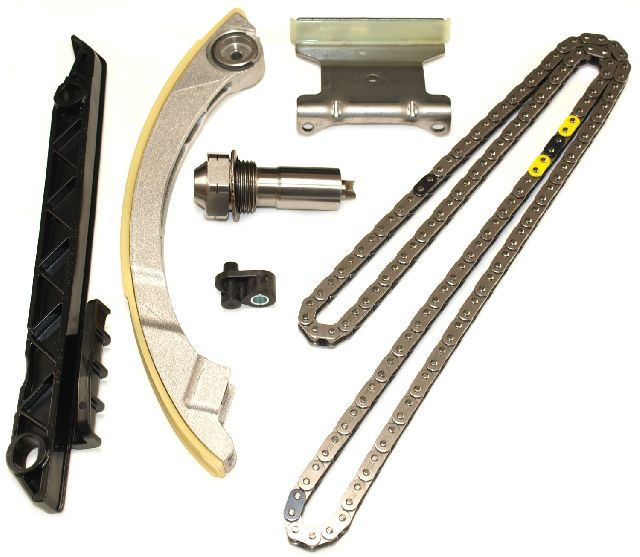
(OEM #12680750)— This is the most common cause of P0016 on the Saturn SKY's Ecotec engine. A complete kit ensures all worn components (chains, guides, tensioners, sprockets) are replaced. The ACDelco kit includes the chain, tensioner, guides, nozzle, seal, and bolts.
Related Codes That Often Appear With This One
- P0017 — This code indicates a correlation issue with the exhaust camshaft (Bank 1, Sensor B). It frequently appears with P0016 when the timing chain has stretched or skipped a tooth, affecting both camshafts' alignment with the crankshaft.
- P0011 — This code means 'Intake Camshaft Position Timing - Over-Advanced'. It can be caused by a faulty VVT solenoid or a stuck cam phaser, which are components of the same system responsible for timing adjustments.
- P0014 — This code means 'Exhaust Camshaft Position Timing - Over-Advanced' and points to issues with the exhaust VVT solenoid or phaser, often appearing with P0011, P0016, and P0017 in cases of severe timing system failure.
Technical Service Bulletins (TSBs) & Recalls
- PIP4716F: Mentions a short, sharp rattle noise at startup associated with DTCs P0011, P0014, P0016, or P0017.
- PIP4548F: Advises inspection of the camshaft reluctor ring if P0016/P0017 are set on a properly timed engine or if there is a crank/no-start condition.
Platform-Specific Known Issues
- A short, sharp rattle from the front of the engine at startup is a key symptom mentioned in TSB #PIP4716F, directly linking it to codes like P0016.
- TSB #PIP4548F notes that P0016 can set on a 'properly timed engine' or cause a 'crank but will not start' condition, pointing technicians to inspect the camshaft reluctor ring for slippage, a known issue on these Ecotec engines.
- On the 2.4L LE5 engine, failure of the balance shaft chain, guides, or tensioner can also contribute to timing correlation codes. A whining noise may be present if these components are failing or were recently replaced.
Mechanic-Grade Diagnostic Values
- Camshaft Oil Control Valve (VVT Solenoid) Resistance — expected: 6.9 - 7.9 ohms at 68°F (20°C). Failure: A reading outside this range, or an open/short circuit, indicates a faulty solenoid.
- Scan Tool Camshaft Position Variance — expected: Less than 2-3 degrees of variance at idle.. Failure: A consistent deviation of more than 5-10 degrees between the desired and actual camshaft position indicates a mechanical timing issue.
Scan Tool Commands That Help
- Tech2 / GDS2 or equivalent professional scanner: Camshaft Position Variance Data PID — Use this live data parameter to see the difference in degrees between the ECM's commanded camshaft angle and the actual angle reported by the sensor. A large, consistent variance points to a mechanical timing problem (stretched chain) rather than an intermittent sensor or solenoid issue.
- Tech2 / GDS2 or equivalent professional scanner: VVT Solenoid Bidirectional Control — This function allows the technician to command the VVT solenoid on and off to verify its mechanical operation. While commanding the solenoid, you should see a corresponding change in the camshaft angle PID. If the solenoid is commanded but the angle doesn't change, it points to a stuck phaser, a clogged oil passage, or a failed solenoid.
Wiring & Ground Locations
- ECM (Engine Control Module) — At the left rear corner of the engine compartment, near the brake master cylinder (2.4L LE5) or on the left side of the engine compartment (2.0L LNF).. The ECM processes the signals from the CMP and CKP sensors. A poor connection or corrosion at the ECM connector can cause signal loss or incorrect readings, potentially triggering P0016.
- G103 — Located at the left rear of the engine compartment on the cowl, above the brake booster.. This is a critical ground point for the ECM, Body Control Module (BCM), and the Data Link Connector (DLC). A loose or corroded G103 can cause a host of unpredictable electrical issues, including sensor signal problems that could lead to a P0016 code.
- G300 — Located under the center console.. This ground serves several interior modules. While less likely to directly cause P0016, a poor ground here can contribute to data communication errors on the vehicle's network.
- Redundant ECM Ground — An additional wire run from the metal case of the ECM to a clean chassis ground point.. On some Saturn models, the ECM relies on its mounting bracket for a ground path, which can become insufficient over time. For persistent, difficult-to-diagnose electrical faults that don't have another clear cause, adding a dedicated ground wire can be a low-cost diagnostic step or fix.
Real Owner Repair Stories
- YouTube channel 'ouRVision nomadic living' (2007 Saturn Sky Redline (2.0L LNF Turbo) with 142,000 miles) — The primary job was initiated by a leaking water pump, but the owner decided to proactively replace all timing components at the same time due to the high mileage and known issues.
❌ Tried (didn't work) This was a proactive replacement, not a story of failed diagnostic steps.
✅ What actually fixed it A complete replacement of the timing chain, balance shaft chain, guides, tensioners, and water pump. The video documents the 8-9 hour procedure, including setting the engine to Top Dead Center, removing the front cover, and installing all new components. The engine started and ran correctly after reassembly, resolving any potential for future timing codes.
"I Checked Everything" — The Actual Cause
- The diagnostic equivalent for P0016 is 'timing marks align perfectly, but the code returns'. This scenario is almost always caused by a spun reluctor ring on either the camshaft (as noted in TSB #PIP4548F) or, more rarely, the crankshaft. Because the reluctor ring is the reference point for the sensor, if it moves on the shaft, the sensor will report a correlation error even when the chain, sprockets, and phasers are perfectly timed.
When the Usual Fixes Don't Work
- While the vast majority of P0016 codes on the Saturn Sky are caused by the timing chain system, mechanics should be aware of cases where the code returns even after a complete timing job. In one documented instance on a similar GM engine, a user replaced the chain, tensioner, guides, phasers, and sensors, but the P0016 code persisted. This outcome strongly points to one of the rare but critical 'timing is correct but code persists' causes, such as a spun camshaft or crankshaft reluctor wheel, which must be inspected if a new timing set does not resolve the code.
OEM Part Supersession History
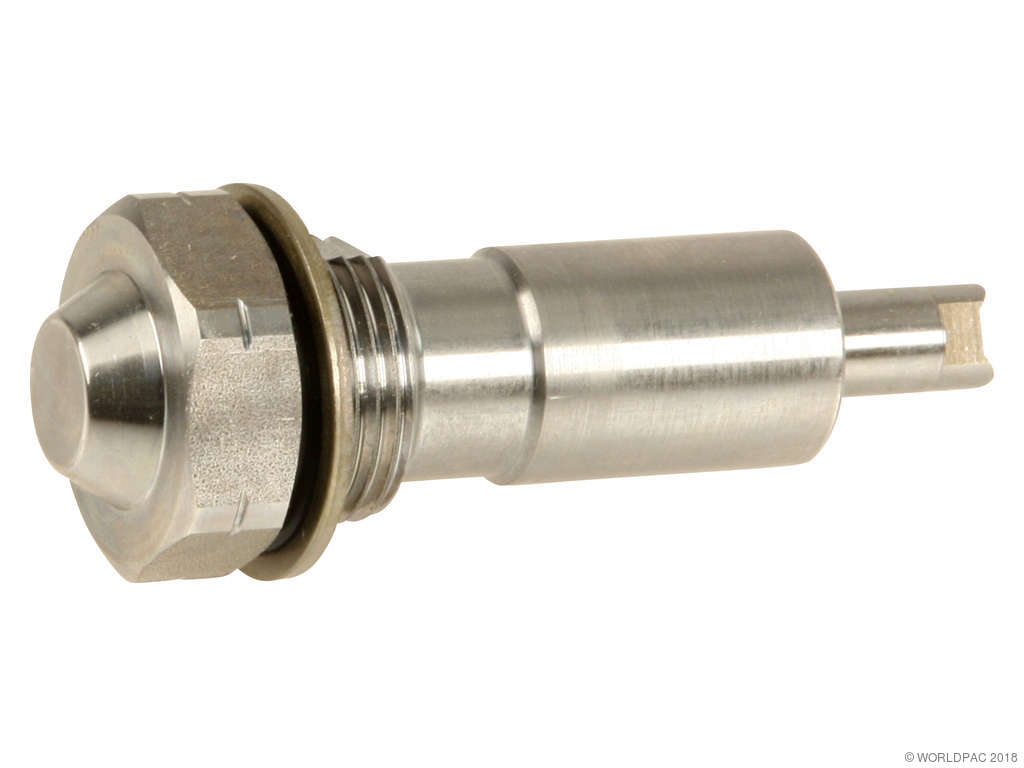
Multiple, including 90537802, 12578209→12608580 (current GM Genuine part)— The original Ecotec timing chain tensioner designs were a known weak point. GM released multiple revisions to improve durability. The earliest design was a two-piece unit with an O-ring and a large piston. Later designs removed the O-ring, and the final, current design is a one-piece unit with a smaller piston that is considered more robust.
Heads up: Using an old-stock or non-updated tensioner will likely lead to a repeat failure. It is critical to use the latest superseded part number (12608580) or a quality aftermarket equivalent built to the updated design.
Model Year Variations Within This Range
- 2007: For the 2007 model year, the 2.4L LE5 engine was updated with an 'Optimized Piston Skirt' that had a slight barrel shape. This was intended to reduce engine noise, especially during cold starts. This change does not affect the diagnosis or common causes of code P0016.
Helpful Videos
We Have This Part in Stock


The information in this article is provided for general reference and educational purposes only. Vehicle specifications, procedures, and part compatibility can vary by production date, trim level, and region. Always consult your vehicle's factory service manual and verify part numbers before purchasing or performing repairs. Safety-critical components such as airbags, seat belts, and braking systems should be installed by a qualified professional.
- Saturn SKY:
- 🧭 Diagnostic Flowchart
- 🎬 Helpful Videos
- 🛍️ Shop This Part
- What's Unique About the 2007-2010 Saturn SKY
- Symptoms You May Notice
- Most Likely Causes
- Rare But Worth Checking
- Diagnosis Steps
- Parts You'll Likely Need
- Related Codes That Often Appear With This One
- Technical Service Bulletins (TSBs) & Recalls
- Platform-Specific Known Issues
- Mechanic-Grade Diagnostic Values
- Scan Tool Commands That Help
- Wiring & Ground Locations
- Real Owner Repair Stories
- "I Checked Everything" — The Actual Cause
- When the Usual Fixes Don't Work
- OEM Part Supersession History
- Model Year Variations Within This Range
- 🎟️ Get 5% Off