

P0017 on 2009-2016 Audi A4 2.0T: Timing Chain Failure Guide
On a 2009-2016 Audi A4 2.0T, P0017 almost always means the timing chain is stretched or the tensioner has failed. This is a critical issue requiring immediate attention. Do not drive the vehicle. The fix is a full timing chain replacement, costing $1,500-$3,000+.
- P0017 on this Audi is a critical code that signals a failing timing chain or tensioner.
- The most common symptom is a 1-3 second rattle on cold starts. Do not ignore this sound.
- Stop driving the vehicle immediately to prevent catastrophic engine failure. The risk of the chain jumping time is high.
- The only correct fix is a complete timing chain service, replacing the chain, guides, and the tensioner with the latest updated version.
- Do not waste money replacing the camshaft or crankshaft position sensors, as they are almost never the root cause.
What's Unique About the 2009-2016 Audi A4
For the EA888 Gen2 engine, P0017 is not a simple sensor issue; it is a strong and reliable indicator of a failing timing chain system. Early versions of the timing chain tensioner used a faulty ratchet mechanism that could fail to hold hydraulic pressure, allowing the chain to go slack. This slack leads to a stretched chain and the potential for the timing to jump, which is a well-documented, widespread problem. Ignoring the code and its underlying cause will likely lead to catastrophic engine failure when pistons and valves collide. Replacing the sensors will not fix the problem.
Generation note: The 2009-2016 range covers the Audi A4 B8 (2009-2012) and B8.5 (2013-2016) generations. Models from 2009-2012 are highly likely to have the original, failure-prone timing chain tensioner if it has not been previously updated. Later models (2013+) are more likely to have an updated tensioner from the factory, but are still susceptible to timing chain stretch over time and mileage.
Symptoms You May Notice
- Check Engine Light illuminated
- A brief (1-3 second) metallic rattle or chain-slap noise on cold startup
- Rough, unstable, or shaking idle
- Reduced engine power and hesitation during acceleration
- Engine cranks but is slow to start, or won't start at all
- EPC (Electronic Power Control) warning light may be illuminated
- Replacing only the camshaft position sensor
- Replacing only the crankshaft position sensor
- Performing an oil change (while good maintenance, it will not fix a stretched chain or failed tensioner)
Most Likely Causes
- Stretched Timing Chain and/or Failed Timing Chain Tensioner 🔴 High Probability → Shop Engine Timing Chain The original-design timing chain tensioner used in early EA888 Gen2 engines is a known failure point. It can fail to hold hydraulic pressure or its mechanical ratchet can fail, allowing the chain to go slack, stretch prematurely, and eventually jump time.
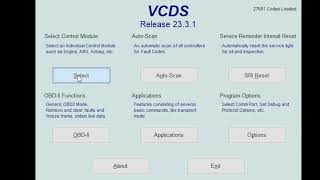
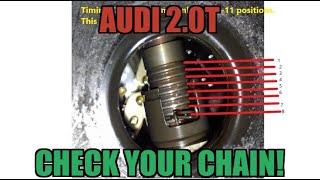
How to confirm: 1. Use a VAG-specific scan tool (VCDS, OBDeleven) to check 'Camshaft adaptation intake bank 1: phase position' in engine measuring block 93 (on older ECUs) or the equivalent advanced measuring value on newer UDS ECUs. 🎬 Watch: How to check timing chain stretch using VCDS A value greater (more negative) than -5.0 degrees indicates significant chain stretch. 2. Visually inspect the tensioner's extension through the inspection plug on the lower timing cover. 🎬 See how to visually inspect the tensioner for chain stretch If the old-style tensioner is present or the new style is extended past 6-7 ridges, the chain system is worn and requires replacement.
Typical fix: A complete timing chain service is required. This involves replacing the timing chain, the tensioner (with the latest revision), all plastic guide rails, the lower timing cover, and associated seals and one-time-use bolts.
Est. part cost: $400-$800
Rare But Worth Checking
- Failed Camshaft Bridge / Clogged Screen: → Shop Engine Camshaft The camshaft bridge, which directs oil to the VVT system, has a small screen that can break apart and clog oil passages. This can starve the VVT actuator (phaser) of oil, causing a correlation fault. Debris can also damage the N205 solenoid. This is often a secondary failure caused by debris from a failing timing system or sludge from poor oil maintenance.
- Failed N205 VVT Solenoid: The solenoid that controls oil flow to the exhaust cam phaser can fail or become clogged with debris. While possible, this is much less common than the primary timing chain failure.
- Faulty Camshaft or Crankshaft Position Sensor: → Shop Engine Crankshaft Position Sensor It is extremely rare for a sensor itself to be the sole cause of P0017 on this engine. This should only be considered after the timing chain system has been verified to be in perfect condition. Many DIY guides incorrectly suggest this as a primary fix.
Diagnosis Steps
- Confirm the presence of P0017 with an OBD-II scanner. Note any other codes present, especially P0016.
- DO NOT clear the codes.
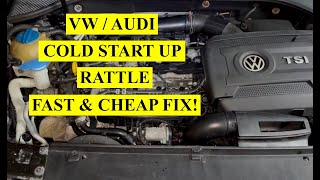
- Listen for a metallic rattle from the front of the engine during a cold start. A 1-3 second rattle is a classic sign of a failing tensioner. 🎬 Watch: Identifying and fixing the common cold start rattle
- Check engine oil level and condition. Low or degraded oil can accelerate wear and affect tensioner performance but will not cause this code on its own.
- Use a VAG-specific scan tool (VCDS, OBDeleven) to read the camshaft adaptation value. For older ECUs, this is in Measuring Block 93. If the value is beyond -5 degrees, the chain is stretched and requires replacement.
- If a scan tool is unavailable, a mechanic can remove the small inspection plug on the lower timing cover to visually inspect the tensioner type and its extension level. If more than 6-7 ridges are showing, the chain is stretched.
- If the chain and tensioner are confirmed to be the cause, schedule a full timing chain service immediately.
Parts You'll Likely Need
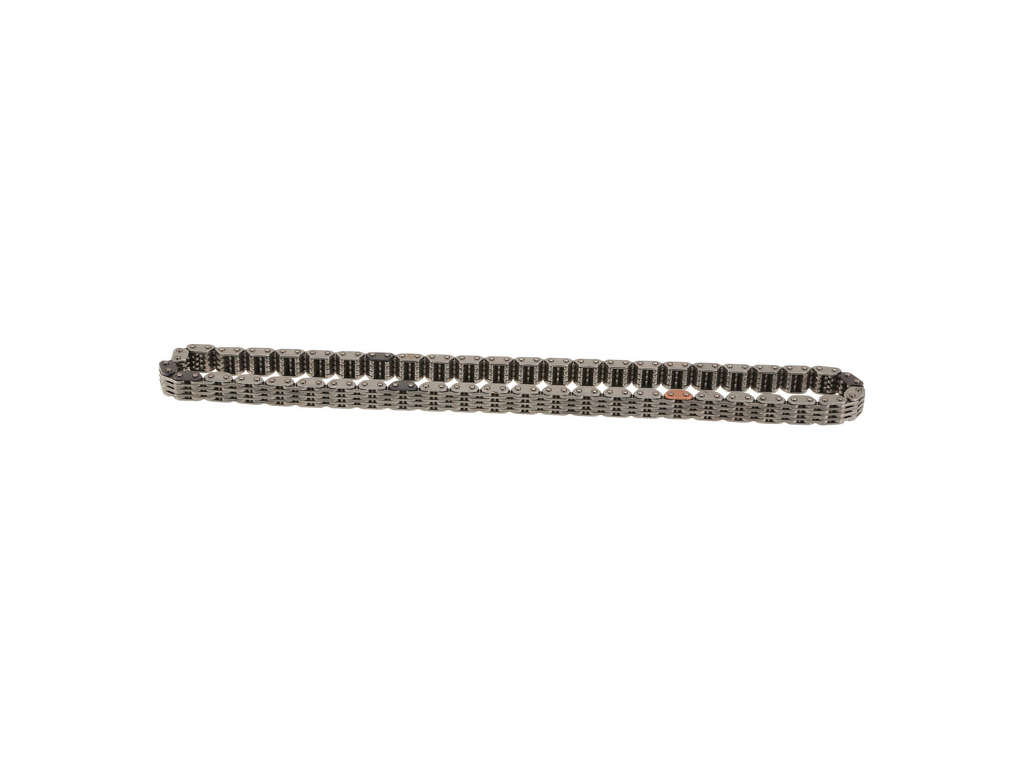
- Timing Chain Kit — This is the comprehensive solution, replacing all wear components of the timing system at once. A kit ensures all parts are new and compatible.
Trusted brands: Iwis, INA, FCP Euro Kit, Febi Bilstein
OEM price range: $500-$800
Aftermarket price range: $350-$600 - Timing Chain Tensioner
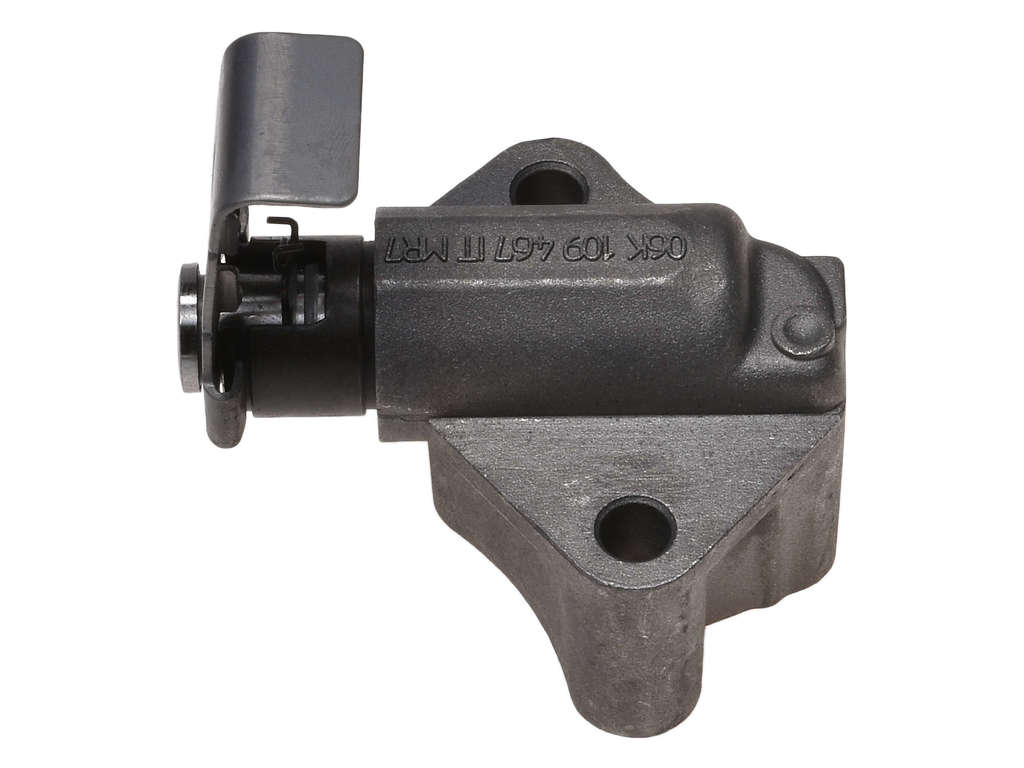
(OEM #06K109467K)— This is the latest revision of the tensioner, designed to prevent the failures of the original part. It is the primary component that must be replaced. This part number supersedes 06H109467AB, 06H109467N, and 06H109467T.
Trusted brands: OEM Volkswagen/Audi, INA
OEM price range: $70-$100
Aftermarket price range: $50-$80 - Lower Timing Cover
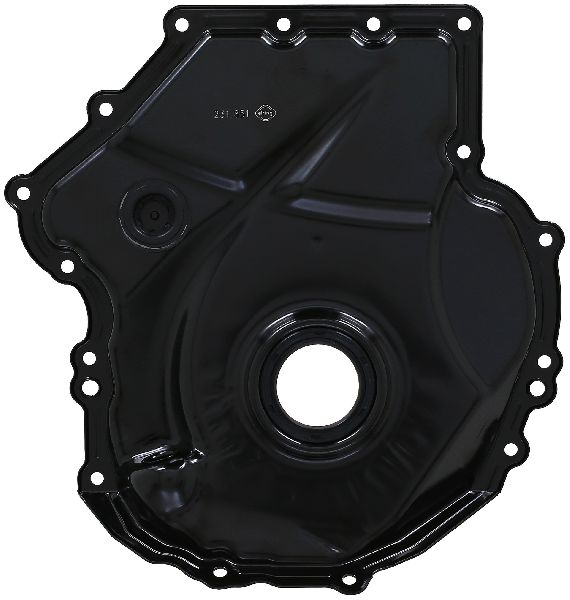
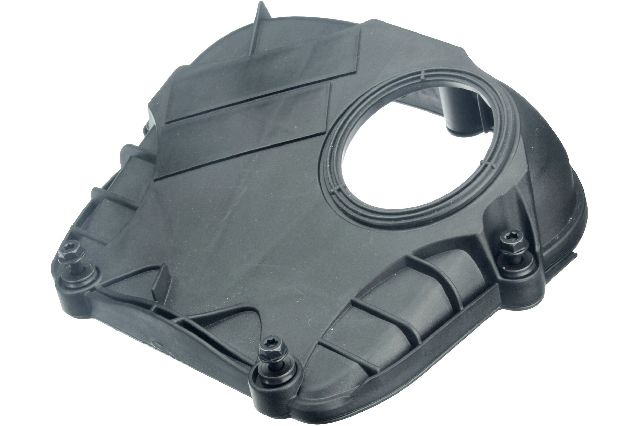
(OEM #06H109210Q)— The lower timing cover is often replaced during this service as it can be damaged during removal and contains integrated seals. Some revisions are updated parts.
Trusted brands: OEM Volkswagen/Audi, Elring Klinger
OEM price range: $100-$150
Aftermarket price range: $70-$120
Related Codes That Often Appear With This One
- P0016 — This is the same correlation error but for the intake camshaft ('Sensor A'). When P0016 and P0017 appear together, it strongly confirms a base mechanical timing issue, as the stretched chain is affecting both camshafts.
- P0341 — This code for 'Camshaft Position Sensor 'A' Circuit Range/Performance' can appear alongside P0017 because the slack in the timing chain causes such a significant deviation that the sensor's reading is considered implausible by the ECM.
- P0300, P0301, P0302, P0303, P0304 — Random or specific cylinder misfire codes are common because incorrect valve timing disrupts stable combustion, leading to misfires.
Technical Service Bulletins (TSBs) & Recalls
- While a single, universally cited TSB for P0017 is elusive, Audi has issued multiple technical bulletins related to the underlying causes. TSB 2027920/10 (and its various revisions) addresses checking timing chain elongation. Another TSB from October 2013 titled 'Engine oil consumption too high' addresses related piston ring issues on 2009-2011 models. A VW TSB also noted that a torn camshaft bridge screen could cause downstream VVT issues, recommending its removal.
Platform-Specific Known Issues
- A class-action lawsuit was previously filed regarding the timing chain tensioner failure in these engines, leading to an extended warranty program for some vehicles. However, most of these vehicles are now outside the age and mileage limits of that program.
- A separate class-action lawsuit addressed excessive oil consumption in 2012-2017 models with the 2.0T EA888 engine, related to defective pistons and rings. While not a direct cause of P0017, severe oil consumption can lead to low oil levels that compromise the hydraulic tensioner's function.
Mechanic-Grade Diagnostic Values
- N205 Camshaft Adjustment Valve (VVT Solenoid) Resistance — expected: 5.0 to 15.0 Ohms. Failure: A reading outside this range (open circuit or short) indicates a faulty solenoid.
- Camshaft Position Sensor (G40/G163) Voltage Supply — expected: >= 4.5V with ignition on, engine off. Failure: Voltage below 4.5V at the sensor connector points to a wiring or ECU power supply issue.
- Engine Oil Pressure at Hot Idle (~80°C) — expected: 17.4 - 30.5 psi (1.2 - 2.1 bar). Failure: Pressure below this range can starve the hydraulic tensioner and VVT system, contributing to timing correlation codes.
- Engine Oil Pressure at 2000 RPM (Hot) — expected: >= 39 psi (2.7 bar). Failure: Low pressure under load indicates a significant oil delivery problem (e.g., worn oil pump, clogged pickup tube) that must be addressed before timing components.
Scan Tool Commands That Help
- VCDS or OBDeleven: Camshaft Adaptation Reset — After replacing the timing chain and/or camshafts. The ECU stores adaptation values to compensate for old chain stretch; resetting this forces the ECU to relearn values for the new, unstretched chain, preventing incorrect timing calculations.
- VCDS or OBDeleven: VVT Actuator Output Test — To test the N205 solenoid and cam phaser functionality. The scan tool can command the solenoid to advance and retard timing. A lack of response or change in engine sound/RPM indicates a clogged solenoid, low oil pressure to the phaser, or a failed phaser.
- VCDS: Throttle Body Alignment (TBA) — After disconnecting the battery or replacing the throttle body. While not a direct fix for P0017, an incorrect throttle adaptation can cause erratic idle and performance issues that may confuse diagnosis. This is performed in 'Basic Settings', Group 060.
Wiring & Ground Locations
- G28 (Engine Speed Sensor) & G40 (Camshaft Position Sensor) — G28 is located on the engine block, reading the crankshaft. G40 is on the cylinder head, reading the camshaft. Specific wiring diagrams are required for pinouts.. A P0017 code is triggered by a discrepancy between the signals from these two sensors. While rarely the cause on this engine, checking for damaged wiring or corroded connectors to these sensors and back to the ECU (J623) is a final diagnostic step after mechanical causes are ruled out. Publicly accessible, reliable wiring diagrams for the B8 platform are scarce.
- Engine Block Ground Points — Multiple ground points exist on the engine block and chassis. A key ground strap typically runs from the engine block to the chassis rail in the engine bay.. A poor engine ground can introduce electrical noise and cause erratic sensor readings, potentially leading to false correlation codes. Verifying the main engine ground strap is clean and tight is a fundamental electrical check.
Real Owner Repair Stories
- Reddit r/MechanicAdvice user (Audi with EA888 engine) — Car ran badly, low oil, found timing had jumped 2 teeth.
❌ Tried (didn't work) The P0017 code remained even after a comprehensive mechanical repair.
✅ What actually fixed it The owner replaced the timing chain, tensioners, both CVVT sprockets, and the exhaust camshaft due to a broken dowel pin. The car ran well afterward, but the P0017 code would not clear. The community advised the next step was to remove and clean the exhaust-side oil control valve (VVT solenoid), as it was likely clogged with debris from the previous failure or was electrically faulty, preventing the code from clearing.
OEM Part Supersession History
06H109467N, 06H109467T, 06H109467AB→06K109467K— The original tensioner designs used a ratchet mechanism that was prone to failure, either by losing hydraulic pressure or the mechanical lock failing, leading to chain slack. The new design is a more robust, non-ratcheting style that is not prone to the same failure mode.06H103144G, 06H103144H, 06H103144J→06H103144K— The original camshaft bridge designs included a small oil screen that was prone to breaking loose. The debris could clog oil passages to the VVT system, or the screen itself could fall into the timing components. The updated part has a revised, more robust screen design.
Model Year Variations Within This Range
- 2009-2012: These B8 models are almost certain to have the original failure-prone timing chain tensioner if it has never been replaced. They are also the primary focus of the oil consumption lawsuits related to piston rings.
- 2013-2016: These B8.5 'facelift' models are more likely to have the updated tensioner from the factory, but are not immune. For the North American market, these vehicles continued to use the EA888 Gen2 engine, not the Gen3 found in other VW/Audi models of the same era. Some very late models (2014-2015) received a revised Gen2 engine with updates like thicker piston rings to address oil consumption.
Diagnostic Flowchart
Other Known Issues on This Vehicle
Issues unrelated to this code that are worth knowing about as an owner of this generation:
- Excessive Oil Consumption 🔴 High — Extremely common in 2009-2011 models, but affects models up to 2017. Caused by faulty piston ring design. Often requires piston/ring replacement to fully resolve. (Ref: Multiple class-action lawsuits have been settled, offering extended warranties or reimbursement for repairs for certain VINs and model years.)
- PCV Valve Failure 🟠 Medium — Common failure item, typically every 60k-80k miles. A failed PCV (Positive Crankcase Ventilation) valve can cause lean codes (P0171), rough idle, oil leaks, and a distinct whistling noise.
- Water Pump & Thermostat Housing Failure 🟠 Medium → Shop Engine Water Pump — The plastic water pump and thermostat housing are prone to cracking and leaking, typically between 70k-100k miles. Often leaks coolant onto sensors below. Upgraded all-aluminum housings are available but don't always solve the root cause of seal failure from oil leaks. (Ref: An earlier recall (NHTSA 18V-229 / Audi 19N4) existed for an electric after-run coolant pump, but not the main mechanical water pump.)
Used vs. New Parts: Buying Guide for This Vehicle
When a used part is the smart pick: For this repair, used parts are generally not recommended. However, if the original timing failure caused collateral damage, a used, low-mileage non-wear component like a valve cover or even a complete cylinder head from a reputable salvage yard could be a cost-effective option.
Donor-vehicle mileage cap: roughly under 60000 miles for the part to have meaningful remaining life.
What to inspect on the donor part:
- For a cylinder head, verify it came from a vehicle with a documented running engine and no signs of overheating.
- Inspect for any visible cracks, stripped threads, or warped mating surfaces.
- Ask for the VIN of the donor car to check its history and confirm engine compatibility.
OEM-only on this vehicle (don't cheap out):
- Timing Chain
- Timing Chain Tensioner
- Timing Chain Guides
- Cylinder Head Bolts (Torque-to-Yield)
Aftermarket brands forum-validated for this vehicle:
- Iwis (often the OEM supplier for chains)
- INA (often the OEM supplier for tensioners and guides)
- FCP Euro (known for comprehensive, high-quality kits)
- Febi Bilstein
Brands owners have reported issues with on this vehicle:
- Unbranded, generic 'timing chain kits' from online marketplaces like eBay or Amazon. These often use inferior materials that can fail prematurely, leading to a repeat of a catastrophic engine failure.
Real Owner Stories
Aggregated from forums and TSBs cited above. Mileages and costs reflect what owners reported in those sources.
2012 Audi A4 B8 1.8 TFSI — 124274 miles
Symptoms: Engine stumbles immediately after cold start; slow or jerky throttle response; feels like a misfire; lack of acceleration in high gear, with RPMs dropping until downshifting. Previous fault codes included P0017.
What fixed it: The community and fault codes strongly suggest the timing chain is the cause, requiring a full timing chain service.
Source hint: r/MechanicAdvice
2014 Audi Q5 3.0T — ~100000 miles
Symptoms: Owner was monitoring measuring block 93 with UDS protocol to determine 'safe' vs. 'unsafe' ranges for camshaft phase adaptation.
What fixed it: Established that values beyond -4.0 degrees indicate the need for timing component replacement.
Source hint: Audiworld.com - Thread: 'Measuring block 93 with UDS protocol, Q5 2014 3.0T'
2011 Audi A4 2.0T — ~110000 miles
Symptoms: A phase position reading of -11 degrees was reported via VCDS.
What fixed it: Consensus confirmed this indicates a mechanical timing issue (stretched chain) rather than a sensor fault.
Source hint: Ross-Tech Forums - Thread: 'Correcting Continuous Camshaft Adjustment'
2013 Audi A4 2.0T — ~95000 miles
Symptoms: Owners sharing failure stories and diagnostic values from VCDS block 93, describing P0017 as the 'death rattle' code.
What fixed it: Complete timing chain service including the tensioner, chain, and guides.
Cost: $2,000-$2,500
Source hint: Audizine.com - Thread: 'Official B8 A4 Timing Chain Failure Thread'
Documented NHTSA Reports
Audi Q7 (Cross-Manufacturer Reference)
Symptoms: An owner reported a catastrophic engine failure while driving on the highway. The vehicle logged DTC P054A, DTC P0301, and DTC P0017, rendering the vehicle undrivable despite regular maintenance at authorized service intervals.
Source hint: NHTSA ODI #11708802
Related OBD-II Codes
Frequently Asked Questions
Is there a specific VCDS measuring block I should check for timing chain stretch on my B8 A4?
Does the class-action lawsuit for the EA888 Gen2 timing chain tensioner still cover my 2012 Audi A4?
Can I visually check if my timing chain tensioner is the old failure-prone style?
Is the P0017 code related to the high oil consumption issues on the 2009-2011 A4 models?
What is the 'red zone' for camshaft phase adaptation values on the EA888 engine?
Should I remove the camshaft bridge screen as mentioned in some Audi/VW technical bulletins?
Helpful Videos
We Have This Part in Stock


The information in this article is provided for general reference and educational purposes only. Vehicle specifications, procedures, and part compatibility can vary by production date, trim level, and region. Always consult your vehicle's factory service manual and verify part numbers before purchasing or performing repairs. Safety-critical components such as airbags, seat belts, and braking systems should be installed by a qualified professional.
- Audi A4:
- 🧭 Diagnostic Flowchart
- 🎬 Helpful Videos
- 🛍️ Shop This Part
- What's Unique About the 2009-2016 Audi A4
- Symptoms You May Notice
- Most Likely Causes
- Rare But Worth Checking
- Diagnosis Steps
- Parts You'll Likely Need
- Related Codes That Often Appear With This One
- Technical Service Bulletins (TSBs) & Recalls
- Platform-Specific Known Issues
- Mechanic-Grade Diagnostic Values
- Scan Tool Commands That Help
- Wiring & Ground Locations
- Real Owner Repair Stories
- OEM Part Supersession History
- Model Year Variations Within This Range
- Other Known Issues on This Vehicle
- Used vs. New Parts: Buying Guide for This Vehicle
- Real Owner Stories
- 2012 Audi A4 B8 1.8 TFSI — 124274 miles
- 2014 Audi Q5 3.0T — ~100000 miles
- 2011 Audi A4 2.0T — ~110000 miles
- 2013 Audi A4 2.0T — ~95000 miles
- Documented NHTSA Reports
- Audi Q7 (Cross-Manufacturer Reference)
- Related OBD-II Codes
- Frequently Asked Questions
- 🎟️ Get 5% Off