

P0017 on 2016-2019 Buick Encore 1.4L LE2: Exhaust Cam Correlation Causes and Fixes
On a 2016-2019 Encore with the 1.4L LE2, P0017 is often caused by low/dirty oil or a bad exhaust VVT solenoid. However, a known issue is the exhaust camshaft reluctor ring shifting, a more complex repair detailed in GM TSB 21-NA-268. This TSB is critical for this specific engine and code.
- Always check the engine oil level and condition first. Use only 5W-30 dexos1 Gen2 oil.
- The exhaust VVT solenoid is a likely culprit and is easy to access for testing or replacement.
- Do not immediately replace the camshaft or crankshaft sensors; they are rarely the cause.
- Be aware of GM TSB 21-NA-268, which points to a shifted reluctor ring on the exhaust camshaft as a known issue for this specific engine and code.
- A rattling noise from the engine likely indicates a serious timing chain issue that requires immediate attention to prevent severe engine damage.
What's Unique About the 2016-2019 Buick Encore
The 1.4L LE2 engine, introduced in 2016, has a specific and non-intuitive failure mode that causes P0017. GM issued Technical Service Bulletin (TSB) 21-NA-268 which points to the exhaust camshaft's press-fit reluctor ring shifting out of position. This can happen if the engine-driven vacuum pump, which is coupled to the end of the exhaust camshaft, seizes or fails, twisting the reluctor ring on the camshaft. While common issues like VVT solenoids are still possible, technicians aware of this platform often check for this specific mechanical failure if the basics (oil, solenoids) check out, as it requires camshaft replacement.
Symptoms You May Notice
- Check Engine Light (Malfunction Indicator Lamp) illuminated
- Rough idle or engine knocking
- Reduced engine power and poor acceleration
- Engine stalling
- Increased fuel consumption
- Difficulty starting the engine or extended cranking
- Crank no start
- Possible increased brake pedal effort (due to vacuum pump issue)
- Replacing the camshaft position sensor without testing. The sensor is usually just reporting the problem, it is not the cause.
- Replacing the crankshaft position sensor. This is even less likely to be the cause than the camshaft sensor.
- Replacing the timing chain without first checking for the shifted reluctor ring as per TSB 21-NA-268. This can lead to a very expensive and ineffective repair.
Most Likely Causes
- Low, Old, or Incorrect Viscosity Engine Oil 🔴 High Probability The Variable Valve Timing (VVT) system uses oil pressure to adjust cam timing. If the oil is low, dirty, or the wrong type (e.g., not meeting dexos1 Gen2 5W-30 spec), the system cannot function correctly, leading to correlation faults. These engines can consume oil, so the level may drop between changes.
How to confirm: Check the oil level on the dipstick. Inspect the oil's color and consistency. Review service records to ensure the correct oil (5W-30 dexos1 Gen2) and a quality filter were used. An engine flush may be considered if sludge is suspected.
Typical fix: Perform an oil and filter change with the manufacturer-specified oil. An engine flush might be considered if sludge is suspected. 🎬 See how to clean your VVT components before buying new parts. Reset the code and see if it returns.
Est. part cost: $40-$70 - Faulty Exhaust VVT Solenoid (Oil Control Valve) 🟡 Medium Probability These solenoids can get clogged with sludge or fail electrically. They are a common failure point on many modern engines and a frequent cause of correlation codes. Manufacturer Bulletin #PIP6082 notes that an engine surge or misfire with DTC P0017 can occur due to potential debris in the cam actuators.
How to confirm: The solenoids are located on top of the valve cover and are identical for intake and exhaust. You can swap the exhaust solenoid with the intake solenoid. If the code changes to P0016 (Intake Correlation), the solenoid is bad. You can also test its resistance with a multimeter (should be 8-12 ohms). Check the solenoid screens for metal or plastic debris, which would indicate a more serious timing chain guide issue.
Typical fix: Replace the faulty exhaust VVT solenoid. It is held in by one bolt and is easily accessible. 🎬 Watch: How to identify and replace a bad VVT solenoid. It is often recommended to use OEM/ACDelco parts, as some aftermarket solenoids have been reported to cause issues.
Est. part cost: $30-$60 - Stretched Timing Chain or Failed Tensioner/Guides 🟡 Medium Probability → Shop Engine Timing Chain Timing chains on the 1.4L Turbo engines are a known wear item. Over time, the chain can stretch, or the plastic guides can break, causing excessive slack and altering the cam/crank correlation. Bulletin #PIP3423P advises technicians to specifically inspect for loose timing chains or tensioners when P0017 is set.
How to confirm: A rattling noise from the front of the engine, especially on startup, is a strong indicator. Diagnosis requires removing the valve cover and timing cover to inspect the chain, guides, and tensioner for slack and damage. This is a labor-intensive job.
Typical fix: Replace the timing chain, tensioners, and guides as a complete kit. This is a labor-intensive job that may require special tools.
Est. part cost: $200-$400 for a kit
Rare But Worth Checking
- Shifted Exhaust Camshaft Reluctor Ring: → Shop Engine Camshaft This is a known issue documented in GM TSB 21-NA-268. The reluctor ring, which the camshaft sensor reads, is press-fit and can move out of position, especially if the vacuum pump attached to the end of the camshaft seizes. This causes a timing correlation fault even if the chain and phasers are perfectly timed. Diagnosis requires removing the cam cover to physically inspect the reluctor's alignment. The fix requires replacing the entire exhaust camshaft and associated vacuum pump components.
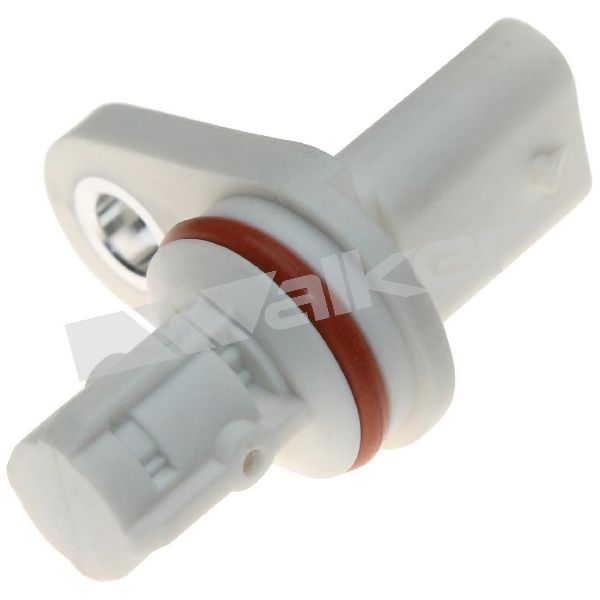
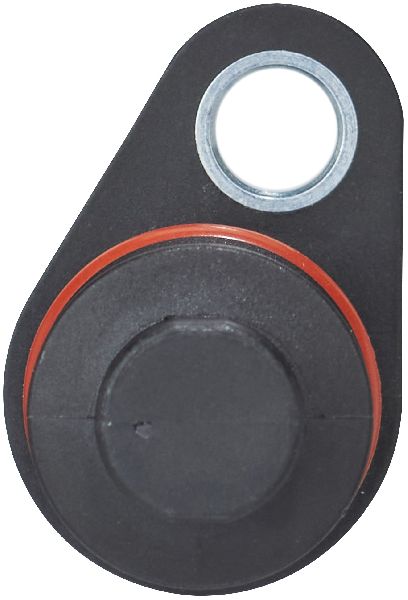
- Faulty Crankshaft or Camshaft Position Sensor: → Shop Engine Camshaft Position Sensor While possible, these sensors are often replaced unnecessarily. P0017 is a correlation code, meaning the sensors are usually working correctly and reporting a real mechanical timing issue. Only replace a sensor if it fails a specific electrical test. A forum user with a P0017 replaced the VVT solenoid, cam sensor, and crank sensor only to have the code return instantly, pointing to a deeper mechanical issue.
- Failed Exhaust Camshaft Phaser/Actuator: → Shop Engine Camshaft The phaser itself, which is responsible for physically advancing or retarding the cam timing based on oil pressure from the solenoid, can fail. It can get stuck in one position or fail internally. This is less common than a solenoid failure but is a possible cause if other checks pass.
Diagnosis Steps
- Check Engine Oil: Verify the oil level is full and the oil is clean. Ensure the correct oil (5W-30 dexos1 Gen2) is being used. If in doubt, change the oil and filter.
- Scan for Other Codes: Check for other related codes like P0014, P0016, P0365, or P0366 to help narrow the diagnosis. Bulletin #20NA151 provides procedures to correct unstable engine idle when codes P0011, P0014, P0016, or P0017 are set.
- Inspect & Swap VVT Solenoids: Locate the intake and exhaust VVT solenoids on the valve cover. Unplug the exhaust solenoid and check for oil contamination in the connector. Test the solenoid's resistance or swap it with the intake solenoid to see if the trouble code changes to P0016.
- Inspect Camshaft Reluctor (TSB 21-NA-268): If the above steps do not find the issue, follow the procedure in TSB 21-NA-268. Remove the cam cover. Rotate the engine to align the 2D matrix on the exhaust camshaft to the 12 o'clock position. Verify the small tang on the reluctor ring is perfectly aligned with it. If it is not, the camshaft has failed and must be replaced. Also inspect the vacuum pump drive lugs for damage.
- Inspect Timing System: If the reluctor is aligned, the next step is to inspect the timing chain. This is a more involved job that requires removing the front engine cover. Check for a loose chain, broken guides, or a failed tensioner.
- Test Sensors: Only if all mechanical and hydraulic checks pass should you suspect the sensors. Test the camshaft and crankshaft position sensors with a multimeter or oscilloscope for proper function. Comparing the cam and crank sensor waveforms on an oscilloscope is a definitive way to verify a correlation issue.
Parts You'll Likely Need
- Exhaust VVT Solenoid / Camshaft Actuator
(OEM #12679099 (Supersedes 25195245))— A common failure item that gets clogged or fails electrically. It's relatively inexpensive and easy to replace, making it a good first part to check/replace after verifying oil condition.
Trusted brands: ACDelco, Delphi
OEM price range: $40-$70
Aftermarket price range: $25-$50 - Engine Timing Chain Kit
(OEM #12684420 (Example Kit, verify by VIN))— If the chain has stretched or a guide has failed, a complete kit is needed to restore proper timing. This is a more significant repair but a common cause of correlation codes on higher-mileage engines. Aftermarket kits are available.
Trusted brands: Cloyes, ACDelco (GM Genuine)
OEM price range: $300-$450
Aftermarket price range: $200-$350 - Exhaust Camshaft
(OEM #12675774)— Required if the reluctor ring has shifted, as per TSB 21-NA-268. The reluctor is not serviced separately. The vacuum pump should also be replaced at the same time.
Trusted brands: ACDelco (GM Genuine)
OEM price range: $95-$150
Aftermarket price range: $70-$120
Related Codes That Often Appear With This One
- P0016 — Intake Camshaft Position Correlation. If seen with P0017, it strongly suggests a base timing issue affecting both cams, like a stretched timing chain or a jumped tooth.
- P0014 — Exhaust Camshaft Position 'B' Timing Over-Advanced. This code can be set by a sticking VVT solenoid or a problem with the cam phaser, which are root causes of P0017 as well. TSB 21-NA-268 also lists P0014 as a related code.
- P0365 / P0366 — Exhaust Camshaft Position Sensor 'B' Circuit / Range / Performance. These codes are also listed in TSB 21-NA-268 as potential companion codes when the reluctor ring has shifted.
Technical Service Bulletins (TSBs) & Recalls
- 21-NA-268: Information on Crank No Start or Extended Crank, Malfunction Indicator Lamp (MIL) Illuminated - DTC P0014, P0017, P0365 and/or P0366 Set. This TSB details the inspection procedure for a shifted exhaust camshaft reluctor ring on the 1.4L LE2 and other GM engines.
- Bulletin #20NA151: Provides a procedure to correct conditions of unstable engine idle and illuminated MIL when DTCs P0011, P0014, P0016, P0017, P05CC, and/or P05CE are set.
- Bulletin #PIP3423P: Instructs technicians to inspect for loose timing chains or tensioners if codes P0016, P0017, P0018, P0019, P0008, or P0009 are present.
- Bulletin #PIP6082: Communicates the possibility of engine surge or misfire with DTCs P0300, P0011, P0014, P0016, or P0017 due to debris in the cam actuators.
Platform-Specific Known Issues
- TSB 21-NA-268: Documents a condition where the exhaust camshaft reluctor can be out of phase (shifted on the camshaft). This causes P0017 and requires inspection with the cam cover off. The fix is to replace the exhaust camshaft and inspect the vacuum pump drive lugs for related damage.
Mechanic-Grade Diagnostic Values
- VVT Solenoid (Camshaft Position Actuator Solenoid) Resistance — expected: 8-12 ohms. Failure: A reading significantly outside this range indicates an electrical failure of the solenoid coil.
- VVT Solenoid Power Supply Voltage — expected: Battery Voltage (approx. 12V). Failure: If battery voltage is not present at the power supply pin of the solenoid connector with the ignition on, there is an open or short in the supply circuit.
Scan Tool Commands That Help
- GDS2 / Tech2 (or advanced aftermarket scanner): Camshaft Position Actuator Control — Used to command the VVT solenoid to a specific angle (e.g., 0-25 degrees) while the engine is idling. This functionally tests the solenoid, oil passages, and phaser. If the engine RPM changes or stumbles, the system is likely responding. If there's no change, it points to a stuck solenoid, clogged passage, or faulty phaser.
Wiring & Ground Locations
- G101 — Located at the lower front of the engine block.. This is a primary ground for the Engine Control Module (ECM). A poor connection here can cause erratic sensor readings and phantom codes, potentially affecting the cam and crank sensor signals.
- G103 — Located at the left rear of the engine compartment on the cowl, above the brake booster.. This is a major ground point for the Body Control Module (BCM) and the Data Link Connector (DLC). While less direct, a fault here can cause communication issues between modules that could complicate diagnosis.
- Exhaust Camshaft Position Sensor Connector — On the top of the engine, near the exhaust camshaft.. The wiring to the sensor can be tested here for power, ground, and signal. A service manual or wiring diagram is needed for specific pin functions.
Real Owner Repair Stories
- YouTube channel 'Pine Hollow Auto Diagnostics' (2008 Chevy Malibu 2.4L LE5 (Note: Different vehicle, but identical failure mode of a press-fit reluctor wheel documented in a similar GM bulletin, making it highly relevant).) — Persistent P0017 code, engine runs.
❌ Tried (didn't work) Complete timing chain and guide replacement, Replacement of both VVT solenoids
✅ What actually fixed it Diagnosis using a lab scope to compare cam and crank waveforms revealed the exhaust camshaft reluctor ring had shifted on the camshaft, even though the base mechanical timing was correct. The required fix was the replacement of the exhaust camshaft. - NHTSA ODI #11317317 (Buick Enclave - cross-model reference) — An owner reported a worn out timing chain and gears causing engine codes P0017, P0018, and P0019.
- NHTSA ODI #11375379 (Buick Enclave - cross-model reference) — A driver noted that codes P0017 and P0008 for the camshaft and crankshaft position sensors kept coming on while driving and parked, even after attempted repairs.
OEM Part Supersession History
12655420, 12646783, 12628347, 12578517→12679099— GM regularly updates service part designs to integrate new materials and technologies.
Heads up: While the part number 12679099 is listed for many GM 2.0L and 2.4L engines, it is also the correct service part for the 1.4L LE2 VVT solenoids. Always verify by VIN, but this part is widely used across many GM engines of the era.
Model Year Variations Within This Range
- 2016: In the 2016 model year, the 1.4L LE2 engine was only available on the 'Sport Touring' trim. Other trims used the older 1.4L LUV engine. From 2017-2019, the LE2 became the standard engine. This is critical, as the LUV engine has different common failure points and does not share the reluctor ring issue described in TSB 21-NA-268.
Diagnostic Flowchart
Other Known Issues on This Vehicle
Issues unrelated to this code that are worth knowing about as an owner of this generation:
- PCV System Failure (Clogged Orifice) 🟠 Medium — Common issue. Unlike the earlier LUV engine's ruptured diaphragm, the LE2 engine is prone to a clogged PCV orifice in the camshaft cover, causing high crankcase pressure and potential oil seal leaks. (Ref: TSB 20-NA-047)
- Turbocharger Failure 🔴 High — A known weak point on the 1.4L turbo engines. Failures can manifest as underboost (P0299) or overboost (P0234) codes, loss of power, or noise.
- Water Pump / Coolant Leaks 🟠 Medium → Shop Engine Water Pump — Like many modern GM engines with plastic cooling components, leaks from the water pump, thermostat housing, and various plastic coolant necks are frequently reported by owners.
- Charge Air Cooler (CAC) Icing in Cold Climates 🟠 Medium — In very cold weather, moisture can freeze inside the charge air cooler or boost control components, leading to overboost codes (P0234) and reduced power. (Ref: TSB 22-NA-007 (for Cruze, but relevant to platform))
Used vs. New Parts: Buying Guide for This Vehicle
When a used part is the smart pick: For this specific P0017 issue, a used exhaust camshaft from a low-mileage, reputable salvage yard could be a cost-effective alternative to a new OEM part, especially if the failure is a shifted reluctor ring. It is critical to inspect the used part per TSB 21-NA-268 to ensure its reluctor is correctly aligned before installation. Used VVT solenoids or sensors are also viable if pulled from a running, low-mileage donor vehicle.
Donor-vehicle mileage cap: roughly under 60000 miles for the part to have meaningful remaining life.
What to inspect on the donor part:
- For a camshaft, verify the reluctor ring alignment using the TSB visual check method before purchase.
- Check for any signs of scoring or excessive wear on bearing journals.
- For solenoids/sensors, look for clean screens (on solenoids) and no physical damage to the housing or connector.
- Ask for vehicle history to ensure the donor car was not wrecked due to engine failure.
OEM-only on this vehicle (don't cheap out):
- Timing Chain Kit: This is a critical wear item. Given the labor-intensive nature of the job, installing used timing components is never recommended. Always use a new, high-quality kit.
- Vacuum Pump: If the vacuum pump seized and caused the reluctor failure, it must be replaced with a new unit to prevent a repeat failure.
Aftermarket brands forum-validated for this vehicle:
- VVT Solenoids: Delphi, Standard Motor Products (SMP).
- Timing Chain Kits: Cloyes is a well-regarded aftermarket brand for timing components.
Brands owners have reported issues with on this vehicle:
- Unnamed/generic VVT solenoids from online marketplaces have a high failure rate and are often a waste of time and money, even if they appear to fix the problem initially.
Real Owner Stories
Aggregated from forums and TSBs cited above. Mileages and costs reflect what owners reported in those sources.
2020 Buick Encore Preferred 1.4L Turbo
Symptoms: Check engine light illuminated with code P0017. Initial repairs included replacing engine seals and a coolant flush, but the light returned within 24 hours.
What fixed it: The dealership eventually replaced the camshaft after previous attempts (seals and solenoid) failed to resolve the code.
Cost: $1850-$2000
Source hint: CARFAX owner report in article context
2019 Chevrolet Trax 1.4L LE2 Turbo
Symptoms: Owner reported a P0017 code and sought assistance regarding the 1.4L Turbo engine's correlation issues.
What fixed it: Diagnosis following TSB 21-NA-268 regarding the shifted exhaust camshaft reluctor ring.
Source hint: https://www.chevytraxforum.com/threads/p0017-code-on-2019-chevy-trax-1-4l-turbo.4538/
Related OBD-II Codes
Frequently Asked Questions
My 2017 Buick Encore has a P0017 code; does TSB 21-NA-268 apply to my 1.4L LE2 engine?
Can using the wrong motor oil cause a P0017 code on my Encore?
How can I tell if my P0017 code is a bad VVT solenoid or a mechanical timing chain issue?
I'm hearing a rattling noise from the front of my engine on startup along with the P0017 code. What does this mean?
Is it true that a vacuum pump issue can be related to my P0017 code?
What is the resistance specification for testing the VVT solenoids on the 1.4L LE2?
Helpful Videos

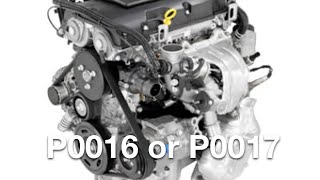
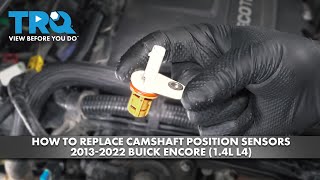

We Have This Part in Stock

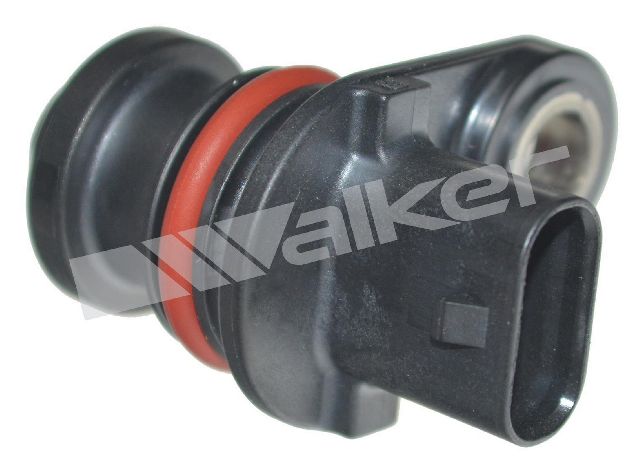

The information in this article is provided for general reference and educational purposes only. Vehicle specifications, procedures, and part compatibility can vary by production date, trim level, and region. Always consult your vehicle's factory service manual and verify part numbers before purchasing or performing repairs. Safety-critical components such as airbags, seat belts, and braking systems should be installed by a qualified professional.
- Buick Encore:
- 🧭 Diagnostic Flowchart
- 🎬 Helpful Videos
- 🛍️ Shop This Part
- What's Unique About the 2016-2019 Buick Encore
- Symptoms You May Notice
- Most Likely Causes
- Rare But Worth Checking
- Diagnosis Steps
- Parts You'll Likely Need
- Related Codes That Often Appear With This One
- Technical Service Bulletins (TSBs) & Recalls
- Platform-Specific Known Issues
- Mechanic-Grade Diagnostic Values
- Scan Tool Commands That Help
- Wiring & Ground Locations
- Real Owner Repair Stories
- OEM Part Supersession History
- Model Year Variations Within This Range
- Other Known Issues on This Vehicle
- Used vs. New Parts: Buying Guide for This Vehicle
- Real Owner Stories
- 2020 Buick Encore Preferred 1.4L Turbo
- 2019 Chevrolet Trax 1.4L LE2 Turbo
- Related OBD-II Codes
- Frequently Asked Questions
- 🎟️ Get 5% Off