

P0017 on 2013-2016 Buick LaCrosse: Crank-Cam Correlation Causes and Fixes
On the 2013-2016 Buick LaCrosse, especially with the 3.6L V6 engine, code P0017 is most often caused by a stretched timing chain, a very serious issue requiring complex repair. Other common causes include low or dirty engine oil and faulty VVT solenoids. On the 2.4L engine, a slipped camshaft reluctor ring is also a known, and often misdiagnosed, culprit.
- P0017 on a 2013-2016 LaCrosse is a serious code that should not be ignored.
- The most likely cause, especially on the 3.6L V6, is a stretched timing chain, which is an expensive repair.
- Before assuming a major repair, always check the engine oil level and condition, as low or dirty oil can cause this code.
- A faulty VVT solenoid is another possible and much cheaper fix to investigate.
- Do not simply replace the camshaft position sensor; this code usually indicates a mechanical problem, not a sensor failure.
What's Unique About the 2013-2016 Buick LACROSSE
Both the 2.4L I4 (Ecotec) and 3.6L V6 (LFX) engines available in this generation of LaCrosse are known for specific mechanical issues that directly cause the P0017 code. For the 3.6L V6, premature timing chain stretching is a widely documented problem, a carry-over issue from its LLT predecessor, though less frequent on 2013+ models due to design updates. GM has issued multiple Technical Service Bulletins (TSBs) related to these timing chain issues. For the 2.4L engine, a particularly tricky issue is the potential for the camshaft reluctor ring (the part the sensor reads) to slip on the camshaft, causing a correlation code even when the timing chain is perfectly fine. This specific failure can lead to a costly and incorrect misdiagnosis of a stretched timing chain.
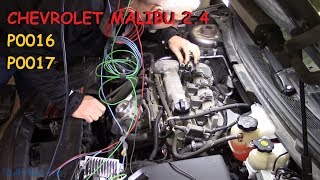
🎬 Watch: Diagnosing P0017 and reluctor ring issues on the 2.4L engineDiagnostic Flowchart
Tap your situation to follow the diagnostic path that matches what you're seeing on this vehicle.
Symptoms You May Notice
- Check Engine Light is on
- Rough or unstable idle
- Reduced engine power and poor acceleration
- Engine rattling or slapping noise, especially on cold startup.
- Engine may crank but fail to start.
- Stalling at low speeds or when coming to a stop
- Noticeable decrease in fuel economy.
- Replacing only the camshaft position sensor without checking for mechanical timing issues or VVT solenoid function. The code P0017 is a correlation code, which more often points to a mechanical problem than a sensor failure.
- Replacing the timing chain on a 2.4L engine without first inspecting the camshaft reluctor ring for slippage. This can lead to the code returning immediately after a very expensive repair.
Most Likely Causes
- Stretched Timing Chain(s) 🔴 High Probability → Shop Engine Timing Chain The GM 3.6L V6 (LFX/LLT) engines have a well-documented history of premature timing chain stretching, often linked to extended oil change intervals and oil breakdown. The 2.4L can also suffer from chain issues. TSB #PIP3423P directly points to inspecting for loose timing chains for this code.
How to confirm: A technician can use a scan tool to compare desired vs. actual camshaft position angles. A significant and persistent deviation points to a timing issue. A rattling noise on startup is a strong audible clue. Physical inspection is the ultimate confirmation but requires significant engine disassembly.
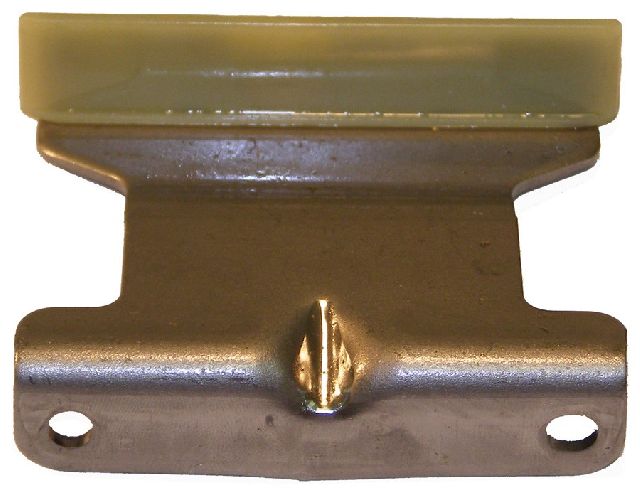
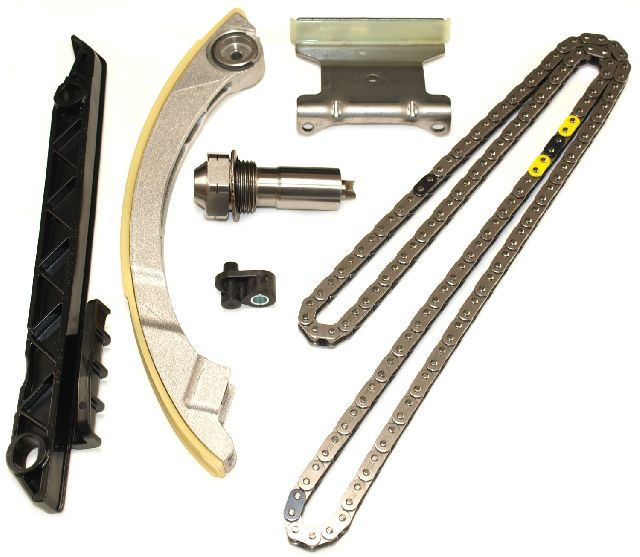
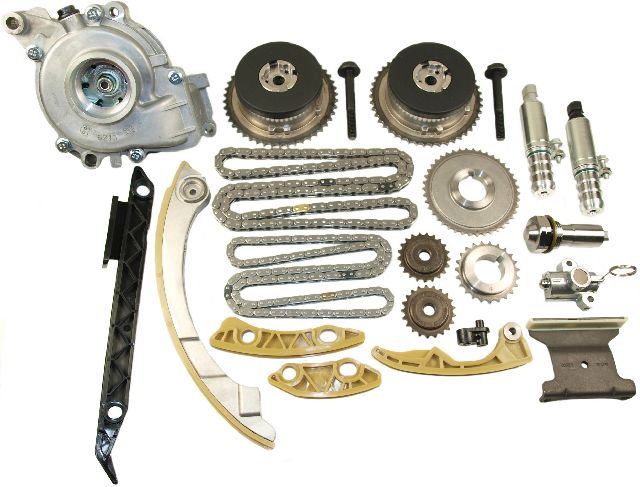
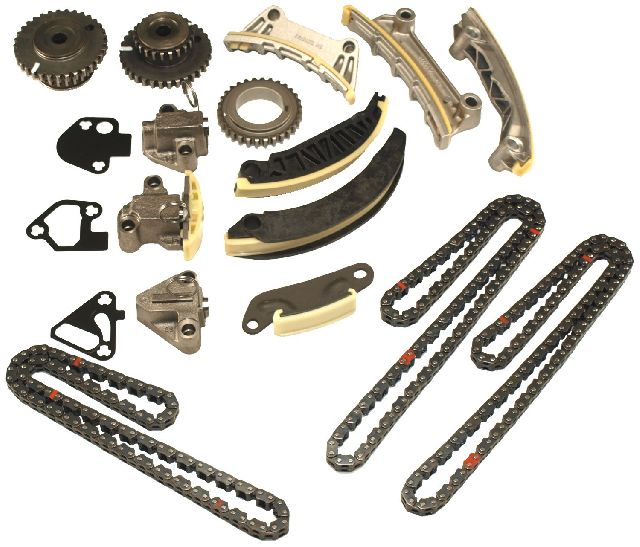
Typical fix: Replace all three timing chains (1 primary, 2 secondary), all tensioners, and all guides as a complete kit. It is critical to replace all components, as worn guides or tensioners will cause a new chain to fail prematurely.
Est. part cost: $250-$500 for a complete kit - Worn or Failed Timing Chain Tensioner(s) 🔴 High Probability → Shop Engine Timing Chain Hydraulic tensioners can fail or weaken, losing their ability to keep the chain taut. This can happen alongside chain stretch or on its own. This is also mentioned in TSB #PIP3423P. Neglecting oil changes exacerbates tensioner wear.
How to confirm: Usually diagnosed during a physical inspection for a stretched timing chain. A rattling or slapping noise from the front of the engine is a strong indicator.
Typical fix: Replace the tensioners, guides, and chains as a complete kit. Replacing only the tensioner is not recommended.
Est. part cost: $250-$500 (as part of a full kit) - Low or Dirty Engine Oil 🟡 Medium Probability The camshaft phasing system (VVT) is hydraulically operated, using engine oil pressure to adjust timing. If the oil is low, dirty, or the wrong viscosity, the VVT actuators (phasers) cannot operate correctly, leading to correlation codes. GM's Oil Life Monitor (OLM) can sometimes suggest overly long intervals between changes, contributing to oil breakdown.
How to confirm: Check the oil level on the dipstick and inspect its condition. If it's very dark, gritty, or below the minimum mark, this is a likely contributor.
Typical fix: Perform an oil and filter change using a high-quality, full-synthetic oil meeting the correct specification (ACDelco dexos1 approved). Clear codes and see if the problem returns.
Est. part cost: $40-$80 - Faulty Camshaft Position Actuator Solenoid (VVT Solenoid) 🟡 Medium Probability → Shop Engine Camshaft
How to confirm: Swap the Bank 1 exhaust solenoid with another one (e.g., the intake solenoid on the same bank). If the code changes to P0016 (Intake), the solenoid is bad. They can also be tested for resistance with a multimeter (typically 8-13 ohms) or activated with a 9V or 12V power source to see if the internal plunger moves.
Typical fix: Replace the faulty solenoid. They are generally accessible on the top of the engine, secured by a single 10mm bolt. 🎬 See how to replace a broken VVT solenoid on a LaCrosse
Est. part cost: $30-$70
Rare But Worth Checking
- Slipped Camshaft or Crankshaft Reluctor Ring: → Shop Engine Crankshaft A reluctor ring is a toothed wheel that a position sensor reads. TSBs for both the 2.4L and 3.6L engines, specifically PIP4548F, mention that these press-fit rings can move on the camshaft or crankshaft. This causes the sensor to send incorrect timing data to the ECM even if the mechanical timing is perfect, leading to a misdiagnosis of a stretched chain. Mechanics have confirmed finding the exhaust cam reluctor on the 2.4L to have slipped, causing a persistent P0017.
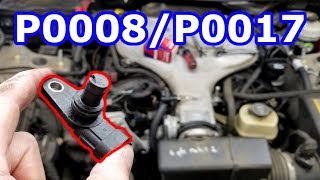
- Faulty Camshaft Position Sensor: → Shop Engine Camshaft Position Sensor While possible, it's less common for the sensor itself to fail than for a mechanical issue to cause the correlation fault. Usually, a bad sensor would trigger other codes related to the sensor circuit itself (e.g., P0365).
- Clogged VVT Solenoid Screens or Oil Passages: The VVT solenoids have fine mesh screens that can become clogged with sludge or debris from infrequent oil changes. This restricts oil flow to the cam phaser, mimicking a failed solenoid. Sometimes, cleaning the solenoid and its passages can resolve the issue without replacement.
Diagnosis Steps
- Check Engine Oil: Verify the oil level is correct and the oil is clean. Low or dirty oil is a common cause of VVT system issues and can trigger this code on its own.
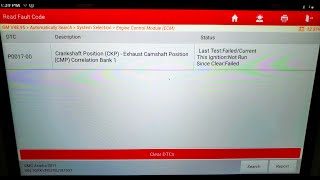
- Scan for Codes: Use an OBD-II scanner to confirm P0017 and check for any other related codes (like P0016, P0008, P0010). Note if the code is active or pending.
- Inspect VVT Solenoids: Locate the Bank 1 exhaust VVT solenoid. Check its wiring and connector for damage. Consider swapping it with the intake solenoid to see if the code follows (changes to P0016). You can also test its resistance with a multimeter.
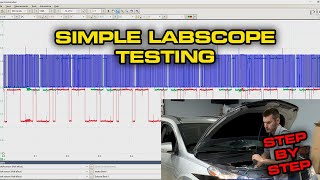
- Analyze Scan Tool Data: Monitor the desired vs. actual camshaft position angles for Bank 1 Exhaust. A large and persistent difference, or a value that doesn't change when the solenoid is commanded, indicates a timing problem. 🎬 Watch: Using a labscope to confirm 3.6L timing chain stretch
- Mechanical Inspection: If the steps above do not resolve the issue, a mechanical inspection is necessary. This involves accessing the timing components to check for chain stretch, broken guides, or bad tensioners. This is a labor-intensive step.
- Check Reluctor Rings: During mechanical inspection, a technician should verify the crankshaft and camshaft reluctor rings have not slipped, as per TSBs PIP3423P and PIP4548F. This is especially critical on the 2.4L engine before condemning the timing set.
Parts You'll Likely Need
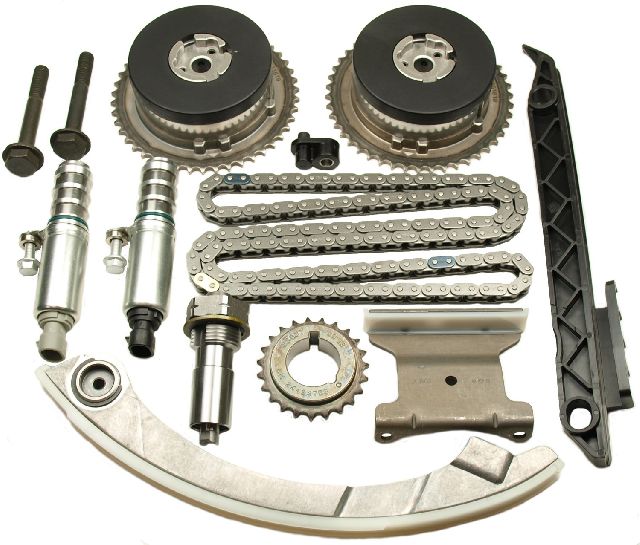
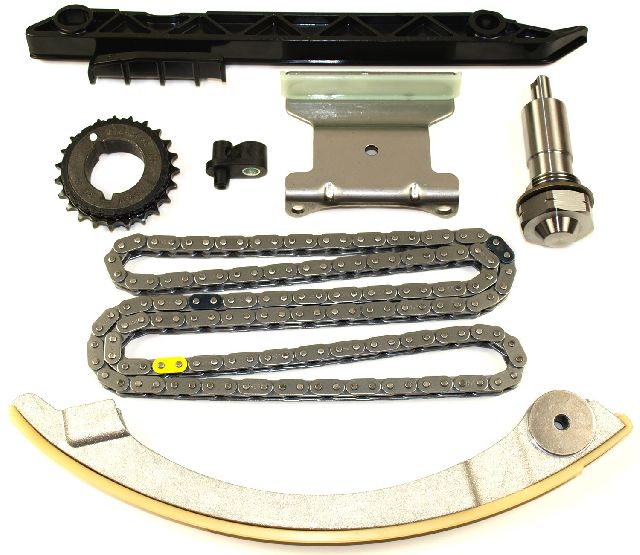
- Timing Chain Kit (3.6L V6)
(OEM #12680750 (Supersedes 12635447, 12673669, 12675579))— This is the most probable cause on the 3.6L V6. A complete kit ensures all related wear items (chains, guides, tensioners) are replaced at once.
Trusted brands: ACDelco
Related Codes That Often Appear With This One
- P0016 — Crankshaft/Camshaft correlation code for the Bank 1 *Intake* camshaft. Seeing P0016 and P0017 together strongly suggests a base timing issue, like a stretched chain affecting the entire bank.
- P0008 — Engine Positions System Performance Bank 1. This is a more general timing correlation code for Bank 1. It is frequently associated with stretched timing chains on these GM engines and is a strong indicator of a significant timing problem.
- P0009 — Engine Positions System Performance Bank 2. If seen with P0008 and other correlation codes, it points to a problem with the primary timing chain that affects both banks, a very serious condition.
Technical Service Bulletins (TSBs) & Recalls
- PIP3423P: Instructs technicians to inspect for loose timing chains or tensioners when codes like P0017, P0008, etc., are present.
- PIP4548F: Advises inspection of the camshaft reluctor ring if P0016 or P0017 sets on a properly timed engine, or if a crank/no-start condition exists.
- PIP5163G: While not directly cited in the initial pass, this TSB also relates to crank/no-start and timing correlation codes, often involving reluctor wheel issues.
- 07-06-01-018: A general TSB for inline engines that provides procedures for checking cam timing when a P0017 code is set.
Platform-Specific Known Issues
- 3.6L V6 Timing Chain Stretch: → Shop Engine Timing Chain Premature timing chain stretch on the 3.6L V6 (LFX) engine is a widely known issue, addressed by GM TSB #PIP3423P, which explicitly lists P0017 as a resulting code. While GM made improvements over the earlier LLT engine, the LFX in 2013-2016 models can still be susceptible, particularly if oil changes are neglected.
- 2.4L I4 Slipped Exhaust Cam Reluctor Ring: On 2.4L Ecotec engines, the reluctor ring can move on the exhaust camshaft, causing a timing correlation code even if the timing chain and components are in perfect condition. TSB PIP4548F addresses this possibility. Owners and technicians on forums have confirmed this failure, which requires replacing the entire exhaust camshaft.
Mechanic-Grade Diagnostic Values
- VVT Actuator Solenoid (Oil Control Valve) Resistance — expected: 6.9 - 7.9 Ohms at 68°F (20°C) or 8 - 13 Ohms (specifically for 2.4L Ecotec).. Failure: A reading of open (OL), zero, or a value significantly outside the specified range indicates a faulty solenoid.
- Crankshaft Position Sensor Resistance — expected: Vehicle specific, but a real-world example on a similar GM engine showed a good sensor at 0.29 kOhms (290 Ohms).. Failure: No reading or a reading far from the manufacturer's specification.
- Camshaft Position Sensor Voltage (3-wire Hall-effect type) — expected: With ignition ON and sensor connected: ~5V on the reference wire and ~5V (or 4.8V) on the signal wire.. Failure: When a metal object is passed in front of the sensor, the signal voltage should drop to 0V. If the voltage doesn't change, the sensor is likely bad. Incorrect reference voltage points to a wiring or ECM issue.
- Camshaft Position Sensor Ground Circuit Test — expected: With ignition ON, testing from the sensor connector's ground pin to the battery's POSITIVE terminal should read battery voltage (~12.6V).. Failure: A reading of 0V or significantly less than battery voltage indicates a poor ground connection.
Scan Tool Commands That Help
- GDS2 / Professional Scan Tool: Camshaft Position Actuator Control / VVT Solenoid Test — To command the exhaust VVT solenoid on and off while monitoring engine RPM or cam angle parameters. This verifies if the solenoid is responding to commands and if the cam phaser is mechanically able to change timing.
- GDS2 / Professional Scan Tool: Crankshaft Position Variation Learn / Sensor Relearn Procedure — After replacing a crankshaft or camshaft position sensor. Some GM vehicles require this procedure for the ECM to learn the minor variations in the new sensor's signal to prevent false codes.
Wiring & Ground Locations
- G103 — On the left (driver's side) frame rail, located underneath the Starter Generator Control Module (SGCM) bracket on eAssist models. The cable runs from the transmission housing to this ground point.. A poor connection at this major powertrain ground can cause erratic behavior and communication issues for various modules, potentially leading to false sensor correlation codes.
- G111 — On the left (driver's side) frame rail.. Although cited in a TSB for power steering, its location on the frame rail makes it a key grounding point for chassis and engine components. A loose or corroded ground here can cause widespread electrical issues.
- G101 / G106 — Located at the front center of the frame cross rail, under the crank pulley.. This ground serves the Engine Control Module (ECM) and Transmission Control Module (TCM). A fault here can directly impact the ECM's ability to correctly process sensor signals from the crank and cam sensors.
- OBD-II Connector Pins — Under the driver's side dash.. For advanced network diagnosis: Pin 1 is the Low-Speed CAN (SW CAN) Green wire, Pin 6 is the High-Speed CAN High Blue wire, and Pin 14 is the High-Speed CAN Low White wire. Issues on the CAN bus can corrupt sensor data.
Real Owner Repair Stories
- YouTube user 'IRV' (GM vehicle with 2.4L Ecotec engine) — Check engine light, running very poorly, audible timing chain noise.
❌ Tried (didn't work) Replaced the entire timing chain set (chains, sprockets, guides)., Disassembled and re-timed the engine three separate times, believing the timing was set incorrectly.
✅ What actually fixed it The root cause was the reluctor wheel on the exhaust camshaft had physically rotated on the camshaft itself. This threw off the sensor reading even though the chain timing was correct. The discovery of the moved reluctor ring was the solution. - Reddit user comment in r/AutomotiveLearning (General experience with Chevy 2.4L engines) — Persistent P0016 / P0017 codes.
❌ Tried (didn't work) Replacing timing components and solenoids without addressing oil quality.
✅ What actually fixed it In many cases, the issue was caused by sludge deposits from infrequent oil changes blocking the oil passages to the cam phasers, or by using the incorrect oil viscosity (e.g., 20W-50 instead of the specified 5W-30). A proper engine flush and oil change with the correct oil resolved the code.
"I Checked Everything" — The Actual Cause
- A common scenario for a persistent P0017, especially on the 2.4L Ecotec, is that all standard checks (VVT solenoids, sensors, and even timing chain alignment marks) appear normal. The actual cause, as documented in TSB PIP4548F and real-world repairs, is a slipped reluctor ring on the exhaust camshaft. Because the ring is press-fit and not keyed, it can rotate slightly, causing the cam sensor's signal to be out of phase with the crankshaft, even when the engine's mechanical timing is perfect.
OEM Part Supersession History
12625988→12632274— Design change for the 3.6L V6 LFX exhaust camshaft.
Heads up: The 2nd design (12632274) is noted as having a 'LARGE THRUST RING BEHIND FRONT CAM CAP'. Using the wrong design could cause fitment or oiling issues.12634844→12634207— Part update for the 2.4L I4 Ecotec intake camshaft.
Model Year Variations Within This Range
- 2013-2016: The 3.6L LFX V6 in this generation is an updated design with improved timing chain components compared to the pre-2012 LLT engine, though failures still occur.
- 2013-2016 (specific year change unknown): There was a design change on the 3.6L V6 exhaust camshaft from a 1st design (PN 12625988) to a 2nd design (PN 12632274), which is identified by a large thrust ring. This is a critical detail when ordering a replacement camshaft.
Helpful Videos
We Have This Part in Stock

The information in this article is provided for general reference and educational purposes only. Vehicle specifications, procedures, and part compatibility can vary by production date, trim level, and region. Always consult your vehicle's factory service manual and verify part numbers before purchasing or performing repairs. Safety-critical components such as airbags, seat belts, and braking systems should be installed by a qualified professional.
- Buick LACROSSE:
- 🧭 Diagnostic Flowchart
- 🎬 Helpful Videos
- 🛍️ Shop This Part
- What's Unique About the 2013-2016 Buick LACROSSE
- Symptoms You May Notice
- Most Likely Causes
- Rare But Worth Checking
- Diagnosis Steps
- Parts You'll Likely Need
- Related Codes That Often Appear With This One
- Technical Service Bulletins (TSBs) & Recalls
- Platform-Specific Known Issues
- Mechanic-Grade Diagnostic Values
- Scan Tool Commands That Help
- Wiring & Ground Locations
- Real Owner Repair Stories
- "I Checked Everything" — The Actual Cause
- OEM Part Supersession History
- Model Year Variations Within This Range
- 🎟️ Get 5% Off