

P0017 on 2004-2007 Buick Rainier: Crank-Cam Correlation Causes and Fixes
On the 4.2L I6 engine, P0017 is most often caused by a faulty Camshaft Position Actuator Solenoid (VVT Solenoid), which is an affordable and accessible part to replace. However, on both the I6 and 5.3L V8, always check for low or dirty engine oil first, as the VVT system is dependent on oil pressure. A stretched timing chain or low oil pressure are more serious possibilities that require immediate attention.
- For a P0017 code, always check the engine oil level and condition first.
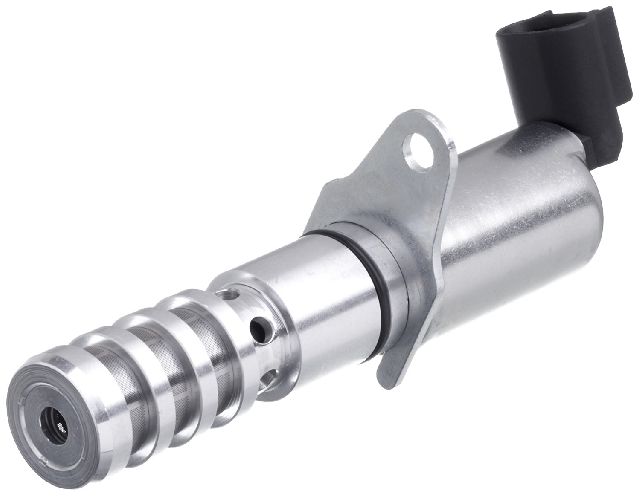
- On the 4.2L I6 engine, the most likely and easiest part to replace is the Camshaft Position Actuator Solenoid (VVT solenoid), part number 12615873.
- Do not immediately assume the camshaft or crankshaft sensors are bad; they are often misdiagnosed.
- A rattling noise from the engine strongly suggests a worn timing chain, which is a serious issue requiring immediate attention to prevent catastrophic engine failure.
- Be aware of manufacturer TSBs that point to unusual causes like a loose crankshaft bolt or low oil pressure.
What's Unique About the 2004-2007 Buick RAINIER
The Buick Rainier uses two very different engines, and the cause of P0017 often depends on which one you have. 🎬 Watch: A clear explanation of the P0017 code and diagnosis. The 4.2L inline-6 'Atlas' engine is well-known for issues with its Camshaft Position Actuator Solenoid (VVT solenoid), which gets easily clogged by dirty oil or has its internal screens tear. The 5.3L V8 is generally robust, but manufacturer bulletins for this platform point to unique issues like a loose crankshaft balancer bolt (TSB PIP4581B) or the need to verify mechanical oil pressure (TSB PIP4913A) as underlying causes for this code, which are not typical starting points on other vehicles. A significant model-year variation is the change in V8 engines from the LM4 in 2004 to the LH6 with Active Fuel Management (AFM/DOD) from 2005-2007, which introduces different potential oil pressure-related failure points.
Diagnostic Flowchart
Tap your situation to follow the diagnostic path that matches what you're seeing on this vehicle.
Symptoms You May Notice
- Check Engine Light is on
- Rough or unstable idle
- Engine stalling, especially at low speeds or when put in gear
- Loss of power and sluggish acceleration
- Reduced fuel economy
- Rattling noise from the front of the engine, especially on cold starts (common with 4.2L timing chain issues)
- Difficulty starting or extended cranking
- Replacing the camshaft and crankshaft position sensors when the actual problem is a clogged VVT solenoid, low oil level, or a stretched timing chain.
- Assuming a timing chain failure before checking the VVT solenoid or confirming the crankshaft balancer bolt torque per TSBs.
Most Likely Causes
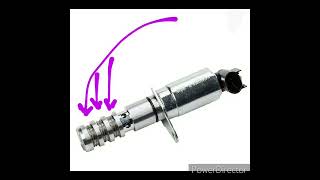
- Faulty Camshaft Position Actuator Solenoid (VVT Solenoid) 🔴 High Probability → Shop Engine Camshaft Specific to the 4.2L I6 engine. The solenoid's fine mesh screens are highly susceptible to clogging from oil sludge and debris, or tearing completely, a very common failure on the GMT360 platform. Oil can also leak past the internal seal into the electrical connector.
How to confirm: Unplug the solenoid and check for oil in the connector. Remove it (one 10mm bolt, requires moving the power steering pump) and inspect the screens for sludge or tears. Test resistance with a multimeter; it should be between 8 and 13 Ohms. A common diagnostic trick is to swap the identical intake and exhaust solenoids and see if the code changes to P0016.
Typical fix: Replace the Camshaft Position Actuator Solenoid. Using an engine flush before the oil change that accompanies the repair is often recommended.
Est. part cost: $30-$80 - Low or Incorrect Engine Oil 🔴 High Probability The Camshaft Phasing (VVT) system on both engines uses oil pressure to adjust timing. Low, dirty, or incorrect viscosity oil will prevent the system from working correctly, immediately triggering a correlation code.
How to confirm: Check the engine oil dipstick for proper level and inspect the oil's condition. If it is dark, gritty, or past its change interval, this is a likely cause.
Typical fix: Perform an oil and filter change using the manufacturer-recommended oil viscosity (typically 5W-30).
Est. part cost: $40-$80 - Stretched Timing Chain or Worn Guides/Tensioner 🟡 Medium Probability → Shop Engine Timing Chain More common on the 4.2L I6 engine due to known wear of the plastic chain guides over time, especially over 100,000 miles. The resulting slack allows the cam/crank correlation to deviate enough to set the code.
How to confirm: Listen for a rattling or scraping noise from the front of the engine, often described as 'marbles in a can'. A definitive diagnosis requires removing the valve cover and/or engine front cover to physically inspect the chain for slack and verify timing marks.
Typical fix: Replace the timing chain, tensioners, and guides as a complete kit. This is a labor-intensive job.
Est. part cost: $150-$400 - Loose Crankshaft Balancer Bolt ⚪ Low Probability → Shop Engine Crankshaft A specific issue noted in TSB PIP4581B for the GMT360 platform. A loose bolt allows for slight movement of the crankshaft balancer and the attached reluctor wheel, throwing off the crankshaft position reading. This often occurs after a repair where the balancer was removed and the bolt wasn't properly torqued.
How to confirm: Physically inspect and check the torque of the crankshaft balancer bolt according to the service manual specifications. The bolt is single-use (Torque-to-Yield) and must be replaced if removed.
Typical fix: Install a new crankshaft balancer bolt and torque it to the proper specification.
Est. part cost: $10-$25 - Faulty Camshaft or Crankshaft Position Sensor ⚪ Low Probability → Shop Engine Crankshaft Position Sensor While sensors can fail, they are often replaced unnecessarily. On this platform, the cause of P0017 is more often mechanical or hydraulic (oil-related) than electrical. However, oil spillage during oil changes can contaminate the crankshaft position sensor connector, causing a faulty signal.
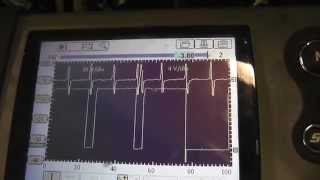
How to confirm: Use an oscilloscope to check the sensor's signal pattern. A scan tool can show live data, but a bad signal may not always be obvious without a scope. Inspect the sensor connectors for corrosion or oil contamination.
Typical fix: Replace the corresponding sensor and clean the connector. A Crankshaft Position Variation (CASE) Relearn procedure using a Tech2 or equivalent scan tool is required after replacing the crankshaft sensor.
Est. part cost: $25-$60
Rare But Worth Checking
- Low Engine Oil Pressure: Per TSB PIP4913A, if standard diagnostics don't find the cause, a mechanical oil pressure test should be performed. Low pressure (below 12 PSI at 1200 RPM) prevents the VVT system from functioning correctly. This can be caused by a worn oil pump or excessive crankshaft end play from worn thrust bearings (TSB PIP3694F).
- Failed Camshaft Phaser (Actuator): → Shop Engine Camshaft The gear on the end of the exhaust camshaft can fail internally, getting stuck in one position or not returning to the zero position. This is less common than the solenoid failing but requires significant labor to replace, as it is a timing-chain-driven part.
Diagnosis Steps
- Check Engine Oil: Verify the oil level is full and the oil is clean. If low or dirty, perform an oil and filter change with 5W-30 oil, clear the code, and re-test. This is the simplest and often most effective first step.
- Scan Tool Analysis: Use a scan tool to check for other related trouble codes, like P0014. Observe the live data for desired vs. actual camshaft position angles. A large discrepancy or a value that is stuck points to a problem.
- Inspect and Test VVT Solenoid (4.2L Engine): Unplug the solenoid and check for oil in the connector. Remove the solenoid (requires moving the power steering pump). Inspect its screens for metal shavings, sludge, or tears. Test its resistance (should be 8-13 ohms). You can test it by applying 12v to its terminals to see if the internal plunger moves. A better test is to swap the intake and exhaust solenoids to see if the code changes to P0016.
- Check Oil Pressure: Following TSB PIP4913A, if the cause is not obvious, connect a mechanical gauge to test the engine's oil pressure to ensure it's within specification (at least 12 PSI at 1200 RPM).
- Inspect Crankshaft Balancer Bolt: Following TSB PIP4581B, visually inspect and verify the torque of the crankshaft balancer bolt to ensure it is not loose.
- Mechanical Timing Inspection: If all else fails, the valve cover and/or front engine cover must be removed to physically inspect the timing chain for slack, check guide condition, and verify the timing marks on the sprockets, cams, and crank are perfectly aligned.
Parts You'll Likely Need
- Camshaft Position Actuator Solenoid (VVT Solenoid)
(OEM #12615873)— This is the most common failure part for P0017 on the 4.2L I6 engine, often due to clogged or torn oil screens. It is strongly recommended to use an OEM ACDelco part.
Trusted brands: ACDelco (GM Original Equipment)
Related Codes That Often Appear With This One
- P0014 — This code is for 'Camshaft Position B - Timing Over-Advanced'. It often appears with P0017 because both codes are related to the control of the same exhaust camshaft via the VVT solenoid and phaser. A sticking solenoid or phaser can cause both correlation and position faults.
- P0016 — This is the correlation code for the intake camshaft (Bank 1 Sensor A). Seeing both P0016 and P0017 together strongly suggests a base timing issue, like a stretched timing chain or incorrectly installed timing components affecting the entire engine bank.
- P0106 — This MAP sensor code can sometimes appear with P0014/P0017. The rough idle caused by the cam timing issue can lead to erratic manifold pressure readings, which the ECU interprets as a MAP sensor fault.
Technical Service Bulletins (TSBs) & Recalls
- PIP4581B: Addresses engine rattle and P0016/P0017 caused by an improperly torqued crankshaft balancer bolt.
- PIP4913A: Advises checking mechanical oil pressure if standard diagnostics do not resolve P0017, pointing to low pressure or a sticking actuator.
- PIP4945B: General bulletin for P0017, directing technicians to follow all other published diagnostics and TSBs.
- PIP3694F: Connects P0017 to excessive crankshaft end play due to worn thrust bearings.
Platform-Specific Known Issues
- TSB #PIP4581B notes that if a rattle is present with code P0017, the crankshaft balancer bolt should be re-torqued to specification, as it may be loose.
- TSB #PIP4913A advises that if standard diagnostics do not isolate the cause of P0017, the engine oil pressure should be monitored with a mechanical gauge, pointing to a potential oiling system problem.
- TSB #PIP4945B is a comprehensive document for the inline engines (including the 4.2L) that lists numerous potential causes for P0017, including incorrect timing after a previous repair, a loose crank gear, or excessive crankshaft end play.
Mechanic-Grade Diagnostic Values
- Exhaust Camshaft Actuator Solenoid (VVT Solenoid) Resistance — expected: 8 to 13 Ohms. Failure: A reading outside this range, or Open Loop / 0 Ohms, indicates a faulty solenoid.
- Engine Oil Pressure (4.2L I6) — expected: Minimum 12 PSI at 1200 RPM. Failure: Pressure significantly below this value indicates a problem with the oil pump, pickup tube, or excessive bearing clearance, which will starve the VVT system of the pressure it needs to operate.
- Crankshaft End Play — expected: 0.0044 to 0.0153 inches. Failure: Excessive end play beyond this specification, caused by a worn thrust bearing, can lead to erratic crankshaft position signals and trigger correlation codes.
Scan Tool Commands That Help
- Tech2 / GDS2 (or equivalent professional scanner): VVT Solenoid Control (Bidirectional) — This function allows a technician to command the camshaft actuator solenoid on and off or to a specific duty cycle to test its mechanical response. If the engine sound or RPM doesn't change when commanded, it confirms a fault in the solenoid, its wiring, or the oil supply to the phaser.
- Tech2 / GDS2 (or equivalent professional scanner): Crankshaft Position Variation Learn (CASE Relearn) — This procedure is mandatory after replacing the crankshaft position sensor, PCM, or crankshaft balancer. It synchronizes the PCM with the minor variations in the crankshaft reluctor wheel. Failure to perform this can cause false timing correlation codes to be set.
Wiring & Ground Locations
- G107 — Lower driver's side of the 4.2L LL8 engine block.. This is a major engine block ground point shared by multiple components, including the fuel pump relay. While not a direct cause of P0017, a poor ground here can cause erratic engine behavior and other electrical faults that can complicate diagnosis. Ensuring all engine grounds are clean and tight is a critical preliminary step.
Real Owner Repair Stories
- GMTNation Forum User (2005 Trailblazer (same platform/engine) with 80,000 miles) — Service Engine Soon light with code P0017.
❌ Tried (didn't work) Initial diagnosis by owner was uncertain. Owner took vehicle to dealership.
✅ What actually fixed it The dealership replaced the camshaft actuator solenoid, which resolved the code. This highlights how common this specific part failure is, even at relatively low mileage. - GMTNation Forum User (2005 GMC Envoy XL 4.2L I6 with 185,000 miles) — P0017 code present, engine ran okay initially but then developed stalling issues after attempted repairs.
❌ Tried (didn't work) Replaced VVT Solenoid (CPAS), Replaced Camshaft Position Sensor, Replaced Crankshaft Position Sensor, Replaced timing chain, guides, and a Dorman brand cam phaser
✅ What actually fixed it The user's problem was complex, involving multiple part replacements at once. A master technician on the forum pointed out that using an aftermarket (Dorman) phaser can be problematic and that a timing job being off by even a single tooth will instantly set the code. The final resolution was not posted, but the critical advice was to verify the mechanical timing was perfect and to perform a CASE relearn after the crank sensor replacement.
OEM Part Supersession History
Not specified, but multiple revisions exist.→12615873 (current as of early 2026)— Standard part evolution for improved durability and reliability.
Heads up: While aftermarket versions exist, it is highly recommended by platform experts to use the OEM ACDelco/GM Genuine part (12615873) to avoid immediate or premature failure.
Model Year Variations Within This Range
- 2004-2005 vs 2005-2007 (V8 Only): The 2004-2005 models used the 5.3L LM4 V8. From 2005-2007, this was replaced by the 5.3L LH6 V8, which included Active Fuel Management (AFM), also known as Displacement on Demand (DOD). AFM systems have unique lifters and a specific valley cover with oil solenoids that can fail, leading to oil pressure issues that could potentially trigger timing correlation codes like P0017.
- 2004-2007 vs 2008-2009 (4.2L I6): While outside the direct vehicle range, it's a critical trap for engine replacement. The 2008-2009 4.2L LL8 engine uses a 58x tooth crankshaft reluctor wheel, while earlier models use a 7x wheel. Swapping an engine from the wrong year group without also swapping the PCM and corresponding wiring will result in an immediate no-start condition and timing codes because the sensor signal is incompatible.
Helpful Videos
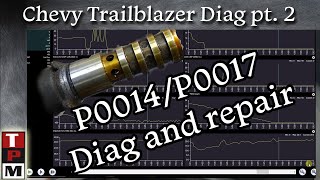
![How to Fix P0017 Engine Code in 6 Minutes [4 DIY Methods / Only $6.81]](https://img.youtube.com/vi/Vcj-f_J2hyo/mqdefault.jpg)


We Have This Part in Stock


The information in this article is provided for general reference and educational purposes only. Vehicle specifications, procedures, and part compatibility can vary by production date, trim level, and region. Always consult your vehicle's factory service manual and verify part numbers before purchasing or performing repairs. Safety-critical components such as airbags, seat belts, and braking systems should be installed by a qualified professional.
- Buick RAINIER:
- 🧭 Diagnostic Flowchart
- 🎬 Helpful Videos
- 🛍️ Shop This Part
- What's Unique About the 2004-2007 Buick RAINIER
- Symptoms You May Notice
- Most Likely Causes
- Rare But Worth Checking
- Diagnosis Steps
- Parts You'll Likely Need
- Related Codes That Often Appear With This One
- Technical Service Bulletins (TSBs) & Recalls
- Platform-Specific Known Issues
- Mechanic-Grade Diagnostic Values
- Scan Tool Commands That Help
- Wiring & Ground Locations
- Real Owner Repair Stories
- OEM Part Supersession History
- Model Year Variations Within This Range
- 🎟️ Get 5% Off