

P0017 on 2013-2018 Cadillac ATS: Crank/Cam Correlation Causes and Fixes
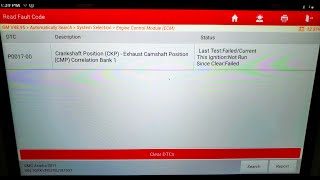
P0017 on a Cadillac ATS indicates a timing mismatch between the crankshaft and the exhaust camshaft on Bank 1. This is often caused by a stretched timing chain, a known and well-documented issue particularly on the 3.6L V6 (LFX) engine. Other common causes include faulty VVT solenoids or low/dirty oil. This is a serious code that requires immediate attention to avoid severe, and potentially catastrophic, engine damage.
- P0017 on a 2013-2018 Cadillac ATS is a serious code that should not be ignored.
- The most likely cause, especially on the 3.6L V6, is a stretched timing chain, which is a major and expensive repair.
- Always check the engine oil level and condition first, as low or dirty oil is a primary contributor to timing system problems.
- Do not simply replace the sensors; they are likely functioning correctly and reporting a real mechanical fault.
- Due to the risk of catastrophic engine failure, it is crucial to have the vehicle diagnosed and repaired promptly.
What's Unique About the 2013-2018 Cadillac ATS

The Cadillac ATS, particularly models equipped with the 3.6L V6 engine (LFX, used from 2013-2015), is highly susceptible to premature timing chain stretching. This is a well-documented issue across many GM vehicles that use this engine family, including the Chevrolet Camaro and Cadillac CTS. The problem is so common that multiple Technical Service Bulletins (TSB #PIP3423P, #12-06-01-009F) were issued, pointing technicians directly toward inspecting for loose timing chains when codes like P0008, P0016, and P0017 appear. While the later 3.6L LGX engine (2016+) featured a more durable, redesigned timing system, the reputation of the earlier V6 makes P0017 a more serious warning on these specific cars. The 2.0L LTG engine can also suffer from this code, though it is more often linked to failed cam phasers or VVT system faults in that application.
Diagnostic Flowchart

Tap your situation to follow the diagnostic path that matches what you're seeing on this vehicle.
Symptoms You May Notice
- Check Engine Light illuminated
- Rough or unstable idle, sometimes surging at startup
- Loss of engine power and poor acceleration
- Engine is hard to start or cranks for a long time before firing
- Rattling, scraping, or ticking noise from the front of the engine, especially on a cold start
- Reduced fuel economy
- Engine stalling, especially at low RPM
- Replacing the camshaft and crankshaft position sensors without diagnosing the root cause. Often, the sensors are correctly reporting a mechanical timing problem, and replacing them is a waste of money and will not fix the issue.
- Replacing only the VVT solenoids when a stretched timing chain is the actual problem. While a solenoid swap is an easy diagnostic step, it's not a guaranteed fix.
Most Likely Causes

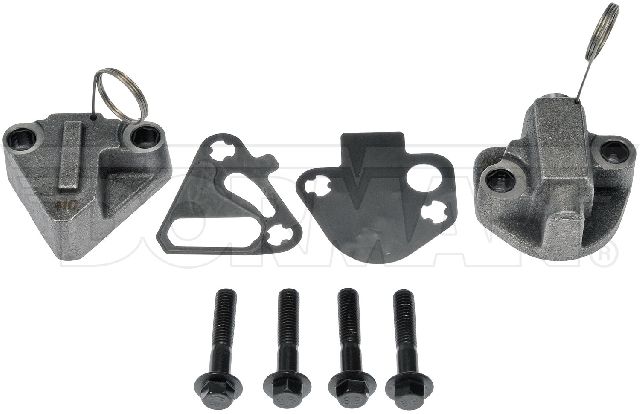
- Stretched Timing Chain or Failed Tensioner 🔴 High Probability → Shop Engine Timing Chain The 3.6L V6 engines (specifically the LFX used in 2013-2015 models) are notorious for premature timing chain wear. This is often attributed to extended oil change intervals, as degraded oil loses its ability to properly lubricate and tension the chains via hydraulic tensioners. The issue is explicitly mentioned in several TSBs (#PIP3423P, #12-06-01-009F) for this vehicle and its platform mates.
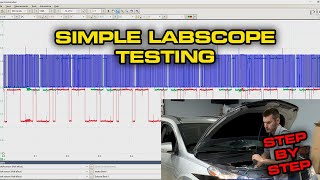
How to confirm: A mechanic can use a scan tool to view camshaft deviation data; 🎬 Watch: How to test timing chain stretch with a labscope. a persistent variance points to a mechanical timing issue. A physical inspection, which requires removing the engine's front cover, is the definitive way to confirm a loose chain or failed tensioner.
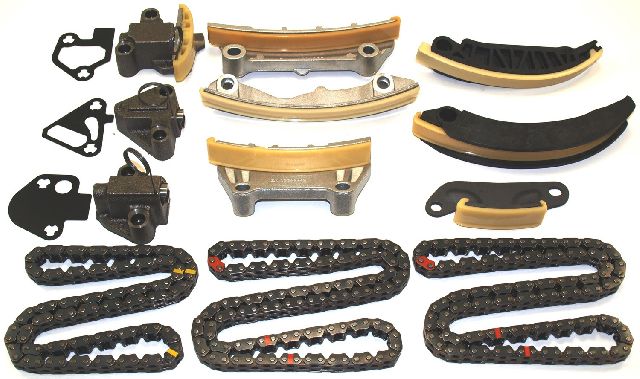
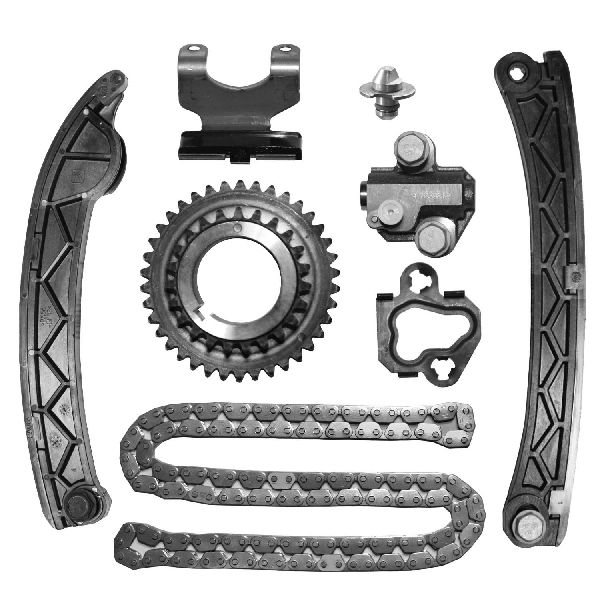
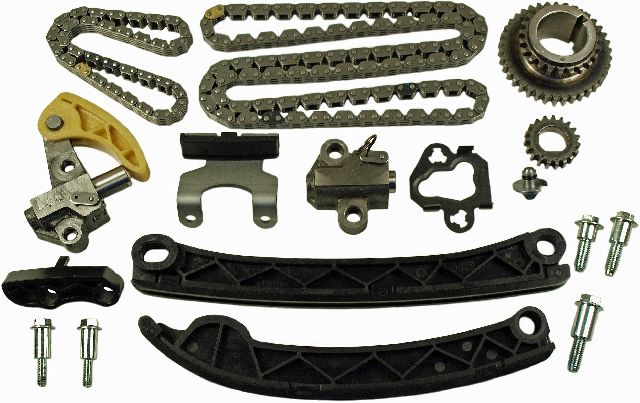
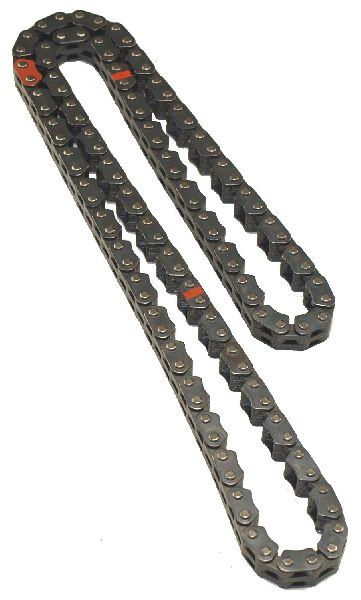
Typical fix: Replacement of all three timing chains (1 primary, 2 secondary), all tensioners, and all guides. It is critical to use a complete, quality kit. This is a major repair, often taking 10+ hours.
Est. part cost: $300-$700 for a full, high-quality timing kit. - Faulty Camshaft Position Actuator Solenoid (VVT Solenoid) 🟡 Medium Probability → Shop Engine Camshaft The VVT system uses engine oil pressure, controlled by these solenoids, to adjust cam timing. The solenoids have fine mesh screens that can become clogged with sludge from dirty oil or metal debris, causing them to stick or respond slowly. This is a common failure point on many modern engines.
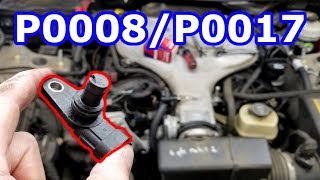
How to confirm: Can be tested with a multimeter for correct resistance (typically 6.9-7.9 ohms or 8-12 ohms depending on the specific part). A more practical test is to swap the Bank 1 exhaust solenoid with the Bank 1 intake solenoid. If the code changes to P0016 (Intake Cam Correlation), 🎬 See how to diagnose P0017 on the GM 3.6L engine. the solenoid is confirmed bad. An advanced scan tool can also command the solenoid to check for a response.
Typical fix: Replacement of the faulty solenoid. It is often recommended to replace them in pairs (intake and exhaust for Bank 1) or all four at once.
Est. part cost: $30-$90 per solenoid. - Low or Dirty Engine Oil 🟡 Medium Probability The entire variable valve timing (VVT) system and the hydraulic timing chain tensioners are critically dependent on clean oil at the correct pressure. GM engines of this era specify Dexos-rated synthetic oil. Using conventional oil or extending change intervals can lead to sludge buildup that clogs the small passages in the VVT solenoids and phasers, causing timing correlation codes.
How to confirm: Check the oil level on the dipstick and inspect its condition and service history. If the level is low or the oil is dark and sludgy, it's a likely contributor to the problem.
Typical fix: Perform an oil and filter change using the manufacturer-specified full synthetic oil (e.g., ACDelco Dexos2 5W-30). This is a crucial first step before any parts are replaced.
Est. part cost: $50-$120 for oil and a filter. - Faulty Camshaft or Crankshaft Position Sensor ⚪ Low Probability → Shop Engine Crankshaft Position Sensor
How to confirm: Sensors can be tested with a multimeter or their signal can be observed for erratic behavior on an oscilloscope. However, sensor failure is far less common than the mechanical or hydraulic issues listed above. Often, the sensors are correctly reporting a real timing problem.
Typical fix: Replacement of the specific sensor that has failed. It's a common misdiagnosis to replace these sensors when the true fault lies with the timing chain or VVT system.
Est. part cost: $30-$80 per sensor.
Rare But Worth Checking
- Slipped Crankshaft Reluctor Wheel: → Shop Engine Crankshaft TSB #PIP3423P explicitly mentions that the reluctor wheel, which the crankshaft sensor reads, can physically move on the crankshaft. This is a rare but severe issue that causes persistent correlation codes even after a timing chain replacement. The fix requires crankshaft replacement.
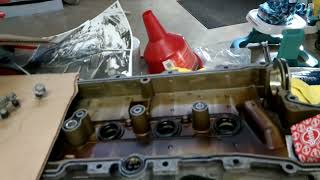
- Failed Camshaft Phaser/Actuator: → Shop Engine Camshaft The mechanical gear (phaser) at the end of the camshaft can fail internally, get stuck, or have its locking pin shear off. This often causes a distinct rattling or knocking noise from the valve cover area. On the 2.0L LTG, phaser failure 🎬 Watch this 2.0L turbo timing chain and valve cover walkthrough. is a more common cause for this code than on the V6. Replacement requires timing component disassembly.
Diagnosis Steps
- Check the engine oil level and condition. If low, dirty, or overdue for a change, perform an oil and filter change with the correct Dexos-spec synthetic oil. Clear codes and re-test. This is the cheapest and most important first step.
- Use an OBD-II scanner to check for any other related trouble codes. Codes like P0008, P0016, P0018, or P0019 strongly suggest a base timing chain issue.
- With an advanced scan tool, monitor live data for 'Camshaft Position Variance' for Bank 1 Exhaust. While the engine is running, the variance should be close to 0 degrees. A consistent deviation of several degrees at idle indicates a mechanical timing problem.
- Inspect the wiring and connectors for the Bank 1 exhaust camshaft position sensor and the VVT solenoid for any damage, corrosion, or loose connections.
- Test the Bank 1 exhaust VVT solenoid. A simple field test is to swap the exhaust solenoid with the intake solenoid on the same bank. Clear the codes and run the engine. If the code changes from P0017 to P0016, the solenoid is faulty and needs replacement.
- If solenoids and oil are good, suspect a mechanical issue. This requires significant engine disassembly to physically inspect the timing chains for slack, and check the plastic guides and hydraulic tensioners for wear or damage.
- While the timing cover is off, inspect the camshaft phaser for damage and the crankshaft reluctor wheel for any signs of movement, as per TSB PIP3423P.
Parts You'll Likely Need
- Timing Chain Kit
(OEM #ACDelco 12651420 (LFX Engine Kit Example))— This is the most common cause of P0017 on the 3.6L V6. A full kit includes all three chains
Related Codes That Often Appear With This One
- P0016 — This code is for the Bank 1 Intake camshaft. If the primary timing chain has stretched, it can affect the timing of both camshafts on that bank, often setting P0016 and P0017 together.
- P0008 — This is a more general Engine Positions System Performance code for Bank 1. It often appears with P0016/P0017 and is a very strong indicator of a stretched primary timing chain on the 3.6L V6.
- P0018 / P0019 / P0009 — These are the equivalent codes for Bank 2 (driver's side). Seeing codes for both banks (e.g., P0017 and P0019) almost certainly points to a problem with the primary timing chain that serves both sides of the engine.
Technical Service Bulletins (TSBs) & Recalls

- PIP3423P: Advises inspection of timing chains and tensioners when P0017 and related codes are present. Also notes the possibility of a moved crankshaft reluctor wheel.
Platform-Specific Known Issues
- TSB #PIP3423P: Crank/Cam Correlation Codes: Directly addresses codes P0016, P0017, P0018, P0019, P0008, or P0009. Advises technicians to first inspect for loose timing chains or tensioners. If no fault is found, it points to a rare but possible slipped crankshaft reluctor wheel, which requires crankshaft replacement to fix.
- TSB #12-06-01-009F: Premature Timing Chain Wear: → Shop Engine Timing Chain Acknowledges the common issue of premature timing chain stretching on the 3.6L V6 engines (LLT, LFX) and provides updated service kits. This TSB is widely referenced in forums for vehicles like the Chevy Camaro which share the same engine.
- Forum Experience: CadillacForums.com: Multiple threads discuss the P0017 code on ATS models. A common story involves a dealership quoting over $3,000 for a timing chain replacement on a 3.6L V6 after the owner tried replacing sensors and solenoids with no success.
- Owner Experience: Reddit r/Cadillac & r/MechanicAdvice: A user on Reddit reported a dealer quote of $3,200 to replace the timing chain on their 2013 ATS 3.6L. Another user with a 2010 CTS (similar 3.0L engine) was quoted $5,000 after replacing sensors and solenoids failed to fix the P0017 code, highlighting it as a common dead-end.
Mechanic-Grade Diagnostic Values

- Camshaft Position (CMP) Actuator Solenoid (VVT Solenoid) Resistance — expected: 6.9 to 7.9 Ohms at 68°F (20°C). Failure: A reading outside of this range, or an open/short circuit.
- Camshaft Position (CMP) Actuator Solenoid (VVT Solenoid) Resistance (Alternate Spec) — expected: 8 to 12 Ohms. Failure: A reading outside this range. One video cited a bad solenoid reading 7 ohms and another reading 15 ohms.
- Crankshaft Position (CKP) Sensor Resistance — expected: Approximately 0.29 kOhms (290 Ohms). Failure: Significantly different reading, open circuit, or short circuit.
Scan Tool Commands That Help
- GDS2 (Global Diagnostic System 2): Camshaft Position Actuator Solenoid Test — This bidirectional control allows a technician to command the VVT solenoid to activate. It's used to verify if the solenoid is mechanically stuck or electrically non-responsive without having to physically remove it. Observing the camshaft angle change (or lack thereof) during this test confirms solenoid functionality.
- GDS2 (Global Diagnostic System 2): Crankshaft Position (CKP) Variation Learn — After replacing a crankshaft position sensor, timing chain, or ECM, this procedure is required. The ECM needs to learn the minor variations in the crankshaft reluctor wheel to accurately detect misfires. Failure to perform this can lead to false misfire codes or improper engine operation, though it's not a direct cause of P0017.
Wiring & Ground Locations
- G107 / G110 — On the 3.6L (LFX), G107 is on the front of the right cylinder head. On the 2.0L/2.5L, G110 is on the upper rear of the cylinder head.. These are primary engine grounds. A loose or corroded ground at these locations can introduce electrical noise or voltage drops, potentially affecting the signals from the camshaft and crankshaft position sensors, leading to correlation faults.
- Engine Control Module (ECM) — Located in the right front of the engine compartment.. All sensor signals (CMP, CKP) and actuator commands (VVT solenoids) route to and from the ECM. The integrity of its connectors and ground is paramount for the entire system to function and report correctly.
- Camshaft Position Sensor Connector — On the 3.6L, the exhaust camshaft sensor is at the rear of the cylinder head. On the 2.0L, it's on the front of the cylinder head.. This is the direct connection point for the sensor. It is susceptible to heat, oil contamination, and vibration. A damaged connector, spread pins, or corroded terminals will corrupt the sensor signal.
Real Owner Repair Stories
- Reddit user on r/MechanicAdvice (Vehicle with P0017, likely GM 3.6L based on description) — Car started running badly, check engine light on, very low oil level found.
❌ Tried (didn't work) The user went straight for the major repair after discovering the jumped timing.
✅ What actually fixed it The timing had jumped two teeth. The final fix involved replacing the timing chain, tensioners, both CVVT sprockets (phasers), and the exhaust camshaft because the dowel pin had broken off. An oil change was also performed. The car ran well afterward, but the user was still trying to clear the persistent code.
Model Year Variations Within This Range
- 2013-2015 (3.6L V6): These models use the LFX engine. This engine is well-known for premature timing chain stretching, making P0017 a very strong indicator of this specific mechanical failure. The timing chain is located at the front of the engine.
- 2016-2018 (3.6L V6): These models use the updated LGX engine. The LGX was a significant redesign, featuring a more durable timing chain system moved to the rear of the engine, a variable displacement oil pump, and redesigned cylinder heads. While P0017 can still occur, it is less likely to be from a stretched timing chain compared to the LFX. On the LGX, the cause is more likely to be a VVT solenoid or phaser issue.
Helpful Videos
We Have This Part in Stock


The information in this article is provided for general reference and educational purposes only. Vehicle specifications, procedures, and part compatibility can vary by production date, trim level, and region. Always consult your vehicle's factory service manual and verify part numbers before purchasing or performing repairs. Safety-critical components such as airbags, seat belts, and braking systems should be installed by a qualified professional.
- Cadillac ATS:
- 🧭 Diagnostic Flowchart
- 🎬 Helpful Videos
- 🛍️ Shop This Part
- What's Unique About the 2013-2018 Cadillac ATS
- Symptoms You May Notice
- Most Likely Causes
- Rare But Worth Checking
- Diagnosis Steps
- Parts You'll Likely Need
- Related Codes That Often Appear With This One
- Technical Service Bulletins (TSBs) & Recalls
- Platform-Specific Known Issues
- Mechanic-Grade Diagnostic Values
- Scan Tool Commands That Help
- Wiring & Ground Locations
- Real Owner Repair Stories
- Model Year Variations Within This Range
- 🎟️ Get 5% Off