

P0017 on 2005-2011 Cadillac STS: Stretched Timing Chain Causes and Fixes
On the 2005-2011 Cadillac STS with a V6 engine, code P0017 almost always points to a stretched timing chain. This is a well-documented issue and a serious, labor-intensive repair. The root cause is often linked to premature chain wear on early LY7 and LLT engines, exacerbated by long oil change intervals. Expect repair costs to range from $2,500 to over $3,500, as it requires extensive engine disassembly.
- P0017 on a 2005-2011 Cadillac STS with the V6 engine is a serious code that almost always indicates stretched timing chains.
- Do not simply replace the sensors; the problem is likely mechanical and requires a proper diagnosis.
- Symptoms include a rattling engine noise (especially at startup), rough idle, and reduced power.
- This is not a DIY-friendly repair. It is complex, requires special tools, and carries a high risk of engine damage if done incorrectly.
- Expect a repair bill between $2,000 and $3,500 due to the high labor involved.
What's Unique About the 2005-2011 Cadillac STS
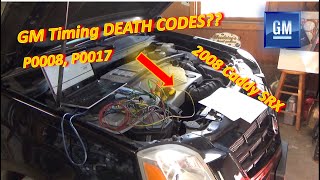
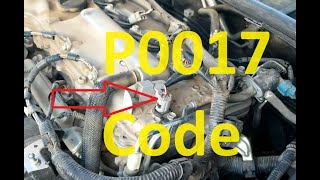
The 3.6L High Feature V6 engines (both the LY7 and the later direct-injected LLT) used in this generation of Cadillac STS are notorious for premature timing chain stretching. 🎬 Watch: Why these specific codes often mean timing chain failure. GM issued a Special Coverage Adjustment (11340C) extending the warranty for this specific issue to 10 years or 120,000 miles due to the high failure rate. The problem was linked to the original timing chain design and the long oil change intervals recommended by the oil life monitoring system (OLM). While sensor failures can cause this code on other vehicles, on the V6 STS, the root cause is overwhelmingly the timing chains themselves, making it a much more serious and expensive repair than a simple sensor swap.
Diagnostic Flowchart
Tap your situation to follow the diagnostic path that matches what you're seeing on this vehicle.
Symptoms You May Notice
- Check Engine Light is on
- Rattling or clattering noise from the engine, especially on a cold start that may quiet down as the engine warms up.
- Rough or unstable idle
- Engine stalling or difficulty starting
- Reduced engine power and poor acceleration
- Longer than normal engine cranking time before start-up.
- Poor fuel economy.
- Replacing only the camshaft or crankshaft position sensors without verifying the mechanical timing. On this specific engine, the problem is almost always mechanical (the timing chains) rather than electrical (a sensor).
- Replacing a single VVT solenoid and expecting it to fix a problem caused by system-wide chain stretch.
Most Likely Causes
- Stretched Timing Chains 🔴 High Probability → Shop Engine Timing Chain The early 3.6L V6 engines had timing chains that were prone to premature wear and stretching. GM later updated the chain design and issued TSBs to address this. TSB #12-06-01-009F specifically mentions the availability of updated timing chain kits for this issue. The problem is so common that it's often referred to as the 'timing chain death code' for these engines.
How to confirm: A technician can use a scan tool to view camshaft position deviation data; significant variance (often more than 4-5 degrees, with some sources indicating a fault over 10-11 degrees) strongly suggests a stretched chain. Swapping VVT solenoids and cam sensors from bank to bank without the code moving is another strong indicator. The ultimate confirmation is a physical inspection of the chains and tensioners for slack, which requires removing the engine front cover.
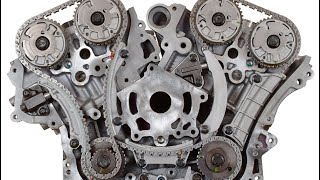
Typical fix: Replace all three timing chains, the tensioners, guides, and sprockets with the updated GM parts. It is often recommended to replace the water pump and oil pump at the same time. After replacement, the ECM should be reprogrammed with the latest software to adjust the oil life monitor for shorter intervals.
Est. part cost: $300-$650 for a complete, high-quality timing chain kit. - Low or Dirty Engine Oil 🟡 Medium Probability The camshaft position actuators (phasers) are hydraulically operated by engine oil. If the oil level is low or the oil is dirty and sludged, it can clog the small passages in the VVT solenoids and phasers, impeding their function and causing a correlation code. GM's original long oil change intervals contributed to premature oil breakdown, exacerbating this issue.
How to confirm: Check the engine oil level on the dipstick and inspect its condition. If it's low or very dirty, this could be a contributing factor. An oil change is a cheap first diagnostic step.
Typical fix: Perform an oil and filter change using a high-quality full synthetic oil of the correct viscosity (5W-30) specified by GM. Clear the codes and see if the problem returns. This is often a temporary fix if the chains are already stretched.
Est. part cost: $50-$120 - Faulty Camshaft Position Actuator Solenoid (VVT Solenoid) ⚪ Low Probability → Shop Engine Camshaft These solenoids can get clogged with sludge from dirty oil or fail electrically. While less common than chain stretch, it's a possible cause and a much easier repair to attempt first.
How to confirm: A technician can command the solenoid with a scan tool to check for response. A common DIY diagnostic is to swap the Bank 1 exhaust solenoid with the Bank 2 exhaust solenoid to see if the code follows (e.g., changes to P0019).
Typical fix: Replace the Bank 1 exhaust camshaft position actuator solenoid. The OEM ACDelco part number is 12636175.
Est. part cost: $30-$90 - Faulty Camshaft or Crankshaft Position Sensor ⚪ Low Probability → Shop Engine Crankshaft Position Sensor
How to confirm: While a rare cause for this specific code on this engine, a sensor can fail. A technician can view live sensor data on a scan tool or use an oscilloscope. Swapping the suspect Bank 1 exhaust cam sensor with the sensor from another position (like the intake) is a common diagnostic step.
Typical fix: Replace the corresponding faulty sensor (Bank 1 exhaust camshaft sensor or the crankshaft position sensor).
Est. part cost: $40-$100
Rare But Worth Checking
- Slipped Crankshaft Reluctor Wheel: → Shop Engine Crankshaft TSB #PIP3423P mentions that the reluctor wheel (the toothed ring the crankshaft sensor reads) can slip or move on the crankshaft, causing a timing correlation code. This is a serious mechanical failure that perfectly mimics a stretched chain. It can sometimes be inspected with a borescope through the crank sensor hole, but often requires crankshaft replacement if confirmed.
- Slipped Camshaft Reluctor Wheel: → Shop Engine Camshaft Similar to the crankshaft reluctor, the reluctor ring on the camshaft itself can spin out of position, causing a correlation code even if the timing chains are perfectly aligned. GM has issued bulletins for other engines regarding this issue, where the fix is to replace the entire camshaft.
Diagnosis Steps
- Check engine oil level and condition. If low or dirty, perform an oil and filter change with 5W-30 full synthetic oil and clear codes.
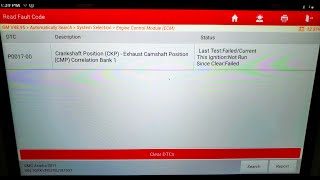
- Use a professional scan tool to read all fault codes and view live data for camshaft angle deviation on all four cams. Deviation consistently over 4-5 degrees at idle or 2000 RPM strongly suggests a stretched timing chain. Some GM documents indicate a fault is set when deviation exceeds 11.7 degrees.
- If deviation is minimal, perform a diagnostic swap. Swap the Bank 1 exhaust VVT solenoid with the Bank 2 exhaust solenoid. Clear codes and re-test. If the code changes to P0019, the solenoid is bad.
- If the code does not move, swap the Bank 1 exhaust camshaft position sensor with the Bank 2 sensor. Clear codes and re-test. If the code changes to P0019, the sensor is bad.
- If all other causes are ruled out, proceed with the diagnosis for a stretched timing chain. This involves removing the engine front cover to physically inspect the chains, guides, and tensioners for slack and wear.
- While the engine is being disassembled, inspect the crankshaft reluctor wheel for any signs of movement or slippage on the crankshaft, as noted in TSB #PIP3423P.
Parts You'll Likely Need
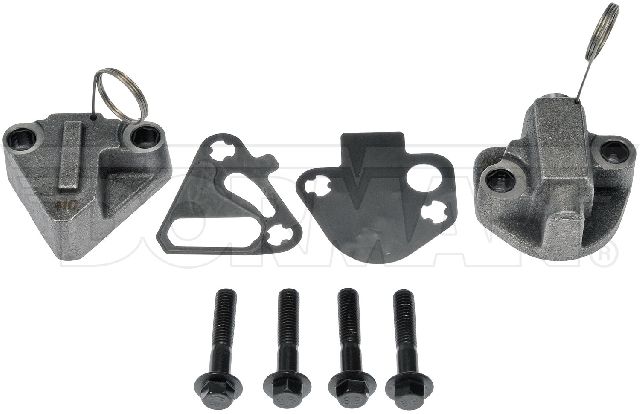
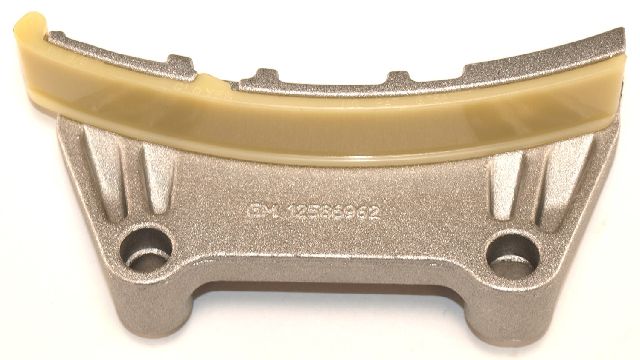
- Engine Timing Chain Kit
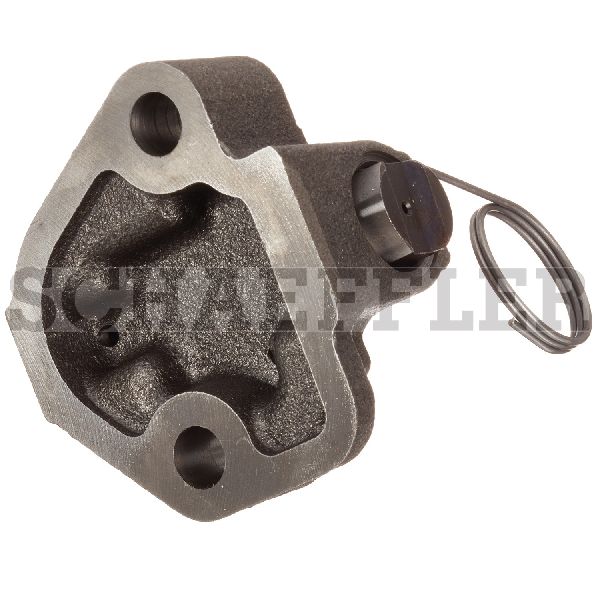
(OEM #12651450 (ACDelco kit number may vary, this is one example))— This is the most common failure part for code P0017 on the 3.6L V6. A complete kit should include all three chains, tensioners, guides, and sprockets. Using a genuine GM or ACDelco kit with the latest revised parts is highly recommended.
Trusted brands: ACDelco, Cloyes, Melling
OEM price range: $400-$600
Aftermarket price range: $250-$450 - Camshaft Position Actuator Solenoid
(OEM #12636175 (ACDelco))— A common first diagnostic step and a potential, though less likely, cause. Failure is often due to oil contamination.
Trusted brands: ACDelco, Dorman, Standard Motor Products
OEM price range: $50-$90
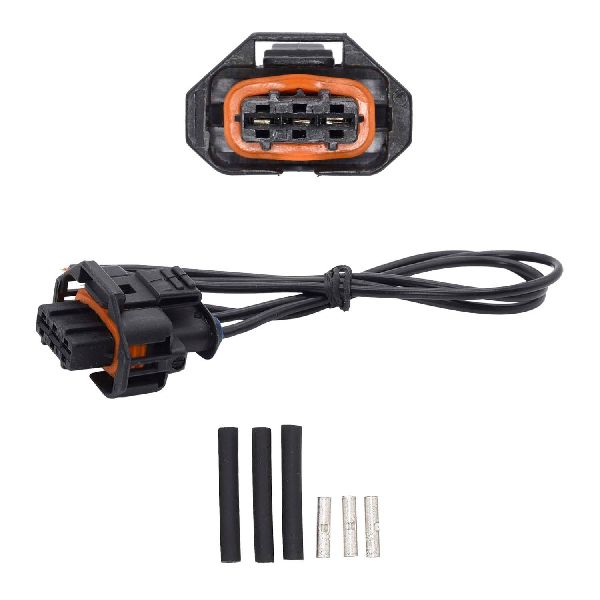
Aftermarket price range: $30-$60 - Camshaft Position Sensor — A rare but possible cause. If diagnostics confirm the sensor is faulty, it will need to be replaced.
Trusted brands: ACDelco, Bosch, NTK
OEM price range: $60-$100
Aftermarket price range: $40-$70
Related Codes That Often Appear With This One
- P0008 — This code indicates a general engine position system performance error for Bank 1. It is a very common companion to P0017 and is explicitly mentioned in GM's TSBs as being caused by stretched timing chains.
- P0016 — This code is for Crankshaft/Camshaft correlation on Bank 1, but for the intake camshaft ('A' sensor). If the primary chain is stretched, it can throw off the timing for the entire bank, triggering both intake and exhaust correlation codes.
- P0014 — This code indicates that the Bank 1 exhaust camshaft is 'over-advanced'. It can be caused by a faulty VVT solenoid or a mechanical timing issue, which are both related to the causes of P0017.
- P0018, P0019, P0009 — These are the equivalent codes for Bank 2 (driver's side). If all three timing chains are significantly worn, it's possible to see codes for both banks simultaneously.
Technical Service Bulletins (TSBs) & Recalls
- PIP3423P/L: Notes that DTCs P0016, P0017, P0018, P0019, P0008, or P0009 may require inspection for loose timing chains or a slipped crankshaft reluctor wheel.
- 12-06-01-009F: Discusses the availability of comprehensive timing chain service kits for repairing stretched timing chains that cause DTCs P0008, P0009, P0016, P0017, P0018 and/or P0019.
- 11340C: Special Coverage Adjustment for Timing Chain Wear. Extended the warranty and acknowledged the link between chain wear and the original oil change intervals for certain model years.
Platform-Specific Known Issues
- The 3.6L V6 engines (LY7 and LLT) used in the 2005-2011 STS are widely known for premature timing chain failure. This is the primary vehicle-specific issue related to code P0017.
- GM issued Special Coverage Adjustment #11340C, extending the warranty to 10 years/120,000 miles for this specific problem on 2007-2009 models. This acknowledged the widespread nature of the defect.
- The original Oil Life Monitor (OLM) calibration allowed for excessively long oil change intervals, which accelerated oil breakdown and chain wear. The fix often includes an ECM reprogram to shorten these intervals.
Mechanic-Grade Diagnostic Values
- Camshaft to Crankshaft Correlation Angle — expected: Less than 11.7 degrees of deviation.. Failure: A consistent deviation greater than 11.7 degrees will trigger the fault code.
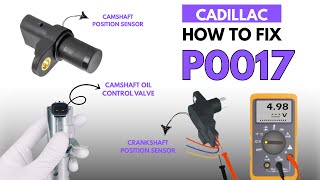
- Camshaft Position (CMP) Sensor Voltage (3-wire Hall-effect) — expected: 5V on the reference wire, 5V on the signal wire (key on, engine off), and battery voltage (approx. 12.6V) on the ground wire when tested against the positive battery terminal.. Failure: When running or cranking, the signal wire voltage should pulse or switch, often between ~5V and 0V. A static voltage or no voltage indicates a sensor or wiring fault.
- VVT Solenoid (Oil Control Valve) Resistance — expected: Approximately 6.9 to 12 ohms, depending on the specific OEM part and temperature.. Failure: A reading significantly outside this range, or an open (OL) or shorted (near zero) reading, indicates a failed solenoid coil.
Scan Tool Commands That Help
- GDS2/Tech2: VVT Solenoid Control — This bidirectional command allows a technician to manually activate and deactivate each VVT solenoid while monitoring engine RPM and cam position data. It's used to verify if a solenoid is mechanically stuck or electrically unresponsive, helping to isolate a faulty solenoid from a deeper mechanical timing issue.
- GDS2/Tech2: Cam/Crank Position Data — Viewing the live data PIDs for desired vs. actual camshaft position for all four cams is the primary non-invasive diagnostic step. This data, viewed at idle and while holding RPM at ~2000, will show a large, steady deviation on the affected cam(s) if the timing chain is stretched.
Wiring & Ground Locations
- G106 — Located on the right rear of the engine block.. This is a primary engine ground. A loose or corroded connection at this point can introduce electrical noise or incorrect reference voltages for various engine sensors, including the camshaft and crankshaft position sensors, potentially causing erroneous correlation codes.
- G131 — Located on the left rear of the engine.. Similar to G106, this is another critical engine ground point. Ensuring it is clean and tight is a fundamental step in diagnosing any electronic engine control issue.
- ECM (Engine Control Module) — On the left front frame rail, below the left headlamp assembly.. The sensor signal and reference voltage wires run from the sensors to the ECM. Knowing its location is necessary for advanced diagnostics like checking for continuity, shorts to ground, or testing pin voltages directly at the module connectors.
- Bank 1 Camshaft Position Sensor Connector — Bank 1 (passenger side) sensors are located on the front of the cylinder head, behind the ECM and its mounting bracket.. This is the primary connection point for testing the Bank 1 exhaust cam sensor ('B' sensor) and its wiring. Access requires removing the ECM bracket.
Real Owner Repair Stories
- YouTube user Kevin Nadeau (2007 Cadillac CTS 3.6L V6) — Check Engine Light with codes P0017 and P0008.
❌ Tried (didn't work) Replaced the Bank 1 exhaust camshaft position sensor., Inspected and cleaned the VVT solenoids.
✅ What actually fixed it The video creator states that the sensor and solenoid work did NOT fix the codes and that the next step, which is implied to be the correct fix, is a full timing chain replacement. This aligns with the common understanding that these codes on the 3.6L V6 almost always require timing chain service.
OEM Part Supersession History
Varies (multiple revisions)→12636175 (ACDelco)— Design improvements to enhance reliability and resistance to oil contamination.
Heads up: Part number 12636175 is a widely used VVT solenoid across many GM vehicles from this era and is the recommended service replacement for the 3.6L V6 in the STS.
Model Year Variations Within This Range
- 2005-~2008: These models primarily used the 3.6L LY7 V6 engine, which features port fuel injection.
- ~2008-2011: Later models transitioned to the 3.6L LLT V6 engine, which introduced direct injection (DI). While sharing the same basic architecture and timing chain issues, the LLT has different pistons (for a higher compression ratio of 11.3:1 vs 10.2:1 on the LY7), a high-pressure fuel pump, and different engine management. Swapping an LY7 and LLT is not a direct fit and requires changing numerous components.
Helpful Videos
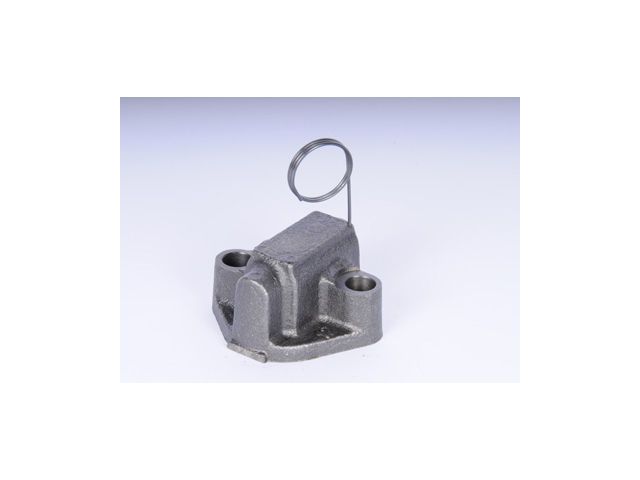
We Have This Part in Stock

The information in this article is provided for general reference and educational purposes only. Vehicle specifications, procedures, and part compatibility can vary by production date, trim level, and region. Always consult your vehicle's factory service manual and verify part numbers before purchasing or performing repairs. Safety-critical components such as airbags, seat belts, and braking systems should be installed by a qualified professional.
- Cadillac STS:
- 🧭 Diagnostic Flowchart
- 🎬 Helpful Videos
- 🛍️ Shop This Part
- What's Unique About the 2005-2011 Cadillac STS
- Symptoms You May Notice
- Most Likely Causes
- Rare But Worth Checking
- Diagnosis Steps
- Parts You'll Likely Need
- Related Codes That Often Appear With This One
- Technical Service Bulletins (TSBs) & Recalls
- Platform-Specific Known Issues
- Mechanic-Grade Diagnostic Values
- Scan Tool Commands That Help
- Wiring & Ground Locations
- Real Owner Repair Stories
- OEM Part Supersession History
- Model Year Variations Within This Range
- 🎟️ Get 5% Off