

P0017 on 2010-2015 Chevrolet Camaro 3.6L V6: Timing Chain and Sensor Guide
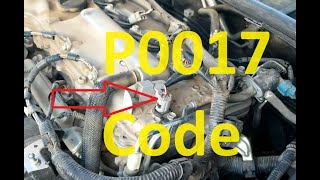
On a 2010-2015 Camaro with the 3.6L V6, code P0017 almost always indicates a stretched timing chain. This is a well-known issue, especially on 2010-2011 LLT engines. While you should check the oil level and VVT solenoids first, expect a timing chain replacement. This is a major, labor-intensive repair with forum-reported costs ranging from $2,500 to over $4,000 at a shop. Ignoring the code can lead to catastrophic engine failure.
- P0017 on a 2010-2015 Camaro V6 is a serious code that almost always points to a stretched timing chain.
- Always check your oil level and condition first, as low or dirty oil can cause this code.
- A faulty VVT solenoid is a possible, and much cheaper, cause. This should be ruled out before committing to a timing chain job.
- Do not start by replacing the camshaft or crankshaft sensors; this is rarely the fix.
- This is not a beginner-friendly DIY repair. Due to the risk of catastrophic engine damage, professional service is strongly recommended.
What's Unique About the 2010-2015 Chevrolet Camaro
The 5th generation Camaro with the 3.6L V6 (both the earlier LLT and later LFX versions) is notorious for premature timing chain stretching. This issue is so common that it's the immediate suspect for code P0017, often accompanied by codes like P0008 and P0016. General Motors issued several Technical Service Bulletins (TSBs), notably #12-06-01-009F, acknowledging the problem across many vehicles using this engine family, including the Camaro. The problem was exacerbated by GM's early Oil Life Monitor (OLM) calibration, which allowed for excessively long oil change intervals, leading to oil degradation and accelerated chain wear. While causes like faulty sensors or solenoids are possible on any car, on this specific platform, they are far less likely than the timing chains themselves being the root cause.
Symptoms You May Notice
- Check Engine Light is on
- Rough or surging idle
- Reduced engine power and poor acceleration
- Engine may be hard to start
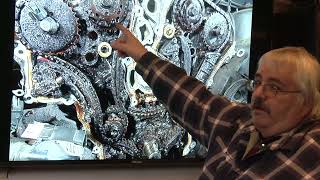
- Rattling noise from the front of the engine, especially on a cold start 🎬 Watch: Hear what a 3.6L engine rattle sounds like.
- Engine ticking noises or hesitation under acceleration.
- Replacing the camshaft or crankshaft position sensors first. P0017 is a 'correlation' code, meaning the sensors are often working correctly and accurately reporting a mechanical misalignment. Replacing them is usually a waste of money 🎬 Watch: How to tell if you need a chain or sensor. unless diagnostic steps prove they are faulty.
Most Likely Causes
- Stretched Timing Chain(s) 🔴 High Probability → Shop Engine Timing Chain The original timing chains on the 3.6L V6 engines are known for premature wear and stretching. This was acknowledged by GM in TSB #12-06-01-009F. The problem is often exacerbated by extended oil change intervals recommended by the original Oil Life Monitor (OLM) system, which led to accelerated wear.
How to confirm: A technician can use a scan tool to view live data for camshaft position deviation; a variance greater than 4-6 degrees at idle suggests a mechanical timing issue. A physical inspection is the ultimate confirmation, which involves significant engine disassembly to measure chain slack.
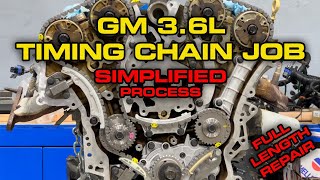
Typical fix: Replace all three timing chains, the tensioners, and the guides. It is highly recommended to use an updated OEM kit (ACDelco) or a quality aftermarket kit from brands like Cloyes or Melling. TSB #12-06-01-009F notes that camshaft actuators (phasers) and sprockets should not be replaced unless visibly damaged.
Est. part cost: $250-$600 - Low or Dirty Engine Oil 🟡 Medium Probability The camshaft phasers (actuators) and chain tensioners are hydraulically operated by engine oil. If the oil level is low or the oil is degraded and sludgy, it can't provide the necessary pressure, leading to timing correlation errors. This can also clog the small filter screens on the VVT solenoids.
How to confirm: Check the oil level on the dipstick and inspect its condition. This should always be the first step.
Typical fix: Perform an oil and filter change using the correct viscosity oil (5W-30 full synthetic is specified). Clear the codes and see if P0017 returns.
Est. part cost: $40-$80 - Faulty Camshaft Position Actuator Solenoid (VVT Solenoid) 🟡 Medium Probability → Shop Engine Camshaft
How to confirm: The Bank 1 exhaust solenoid can be swapped with another solenoid (e.g., the intake solenoid on the same bank). If the code changes to P0016 (Intake Cam Correlation), the solenoid is faulty. The solenoids are located on the front of the cylinder head covers and are relatively accessible.
Typical fix: Replace the faulty solenoid. It is often recommended to replace them in pairs (intake and exhaust) or all four at once. Use a quality OEM or aftermarket part.
Est. part cost: $30-$70 - Faulty Camshaft Position Sensor ⚪ Low Probability → Shop Engine Camshaft Position Sensor
How to confirm: This is an uncommon cause. The sensor can be tested with a multimeter or swapped with the corresponding sensor on Bank 2 to see if the code changes to P0019 (Crankshaft Position – Exhaust Camshaft Position Not Plausible Bank 2).
Typical fix: Replace the Bank 1 exhaust camshaft position sensor.
Est. part cost: $25-$60
Rare But Worth Checking
- Slipped Crankshaft Reluctor Wheel: → Shop Engine Crankshaft In some cases, the reluctor wheel, which the crankshaft position sensor reads, can physically move on the crankshaft. This will cause persistent timing codes even after a timing chain replacement. GM issued Preliminary Information Bulletin PIP3423P (and earlier versions) detailing this issue. The fix requires replacing the entire crankshaft, as the reluctor wheel is press-fit.
- Slipped Camshaft Reluctor Wheel: → Shop Engine Camshaft Extremely rare, but there is a documented case where the reluctor wheel on the exhaust camshaft itself slipped, causing a persistent P0017 after a timing chain replacement. The wheel is press-fit with no keyway. The fix involved identifying the misalignment by comparing it to a new camshaft and rotating the wheel back to its correct position.
Diagnosis Steps
- Check Engine Oil: Verify the oil level is full and the oil is clean. If low or dirty, perform an oil change with 5W-30 full synthetic oil, clear the codes, and re-test.
- Scan for Other Codes: Check for other related codes like P0008, P0016, P0018, or P0019, which can help pinpoint the problem's scope.
- Inspect VVT Solenoids: Locate the Bank 1 (passenger side) exhaust VVT solenoid. Check its wiring. Consider swapping it with the intake solenoid to see if the code follows the part (changing to P0016). If it does, the solenoid is bad.
- Inspect Camshaft Sensor: As a less likely step, inspect the wiring for the Bank 1 exhaust camshaft sensor. You can swap it with the Bank 2 sensor to see if the code changes to P0019.
- Check Camshaft Correlation Data: Using an advanced scan tool, monitor the 'Camshaft Position Variance' or similar parameter. If it shows a sustained deviation beyond 4-6 degrees, it confirms a mechanical timing issue.
- Inspect Crankshaft Reluctor Wheel: If possible, use a borescope through the crankshaft position sensor hole to inspect the reluctor wheel for movement, as detailed in GM bulletin PIP3423P.
- Inspect Timing Chains: If all else fails, the final step is to gain access to the timing chains for a physical inspection to confirm they are stretched. This is a labor-intensive job with a book time of around 7.8 hours. Manufacturer TSB Bulletin #PIP3423P advises that technicians will need to inspect for loose timing chains or tensioners when these codes are present.
Parts You'll Likely Need
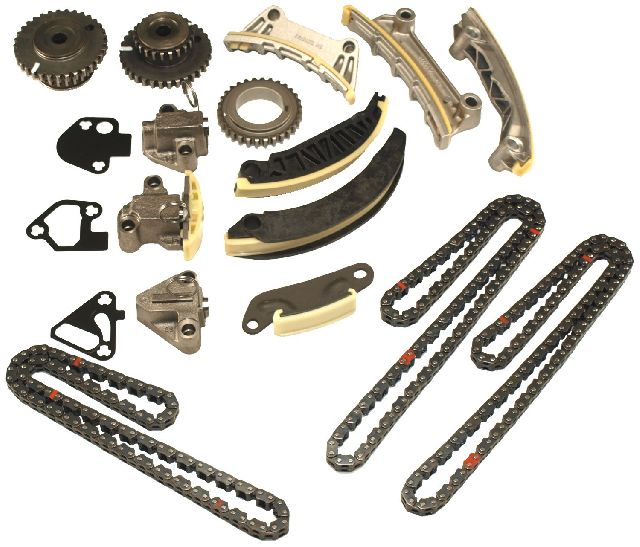
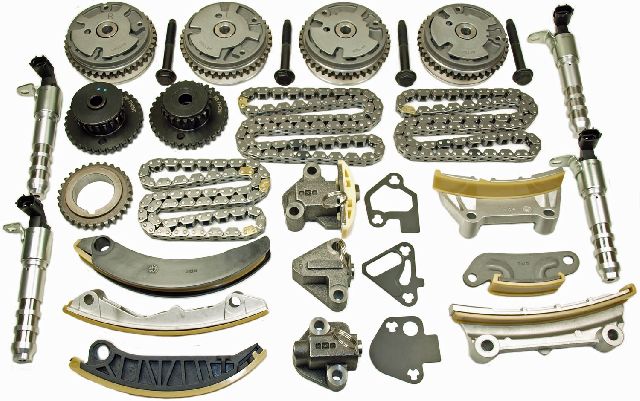
- Engine Timing Chain Kit
(OEM #12651450)— This is the most common cause of P0017 on the 3.6L V6. The kit should include all three chains, tensioners, and guides. GM released updated kits in 2012 to address the premature wear issue.
Trusted brands: ACDelco (OEM), Cloyes, Melling
OEM price range: $350-$500
Aftermarket price range: $250-$400 - Camshaft Position Actuator Solenoid (VVT Solenoid)
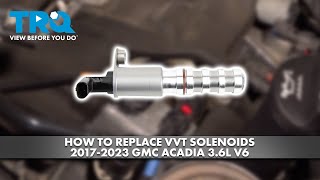
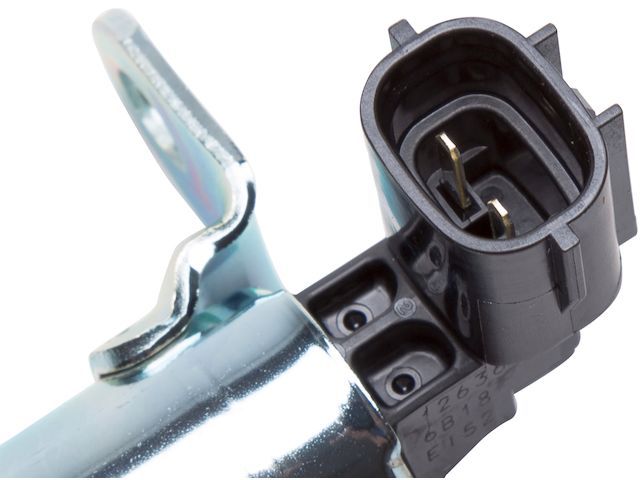
(OEM #12655421 (Exhaust), 12655420 (Intake) - Note: Part numbers may be superseded, verify with VIN. A common replacement is 12636175.)— A much cheaper and easier potential fix. A clogged or failed solenoid can prevent the camshaft from phasing correctly, mimicking a timing chain issue.
Trusted brands: ACDelco, Delphi, Dorman
OEM price range: $50-$70
Aftermarket price range: $30-$50 - Camshaft Position Sensor
(OEM #12680696)— A rare cause, but possible. This sensor reads the camshaft's position and reports it to the ECM. Failure can cause correlation codes.
Related Codes That Often Appear With This One
- P0008 — This is a general engine position system performance code for Bank 1. It is very commonly triggered along with P0017 by a stretched timing chain and is specifically mentioned in TSB 12-06-01-009F.
- P0016 — This code is for the Bank 1 *intake* camshaft correlation. When both P0016 and P0017 appear together, it's an extremely strong indicator that the timing chain serving Bank 1 has stretched or jumped a tooth.
- P0018 / P0019 — These are the correlation codes for Bank 2 (driver's side). Seeing codes for both banks (e.g., P0017 and P0019) points to a problem with the primary timing chain that serves both cylinder heads, or a slipped crankshaft reluctor wheel.
Technical Service Bulletins (TSBs) & Recalls
- 12-06-01-009F: Information on High Feature V6 Timing Chain Kits and Chain Guide Replacements for DTCs P0008, P0009, P0016, P0017, P0018 and/or P0019. This TSB confirms the widespread timing chain issue and lists the updated part kits.
- PIP3423P: Mentions that a slipped crankshaft reluctor wheel can cause these timing codes and advises on how to inspect for it. This bulletin has been superseded multiple times, with the latest version being PIP3423P as of August 2018.
Platform-Specific Known Issues
- Premature timing chain failure is the single most significant issue related to this code on the 2010-2015 Camaro V6. GM released TSB #12-06-01-009F (and earlier versions) that details the issue and the repair procedure for many vehicles with the 3.6L engine, including the Camaro.
- While some other GM vehicles received a special coverage warranty extension for this issue (e.g., #11340C for the 2009 Traverse), the Camaro was often excluded, leaving owners to pay for the expensive repair out-of-pocket.
Mechanic-Grade Diagnostic Values
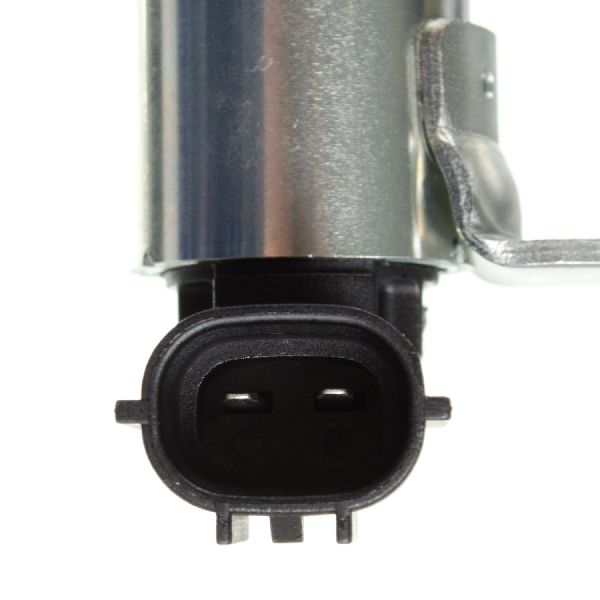
- VVT Solenoid Resistance — expected: 6.9-7.9 Ohms at 68°F (20°C). Failure: A reading outside this range indicates a faulty solenoid coil.
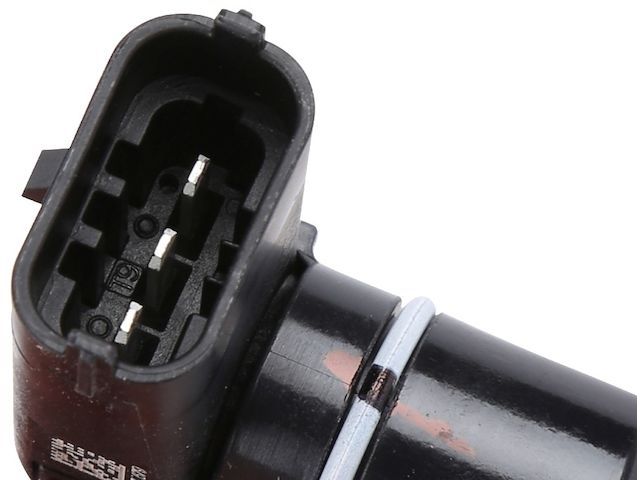
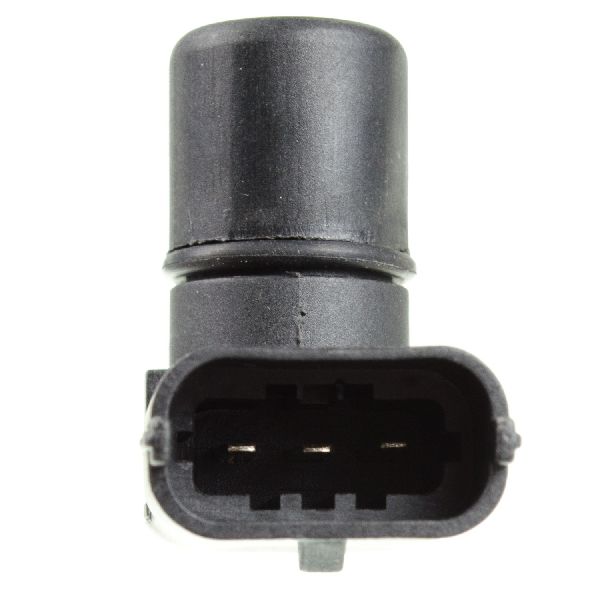
- Camshaft Position Sensor (3-wire Hall-effect) Voltage — expected: Power wire: ~5V or ~12V (check manual), Ground wire: <5 ohms to chassis ground, Signal wire: Fluctuates between 0V and 5V when cranking.. Failure: No voltage, no fluctuation on the signal wire, or high resistance on the ground indicates a sensor or wiring fault.
- Crankshaft Reluctor Wheel Position Check (per TSB PIP3423P) — expected: 25mm to 26mm. Failure: A measurement outside this range indicates the reluctor wheel has slipped on the crankshaft, requiring crankshaft replacement.
Scan Tool Commands That Help
- GDS2 (GM Global Diagnostic System 2): Camshaft Position Actuator Test — This bidirectional control allows a technician to command the VVT solenoid to activate and deactivate while monitoring the camshaft angle data. It confirms if the solenoid is responding and if the cam phaser is mechanically able to move, helping to isolate a faulty solenoid from a stuck phaser or oil pressure problem.
- GDS2 (GM Global Diagnostic System 2): Camshaft Position Solenoid Test — This is a simpler on/off electrical test of the solenoid circuit. A healthy solenoid should produce an audible click. It's a quick way to verify the solenoid's basic electrical function before performing more in-depth mechanical tests.
Wiring & Ground Locations
- Passenger Cylinder Head Ground — Two small ground wires are located on the back of the passenger side cylinder head.. These grounds are part of the engine sensor and control harness. A poor connection here could potentially cause erratic signals from the camshaft position sensor on Bank 1.
- Main Engine Block Ground — A primary ground strap attaches to the engine block underneath the passenger exhaust manifold, near the starter.. This is a critical ground for the entire engine management system. A loose connection here, which has been reported from the factory, can cause numerous electrical issues, including erratic tachometer signals and potentially sensor correlation faults.
- Driver Cylinder Head Ground — A ground wire is located on the back of the driver's side cylinder head, behind the last coil pack.. While less likely to directly cause a Bank 1 code, ensuring all engine grounds are clean and tight is a crucial step in diagnosing any electrical fault.
Real Owner Repair Stories
- Reddit user in r/MechanicAdvice (Vehicle not specified, but 3.6L V6 with P0017) — Car started running badly after oil was found to be very low. P0017 code present.
❌ Tried (didn't work) Replaced crankshaft position sensor., Cleaned and tested VVT solenoids (oil control valves).
✅ What actually fixed it The timing had jumped two teeth. The user replaced the timing chain, tensioners, both CVVT sprockets (phasers), and the exhaust camshaft. After the repair, the car ran well, but the P0017 code would not clear, indicating a potential need for a drive cycle or a deeper underlying issue not yet resolved. - NHTSA ODI #10969711 — An owner reported that their dealer diagnosed P0008 and P0017 codes as stretched timing chains at 52,724 miles, with a repair cost of $3,000.
- NHTSA ODI #10939451 — An owner reported the check engine light appearing several times with codes P0008 and P0017, which dealerships confirmed were related to the timing chain.
- NHTSA ODI #11041879 — An owner reported the engine light on with codes P0007, P0008, and P0017, noting a loss of power and fear of driving the vehicle.
When the Usual Fixes Don't Work
- In cases where the P0017 code returns immediately after a complete timing chain replacement, the cause is almost never the new chains. Technicians should immediately suspect an incorrect timing procedure during installation or, more notably, a slipped crankshaft reluctor wheel. GM TSB PIP3423P specifically addresses this possibility, which requires checking a specific measurement on the crankshaft, often with a borescope through the crank sensor hole, before committing to a full crankshaft replacement.
OEM Part Supersession History
12651450→12679117, then 12693218, and most recently 12700436— GM progressively updated the timing chain kit components to improve durability and address the premature stretching and wear issues found in the early LLT and LFX engines.
Heads up: While older kits may physically fit, only the latest available part number should be used to ensure the most durable and updated components are installed. Always verify the correct kit part number with the vehicle's VIN.
Model Year Variations Within This Range
- 2010-2011 (LLT Engine): These earlier models are significantly more prone to timing chain stretch due to the original chain design. The issue is widespread and the primary suspect for P0017.
- 2012-2015 (LFX Engine): The LFX engine features an improved, stronger timing chain design. While failures are less common than on the LLT, they still occur, especially if oil change intervals are neglected or if the engine suffers from oil consumption.
Diagnostic Flowchart
Other Known Issues on This Vehicle
Issues unrelated to this code that are worth knowing about as an owner of this generation:
- Torque Converter Shudder 🟠 Medium — Common on automatic transmission models, often felt as a shudder or vibration at low speeds (around 40-50 mph). (Ref: Multiple TSBs exist regarding transmission fluid flushes to address this.)
- Airbag Occupancy Sensor Failure 🔴 High — The passenger seat occupancy sensor mat is prone to tearing, causing the airbag warning light to illuminate and disabling the passenger airbag. (Ref: Subject of recalls and customer satisfaction programs.)
- Key Stuck in Ignition 🟡 Low — A faulty shifter interlock or ignition switch can prevent the key from being removed after turning the car off. (Ref: Subject of a recall (NHTSA 14V346000).)
- Convertible Top Wear 🟠 Medium — The convertible soft top can experience premature wear, particularly at the points where it folds and contacts the support brackets. (Ref: GM issued service bulletins like #12052 to address this with modified parts.)
- Water Pump Failure (V8 Models) 🟠 Medium → Shop Engine Water Pump — While this article focuses on the V6, the V8 models (SS) are known to sometimes develop coolant leaks from the water pump before 100,000 miles.
Used vs. New Parts: Buying Guide for This Vehicle
When a used part is the smart pick: For this specific P0017 repair, using used parts is generally not recommended for the core components. However, a used VVT solenoid from a low-mileage donor vehicle could be a cost-effective diagnostic step (to swap and test) or a temporary fix if new parts are unavailable. Structural components like the timing cover or valve covers are also fine to source used if damaged during repair.
Donor-vehicle mileage cap: roughly under 60000 miles for the part to have meaningful remaining life.
What to inspect on the donor part:
- For VVT Solenoids: Check that the mesh screens are intact, not torn or clogged with sludge.
- Verify the donor vehicle had no timing-related trouble codes.
- Look for evidence of regular oil changes (no heavy sludge buildup under the oil cap).
OEM-only on this vehicle (don't cheap out):
- Engine Timing Chain Kit: This is a critical wear item. Using a used kit is asking for a repeat failure. Always install a new, updated kit.
- Crankshaft Position Sensor: Given its criticality and relatively low cost, a new OEM or high-quality aftermarket sensor is the only sensible choice.
- Camshaft Position Sensor: Similar to the crank sensor, the risk of using a used part outweighs the small cost savings.
Aftermarket brands forum-validated for this vehicle:
- Timing Chain Kits: Cloyes, Melling (often considered OEM-quality or better by professionals).
- VVT Solenoids: Delphi, Dorman (ensure it's a reputable line like Dorman OE Solutions).
Brands owners have reported issues with on this vehicle:
- Unnamed/white-box eBay or Amazon timing kits: Many forum users report premature failure from no-name, ultra-low-cost timing kits. The labor cost of this job is too high to risk using inferior quality chains and tensioners.
Real Owner Stories
Aggregated from forums and TSBs cited above. Mileages and costs reflect what owners reported in those sources.
2010-2015 Chevrolet Camaro 3.6L V6
Symptoms: Owner received a repair quote of almost $4,000 for a timing chain replacement.
What fixed it: Timing chain replacement (though the owner noted a subsequent total engine failure a year after a $2,500 repair).
Cost: $2,500-$4,000
Source hint: Reddit r/camaro - 'Quoted almost $4,000 for timing chain replacment'
Related OBD-II Codes
Frequently Asked Questions
Does TSB #12-06-01-009F apply to my 2010-2015 Chevrolet Camaro with the 3.6L V6?
Is there a special warranty extension for timing chain failure on the Camaro like there is for the Chevy Traverse?
Can I just replace the camshaft actuators (phasers) to fix P0017?
What type of oil should I use to prevent VVT and timing issues on my LFX engine?
How can I tell if my P0017 code is a bad sensor or a mechanical timing issue?
Is there a specific part brand recommended for the timing chain replacement?
Helpful Videos
We Have This Part in Stock

The information in this article is provided for general reference and educational purposes only. Vehicle specifications, procedures, and part compatibility can vary by production date, trim level, and region. Always consult your vehicle's factory service manual and verify part numbers before purchasing or performing repairs. Safety-critical components such as airbags, seat belts, and braking systems should be installed by a qualified professional.
- Chevrolet Camaro:
- 🧭 Diagnostic Flowchart
- 🎬 Helpful Videos
- 🛍️ Shop This Part
- What's Unique About the 2010-2015 Chevrolet Camaro
- Symptoms You May Notice
- Most Likely Causes
- Rare But Worth Checking
- Diagnosis Steps
- Parts You'll Likely Need
- Related Codes That Often Appear With This One
- Technical Service Bulletins (TSBs) & Recalls
- Platform-Specific Known Issues
- Mechanic-Grade Diagnostic Values
- Scan Tool Commands That Help
- Wiring & Ground Locations
- Real Owner Repair Stories
- When the Usual Fixes Don't Work
- OEM Part Supersession History
- Model Year Variations Within This Range
- Other Known Issues on This Vehicle
- Used vs. New Parts: Buying Guide for This Vehicle
- Real Owner Stories
- 2010-2015 Chevrolet Camaro 3.6L V6
- Related OBD-II Codes
- Frequently Asked Questions
- 🎟️ Get 5% Off