

P0017 on 2008-2009 Chevrolet Equinox 3.6L: Stretched Timing Chain Causes and Fixes
On a 2008-2009 Equinox with the 3.6L V6, code P0017 almost always means the timing chains have stretched. This is a well-known, serious issue with this engine. The only correct fix is to replace the timing chains, tensioners, and guides with an updated kit, a costly repair often exceeding $2,000. Do not waste money on sensors first.
- P0017 on a 2008-2009 Equinox 3.6L is a serious code that almost always points to stretched timing chains.
- Do not waste money replacing the camshaft or crankshaft sensors first; they are rarely the cause.
- Always check the engine oil level and condition immediately, as low or dirty oil is a major contributing factor.
- This is a major, expensive repair that is not DIY-friendly and requires immediate professional attention to prevent catastrophic engine failure.
- Ensure the repair shop uses an updated timing chain kit to prevent a repeat failure.
What's Unique About the 2008-2009 Chevrolet Equinox
The 3.6L LY7 V6 engine used in the 2008-2009 Equinox is notorious for premature timing chain stretching. This was such a widespread problem across many GM models using this engine that GM issued multiple Technical Service Bulletins (TSBs) and Special Coverage Adjustment #11340. The issue is attributed to a combination of the original timing chain design being prone to wear and an overly optimistic Oil Life Monitoring (OLM) system that led to extended oil change intervals and subsequent oil degradation. Therefore, unlike in many other vehicles where P0017 might be a sensor or solenoid, on this platform, it is a strong and almost certain indicator of this specific, significant mechanical failure.
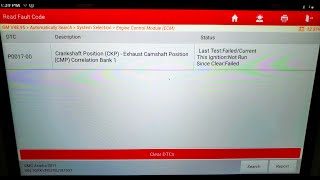
🎬 Watch: A walkthrough of the P0017 code on this engineSymptoms You May Notice
- Check Engine Light is on
- Rattling or buzzing noise from the engine, especially on cold startups
- Rough or unstable idle
- Loss of engine power and poor acceleration
- Difficulty starting the engine or extended cranking time
- Engine stalling at low speeds
- Reduced fuel economy
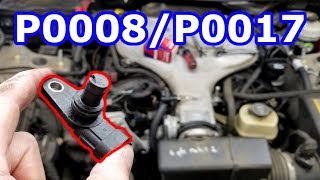
- Replacing the camshaft position sensor 🎬 Watch: Why replacing the sensor rarely fixes the P0017 code
- Replacing the crankshaft position sensor
- Replacing only the VVT solenoids without addressing the timing chains
Most Likely Causes
- Stretched Timing Chains 🔴 High Probability → Shop Engine Timing Chain The original timing chains on the 3.6L LY7 engine were of a design susceptible to premature wear and stretching. This was a well-documented factory issue acknowledged by GM through multiple service bulletins and a special coverage program. The problem was exacerbated by the original Oil Life Monitor (OLM) calibration which allowed for excessively long oil change intervals.
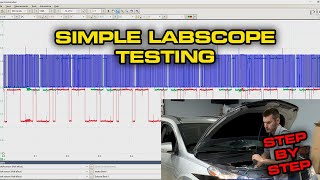
How to confirm: A definitive diagnosis requires removing the engine's front timing cover for a visual inspection of chain slack and tensioner extension. A scan tool can show cam/crank deviation data, which points towards the issue, but visual confirmation is key. An advanced diagnosis can be done with a lab scope to compare camshaft and crankshaft sensor waveforms without major disassembly. 🎬 See how to use a lab scope to confirm timing
Typical fix: Replace all three timing chains, all tensioners, and all guides with a new, updated timing chain kit. Per TSB #12-06-01-009D, the sprockets and phasers should not be replaced unless visibly damaged. It is also recommended to perform an ECM reprogram to update the Oil Life Monitor (OLM) calibration to shorten oil change intervals.
Est. part cost: $250-$500 for a quality aftermarket kit (e.g., Cloyes, Gates) or an ACDelco OEM kit. - Failed Timing Chain Tensioners or Guides 🔴 High Probability → Shop Engine Timing Chain The hydraulic tensioners rely on clean oil at the correct pressure. Degraded oil from extended change intervals can cause them to fail or leak down, leading to a loose chain. The plastic guides can also become brittle and break over time, sometimes leaving debris in the oil pan.
How to confirm: This is diagnosed during the visual inspection when checking for a stretched timing chain. A fully extended tensioner is a clear sign of a stretched chain. Broken guide pieces may be found in the oil pan.
Typical fix: Tensioners and guides are always replaced as part of a complete timing chain kit replacement. It is not recommended to replace them in isolation.
Est. part cost: $50-$150 if bought separately, but included in a full kit - Low or Degraded Engine Oil 🟡 Medium Probability The entire variable valve timing (VVT) system, including the cam phasers and timing chain tensioners, is operated by oil pressure. If the oil is low, dirty, or the wrong viscosity, it can cause the hydraulic tensioners to malfunction and the cam phasers to respond slowly, triggering a correlation code. This was a primary contributing factor to the widespread chain failures on this engine.
How to confirm: Check the oil level on the dipstick and inspect its condition. If it's low or appears like sludge, this is a likely contributor. An oil pressure test can also be performed.
Typical fix: Perform an engine oil and filter change using the correct specification oil (ACDelco dexos1). An engine flush may be recommended if significant sludge is present. However, if the chain is already stretched, an oil change alone will not fix the P0017 code.
Est. part cost: $40-$80 for oil and a filter
Rare But Worth Checking
- Slipped Crankshaft Reluctor Wheel: → Shop Engine Crankshaft GM issued TSB PIP3423P (later superseded by PIP3423M) which notes that the reluctor wheel press-fit onto the crankshaft can physically move, causing a false timing signal that perfectly mimics a stretched chain. This can lead to a P0017 code returning immediately after a timing chain replacement. It can sometimes be inspected with a borescope through the crankshaft position sensor hole. If it has moved, the crankshaft must be replaced.
- Faulty Camshaft Position Actuator Solenoid (VVT Solenoid): → Shop Engine Camshaft While not a primary cause on this engine, a solenoid can get stuck or clogged with debris from dirty oil. This is a relatively inexpensive part and can be tested by swapping the exhaust and intake solenoids (if identical) to see if the code changes to P0016. On the LY7, this is an unlikely fix but is sometimes attempted before the larger timing chain job.
- Spun Camshaft Reluctor Ring: → Shop Engine Camshaft Similar to the crankshaft reluctor, the reluctor ring on the exhaust camshaft itself can spin out of position, causing the cam sensor to send incorrect data to the ECM even when mechanical timing is perfect. This is a very rare failure but has been documented in forums after a timing chain job fails to clear the code.
Diagnosis Steps
- Verify the engine oil level and condition. If low or dirty, perform an oil and filter change. This is a crucial first step but is unlikely to be a final fix.
- Scan for any other accompanying trouble codes. Codes for the other bank (P0018, P0019, P0009) point strongly to a primary chain issue.
- Using a professional scan tool, observe the camshaft deviation angles in the live data. A significant deviation that cannot be compensated for points to a mechanical timing issue. Also observe the active counters for cam and crank sensors; the crank sensor counter should be stable and not erratic.
- Consider swapping the Bank 1 intake and exhaust camshaft actuator solenoids. If the code changes to P0016, the solenoid is faulty. This is a low-probability fix for this specific engine but is a simple diagnostic step.
- If the above steps do not resolve the issue, the next step is to prepare for a timing chain inspection. This is an advanced procedure.
- An advanced, non-invasive check can be performed using a lab scope to compare the crankshaft sensor signal with the camshaft sensor signals to visually confirm the timing relationship without disassembly.
- Perform a physical inspection of the timing chains, guides, and tensioners. This requires significant engine disassembly (removing the front timing cover) and is best left to a professional. A stretched chain or fully extended tensioner confirms the diagnosis.
Parts You'll Likely Need
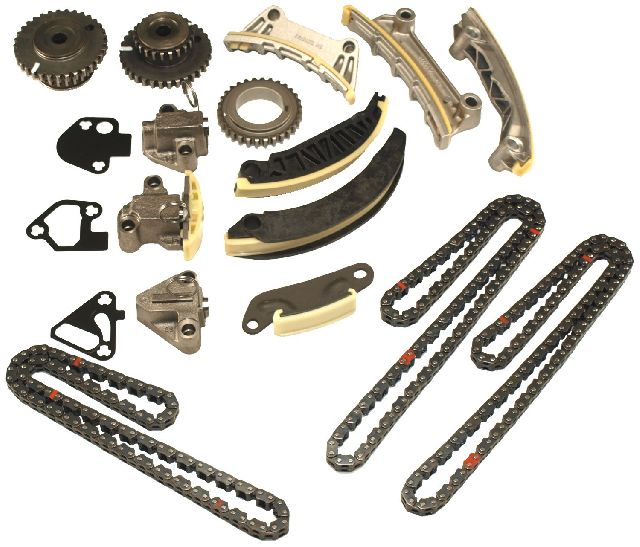
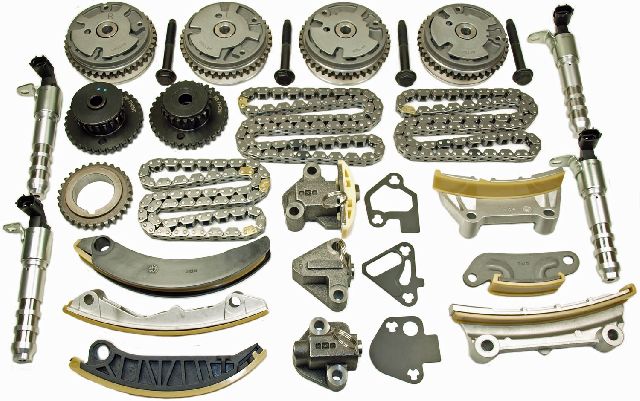
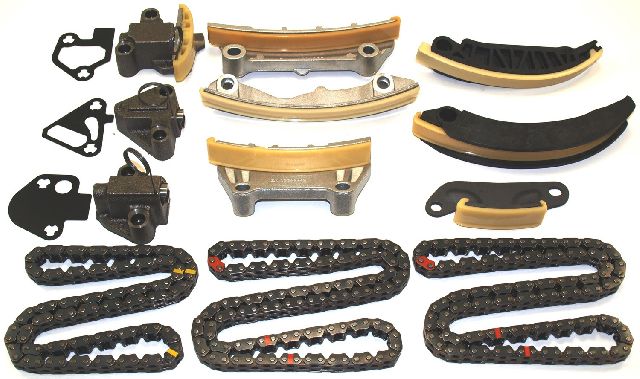
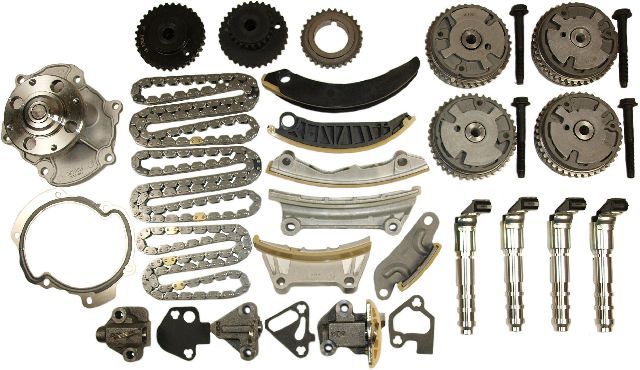
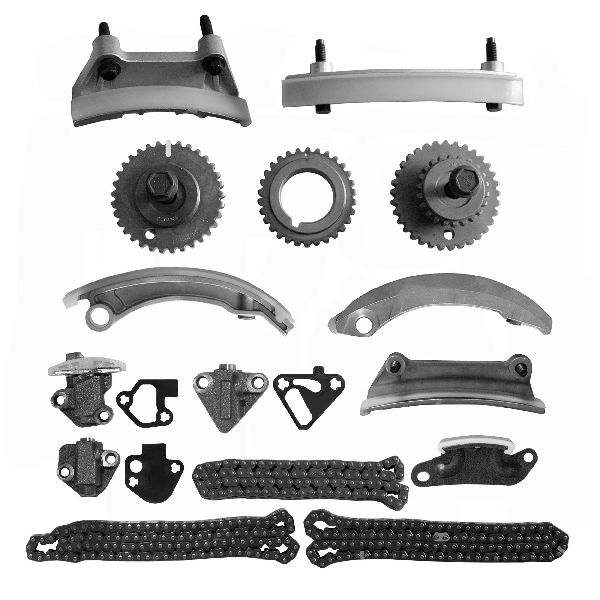
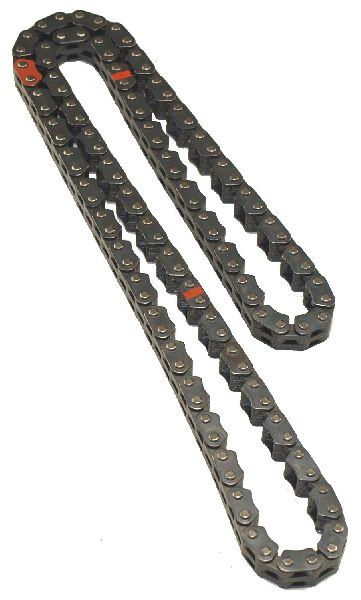
- Engine Timing Chain Kit
(OEM #ACDelco #12700436 (Kit includes chains, tensioners, guides))— This is the definitive fix for the most common cause of P0017 on the 3.6L LY7 engine: stretched timing chains. A complete kit includes all three chains, tensioners, and guides needed for the repair. Using an updated kit from a reputable brand is critical.
Trusted brands: ACDelco (OEM), Cloyes, Gates
OEM price range: $400-$600
Aftermarket price range: $250-$450
Related Codes That Often Appear With This One
- P0016 — Crankshaft/Intake Camshaft Correlation, Bank 1. This often appears with P0017 because a single stretched timing chain is affecting the timing of both camshafts on Bank 1.
- P0008 — Engine Positions System Performance Bank 1. This is a more general timing correlation code that is frequently set alongside P0017 when there is a significant timing chain issue.
- P0018 / P0019 / P0009 — These are the equivalent timing codes for Bank 2 (the bank closer to the radiator). If these appear alongside P0017, it strongly indicates an issue with the primary timing chain that serves both banks, confirming a systemic problem.
Technical Service Bulletins (TSBs) & Recalls
- 12-06-01-009D: Information on High Feature V6 Timing Chain Kits and guide replacement for DTCs including P0017. Advises against replacing sprockets/phasers unless damaged.
- PIP3423P / PIP3423M: Details diagnosis of a slipped crankshaft reluctor wheel, a rare but possible cause for P0017 after a timing chain replacement.
- Bulletin #12-06-01-009F: Notes the availability of high feature V6 timing chain kits and guide replacements specifically for repairing stretched timing chains that set DTCs P0008, P0009, P0016, P0017, P0018, and/or P0019.
- Bulletin #PIP3423P: Advises technicians that DTCs P0016, P0017, P0018, P0019, P0008, or P0009 may be set and requires inspection for loose timing chains or tensioners.
Platform-Specific Known Issues
- The 3.6L LY7 V6 engine is widely known for premature timing chain stretching, which GM addressed with TSB #12-06-01-009D and updated parts.
- GM also issued Special Coverage Adjustment #11340C for some model years and vehicles with this engine, extending the warranty for timing chain failure to 10 years/120,000 miles. Most 2008-2009 models are now well outside this coverage window by time.
- The repair often involves reprogramming the ECM to shorten the oil change intervals calculated by the Oil Life Monitor (OLM) to prevent recurrence.
Mechanic-Grade Diagnostic Values
- Crankshaft Reluctor Wheel Position Measurement — expected: 25 to 26 mm from the end of the machined surface of the crankshaft throw to the edge of the open space in the reluctor wheel.. Failure: A measurement outside of this range, either clockwise or counter-clockwise, indicates the reluctor has slipped and the crankshaft must be replaced.
- Camshaft vs. Crankshaft Correlation DTC Trigger — expected: Less than 14 degrees of deviation.. Failure: The ECM will set P0017 if it detects the exhaust camshaft is greater than 14 degrees advanced or retarded in relationship to the crankshaft.
Scan Tool Commands That Help
- GDS2 / Tech2 or equivalent professional scan tool: Crankshaft and Camshaft Sensor Active Counters — When diagnosing an intermittent or unusual P0017. Graphing the active counters for all cam sensors and the crank sensor can reveal an erratic signal from one sensor that might not be obvious from the code alone. A stable, stair-stepping pattern is expected from all sensors; an erratic, inconsistent count from the crankshaft sensor while the cam sensors are stable points to a faulty crank sensor or wiring issue rather than a mechanical timing problem.
- GDS2 / Tech2 or equivalent professional scan tool: Cam/Crank Relearn — After replacing a crankshaft sensor or performing major engine work like a timing chain replacement. A user on a forum noted that after a timing chain replacement, the P0017 code returned instantly until a successful cam/crank relearn procedure was completed, which required multiple attempts.
Wiring & Ground Locations
- G107 — On the upper left front side of the 3.6L engine.. This is a primary ground point for the engine harness, which includes grounds for the ECM and multiple sensors. A poor or corroded connection at G107 can cause erratic sensor readings and phantom codes, including correlation codes like P0017.
- G109 — On the upper left rear side of the 3.6L engine.. This ground serves the Engine Control Module (ECM). A compromised ground connection here can directly affect ECM operation and its ability to correctly interpret sensor signals from the camshaft and crankshaft sensors.
- Engine Control Module (ECM) — Mounted on top of the battery cover.. The ECM is the central processing unit for this fault. All relevant sensor wiring for the camshaft and crankshaft position sensors terminates here. Knowing its location is critical for any circuit testing, such as checking for continuity or voltage at the sensor connectors.
Real Owner Repair Stories
- Chevy Equinox Forum (Unknown year Equinox with 3.6L V6, 160k miles) — Engine would stall randomly at idle but start right back up. P0016 and P0017 codes present. One of the rear cam sensors (Bank 1) was unplugged by a previous owner because the engine would not start or would stall if it was plugged in.
❌ Tried (didn't work) Replacing the crankshaft position sensor.
✅ What actually fixed it The user discovered the Bank 1 intake camshaft sensor was physically being rubbed by the spinning camshaft component (likely the phaser or reluctor). The temporary fix was to space the sensor out with an O-ring to prevent contact, which stopped the stalling. The root cause was suspected to be a loosened cam phaser bolt allowing for physical contact with the sensor. - Chevy Equinox Forum (Unknown year Equinox) — P0017 code appeared immediately after a professional timing chain and phaser replacement.
❌ Tried (didn't work) Replacing both camshaft position sensors., Replacing both VVT solenoids (referred to as VCTs).
✅ What actually fixed it The issue was unresolved in the thread, but a moderator suggested the cause could be a spun reluctor wheel on the new exhaust camshaft, which would require camshaft replacement. This highlights a potential failure even with new parts, where the press-fit reluctor ring moves out of position. - NHTSA ODI #10979701 — An owner reported that their vehicle was brought to the dealership with 77,008 miles for a P0017 crankshaft/camshaft correlation bank 1 code and a P0008 code, noting the exhaust camshaft was not moving when commanded.
- NHTSA ODI #11327300 — An owner of a Sport model with the 3.6L engine reported codes P0008, P0018, and P0017, and expressed concern that the engine issues may have led to subsequent transmission failures (codes P0752 and P0700).
OEM Part Supersession History
ACDelco 12651450→ACDelco 12700436— Updated timing chain kit design to address premature stretching issues.
Heads up: Using older stock or a non-updated kit may lead to a repeat failure. It is critical to use the latest superseded part number from GM or a quality aftermarket equivalent like Cloyes 9-0753S.
Model Year Variations Within This Range
- 2008-2009: The 3.6L LY7 V6 engine was not available in the base model Equinox. It was introduced for the 2008 model year as part of the 'Sport' trim, which also included a 6-speed automatic transmission and a sport-tuned suspension. Therefore, this P0017 issue on the 3.6L engine only applies to the Equinox Sport models from this period.
Diagnostic Flowchart
Real Owner Stories
Aggregated from forums and TSBs cited above. Mileages and costs reflect what owners reported in those sources.
Chevrolet Equinox 3.6L LY7 V6
Symptoms: The P0017 code returned instantly after performing a full timing chain replacement.
What fixed it: Diagnosed a spun camshaft reluctor ring after the primary timing chain repair failed to clear the code.
Source hint: Chevy Equinox Forum: 'Yet Another P0017 Issue! Sorry!'
Saturn Vue 3.6L V6 (Platform Mate)
Symptoms: Experienced P0017 and P0366 codes.
What fixed it: Performed a complete DIY timing job using parts from RockAuto, which included replacing the timing chains, oil pump, and pickup tube.
Source hint: YouTube: 'Saturn Vue 3.6L Timing Chain Replacement'
Related OBD-II Codes
Frequently Asked Questions
Is the timing chain issue on my 2008-2009 Equinox 3.6L covered by a recall or warranty?
What parts should I replace when fixing the P0017 code on the 3.6L LY7 engine?
Can I just change the oil to fix the P0017 code on my Equinox?
I replaced the timing chain on my 3.6L Equinox but the P0017 code came right back. What else could it be?
How can I prevent the timing chains from stretching again after replacement?
Is there a way to confirm the timing chain is stretched without taking the engine apart?
Helpful Videos
We Have This Part in Stock

The information in this article is provided for general reference and educational purposes only. Vehicle specifications, procedures, and part compatibility can vary by production date, trim level, and region. Always consult your vehicle's factory service manual and verify part numbers before purchasing or performing repairs. Safety-critical components such as airbags, seat belts, and braking systems should be installed by a qualified professional.
- Chevrolet Equinox:
- 🧭 Diagnostic Flowchart
- 🎬 Helpful Videos
- 🛍️ Shop This Part
- What's Unique About the 2008-2009 Chevrolet Equinox
- Symptoms You May Notice
- Most Likely Causes
- Rare But Worth Checking
- Diagnosis Steps
- Parts You'll Likely Need
- Related Codes That Often Appear With This One
- Technical Service Bulletins (TSBs) & Recalls
- Platform-Specific Known Issues
- Mechanic-Grade Diagnostic Values
- Scan Tool Commands That Help
- Wiring & Ground Locations
- Real Owner Repair Stories
- OEM Part Supersession History
- Model Year Variations Within This Range
- Real Owner Stories
- Chevrolet Equinox 3.6L LY7 V6
- Saturn Vue 3.6L V6 (Platform Mate)
- Related OBD-II Codes
- Frequently Asked Questions
- 🎟️ Get 5% Off