

P0017 on 2016-2017 Chevrolet Equinox: Causes and Fixes for Crank/Cam Correlation
On a 2016-2017 Equinox, especially with the 2.4L engine, P0017 almost always points to a stretched timing chain or failed tensioner, often caused by low or dirty engine oil from known consumption issues. A VVT solenoid or engine flush is a cheaper, possible first step, but the most common repair is a full timing chain replacement, which can cost $1,500-$2,700+. In rare cases after a chain replacement, the code can be caused by a spun camshaft reluctor ring.
- P0017 on a 2016-2017 Equinox is a serious code that should be addressed immediately to prevent severe engine damage.
- The first and most important diagnostic step is to check the engine oil level and condition, as low/dirty oil is a primary cause, especially on the 2.4L engine.
- While a faulty VVT solenoid is a possible and relatively cheap fix, the most probable cause is a stretched timing chain and/or failed tensioner, which is an expensive repair.
- Do not simply replace the cam/crank sensors as a first step; they are usually reporting a real mechanical problem.
- Given the high cost of a timing chain replacement ($1,500-$2,700+), proper diagnosis is critical to avoid unnecessary expense.
What's Unique About the 2016-2017 Chevrolet EQUINOX

The 2016-2017 Equinox, particularly models with the 2.4L Ecotec engine, is widely known for excessive oil consumption, a defect that can lead to class-action lawsuits. This condition often leads to low oil levels or degraded oil quality, which starves the timing chain and Variable Valve Timing (VVT) system of the hydraulic pressure and lubrication needed to operate correctly. This makes stretched timing chains, worn guides, and faulty tensioners the most common culprits for a P0017 code, a fact supported by multiple Technical Service Bulletins (TSBs) and countless owner complaints.
Diagnostic Flowchart

Tap your situation to follow the diagnostic path that matches what you're seeing on this vehicle.
Symptoms You May Notice
- Check Engine Light is on
- Rough or unstable idle
- Engine rattling noise, especially on startup
- Reduced engine power and poor acceleration
- Engine may stall or be difficult to start.
- Vehicle enters 'limp mode' with reduced power
- Replacing only the camshaft or crankshaft position sensors without first verifying the engine oil level and the mechanical integrity of the timing system. The sensors are often just the messenger, not the problem.
- Replacing the timing chain on a 2.4L engine without inspecting the exhaust camshaft reluctor ring for slippage, which can cause the P0017 code to return immediately.
Most Likely Causes


- Stretched Timing Chain or Worn/Broken Guides 🔴 High Probability → Shop Engine Timing Chain The 2.4L Ecotec engine has a well-documented history of timing chain stretch and guide failure, often accelerated by oil consumption issues. The 3.6L V6 is also known for this issue across GM platforms. A user on YouTube showed a broken timing chain guide was the direct cause of P0016/P0017 on their 2017 Equinox.
How to confirm: A physical inspection is the only definitive way. A mechanic can remove the valve cover to check for chain slack. A professional scan tool may also show a high deviation between desired and actual cam angles. A rattling noise on startup is a strong indicator.
Typical fix: Replace the timing chain, tensioners, and all guides as a complete kit. This is a major repair. It is also recommended to replace the water pump at the same time if it is driven by the timing chain.
Est. part cost: $150-$500 - Low or Dirty Engine Oil 🔴 High Probability The 2.4L engine is notorious for consuming oil between changes. Low oil pressure prevents the VVT system and hydraulic timing chain tensioner from operating correctly. Dirty or sludgy oil can clog the small passages in the VVT solenoids and cam phasers.
How to confirm: Check the engine oil dipstick. If the level is low or the oil is dark and sludgy, this is a likely contributor. A Reddit user's 2016 Equinox burned through 4 quarts of oil before the timing chain failed, triggering code P0016.
Typical fix: Perform an oil and filter change using the manufacturer-specified grade of oil (full synthetic ACDelco dexos1 is recommended). Some owners suggest performing an engine flush to clear sludge from VVT components before the oil change. Clear codes and see if the problem returns.
Est. part cost: $40-$80 - Failed Timing Chain Tensioner 🔴 High Probability → Shop Engine Timing Chain The tensioner is hydraulic and relies on clean oil at the proper pressure. It can fail or become weak, allowing the chain to go slack. TSB #PIP3423P directly points to this as a primary inspection point for P0017.
How to confirm: Usually diagnosed during a physical inspection for a loose timing chain. A loose chain is the primary symptom of a failed tensioner.
Typical fix: Replace the tensioner. This is always done as part of a full timing chain service.
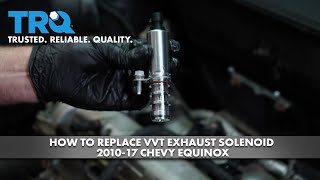
Est. part cost: $50-$100 - Faulty Exhaust Camshaft Position Actuator Solenoid (VVT Solenoid) 🟡 Medium Probability → Shop Engine Camshaft Sludge from dirty or low oil can clog the small screens and passages in the solenoid, causing it to stick or respond slowly. An owner complaint also noted this as part of a successful repair. Owners on forums strongly recommend using only OEM ACDelco solenoids, as aftermarket versions can cause codes to return.
How to confirm: Swap the exhaust solenoid with the intake solenoid (they are often identical). Clear codes and drive. If the code changes to P0016 (Intake Cam Correlation), the solenoid is bad.
Typical fix: Replace the faulty solenoid. It is best practice to replace both intake and exhaust solenoids at the same time.
Est. part cost: $30-$70
Rare But Worth Checking
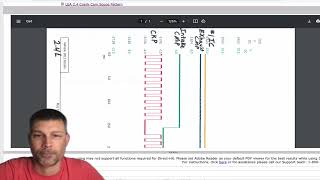
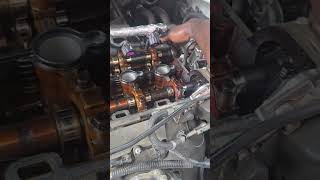
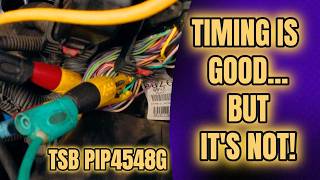
- Spun Camshaft Reluctor Ring: → Shop Engine Camshaft TSB #PIP4548F specifically addresses this. The reluctor ring (or tone wheel) that the camshaft sensor reads is press-fit onto the camshaft and can spin out of position. This causes a false reading even when mechanical timing is perfect, often leading to P0017 returning immediately after a timing chain replacement. A mechanic on YouTube documented this exact failure on a 2.4L Ecotec, showing how he had to manually rotate the ring back into position to fix the code.
- Spun Crankshaft Reluctor Ring: → Shop Engine Crankshaft On 3.6L V6 engines, TSB #PIP3423P notes that if timing chains and tensioners are found to be good, the crankshaft reluctor wheel may have moved. This requires crankshaft replacement.
- Faulty Camshaft or Crankshaft Position Sensor: → Shop Engine Crankshaft Position Sensor While possible, it's more likely the sensors are correctly reporting a mechanical problem. However, an owner complaint did mention replacing them as part of a fix. It's often recommended to use OEM ACDelco sensors, as some aftermarket sensors can cause issues.
- Failed Oil Pump: A failing oil pump can cause low oil pressure throughout the engine, leading to timing issues. One owner reported replacing the oil pump along with the timing chain kit to resolve P0017.
Diagnosis Steps
- Check the engine oil level and condition. If low or dirty, perform an oil and filter change with full synthetic oil, clear the codes, and re-test. Consider an engine flush if sludge is suspected.
- Use a scan tool to check for any other stored fault codes. Note if P0016 is also present, which strongly points to a base timing issue.
- With an advanced scan tool, monitor the live data for desired vs. actual camshaft position angles for Bank 1 Exhaust. A significant, lagging deviation points to a mechanical issue. If the PCM detects a base timing fault, it may disable VVT command, showing 0 desired angle.
- Locate the intake and exhaust VVT solenoids. Inspect their wiring and connectors for damage. Swap the two solenoids and clear the codes. If the code returns as P0016, the solenoid you moved to the intake side is faulty.
- If the solenoid is not the issue, test the camshaft position sensor and its wiring for proper voltage and continuity. Ensure OEM sensors are used if replacement is needed.
- If all electronic tests pass, a mechanical inspection is required. This involves removing the valve cover and/or timing cover to physically check the timing chain for slack, and inspect the guides and tensioner for wear or damage.
- If P0017 persists after a timing chain replacement, inspect the exhaust camshaft reluctor ring for any signs of slippage or movement relative to the camshaft, as per TSB #PIP4548F.
Parts You'll Likely Need
- Engine Timing Chain Kit — This is the most common fix for a P0017 code caused by a stretched chain, worn guides, or a failed tensioner. A complete kit ensures all related wear items are replaced.
Trusted brands: ACDelco (OEM), Cloyes
OEM price range: $250-$450
Aftermarket price range: $150-$300 - Exhaust Camshaft Position Actuator Solenoid (VVT Solenoid)
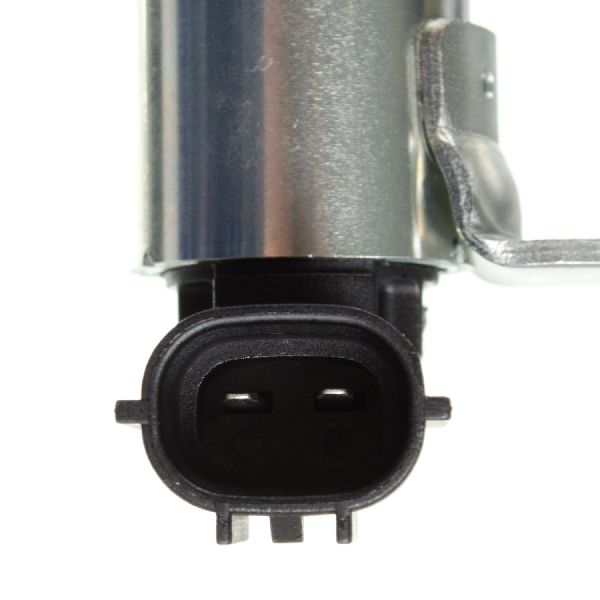
(OEM #12655421)— Often gets clogged by dirty oil or fails electronically, causing a loss of control over the exhaust cam phaser. It's a common, low-cost, and easy-to-replace part that should be considered early in the diagnosis.
Trusted brands: ACDelco (OEM), Dorman
OEM price range: $40-$60
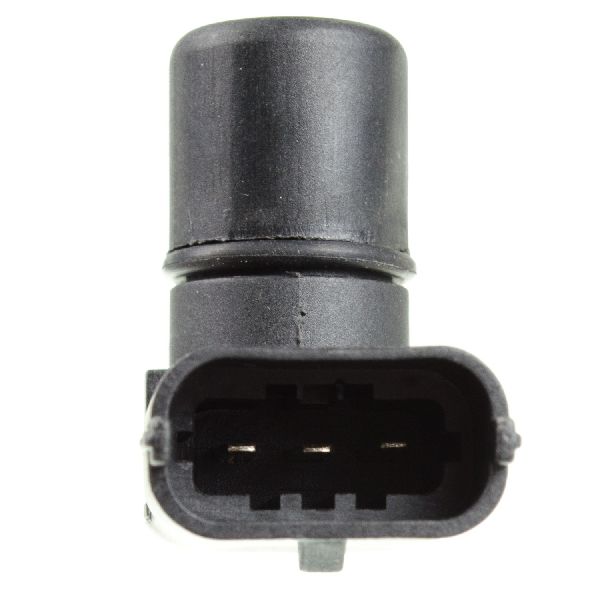
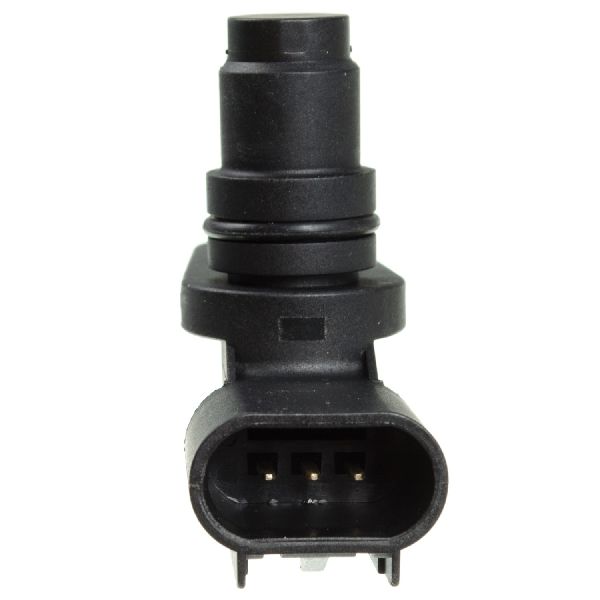
Aftermarket price range: $20-$40 - Exhaust Camshaft Position Sensor
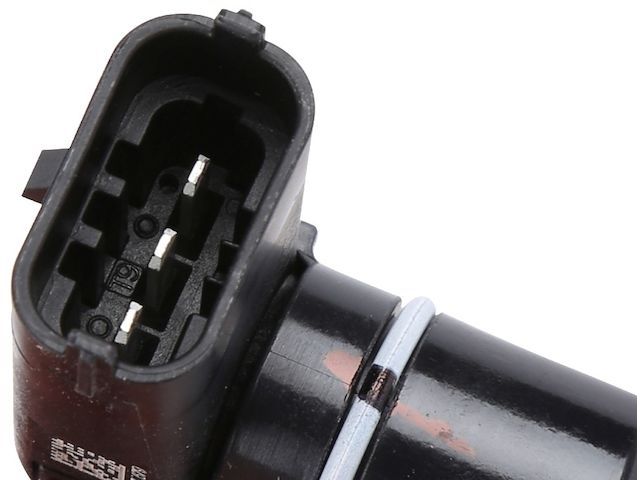
(OEM #12674702)— Though less common to be the root cause, a faulty sensor can send bad data. It's often replaced during a larger timing job or as a misdiagnosis. Many owners report that these engines are sensitive to aftermarket sensors.
Trusted brands: ACDelco (OEM), Bosch
OEM price range: $25-$45
Aftermarket price range: $15-$30
Related Codes That Often Appear With This One
- P0016 — Crankshaft/Intake Camshaft Correlation, Bank 1. This often appears with P0017 when a stretched timing chain affects both camshafts on Bank 1.
- P0008 — Engine Positions System Performance Bank 1. This is a general timing correlation code that is frequently set alongside P0017 due to a significant timing chain issue, especially on the 3.6L V6.
- P0014 — Exhaust Camshaft Position Timing - Over-Advanced. This code can be caused by a faulty VVT solenoid, a stuck cam phaser, or a stretched chain, all of which are related to P0017.
- P228D — High Pressure Fuel Pump Regulator Performance. On the 2.4L engine, the high-pressure fuel pump is driven by the intake camshaft. A timing chain issue can affect the pump's operation and trigger this code.
Technical Service Bulletins (TSBs) & Recalls
- Bulletin #PIP3423P: Instructs technicians to inspect for loose timing chains or tensioners when DTCs like P0017 are set.
- Bulletin #PIP4548F: Advises inspection of intake or exhaust components if P0017 sets on a properly timed engine or if there's a crank-no-start condition.
Platform-Specific Known Issues
- The 2.4L Ecotec engine in the 2016-2017 Equinox is known for high oil consumption, which is a primary contributor to premature timing chain failure and P0017 codes.
- Aftermarket VVT solenoids and camshaft position sensors are known to cause issues on this platform. Owners and mechanics strongly recommend using only ACDelco/GM Genuine parts for these components to avoid repeat failures or incorrect codes.
- A spun exhaust camshaft reluctor ring is a known, though rare, issue that can cause P0017 even with a new timing chain. This is covered in TSB #PIP4548F.
Mechanic-Grade Diagnostic Values
- VVT Actuator Solenoid Resistance (2.4L Engine) — expected: 8 to 13 Ohms. Failure: A reading outside of the specified range, especially a high reading in the kilo-ohms (KΩ), or a wildly fluctuating reading indicates a failed solenoid.
- Scan Tool: Desired vs. Actual Camshaft Angle (Exhaust Bank 1) — expected: The 'Desired' and 'Actual' angle values should closely match each other, especially when holding RPM above 1500.. Failure: A significant deviation between the desired and actual values indicates a problem. In some cases, if the PCM detects a persistent fault, it may command '0' degrees and disable VVT operation for that camshaft, which is a strong clue.
- ECM/PCM Ground Circuit Resistance — expected: Less than 1.0 Ohm. Failure: A reading higher than 1.0 Ohm between the ECM ground pin and the negative battery terminal indicates excessive resistance in the ground circuit, which can cause various unpredictable issues.
Scan Tool Commands That Help
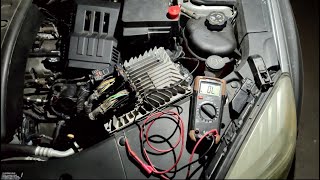
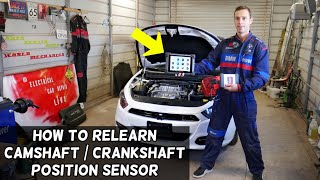
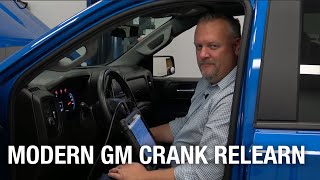
- GDS2 / Professional Scan Tool: Crankshaft Position Variation Learn — This relearn procedure should be performed after any work on the timing chain, camshafts, or crankshaft sensor. A failure for the procedure to complete can indicate a persistent base timing problem.
- GDS2 / Professional Scan Tool: Camshaft Position Actuator Live Data Monitoring — Used during diagnosis to compare the ECM's 'Desired' cam angle with the 'Actual' angle reported by the sensor. This helps differentiate between a command issue and a mechanical execution issue.
Wiring & Ground Locations
- Primary PCM/ECM Ground (2.4L) — On a stud on the engine block, located under the alternator and just above the A/C compressor.. This is a critical ground point for the engine computer. Corrosion or a loose connection at this hard-to-see location is a known cause of various engine codes and communication issues.
- Engine Harness Chafe Points — The engine harness may chafe against the ECM/TCM bracket, the driver's side upper control arm, and the shock tower bolt.. Vibration can cause the harness to rub through, potentially shorting the circuits for the camshaft sensors or VVT solenoids to ground, which can trigger P0017 and other codes.
- ECM Connector Ground Pins (2.4L) — The main ground wires are typically large black-and-white wires leading to the top-left terminal of each main ECM connector block.. Allows for direct testing of the ground circuit integrity right at the module, confirming the entire path from the ECM to the battery is solid.
Real Owner Repair Stories
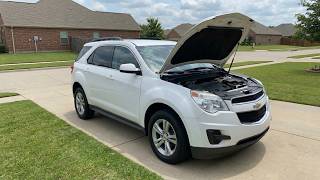
- YouTube user 'IRV' (2016 Chevrolet Equinox 2.4L, 160,000 miles) — Poor running, audible timing chain noise, Check Engine Light with P0017.
❌ Tried (didn't work) Replaced entire timing set (chain, guides, sprockets, etc.)., Replaced VVT solenoids., Replaced exhaust camshaft position sensor., Disassembled and re-timed the engine a total of three times, confirming timing marks were correct.
✅ What actually fixed it The reluctor ring on the end of the exhaust camshaft had spun out of position. Since it is only press-fit with no keyway, it gave a false reading to the sensor despite the mechanical timing being perfect. The camshaft itself had to be addressed. - YouTube comment on a P0016/P0017 video (2010 Chevrolet Equinox 2.4L) — Immediate P0016 and P0017 codes after a replacement engine was installed.
❌ Tried (didn't work) Tore down engine to verify timing was correct., Replaced phasers and tensioners.
✅ What actually fixed it After consulting TSBs, the technician discovered the reluctor ring on the intake camshaft had spun, likely due to a previous overheat condition on the engine core. The reluctor for the 2010 model was a one-year-only part and discontinued, complicating the repair. - Chevy Equinox Forum user (Chevrolet Equinox with 3.6L V6) — Codes P0016 and P0017, engine would stall if the Bank 1 intake camshaft sensor was plugged in.
❌ Tried (didn't work) Replacing sensors.
✅ What actually fixed it The user discovered the cam sensor was being physically rubbed by the camshaft/phaser assembly. Spacing the sensor out with an O-ring provided a temporary fix. The suspected root cause was a loose cam phaser bolt allowing for excessive movement.
"I Checked Everything" — The Actual Cause
- The equivalent for this code is 'timing marks align perfectly, but the code persists.' This scenario is frequently caused by a spun camshaft reluctor ring. The timing chain, sprockets, and phasers can be perfectly aligned according to service procedures, but because the tone wheel that the sensor reads has physically moved on the camshaft itself, the ECM receives data indicating a correlation fault. Technicians report tearing down the engine multiple times to re-verify timing before discovering the fault is on the camshaft itself.
When the Usual Fixes Don't Work
- While a stretched timing chain is the most common cause, a significant number of owners and technicians report that replacing the timing chain components does not resolve the P0017 code. In these cases, the actual root cause was a spun reluctor ring on the exhaust camshaft, a much rarer and harder-to-diagnose failure. For the 3.6L V6 engine, before undertaking the expensive timing chain replacement, an engine oil flush is recommended as a first step, as sludge buildup in the cam phasers can cause them to stick and trigger the code, mimicking a more severe mechanical failure.
OEM Part Supersession History
12655420 (Intake VVT Solenoid, 2.4L)→12679099— Part has been updated by the manufacturer.12635447, 12673669, 12675579 (Timing Chain Kit, 2.4L)→12680750— Kit has been updated by the manufacturer to a new consolidated part number.
Model Year Variations Within This Range
- 2016-2017: There are no significant mechanical differences between the 2016 and 2017 model year Equinox engines (2.4L or 3.6L) that would affect the diagnosis or common causes of a P0017 code. The primary changes were cosmetic and trim level designations (LTZ renamed to Premier in 2017).
Helpful Videos


We Have This Part in Stock



The information in this article is provided for general reference and educational purposes only. Vehicle specifications, procedures, and part compatibility can vary by production date, trim level, and region. Always consult your vehicle's factory service manual and verify part numbers before purchasing or performing repairs. Safety-critical components such as airbags, seat belts, and braking systems should be installed by a qualified professional.
- Chevrolet EQUINOX:
- 🧭 Diagnostic Flowchart
- 🎬 Helpful Videos
- 🛍️ Shop This Part
- What's Unique About the 2016-2017 Chevrolet EQUINOX
- Symptoms You May Notice
- Most Likely Causes
- Rare But Worth Checking
- Diagnosis Steps
- Parts You'll Likely Need
- Related Codes That Often Appear With This One
- Technical Service Bulletins (TSBs) & Recalls
- Platform-Specific Known Issues
- Mechanic-Grade Diagnostic Values
- Scan Tool Commands That Help
- Wiring & Ground Locations
- Real Owner Repair Stories
- "I Checked Everything" — The Actual Cause
- When the Usual Fixes Don't Work
- OEM Part Supersession History
- Model Year Variations Within This Range
- 🎟️ Get 5% Off