

P0017 on 2012-2020 Chevrolet Impala 3.6L: Crank/Cam Correlation Causes and Fixes
On the 2012-2020 Impala with the 3.6L V6, code P0017 almost always points to stretched timing chains, a serious and expensive repair. Before assuming the worst, check the engine oil level and condition, as low or dirty oil can affect the VVT system and trigger the code. Do not replace sensors first, as this is a common misdiagnosis; they are usually correctly reporting a mechanical fault.
- For the 2012-2020 Impala 3.6L, P0017 is a strong indicator of a stretched timing chain, a serious and expensive repair.
- Always check the engine oil level and condition first. A simple oil change with the correct synthetic oil might resolve the issue if it's related to a dirty VVT system.
- Do not ignore this code. Continued driving risks the timing chain failing completely, which can lead to catastrophic engine damage.
- Replacing the camshaft position sensor or VVT solenoid is a possible but much less likely fix than replacing the timing chains.
- This repair is not recommended for a DIY novice. Timing chain replacement is a complex job that should be left to a professional mechanic.
What's Unique About the 2012-2020 Chevrolet Impala
The GM 3.6L V6 engine family (including the LFX) has a well-documented history of premature timing chain stretch. This issue is so common that it's the primary suspect for a P0017 code, unlike in many other vehicles where a sensor or solenoid might be the more frequent cause. While GM released updated timing chain kits and numerous Technical Service Bulletins (TSBs) for earlier versions of this engine, the problem can still occur in the LFX, especially if oil change intervals recommended by the Oil Life Monitor are too long. GM's own TSB #12-06-01-009F directly addresses this issue and lists P0017 as a resulting code.
Generation note: This range covers the end of the ninth generation (2012-2016, sold as 'Impala Limited' from 2014) and the full run of the tenth generation (2014-2020). Both generations used the 3.6L LFX V6 engine, and the primary causes for code P0017, particularly timing chain issues, are common to the engine regardless of the vehicle generation. The LFX engine itself was an update to the earlier LLT engine and featured improved timing chain designs, but the stretching issue was not completely eliminated.
Symptoms You May Notice
- Check Engine Light illuminated
- Engine rattle, especially on cold startup
- Rough or uneven idle
- Loss of power or sluggish acceleration
- Difficulty starting the engine or extended cranking
- Poor fuel economy
- Engine surging or a fluctuating idle
- Replacing only the camshaft position sensor without investigating the oil condition or the mechanical timing. On this engine, P0017 is more often a mechanical fault than a sensor fault.
- Replacing the VVT solenoid without first checking oil level and quality. A new solenoid can quickly become clogged or fail to operate correctly if the underlying oil sludge or pressure issue is not resolved.
Most Likely Causes
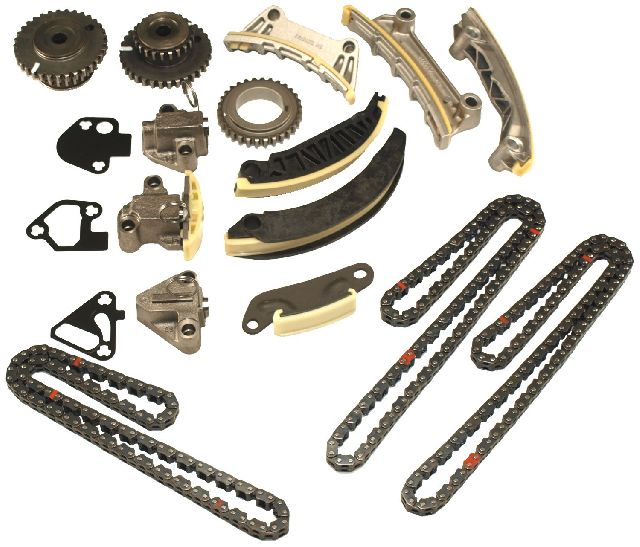
- Stretched Timing Chain(s) 🔴 High Probability → Shop Engine Timing Chain The 3.6L LFX engine has a widely documented history of premature timing chain wear, a known issue carried over from its predecessors (LY7, LLT). This can be exacerbated by infrequent oil changes, as the oil life monitor may allow for excessively long intervals, leading to oil breakdown and inadequate lubrication of the chains and tensioners.
How to confirm: Listen for a distinct rattling noise from the engine on cold starts. A professional mechanic can use a scan tool to observe the camshaft deviation angles or perform a physical inspection, which is labor-intensive and may require dropping the engine cradle. A lab scope can also be used to compare camshaft and crankshaft sensor patterns against a known good waveform to confirm a timing discrepancy.
Typical fix: Replace all three timing chains, along with the tensioners and guides, using a complete, updated kit. It is also highly recommended to replace the water pump during this service, as it is driven by the timing chain and difficult to access otherwise.
Est. part cost: $300-$650 - Low or Dirty Engine Oil 🟡 Medium Probability The camshaft phasers (VVT system) are hydraulically operated by engine oil pressure. Low, old, or sludgy oil can cause the VVT solenoids or phasers to stick or respond slowly, triggering a correlation code. Using oil that does not meet the GM dexos1 specification can also contribute to sludge and wear.
How to confirm: Check the engine oil dipstick for level and inspect the oil's condition. If it is dark, gritty, or below the 'add' line, this is a likely contributing factor. This should be the very first diagnostic step. 🎬 See this simple diagnostic trick before replacing your timing chains.
Typical fix: Perform an engine oil and filter change using a full synthetic oil that meets the GM dexos1 specification. Some mechanics may recommend an engine flush to clean out sludge, but this should be done with caution. After the oil change, clear the codes and drive to see if P0017 returns.
Est. part cost: $50-$100 - Faulty Camshaft Actuator Solenoid (VVT Solenoid) ⚪ Low Probability → Shop Engine Camshaft These solenoids have fine mesh screens that can become clogged with debris from dirty oil, causing them to fail or stick. While less common than chain stretch on the LFX, it's a possible and much cheaper failure point.
How to confirm: Remove the Bank 1 exhaust VVT solenoid and inspect it for sludge or debris. It can be tested by applying 12V power. A common diagnostic technique is to swap the suspect solenoid with an identical one (e.g., the intake solenoid on the same bank) and see if the trouble code follows (e.g., changes to P0016). The internal resistance can also be measured with a multimeter and should be between 8 and 13 ohms.
Typical fix: Replace the faulty solenoid. Given the relatively low cost, replacement is often more practical than cleaning. The OEM part is recommended.
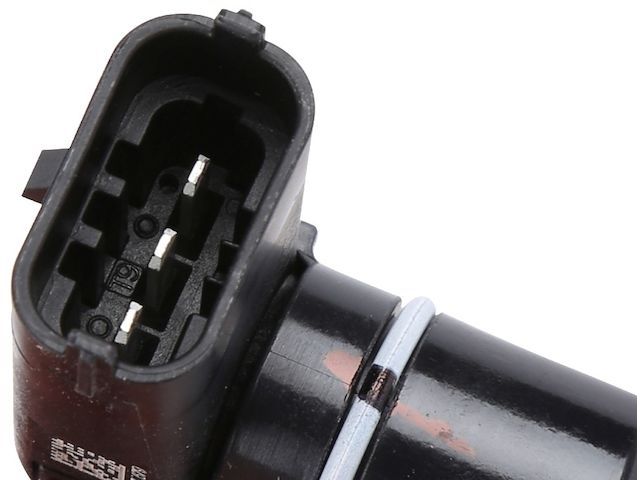
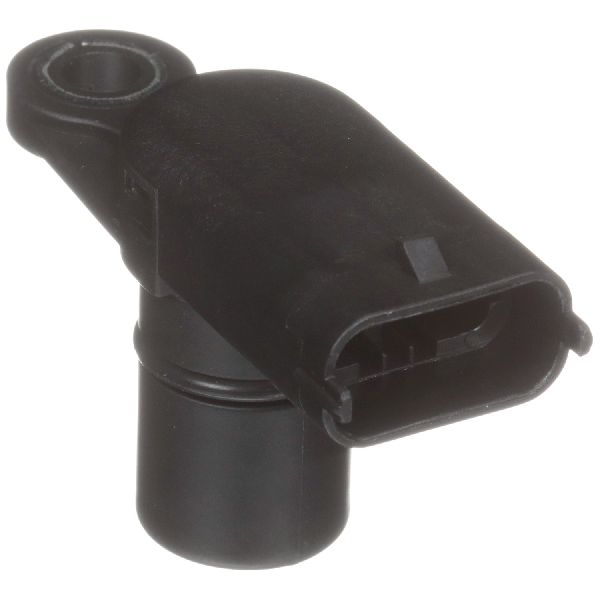
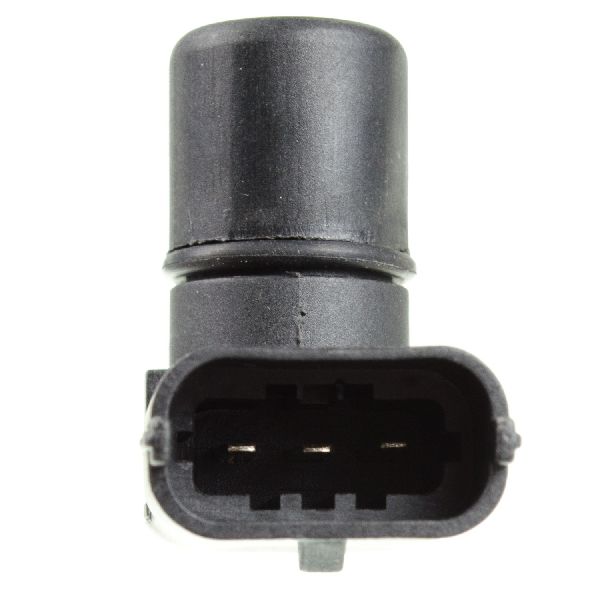
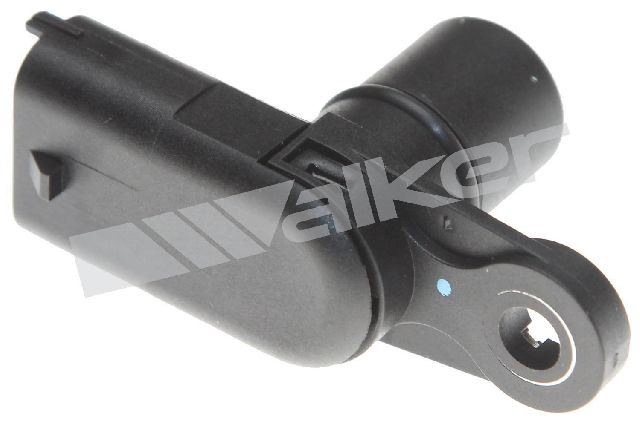
Est. part cost: $25-$70 - Faulty Camshaft Position Sensor ⚪ Low Probability → Shop Engine Camshaft Position Sensor
How to confirm: While less common for this code on the LFX engine, the sensor can fail. It can be tested with a multimeter or by swapping it with the corresponding sensor on the other bank (if accessible and identical) to see if the code changes to P0019. A three-wire Hall effect sensor can be tested for a 5V reference, good ground, and a fluctuating signal voltage when the engine is running.
Typical fix: Replace the Bank 1 exhaust camshaft position sensor.
Est. part cost: $20-$60
Rare But Worth Checking
- Failed Camshaft Phaser/Actuator: → Shop Engine Camshaft The mechanical gear on the end of the camshaft can fail, getting stuck in one position. This is less common than chain stretch but is a possible mechanical failure that would also necessitate a timing chain job to access.
- Slipped Crankshaft Reluctor Wheel: → Shop Engine Crankshaft In rare cases, the toothed wheel on the crankshaft that the position sensor reads can move slightly, throwing off the base timing reading for the entire engine and causing correlation codes. GM has a specific bulletin (PIP3423) for inspecting this with a borescope through the crankshaft sensor hole.
Diagnosis Steps
- Verify the engine oil level is correct and the oil is clean. If low or dirty, perform an oil change with a full synthetic dexos1-approved oil and a new filter. Clear the code and see if it returns. This is the easiest and cheapest first step.
- Use a professional OBD-II scanner to check for other related codes (P0008, P0016, P0018, P0019). Multiple timing codes strongly point to a base mechanical timing issue.
- Listen for a rattling or slapping noise from the front of the engine during a cold start, which is a classic sign of a loose timing chain.
- Inspect and test the Bank 1 exhaust camshaft actuator (VVT) solenoid. Check its screens for debris. Consider swapping it with the intake solenoid to see if the code changes from P0017 to P0016.
- Inspect and test the Bank 1 exhaust camshaft position sensor and its wiring.
- If all previous steps fail to resolve the issue, the cause is almost certainly a mechanical timing problem (stretched chain). This requires engine disassembly to verify and repair, a job for a professional mechanic.
Parts You'll Likely Need
- Engine Timing Chain Kit
(OEM #12650230 (Kit for earlier models, check specific VIN))— This is the most common fix for P0017 on the 3.6L LFX engine due to the high probability of stretched timing chains. A complete kit ensures all wearable components are replaced. TSB 12-06-01-009F specifies using a complete kit for this repair.
Trusted brands: ACDelco (GM Genuine), Cloyes, Dayco
OEM price range: $400-$650
Aftermarket price range: $250-$550 - Camshaft Position Actuator Solenoid
(OEM #12651420 (Exhaust), 19419980 (Updated P/N))— A common and inexpensive part to fail due to oil contamination. It's often replaced as a diagnostic step before committing to a timing chain job.
Trusted brands: ACDelco, Dorman
OEM price range: $40-$70
Aftermarket price range: $25-$45 - Camshaft Position Sensor
(OEM #12686928 (Bank 1 Exhaust/Intake))— Though a less common cause, a faulty sensor can trigger the code. It is relatively easy to access and replace.
Trusted brands: ACDelco, NTK, Delphi
OEM price range: $35-$55
Aftermarket price range: $20-$40
Related Codes That Often Appear With This One
- P0008 — A general engine position system performance code for Bank 1. It is frequently the first code to appear when a timing chain begins to stretch and is listed in the same TSBs as P0017.
- P0016 — This is the correlation code for the intake camshaft on the same bank (Bank 1). If P0016 and P0017 appear together, it strongly suggests a stretched timing chain affecting the entire bank.
- P0018 / P0019 — These are the equivalent codes for Bank 2 (the front bank, closer to the radiator). If they appear alongside P0017, it indicates a severe, engine-wide timing chain problem, likely involving the primary chain.
Technical Service Bulletins (TSBs) & Recalls
- TSB #12-06-01-009F: Information on High Feature V6 Timing Chain Kits and Chain Guide Replacements, DTCs P0008, P0009, P0016, P0017, P0018 and/or P0019. This is the primary TSB covering the timing chain stretch issue and explicitly lists the 2012 Impala LFX.
- Special Coverage #11340C: This earlier program extended the warranty on timing chains to 10 years/120,000 miles for certain older 3.6L engines due to premature wear. While it may not apply to all vehicles in this range, it demonstrates GM's acknowledgement of the problem.
- TSB #PIP3423C: This bulletin details the diagnostic procedure for checking a potentially slipped crankshaft reluctor ring using a borescope, which can also cause these codes.
Platform-Specific Known Issues
- Premature timing chain wear is a significant, well-documented issue on the 3.6L V6 engine family. General Motors issued Technical Service Bulletin #12-06-01-009 (with several revisions like 12-06-01-009F) which addresses this issue and lists the relevant DTCs, including P0017. The bulletin specifies using comprehensive timing chain kits for the repair and applies to the 2012 Impala with the LFX engine.
- The GM Oil Life Monitor (OLM) on earlier versions of this engine family was criticized for allowing overly long oil change intervals, contributing to oil breakdown and chain wear. While the LFX has improved chains, sticking to a conservative 5,000-mile oil change interval with full synthetic dexos1 oil is cheap insurance against this expensive failure.
Mechanic-Grade Diagnostic Values
- Camshaft Actuator (VVT) Solenoid Resistance — expected: 8 to 13 Ohms. Failure: A reading outside this range (significantly higher or lower) indicates a faulty solenoid winding.
- Camshaft Position Sensor (3-wire Hall Effect) - Power Supply — expected: ~5V DC (Key On, Engine Off). Failure: No voltage or significantly low voltage points to a wiring or ECM issue, not a bad sensor.
- Camshaft Position Sensor (3-wire Hall Effect) - Signal Wire Static Voltage (Low State) — expected: Very close to 0V (e.g., < 0.1V). Failure: A low state voltage significantly above 0V (e.g., 0.15V or higher) can indicate a failing sensor that produces a weak signal, leading to intermittent codes even if it appears to function.
Hidden / Shadow Codes Worth Checking
- Mode $06, TID $83 (example ID): This is not a shadow code, but a data parameter within the standard OBD-II Mode $06. It shows the raw test results from the ECM's continuous monitoring of the Cam/Crank correlation. A technician can view the measured deviation in degrees and compare it to the maximum allowable threshold programmed into the ECM. (see via A professional scan tool with Mode $06 data viewing capabilities is required.)
Scan Tool Commands That Help
- GDS2 (GM Global Diagnostic System 2) or similar professional scan tool: Crankshaft Position Variation Learn — This procedure should be performed after replacing a crankshaft position sensor or the crankshaft itself. It allows the ECM to learn the minor variations in the crankshaft reluctor wheel to ensure accurate misfire detection and timing. While not a direct fix for P0017, it's a required step if related components are replaced.
- GDS2 or similar professional scan tool: Camshaft Position Actuator Solenoid Test — This bidirectional command allows a technician to manually command the VVT solenoids on and off while monitoring engine RPM or timing angles. It's used to verify if a solenoid is mechanically stuck or responding correctly to ECM commands, helping to isolate a faulty solenoid from a wiring or mechanical phaser issue.
Wiring & Ground Locations
- G103 / G104 — On the LFX engine and similar GM V6 platforms, key engine grounds are typically located on the engine block itself, often near the starter or on the cylinder heads. For example, G104 is often found on the lower left side of the engine block.. The Camshaft and Crankshaft Position Sensors rely on a clean ground reference to send an accurate signal to the ECM. A corroded or loose engine ground at G103 or G104 can introduce electrical noise or voltage offsets, potentially causing the ECM to misinterpret the sensor signals and set a false correlation code.
- ECM/PCM Connector — The Engine Control Module is typically located in the engine bay. The specific pins for the Bank 1 Exhaust Camshaft Position Sensor need to be identified from a wiring diagram.. If sensor and solenoid tests pass, a technician must check for continuity and resistance on the signal, power, and ground wires between the component connector and the ECM connector. This can identify a break or high resistance in the harness that is causing the fault.
Real Owner Repair Stories
- Camaro5 Chevy Camaro Forum (2012 Camaro 3.6L LFX, 47k miles) — Check Engine Light with codes P0016 and P0017, surging idle on startup (1200 RPM down to 600 RPM, cycling).
❌ Tried (didn't work) Replacing the timing chains, Replacing the throttle body, Replacing the crankshaft sensor, Replacing spark plugs, Replacing the Engine Coolant Temperature sensor
✅ What actually fixed it The crankshaft reluctor wheel had slipped 2.5 teeth. The final repair required pulling the engine and replacing the entire crankshaft to resolve the issue.
OEM Part Supersession History
12651420 (Exhaust VVT Solenoid)→19419980— Part number updated by GM. Reasons can include minor design revisions, change in manufacturer, or consolidation of parts.12671373 (VVT Solenoid)→12701385— Part number updated by GM for various applications.
Heads up: Always verify part numbers with the vehicle's VIN, as multiple solenoid designs exist for the HFV6 engine family.
Model Year Variations Within This Range
- 2012-2013 vs 2014+: While the LFX engine was used throughout, GM continuously made minor revisions to engine components and software. Earlier LFX engines may be slightly more susceptible to timing chain issues than the very last versions produced toward 2020. However, the fundamental cause and diagnostic procedure for P0017 remain the same across the entire 2012-2020 range.
Diagnostic Flowchart
Other Known Issues on This Vehicle
Issues unrelated to this code that are worth knowing about as an owner of this generation:
- Intake Valve Carbon Buildup 🟠 Medium — Common on all Gasoline Direct Injection (GDI) engines, including the LFX, typically becoming noticeable after 60,000-80,000 miles. Can cause rough idle, misfires, and reduced performance.
- Transmission Shudder (6T70/6T75) 🟠 Medium — Some owners report a shudder or vibration during light acceleration or when shifting, particularly in lower gears. This can be caused by torque converter issues or problems within the valve body. (Ref: TSB #18-NA-358)
- Failing Fuel Injectors 🟡 Low — While not extremely common, a failing direct injector can cause misfires (P0300-P0306) and rough running. Replacement is labor-intensive as the intake manifold must be removed.
- Water Pump Failure 🟠 Medium → Shop Engine Water Pump — The water pump is internal and driven by the timing chain. It can fail and leak coolant into the oil pan, causing major engine damage. It is highly recommended to replace it preventatively during any timing chain service.
Used vs. New Parts: Buying Guide for This Vehicle
When a used part is the smart pick: For this repair, used parts are generally not recommended for core timing components. However, a used Camshaft Position Sensor or VVT Solenoid from a low-mileage, reputable donor vehicle could be a cost-effective diagnostic step or replacement, provided it is inspected carefully.
Donor-vehicle mileage cap: roughly under 60000 miles for the part to have meaningful remaining life.
What to inspect on the donor part:
- For VVT Solenoids: Inspect the mesh screens for any metallic debris or heavy sludge. If they are not perfectly clean, do not buy the part.
- For Sensors: Check the plastic housing for cracks or heat damage. Ensure the connector pins are clean and free of corrosion.
- Verify the donor vehicle did not have timing-related trouble codes or a catastrophic engine failure.
OEM-only on this vehicle (don't cheap out):
- Timing Chain Kit: Never use a used timing chain, tensioner, or guide. The primary cause of P0017 is wear on these parts, so installing used ones is counterproductive. Always buy a new, complete kit.
- Camshaft Phasers/Actuators: These are complex mechanical parts that wear internally. Given the high labor cost to access them, installing a used phaser is a significant risk.
Aftermarket brands forum-validated for this vehicle:
- Timing Chain Kits: Cloyes is a highly regarded aftermarket brand for timing components, often considered equivalent or superior to OEM.
Brands owners have reported issues with on this vehicle:
- Unnamed/white-box eBay or Amazon timing kits: Many forum users and mechanics warn against using cheap, unbranded timing kits, as they have a high failure rate and can lead to catastrophic engine damage.
Real Owner Stories
Aggregated from forums and TSBs cited above. Mileages and costs reflect what owners reported in those sources.
2012 Chevrolet Impala LFX 3.6L V6
Symptoms: The owner experienced a Check Engine Light with code P0017 and noted that the 3.6L LFX engine has a history of premature timing chain wear.
What fixed it: Replacement of all three timing chains, along with the tensioners and guides, using a complete updated kit as specified in TSB #12-06-01-009F.
Source hint: TSB #12-06-01-009F and impalaforums.com
2012-2020 Chevrolet Impala 3.6L V6
Symptoms: Engine rattle, especially on cold startup, and a fluctuating idle.
What fixed it: An engine oil and filter change using full synthetic oil meeting GM dexos1 specifications to address VVT solenoids sticking due to dirty oil.
Source hint: Article context symptoms and common causes
Related OBD-II Codes
Frequently Asked Questions
Does TSB #12-06-01-009F apply to my 2012 Chevrolet Impala with the 3.6L LFX engine?
Is there a special warranty extension for timing chain issues on the LFX engine?
Can I use any synthetic oil in my Impala to prevent P0017?
How often should I change my oil to avoid timing chain stretch on the 3.6L V6?
If I have to replace the timing chains, are there other parts I should change at the same time?
Could a problem with the crankshaft itself cause P0017 on my Impala?
Helpful Videos

We Have This Part in Stock


The information in this article is provided for general reference and educational purposes only. Vehicle specifications, procedures, and part compatibility can vary by production date, trim level, and region. Always consult your vehicle's factory service manual and verify part numbers before purchasing or performing repairs. Safety-critical components such as airbags, seat belts, and braking systems should be installed by a qualified professional.
- Chevrolet Impala:
- 🧭 Diagnostic Flowchart
- 🎬 Helpful Videos
- 🛍️ Shop This Part
- What's Unique About the 2012-2020 Chevrolet Impala
- Symptoms You May Notice
- Most Likely Causes
- Rare But Worth Checking
- Diagnosis Steps
- Parts You'll Likely Need
- Related Codes That Often Appear With This One
- Technical Service Bulletins (TSBs) & Recalls
- Platform-Specific Known Issues
- Mechanic-Grade Diagnostic Values
- Hidden / Shadow Codes Worth Checking
- Scan Tool Commands That Help
- Wiring & Ground Locations
- Real Owner Repair Stories
- OEM Part Supersession History
- Model Year Variations Within This Range
- Other Known Issues on This Vehicle
- Used vs. New Parts: Buying Guide for This Vehicle
- Real Owner Stories
- 2012 Chevrolet Impala LFX 3.6L V6
- 2012-2020 Chevrolet Impala 3.6L V6
- Related OBD-II Codes
- Frequently Asked Questions
- 🎟️ Get 5% Off