

P0017 on 2015-2019 Chevrolet Impala: Crank/Cam Correlation, Causes, and Fixes
On the 3.6L V6 Impala, P0017 almost always means the timing chains have stretched, a serious and expensive repair. For the 2.5L I4, start by checking engine oil level and condition, then suspect a faulty camshaft position sensor or VVT solenoid before assuming a chain issue. An engine flush is a recommended first step for V6 models before committing to chain replacement.
- For a 2015-2019 Impala with the 3.6L V6, P0017 strongly suggests a stretched timing chain, a major repair.
- Always start diagnosis by checking the engine oil level and quality, as low or dirty oil can cause VVT system issues that trigger this code.
- On the 2.5L I4 engine, consider a faulty VVT solenoid or camshaft sensor as more likely causes before suspecting the timing chain.
- Do not ignore this code. Continued driving risks the timing chain jumping or breaking, which can lead to severe, non-repairable engine damage.
- This repair, especially the timing chain replacement, is not recommended for DIY beginners due to its complexity.
What's Unique About the 2015-2019 Chevrolet IMPALA
The 10th generation Impala was offered with both a 2.5L I4 (LCV) and a 3.6L V6 (LFX). The 3.6L V6 has a well-documented history of premature timing chain stretching, which is the most common cause of P0017 on these engines. This issue is so prevalent that GM has issued multiple Technical Service Bulletins (TSBs) related to it. While sensor or oil issues can cause this code on any engine, on the V6 Impala, the diagnosis often quickly points to this serious mechanical fault. The 2.5L engine is less prone to this specific failure mode, making sensor or solenoid issues a more likely starting point.
Diagnostic Flowchart
Tap your situation to follow the diagnostic path that matches what you're seeing on this vehicle.
Symptoms You May Notice
- Check Engine Light is on
- Rough or unstable idle
- Reduced engine power and sluggish acceleration
- Rattling noise from the engine, especially on a cold start
- Difficulty starting the engine or engine cranks but won't start
- Poor fuel economy
- Engine stalling, especially when put in gear
- Replacing only the camshaft or crankshaft position sensors without diagnosing the underlying mechanical issue, especially on the 3.6L V6. The sensors are often correctly reporting a mechanical timing problem.
- Replacing timing chains when the actual fault is a slipped crankshaft reluctor ring, leading to the code returning immediately after the expensive repair.
Most Likely Causes
- Stretched Timing Chains (3.6L V6) 🔴 High Probability → Shop Engine Timing Chain The GM 3.6L High Feature V6 engine family (LFX) has a known design issue leading to premature timing chain wear. This is often attributed to inadequate lubrication from extended oil change intervals (sometimes exacerbated by an optimistic Oil Life Monitor system 🎬 Watch: Why these GM 3.6L V6 timing chains fail so often.) and the hydraulic tensioners losing pressure with dirty or low oil.
How to confirm: A professional mechanic can use a lab scope to analyze the patterns from the crank and cam sensors to confirm the timing deviation 🎬 See how a mechanic uses a lab scope to confirm timing. without major disassembly. A rattling noise on cold starts is a strong audible clue. The definitive method is a physical inspection for chain slack by removing the engine front cover.
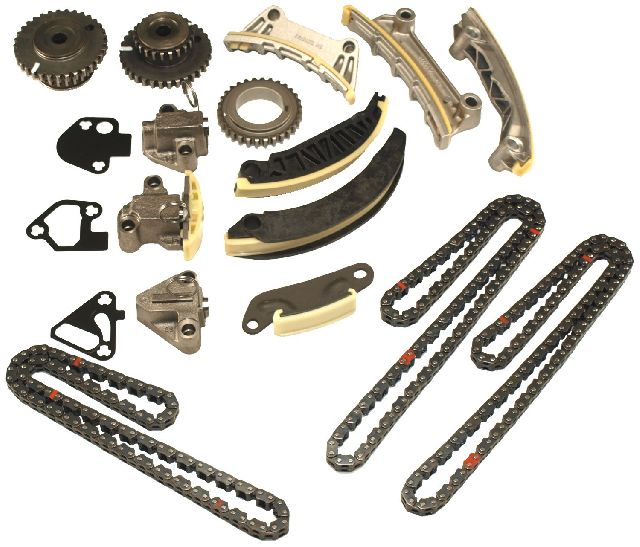
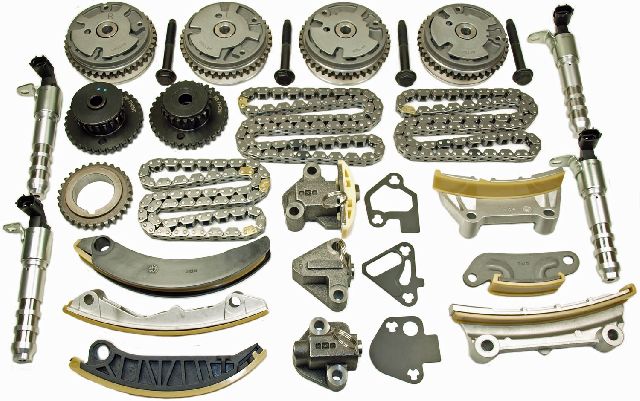
Typical fix: Replacement of all three timing chains, tensioners, and guides using an updated kit. This is a very labor-intensive job. 🎬 Watch this full step-by-step timing chain replacement walkthrough. GM TSB 12-06-01-009F notes that sprockets and guides often do not need replacement unless visibly worn.
Est. part cost: $400-$900 - Low or Dirty Engine Oil 🟡 Medium Probability The Variable Valve Timing (VVT) system and hydraulic timing chain tensioners rely on clean oil at the correct pressure. If the oil is low, dirty, or the wrong viscosity, it can clog the small passages in the VVT solenoids and cam phasers, causing them to respond slowly or stick. This can also reduce the effectiveness of the chain tensioners, accelerating wear.
How to confirm: Check the oil level on the dipstick and inspect its condition. If it's low or looks like dark sludge, this could be the cause.
Typical fix: Perform an oil and filter change using the correct specification synthetic oil. For the V6, some mechanics and owners recommend using an engine flush product first to clean out sludge from VVT components before changing the oil. Clear the code and see if it returns.
Est. part cost: $50-$100 - Faulty Camshaft Actuator Solenoid (VVT Solenoid) 🟡 Medium Probability → Shop Engine Camshaft
How to confirm: The Bank 1 exhaust solenoid can be tested with a scan tool that can command it to activate. You can also swap it with the intake solenoid (if they are the same part number) and see if the code changes to P0016. Visually inspect the solenoid's screens for sludge or debris upon removal.
Typical fix: Replace the Bank 1 exhaust camshaft actuator solenoid. For the 2.5L LCV, the OEM part number is 12633613 (superceded by 19419980). For the 3.6L LFX, the exhaust solenoid is OEM part number 12651420 (superseded by 12679099).
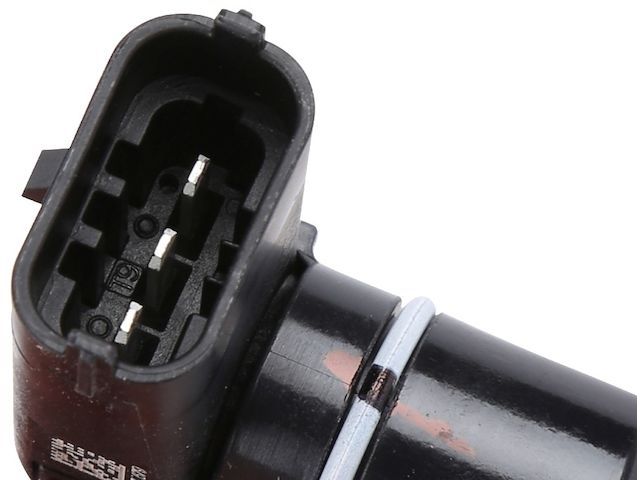
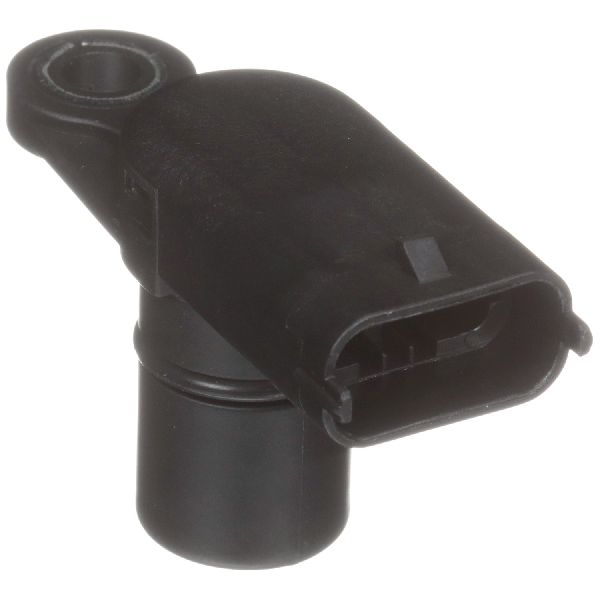
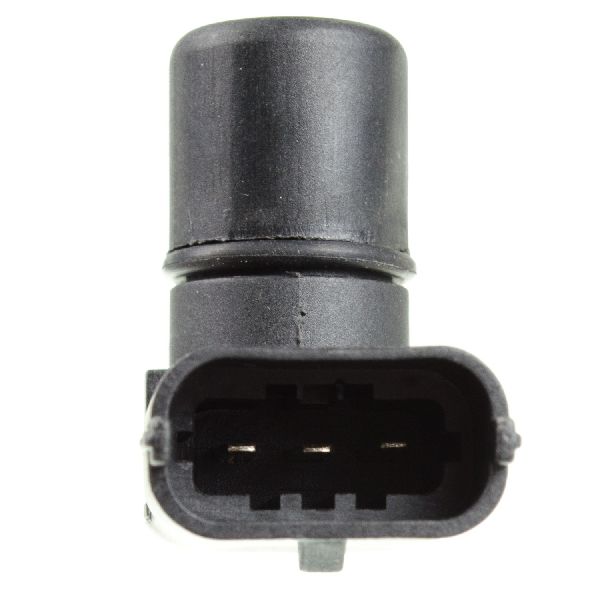
Est. part cost: $25-$70 - Faulty Camshaft or Crankshaft Position Sensor ⚪ Low Probability → Shop Engine Crankshaft Position Sensor
How to confirm: A failing sensor will often set its own specific code (e.g., P0365). A mechanic can monitor the sensor's output on a scan tool or with a lab scope to check for an erratic or missing signal. In some cases, a dirty sensor can cause issues; cleaning it and swapping it with the intake sensor can be a diagnostic step.
Typical fix: Replace the corresponding sensor (Bank 1 exhaust camshaft position sensor or the crankshaft position sensor).
Est. part cost: $20-$60
Rare But Worth Checking
- Slipped Crankshaft Reluctor Ring: → Shop Engine Crankshaft Multiple GM TSBs (including PIP3423P and its successors) mention that if timing chains are confirmed to be good, the next step is to inspect the crankshaft reluctor ring. This is a pressed-on wheel that the crankshaft sensor reads. If it has rotated on the crankshaft, it will cause persistent timing codes even with new chains. On some applications, it can be visually inspected with a borescope through the crank sensor hole before major disassembly. The fix requires crankshaft replacement.
Diagnosis Steps
- Check the engine oil level and condition. Top off or change the oil if it is low or dirty. Use the manufacturer-specified grade. For V6 models, consider an engine flush.
- Use a professional scan tool to check for any other stored trouble codes. Codes like P0016, P0008, P0018, or P0019 provide important clues and strongly point to a base timing issue.
- For the 3.6L V6, the highest probability is a stretched timing chain. Listen for a rattling noise from the front of the engine on cold starts.
- For the 2.5L I4, suspect the VVT solenoid first. You can use a scan tool to command the solenoid or swap it with the intake solenoid to see if the code follows.
- Test the camshaft and crankshaft position sensors. Check their wiring and connectors for damage. A lab scope is the best tool for verifying a clean signal.
- If other steps fail on a V6, a mechanical timing inspection is necessary. Per TSB PIP3423P, it may be possible to inspect the crankshaft reluctor ring with a borescope through the crank sensor port before committing to a full teardown. Otherwise, this involves significant disassembly to check for chain slack or broken guides.
Parts You'll Likely Need
- Timing Chain Kit (V6) — This is the most common failure on the 3.6L V6 engine leading to code P0017. A complete kit should be used to replace all chains, tensioners, and worn guides.
Trusted brands: ACDelco, Melling, Cloyes
OEM price range: $500-$800
Aftermarket price range: $300-$500 - Camshaft Position Actuator Solenoid
(OEM #12633613 (2.5L), 12651420 (3.6L Exhaust))— A common failure point due to oil contamination or simple wear. It's relatively inexpensive and easy to replace, making it a good diagnostic step, especially on the 2.5L engine.
Trusted brands: ACDelco, Delphi, Dorman
OEM price range: $40-$70
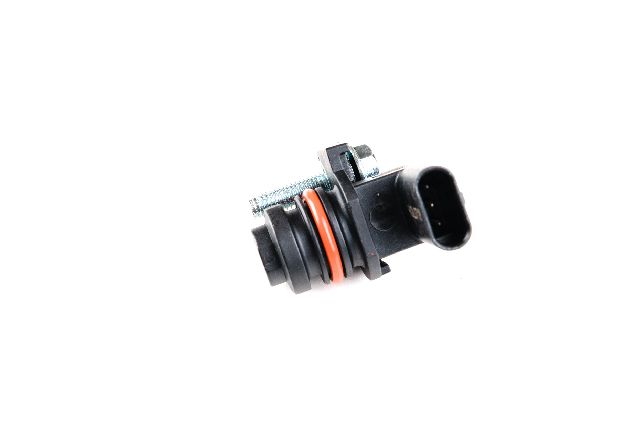
Aftermarket price range: $20-$50 - Exhaust Camshaft Position Sensor (Bank 1) — While less common than chain stretch on the V6, a sensor can fail and is a more probable cause on the 2.5L engine.
Trusted brands: ACDelco, Bosch, NTK
OEM price range: $35-$60
Aftermarket price range: $15-$40
Related Codes That Often Appear With This One
- P0008 — A general engine position system performance code for Bank 1. It is often the first code to appear when a timing chain begins to stretch on the 3.6L V6.
- P0016 — This is the correlation code for the *intake* camshaft on Bank 1. If both P0016 and P0017 are present, it strongly suggests a stretched timing chain affecting the entire bank.
- P0018 / P0019 — These are the equivalent codes for Bank 2. If they appear with P0017, it indicates a severe, system-wide timing chain problem affecting both sides of the V6 engine.
- P06DE — This oil pressure control circuit code can appear alongside timing codes on the 2.5L engine, suggesting an underlying oil pressure or delivery problem is causing the timing issue.
Technical Service Bulletins (TSBs) & Recalls
- PIP3423P
- 12-06-01-009F
- PIP5096C
Platform-Specific Known Issues
- The 3.6L LFX V6 engine used in this Impala is known for premature timing chain stretch, which is the primary cause for P0017 and related codes (P0008, P0016, P0018, P0019). This was an improvement over the earlier LLT engine but the issue persists, often linked to oil quality and change intervals.
- GM has released updated ECU software for some vehicles that widens the acceptable variance for cam/crank correlation, which can sometimes prevent the code from setting with minor chain stretch, though this does not fix the mechanical wear.
Mechanic-Grade Diagnostic Values
- Camshaft Position Actuator Solenoid (VVT Solenoid) Resistance — expected: 8 to 12 Ohms at 68°F (20°C). Some sources cite ranges from 5-15 Ohms.. Failure: A reading of infinite resistance (open circuit), zero resistance (short), or a value significantly outside the expected range indicates a faulty solenoid.
- 3-Wire Camshaft Position Sensor Circuit Voltage (Key On, Engine Off) — expected: Power Wire to Ground: ~5V. Signal Wire to Ground: ~4-5V. Ground wire should have continuity to chassis ground.. Failure: Absence of 5V on the power or signal wire points to a wiring or ECM issue. High resistance on the ground circuit can cause erratic signals.
Hidden / Shadow Codes Worth Checking
- Mode $06 Data: While not a 'shadow code', Mode $06 provides the raw results of the ECM's self-tests. For P0017, a technician can view the specific test data for the Cam/Crank Correlation monitor (e.g., TID $83 on some GMs) to see the actual measured value, the test limits, and whether it passed or failed. This can reveal if the timing is borderline or grossly out of spec, which is more detail than the simple DTC provides. (see via A professional scan tool with Mode $06 capability is required.)
Scan Tool Commands That Help
- GDS2 (or equivalent professional scan tool): Camshaft Position Actuator Control — This bidirectional command allows a technician to manually command the VVT solenoid to a specific percentage (e.g., 0% to 100%) while monitoring the 'Desired vs. Actual' camshaft position PIDs. If the actual position fails to change or doesn't match the desired position, it confirms a fault in the solenoid, oil pressure delivery, or the phaser itself, helping to isolate the problem without disassembly.
Wiring & Ground Locations
- G103 — Typically located on the cowl in the engine compartment, often near the brake booster.. This is a major ground point for the Body Control Module (BCM) and the Data Link Connector (DLC). While not a direct engine ground, poor grounding here can cause bizarre communication issues across the vehicle's network, potentially affecting how codes are reported or diagnosed.
- Engine Block to Chassis Ground — A primary ground strap connecting the engine block directly to the vehicle's frame or firewall.. The ECM and its sensors rely on a clean and solid ground reference through the engine block. A corroded, loose, or broken engine ground strap can introduce electrical noise and voltage offsets, leading to erratic sensor readings and potentially triggering false correlation codes like P0017.
Real Owner Repair Stories
- Chevy HHR Network forum user (2011 GM Vehicle (similar 2.4L Ecotec engine architecture)) — P0016 and P0017 codes present.
❌ Tried (didn't work) A full timing chain replacement was performed, which cleared the P0016 code. However, the P0017 code remained. The crankshaft position sensor was also replaced without resolving the code.
✅ What actually fixed it The user was in the process of replacing both VVT solenoids, as testing showed the exhaust solenoid was faulty despite not having its own specific DTC. The story highlights that a timing chain job may not be the only necessary repair and that associated components like solenoids can also fail. - Reddit user in r/MechanicAdvice (Vehicle with 3.6L engine) — Car ran poorly, found to be very low on oil. Timing had jumped 2 teeth.
❌ Tried (didn't work) N/A - extensive work performed at once.
✅ What actually fixed it The user performed a massive repair: replaced timing chain, tensioners, both CVVT sprockets, and the exhaust camshaft. The car ran well after the repair, but the P0017 code would not clear. This scenario strongly suggests a secondary issue that was not resolved by the mechanical timing components, such as a faulty ECM, a wiring harness problem, or a slipped crankshaft reluctor ring.
OEM Part Supersession History
12633613→19419980— This is the Camshaft Position Actuator Solenoid for the 2.5L LCV engine. The supersession likely indicates an updated design for improved reliability or performance.12651420→12679099 (or other variants)— This is the Camshaft Position Actuator Solenoid for the 3.6L LFX engine. GM has had multiple revisions of these solenoids to address high failure rates. TSBs like PIP5096C mention using specific new 'service' valves from different suppliers to resolve repeat failures.
Heads up: It is critical to use the latest recommended OEM part number for the specific VIN, as some solenoids were part of a known faulty batch.
Model Year Variations Within This Range
- 2015-2019: The 3.6L V6 engine offered in the Impala throughout this period was the LFX. The updated LGX V6 was used in other GM platforms (like the Cadillac CTS and Chevrolet Camaro starting in 2016) but was never installed in the 10th generation Impala.
Helpful Videos

We Have This Part in Stock

The information in this article is provided for general reference and educational purposes only. Vehicle specifications, procedures, and part compatibility can vary by production date, trim level, and region. Always consult your vehicle's factory service manual and verify part numbers before purchasing or performing repairs. Safety-critical components such as airbags, seat belts, and braking systems should be installed by a qualified professional.
- Chevrolet IMPALA:
- 🧭 Diagnostic Flowchart
- 🎬 Helpful Videos
- 🛍️ Shop This Part
- What's Unique About the 2015-2019 Chevrolet IMPALA
- Symptoms You May Notice
- Most Likely Causes
- Rare But Worth Checking
- Diagnosis Steps
- Parts You'll Likely Need
- Related Codes That Often Appear With This One
- Technical Service Bulletins (TSBs) & Recalls
- Platform-Specific Known Issues
- Mechanic-Grade Diagnostic Values
- Hidden / Shadow Codes Worth Checking
- Scan Tool Commands That Help
- Wiring & Ground Locations
- Real Owner Repair Stories
- OEM Part Supersession History
- Model Year Variations Within This Range
- 🎟️ Get 5% Off