

P0017 on 2012-2016 Chevrolet Sonic: Crank/Cam Correlation Causes and Fixes
P0017 on a Chevy Sonic usually means the timing is off between the crankshaft and the exhaust camshaft. The most common causes are low/dirty oil, a bad camshaft position sensor, or a faulty camshaft actuator solenoid. A stretched timing chain (1.4L) or slipped/improperly installed timing belt (1.8L) is also a significant possibility, especially if the code appears after a recent repair.
- Always check your engine oil level and condition first when you see a P0017 code.
- The most common parts to fail are the exhaust camshaft position sensor and the exhaust VVT solenoid. Swapping them with their intake-side counterparts is an effective way to diagnose the problem.
- This code often appears after a timing belt replacement on the 1.8L engine, which strongly suggests the mechanical timing was set incorrectly.
- For the 1.4L turbo engine, a stretched timing chain is a more probable mechanical cause than a slipped belt.
- If you have a 1.8L and the code appeared after a repair near the camshafts, check for the missing plastic oil sleeve mentioned in TSB PIP4543D.
What's Unique About the 2012-2016 Chevrolet SONIC
The Chevy Sonic was available with two different engines: a 1.8L that uses a timing belt, and a 1.4L turbo that uses a timing chain. While both can experience the P0017 code, the diagnostic path can differ. The 1.8L engine is specifically mentioned in GM Technical Service Bulletin #PIP4543D for this code appearing after repairs (like a cylinder head or timing belt change) if a small, black plastic oiling sleeve for the cam actuator is forgotten, damaged, or installed incorrectly during reassembly. For the 1.4L turbo, stretched timing chains are a more common concern leading to this code, often accompanied by a rattling noise on startup.
Diagnostic Flowchart
Tap your situation to follow the diagnostic path that matches what you're seeing on this vehicle.
Symptoms You May Notice
- Check Engine Light is on
- Rough idle, shaking, or stalling.
- Reduced engine power and acceleration, sometimes described as 'limp mode'.
- Poor fuel economy.
- Rattling noise from the engine, especially on startup (more common on 1.4L with timing chain issues).
- Replacing camshaft or crankshaft sensors when the root cause is a mechanical timing issue (stretched chain/belt) or low/dirty engine oil.
- Replacing the timing chain/belt without addressing a faulty VVT solenoid, leading to the code returning.
- Assuming the code is a sensor fault when it appears immediately after a timing belt change, where incorrect timing is the most likely cause.
Most Likely Causes
- Low or Dirty Engine Oil 🔴 High Probability The camshaft phasing system (Variable Valve Timing or VVT) uses oil pressure to adjust timing. If the oil is low, dirty, or not the correct Dexos-approved viscosity, the actuators cannot function correctly, leading to correlation codes.
How to confirm: Check the engine oil dipstick for proper level and inspect the oil's condition. If it's very dark, gritty, or below the minimum mark, this is a likely cause. Many owners report the code clearing after an oil change. 🎬 Watch: How to clean your camshaft valves and actuators for free.
Typical fix: Perform an oil and filter change using a full synthetic oil that meets GM's Dexos specification. Clear the code and see if it returns.
Est. part cost: $30-$70 - Faulty Exhaust Camshaft Position Actuator Solenoid 🟡 Medium Probability → Shop Engine Camshaft These solenoids control oil flow to the cam phasers. Their internal screens can get clogged with sludge from dirty oil, or they can fail electrically over time.
How to confirm: You can test the solenoid's resistance with a multimeter (spec is typically 8-13 ohms). A common and effective diagnostic step is to swap the intake and exhaust solenoids (they are identical). Clear the codes and drive. If the code changes to P0016 (intake correlation), the solenoid is confirmed bad.
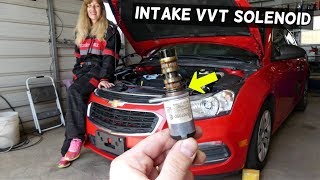
Typical fix: Replace the exhaust camshaft position actuator solenoid. It's often recommended to replace both intake and exhaust solenoids at the same time. 🎬 See this video to locate the VVT solenoids on the 1.8L engine.
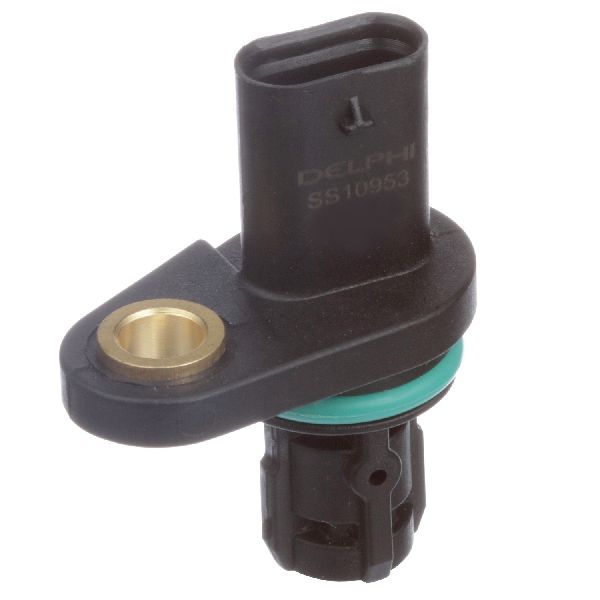
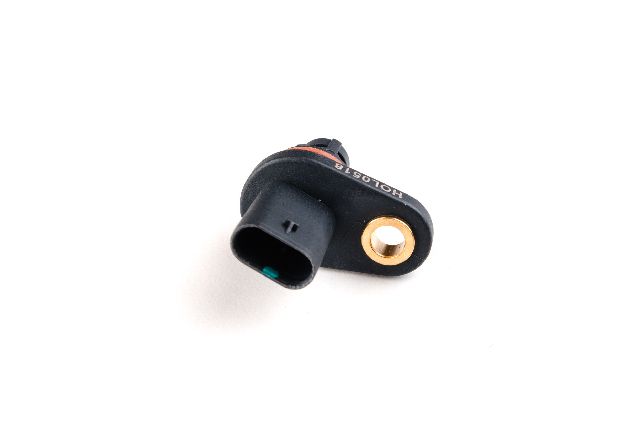
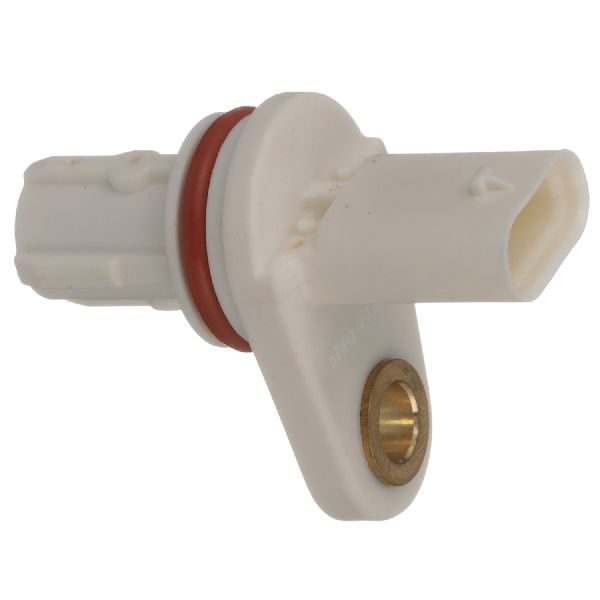
Est. part cost: $25-$60 - Faulty Exhaust Camshaft Position Sensor 🟡 Medium Probability → Shop Engine Camshaft Position Sensor
How to confirm: Inspect the sensor and its wiring for damage. A user on a forum noted that on the 1.4T, the actuator wires can melt on the corner of the head. The easiest test is to swap the intake and exhaust camshaft position sensors (if they are identical parts) and see if the trouble code changes to P0016.
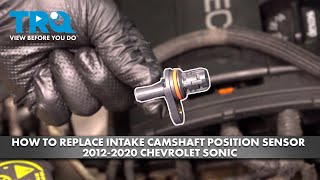
Typical fix: Replace the exhaust camshaft position sensor (Bank 1, Sensor B). 🎬 Watch: A step-by-step guide to replacing the camshaft position sensor.
Est. part cost: $20-$50 - Stretched Timing Chain (1.4L Engine) or Slipped/Incorrect Timing (1.8L Engine) 🟡 Medium Probability → Shop Engine Timing Chain Timing chains on the 1.4L turbo engine are known to stretch over time, causing correlation issues. The timing belt on the 1.8L engine has a specific service interval and can cause P0016/P0017 if it slips a tooth or is installed incorrectly during a service.
How to confirm: This requires removing the valve cover and/or timing cover to physically inspect the timing marks. For the 1.8L, a special camshaft locking tool is used to verify the cams are aligned when the crank is at Top Dead Center (TDC). For the 1.4L, excessive slack in the chain or a fully extended tensioner are signs of a problem.
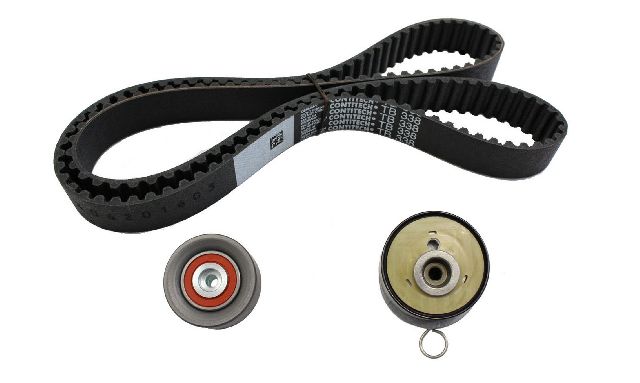
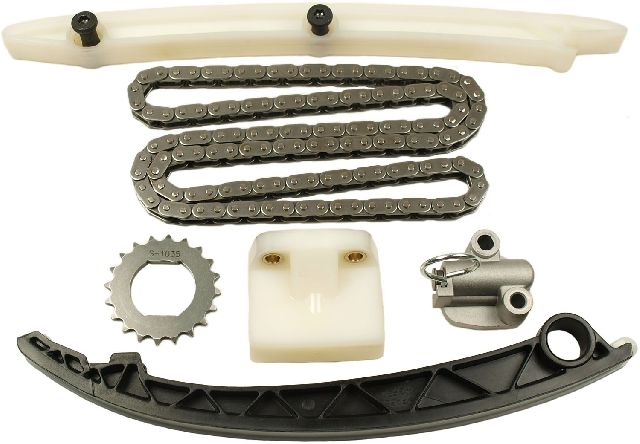
Typical fix: Replace the timing chain kit (chain, guides, tensioner) or timing belt kit (belt, tensioner, idlers).
Est. part cost: $60-$260
Rare But Worth Checking
- Missing Camshaft Actuator Oil Sleeve (1.8L Engine): → Shop Engine Camshaft According to GM TSB #PIP4543D, this code can appear after a repair where the camshaft actuators were removed (e.g., head gasket replacement). A small black plastic oil sleeve between the actuator and camshaft can be lost or damaged, preventing the VVT system from working correctly. These sleeves are not sold separately and come with a new actuator assembly.
- Damaged Camshaft Reluctor Wheel: → Shop Engine Camshaft A user in a forum for a similar GM engine described an issue where the reluctor wheel (the part the sensor reads) on the camshaft itself was broken, causing a persistent P0017 code.
- Faulty Crankshaft Position Sensor: → Shop Engine Crankshaft Position Sensor While less common than the camshaft sensor, a failing crankshaft position sensor can also cause correlation codes.
- Damaged Camshaft Phaser/Actuator: → Shop Engine Camshaft The mechanical gear (phaser or actuator) that the solenoid controls can fail mechanically, but this is less common than a solenoid failure.
Diagnosis Steps
- Verify engine oil level and condition. Change the oil and filter with the correct Dexos-rated synthetic oil if low, dirty, or overdue. This is the simplest and a very common fix.
- Use a scan tool to check for any other accompanying fault codes, like P0016 or P0014.
- Inspect the wiring and connectors for the crankshaft position sensor and both camshaft position sensors and VVT solenoids. On the 1.4L, pay close attention to the wiring near the front passenger corner of the head, as it can melt.
- Swap the exhaust and intake camshaft position actuator solenoids. They are identical and easily accessible. Clear the codes and drive the vehicle. If the code changes to P0016, the solenoid you moved to the intake side is faulty.
- If the code does not change, swap the exhaust and intake camshaft position sensors (confirm they are the same part number first). If the code changes to P0016, the sensor is faulty.
- If the code persists, the issue is likely mechanical. For the 1.8L, remove the valve cover and use a camshaft locking tool to verify cam alignment with the crank at TDC. For the 1.4L, inspect the timing chain for slack and listen for rattling.
- If work was recently done on the 1.8L engine involving the cam actuators, inspect for the presence and correct installation of the black plastic oil sleeve as per TSB #PIP4543D.
Parts You'll Likely Need
- Exhaust Camshaft Position Actuator Solenoid
(OEM #12655421 (May be superseded by 12679100))— This solenoid is a common failure point, getting clogged or failing electrically, which prevents proper adjustment of the exhaust cam timing.
Trusted brands: ACDelco, Delphi
OEM price range: $35-$50
Aftermarket price range: $20-$40 - Exhaust Camshaft Position Sensor
(OEM #55565709 or 25195556 (1.8L))— The sensor that reads the camshaft's position can fail, sending incorrect data to the ECM and triggering the correlation code.
Trusted brands: ACDelco, Bosch, NTK, Duralast
OEM price range: $40-$60
Aftermarket price range: $20-$45 - Timing Chain Kit (1.4L Engine) — For the 1.4L turbo engine, a stretched timing chain is a known issue that directly causes timing correlation codes, often P0016 and P0017 together.
Trusted brands: ACDelco, Cloyes
OEM price range: $150-$250
Aftermarket price range: $60-$150 - Timing Belt Kit (1.8L Engine) — The 1.8L engine uses a timing belt that must be replaced at regular intervals. A slipped, incorrectly installed, or worn belt will cause this code.
Trusted brands: ACDelco
Related Codes That Often Appear With This One
- P0016 — Crankshaft Position – Intake Camshaft Position Correlation. This code is for the intake cam, while P0017 is for the exhaust cam. Seeing them together points strongly to a base timing issue like a slipped belt/chain or a major oil pressure problem affecting both phasers.
- P0014 — Exhaust Camshaft Position (CMP) System Performance. This code indicates an issue with the VVT system's ability to control the exhaust cam position, often caused by a bad actuator solenoid or oil flow problem. It frequently appears with P0017.
- P1101 — Intake Air Flow System Performance. This code can sometimes appear alongside timing codes on the 1.4L engine, often related to PCV system issues which are also common on this engine.
Technical Service Bulletins (TSBs) & Recalls
- PIP4543D: Warns of DTCs P0011, P0014, P0016, or P0017 setting on 1.8L engines after repairs involving camshaft actuator removal if the plastic oil sleeve is missing or damaged.
- 16186: A voluntary emission recall for 2013-2014 Sonics with the 1.8L LWE engine to reprogram the ECM to prevent high exhaust temperatures that could damage the catalytic converter. While not directly for P0017, it's relevant context for the platform.
Platform-Specific Known Issues
- For 1.8L engines, TSB #PIP4543D warns that codes P0016 and P0017 can set after engine repairs if the 'unique black plastic oil sleeve' for the camshaft actuator is missing or damaged. This is a critical check if the code appears after service.
- For 1.4L engines, the timing chain stretch is a well-documented problem. A rattling noise on startup is a strong indicator that the chain, guides, and tensioner need replacement to resolve P0017.
- On 1.8L engines, getting P0016 and P0017 immediately after a timing belt replacement almost always indicates the timing was set incorrectly and the job needs to be redone.
Mechanic-Grade Diagnostic Values
- Camshaft Position Actuator Solenoid Resistance — expected: 8 to 13 Ohms. Failure: A reading outside this range, or a wildly fluctuating reading, indicates a faulty solenoid. A reading in the kilo-ohms (KΩ) or mega-ohms (MΩ) indicates a completely failed/open solenoid.
- Camshaft Position Sensor Signal Voltage (3-wire sensor) — expected: Approximately 5V with key on, engine off. Should drop to near 0V when a ferrous metal object is placed in front of the sensor tip.. Failure: Voltage does not switch from ~5V to ~0V when tested, or the initial voltage is incorrect.
- Camshaft Position Sensor Supply Voltage (at connector) — expected: One pin should have ~5V (signal), one should have battery voltage (~12V), and one should be ground.. Failure: Missing or incorrect voltage on any of the pins points to a wiring or ECM issue, not a bad sensor.
Scan Tool Commands That Help
- GDS2 (GM Global Diagnostic System 2): Camshaft Position Actuator Control — This bidirectional command allows a technician to manually command the VVT solenoids to advance or retard cam timing while monitoring live data. If the commanded angle doesn't match the actual angle reported by the cam sensor, it helps isolate whether the issue is with the solenoid, phaser, or oil pressure, after basic electrical checks are complete.
- GDS2 (GM Global Diagnostic System 2): Crankshaft Position Variation Learn — While not a direct fix for P0017, this procedure should be performed after replacing a crankshaft position sensor or performing major engine work. It allows the ECM to learn the minor variations in the crankshaft reluctor wheel to prevent misfire detection issues, which can sometimes be related to timing correlation problems.
Wiring & Ground Locations
- G105 / G107 — G105 is located on the left front of the engine compartment, under the battery tray. G107 is on the lower left rear of the engine block.. These are primary engine and chassis grounds. A loose or corroded ground at these locations can cause erratic behavior from sensors and the ECM, potentially leading to false correlation codes. A GM service bulletin for the Sonic mentions inspecting G105 for paint or weld slag causing a poor connection.
- K20 ECM Connector X1 (1.8L LWE/LUW) — The main engine computer, typically located in the engine bay.. Pin 53 is the Exhaust Camshaft Position Sensor Signal. Pin 54 is the Low Reference (ground) for the sensor. Pin 55 is the 5V Reference. Testing at these pins can confirm if the wiring harness between the sensor and ECM is intact.
- K20 ECM Connector X2 (1.4L LUV) — The main engine computer, typically located in the engine bay.. Pin 3 is the control circuit for the Exhaust Camshaft Phaser Solenoid. Pin 50 is the control for the Exhaust Camshaft Position Sensor. Testing at these pins can verify signal integrity from the ECM.
Real Owner Repair Stories
- Reddit user on r/ChevySonic (2012 Chevy Sonic 1.8L LS) — Extremely poor fuel economy (15-16 MPG) and codes P0016 and P0017 immediately after a timing belt and water pump replacement.
❌ Tried (didn't work) The mechanic initially suspected a catalytic converter issue, which was incorrect.
✅ What actually fixed it The strong implication from other users' similar experiences is that the mechanic installed the new timing belt incorrectly, causing the camshafts to be out of time with the crankshaft. The fix is to take it back to the mechanic to have the timing re-done correctly. - Sonic Owners Forum user (2014 Chevy Sonic 1.8L) — P0017 code appeared after replacing timing belt, tensioner, and both cam sprocket gears.
❌ Tried (didn't work) Tearing down and re-timing the engine multiple times.
✅ What actually fixed it The user discovered the camshafts would not stay in the correct position when the locking tool was removed because the valve springs were pushing them. The solution is to use the cam locking tool to hold the cams in place while installing the new belt and pulleys, then rotate the engine by hand at the crankshaft bolt at least two full rotations to ensure all timing marks still align perfectly before starting the engine.
OEM Part Supersession History
12655421→12679100, 12679100— Part revision by manufacturer.
Heads up: The new part number is a direct replacement for the old one.55565709→25195556— Part revision by manufacturer.
Heads up: Both part numbers are often listed as compatible for the Camshaft Position Sensor on the 1.8L engine. Always verify with VIN.
Model Year Variations Within This Range
- 2011-2016: The 1.4L Turbo engine used in the Sonic (and Cruze) is designated as LUJ or LUV. While largely the same for this repair, parts intended for one may be compatible with the other. For example, an aftermarket intake manifold advertised for the 2012+ Sonic (LUV) was also found to fit the 2011-2016 Cruze (LUJ/LUV) without issue.
Helpful Videos
We Have This Part in Stock

The information in this article is provided for general reference and educational purposes only. Vehicle specifications, procedures, and part compatibility can vary by production date, trim level, and region. Always consult your vehicle's factory service manual and verify part numbers before purchasing or performing repairs. Safety-critical components such as airbags, seat belts, and braking systems should be installed by a qualified professional.
- Chevrolet SONIC:
- 🧭 Diagnostic Flowchart
- 🎬 Helpful Videos
- 🛍️ Shop This Part
- What's Unique About the 2012-2016 Chevrolet SONIC
- Symptoms You May Notice
- Most Likely Causes
- Rare But Worth Checking
- Diagnosis Steps
- Parts You'll Likely Need
- Related Codes That Often Appear With This One
- Technical Service Bulletins (TSBs) & Recalls
- Platform-Specific Known Issues
- Mechanic-Grade Diagnostic Values
- Scan Tool Commands That Help
- Wiring & Ground Locations
- Real Owner Repair Stories
- OEM Part Supersession History
- Model Year Variations Within This Range
- 🎟️ Get 5% Off