

P0017 on 2002-2009 Chevrolet TrailBlazer 4.2L: Crank/Cam Correlation Causes and Fixes
On a 4.2L TrailBlazer, P0017 is almost always caused by low/dirty engine oil or a faulty exhaust camshaft actuator solenoid (VVT solenoid). Start by checking your oil. If the oil is fine, the solenoid is the next likely fix, costing about $30-$90 for the part. If the vehicle has over 100,000 miles and a new solenoid doesn't fix it, a stretched timing chain is the next probable cause.
- Always check your engine oil level and condition first. A simple oil change with 5W-30 oil can fix this code.
- The most likely failed part is the exhaust VVT solenoid (actuator), NOT the camshaft position sensor.
- Replacing the VVT solenoid is a manageable DIY job, but requires moving the power steering pump for access.
- If the vehicle has high mileage and a new solenoid with fresh oil doesn't fix the code, the timing chain has likely stretched and needs professional replacement.
- Do not waste money on replacing the cam or crank position sensors first; they are rarely the root cause on this engine.
What's Unique About the 2002-2009 Chevrolet TrailBlazer
The 4.2L LL8 inline-6 engine in the TrailBlazer is famously sensitive to engine oil level and quality. The VVT system, which adjusts the exhaust camshaft timing, is entirely dependent on clean oil and proper hydraulic pressure to function. Because of this design, the exhaust camshaft actuator solenoid is a known weak point that frequently gets clogged with oil sludge or fails when its internal mesh screens tear or get ingested by the engine, leading directly to code P0017 and the related P0014.
Symptoms You May Notice
- Check Engine Light is on
- Rough, unstable idle or engine vibration
- Engine stalling, especially at low speeds, when stopping, or when put into gear.
- Reduced engine power and poor acceleration
- Engine may be hard to start or have an extended crank time
- Rattling or ticking noise from the front of the engine, especially on startup.
- Reduced fuel economy
- Replacing the Camshaft Position Sensor (CMP)
- Replacing the Crankshaft Position Sensor (CKP)
Most Likely Causes
- Low or Dirty Engine Oil 🔴 High Probability The LL8 engine's VVT system is hydraulic and highly sensitive to oil pressure and cleanliness. The engine has a large 7-quart oil capacity, which can lead to owners overlooking low levels. Sludge from infrequent oil changes is a primary cause of VVT system malfunction.
How to confirm: Check the engine oil dipstick for level and inspect the oil's color and consistency. If it is below the 'full' mark or appears dark and sludgy, this is the likely cause.
Typical fix: Perform an engine oil and filter change using the correct grade (5W-30). Clear the code and drive to see if it returns. An engine flush product may be used with caution before the oil change to help clean internal passages and potentially free a sticking cam phaser.
Est. part cost: $40-$80 - Faulty Exhaust Camshaft Position Actuator Solenoid (VVT Solenoid) 🔴 High Probability → Shop Engine Camshaft This solenoid is a known weak point. Its fine mesh screens are prone to clogging with oil sludge or tearing, which impedes its ability to correctly direct oil flow to the cam phaser. The original design was susceptible to the screens breaking off and being ingested into the engine.
How to confirm: Remove the solenoid (requires moving the power steering pump for access) and visually inspect the three screens for tears, clogging, or if any are missing. You can also test its resistance with a multimeter; a reading between 8-13 ohms is typical. A simple diagnostic is to swap the identical intake and exhaust solenoids and see if the code changes to P0016.
Typical fix: Replace the solenoid. Cleaning the old one is often only a temporary fix. It is critical to also change the engine oil and filter when replacing the solenoid to prevent immediate contamination of the new part. Always use a quality OEM (ACDelco) or reputable aftermarket part (Delphi, Dorman 917-010).
Est. part cost: $30-$90 - Stretched Timing Chain 🟡 Medium Probability → Shop Engine Timing Chain On higher mileage engines (typically over 100,000-150,000 miles), the timing chain can stretch beyond the VVT system's ability to compensate, causing a permanent correlation error that a new solenoid and oil change won't fix.
How to confirm: This is usually diagnosed after a new VVT solenoid and fresh oil fail to resolve the code. A persistent rattling noise from the front of the engine is a strong indicator. Confirmation requires significant teardown to physically inspect the chain for slack against the guides or measuring cam/crank deviation with an advanced scan tool.
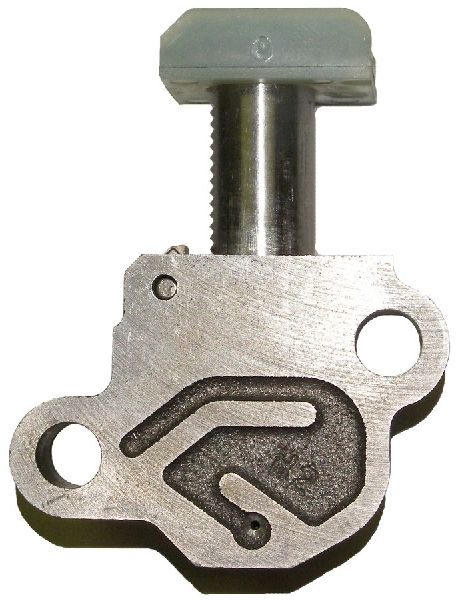
Typical fix: Replace the timing chain, tensioner, and all guides. This is a labor-intensive job (rated 8 out of 10 difficulty) that is not recommended for novice DIYers. A common aftermarket kit is the Cloyes C-3221.
Est. part cost: $150-$400
Rare But Worth Checking
- Loose Crankshaft Balancer Bolt: → Shop Engine Crankshaft Mentioned in TSB #PIP4581B and #PIP4945B, a loose or improperly torqued balancer can cause a rattling noise and throw off the crankshaft position sensor's reading enough to trigger P0017. This is a simple check before considering major engine work. The bolt is torque-to-yield and must be replaced if removed.
- Sticking Exhaust Cam Phaser (Actuator): → Shop Engine Timing Gear The gear itself, which the solenoid controls, can become stuck due to internal sludge or wear. This is a more involved repair than the solenoid and is usually considered after the solenoid has been ruled out. In some forum cases, users replaced the phaser along with the timing chain to resolve the code.
- Excessive Crankshaft End Play: → Shop Engine Crankshaft Mentioned in TSB #PIP3694F and #PIP4945B, excessive forward/backward movement of the crankshaft (>0.0153 inches) due to worn thrust bearings can cause this code. This indicates a severe internal engine problem requiring a rebuild. The TSB warns that if this is the cause, all bearing debris must be flushed from the engine or the code will return.
Diagnosis Steps
- Check Engine Oil: First, verify the oil level is full and the oil is clean. If low, top it off. If dirty or past its change interval, perform a full oil and filter change with 7 quarts of 5W-30 oil. Clear the code and see if it returns.
- Inspect VVT Solenoid: If the oil is fine, the next step is to inspect the exhaust VVT solenoid. It's located on the passenger side of the engine, partially blocked by the power steering pump.
- Access and Remove Solenoid: Remove the serpentine belt using a tensioner tool (3/8" drive). Unbolt the power steering pump (three 13mm bolts) and move it aside without disconnecting the lines. Unplug the solenoid's electrical connector (lift the gray lock tab first) and remove the single 10mm bolt holding it in.
- Test Solenoid: Wiggle the solenoid to pull it straight out. Inspect the solenoid's three mesh screens for tears or sludge. If any screens are missing, the solenoid must be replaced. Test the resistance across its two pins with a multimeter; a reading of 8-13 ohms is expected. A definitive test is to swap the exhaust solenoid with the identical intake solenoid to see if the code changes to P0016.
- Replace Solenoid if Needed: If the solenoid is bad, replace it. Lubricate the new O-rings with clean motor oil before installation. Torque the 10mm retaining bolt to 89 in-lbs. It is highly recommended to install a new oil filter and fresh oil to prevent immediate contamination of the new part.
- Check Crankshaft Balancer: If a new solenoid and clean oil do not fix the code, inspect the crankshaft balancer bolt at the front of the engine to ensure it is tight, as per TSB #PIP4581B.
- Advanced Diagnosis: If the code still persists, especially on a high-mileage engine, the issue is likely a stretched timing chain or a faulty cam phaser. As noted in Bulletin #PIP4913A, if standard diagnostics do not isolate the cause, technicians should monitor the oil pressure specifically at the VVT system.
Parts You'll Likely Need
- Exhaust Camshaft Position Actuator Solenoid
(OEM #12615873)— This is the most common part to fail for P0017 on the 4.2L LL8 engine. Its screens get clogged or tear from oil contaminants, causing it to stick.
Trusted brands: ACDelco (OEM), Delphi, Dorman (P/N: 917-010)
OEM price range: $50-$90
Aftermarket price range: $30-$60 - Timing Chain Kit — For higher mileage vehicles where the chain has physically stretched, replacing the solenoid will not fix the code. A full kit is needed to restore base engine timing.
Trusted brands: Cloyes (P/N: C-3221), Melling
OEM price range: $250-$400
Aftermarket price range: $150-$250
Related Codes That Often Appear With This One
- P0014 — This code ('Exhaust Camshaft Position Timing Over-Advanced') often appears with P0017 because a sticking VVT solenoid or oil pressure issues can cause the exhaust cam to be both in the wrong position (P0017) and too far advanced (P0014).
- P0106 — A 'Manifold Absolute Pressure (MAP) Circuit Performance' code can be triggered because the erratic valve timing from the P0017 fault causes an unstable engine vacuum, which the MAP sensor detects as a problem. TSB #PIP3694F explicitly links P0106 with P0014 and P0017.
- P0016 — This is the correlation code for the intake camshaft. If P0016 and P0017 appear together, it points more strongly to a base timing issue like a stretched timing chain, a problem with the crankshaft reluctor ring, or a loose crankshaft balancer affecting the entire engine.
Technical Service Bulletins (TSBs) & Recalls
- PIP4581B: Notes that a rattle noise with P0017 could be from a loose crankshaft balancer bolt.
- PIP3694F: Links P0017 with P0014 and P0106, and advises checking the VVT solenoid screens and crankshaft end play. Specifies that end play over 0.0153 inches is excessive.
- PIP4945B: A cumulative document for P0017 causes on inline GM engines, reiterating checks for crank end play, loose balancer, and confirming the code sets when cam/crank correlation is off by more than 16.31 degrees.
- Bulletin #PIP4913A: Advises that if Service Information diagnostics and the latest version of PIP3694 do not isolate the cause of P0017, the technician should monitor the oil pressure.
Platform-Specific Known Issues
- Power Steering Pump Access: To replace the exhaust VVT solenoid, the power steering pump must be unbolted (3 bolts) and moved aside. The hydraulic lines can remain connected. Accessing the bolts may require removing the serpentine belt first.
Mechanic-Grade Diagnostic Values
- VVT Actuator Solenoid Resistance — expected: 8-13 Ohms. Failure: A reading of zero (short) or infinite (open) ohms indicates a failed solenoid coil.
- Engine Oil Pressure (at VVT system) — expected: At least 12 PSI at 1200 RPM. Failure: Pressure below this threshold can starve the VVT system, preventing the phaser from moving correctly and triggering correlation codes.
- Crankshaft End Play — expected: 0.0044 - 0.0153 inches (0.112 - 0.389 mm). Failure: Exceeding this specification indicates worn thrust bearings, a severe mechanical failure that can cause the crank position to fluctuate, triggering P0017. This is documented in TSB #PIP3694F.
- Camshaft Position Sensor Power Supply — expected: 10-12 Volts DC. Failure: No voltage suggests a problem with the wiring or the PCM, not necessarily the sensor itself.
Scan Tool Commands That Help
- Tech2 / GDS2: Camshaft Position Actuator Solenoid Control — This bidirectional command allows a technician to manually duty cycle the VVT solenoid to see if it responds mechanically, which helps verify if the solenoid is physically stuck. However, the PCM will inhibit this function if DTC P0017 is active, so the code may need to be cleared immediately before running the test.
Wiring & Ground Locations
- VVT Solenoid Connector — On the passenger side of the engine, partially behind the power steering pump.. The connector has two pins. One receives battery voltage from the fuse box with the ignition on. The other is a control wire (ground-side switched) from the PCM. A loss of power or a break in the control wire will render the solenoid inoperative. Oil can also wick up through a failed solenoid and contaminate this connector, requiring cleaning or replacement.
- G101 / G106 — Located on the front center of the frame cross rail, under the crank pulley. G101 grounds the PCM and TCM.. This is a primary ground for the Engine Control Module (PCM). A poor connection here can cause erratic behavior from the PCM and its controlled components, including the VVT solenoid and sensors, potentially leading to false codes.
- G102 — Located at the left rear of the engine, grounds the ignition coils.. While not directly related to the VVT system, a poor ground here can cause misfires (like P0300) which can sometimes occur alongside timing codes due to poor engine performance.
- G103 — Located on the cowl in the left rear of the engine compartment, above the brake booster.. This ground serves the Body Control Module (BCM) and Data Link Connector (DLC). While not a direct cause of P0017, a bad ground here can interfere with scan tool communication during diagnosis.
Real Owner Repair Stories
- GMTNation Forum User (2003 TrailBlazer EXT LT 4.2L) — Rattling noise from top of engine, visible wobble from the cam phaser when viewed through the oil cap.
❌ Tried (didn't work) Replaced Camshaft Position Actuator Solenoid (CPAS)
✅ What actually fixed it The cam phaser (actuator gear) itself had failed and would not respond to Tech 2 commands. The user replaced the cam phaser, oil pump, and harmonic balancer to resolve the issue. The final fix was the new phaser. - iATN Technician Network (2006 GMC Canyon 2.8L (similar LLV engine family)) — Persistent P0017 after a used engine was installed.
❌ Tried (didn't work) Torqued crankshaft bolt to spec, Replaced crankshaft sensor with GM part, Replaced VVT solenoid with GM part, Visually checked timing chain alignment
✅ What actually fixed it The discussion pointed towards a likely issue with the replacement engine's internal timing components, such as a worn phaser or a subtle timing misalignment not visible on a basic check, suggesting the problem was inherited with the used engine. The final resolution was not posted, but it highlights that even with new sensors, a persistent P0017 points back to a hard mechanical fault.
OEM Part Supersession History
Not specified, but multiple revisions existed.→12615873— Likely improvements to screen material and internal construction to prevent failures from oil contamination and screen ingestion.
Heads up: The current ACDelco part 12615873 is the recommended replacement for the entire 2002-2009 model range.
Model Year Variations Within This Range
- 2006-2009: The ignition coils and the corresponding valve cover design were changed starting with the 2006 model year. While this does not directly affect the P0017 diagnosis, it is a critical difference to note when ordering valve cover gaskets or ignition system components during a larger repair like a timing chain replacement.
- 2002-2005 vs 2006-2009: Forum discussions suggest the internal design of the cam phaser itself was updated around 2005. While the parts are physically interchangeable (e.g., a Dorman replacement fits all years), the original parts had different appearances (solid vs. holes). This is not a functional difference for replacement parts but can cause confusion when comparing an old part to a new one.
Diagnostic Flowchart
Other Known Issues on This Vehicle
Issues unrelated to this code that are worth knowing about as an owner of this generation:
- Cracked Exhaust Manifold 🟠 Medium — Common failure, often occurring around 60,000 miles. Can cause loud ticking/exhaust leak noises. (Ref: A special coverage campaign was issued by GM for some vehicles, but may have expired.)
- Failing Fan Clutch 🟠 Medium — The electromagnetic fan clutch is prone to premature failure, causing either engine overheating (if it fails to engage) or excessive noise and reduced power (if it locks up).
- Faulty Ignition Switch 🔴 High — The ignition switch can fail, causing a wide range of intermittent electrical problems, including no-start conditions, loss of power to gauges, HVAC, and other modules.
- Instrument Cluster Stepper Motor Failure 🟡 Low — Very common across all GM vehicles of this era. Gauges (speedometer, tachometer, etc.) become erratic or stop working. (Ref: GM had an extended warranty program, but it has since expired.)
- Worn Valve Seats 🔴 High — A known issue on early (2002-2007) 4.2L engines where valve seats wear prematurely, causing loss of compression, misfires, and requiring cylinder head replacement.
- Failed Fuel Level Sending Unit 🟡 Low — The fuel gauge becomes inaccurate or stuck, a common issue due to the failure of the sending unit inside the fuel tank.
Used vs. New Parts: Buying Guide for This Vehicle
When a used part is the smart pick: Given the low cost and high failure rate of the VVT solenoid, a used part is not recommended. For major engine components like the cylinder head or engine block, a used part from a low-mileage, documented donor vehicle could be a cost-effective option if the original is damaged beyond repair.
Donor-vehicle mileage cap: roughly under 100000 miles for the part to have meaningful remaining life.
What to inspect on the donor part:
- For a major component like an engine, look for proof of regular oil changes (service records, clean oil cap/filler neck).
- Avoid engines from vehicles that show signs of sitting for a long time (rodent damage, heavy corrosion).
- If possible, get compression test numbers from the donor engine before purchase.
OEM-only on this vehicle (don't cheap out):
- Camshaft Position Actuator Solenoid (VVT Solenoid) - While quality aftermarket options exist, the ACDelco OEM part is widely considered the most reliable to avoid repeat failures.
- Timing Chain Components - Due to the labor-intensive nature of the job, using high-quality OEM or top-tier aftermarket (e.g., Cloyes) parts is critical to ensure longevity.
Aftermarket brands forum-validated for this vehicle:
- Cloyes (for Timing Chain Kits)
- Delphi (for VVT Solenoids and sensors)
- Dorman (for VVT Solenoids, P/N 917-010)
Brands owners have reported issues with on this vehicle:
- Unnamed, no-brand 'white box' solenoids and sensors from online marketplaces are frequently cited as failing quickly or being dead-on-arrival.
Real Owner Stories
Aggregated from forums and TSBs cited above. Mileages and costs reflect what owners reported in those sources.
2002-2009 Chevrolet TrailBlazer 4.2L I6
Symptoms: The owner replaced the VVT solenoid, both sensors, timing chain, guides, and cam phaser, but the P0017 code returned instantly.
What fixed it: The issue remained unresolved in the report, highlighting that P0017 can persist even after replacing major timing components if the underlying correlation issue is not precisely identified.
Source hint: GMTNation.com - Thread: 'SOLVED! - P0017 Assistance'
2002-2009 Chevrolet TrailBlazer 4.2L I6 — ~155000 miles
Symptoms: The P0017 code only appeared when revving the engine over 1500 RPM.
What fixed it: The discussion identified a stretched timing chain and poor oil pressure/sludge as the likely culprits after basic fixes failed.
Source hint: GMTNation.com - Thread: 'P0017 only when reviving engine over 1500 RMP. Weird!'
Related OBD-II Codes
Frequently Asked Questions
I have a rattle and P0017 on my TrailBlazer; could it be the crankshaft balancer?
Can I just clean the mesh screens on my LL8 exhaust VVT solenoid to fix P0017?
How much oil does my 4.2L I6 TrailBlazer actually need for an oil change?
Does TSB #PIP3694F apply if I have P0017 and other codes?
Is the P0017 code on my TrailBlazer related to the common cracked exhaust manifold issue?
How do I know if my P0017 is a stretched timing chain or just a bad solenoid?
What should I do if standard diagnostics for P0017 don't find the problem?
We Have This Part in Stock


The information in this article is provided for general reference and educational purposes only. Vehicle specifications, procedures, and part compatibility can vary by production date, trim level, and region. Always consult your vehicle's factory service manual and verify part numbers before purchasing or performing repairs. Safety-critical components such as airbags, seat belts, and braking systems should be installed by a qualified professional.
- Chevrolet TrailBlazer:
- 🧭 Diagnostic Flowchart
- 🛍️ Shop This Part
- What's Unique About the 2002-2009 Chevrolet TrailBlazer
- Symptoms You May Notice
- Most Likely Causes
- Rare But Worth Checking
- Diagnosis Steps
- Parts You'll Likely Need
- Related Codes That Often Appear With This One
- Technical Service Bulletins (TSBs) & Recalls
- Platform-Specific Known Issues
- Mechanic-Grade Diagnostic Values
- Scan Tool Commands That Help
- Wiring & Ground Locations
- Real Owner Repair Stories
- OEM Part Supersession History
- Model Year Variations Within This Range
- Other Known Issues on This Vehicle
- Used vs. New Parts: Buying Guide for This Vehicle
- Real Owner Stories
- 2002-2009 Chevrolet TrailBlazer 4.2L I6
- 2002-2009 Chevrolet TrailBlazer 4.2L I6 — ~155000 miles
- Related OBD-II Codes
- Frequently Asked Questions
- 🎟️ Get 5% Off