

P0017 on 2015-2021 Ford Edge: Crank/Cam Correlation Causes and Fixes
On a 2015-2021 Ford Edge, code P0017 is most often caused by low/dirty engine oil or a faulty Variable Camshaft Timing (VCT) solenoid for the exhaust camshaft on Bank 1. Replacing the correct VCT solenoid is a common fix, with parts costing between $50 and $150. Always check your oil level and condition first, as the VCT system is highly sensitive to oil quality and pressure.
- P0017 on a Ford Edge points to a timing mismatch between the crankshaft and the Bank 1 exhaust camshaft.
- Before replacing any parts, check your engine oil. Low or dirty oil is a very common cause.
- The most likely part to fail is the Bank 1 exhaust VCT solenoid, which can get stuck from oil debris.
- If oil and solenoids are good, investigate the camshaft position sensor.
- In more serious cases, the code can indicate a stretched timing chain, which is a much more expensive repair.
What's Unique About the 2015-2021 Ford EDGE
For this generation of Ford Edge, across all its engine options (2.0L, 2.7L, 3.5L), the Variable Camshaft Timing (VCT) system is sensitive to oil condition and level. Multiple Ford Technical Service Bulletins (TSBs) point to small debris in the engine oil causing VCT solenoids to stick, which is a primary trigger for this code. [SSM 47170, SSM 48423] This makes regular, high-quality oil changes especially critical on these vehicles to prevent P0017. The 3.5L V6, in particular, also has an internally-mounted water pump driven by the timing chain; a failure of this pump can lead to overheating and subsequent timing issues.
Diagnostic Flowchart
Tap your situation to follow the diagnostic path that matches what you're seeing on this vehicle.
Symptoms You May Notice
- Check Engine Light is on
- Rough or uneven idle
- Engine hesitates or loses power during acceleration
- Engine may stall at low speeds
- Reduced fuel economy
- Rattling noise from the engine, sometimes described as a diesel-like clatter, especially on cold starts.
- Replacing the camshaft position sensor when the actual problem is a sticking VCT solenoid or a base timing issue.
- Replacing the crankshaft position sensor when the code points specifically to a camshaft correlation error.
- Assuming a major timing chain failure before thoroughly diagnosing the VCT solenoids and checking oil condition, which are far more common and cheaper fixes.
Most Likely Causes
- Low or Dirty Engine Oil 🔴 High Probability The VCT system uses oil pressure to adjust cam timing. Ford TSBs specifically mention debris in oil causing solenoids to stick. [SSM 47170, SSM 48423] Forum users frequently report that an oil change is the first and most important diagnostic step.
How to confirm: Check the engine oil level on the dipstick and inspect its color and consistency. If it's low or appears dark and sludgy, this is a likely contributor.
Typical fix: Perform an engine oil and filter change using the manufacturer-specified grade of oil (e.g., Motorcraft Synthetic Blend) and a quality filter.
Est. part cost: $40-$80 - Faulty VCT Solenoid (Oil Control Valve) 🔴 High Probability → Shop Engine Variable Valve Timing (VVT) Solenoid As noted in Ford TSBs, these solenoids are prone to sticking due to oil contamination. [SSM 47170, SSM 48423] This is a very common failure point for VCT-related codes and is often the recommended fix, even on low-mileage vehicles per TSB-16-0093.
How to confirm: You can test the solenoid's resistance with a multimeter or apply 12V to see if it actuates (clicks). A professional scan tool can also command the solenoid and monitor the camshaft angle response in live data to see if it matches the commanded position.
Typical fix: Replace the Bank 1 exhaust VCT solenoid. It is often recommended to replace both the intake and exhaust solenoids on the affected bank at the same time.
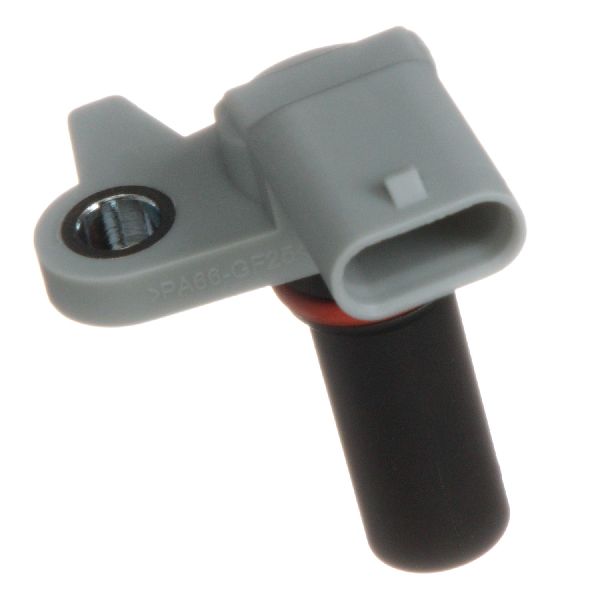
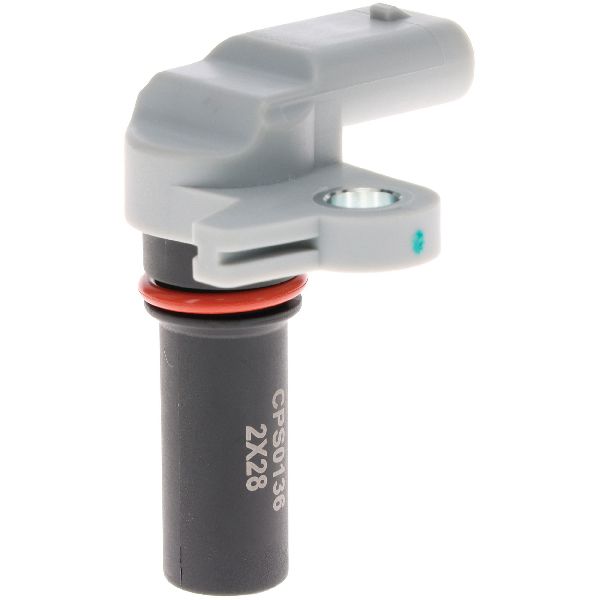
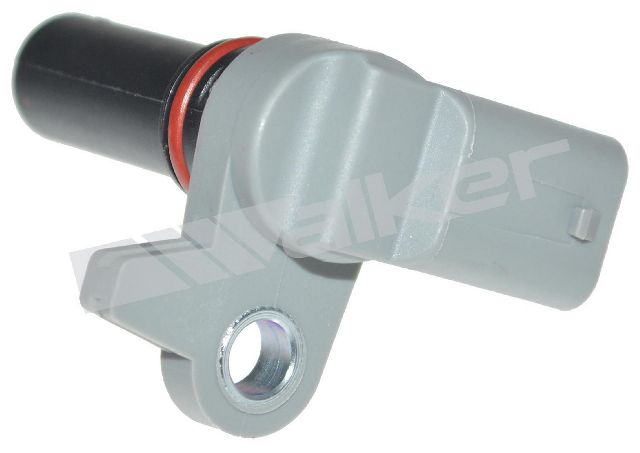
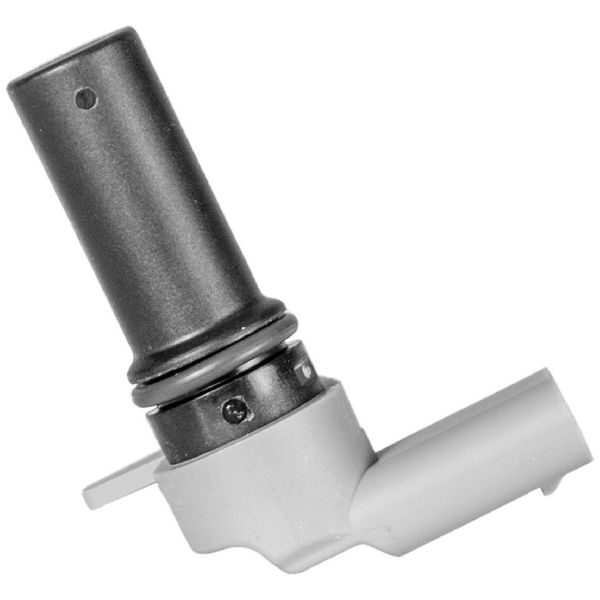
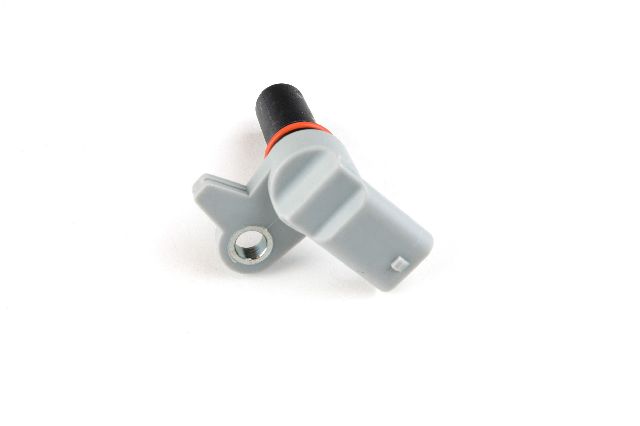
Est. part cost: $50-$150 - Faulty Camshaft Position (CMP) Sensor 🟡 Medium Probability → Shop Engine Camshaft Position Sensor Sensors can fail over time due to heat cycles and exposure to oil. However, for correlation codes, the issue is often mechanical or hydraulic (oil pressure) rather than a completely failed sensor.
How to confirm: Inspect the sensor and its wiring for damage. A multimeter can be used to test for a proper signal, or it can be swapped with the intake sensor (Sensor 'A') on the same bank to see if the code changes to P0016.
Typical fix: Replace the Bank 1 exhaust camshaft position sensor.
Est. part cost: $25-$70 - Stretched Timing Chain or Worn Timing Components ⚪ Low Probability → Shop Engine Timing Chain While less common than sensor or solenoid issues, timing chains can stretch over time, especially on higher-mileage vehicles or those with poor maintenance history. This is a known issue on some Ford EcoBoost and 3.5L V6 engines. A Reddit user with multiple cam/crank codes (P0016, P0017, P0018, P0019) on a 3.5L V6 confirmed the issue was incorrect timing after a timing chain replacement.
How to confirm: This is a complex diagnosis. A technician can use a scan tool to observe the commanded vs. actual cam phaser angles. A significant, consistent deviation points to a base timing issue. Physical inspection for chain slack by removing the valve cover is the definitive check. A tensioner with more than 5 teeth exposed indicates a stretched chain.
Typical fix: Replace the timing chain, tensioners, and guides. This is a labor-intensive job often costing over $1,500.
Est. part cost: $400-$800
Rare But Worth Checking
- Faulty Crankshaft Position (CKP) Sensor: → Shop Engine Crankshaft Position Sensor While possible, it's less likely to fail than the camshaft sensor for this specific code. If it fails, it usually causes more severe starting and running issues or a no-start condition.
- Damaged Camshaft Phaser/Actuator: → Shop Engine Camshaft The phaser is the gear on the end of the camshaft that the VCT solenoid controls. It can fail mechanically, getting stuck or breaking, but this is less common than a solenoid failure. A mechanic on a forum noted that at high mileage (190k+), phasers are likely to need replacement.
- Clogged Oil Passages: Severe engine sludge can block the small oil passages leading to the VCT components, preventing them from functioning even if the solenoid is good. This emphasizes the importance of regular oil changes.
Diagnosis Steps
- Check Engine Oil: Verify the oil level is correct and the oil is clean. If low or dirty, perform an oil and filter change with the correct viscosity oil, clear the code, and drive for 15-20 minutes to see if it returns. This is the first step recommended by all TSBs and experts.
- Scan for Other Codes: Use an OBD-II scanner to check for any other related trouble codes that could provide more clues (e.g., P0015, P0016).
- Inspect Wiring: Visually inspect the wiring and connector for the Bank 1 exhaust camshaft position sensor and the VCT solenoid for any signs of damage, corrosion, or loose connections.
- Test the VCT Solenoid: With the engine off, remove the solenoid and test its mechanical function by applying 12 volts; you should hear a distinct click. You can also check its resistance with a multimeter. A more advanced test involves using a scan tool to monitor commanded versus actual cam angle degrees while the engine is running.
- Test the Camshaft Position Sensor: The sensor's output can be checked with a multimeter or an oscilloscope. An easier method for DIY is to swap the exhaust sensor with the intake sensor on the same bank and see if the code changes to P0016. If it does, the sensor is faulty.
- Check Base Timing: If all electronic components test good, suspect a mechanical timing issue. This involves a more in-depth inspection of the timing chain, guides, and tensioner, which may require professional assistance and removal of the valve cover.
Parts You'll Likely Need
- Variable Camshaft Timing (VCT) Solenoid
(OEM #2.0L EcoBoost: CJ5Z-6M280-A; 3.5L V6: AT4Z-6M280-C (Exhaust); 2.7L EcoBoost: FT4Z-6M280-B)— This is the most frequent cause of P0017 on these engines, often due to sticking from oil debris as noted in Ford TSBs. [SSM 47170, SSM 48423] TSB 16-0093 specifically advises replacing the solenoid on low-mileage 3.5L engines.
Trusted brands: Motorcraft, Dorman, Delphi
OEM price range: $60-$120
Aftermarket price range: $30-$90 - Camshaft Position Sensor — If the VCT solenoid is not the cause, a failing sensor that sends an incorrect signal to the PCM is the next most likely culprit.
Trusted brands: Motorcraft, Bosch, NGK/NTK
OEM price range: $40-$70
Aftermarket price range: $25-$50 - Timing Chain Kit — In higher-mileage cases or if maintenance has been neglected, a stretched timing chain can cause this code. The kit includes the chain, guides, and tensioner. This is a known issue on the 3.5L V6 and EcoBoost engines.
Trusted brands: Motorcraft, Cloyes
OEM price range: $400-$600
Aftermarket price range: $200-$400
Related Codes That Often Appear With This One
- P0015 — ('Camshaft Position B - Timing Over-Retarded') This code is also for the Bank 1 exhaust camshaft and often appears with P0017, pointing strongly to a VCT solenoid or phaser issue on that specific cam.
- P0016 — This is the equivalent correlation code but for the intake camshaft ('Sensor A') on Bank 1. Seeing both P0016 and P0017 together strongly suggests a base timing problem, like a stretched timing chain, affecting the entire bank.
- P0018 & P0019 — These are the correlation codes for Bank 2. Seeing all four codes (P0016, P0017, P0018, P0019) is a very strong indicator of a base timing issue, such as a jumped or incorrectly installed timing chain.
Technical Service Bulletins (TSBs) & Recalls
- SSM 54366: General diagnostic procedure for multiple VCT codes on 2015-2021 Ford vehicles.
- SSM 47170: Suggests P0017 may be due to small debris causing the VCT solenoid to stick.
- TSB-16-0093: Notes that P0017 can appear on very low mileage (under 2000 miles) 3.5L V6 vehicles and recommends VCT solenoid replacement.
- SSM 48423: Repeats the warning from SSM 47170 about debris in the VCT solenoid for 2015-2020 models.
Platform-Specific Known Issues
- TSB SSM 47170 and SSM 48423 note that P0017 (among other codes) may be caused by small debris causing the VCT solenoid to stick.
Mechanic-Grade Diagnostic Values
- VCT Solenoid Resistance — expected: 7.0 to 14.0 Ohms. Failure: A reading outside this range, or an open/infinite reading, indicates a faulty solenoid coil.
- Camshaft Position Sensor (CMP) Circuit Voltage — expected: Power wire: ~5V with key on. Ground wire: Good ground. Signal wire: ~4-5V with key on, dropping to 0V when metal passes in front of the sensor.. Failure: No voltage on the power or signal wire, or a signal wire voltage that does not change when the engine is cranked, points to a wiring or sensor fault.
Scan Tool Commands That Help
- Professional Scan Tool (e.g., Ford IDS, Autel, Snap-on): VCT Solenoid Actuator Test / Bidirectional Control — This command allows the technician to manually activate the VCT solenoid while the engine is running. If the engine stumbles or stalls when the solenoid is commanded, it confirms the solenoid is mechanically functioning and oil passages are likely clear. If there is no change in engine operation, the solenoid is either stuck, clogged, or there is an oil pressure issue.
Wiring & Ground Locations
- Bank 1 Camshaft Position Sensor (CMP) — On the 3.5L V6 engine, Bank 1 is the rear cylinder bank (closer to the firewall). The sensor is located on the cylinder head, accessible after removing the airbox assembly.. P0017 specifically relates to Bank 1. A damaged wire or loose connector at this location can directly cause the code by interrupting the signal from the sensor to the PCM.
- Bank 2 Camshaft Position Sensor (CMP) — On the 3.5L V6 engine, Bank 2 is the front cylinder bank. The sensor is more easily accessible on the front of the engine.. While not the direct cause of P0017, knowing its location is useful for comparison or if codes for both banks are present (e.g., P0017 and P0019).
Real Owner Repair Stories
- Reddit user celicaturbo88 (Ford/Lincoln with 3.5L V6 (specific model not mentioned, but behavior is relevant)) — Persistent P0017 and P0018 codes that return on the second start after clearing, even after major repairs.
❌ Tried (didn't work) Replacing timing chains and gears.
✅ What actually fixed it Replacing the ECU (PCM) with a used unit. The user noted that after a mechanical fault with a phaser, the ECU can learn incorrect timing values that cannot be cleared by a standard code clear or even a reflash. The issue was only resolved after replacing the timing components AND the ECU.
Helpful Videos
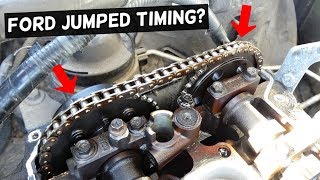
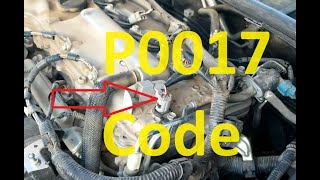

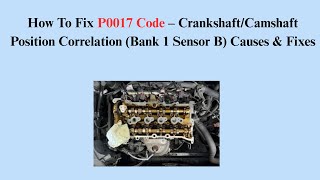
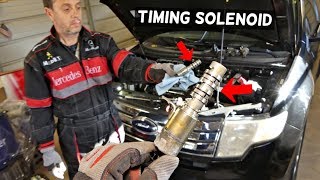
![How to Fix P0017 Engine Code in 6 Minutes [4 DIY Methods / Only $6.81]](https://img.youtube.com/vi/Vcj-f_J2hyo/mqdefault.jpg)
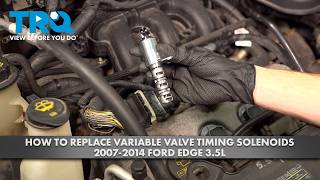
We Have This Part in Stock


The information in this article is provided for general reference and educational purposes only. Vehicle specifications, procedures, and part compatibility can vary by production date, trim level, and region. Always consult your vehicle's factory service manual and verify part numbers before purchasing or performing repairs. Safety-critical components such as airbags, seat belts, and braking systems should be installed by a qualified professional.
- Ford EDGE:
- 🧭 Diagnostic Flowchart
- 🎬 Helpful Videos
- 🛍️ Shop This Part
- What's Unique About the 2015-2021 Ford EDGE
- Symptoms You May Notice
- Most Likely Causes
- Rare But Worth Checking
- Diagnosis Steps
- Parts You'll Likely Need
- Related Codes That Often Appear With This One
- Technical Service Bulletins (TSBs) & Recalls
- Platform-Specific Known Issues
- Mechanic-Grade Diagnostic Values
- Scan Tool Commands That Help
- Wiring & Ground Locations
- Real Owner Repair Stories
- 🎟️ Get 5% Off