

P0017 on 2013-2019 Ford Escape 2.5L & 2.0L: Crank/Cam Correlation Causes and Fixes
On a 2013-2019 Ford Escape with a 2.5L or 2.0L engine, P0017 is almost always caused by low/dirty engine oil or a faulty exhaust VCT solenoid. Start with an oil change; if the code returns, the VCT solenoid is the next likely fix, costing around $40-$90 for the part. If both P0016 and P0017 are present, suspect a stretched timing chain.
- Always check your engine oil level and condition first. An oil change with the correct 5W-30 synthetic blend might fix the problem.
- The most likely failed part is the exhaust VCT solenoid (part # CJ5Z-6M280-A). A simple diagnostic test is to swap it with the intake solenoid and see if the code changes to P0016.
- Do not immediately replace the camshaft or crankshaft sensors; they are rarely the cause of a P0017 code.
- If you have both P0017 and P0016 codes, the problem is likely a more serious and expensive issue with the timing chain itself.
What's Unique About the 2013-2019 Ford Escape
For this generation of Ford Escape, the Variable Camshaft Timing (VCT) system is a known weak point. Ford has issued multiple Technical Service Bulletins (TSBs) acknowledging that small debris in the engine oil can cause the VCT solenoids to stick and trigger codes like P0017. Specifically, TSB SSM 48423 covers multiple VCT-related DTCs (including P0017) and recommends cycling the solenoid with a scan tool to clear debris before replacement. This makes an oil-related issue or a sticking solenoid a much higher probability cause on this vehicle than a more serious mechanical timing problem. Unlike the 1.5L/1.6L EcoBoost engines which use a timing belt, the 2.5L Duratec and 2.0L EcoBoost both use a timing chain.
Generation note: The 2013-2019 Ford Escape is the third generation (C520). The 2.5L Duratec and 2.0L EcoBoost engines were available throughout this period and both use a timing chain. The diagnostic steps for P0017 are consistent for these two engines across the entire year range.
Symptoms You May Notice
- Check Engine Light is on
- Rough or uneven idle, especially when cold
- Reduced engine power and poor acceleration
- Engine may hesitate or stall at low speeds
- Decreased fuel economy
- Rattling or knocking noise from the engine on startup
- Replacing the camshaft or crankshaft position sensors. This code is a 'correlation' code, meaning the sensors are likely working correctly and reporting a mechanical misalignment or oil-flow issue. Replacing the sensors is rarely the fix.
Most Likely Causes
- Low, Dirty, or Incorrect Viscosity Engine Oil 🔴 High Probability The VCT system is operated by engine oil pressure. The solenoids and phasers have very small oil passages that are easily clogged by sludge or debris. Ford TSBs directly link oil quality to VCT-related codes.
How to confirm: Check the oil level on the dipstick. Inspect the oil for darkness, thickness (sludge), or being past its recommended change interval. An oil change is the first and cheapest diagnostic step.
Typical fix: Perform an oil and filter change using the correct Ford-specified oil (SAE 5W-30, meeting Ford specification WSS-M2C946-A or WSS-M2C946-B1) and a quality filter like Motorcraft.
Est. part cost: $40-$80 - Faulty Exhaust VCT Solenoid (Bank 1) 🔴 High Probability → Shop Engine Variable Valve Timing (VVT) Solenoid As noted in Ford TSBs like SSM 48423, these solenoids are prone to sticking from small debris in the oil, preventing them from correctly adjusting camshaft timing. This is the most common component failure for this code.
How to confirm: A common DIY test is to swap the exhaust VCT solenoid with the intake VCT solenoid (they are identical and located on top of the valve cover). Clear the codes and drive. If the code changes to P0016 (Intake Camshaft Correlation), you have confirmed the solenoid is faulty. A professional can use a scan tool to command the solenoid to cycle, per TSB SSM 48423.
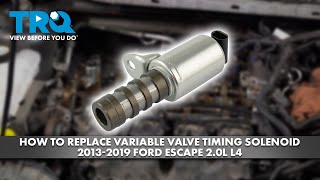
Typical fix: Replace the Bank 1 exhaust VCT solenoid. 🎬 Watch: Step-by-step guide to replacing the VCT solenoid. It is highly recommended to change the engine oil at the same time to prevent contamination of the new part. The solenoids are located on top of the valve cover and are accessible for DIY replacement.
Est. part cost: $40-$90 - Stretched Timing Chain 🟡 Medium Probability → Shop Engine Timing Chain While the timing chains on the 2.0L and 2.5L engines are generally robust, they can stretch over time, especially with high mileage (100,000+ miles) or a history of infrequent oil changes, which can starve the tensioners and guides.
How to confirm: This is a more involved diagnosis. A strong indicator is having both P0017 (exhaust) and P0016 (intake) codes appear at the same time. A mechanic can verify by checking physical timing marks, which requires significant engine disassembly, or by observing camshaft timing deviation with an advanced scan tool. A deviation greater than 5 degrees at idle is a strong indication of a stretched chain.
Typical fix: Replace the timing chain, tensioners, guides, and sprockets. This is a labor-intensive job, often costing over $1,500.
Est. part cost: $250-$500
Rare But Worth Checking
- Failed Camshaft Phaser: → Shop Engine Camshaft The VCT phaser (actuator) at the end of the camshaft can fail mechanically, getting stuck or losing its ability to adjust timing. This is less common than a solenoid failure but is a possibility if a new solenoid doesn't fix the code. It often produces a rattling noise on startup.
- Damaged Tone Ring: The sensor reads a toothed wheel (tone ring or reluctor wheel) on the camshaft or crankshaft. In rare cases, this ring can become damaged, break, or slip on the shaft, causing the sensor to send inaccurate position data to the PCM.
- Low Oil Pressure: Beyond just low or dirty oil, a failing oil pump or clogged oil pickup tube can cause system-wide low oil pressure, which will prevent the VCT system from operating correctly and can trigger this code before more catastrophic engine damage occurs.
Diagnosis Steps
- Check Engine Oil: Verify the oil level is full and the oil is clean. If it's low, dirty, or past its change interval, perform an oil and filter change with the manufacturer-specified grade (e.g., Motorcraft 5W-30). Clear the codes and see if P0017 returns.
- Scan for Other Codes: Use an OBD-II scanner to confirm P0017 and check for other codes. The presence of P0016 is a critical clue pointing towards a base timing issue (e.g., stretched chain).
- Swap VCT Solenoids: Locate the intake and exhaust VCT solenoids on the valve cover. They are typically held in by a single 8mm or 10mm bolt each. Swap their positions. Clear the codes and drive the vehicle. If the code changes to P0016, the solenoid you moved to the intake position is faulty and needs to be replaced.
- Test Solenoid (Advanced): With a capable scan tool (like FORScan), perform the VCT solenoid cycle test as recommended by Ford TSB SSM 48423. This attempts to dislodge debris. You can also remove the solenoid and test its resistance with a multimeter (should be between 6.9 and 7.9 ohms at room temperature) or apply 12V to see if the internal pintle moves.
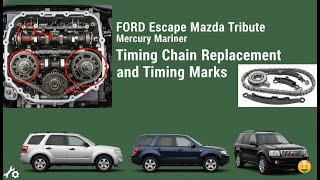
- Inspect Timing Chain: If the above steps do not resolve the issue, the next step is to suspect a mechanical timing problem. This involves removing the valve cover to inspect the timing chain for slack and verifying the timing marks are aligned, which is a complex job best left to a professional.
Parts You'll Likely Need
- Engine Variable Valve Timing (VVT) Solenoid
(OEM #CJ5Z-6M280-A)— This is the most common part to fail for a P0017 code on this vehicle, typically by getting stuck from oil debris. Both intake and exhaust solenoids use the same part number.
Trusted brands: Motorcraft, Dorman, Delphi
OEM price range: $60-$90
Aftermarket price range: $30-$60 - Engine Oil and Filter
(OEM #XO-5W30-Q1SP (Oil), FL-910S (Filter))— Low or dirty oil is a primary cause of VCT system faults. An oil change is the first step in diagnosis and repair. Use Ford-spec 5W-30 oil meeting WSS-M2C946-B1.
Trusted brands: Motorcraft, Castrol, Mobil 1
OEM price range: $50-$80
Aftermarket price range: $40-$60 - Timing Chain Kit — Needed if diagnosis confirms the timing chain has stretched, which is the next most likely cause after the VCT solenoid, especially if P0016 is also present.
Trusted brands: Motorcraft, Cloyes
OEM price range: $300-$500
Aftermarket price range: $150-$250
Related Codes That Often Appear With This One
- P0016 — This is the same correlation error, but for the intake camshaft ('Sensor A'). If P0016 and P0017 appear together, it strongly suggests a base timing issue, like a stretched timing chain affecting the entire engine.
- P0015 — This code means 'Camshaft Position B - Timing Over-Retarded'. It points to a problem within the same exhaust VCT system and is often caused by the same faulty components, like a sticking VCT solenoid.
- P0011, P0012, P0014, P0021, P0022, P0024, P0025 — These are all VCT-related codes mentioned in TSB SSM 48423. Their appearance alongside P0017 points to a systemic issue with oil pressure/quality or sticking VCT solenoids.
Technical Service Bulletins (TSBs) & Recalls
- SSM 48423: Mentions that small debris in engine oil can cause VCT solenoid
Platform-Specific Known Issues
- Owner Experience: P0016 and P0017 together means timing chain: → Shop Engine Timing Chain A well-documented case on fordescape.org for a 2.0L EcoBoost showed that after replacing VCT solenoids did not fix the issue, a full timing chain job (chain, guides, tensioner) was required to resolve simultaneous P0016 and P0017 codes.
- DIY Solenoid Swap is the Go-To Test: Across multiple forums, the most recommended first diagnostic step after an oil change is to swap the intake and exhaust VCT solenoids. Since they are identical and accessible, this free test definitively confirms a bad solenoid if the trouble code moves from P0017 to P0016.
Mechanic-Grade Diagnostic Values
- VCT Solenoid Internal Resistance — expected: 6.9 to 14 Ohms. Failure: A reading outside this range indicates a faulty solenoid coil.
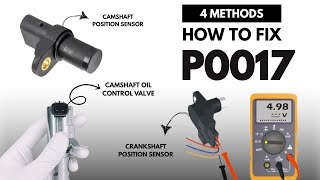
- Camshaft Position Sensor Power Supply Voltage (Key On, Engine Off) — expected: ~5.0 Volts DC. Failure: 0V indicates an open in the power supply wire from the PCM or a PCM fault.
- Scan Tool VCT Error PID (e.g., FORScan CAM_ERR) — expected: Should hover around 0 degrees at idle and under steady load.. Failure: A consistent deviation greater than +/- 5 degrees indicates a correlation problem that could be a stretched chain or failing phaser.
- Oil Pressure at Idle (Hot) — expected: Minimum 15 PSI at idle.. Failure: Pressure below the minimum spec can cause VCT system malfunction and indicates a larger lubrication system problem.
Scan Tool Commands That Help
- Ford IDS / FORScan: VCT Solenoid Cycle Test (Pinpoint Test HK11) — As recommended by TSB SSM 48423, this command cycles the VCT solenoid rapidly 10 times to attempt to dislodge debris causing it to stick. This should be performed after an oil change and before replacing the solenoid.
- Ford IDS / FORScan: Monitor PIDs: RCAM (Requested Cam Angle) vs. RCAM_ACT (Actual Cam Angle) — To diagnose a timing chain or phaser issue. While driving, compare the requested camshaft angle by the PCM to the actual angle reported by the sensor. A significant, lagging difference between the two values points towards a mechanical issue (stretch, bad phaser) rather than an electrical one.
Wiring & Ground Locations
- G104 — Left front of the engine compartment.. This is a primary ground point for various engine components. A corroded or loose connection at G104 can cause erratic sensor readings and intermittent electrical faults for the VCT and ignition systems, potentially mimicking sensor or solenoid failure.
- Camshaft Position Sensor Connector — On top of the valve cover, plugged into the CMP sensor.. The connector itself or the pigtail wiring can become brittle from heat, causing poor connections. Oil from a leaking valve cover gasket can also contaminate the pins. A visual inspection for damage, and testing for voltage/ground at the connector pins, is crucial before replacing the sensor.
Real Owner Repair Stories
- GMTNation forum user (Vehicle with P0017 (GM engine, but universally applicable diagnosis)) — Instant P0017 code return, stalling when put in gear, no-start unless clearing flood mode.
❌ Tried (didn't work) Replaced VVT solenoid, Replaced camshaft position sensor, Replaced crankshaft position sensor, Replaced cam phaser
✅ What actually fixed it The discussion concluded the only remaining possibility after replacing all components was that the new timing chain was installed incorrectly, off by a single tooth. This highlights the critical importance of mechanical timing accuracy.
Model Year Variations Within This Range
- 2017-2019: The 2.0L EcoBoost engine was updated mid-generation. The 2017-2019 models received a twin-scroll turbo version of the 2.0L, which was a revision of the engine from 2013-2016. While the P0017 diagnosis is largely the same, be aware of engine generation when sourcing parts like timing chain kits, as minor differences may exist.
Diagnostic Flowchart
Other Known Issues on This Vehicle
Issues unrelated to this code that are worth knowing about as an owner of this generation:
- 2.0L EcoBoost Coolant Intrusion 🔴 High — Common in 2017-2019 models. A design flaw in the engine block between cylinders can cause cracks, leading to coolant leaking into the cylinders. Symptoms include white exhaust smoke, unexplained coolant loss, and misfires. (Ref: TSB 19-2346)
- 6F35 Transmission Failure 🔴 High — Widespread issue across the 2013-2019 generation. Symptoms include shuddering, harsh shifting, slipping, and complete failure, often before 100,000 miles. Class action lawsuits have been filed regarding this transmission.
- Faulty Door Latches 🟠 Medium — Common on 2013-2015 models. A component in the door latch can break, preventing the door from closing securely or causing it to open while driving. (Ref: Recall 16S30)
- EVAP Purge Valve Failure 🟡 Low — A common failure part that can cause a check engine light (often code P1450), rough idle after refueling, and difficulty starting after filling the gas tank.
- Power Steering Failure 🔴 High — More prevalent in 2013-2014 models, the electronic power steering assist can fail suddenly, making the vehicle very difficult to steer. (Ref: Recall for some VINs)
Used vs. New Parts: Buying Guide for This Vehicle
When a used part is the smart pick: A used part is generally not recommended for the key components in this repair. VCT solenoids fail due to internal wear and contamination, and a used part carries an unknown history and high risk of premature failure. A timing chain should always be new.
Donor-vehicle mileage cap: roughly under 50000 miles for the part to have meaningful remaining life.
What to inspect on the donor part:
- For any used engine part, seek vehicles with documented, regular oil change histories.
- Avoid engines that show signs of heavy oil sludge under the oil cap, as this indicates poor maintenance that is lethal to VCT components.
- Check for front-end collision damage on the donor vehicle, which could have impacted engine-mounted components.
OEM-only on this vehicle (don't cheap out):
- Timing Chain Kit: Due to the critical nature of engine timing, using a high-quality OEM (Motorcraft) or top-tier aftermarket (Cloyes) kit is essential to avoid catastrophic failure.
- Camshaft Phasers: Aftermarket phasers have a poor reputation for reliability and can cause rattling noises even when new. OEM is strongly recommended if a phaser replacement is needed.
Aftermarket brands forum-validated for this vehicle:
- VCT Solenoids: Dorman, Delphi, Standard Motor Products (SMP)
- Timing Chain Kits: Cloyes
Brands owners have reported issues with on this vehicle:
- Unbranded or 'white box' VCT solenoids and sensors from online marketplaces. These often fail quickly or are dead on arrival.
Real Owner Stories
Aggregated from forums and TSBs cited above. Mileages and costs reflect what owners reported in those sources.
2013-2019 Ford Escape 2.0L EcoBoost — ~110000 miles
Symptoms: The vehicle threw both P0016 and P0017 codes simultaneously. Replacing the VCT solenoids did not resolve the issue.
What fixed it: A complete timing chain replacement, including the chain, guides, and tensioner.
Source hint: fordescape.org: 'P0016 and P0017 - What we did to fix it'
2013-2019 Ford Escape 2.5L / 2.0L
Symptoms: P0017 code present; discussion warned against the common mistake of replacing cam or crank sensors first.
What fixed it: Addressing oil quality or replacing the VCT solenoid; the community emphasizes that sensors are rarely the root cause.
Source hint: Reddit r/MechanicAdvice: 'P0017 code'
Related OBD-II Codes
Frequently Asked Questions
What specific oil should I use in my 2013-2019 Ford Escape to prevent P0017?
Is there a Ford TSB for VCT solenoid issues on the Escape?
Can I test the VCT solenoid myself before buying a new one?
What does it mean if my Escape has both P0016 and P0017 codes at the same time?
Are there other major engine issues I should be aware of on my 2017-2019 2.0L EcoBoost Escape?
What is the resistance specification for the VCT solenoid if I test it with a multimeter?
Helpful Videos

We Have This Part in Stock


The information in this article is provided for general reference and educational purposes only. Vehicle specifications, procedures, and part compatibility can vary by production date, trim level, and region. Always consult your vehicle's factory service manual and verify part numbers before purchasing or performing repairs. Safety-critical components such as airbags, seat belts, and braking systems should be installed by a qualified professional.
- Ford Escape:
- 🧭 Diagnostic Flowchart
- 🎬 Helpful Videos
- 🛍️ Shop This Part
- What's Unique About the 2013-2019 Ford Escape
- Symptoms You May Notice
- Most Likely Causes
- Rare But Worth Checking
- Diagnosis Steps
- Parts You'll Likely Need
- Related Codes That Often Appear With This One
- Technical Service Bulletins (TSBs) & Recalls
- Platform-Specific Known Issues
- Mechanic-Grade Diagnostic Values
- Scan Tool Commands That Help
- Wiring & Ground Locations
- Real Owner Repair Stories
- Model Year Variations Within This Range
- Other Known Issues on This Vehicle
- Used vs. New Parts: Buying Guide for This Vehicle
- Real Owner Stories
- 2013-2019 Ford Escape 2.0L EcoBoost — ~110000 miles
- 2013-2019 Ford Escape 2.5L / 2.0L
- Related OBD-II Codes
- Frequently Asked Questions
- 🎟️ Get 5% Off