

P0017 on 2015-2021 Ford Escape: Crank/Cam Correlation Causes and Fixes
On a 2015-2021 Ford Escape, P0017 is most often caused by a faulty Variable Camshaft Timing (VCT) solenoid on the exhaust side of Bank 1, often due to dirty oil or debris. Start by changing the engine oil and filter; if the code returns, replacing the VCT solenoid is the next logical step. Ford TSBs specifically recommend cycling the solenoid with a scan tool to clear debris before replacement.
- P0017 on a 2015-2021 Ford Escape means the exhaust camshaft on Bank 1 is out of sync with the crankshaft.
- Before buying any parts, check your engine oil. Low or dirty oil is a primary cause of this code.
- The most likely part to fail is the exhaust VCT solenoid on Bank 1, as confirmed by multiple Ford TSBs.
- Do not immediately assume the camshaft or crankshaft sensors are bad; they are often misdiagnosed.
- If an oil change and VCT solenoid replacement do not fix the issue, the problem is likely more serious, involving the timing chain, and may require professional diagnosis.
What's Unique About the 2015-2021 Ford ESCAPE

For this generation of Ford Escape with EcoBoost engines, the Variable Camshaft Timing (VCT) system is a known point of failure. Ford has issued multiple Technical Service Bulletins (TSBs) for P0017 and related codes, specifically mentioning that small debris in the engine oil can cause the VCT solenoids to stick. TSB #SSM 48423 explicitly advises technicians to use a scan tool to cycle the affected VCT solenoid 10 times to attempt to clear the debris before replacing any parts. This official procedure makes a sticking VCT solenoid a much higher probability cause on this vehicle compared to a generic diagnosis that might point to a bad sensor first.
Diagnostic Flowchart

Tap your situation to follow the diagnostic path that matches what you're seeing on this vehicle.
Generation note: The 2015-2021 year range covers two Ford Escape generations. The third generation runs from 2013-2019 and the fourth generation began in 2020. Engine options differ, but the gasoline EcoBoost engines (1.5L, 1.6L, 2.0L) in both generations use a similar VCT system, and the cited TSBs cover vehicles in both generations, indicating the common causes are consistent across this year range. The fourth generation (2020+) also introduced a 1.5L 3-cylinder EcoBoost engine.
Symptoms You May Notice
- Check Engine Light is on
- Rough or uneven idle
- Reduced engine power and poor acceleration
- Engine may hesitate or stall
- Decreased fuel economy
- Rattling noise from the engine, especially on startup
- Engine cranks but may not start
- Replacing the camshaft or crankshaft position sensors before checking oil and VCT solenoids. The code points to a timing *correlation* issue, which is frequently mechanical or hydraulic, not a failed sensor.
- Replacing the timing chain without first diagnosing the much cheaper and more common VCT solenoid failure.
Most Likely Causes

- Dirty or Low Engine Oil 🔴 High Probability The VCT system is hydraulic and highly sensitive to oil pressure and cleanliness. Old oil, low levels, or using the incorrect viscosity can prevent the VCT solenoids and phasers from operating correctly. Ford's own TSBs point to oil debris as a primary cause.
How to confirm: Check the oil level on the dipstick and inspect its color and consistency. If it's low, dark, or sludgy, it needs to be changed.
Typical fix: Perform a complete engine oil and filter change using the correct viscosity oil specified by Ford (e.g., SAE 5W-30 for many EcoBoost models).
Est. part cost: $40-$80 - Faulty Exhaust VCT Solenoid (Bank 1) 🔴 High Probability → Shop Engine Variable Valve Timing (VVT) Solenoid Ford TSBs #SSM 54366, #SSM 48423, and #SSM 47170 directly state that debris can cause the VCT solenoid to stick, leading to this code. This is the most common component failure for this issue.
How to confirm: A mechanic can command the solenoid on and off with a scan tool while monitoring engine data, per TSB #SSM 48423's pinpoint test HK11. It can also be removed and tested by applying 12V to see if the internal plunger clicks. Visual inspection may show clogged screens.
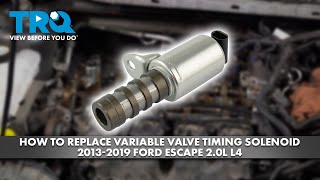
Typical fix: Replace the Bank 1 exhaust VCT solenoid. It is often recommended to replace both the intake and exhaust solenoids at the same time. The causal part number referenced in TSBs is a generic base number (6M280).
Est. part cost: $30-$90 - Stretched Timing Chain or Failed Tensioner 🟡 Medium Probability → Shop Engine Timing Chain Over time, particularly at higher mileage, timing chains can stretch and tensioners can wear out, causing slack in the chain and altering the mechanical timing between the crank and cams. This is a known issue on some EcoBoost engines after 100,000 miles.
How to confirm: This requires significant disassembly of the engine to physically inspect the timing marks, chain, guides, and tensioner. A persistent rattling noise on startup that doesn't go away is a common symptom. A mechanic may also use an oscilloscope to compare cam and crank sensor waveforms.
Typical fix: Replace the timing chain, guides, and tensioners. This is a labor-intensive job.
Est. part cost: $200-$500 - Faulty Camshaft Position Sensor (Bank 1, Sensor B) ⚪ Low Probability → Shop Engine Camshaft Position Sensor While sensors can fail, this code indicates a correlation error, which is more often a mechanical or oil-related issue than a sensor failure. It's often misdiagnosed as the primary problem.
How to confirm: Swap the exhaust sensor with the intake sensor (if they are the same part number) and see if the code changes to P0016. If it does, the sensor is bad. It can also be tested with a multimeter for resistance.
Typical fix: Replace the Bank 1 exhaust camshaft position sensor.
Est. part cost: $25-$70
Rare But Worth Checking
- Failed Camshaft Phaser: → Shop Engine Camshaft The phaser (or VCT unit) is the gear that the VCT solenoid controls. If it's mechanically stuck, broken, or its internal oil passages are clogged, it won't adjust timing correctly even with a good solenoid. This is usually diagnosed after replacing the solenoid doesn't fix the issue.
- Faulty Crankshaft Position Sensor: → Shop Engine Crankshaft Position Sensor This is less common than a camshaft sensor failure for this specific code, but if its signal is erratic, it can disrupt the correlation check. This often presents with other symptoms like stalling, long crank times, or no-start conditions.
- Wiring or Connector Issues: A damaged wire or loose/corroded connector at either the camshaft sensor, crankshaft sensor, or VCT solenoid can cause intermittent signal loss and trigger the code.
Diagnosis Steps
- Check Engine Oil: Verify the oil level is full and the oil is clean. If low or dirty, perform an oil and filter change using Ford-specified oil. Clear the code and see if it returns.
- Scan Tool Analysis: Use an OBD-II scanner to check for other pending or active codes. Monitor live data for the commanded vs. actual camshaft position angles for Bank 1 Exhaust.
- Perform TSB Diagnostic: Following TSB #SSM 48423, use a capable scan tool to access the PCM's pinpoint test HK11 and command the Bank 1 Exhaust VCT solenoid to cycle 10 times. This may dislodge debris. Clear codes and re-test.
- Inspect VCT Solenoid: If the code returns, locate the exhaust VCT solenoid on Bank 1. Inspect the wiring and connector for damage or oil contamination.
- Test VCT Solenoid: Remove the solenoid. Check for debris on the oil screens. Test its mechanical function by applying 12V power to its terminals to listen for a sharp click. Test its internal resistance with a multimeter.
- Replace VCT Solenoid: If the solenoid is sluggish, non-responsive, or fails resistance tests, replace it. Cleaning the screens is a temporary fix at best; replacement is recommended.
- Test Sensors: If the problem persists, test the camshaft and crankshaft position sensors. Swapping the cam sensor with another one (if identical) is a quick diagnostic trick.
- Mechanical Timing Check: If all else fails, the issue is likely mechanical. The front engine cover must be removed to inspect the timing chain, guides, tensioners, and phasers for wear or misalignment. This is an advanced step best left to professionals.
Parts You'll Likely Need
- Variable Camshaft Timing (VCT) Solenoid
(OEM #CN1Z-6M280-B (For 1.5L/1.6L EcoBoost))— This is the most likely cause according to Ford's own Technical Service Bulletins, which state they can stick due to debris. Note: Intake and Exhaust solenoids are often the same part but confirm before purchase.
Trusted brands: Motorcraft, Dorman, NTK
OEM price range: $50-$90
Aftermarket price range: $30-$60 - Camshaft Position Sensor — Replaced if the sensor itself is tested and found to be faulty, though it is less common than a VCT solenoid issue.
Trusted brands: Motorcraft, Bosch, NGK/NTK
OEM price range: $40-$70
Aftermarket price range: $25-$50 - Timing Chain Kit — Required if a physical inspection reveals a stretched chain, broken guides, or a failed tensioner. This is a major mechanical repair.
Trusted brands: Motorcraft, Cloyes
OEM price range: $300-$500
Aftermarket price range: $150-$300
Related Codes That Often Appear With This One
- P0016 — P0016 is the same correlation error but for the intake camshaft (Sensor A) on Bank 1. Seeing both P0016 and P0017 together strongly suggests a base timing issue, like a jumped or stretched timing chain, affecting the entire bank.
- P0011, P0012, P0014, P0015 — These are other VCT-related codes for over-advanced or over-retarded timing. They are listed in the same Ford TSBs and point to issues within the VCT system, such as sticking solenoids or phasers.
Technical Service Bulletins (TSBs) & Recalls
- SSM 54366: Notes that various 2015-2021 Ford vehicles may exhibit P0017 and other VCT codes, directing technicians to specific diagnostic procedures.
- SSM 48423: States that P0017 on 2015-2020 models may be due to small debris causing the VCT solenoid to stick.
- SSM 47170: An earlier bulletin with the same guidance as SSM 48423 for similar VCT-related codes.
Platform-Specific Known Issues
- TSB #SSM 54366, #SSM 48423, and #SSM 47170 from Ford indicate that P0017 and other VCT-related codes can be caused by small debris making the VCT solenoid stick. The recommended procedure is to perform pinpoint tests and cycle the solenoid with a scan tool before replacing components.
Mechanic-Grade Diagnostic Values
- VCT Solenoid Internal Resistance — expected: 7 to 14 Ohms. Failure: A reading outside this range indicates a faulty solenoid coil.
- Camshaft Position Sensor Resistance (Inductive type) — expected: Approximately 200 to 1,000 Ohms, but can vary. One example showed a good sensor at 453 Ohms against a spec of 482 Ohms.. Failure: A reading of zero suggests a short circuit, while an infinite reading indicates an open circuit. Always check against the manufacturer's specific value for your vehicle.
- VCT Solenoid Power Supply Voltage — expected: Battery Voltage (approx. 12V) with key on, engine off.. Failure: No voltage indicates a problem with the power supply circuit, fuse, or PCM power relay.
Hidden / Shadow Codes Worth Checking
- Mode 6, Test ID $81: This test monitor in the generic OBD-II data relates to Variable Camshaft Timing (VCT) system monitoring. It can provide statistical data on VCT performance that may show anomalies before a hard code like P0017 is set. (see via A professional scan tool with Mode 6 capabilities, such as the Ford IDS.)
Scan Tool Commands That Help

- Ford IDS (Integrated Diagnostic System): VCT PIDs (RCAM, RCAM_DSD, VCT_EXH_ERR) — Use the Powertrain -> DataLogger function to monitor these Parameter IDs (PIDs). RCAM is the actual cam angle, RCAM_DSD is the desired angle, and VCT_EXH_ERR shows the difference in degrees. A consistently high error value at idle or under load points to a problem in the VCT system.
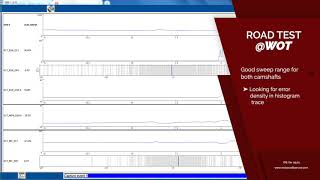
- Ford IDS (Integrated Diagnostic System): Histogram Mode for VCT Error PIDs — After data logging a drive cycle, using the histogram mode can visually show the frequency and magnitude of VCT errors, making it easier to spot intermittent anomalies that might be missed just by watching live data.
- Ford IDS (or equivalent bidirectional scanner): Active Command - VCT Solenoid — As mentioned in TSBs, this command allows a technician to cycle the solenoid on and off while the engine is running to see if it affects engine idle or to attempt to dislodge debris. A lack of change in engine behavior can indicate a stuck solenoid.
Wiring & Ground Locations
- G103 — Right side of the engine compartment.. This is a logic ground for the engine controls system. A poor connection at this ground point could potentially cause erratic behavior or incorrect readings from sensors and solenoids controlled by the PCM.
Real Owner Repair Stories
- Reddit user wwoolyieten in r/fordexpedition (2015 Ford Expedition with EcoBoost engine (similar VCT system)) — After a DIY timing chain replacement, all previous codes cleared, but a new P0017 code appeared.
❌ Tried (didn't work) Testing VCT solenoids with direct voltage (they clicked)., Testing for voltage at the camshaft position sensor (read 11v).
✅ What actually fixed it The timing was correct initially, but slack was left in the wrong part of the chain during installation. Upon the first startup, the chain jumped a tooth. The issue was resolved by having a shop re-do the timing job correctly, ensuring proper chain tensioning throughout the process.
When the Usual Fixes Don't Work
- In a case involving a similar engine, a user experienced P0017 after a timing chain replacement where they had confirmed the timing marks were aligned. After trying to diagnose sensors and solenoids, the final cause was determined to be that the chain had jumped a single tooth upon the first startup because slack was left in the wrong place during installation. This contradicts the assumption that a P0017 appearing after a timing job is always due to a faulty sensor or solenoid activated during the repair, and highlights the critical importance of proper tensioning procedure.
OEM Part Supersession History
CM5Z-6M280-D→CM5Z-6M280-G— Part revision by the manufacturer, likely for improved durability or performance.8L3Z-6M280-A→8L3Z-6M280-B— Part revision for 4.6L/5.4L engines, but the base number 6M280 is shared across many Ford engines, indicating a pattern of revisions.
Heads up: This specific part is for V8 engines but demonstrates the supersession pattern for the 6M280 base part number.
Model Year Variations Within This Range
- 2017-2019: The 2017 model year refresh introduced the 1.5L EcoBoost I-4 as the standard engine on SE and Titanium trims, replacing the previous 1.6L EcoBoost. While functionally similar and using VCT technology, part numbers for components like VCT solenoids may differ.
- 2020-2021: The fourth-generation Escape (2020+) introduced a new 1.5L 3-cylinder 'Dragon' EcoBoost engine. This engine features Twin-independent Variable Cam Timing (Ti-VCT) and cylinder deactivation. While the principle of VCT remains, the components (solenoids, phasers) are specific to this new engine design.
Helpful Videos
![How to Fix P0017 Engine Code in 6 Minutes [4 DIY Methods / Only $6.81]](https://img.youtube.com/vi/Vcj-f_J2hyo/mqdefault.jpg)



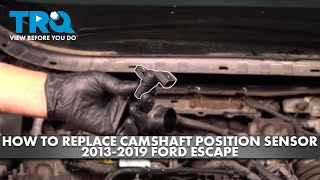
We Have This Part in Stock

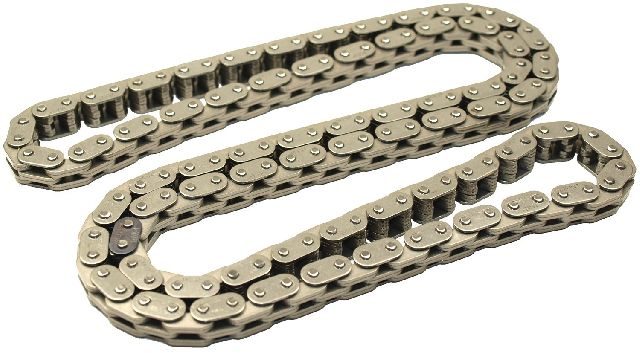
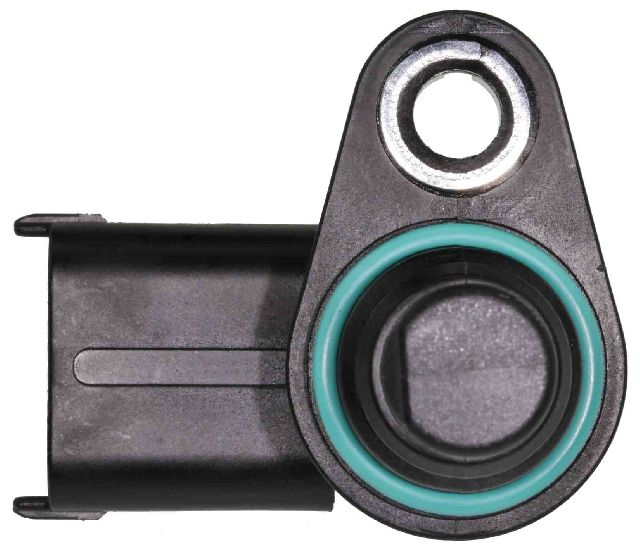

The information in this article is provided for general reference and educational purposes only. Vehicle specifications, procedures, and part compatibility can vary by production date, trim level, and region. Always consult your vehicle's factory service manual and verify part numbers before purchasing or performing repairs. Safety-critical components such as airbags, seat belts, and braking systems should be installed by a qualified professional.
- Ford ESCAPE:
- 🧭 Diagnostic Flowchart
- 🎬 Helpful Videos
- 🛍️ Shop This Part
- What's Unique About the 2015-2021 Ford ESCAPE
- Symptoms You May Notice
- Most Likely Causes
- Rare But Worth Checking
- Diagnosis Steps
- Parts You'll Likely Need
- Related Codes That Often Appear With This One
- Technical Service Bulletins (TSBs) & Recalls
- Platform-Specific Known Issues
- Mechanic-Grade Diagnostic Values
- Hidden / Shadow Codes Worth Checking
- Scan Tool Commands That Help
- Wiring & Ground Locations
- Real Owner Repair Stories
- When the Usual Fixes Don't Work
- OEM Part Supersession History
- Model Year Variations Within This Range
- 🎟️ Get 5% Off