

P0017 on 2015-2018 Ford Focus: Crankshaft/Camshaft Correlation Causes and Fixes
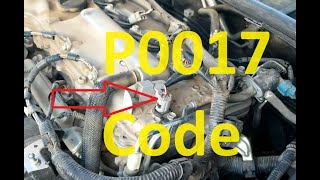
On a 2015-2018 Ford Focus, code P0017 is most often caused by low or dirty engine oil, or a failing exhaust VCT (Variable Camshaft Timing) solenoid. An oil change and replacing the VCT solenoid are the most common fixes, with DIY parts costing between $40 and $100. For the 1.0L EcoBoost, this code can also be a serious indicator of a failing oil pump belt.
- Always check your engine oil level and condition first. A simple oil change can often fix this code.
- The most likely failed part is the exhaust VCT solenoid, which is relatively inexpensive and accessible to replace.
- If both P0016 and P0017 codes are present, the problem is more likely to be a stretched timing chain.
- For 1.0L EcoBoost engines, check if your vehicle is affected by recall 23S64, as it relates to oil pump failure which can cause this code.
What's Unique About the 2015-2018 Ford FOCUS
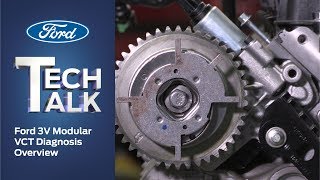
For this generation of Ford Focus, particularly with the 2.0L GDI and 1.0L EcoBoost engines, the Twin Independent Variable Camshaft Timing (Ti-VCT) system is very sensitive to oil quality, viscosity, and pressure. Ford has issued multiple Technical Service Bulletins (TSBs) stating that small debris in the oil can cause VCT solenoids to stick, which is a primary cause for this code. The 1.0L EcoBoost has a unique and critical failure point: a timing-belt-in-oil ('wet belt') design for the oil pump. This belt can degrade, clogging the oil pump pickup screen, leading to a loss of oil pressure that starves the VCT system 🎬 Watch: Ford Tech Talk overview of VCT system diagnosis and triggers timing codes like P0017. This is a known issue covered by Ford recall 23S64 for the oil pump belt tensioner.
Diagnostic Flowchart
Tap your situation to follow the diagnostic path that matches what you're seeing on this vehicle.
Symptoms You May Notice
- Check Engine Light is on
- Rough or erratic idle, sometimes with RPM fluctuations
- Engine is difficult to start or has an extended crank time
- Loss of engine power, especially during acceleration
- Engine stalling at low speeds or when coming to a stop
- Decreased fuel economy
- Rattling noise from the engine, especially on startup
- Replacing the crankshaft position sensor when the issue is with the camshaft circuit or base timing.
- Replacing the camshaft position sensor when the root cause is a faulty VCT solenoid, low/dirty oil, or a clogged oil pickup screen (on the 1.0L).
Most Likely Causes
- Low, Dirty, or Incorrect Viscosity Engine Oil 🔴 High Probability The VCT system is hydraulically operated and highly sensitive to oil pressure and cleanliness. The TSBs for this platform frequently cite oil-related issues as the root cause of VCT solenoid failure.
How to confirm: Check the oil level on the dipstick and inspect its condition. If it's low, dark, or sludgy, it needs to be changed. This should always be the first step.
Typical fix: Perform an engine oil and filter change using the correct OEM-specified full synthetic oil (e.g., Motorcraft 5W-20 for the 2.0L GDI) and a high-quality filter.
Est. part cost: $30-$60 - Failing Variable Camshaft Timing (VCT) Solenoid 🔴 High Probability → Shop Engine Camshaft Ford TSBs #SSM 48423 and #SSM 47170 state that small debris can cause the VCT solenoid to stick. This is the most common component failure for P0017 on the 2.0L GDI engine.
How to confirm: After an oil change, if the code persists, this is the next logical part. TSB #SSM 48423 advises using a scan tool to cycle the solenoid 10 times to try and clear debris before replacement. You can also test the solenoid's resistance with a multimeter; it should be between 6.9 and 7.9 ohms at room temperature (68°F/20°C).
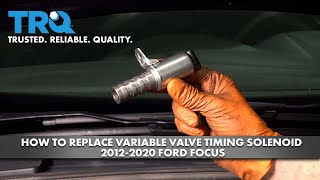
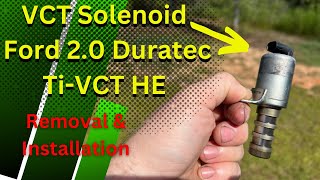
Typical fix: Replace the Bank 1 exhaust VCT solenoid (also called an oil control valve).
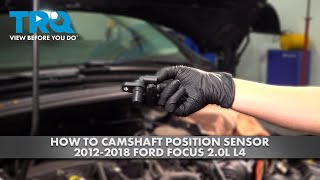
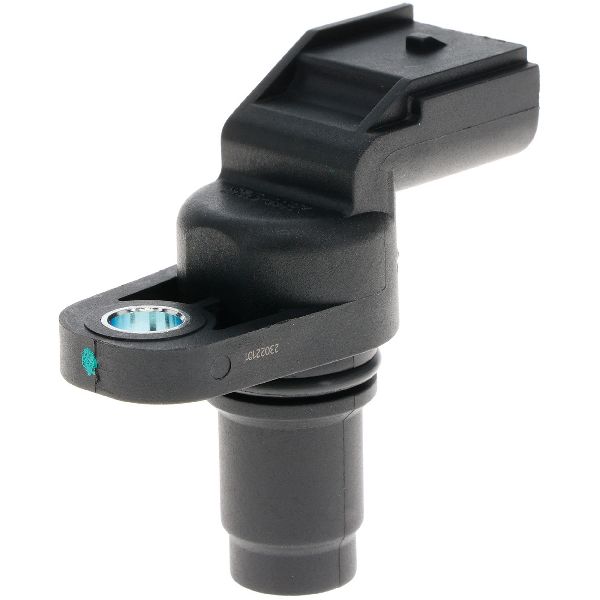
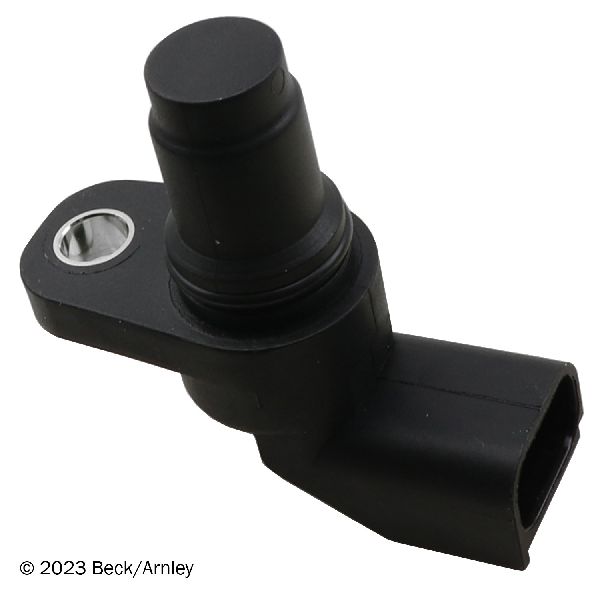
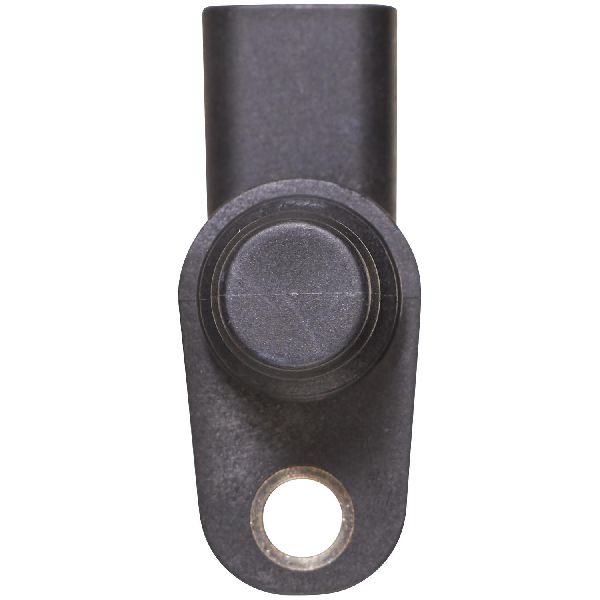
Est. part cost: $25-$75 - Failing Camshaft Position (CMP) Sensor 🟡 Medium Probability → Shop Engine Camshaft Position Sensor
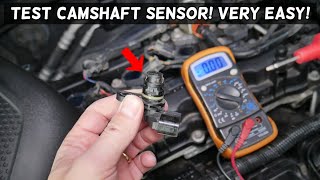
How to confirm: If the engine runs smoothly but the code is present, the sensor itself may be faulty. A scan tool can monitor the sensor's live data stream for dropouts. The sensor's resistance can also be tested, but this is often misdiagnosed; the issue is more commonly the VCT solenoid or oil.
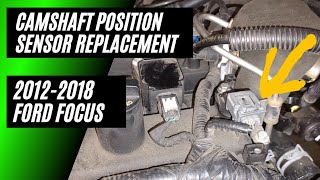
Typical fix: Replace the Bank 1 exhaust camshaft position sensor.
Est. part cost: $20-$50 - Stretched Timing Chain or Damaged Timing Components ⚪ Low Probability → Shop Engine Timing Chain While less common at lower mileage, timing chains can stretch over time, causing a permanent correlation error that sensors and solenoids cannot correct. This is more likely on higher-mileage vehicles.
How to confirm: This is usually diagnosed after all other possibilities are ruled out. A mechanic can physically inspect the timing chain for slack. An oscilloscope can be used to compare the crankshaft and camshaft sensor waveforms to reveal a permanent timing offset.
Typical fix: Replace the timing chain, tensioners, and guides. This is a labor-intensive job.
Est. part cost: $200-$500
Rare But Worth Checking
- Failed Camshaft Phaser/Actuator: → Shop Engine Camshaft The VCT phaser itself can fail mechanically, getting stuck in one position. This is a more involved and expensive repair than the solenoid and usually produces a more consistent rattling noise.
- Damaged Reluctor Wheel/Tone Ring: The toothed wheel that the camshaft or crankshaft sensor reads can become damaged, bent, or slip on its shaft, causing incorrect readings even with a good sensor.
- Failing Oil Pump/Clogged Pickup Screen (1.0L EcoBoost only): A critical issue for the 1.0L engine. The oil pump's wet belt degrades, and rubber particles clog the oil pickup screen in the oil pan. This starves the engine of oil pressure, causing the VCT system to fail and triggering P0016/P0017. This requires dropping the oil pan to inspect.
Diagnosis Steps
- Check engine oil level and condition. If low, dirty, or overdue for a change, perform an oil and filter change with the correct OEM-spec oil and clear the code.
- Use an OBD-II scanner to check for any other related trouble codes. The presence of P0016 is a significant clue.
- For the 1.0L EcoBoost, if the car has over 60,000 miles or an unknown service history, a professional should check the oil pressure with a mechanical gauge. Low pressure strongly suggests a clogged oil pickup screen.
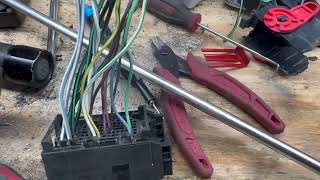
- Inspect the wiring and connectors for the crankshaft sensor, camshaft sensor, and VCT solenoid for any visible damage, corrosion, or loose connections.
- Use a scan tool to command the exhaust VCT solenoid on and off while the engine is idling. A healthy solenoid will cause a noticeable change in idle quality or may even stall the engine. If there is no change, the solenoid is likely stuck or has failed.
- If the solenoid is suspected, remove it. It can be cleaned with brake cleaner and tested off the vehicle by applying a 12V source to see if it actuates. However, replacement is often the most reliable fix.
- If the code persists, test the camshaft position sensor itself. If it fails testing, replace it.
- If all electronic components and oil pressure are good, the final step is to suspect a mechanical timing issue. This requires using an oscilloscope to compare cam/crank signals or a physical inspection of the timing chain, guides, and tensioners, which is best left to a professional.
Parts You'll Likely Need
- Variable Camshaft Timing (VCT) Solenoid / Oil Control Valve
(OEM #CM5Z-6M280-A (Intake/Exhaust for 2.0L GDI), CN1Z-6M280-B (Exhaust for 1.0L EcoBoost))— This is the most common point of failure according to Ford's own service bulletins, often due to oil contamination.
Trusted brands: Motorcraft, Dorman
OEM price range: $40-$80
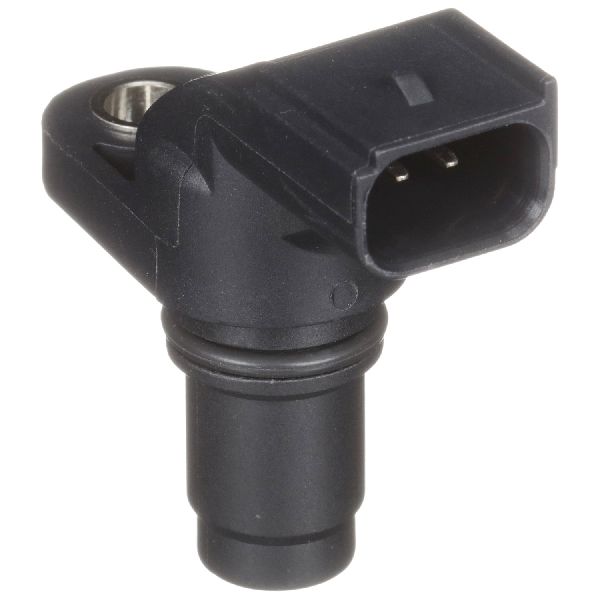
Aftermarket price range: $25-$50 - Camshaft Position Sensor
(OEM #7L5Z-6B288-A (Fits both Intake/Exhaust on 2.0L GDI))— The sensor providing the camshaft position signal can fail, causing a correlation code even if the mechanical timing is correct. Often replaced unnecessarily.
Trusted brands: Motorcraft, Bosch, NTK
OEM price range: $30-$60
Aftermarket price range: $20-$40 - Engine Oil and Filter
(OEM #XO-5W20-QFS (Motorcraft 5W-20 Full Synthetic), FL-910S (Motorcraft Filter))— Clean oil of the correct viscosity is essential for the VCT system to function. This should always be the first step in addressing this code.
Trusted brands: Motorcraft
OEM price range: $40-$70
Aftermarket price range: $30-$50
Related Codes That Often Appear With This One
- P0016 — This code is for the intake camshaft (Sensor A) on the same bank. If P0016 and P0017 appear together, it strongly suggests a base timing issue (like a stretched chain) or a systemic oil pressure problem affecting the entire VCT system.
- P0014 / P0015 — These codes indicate the exhaust camshaft timing is over-advanced (P0014) or over-retarded (P0015). They often appear with P0017 and point more specifically to the exhaust cam timing being stuck, likely due to the VCT solenoid or phaser.
- P0365 / P0369 — These codes indicate a circuit malfunction for the Bank 1 exhaust camshaft position sensor itself. A faulty sensor or wiring can be the direct cause of the P0017 correlation error.
Technical Service Bulletins (TSBs) & Recalls
- SSM 54366: Notes that various VCT codes including P0017 may be present and refers to pinpoint tests.
- SSM 48423: States that P0011-P0025 codes may be due to small debris causing the VCT solenoid to stick. Recommends cycling the solenoid with a scan tool to clear debris before replacement.
- SSM 47170: An earlier version of SSM 48423 with the same guidance regarding debris in VCT solenoids.
Platform-Specific Known Issues
- Sticking VCT Solenoids (TSB SSM 47170, 48423, 54366): → Shop Engine Variable Valve Timing (VVT) Solenoid Multiple Ford TSBs note that P0017 and related VCT codes may be caused by small debris causing the VCT solenoid to stick. The recommended procedure before replacement is to use a scan tool to command the solenoid to cycle 10 times to attempt to clear the debris.
- 1.0L EcoBoost Oil Pump Belt Degradation: A well-documented, critical failure on the 1.0L EcoBoost engine involves the oil pump's 'wet' belt. This belt degrades over time, shedding rubber particles that clog the oil pump pickup screen. The resulting loss of oil pressure starves the VCT system, triggering timing correlation codes like P0017 and P0016. This is a severe condition that requires dropping the oil pan for inspection and likely replacing the oil pump, belt, and tensioner. Ford has issued recall 23S64 for the oil pump belt tensioner on certain models.
Mechanic-Grade Diagnostic Values
- VCT Solenoid (OCV) Resistance — expected: 6.9 to 7.9 Ohms at 68°F (20°C). Other sources state a broader range of 5-15 Ohms.. Failure: A reading of 0 Ohms (short circuit) or infinite/OL (open circuit) indicates a failed solenoid.
- Camshaft Position Sensor (CMP) Power Supply Voltage — expected: Battery voltage (approx. 12V) with ignition on, engine off.. Failure: Significantly lower or no voltage suggests a wiring or PCM power supply issue.
- Camshaft Position Sensor (CMP) Signal Voltage — expected: Around 5V (for Hall effect type sensors).. Failure: No voltage or erratic voltage can indicate a faulty sensor or wiring issue.
Hidden / Shadow Codes Worth Checking
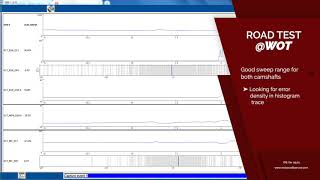
- VCT PIDs (VCT_EXH_CMD, VCT_EXH_ACT, VCT_EXH_ERR): These are not hidden codes but specific Parameter IDs (PIDs) viewable with advanced scan tools like FORScan or Ford's IDS. They show Commanded, Actual, and Error degrees for the exhaust camshaft timing, allowing a technician to see in real-time if the phaser is responding correctly to PCM commands. (see via Use a scan tool with Ford-specific live data capabilities, such as FORScan or a professional-grade scanner.)
Scan Tool Commands That Help
- Ford IDS, FORScan, or equivalent: VCT Solenoid On/Off Bidirectional Control (Pinpoint Test HK11) — As per Ford TSBs (e.g., SSM 48423), this command should be used after an oil change but before replacing a suspected VCT solenoid. It cycles the solenoid rapidly (typically 10 times) to dislodge small debris that may be causing it to stick, which can sometimes fix the code without replacing parts.
Wiring & Ground Locations
- Main Engine Bay Ground — Under the airbox, bolted to the chassis/fender area in front of the battery.. A poor or corroded main ground can cause erratic behavior from sensors and the PCM, potentially leading to incorrect correlation codes. Ensuring this connection is clean and tight is a crucial, often overlooked, electrical diagnostic step.
- VCT Solenoid Connector — On top of the VCT solenoid, under the valve cover on the 2.0L GDI engine.. When testing, one pin (often on a blue-green wire) should have 12V+ with the ignition on. The other pin is the control line, which the PCM pulses to ground to activate the solenoid. Checking for power here is a primary step in diagnosing a non-responsive solenoid.
Real Owner Repair Stories
- Reddit user on /r/MechanicAdvice (Vehicle with an oil consumption problem (model year not specified but relevant to the engine type)) — Car started running badly. P0017 code present.
❌ Tried (didn't work) The user performed a major repair: replaced the timing chain, tensioners, both CVVT sprockets, and the exhaust camshaft because its dowel pin had broken. They also tested the oil control valves (solenoids) and confirmed they were actuating.
✅ What actually fixed it The story is a cautionary tale: even after correctly replacing all failed and jumped mechanical timing components, the P0017 code would not go away, despite the car running well. This indicates the issue can persist due to PCM memory, the need for a specific relearn procedure, or a subtle, unaddressed electrical fault.
OEM Part Supersession History
CM5Z-6M280-A→CM5Z-6M280-C— Part revision by the manufacturer, likely for improved durability or performance.
Heads up: The new part number (CM5Z-6M280-C) is the correct replacement for the 2.0L GDI engine. Using old stock of the '-A' version is not recommended. Note that the 1.0L EcoBoost uses a different part, such as CM5Z-6M280-G.
Model Year Variations Within This Range
- 2015-2018: The 2.0L GDI engine in 2015 and later models features a cylinder head temperature sensor located between the spark plug wells for cylinders 2 and 3. This sensor is not present on the 2012-2014 models. This is a key difference to note if swapping an engine or wiring harness between these year ranges.
Helpful Videos

![How to Fix P0017 Engine Code in 6 Minutes [4 DIY Methods / Only $6.81]](https://img.youtube.com/vi/Vcj-f_J2hyo/mqdefault.jpg)
![Ford Focus Wiring Diagrams 1999 to 2016 [Complete]](https://img.youtube.com/vi/lXS_8FmsLx0/mqdefault.jpg)
We Have This Part in Stock


The information in this article is provided for general reference and educational purposes only. Vehicle specifications, procedures, and part compatibility can vary by production date, trim level, and region. Always consult your vehicle's factory service manual and verify part numbers before purchasing or performing repairs. Safety-critical components such as airbags, seat belts, and braking systems should be installed by a qualified professional.
- Ford FOCUS:
- 🧭 Diagnostic Flowchart
- 🎬 Helpful Videos
- 🛍️ Shop This Part
- What's Unique About the 2015-2018 Ford FOCUS
- Symptoms You May Notice
- Most Likely Causes
- Rare But Worth Checking
- Diagnosis Steps
- Parts You'll Likely Need
- Related Codes That Often Appear With This One
- Technical Service Bulletins (TSBs) & Recalls
- Platform-Specific Known Issues
- Mechanic-Grade Diagnostic Values
- Hidden / Shadow Codes Worth Checking
- Scan Tool Commands That Help
- Wiring & Ground Locations
- Real Owner Repair Stories
- OEM Part Supersession History
- Model Year Variations Within This Range
- 🎟️ Get 5% Off