

P0017 on 2015-2019 Ford Transit 3.5L EcoBoost: Causes and Fixes for Cam/Crank Correlation
On a 2015-2019 Ford Transit with the 3.5L EcoBoost engine, P0017 almost always points to a stretched timing chain or a faulty VCT solenoid. An oil change is the first step, but prepare for a potential timing chain replacement, which can cost between $1,500 and $2,500. Ignoring the startup rattle can lead to catastrophic engine failure.
- P0017 on a 3.5L EcoBoost Transit is a serious code that should be addressed immediately to prevent engine damage.
- Always check the engine oil level and condition first; a simple oil change can sometimes resolve the issue if it's related to VCT solenoid operation.
- A rattling noise on startup is a classic symptom of a stretched timing chain, the most common major repair for this code on this engine.
- If a timing chain replacement is needed, it is best practice to also replace the cam phasers and VCT solenoids as a complete kit.
- Multiple Ford TSBs acknowledge issues with the VCT system that can trigger this code. [SSM 48423, 16-0038]
What's Unique About the 2015-2019 Ford TRANSIT
The 3.5L EcoBoost engine in the Ford Transit is known for timing chain issues. Unlike many other engines where this code might point to a simple sensor fault, on the 3.5L EcoBoost, it is frequently a precursor to a stretched timing chain. This is a known issue, and failure to address it can lead to significant engine damage. Ford has issued multiple Technical Service Bulletins (TSBs) that group P0017 with other timing-related codes. TSB SSM 48423 suggests that before component replacement, a technician should use a scan tool to cycle the VCT solenoid 10 times 🎬 Watch: How to troubleshoot VVT solenoids and sensors first. to attempt to clear debris. However, owners and mechanics report this is often a temporary fix, with the root cause being mechanical wear.
Diagnostic Flowchart
Tap your situation to follow the diagnostic path that matches what you're seeing on this vehicle.
Symptoms You May Notice
- Check Engine Light is on
- Rough or unstable idle
- Engine rattling noise, especially a brief 'chain rattle' on cold startup that may last 2-5 seconds
- Noticeable loss of engine power and acceleration
- Engine may stall at low speeds
- Decreased fuel economy
- A strong smell of unburnt fuel from the exhaust due to poor timing.
- Replacing only the camshaft position sensor without checking oil condition or for signs of a stretched timing chain. The sensor is rarely the root cause on this engine.
- Assuming the problem is fixed after an oil change or VCT solenoid replacement when the code returns, indicating the underlying mechanical wear of the timing chain was the true cause.
- Incorrectly timing the engine during a timing chain replacement, which can cause P0017 to appear immediately after the job is completed. 🎬 Watch: How to correctly time the 3.5L EcoBoost engine.
Most Likely Causes
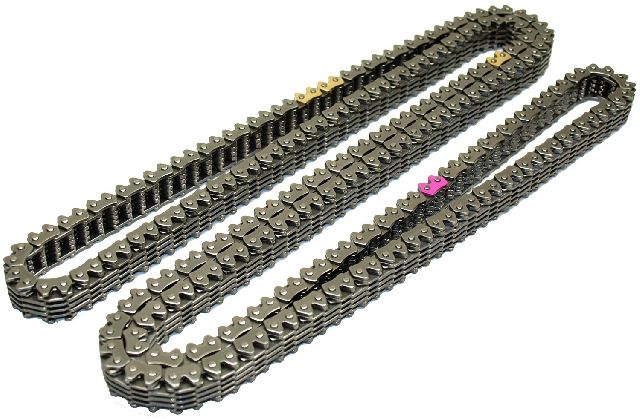
- Stretched Timing Chain 🔴 High Probability → Shop Engine Timing Chain The 1st generation 3.5L EcoBoost engine (used through 2016) has a known issue with premature timing chain stretching due to its long single-chain design. This is exacerbated by factors like infrequent oil changes, oil contamination, and failure of the hydraulic tensioner. Plastic chain guides can also become brittle and break.
How to confirm: A rattling noise on startup is a strong indicator. A definitive diagnosis requires measuring chain slack, which involves significant engine disassembly. It is often diagnosed after ruling out simpler causes like sensors and solenoids.
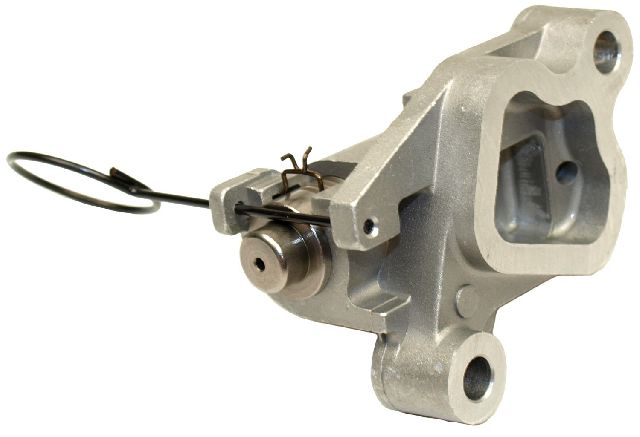
Typical fix: Replace the timing chain, tensioners, and guides. 🎬 See this walkthrough for a simplified timing chain replacement. It is highly recommended to replace the cam phasers, VCT solenoids, and water pump at the same time since the labor overlaps significantly.
Est. part cost: $400-$800 for a full kit - Faulty Variable Camshaft Timing (VCT) Solenoid 🟡 Medium Probability → Shop Engine Camshaft Ford TSBs #SSM 48423 and #SSM 47170 specifically state that small debris in the oil can cause the VCT solenoid to stick, leading to this code. They are a common failure point and a frequent first step in diagnosis after an oil change.
How to confirm: Use a high-end scan tool to command the solenoid on and off and monitor the camshaft angle response. Resistance can also be checked with a multimeter, with a good solenoid typically reading between 5 and 25 ohms. The solenoid can also be removed and tested with a 12V source to see if it actuates.
Typical fix: Replace the Bank 1 exhaust VCT solenoid. Many mechanics recommend replacing all four VCT solenoids at once.
Est. part cost: $25-$70 - Low or Dirty Engine Oil 🟡 Medium Probability The VCT system is entirely dependent on clean oil at the correct pressure to function. Sludgy or low oil will impede the operation of phasers and solenoids, and is considered a primary contributor to timing component wear.
How to confirm: Check the oil level on the dipstick and inspect its color and consistency. This should always be the first check before any parts are replaced.
Typical fix: Perform an oil and filter change using the manufacturer-specified oil (Ford recommends Motorcraft 5W-30 Synthetic Blend) and a quality filter (e.g., Motorcraft FL-500S). Clear the codes and drive to see if the issue returns.
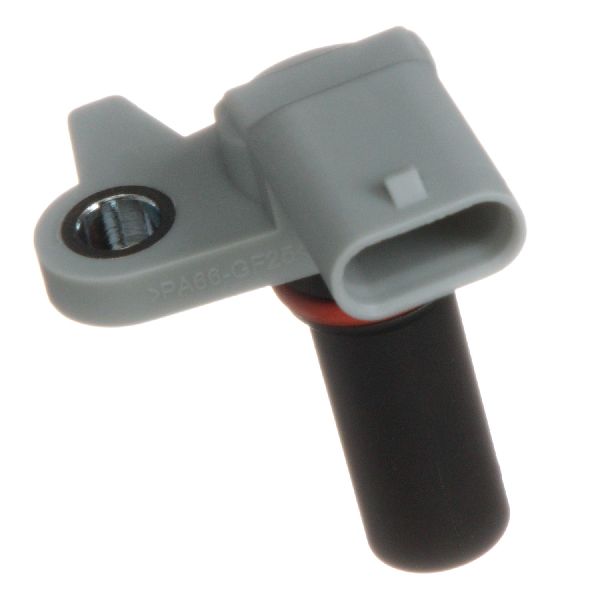
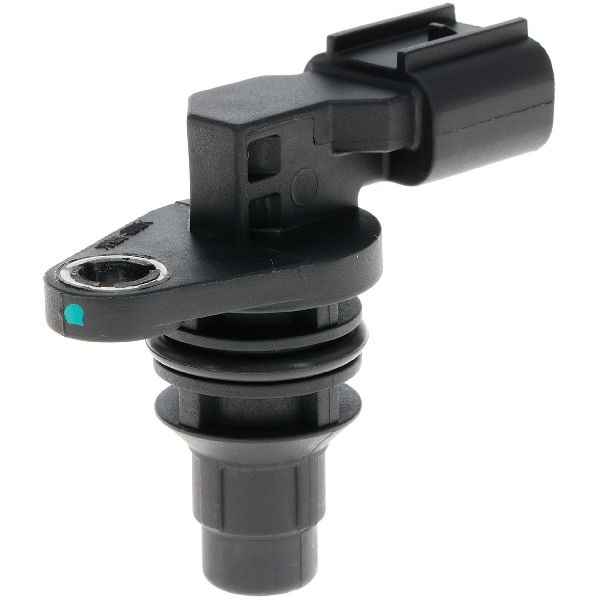
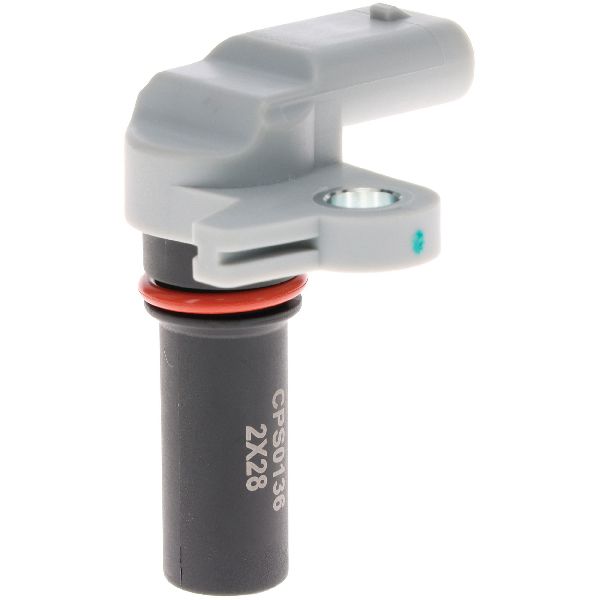
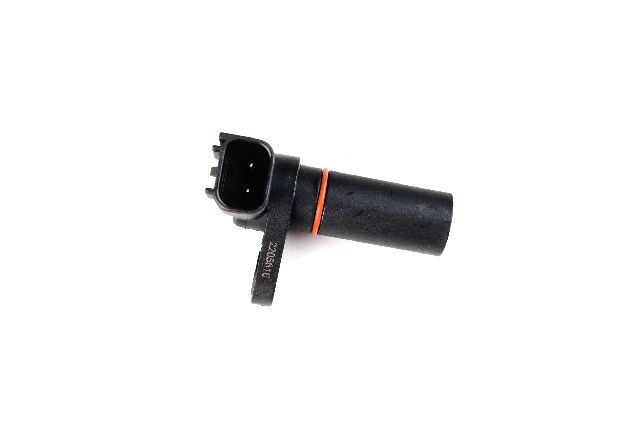
Est. part cost: $50-$80 - Failed Camshaft Position Sensor ⚪ Low Probability → Shop Engine Camshaft Position Sensor
How to confirm: If the engine runs perfectly but the code persists, the sensor is a more likely culprit. Test the sensor's output signal with a multimeter or oscilloscope. With the key on, the signal wire should read approximately 4.8-5.0 volts, and this voltage should drop to zero when a ferrous metal object is passed in front of the sensor. Swapping the sensor with the one from the other bank is a common diagnostic trick.
Typical fix: Replace the Bank 1 exhaust camshaft position sensor.
Est. part cost: $20-$60
Rare But Worth Checking
- Failed Cam Phaser: → Shop Engine Timing Gear While often replaced with the timing chain, a phaser can fail on its own by getting stuck in one position or having its internal locking pin fail. This is less common than the chain stretching but is a known issue on the 3.5L EcoBoost.
- Damaged Reluctor Wheel/Tone Ring: The tone ring on the camshaft or crankshaft that the sensor reads can become damaged, slip, or have debris on it, sending incorrect position data to the PCM. This is rare but can happen, especially if other engine work was recently performed.
- Wiring Harness Issue: Damage to the wiring harness for the camshaft sensor or VCT solenoid, such as a short to ground or an open circuit, can mimic a failed component. This should be investigated before replacing expensive parts, especially if codes appear immediately after a repair.
Diagnosis Steps
- Check Engine Oil: Verify the oil level is full and the oil is clean. If low or dirty, perform an oil and filter change with Ford-specified 5W-30 oil, clear the code, and drive for 15-20 minutes to see if it returns.
- Scan for Codes: Use an OBD-II scanner to confirm P0017 and check for other related codes like P0016, P0018, or P0019. Note any freeze-frame data.
- Inspect Wiring: Check the wiring harness and connector for the Bank 1 exhaust camshaft position sensor and the VCT solenoid for any signs of damage, corrosion, or loose connections.
- Test the VCT Solenoid: Using a capable scan tool like Ford IDS, command the Bank 1 exhaust VCT solenoid to activate (per TSB SSM 48423, cycle it 10 times) and watch for a change in camshaft timing or engine idle. Monitor the VCT_ADV_ERR (VCT Advance Error) PID; it should be close to 0 degrees (+/- 5 degrees) at idle.
- Test the Camshaft Sensor: If the solenoid tests good, test the camshaft position sensor's signal with a multimeter or oscilloscope to ensure it's sending a clean signal to the PCM. Consider swapping it with the sensor from Bank 2 to see if the code follows.
- Inspect Mechanical Timing: If all electrical components and sensors are working, the cause is almost certainly mechanical. This involves inspecting the timing chain for stretching or slack, which is an advanced procedure requiring significant engine disassembly.
Parts You'll Likely Need
- Timing Chain Kit
(OEM #BL3Z-6D256-C (for 2015-2016 models, often includes phasers) or a kit built around HL3Z-6268-A (for 2017+ models))— This is the most common root cause on the 3.5L EcoBoost engine. A full kit ensures all worn components (chain, guides, tensioner) are replaced.
Trusted brands: Motorcraft, Cloyes
OEM price range: $500-$900
Aftermarket price range: $300-$500 - Variable Camshaft Timing (VCT) Solenoid
(OEM #BL3Z-6M280-B or 8L3Z-6M280-B (often used for exhaust). Note: Intake and Exhaust solenoids can have different part numbers (e.g., AT4Z-6M280-A for intake). Verify by position.)— These are known to fail or stick due to oil debris, as noted in Ford TSBs. They are relatively inexpensive and easy to replace as a first step.
Trusted brands: Motorcraft, Dorman
OEM price range: $40-$60
Aftermarket price range: $25-$45 - Camshaft Position Sensor
(OEM #Motorcraft DU-87 (check specific application))— Replaced when diagnostic tests confirm the sensor itself has failed, which is less common than mechanical or solenoid issues.
Trusted brands: Motorcraft, Bosch, NTK
OEM price range: $40-$70
Aftermarket price range: $20-$50
Related Codes That Often Appear With This One
- P0016 — This code is for the intake camshaft (Sensor A) on the same bank. Seeing both P0016 and P0017 together strongly suggests a base timing issue, like a stretched chain, affecting the entire bank.
- P0018 / P0019 — These are the corresponding codes for Bank 2 (driver's side). If codes for both banks are present, it almost certainly confirms a problem with the primary timing chain or crankshaft position.
- P0015 — This code indicates 'B' Camshaft Position - Timing Over-Retarded (Bank 1). It often appears with P0017 and points to the same set of potential causes: VCT solenoid, oil issues, or timing chain problems.
Technical Service Bulletins (TSBs) & Recalls
- SSM 54366: Mentions P0017 as part of a group of VCT-related DTCs on 2015-2021 Ford vehicles.
- SSM 48423: Notes that P0017 may be due to small debris causing the VCT solenoid to stick and advises cycling the solenoid before replacement.
- TSB-16-0093: Cites P0017 on low-mileage vehicles.
- 16-0038: Specifically mentions P0017 on 2016 Transit vehicles with the 3.5L GTDI engine under 2000 miles.
- SSM 47170: An earlier version of the TSB pointing to debris in the VCT solenoid as a cause for P0017.
Platform-Specific Known Issues
- TSB #SSM 48423 and #SSM 47170 note that this code can be caused by small debris causing the VCT solenoid to stick. The recommended diagnostic step is to use a scan tool to cycle the solenoid 10 times to try and clear it.
- TSB #16-0038 and #TSB-16-0093 specifically call out P0017 on low-mileage 3.5L GTDI engines (under 2000 miles), indicating potential early life component failure.
Mechanic-Grade Diagnostic Values
- VCT Solenoid Internal Resistance — expected: 5 to 25 Ohms. Failure: A reading outside this range, or infinite resistance (open circuit), indicates a failed solenoid.
- Camshaft Position Sensor (3-wire Hall-effect) Signal Voltage — expected: Approx. 4.8 - 5.0 Volts DC with key on, engine off.. Failure: Voltage drops to 0V when ferrous metal is passed over the sensor tip. If voltage is stuck high or low, the sensor is bad.
- VCT Advance Error PID (VCT_ADV_ERR) at Idle — expected: Should hover around 0 degrees.. Failure: A variation greater than +/- 5 degrees for an excessive time suggests a VCT system fault.
Hidden / Shadow Codes Worth Checking
- Mode 6, Test ID $53 (on some models) or specific misfire monitor IDs (e.g., $A2-$AD): Mode 6 data can reveal misfire counts per cylinder before they are high enough to set a standard DTC. While not a direct P0017 diagnostic, it can show which cylinders are affected by the timing issue. (see via A capable OBD-II scanner with Mode 6 functionality. Ford's IDS provides detailed statistical data for VCT performance.)
Scan Tool Commands That Help
- Ford IDS (Integrated Diagnostic System): VCT Solenoid Duty Cycle Command & VCT Advance Error PID (VCT_ADV_ERR) — This is a primary diagnostic step. By commanding the solenoid on and off, a technician can watch the VCT_ADV_ERR PID to see if the camshaft is responding correctly. A lack of response points to a stuck solenoid, clogged passage, or failed phaser.
- Ford IDS (Integrated Diagnostic System): Data Logger with Histogram Mode — When diagnosing intermittent issues, a technician can record the VCT error PIDs while driving the vehicle through various load and RPM ranges to capture anomalies that don't occur at idle.
Wiring & Ground Locations
- Bank 1 Exhaust Camshaft Position Sensor (CMP) — On the 3.5L EcoBoost, Bank 1 is the passenger side. The exhaust camshaft sensor is typically located on the back of the cylinder head, near the firewall.. This is the specific sensor ('Bank 1, Sensor B') that the PCM uses to monitor the exhaust camshaft's position. Damage to its wiring or connector can directly cause a P0017 code.
- PCM Connector — Varies by specific Transit model/year, but typically found in the engine bay near the firewall or battery.. All signals from the CMP sensor and commands to the VCT solenoid route through the PCM. Corrosion, pushed-out pins, or damage at the PCM connector can cause intermittent or persistent P0017 codes.
Real Owner Repair Stories
- Ford F150 Forum (2011 Ford F-150 3.5L EcoBoost) — P0017 code appeared immediately after a complete timing chain and phaser replacement job. No other codes were present.
❌ Tried (didn't work) Clearing the code (it returned immediately).
✅ What actually fixed it The user concluded that the timing was likely off by one tooth on the chain, despite believing it was set correctly. The issue was attributed to the difficulty of keeping the long chain perfectly aligned during installation, even with cam holding tools. The final resolution required disassembling the front of the engine again to re-time it correctly.
OEM Part Supersession History
BL3Z-6268-B (part of older kits for Gen 1)→HL3Z-6268-A (for Gen 2)— The timing system was redesigned for the 2nd Generation 3.5L EcoBoost starting in the 2017 model year. The new design uses two shorter primary chains instead of one long one to reduce stretch.
Heads up: The timing chain HL3Z-6268-A is for 2017 and newer models and is not compatible with the 2015-2016 (Gen 1) engines.
Model Year Variations Within This Range
- 2015-2016: These model years use the 1st Generation 3.5L EcoBoost, which features a single long primary timing chain. This design is more prone to the chain stretching that commonly causes P0017.
- 2017-2019: These model years use the 2nd Generation 3.5L EcoBoost. This engine features a completely redesigned timing system with two shorter primary chains (one for each bank), stronger chain links, and improved cam phasers to increase durability and reduce the likelihood of stretching. While still possible, a stretched chain is less common on these later models compared to the Gen 1 engine.
Helpful Videos
We Have This Part in Stock

The information in this article is provided for general reference and educational purposes only. Vehicle specifications, procedures, and part compatibility can vary by production date, trim level, and region. Always consult your vehicle's factory service manual and verify part numbers before purchasing or performing repairs. Safety-critical components such as airbags, seat belts, and braking systems should be installed by a qualified professional.
- Ford TRANSIT:
- 🧭 Diagnostic Flowchart
- 🎬 Helpful Videos
- 🛍️ Shop This Part
- What's Unique About the 2015-2019 Ford TRANSIT
- Symptoms You May Notice
- Most Likely Causes
- Rare But Worth Checking
- Diagnosis Steps
- Parts You'll Likely Need
- Related Codes That Often Appear With This One
- Technical Service Bulletins (TSBs) & Recalls
- Platform-Specific Known Issues
- Mechanic-Grade Diagnostic Values
- Hidden / Shadow Codes Worth Checking
- Scan Tool Commands That Help
- Wiring & Ground Locations
- Real Owner Repair Stories
- OEM Part Supersession History
- Model Year Variations Within This Range
- 🎟️ Get 5% Off