

P0017 on 2004-2011 GMC Canyon: Crank/Cam Correlation Causes and Fixes
On 2004-2011 GMC Canyon models, P0017 indicates a timing mismatch between the crankshaft and exhaust camshaft. Before replacing sensors, check for low/dirty oil and consider a faulty camshaft actuator solenoid, which is a very common failure. A stretched timing chain is also a frequent cause on these engines, particularly at higher mileage.
- For P0017 on a 2004-2011 GMC Canyon, always check the engine oil level and condition first.
- The most likely part to fail is the exhaust camshaft actuator (VVT) solenoid, not the cam or crank position sensors.
- This code indicates a serious timing problem; address it promptly to avoid poor performance and the risk of severe engine damage.
- If basic checks don't find the cause, the issue is likely mechanical, such as a stretched timing chain, requiring professional diagnosis.
What's Unique About the 2004-2011 Gmc CANYON

The first-generation GMC Canyon with the Atlas family of inline engines (I4 and I5) has several well-documented reasons for triggering a P0017 code. Unlike many vehicles where this code points to a simple sensor failure, on the Canyon it is frequently caused by mechanical issues. These engines are known for having timing chains that can stretch over time. Furthermore, the Variable Valve Timing (VVT) system is very sensitive to oil pressure and cleanliness, and a failing camshaft actuator solenoid is a primary culprit. A unique issue cited in a GM Technical Service Bulletin is a loose crankshaft balancer bolt, which can cause the timing reluctor wheel to wobble and create a false correlation error.
🎬 See a breakdown of common P0017 causes and mechanical fixes.Diagnostic Flowchart

Tap your situation to follow the diagnostic path that matches what you're seeing on this vehicle.
Symptoms You May Notice
- Check Engine Light is on
- Rough idle, sometimes with RPM 'blips' or drops.
- Engine is hard to start.
- Engine stalling, especially when coming to a stop.
- Rattling noise from the engine, particularly from the timing chain area at idle.
- Reduced engine power or sluggish acceleration.
- Increased fuel consumption.
- Replacing the camshaft and crankshaft position sensors without first checking oil level/condition, testing the VVT solenoid, or verifying mechanical timing.
Most Likely Causes


- Faulty Camshaft Actuator Solenoid (VVT Solenoid) 🔴 High Probability → Shop Engine Camshaft The solenoid controls oil flow to the cam phaser. Its internal screens can get clogged with sludge or tear, or the solenoid can fail electrically, which is a very common issue on these GM engines. Forum users note the OEM replacement part was updated with a spring to better secure the screens.
How to confirm: Unplug the solenoid and check its resistance with a multimeter (typically 6.9-7.9 ohms at 68°F/20°C). You can also remove it (a single 10mm bolt) and inspect the screens for debris or damage. A scan tool can command the solenoid on and off to see if engine performance changes.
Typical fix: Replace the exhaust camshaft actuator solenoid. This is a simple, 10-minute job.
Est. part cost: $25-$60 - Low, Dirty, or Incorrect Viscosity Engine Oil 🔴 High Probability The entire VVT system is hydraulic and depends on clean oil at the correct pressure to function. GM issued TSB #PIP4913A specifically advising technicians to check oil pressure when diagnosing P0017. A Reddit user reported their stalling symptoms and P0017 code went away immediately after an oil change, highlighting the oil's importance.
How to confirm: Check the oil level on the dipstick and note its condition. If it's low, black, or sludgy, it's a likely contributor. Verify the correct oil viscosity is being used per the owner's manual. Some owners on forums recommend using a high-quality full synthetic oil and a premium filter to prevent issues.
Typical fix: Perform an oil and filter change with the correct grade of oil. An engine flush may be beneficial if sludge is present.
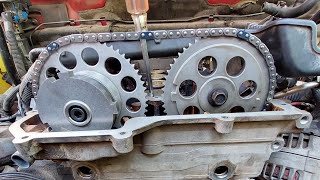
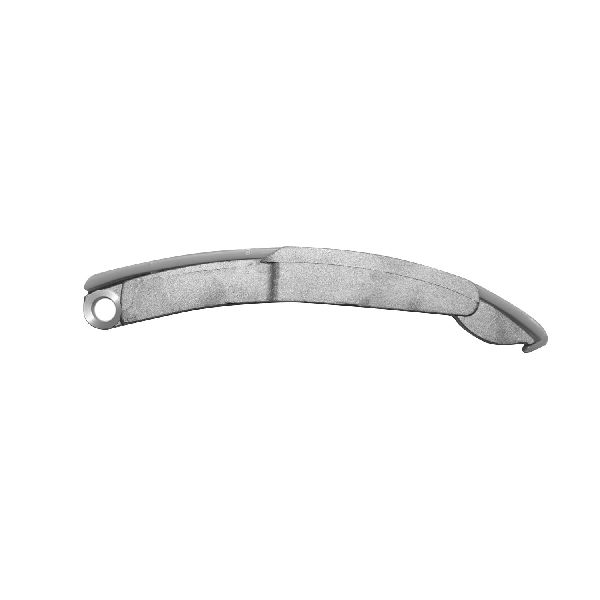
Est. part cost: $40-$80 - Stretched Timing Chain 🟡 Medium Probability → Shop Engine Timing Chain The timing chains on the Atlas engines are known to stretch over time, causing the cam and crank correlation to fall out of the specified range. This is a more likely cause on higher-mileage vehicles.
How to confirm: This is a complex diagnosis. It involves removing the valve cover to inspect the chain for slack and to check the timing marks on the cams and crank, which is a labor-intensive job. A rattling noise from the front of the engine at idle is a strong indicator.
Typical fix: Replace the timing chain, tensioners, and guides. This is a significant repair, often costing over $1000 at a shop.
Est. part cost: $200-$400 - Loose Crankshaft Balancer Bolt ⚪ Low Probability → Shop Engine Crankshaft TSB #PIP4581B specifically calls out this unusual issue. A loose balancer bolt allows the crankshaft timing gear (reluctor wheel) to move or wobble, disrupting the signal sent by the crankshaft position sensor and creating a false correlation error.
How to confirm: Visually inspect the crankshaft balancer for any wobble while the engine is running. With the engine off, attempt to tighten the crankshaft balancer bolt to the manufacturer's torque specification (240 ft-lb per a similar TSB).
Typical fix: Re-torque the crankshaft balancer bolt to the correct specification. If the balancer is damaged, it will need replacement.
Est. part cost: $0 (if only tightening is needed)
Rare But Worth Checking
- Failed Camshaft or Crankshaft Position Sensor: → Shop Engine Crankshaft Position Sensor While these sensors are often replaced first, they are less commonly the actual cause of P0017 on this platform. Owner complaints and technician forums often report that replacing sensors does not fix the code. However, a failed sensor is still possible.
- Failed Camshaft Phaser: → Shop Engine Camshaft The phaser is the mechanical gear that the solenoid acts upon. It can become stuck due to sludge or fail internally, but this is less common than a solenoid failure.
- Oil Contamination in Crankshaft Sensor Connector: → Shop Engine Crankshaft A user on a Chevrolet Colorado forum reported solving a persistent P0017 code by cleaning engine oil out of the crankshaft position sensor's electrical connector. Due to its location, oil can spill into it during messy oil changes.
Diagnosis Steps
- Check the engine oil level and condition. An oil change with full synthetic oil is a recommended first step.
- Scan for any other DTCs that may provide more clues (e.g., P0014, P0016).
- Inspect and test the exhaust camshaft actuator solenoid. Remove the single 10mm bolt, inspect the screens for tears or clogs, and test resistance (should be 6.9-7.9 ohms).
- Using a scan tool, monitor the desired vs. actual camshaft position angles (PIDs) to see if the phaser is responding to commands.
- With the engine off, inspect the crankshaft balancer bolt and ensure it is torqued to specification as per TSB #PIP4581B.
- Inspect the crankshaft position sensor electrical connector for oil contamination, a known issue from messy oil changes.
- If the above steps do not resolve the issue, perform a mechanical oil pressure test to rule out low pressure from a failing oil pump, as suggested by TSB #PIP4913A.
- The final step is to perform a physical inspection of the timing chain, guides, and tensioners for stretch or wear. This is a labor-intensive process.
Parts You'll Likely Need
- Exhaust Camshaft Position Actuator Solenoid
(OEM #12615873 (Supersedes: 12568078, 12602516, and others))— This is the most common point of failure for VVT-related timing codes on this engine due to clogging or electrical failure.
Trusted brands: ACDelco, Delphi
OEM price range: $40-$70
Aftermarket price range: $25-$50 - Timing Chain Kit — If the timing chain has stretched, a full kit including the chain, tensioner, and guides is required to properly restore engine timing.
Trusted brands: Cloyes (e.g., Kit 9-4201S), ACDelco
OEM price range: $250-$400
Aftermarket price range: $150-$250 - Crankshaft Position Sensor — Replaced if the sensor itself is tested and found to be faulty, or if the connector is contaminated with oil and cleaning doesn't resolve the issue. This is a less common cause.
Trusted brands: ACDelco, Denso, NTK
OEM price range: $50-$80
Aftermarket price range: $30-$60
Related Codes That Often Appear With This One
- P0014 — This code for 'Exhaust Camshaft Position Timing - Over-Advanced' is often seen with P0017 because both relate to the exhaust cam timing control. TSB #PIP3694F mentions them appearing together.
- P0016 — This code is for 'Crankshaft Position - Intake Camshaft Position Correlation'. If the timing chain has stretched significantly, it can affect the timing of both the intake and exhaust camshafts, causing both codes to appear.
- P0106 — This code for 'Manifold Absolute Pressure (MAP) Sensor Performance' can be triggered by the rough idle and poor engine breathing caused by incorrect cam timing, as noted in TSB #PIP3694F.
Technical Service Bulletins (TSBs) & Recalls
- PIP3694F: Mentions P0017 with rough idle, engine noise, and other codes like P0014 and P0106, advising inspection of the VVT solenoid screens.
- PIP4913A: Advises checking engine oil pressure when P0017 diagnostics are inconclusive.
- PIP4581B: Points to a loose crankshaft balancer bolt as a potential cause.
Platform-Specific Known Issues
- TSB #PIP3694F notes that P0017 can be accompanied by engine belt noise, a rough idle, and code P0014 or P0106. The bulletin points toward inspecting the camshaft actuator solenoid screens.
- TSB #PIP4913A highlights the importance of checking engine oil pressure if standard diagnostics do not resolve a P0017 code.
- TSB #PIP4581B identifies a rare but specific issue where a loose crankshaft balancer bolt can cause P0017, often with a rattle noise.
Mechanic-Grade Diagnostic Values
- Camshaft Actuator Solenoid (VVT Solenoid) Resistance — expected: 6.9 to 7.9 Ohms at 68°F (20°C). Failure: A reading outside this range, or an open/short circuit, indicates a faulty solenoid.
- Engine Oil Pressure (General Guideline) — expected: At least 10-20 PSI at a warm idle; should increase to 40-65 PSI at higher RPM.. Failure: Pressure below 10 PSI at idle can be insufficient to operate the VVT system correctly, potentially triggering P0017.
- Crankshaft-to-Camshaft Correlation Angle — expected: Within 16.31 degrees. Failure: A deviation greater than 16.31 degrees between the crankshaft pulse and the corresponding camshaft pulse will set a P0017 code.
Scan Tool Commands That Help
- Tech2 / GDS2 (or equivalent professional scanner): Camshaft Position Actuator Solenoid Control — This bidirectional command allows a technician to manually activate and deactivate the VVT solenoid while the engine is running to verify its mechanical operation. The technician can observe changes in engine idle or monitor cam angle PIDs to see if the phaser is responding to the command, which helps isolate a faulty solenoid from a stuck phaser or oil pressure issue.
Wiring & Ground Locations
- G105 (SP-105) — On the driver's side of the engine compartment, near the battery.. This is a major under-hood ground point. While not directly for the cam/crank sensors, a poor connection here can cause a host of electrical issues and erratic behavior in various modules, including the ECM, which processes the sensor signals. Cleaning this ground is a good preventative maintenance step for any electrical diagnosis.
- G106 (SP-106) — On the passenger's side of the engine compartment, behind the engine airbox.. Similar to G105, this is another critical engine bay ground. It serves the HVAC module and Data Link Connector (DLC), among other things. A poor ground here can affect scan tool communication and introduce electrical noise that could potentially interfere with sensor readings.
- Engine Control Module (ECM) — Located in the right rear corner of the engine compartment.. The ECM is the central computer that receives signals from the crankshaft and camshaft position sensors and controls the VVT solenoid. All related wiring terminates here, making it a central point for advanced circuit testing (pin-out voltage/resistance checks).
Real Owner Repair Stories
- Reddit user michaelfkenedy on r/chevycolorado (GMC Canyon (year not specified, but first generation)) — Persistent P0017 code, engine going into limp mode.
❌ Tried (didn't work) Changing the camshaft position sensor, Checking that the VVT solenoid screens were intact, Checking the timing chain
✅ What actually fixed it The user discovered engine oil had contaminated the electrical connector for the crankshaft position sensor, which is located below the oil filler cap. Cleaning the oil out of the connector with a contact cleaner and using a funnel for future oil changes permanently resolved the issue.
OEM Part Supersession History
12568078, 12576768, 12602516→12615873— Design improvement. Forum and user reports suggest the updated OEM part includes a spring or improved design to better secure the internal filter screens, which were a common failure point on the original solenoids.
Model Year Variations Within This Range
- 2004-2006 vs 2007-2011: In 2007, the engines were updated. The 2.8L I4 became the 2.9L I4 (LLV), and the 3.5L I5 became the 3.7L I5 (LLR). While the fundamental VVT system design and P0017 causes are the same, some specific components or procedures may have minor differences. The VVT solenoid (PN 12615873) is listed as compatible across all these engine years, indicating the core component did not change.
Helpful Videos


We Have This Part in Stock


The information in this article is provided for general reference and educational purposes only. Vehicle specifications, procedures, and part compatibility can vary by production date, trim level, and region. Always consult your vehicle's factory service manual and verify part numbers before purchasing or performing repairs. Safety-critical components such as airbags, seat belts, and braking systems should be installed by a qualified professional.
- Gmc CANYON:
- 🧭 Diagnostic Flowchart
- 🎬 Helpful Videos
- 🛍️ Shop This Part
- What's Unique About the 2004-2011 Gmc CANYON
- Symptoms You May Notice
- Most Likely Causes
- Rare But Worth Checking
- Diagnosis Steps
- Parts You'll Likely Need
- Related Codes That Often Appear With This One
- Technical Service Bulletins (TSBs) & Recalls
- Platform-Specific Known Issues
- Mechanic-Grade Diagnostic Values
- Scan Tool Commands That Help
- Wiring & Ground Locations
- Real Owner Repair Stories
- OEM Part Supersession History
- Model Year Variations Within This Range
- 🎟️ Get 5% Off