

P0017 on 2017-2022 GMC Canyon 3.6L V6: VVT Solenoid vs. Stretched Timing Chain
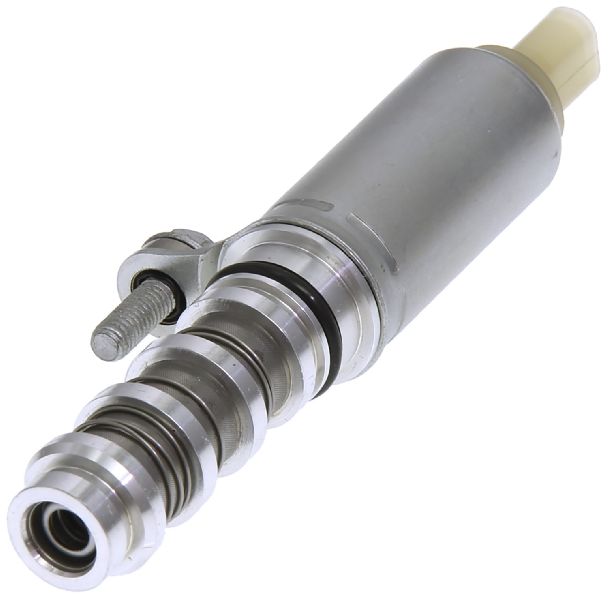
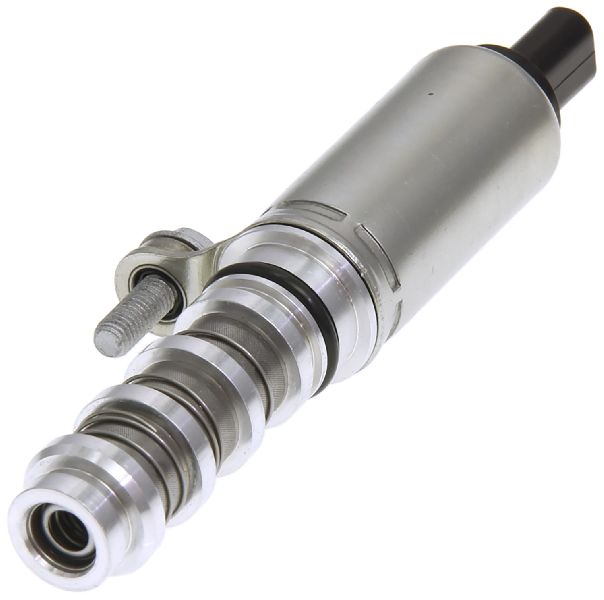
On the 2017-2022 GMC Canyon 3.6L, P0017 is often caused by a faulty Bank 1 (passenger side) exhaust VVT solenoid (Part No. 12679100), a relatively easy fix costing ~$50-$100 for the part. However, it can also indicate a more serious stretched timing chain, a professional repair that can cost over $2,500.
- For a 2017-2022 Canyon with the LGZ V6, P0017 is most likely a bad passenger-side exhaust VVT solenoid or a simple issue of low/dirty oil.
- Do not drive the vehicle with this code active, as it could signal a timing chain problem that can lead to catastrophic engine failure.
- A simple diagnostic step is to swap the exhaust and intake VVT solenoids on the passenger side; if the code changes to P0016, you've found the faulty part.
- Do not replace the camshaft or crankshaft sensors unless all other mechanical, oil-related, and solenoid issues have been definitively ruled out.
What's Unique About the 2017-2022 GMC Canyon
This vehicle range uses the updated LGZ 3.6L V6 engine, which features a more robust timing chain system than its predecessor, the LFX (used in 2015-2016 models). While the LFX was notorious for premature timing chain failures, the LGZ is less prone to this specific issue. As a result, for the 2017-2022 Canyon, a faulty Variable Valve Timing (VVT) solenoid is a more common and less severe cause of P0017. However, the underlying sensitivity of the entire timing system to oil quality and level remains a key characteristic of the GM 3.6L engine family.
Symptoms You May Notice
- Check Engine Light is on
- Engine stumbles or hesitates on light acceleration, especially when cold
- Rough or unstable idle
- Reduced engine power or entering 'limp mode'
- Engine stalling at low speeds
- Rattling or chain noise from the front of the engine, particularly on startup
- Replacing the camshaft or crankshaft position sensors. These sensors are usually accurately reporting the mechanical timing fault and are rarely the root cause of a P0017 code on this engine.
Most Likely Causes
- Faulty Bank 1 Exhaust VVT Solenoid 🔴 High Probability The VVT system is sensitive to oil condition, and these solenoids are a known failure point on the LGZ engine. The internal screens can get clogged with debris from infrequent oil changes, or the solenoid can fail electrically.
How to confirm: Swap the Bank 1 exhaust solenoid (rear position on the passenger side valve cover) with the Bank 1 intake solenoid (front position). Clear the codes and drive the vehicle. If the code changes to P0016 (Intake Camshaft Position Correlation), the solenoid is confirmed bad. Alternatively, test the solenoid's internal resistance; a healthy solenoid should measure between 8 and 13 Ohms.
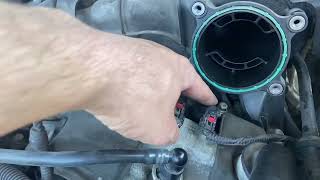
Typical fix: Replace the Bank 1 exhaust VVT solenoid. This is an accessible part on top of the engine, held by a single 10mm bolt. 🎬 Watch: Step-by-step VVT solenoid replacement for your Canyon.
Est. part cost: $40-$100 - Low or Dirty Engine Oil 🔴 High Probability The entire timing system, including the cam phasers and chain tensioners, is hydraulically operated by engine oil. Degraded or low oil cannot provide the necessary pressure for the VVT system to operate correctly, causing timing correlation faults. Bulletin #PIP4913A notes that if standard diagnostics do not isolate the cause of P0017, technicians should monitor the engine oil pressure.
How to confirm: Check the oil level on the dipstick and inspect its color and consistency. If the level is low or the oil is dark and sludgy, this is a likely contributor.
Typical fix: Perform an oil and filter change using a full synthetic 5W-30 oil that meets GM's dexos1 specification. Clear the code and see if it returns.
Est. part cost: $50-$90 - Stretched Timing Chain(s) or Failed Tensioner 🟡 Medium Probability → Shop Engine Timing Chain While the LGZ engine has an improved design, the GM 3.6L V6 family has a documented history of timing chain issues. Bulletin #PIP3423P indicates that P0017 may be set due to loose timing chains or tensioners.
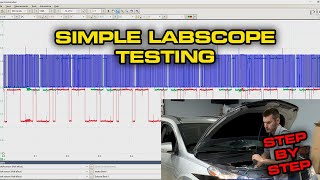
How to confirm: This requires professional diagnosis. A mechanic will use a scan tool to monitor camshaft deviation angles or a lab scope to compare cam and crank sensor waveforms. 🎬 See how a pro uses a labscope to diagnose timing. Physical inspection is the ultimate confirmation but requires significant disassembly.
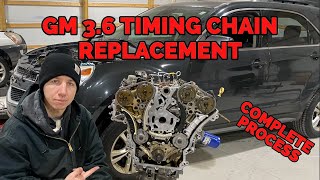
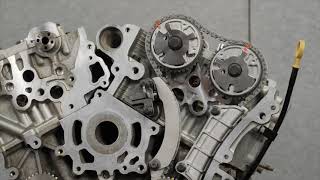
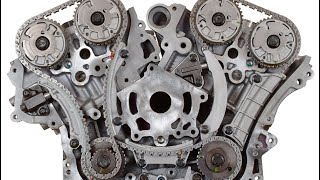
Typical fix: Replace all three timing chains, all guides, and all tensioners. This is a labor-intensive job (14+ hours) that requires significant engine disassembly or removal. 🎬 Watch this full walkthrough of the 3.6L timing chain replacement.
Est. part cost: $300-$700
Rare But Worth Checking
- Chafed Engine Wiring Harness: TSB #18-NA-307 describes a condition where the engine harness can rub against the passenger side cylinder head or camshaft cover, causing damage to the camshaft sensor wires. This can trigger correlation codes (like P0014) or sensor circuit codes (like P0365, P0366) and is worth inspecting visually.
- Slipped Crankshaft Reluctor Wheel: → Shop Engine Crankshaft A rare mechanical failure mentioned in TSB #PIP3423K/L where the toothed wheel on the crankshaft that the position sensor reads from can move, causing a timing correlation error even with good chains.
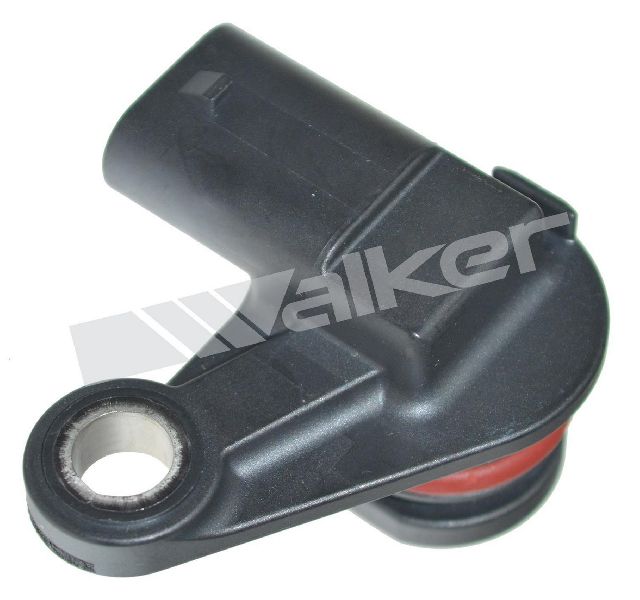
- Faulty Camshaft or Crankshaft Position Sensor: → Shop Engine Crankshaft Position Sensor While possible, this is an uncommon cause for a correlation code. Bulletin #PIP4945B advises technicians to follow published Service Information to address P0017 codes set in current or history.
- Shifted Camshaft Reluctor Ring: → Shop Engine Camshaft A rare failure documented in GM bulletin PIP4548G where the reluctor ring on the camshaft itself rotates slightly from its correct position. This causes the camshaft position sensor to send a signal that is out of sync with the crankshaft, triggering a P0017 code even if the timing chain and phaser are mechanically sound. Diagnosis requires removing the valve cover to visually inspect the reluctor's alignment relative to the camshaft lobes.
- Loose Crankshaft Balancer Bolt: → Shop Engine Crankshaft According to Bulletin #PIP4581B, if a rattle noise is duplicated along with P0017 and standard diagnosis does not isolate the cause, the crankshaft balancer bolt should be re-torqued to specifications.
- Engine Belt Noise and Rough Idle: Bulletin #PIP3694F notes that vehicles may exhibit engine belt noise or a rough idle alongside P0017; if a rough idle is present, a P0106 code may also be stored.
Diagnosis Steps
- Check the engine oil level and condition. If low, top it off. If old or dirty, perform an oil and filter change using full synthetic 5W-30 oil meeting the GM dexos1 specification.
- Scan for any other diagnostic trouble codes. The presence of codes for other banks (P0018, P0019) or general timing codes (P0008, P0009) points to a more severe chain issue.
- Inspect the engine wiring harness on the passenger side of the engine, near the valve cover and cylinder head, for any signs of rubbing or chafing, as noted in TSB 18-NA-307.
- To test the VVT solenoid, locate the two solenoids on the passenger side valve cover. The exhaust solenoid is the one towards the rear (firewall). Swap it with the intake solenoid (towards the front). Clear the codes and drive the vehicle. If the code changes from P0017 to P0016, the solenoid is faulty and needs replacement.
- If the code P0017 returns after the solenoid swap and oil change, the issue is likely mechanical. The vehicle should be taken to a professional to have timing chain stretch and tensioner performance evaluated with advanced diagnostic tools.
Parts You'll Likely Need
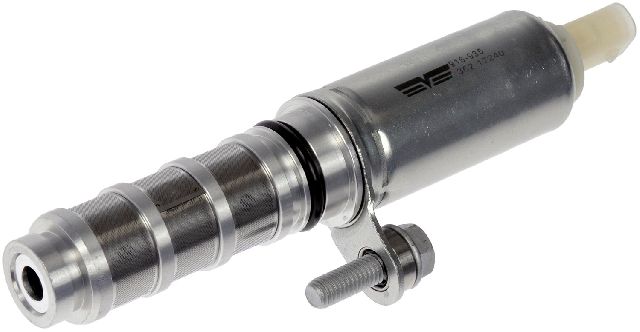
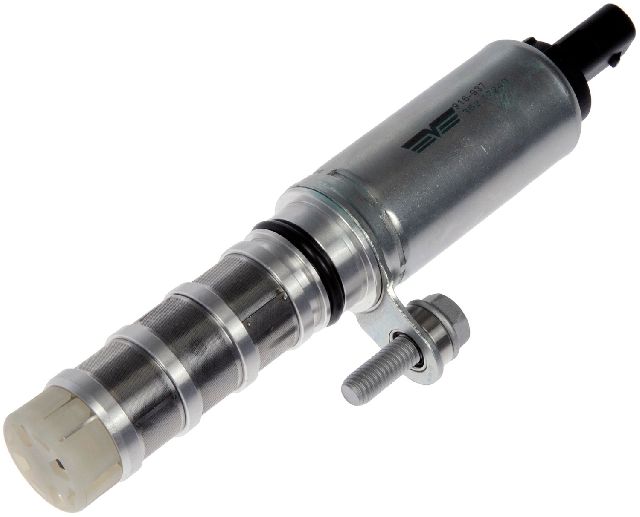
- Exhaust Camshaft Position Actuator Solenoid (VVT Solenoid)
(OEM #12679100)— This is the most common component to fail for this code on the LGZ engine, often getting clogged or failing electrically. It is the same part used for the exhaust solenoid on many other GM engines.
Trusted brands: ACDelco (GM Genuine)
OEM price range: $60-$100
Aftermarket price range: $40-$80 - Engine Timing Chain Kit
(OEM #12713649)— If the timing chain has stretched or a tensioner has failed, a complete kit including all chains, guides, and tensioners is required for a proper repair. This kit is specific to the 2017-2022 LGZ engine.
Trusted brands: ACDelco (GM Genuine), Cloyes
OEM price range: $400-$700
Aftermarket price range: $300-$550
Related Codes That Often Appear With This One
- P0016 — This is the correlation code for the intake camshaft on the same bank (Bank 1). If P0017 and P0016 appear together, it strongly suggests a base timing issue, like a stretched chain affecting the entire bank. If P0017 changes to P0016 after swapping VVT solenoids, it confirms a bad solenoid.
- P0018 / P0019 — These are the equivalent correlation codes for Bank 2 (driver's side). Seeing codes for both banks (e.g., P0017 and P0019) is a strong indicator of a problem with the primary timing chain affecting the entire engine.
- P0008 / P0009 — These are general engine position performance codes. Their presence alongside P0017 points towards a significant, systemic timing chain problem affecting both banks.
Technical Service Bulletins (TSBs) & Recalls
- PIP3423K/L: Connects codes P0016, P0017, P0018, and P0019 to stretched timing chains or a slipped crankshaft reluctor wheel. This is a long-standing TSB for the GM 3.6L engine family.
- 18-NA-307: Details a potential issue where the engine wiring harness chafes against the passenger side cylinder head, causing various cam sensor circuit and correlation codes.
- 20-NA-085: Warns of a possible missing timing chain guide insert from the factory on some 2019-2020 models, leading to premature chain wear and noise.
- 18-NA-355: Addresses the common 8-speed transmission shudder issue, which is unrelated to P0017 but a major problem for this vehicle generation. The fix involves a complete fluid exchange with an updated formula.
- PIP4548G: Documents a rare condition where the camshaft reluctor ring can shift or rotate on the camshaft, causing a plausible but incorrect signal that leads to correlation codes like P0017 even with correct mechanical timing.
- Bulletin #PIP3423P: Provides information that DTCs P0016, P0017, P0018, P0019, P0008 or P0009 may be set and requires inspection for loose timing chains or tensioners.
- Bulletin #PIP4945B: Notes that vehicles may have the Malfunction Indicator Lamp on with P0017 set in current or history, requiring technicians to follow published Service Information.
- Bulletin #PIP4581B: Mentions that a rattle noise duplicated with P0016 or P0017 may require the crankshaft balancer bolt to be re-torqued.
- Bulletin #PIP3694F: Describes conditions involving engine belt noise, rough idle, and P0014 or P0017 codes.
- Bulletin #PIP4913A: Advises monitoring oil pressure if standard diagnostics for P0017 do not isolate the cause.
Platform-Specific Known Issues
- The GM 3.6L V6 engine family has a well-documented history of timing chain stretch, often accelerated by extended oil change intervals. While the LGZ engine in the 2017-2022 Canyon is more robust than its LFX predecessor, it is not immune to this issue.
- TSB 20-NA-085 notes that some 2019-2020 models may have a missing timing chain guide insert from the factory, which can cause accelerated chain wear and lead to correlation codes like P0017.
Mechanic-Grade Diagnostic Values
- VVT Solenoid (Camshaft Position Actuator Solenoid) Internal Resistance — expected: 8 to 13 Ohms. Failure: A reading outside of this range indicates a faulty solenoid coil.
- Camshaft/Crankshaft Correlation Threshold (GM) — expected: Less than 9 degrees of deviation. Failure: If the ECM detects a deviation greater than 9 degrees between the crankshaft and camshaft, it will set a correlation code like P0017.
- VVT Solenoid Connector Voltage — expected: Battery voltage (approx. 12V) on the power supply wire with key on, engine off.. Failure: No voltage suggests a problem with the fuse or wiring leading to the solenoid.
Scan Tool Commands That Help
- GDS2 (GM Professional Scan Tool): Camshaft Position Actuator Solenoid Control — This bidirectional test allows a technician to command a specific VVT solenoid on and off while the engine is running. If the engine's idle changes or stumbles when the solenoid is commanded, it confirms the solenoid is mechanically functioning and oil passages are likely clear. No change in engine operation points to a failed solenoid, clogged passage, or wiring issue.
- GDS2 (GM Professional Scan Tool): Crankshaft Position Variation Learn — This is a reset procedure that must be performed after replacing the crankshaft, crankshaft position sensor, or the Engine Control Module (ECM). It allows the ECM to learn the mechanical tolerances of the new component's reluctor wheel to prevent false correlation codes.
Wiring & Ground Locations
- G106 (Ground Splice Pack) — Under the hood on the passenger side, typically located behind the engine airbox.. This is a major ground distribution point for components on the passenger side (Bank 1). Corrosion or a loose connection can create intermittent electrical issues for the ECM and its sensor inputs, including the Bank 1 camshaft sensor and VVT solenoid, potentially causing false codes.
- G105 (Ground Splice Pack) — Under the hood on the driver's side, often near the EBCM (brake control module) or battery.. While on the opposite side, this ground serves circuits related to the ECM. A fault here can cause a wide range of unpredictable electrical problems that could affect engine management.
- Bank 1 Exhaust Camshaft Position Sensor Connector — On the passenger side (Bank 1) of the engine, at the rear of the cylinder head, connecting to the rearmost sensor.. This is the direct connection point for the sensor that reports the data for P0017. It's where circuit tests (for power, ground, and signal) should be performed. The wiring harness near this connector is known to chafe per TSB 18-NA-307.
OEM Part Supersession History
12578518, 12628348, 12646784, 12655421→12679100— Standard part evolution for improved reliability, material changes, or manufacturing process updates.
Heads up: The newest part number, 12679100, is the correct service replacement for the earlier numbers on many GM engines, but always verify fitment for the specific 3.6L LGZ application.
Model Year Variations Within This Range
- 2019-2020: Per TSB 20-NA-085, some models within these years may have been built with a missing timing chain guide insert from the factory. This can cause accelerated chain wear, noise, and lead to timing correlation codes like P0017 sooner than expected.
Diagnostic Flowchart
Other Known Issues on This Vehicle
Issues unrelated to this code that are worth knowing about as an owner of this generation:
- 8-Speed (8L45) Transmission Shudder/Harsh Shifting 🔴 High — Very common on 2017-2019 models. Less common on 2020+ after fluid formulation change. Can occur at various mileages. (Ref: TSB #18-NA-355 recommends a specific fluid flush procedure with a new type of Mobil 1 synthetic ATF to resolve torque converter clutch shudder.)
- Infotainment System Glitches (Blank Screen, Freezing) 🟡 Low — Reported sporadically across model years. Can be intermittent. (Ref: Various software update TSBs exist, such as #22-NA-085, which may address some of these concerns.)
- HVAC Blend Door Actuator Failure 🟠 Medium — Common failure item, often presents as a repetitive clicking sound from behind the dashboard.
- Power Steering Loss (2015-2018) 🔴 High — More prevalent on earlier models but some reports exist for 2017-2018. Can be intermittent or a complete failure. (Ref: Multiple TSBs and a special coverage adjustment (N182182760) were issued for earlier models, but the issue has been noted on 2017s as well.)
Used vs. New Parts: Buying Guide for This Vehicle
When a used part is the smart pick: For this repair, using used parts is generally not recommended. The primary culprits are wear-items (timing chain) or sensitive electro-mechanical parts (VVT solenoids) that are inexpensive to buy new.
Donor-vehicle mileage cap: roughly under 40000 miles for the part to have meaningful remaining life.
What to inspect on the donor part:
- For a VVT solenoid, there are no reliable visual cues. It's a gamble.
- For a camshaft or crankshaft sensor, ensure the connector is not cracked and there is no physical damage to the sensor body.
- Verify the donor vehicle was not in a severe front-end collision.
OEM-only on this vehicle (don't cheap out):
- Engine Timing Chain Kit: Given the history of timing chain issues on the 3.6L V6 family and the high labor cost, using an OEM (ACDelco) or a top-tier, reputable aftermarket brand like Cloyes is critical. Avoid no-name kits.
- Camshaft/Crankshaft Position Sensors: While aftermarket sensors may work, they are a common source of repeat failures or incorrect readings. Using OEM sensors is a safer bet to avoid misdiagnosis.
Aftermarket brands forum-validated for this vehicle:
- Cloyes (for timing chain kits)
Brands owners have reported issues with on this vehicle:
- Unknown or 'white-box' brands for VVT solenoids and especially timing chain components, as failure can be catastrophic.
Real Owner Stories
Aggregated from forums and TSBs cited above. Mileages and costs reflect what owners reported in those sources.
2017 GMC Canyon 3.6L V6
Symptoms: The P0017 code appeared intermittently, specifically after an oil change during cold weather.
What fixed it: The owner noted the code popped up after an oil change, though another user in the same discussion suggested a camshaft position sensor as a potential fix.
Source hint: Reddit r/chevycolorado - Thread 'P0017 popping up again'
Related OBD-II Codes
Frequently Asked Questions
I have a 2019 GMC Canyon; is there a specific factory defect that could cause P0017?
Can I test the VVT solenoids on my LGZ engine without buying new parts?
Does the wiring harness issue mentioned in TSB 18-NA-307 apply to the P0017 code?
What type of oil should I use in my 2017-2022 Canyon to prevent VVT issues?
Is P0017 related to the transmission shudder I'm feeling in my 2018 Canyon?
Could a shifted reluctor ring be causing my P0017 code even if the timing is mechanically correct?
Helpful Videos
We Have This Part in Stock


The information in this article is provided for general reference and educational purposes only. Vehicle specifications, procedures, and part compatibility can vary by production date, trim level, and region. Always consult your vehicle's factory service manual and verify part numbers before purchasing or performing repairs. Safety-critical components such as airbags, seat belts, and braking systems should be installed by a qualified professional.
- GMC Canyon:
- 🧭 Diagnostic Flowchart
- 🎬 Helpful Videos
- 🛍️ Shop This Part
- What's Unique About the 2017-2022 GMC Canyon
- Symptoms You May Notice
- Most Likely Causes
- Rare But Worth Checking
- Diagnosis Steps
- Parts You'll Likely Need
- Related Codes That Often Appear With This One
- Technical Service Bulletins (TSBs) & Recalls
- Platform-Specific Known Issues
- Mechanic-Grade Diagnostic Values
- Scan Tool Commands That Help
- Wiring & Ground Locations
- OEM Part Supersession History
- Model Year Variations Within This Range
- Other Known Issues on This Vehicle
- Used vs. New Parts: Buying Guide for This Vehicle
- Real Owner Stories
- 2017 GMC Canyon 3.6L V6
- Related OBD-II Codes
- Frequently Asked Questions
- 🎟️ Get 5% Off