

P0017 on 2002-2009 GMC Envoy 4.2L: Exhaust Camshaft Position Correlation Causes and Fixes
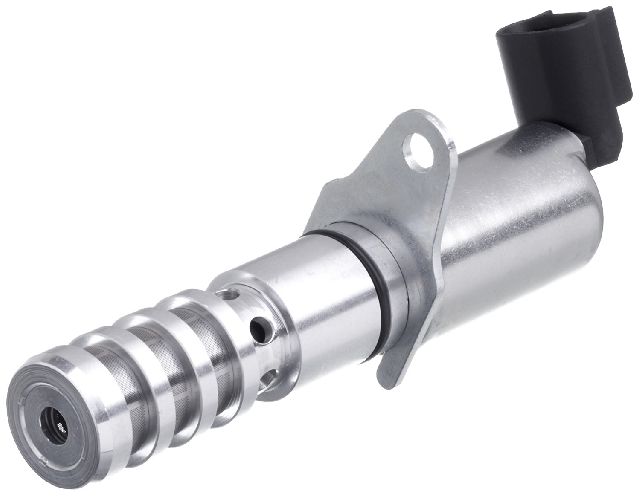
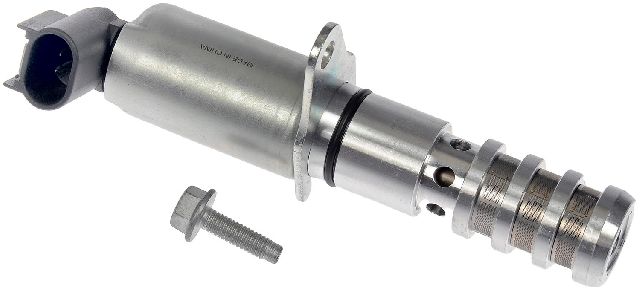
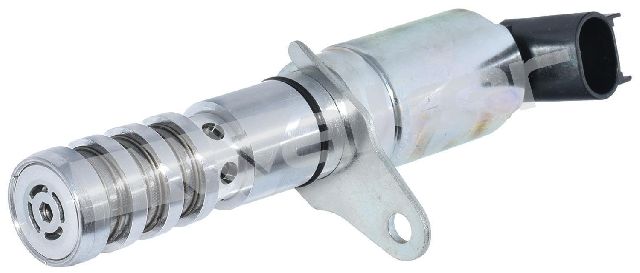
On a 2002-2009 GMC Envoy with the 4.2L I6 engine, code P0017 is most often caused by a faulty exhaust Camshaft Position Actuator Solenoid (ACDelco P/N 12615873) or low/dirty engine oil. Replacing the solenoid is a common DIY fix costing between $30 and $90. Always check the oil level and condition first, as this is the simplest and a very frequent fix.
- Always check the engine oil level and condition first. Low or dirty oil is a primary cause of P0017 on the GMC Envoy 4.2L.
- The most likely failed part is the Camshaft Position Actuator Solenoid (VVT solenoid), not the camshaft position sensor.
- A simple and effective diagnostic step is to swap the identical intake and exhaust VVT solenoids to see if the trouble code changes from P0017 to P0016.
- Do not proceed with an expensive timing chain replacement without first ruling out the simpler and more common issues like oil condition and the VVT solenoid.
What's Unique About the 2002-2009 GMC Envoy
The 4.2L LL8 inline-6 engine in the GMC Envoy is known for being highly sensitive to engine oil quality and level, which directly operates the VVT system. The Camshaft Position Actuator Solenoid is a well-documented weak point that gets clogged by oil sludge or has its internal screens tear and get ingested by the engine. GM has also issued several Technical Service Bulletins (TSBs) for this platform that point to less common mechanical causes like a loose crankshaft balancer bolt (TSB PIP4581B) or excessive crankshaft end play (TSB PIP3694F), which can mimic sensor or solenoid failures. When code P0017 is active, the ECM inhibits scan tool control of the VVT solenoid, making live testing difficult until the code is cleared.
Symptoms You May Notice
- Check Engine Light (CEL) is on
- Rough or unstable idle
- Engine stalling, especially at low speeds or when shifting into gear
- Loss of power and sluggish acceleration
- Reduced fuel economy
- Rattling noise from the front of the engine, especially on cold starts, which can indicate a timing chain or loose balancer bolt issue
- Difficulty starting or extended cranking
- Replacing the Camshaft Position Sensor when the actual fault is the Camshaft Position Actuator Solenoid. This is the most common misdiagnosis.
- Replacing the Crankshaft Position Sensor. This sensor is robust and rarely the cause for this specific code on this engine. A failure here would likely cause other codes or a no-start condition.
- Immediately replacing the timing chain without first diagnosing the much more common and cheaper-to-fix VVT solenoid, oil condition, and checking the crankshaft balancer bolt torque per TSBs.
Most Likely Causes
- Faulty Camshaft Position Actuator (CPA) Solenoid / VVT Solenoid 🔴 High Probability → Shop Engine Camshaft The solenoid's fine mesh screens are prone to clogging with oil sludge or tearing. Oil can also leak through the solenoid's internal seal into the electrical connector, causing a poor signal.
How to confirm: Inspect the solenoid for torn or clogged screens. A definitive diagnostic step is to swap the identical intake and exhaust solenoids. If the code changes to P0016 (Intake Cam Correlation), the solenoid is confirmed to be faulty. Check for oil contamination inside the electrical connector.
Typical fix: Replace the Camshaft Position Actuator Solenoid. It is highly recommended to use an OEM ACDelco part (P/N 12615873) as aftermarket versions can be unreliable.
Est. part cost: $30-$90 - Low or Dirty Engine Oil 🔴 High Probability The VVT system is operated by hydraulic oil pressure. Low levels or oil that is dirty, sludgy, or of the wrong viscosity will cause the cam phaser to respond slowly or not at all, triggering a correlation fault.
How to confirm: Check the engine oil dipstick for proper level and inspect the oil's condition. If it is dark, thick, or past its change interval, it needs to be replaced. Some owners cut open the old oil filter to check for metal shavings, which would indicate a more severe internal engine problem.
Typical fix: Perform an engine oil and filter change with a quality full synthetic 5W-30 oil and a new, quality filter. An engine flush may be beneficial for sludged engines, but should be done with caution.
Est. part cost: $40-$80 - Stretched Timing Chain or Failed Tensioner 🟡 Medium Probability → Shop Engine Timing Chain On higher mileage engines (typically over 100,000-150,000 miles), the timing chain can stretch, or the hydraulic tensioner can weaken, causing the cam and crank timing to fall out of sync enough to trigger P0017.
How to confirm: This is an advanced diagnosis. A rattling noise from the front of the engine is a strong clue. Diagnosis involves removing the valve cover to inspect the chain for slack and checking the plastic guides for damage. A definitive check requires specialized tools to verify cam and crank alignment per the service manual (TSB 07-06-01-018).
Typical fix: Replace the timing chain, guides, and tensioner as a complete kit. This is a labor-intensive job that often requires removing the oil pan and front engine cover.
Est. part cost: $150-$400 - Faulty Exhaust Camshaft Position (CMP) Sensor ⚪ Low Probability → Shop Engine Camshaft Position Sensor
How to confirm: While less common than a solenoid failure, the sensor can fail. It can be tested with a multimeter for resistance or by observing its signal with an oscilloscope. Swapping with a known good sensor is another method. It is often replaced unnecessarily.
Typical fix: Replace the exhaust camshaft position sensor.
Est. part cost: $25-$60
Rare But Worth Checking
- Loose Crankshaft Balancer Bolt: → Shop Engine Crankshaft Mentioned in TSB PIP4581B. The balancer can wobble if the bolt is loose, causing the crankshaft position sensor reluctor ring to send an erratic signal. The bolt is torque-to-yield and must be replaced with a new one (e.g., GM P/N 11570163) if loosened or removed.
- Excessive Crankshaft End Play: → Shop Engine Crankshaft Mentioned in TSB PIP3694F. Worn thrust bearings can allow the crankshaft to move back and forth excessively (>0.0153 inches), which can trigger P0017. This indicates a serious internal engine problem requiring a bottom-end rebuild.
- Stuck Camshaft Phaser (Actuator): → Shop Engine Camshaft The mechanical gear on the end of the camshaft can become stuck due to sludge or internal failure. TSB PIP4913A notes this can be caused by debris in the oil. Unlike the solenoid, the phaser cannot be cleaned and must be replaced, which is a timing-chain-level job.
Diagnosis Steps
- Check the engine oil level and condition. Top off or change the oil and filter if necessary. Use full synthetic 5W-30 oil and a quality filter. Clear codes and test drive. This is the #1 step.
- Scan for any other trouble codes. Note if codes like P0014 or P0016 are present, as they provide critical diagnostic clues.
- Inspect the wiring and connector for the exhaust Camshaft Position Actuator (VVT) Solenoid. Look for damage or oil contamination in the connector, which indicates a failed solenoid seal.
- Perform a VVT solenoid swap. The intake and exhaust solenoids are identical and easily accessible. Swap their positions. Clear the codes and drive the vehicle. If the code returns as P0016, the solenoid you moved to the intake side is bad and needs replacement. This is a definitive test.
- If the code remains P0017 after the swap, the issue is not the solenoid. Next, inspect and test the exhaust Camshaft Position Sensor and its wiring.
- If sensors and solenoids are confirmed good, check engine oil pressure with a mechanical gauge. Per TSB PIP4913A, pressure should be at least 12 PSI at 1200 RPM. Low pressure points to a worn oil pump or bearing issues.
- Check the torque on the crankshaft balancer bolt as per TSB PIP4581B to ensure it is not loose.
Parts You'll Likely Need
- Camshaft Position Actuator Solenoid (VVT Solenoid)
(OEM #12615873)— This is the most common failure point for P0017 on the 4.2L LL8 engine, typically due to clogged or torn screens from oil contaminants.
Trusted brands: ACDelco, GM Genuine Parts
OEM price range: $50-$90
Aftermarket price range: $30-$60 - Exhaust Camshaft Position Sensor
(OEM #12576519)— Though less common than the solenoid, a failing sensor can send incorrect data to the ECM. It is often replaced unnecessarily when the solenoid is the real problem.
Trusted brands: ACDelco, Bosch, Delphi
OEM price range: $40-$70
Aftermarket price range: $25-$50 - Crankshaft Balancer Bolt
(OEM #11570163)— This is a single-use, torque-to-yield bolt. If TSB PIP4581B is followed for diagnosis, this bolt must be replaced if it is loosened or removed.
Trusted brands: GM Genuine Parts, ARP
OEM price range: $10-$20
Aftermarket price range: $8-$15
Related Codes That Often Appear With This One
- P0014 — Stands for 'Exhaust Camshaft Position Timing - Over-Advanced'. It is often caused by the same faulty VVT solenoid or oil pressure issues that trigger P0017, as both codes relate to the exhaust cam's position.
- P0016 — This is the correlation code for the intake camshaft. If P0016 and P0017 appear together, it points more strongly to a base timing issue like a stretched timing chain, a problem with the crankshaft sensor/reluctor ring, or a loose crankshaft balancer affecting the entire engine.
- P0106 — TSB PIP3694F notes that a rough idle caused by the P0017 fault can trigger a P0106 (Manifold Absolute Pressure Circuit Performance) code due to erratic engine vacuum.
Technical Service Bulletins (TSBs) & Recalls
- PIP4945B: A master document that consolidates many possible causes for P0017 on inline GM engines, including incorrect timing, loose crank gear, excessive crank end play, and faulty actuators/solenoids.
- PIP4581B: Specifically points to a loose crankshaft balancer bolt as a cause for P0017, often accompanied by a rattling noise. It stresses that the bolt is torque-to-yield and must be replaced if loosened.
- PIP3694F: Discusses P0017 in conjunction with excessive crankshaft end play (>0.0153 inches) due to worn thrust bearings. Also notes P0106 can be triggered by the resulting rough idle.
- PIP4913A: Advises checking mechanical oil pressure when diagnostics for P0017 are inconclusive, highlighting that a sticking camshaft actuator can be caused by debris from poor oil maintenance.
- TSB 07-06-01-018: Provides the procedure for checking cam/crank timing by setting the engine to TDC and using a straight edge on the cam flats.
Platform-Specific Known Issues
- GM Technical Service Bulletin (TSB) PIP4945B consolidates information for P0017 on this engine, noting causes can range from incorrect engine timing and loose crank components to faulty actuators.
- The VVT solenoids (intake and exhaust) are identical and interchangeable, which provides a simple and definitive diagnostic test (the 'solenoid swap').
- The location of the crankshaft position sensor can make it vulnerable to oil contamination during messy oil changes, which can degrade the connector and cause signal issues.
Mechanic-Grade Diagnostic Values
- Camshaft Position Actuator (VVT) Solenoid Resistance — expected: 6-12 Ohms. Failure: A reading of 0 Ohms (short circuit) or infinite/OL (open circuit). Some sources report out-of-spec readings like 15 ohms indicating failure.
- Engine Oil Pressure (Hot, Mechanical Gauge) — expected: Minimum 12 PSI at 1200 RPM. Failure: Pressure significantly below the minimum specification indicates a worn oil pump, clogged pickup tube, or excessive bearing clearances, which will starve the VVT system.
- Crankshaft End Play — expected: 0.0044 to 0.0153 inches. Failure: Movement greater than 0.0153 inches. TSB PIP3694F notes that when this is the cause, the play is often obviously excessive, sometimes 0.050 inches or more, and can be seen by prying the crankshaft back and forth.
Scan Tool Commands That Help
- Tech 2 / GDS2 or equivalent high-end scanner: CMP Actuator Solenoid Control — Used to command the VVT solenoid on and off to verify its mechanical operation and observe the change in cam timing on live data. However, this function is often inhibited by the ECM once DTC P0017 is actively set, so codes may need to be cleared first to perform this test.
Wiring & Ground Locations
- Exhaust Camshaft Position (CMP) Sensor — Located on the passenger side of the cylinder head, towards the front of the engine. It is held in by a single 10mm bolt.. This sensor provides the primary signal for the exhaust camshaft's position. A bad sensor, connector, or wiring here is a direct cause of the code, though less common than the solenoid.
- Crankshaft Position (CKP) Sensor — On the driver's side of the engine block, located just below the starter motor. It is held in by a 10mm bolt.. This sensor's signal is compared against the CMP signal. A fault here is unlikely to cause only P0017, but its wiring and physical security (and that of the reluctor wheel it reads) are critical for all timing-related codes.
- Camshaft Position Actuator (VVT) Solenoid — Located on the passenger side of the cylinder head, behind the power steering pump. Access requires moving the power steering pump aside.. This is the most common failure point for P0017. Its connector is prone to oil contamination from internal solenoid seal failure.
Real Owner Repair Stories
- GMTNation Forum (2006 Chevrolet Trailblazer 4.2L) — Codes P0017 and P0128.
❌ Tried (didn't work) Replacing the VVT solenoid (the code returned the next day).
✅ What actually fixed it The user's story highlights a common pitfall: replacing the solenoid, the most likely cause, did not provide a final fix. The forum advised the user to then check oil pressure and investigate a potential timing chain issue, illustrating that a new solenoid won't fix an underlying mechanical or oil pressure problem. The final resolution was not posted, but the diagnostic path is instructive. - YouTube video by 'GM TSB' (2006 Chevrolet Trailblazer) — P0014, P0017, misfire, MAP sensor codes, stalling, rough idle.
❌ Tried (didn't work) Initial diagnosis pointed towards a complex timing or sensor issue.
✅ What actually fixed it The first diagnostic step shown was to check the oil level, which was found to be completely empty. After adding oil, the immediate issue was resolved, demonstrating the critical importance of checking the oil level first. The video then shows a failed VVT solenoid with a disintegrated screen as the root cause.
OEM Part Supersession History
12568078, 12576768, 12597025, 12602516→12615873— Standard part evolution and consolidation. Later versions may have improved screen design to prevent tearing.
Heads up: All listed part numbers are interchangeable for this application. The latest number, 12615873, is the recommended service replacement.
Model Year Variations Within This Range
- 2002-2005 vs 2006-2009: The LL8 engine was updated around 2006, which included changes like a new ECM and the addition of a Mass Airflow (MAF) sensor. However, the VVT system's fundamental design and the common causes for P0017 (solenoid, oil, timing chain) remained consistent across the entire 2002-2009 range.
Diagnostic Flowchart
Real Owner Stories
Aggregated from forums and TSBs cited above. Mileages and costs reflect what owners reported in those sources.
2006 Chevrolet TrailBlazer 4.2L
Symptoms: Triggered P0017 and P0128 codes. The VVT solenoid was found to have damaged screens.
What fixed it: Replaced the VVT solenoid, but the code returned after one day, highlighting that underlying issues like oil quality or mechanical faults can persist even with a new solenoid.
Source hint: GMTNation Forum
GMC Envoy / TrailBlazer 4.2L
Symptoms: Vehicle threw P0017 and P0014 codes. Upon inspection, there was absolutely nothing on the engine oil dipstick.
What fixed it: Performed an oil change and cleared the codes as the first step before further diagnosis.
Source hint: GMTNation Forum thread 'p00017-p00014.21443'
2004 GMC Envoy 4.2L — 211000 miles
Symptoms: P0017 code present. Found the timing marks would not align, indicating a stretched or jumped timing chain, which occurred alongside a stuck valve.
What fixed it: Required a major cylinder head and timing chain replacement job.
Source hint: GMTNation Forum thread 'cylinder-head-and-timing-chain-headaches.20138'
Related OBD-II Codes
Frequently Asked Questions
How can I easily test if the VVT solenoid is causing P0017 on my 4.2L Envoy?
I have a rattling noise from the front of the engine along with P0017. What does TSB PIP4581B say about this?
Should I use an aftermarket Camshaft Position Actuator Solenoid to save money?
My Envoy has over 150,000 miles and P0017 won't go away after an oil change and new solenoid. What's next?
Can a messy oil change cause P0017 on the GMT360 platform?
What oil pressure should my 4.2L LL8 have to prevent VVT issues?
We Have This Part in Stock


The information in this article is provided for general reference and educational purposes only. Vehicle specifications, procedures, and part compatibility can vary by production date, trim level, and region. Always consult your vehicle's factory service manual and verify part numbers before purchasing or performing repairs. Safety-critical components such as airbags, seat belts, and braking systems should be installed by a qualified professional.
- GMC Envoy:
- 🧭 Diagnostic Flowchart
- 🛍️ Shop This Part
- What's Unique About the 2002-2009 GMC Envoy
- Symptoms You May Notice
- Most Likely Causes
- Rare But Worth Checking
- Diagnosis Steps
- Parts You'll Likely Need
- Related Codes That Often Appear With This One
- Technical Service Bulletins (TSBs) & Recalls
- Platform-Specific Known Issues
- Mechanic-Grade Diagnostic Values
- Scan Tool Commands That Help
- Wiring & Ground Locations
- Real Owner Repair Stories
- OEM Part Supersession History
- Model Year Variations Within This Range
- Real Owner Stories
- 2006 Chevrolet TrailBlazer 4.2L
- GMC Envoy / TrailBlazer 4.2L
- 2004 GMC Envoy 4.2L — 211000 miles
- Related OBD-II Codes
- Frequently Asked Questions
- 🎟️ Get 5% Off