

P0017 on 2012-2017 Hyundai Azera 3.3L V6: Exhaust Cam Timing Causes and Fixes
For the 2012-2017 Hyundai Azera, code P0017 is most often caused by low/dirty engine oil or a faulty Bank 1 (rear) exhaust Oil Control Valve (OCV). An OCV is about $60-$100 for the part and is a common DIY fix. Always check your oil level and condition first. In some cases, it can be an early sign of a more serious timing chain issue.
- Always check your engine oil level and condition first; this is the simplest and most common fix.
- P0017 on this engine is very often caused by a faulty Bank 1 (rear) exhaust Oil Control Valve (OCV), not a bad cam/crank sensor.
- A rattling noise when starting the engine is a major red flag for a stretching timing chain or bad tensioner, a known issue with this engine that requires professional repair.
- If replacing the OCV doesn't fix the code, do not ignore it. The underlying cause could be a serious mechanical timing problem that can lead to severe engine damage.
What's Unique About the 2012-2017 Hyundai Azera
The Lambda II 3.3L GDI engine (G6DH) in this generation of Azera is known for having issues related to its timing system. While the code can be triggered by a simple issue like dirty oil, it can also be an early warning for a more serious problem like a stretched timing chain or failing tensioner, which are documented weaknesses on this engine, especially at higher mileage. Owners often report a distinct engine rattle on startup that precedes timing-related codes like P0017. A class-action lawsuit has also been filed concerning premature failures in the 3.3L Lambda II engine family, although it primarily focuses on Santa Fe models.
Symptoms You May Notice
- Check Engine Light is on
- Rough or unstable idle
- Hesitation or stumbling during acceleration
- Reduced engine power or entering 'limp mode'
- Engine may stall, especially at low speeds
- Decreased fuel economy
- Rattling noise from the engine, particularly on cold starts
- In severe cases, the engine may crank but fail to start
- Engine shaking for a few seconds after startup
- Replacing the camshaft or crankshaft position sensors without proper diagnosis. The issue is more frequently caused by an oil-related problem or a faulty Oil Control Valve (OCV).
- Assuming the timing chain is the issue without first ruling out the much cheaper and easier OCV replacement.
Most Likely Causes
- Low or Dirty Engine Oil 🔴 High Probability The CVVT (Continuous Variable Valve Timing) system uses oil pressure to adjust cam timing. Low or sludgy oil prevents the system from working correctly, leading to correlation faults. These engines can be sensitive to oil level and quality.
How to confirm: Check the engine oil dipstick. The level should be between the 'F' and 'L' marks. Inspect the oil's color and consistency; if it is black, thick, or gritty, it needs to be changed.
Typical fix: Top up the oil to the correct level or perform a complete oil and filter change using a quality full synthetic 5W-20 or 5W-30 oil and an OEM filter. Clear the code and re-test.
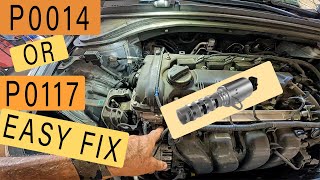
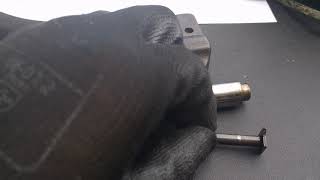
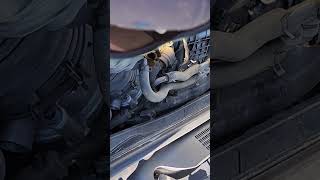
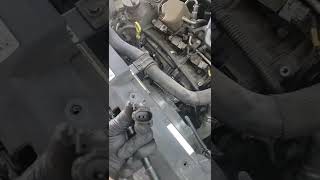
Est. part cost: $40-$80 - Faulty Bank 1 Exhaust Oil Control Valve (OCV) 🔴 High Probability → Shop Engine Variable Valve Timing (VVT) Solenoid These solenoids are a very common failure point on Hyundai engines. They get clogged with oil sludge or fail electrically, causing them to stick and improperly regulate oil flow to the cam phaser. 🎬 Watch: How to fix P0017 by cleaning or replacing the OCV.
How to confirm: Swap the Bank 1 exhaust OCV with the Bank 2 exhaust OCV. Bank 1 is the rear bank (firewall side). If the code changes to P0019 (Bank 2 Exhaust Correlation), the OCV is bad. Alternatively, test the solenoid's resistance with a multimeter; it should be between 6.9-7.9 ohms. You can also try applying 12v power to see if the solenoid clicks; a lack of a click indicates failure.
Typical fix: Replace the Bank 1 exhaust Oil Control Valve. It is located on the rear valve cover.
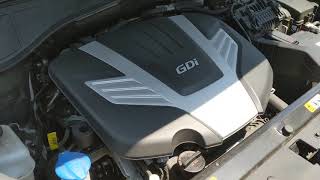
Est. part cost: $60-$120 - Stretched Timing Chain or Failed Tensioner 🟡 Medium Probability → Shop Engine Timing Chain The Lambda II 3.3L engine has a known tendency for timing chain stretch and tensioner failure, particularly over 100,000 miles. A startup rattle is a strong indicator of this issue. 🎬 Listen: What the 3.3L timing chain rattle sounds like on startup. Hyundai has issued TSBs regarding updated timing chain and sprocket parts for this engine family.
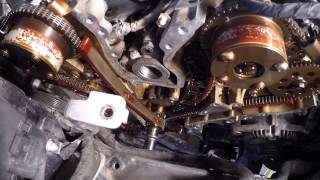
How to confirm: This requires significant disassembly to physically inspect the timing chain for slack and check the tensioner's extension. A mechanic can also use an oscilloscope to analyze the cam and crank sensor signals to spot a timing deviation that confirms a stretched chain.
Typical fix: Replace the timing chains, guides, and tensioners. This is a labor-intensive job often costing over $2,000.
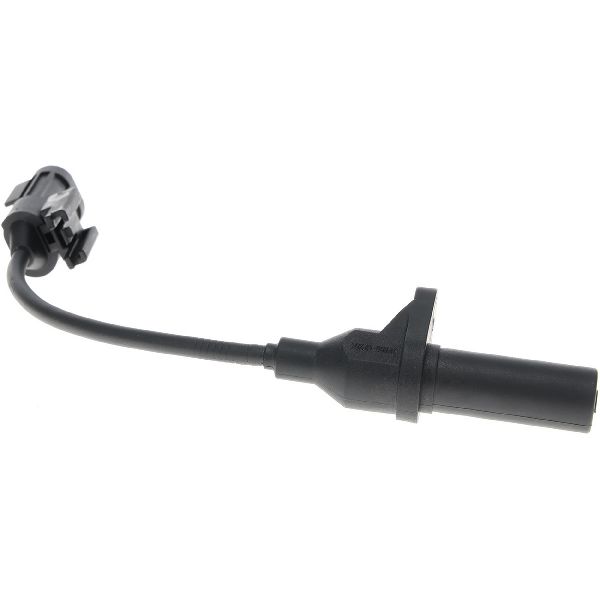
Est. part cost: $400-$800 - Faulty Camshaft or Crankshaft Position Sensor ⚪ Low Probability → Shop Engine Crankshaft Position Sensor
How to confirm: These are best tested by swapping a suspect sensor with a known good one from another position (if applicable) to see if the code follows the sensor, or by testing with an oscilloscope. Replacing them without testing is a common misdiagnosis, as the code indicates a correlation *problem*, not necessarily a sensor failure.
Typical fix: Replace the failed sensor. The P0017 code specifically relates to the Bank 1 exhaust camshaft position sensor or the crankshaft position sensor.
Est. part cost: $40-$90
Rare But Worth Checking
- Damaged Exhaust Cam Phaser (CVVT Gear): → Shop Engine Timing Gear In some cases, the locating pin that aligns the phaser sprocket to the camshaft can shear off or sink into the camshaft, causing the camshaft's timing to drift independently of the timing chain. This is a serious mechanical failure that requires replacing the CVVT gear and potentially the camshaft. A Reddit user with a 2012 Azera reported this exact failure diagnosis from a dealer.
Diagnosis Steps
- Check Engine Oil: Verify the oil level is correct and the oil is clean. If low or dirty, perform an oil and filter change with full synthetic 5W-20 or 5W-30 oil and an OEM filter, clear the code, and see if it returns.
- Inspect OCV Wiring: Check the electrical connector and wiring to the Bank 1 (rear bank) exhaust OCV for any damage or loose connections.
- Test the OCV: The easiest test is to swap the Bank 1 exhaust OCV with the Bank 2 (front bank) exhaust OCV. Clear the codes and drive the vehicle. If the code returns as P0019 (Bank 2), the OCV is faulty and needs replacement.
- (Advanced) Test OCV Resistance: Using a multimeter, measure the resistance across the two pins of the OCV. It should be between 6.9 and 7.9 Ohms for a Denso-type part. An open circuit or zero resistance indicates a failed solenoid.
- (Advanced) Inspect Timing System: If the OCV is good, the next step is to investigate the mechanical timing. This involves listening for a startup rattle, which strongly suggests a stretched chain or bad tensioner. Confirmation requires removing the valve cover and timing cover to check for a stretched chain, worn guides, or a failed tensioner. This step is best left to a professional.
- (Advanced) Test Sensors: If all mechanical components appear correct, test the crankshaft and camshaft position sensors, preferably with an oscilloscope to verify their signal patterns.
Parts You'll Likely Need
- Engine Oil Control Valve (Bank 1 Exhaust)
(OEM #24360-3CAB2)— This solenoid is the most common part to fail, either by getting clogged with debris or failing electrically. It directly controls the exhaust cam timing for Bank 1.
Trusted brands: Genuine Hyundai, Dorman, NTK
OEM price range: $80-$110
Aftermarket price range: $45-$75 - Camshaft Position Sensor
(OEM #39318-3C100)— While less common, the sensor that reads the camshaft's position can fail, sending incorrect data to the PCM. Always verify with VIN before ordering.
Trusted brands: Genuine Hyundai, Delphi, Walker, NGK
OEM price range: $70-$95
Aftermarket price range: $30-$60 - Crankshaft Position Sensor
(OEM #39310-3C600)— This sensor provides the primary timing reference for the engine. A failure can cause a variety of timing codes, including P0017. A known issue on some 3.3L engines is intermittent no-start/stalling caused by this sensor failing. 🎬 See this walkthrough for locating and replacing the crankshaft sensor. Always verify with VIN before ordering.
Trusted brands: Genuine Hyundai, Hitachi, Delphi
OEM price range: $85-$115
Aftermarket price range: $40-$70 - Timing Chain Kit
(OEM #24312-3L100 (Chain, x2), 23121-3L100 (Sprocket LH), 23122-3L100 (Sprocket RH))— For high-mileage vehicles, especially those with a startup rattle, the timing chain may have stretched beyond the tensioner's ability to compensate. Hyundai updated these parts, and old and new versions cannot be mixed.
Trusted brands: Genuine Hyundai, Cloyes, Melling
OEM price range: $400-$800
Aftermarket price range: $250-$500
Related Codes That Often Appear With This One
- P0016 — Crankshaft/Camshaft Correlation for Bank 1 Intake. If the timing chain has stretched, it can affect both the intake and exhaust cams on the same bank.
- P0018 / P0019 — Correlation codes for Bank 2. If the primary timing chain is stretched, it can throw off the timing for both cylinder banks, triggering codes for Bank 1 and Bank 2 simultaneously.
- P0300 — Random/Multiple Cylinder Misfire. Incorrect cam timing disrupts the combustion process, leading to misfires.
Technical Service Bulletins (TSBs) & Recalls
- 19-EM-001H — Provides information on updated timing chain and crankshaft sprocket part numbers for Lambda 3.3L/3.8L GDI engines. It explicitly states that old and new parts cannot be interchanged due to different designs. This applies to the 2012-2017 Azera.
- 24-EM-003H — Details an extended limited engine warranty for MY 2013-2019 Santa Fe vehicles with the 3.3L Lambda-II engine to 15 years or 150,000 miles. While not directly for the Azera, it shows Hyundai's acknowledgement of issues within this engine family.
- 25-EM-008H — Describes the inspection and repair procedure for abnormal engine noise on Santa Fe/Santa Fe XL models with the 3.3L Lambda II GDI, related to the TXX8 warranty extension. It provides a detailed diagnostic flowchart for technicians.
Platform-Specific Known Issues
- The Lambda II 3.3L GDI engine is known to develop a rattle on startup, which is a strong symptom of a failing timing chain tensioner that has lost its ability to hold oil pressure when the engine is off. Ignoring this rattle can lead to timing chain stretch and the eventual setting of codes like P0017.
- Due to manufacturing issues, some Lambda II engines have experienced premature bearing failure, which can contaminate the oil with metal debris, clogging OCVs and leading to timing faults.
Mechanic-Grade Diagnostic Values
- Oil Control Valve (OCV) Solenoid Resistance — expected: 6.9 - 7.9 Ohms (for Denso-type OCVs at 68°F / 20°C). Failure: A reading significantly outside this range, or showing an open (infinity) or short (near-zero) circuit.
- Oil Control Valve (OCV) Mechanical Actuation — expected: An audible 'click' as the internal spool valve moves.. Failure: No click or movement when 12V is briefly applied to the solenoid's terminals, indicating it is mechanically stuck.
Scan Tool Commands That Help
- Hyundai GDS (Global Diagnostic System): Actuation Test: 'OIL CONTROL VALVE' — This command allows a technician to manually activate the OCV solenoid to verify it is responding electrically and audibly clicking. It's used after checking oil level but before physically removing the valve, helping to isolate a failed solenoid from a wiring issue.
Wiring & Ground Locations
- GE02 — Right front of the engine compartment.. A poor ground at this location can cause erratic voltage and signal issues for various engine sensors and the ECU, potentially leading to false correlation codes.
- G115 — Left rear of the engine compartment.. This is another primary engine bay ground point. Corrosion or a loose connection here can affect the stability of the entire engine management system.
- GM01 — Top left side of the dash.. Interior grounds, particularly those near the main junction blocks, are critical for the Powertrain Control Module (PCM/ECU). A fault here could disrupt the PCM's ability to accurately process sensor inputs.
Real Owner Repair Stories
- Reddit user ForgedAuto in r/Hyundai (2016 Hyundai Elantra (Note: Different model, but same code and similar failure principles)) — Car died mid-drive and cranks but will not start. Permanent P0017 code stored.
❌ Tried (didn't work) Replaced battery, Replaced camshaft position sensors, Cleaned throttle body
✅ What actually fixed it The diagnosis pointed to a jumped timing chain or a damaged CVVT pin, requiring engine teardown to inspect the timing components and check for bent valves. The code indicated a definitive mechanical timing failure, not a simple sensor issue. - NHTSA ODI #11450502 — An owner reported that after having their oil changed at a lube shop, a diagnostic on the Check Engine Light revealed code P0017. Although the code was cleared to ensure it wasn't a glitch, the light returned in less than 50 miles.
- NHTSA ODI #11729808 (Hyundai Kona) — A report describes recurring P0017 codes despite repeated repairs including the CVVT assembly-exhaust and timing chain tensioner, with total warranty expenditures exceeding $7,800.
Documented NHTSA Reports
- NHTSA ODI #11499629 — An owner reported problems changing gears accompanied by a crankshaft position camshaft powertrain system code P0017 on a vehicle with only 28,000 miles.
- NHTSA ODI #11677887 — A report notes major engine problems including a check engine light with code P0017, which refers to crankshaft-camshaft correlation issues, described as a known symptom of an engine defect.
- NHTSA ODI #11675752 — An owner experienced a clanking sound while driving; subsequent testing revealed code P0017 for Crankshaft Position Correlation Bank 1 Sensor B, alongside misfire codes P0303 and P0302.
OEM Part Supersession History
24312-3CGA2 (Timing Chain), 23121-3CGA3 (Crank Sprocket LH), 23122-3CGA1 (Crank Sprocket RH)→24312-3L100 (Timing Chain), 23121-3L100 (Crank Sprocket LH), 23122-3L100 (Crank Sprocket RH)— Design change to the tooth root diameter of the crankshaft sprockets and corresponding timing chain.
Heads up: CRITICAL: The old and new part numbers cannot be interchanged. If replacing any of these components, all chains and sprockets must be of the new part number series. Mixing old and new parts will result in immediate timing issues.
Model Year Variations Within This Range
- 2012-2017: While the engine remained the same (3.3L Lambda II GDI), a Technical Service Bulletin (19-EM-001H) was issued detailing updated part numbers for the timing chains and crankshaft sprockets. This means a vehicle may have either the old or new style parts depending on its build date or prior service history. The parts are not interchangeable.
Diagnostic Flowchart
Other Known Issues on This Vehicle
Issues unrelated to this code that are worth knowing about as an owner of this generation:
- Engine Failure / Internal Damage 🔴 High — Reported at various mileages, but more common over 100,000 miles. A class-action lawsuit has been filed for the 3.3L Lambda II engine family, alleging premature wear and catastrophic failure. (Ref: 24-EM-003H (Warranty Extension for Santa Fe))
- Timing Chain Stretch and Tensioner Failure 🔴 High → Shop Engine Timing Chain — Becomes a significant concern after 100,000 miles, often preceded by a startup rattle. (Ref: 19-EM-001H (Updated Parts))
- Carbon Buildup on Intake Valves 🟠 Medium — A common issue for all Gasoline Direct Injection (GDI) engines, including the Lambda II. Can cause performance loss and misfires over time, typically noticeable after 60,000-80,000 miles. (Ref: 23-EM-007H (Combustion Chamber Cleaning TSB for Santa Fe))
- Brake System ABS Module Failure 🔴 High — Subject of a recall, the ABS module can malfunction internally and cause an electrical short, increasing the risk of an engine compartment fire, even when the car is off. (Ref: Recall 23V651000)
- No Sound from Speakers 🟡 Low — A widely reported issue where the factory amplifier fails, causing a total loss of audio from the sound system. This is a common complaint on forums and repair sites.
Used vs. New Parts: Buying Guide for This Vehicle
When a used part is the smart pick: For this specific repair, using used parts is generally not recommended. The primary culprits (OCV solenoids, timing components) are wear items. A used part may have limited remaining life or be clogged internally, leading to a repeat failure.
Donor-vehicle mileage cap: roughly under 75000 miles for the part to have meaningful remaining life.
What to inspect on the donor part:
- For mechanical parts like a CVVT phaser, verify the donor vehicle had no timing-related codes.
- Visually inspect any used part for sludge, scoring, or damage before purchase.
- Avoid electronic sensors or solenoids from junkyards as their internal condition cannot be verified.
OEM-only on this vehicle (don't cheap out):
- Camshaft/Crankshaft Position Sensors
- Oil Control Valves (OCV/VVT Solenoids)
- Timing Chain and Tensioners
Aftermarket brands forum-validated for this vehicle:
- Dorman (for Oil Control Valves)
- NTK (for Sensors and Solenoids)
- Cloyes (for Timing Chain Kits)
Brands owners have reported issues with on this vehicle:
- Unnamed, no-brand 'white box' parts from online marketplaces are a significant risk for sensors and solenoids, as reported by forum users.
Real Owner Stories
Aggregated from forums and TSBs cited above. Mileages and costs reflect what owners reported in those sources.
2012 Hyundai Azera 3.3L V6 — 95000 miles
Symptoms: Clicking sound and check engine light.
What fixed it: The dealer diagnosed a rare failure where the exhaust CVVT CPI sheared into the camshaft, causing high deviation off the cam phase setpoint.
Source hint: Reddit: Azera-Oil consumption
2015 Hyundai Elantra (Lambda II Engine Family) — 114000 miles
Symptoms: Engine shaking for a few seconds on startup; replaced cam/crank sensors and OCV but the P0017 code remained.
What fixed it: The symptoms pointed toward a likely timing chain issue (stretched chain or failed tensioner) rather than sensor failure.
Source hint: Reddit: code p0017 giving me a major headache!
2013-2019 Hyundai Santa Fe 3.3L Lambda II — ~100000 miles
Symptoms: Abnormal engine noise and startup rattle.
What fixed it: Inspection and repair following a detailed diagnostic flowchart for timing chain and tensioner issues related to the TXX8 warranty extension.
Source hint: TSB 25-EM-008H
Related OBD-II Codes
Frequently Asked Questions
Does TSB 19-EM-001H apply to my 2012-2017 Hyundai Azera?
I hear a rattling noise when I first start my Azera in the morning; is this related to P0017?
Can I just swap parts between banks to diagnose which Oil Control Valve is bad?
What specific oil should I use to prevent CVVT issues in my 3.3L V6?
Is there a warranty extension for the 3.3L Lambda II engine issues?
What is the correct electrical resistance for the Azera's Oil Control Valve?
Helpful Videos
We Have This Part in Stock


The information in this article is provided for general reference and educational purposes only. Vehicle specifications, procedures, and part compatibility can vary by production date, trim level, and region. Always consult your vehicle's factory service manual and verify part numbers before purchasing or performing repairs. Safety-critical components such as airbags, seat belts, and braking systems should be installed by a qualified professional.
- Hyundai Azera:
- 🧭 Diagnostic Flowchart
- 🎬 Helpful Videos
- 🛍️ Shop This Part
- What's Unique About the 2012-2017 Hyundai Azera
- Symptoms You May Notice
- Most Likely Causes
- Rare But Worth Checking
- Diagnosis Steps
- Parts You'll Likely Need
- Related Codes That Often Appear With This One
- Technical Service Bulletins (TSBs) & Recalls
- Platform-Specific Known Issues
- Mechanic-Grade Diagnostic Values
- Scan Tool Commands That Help
- Wiring & Ground Locations
- Real Owner Repair Stories
- Documented NHTSA Reports
- OEM Part Supersession History
- Model Year Variations Within This Range
- Other Known Issues on This Vehicle
- Used vs. New Parts: Buying Guide for This Vehicle
- Real Owner Stories
- 2012 Hyundai Azera 3.3L V6 — 95000 miles
- 2015 Hyundai Elantra (Lambda II Engine Family) — 114000 miles
- 2013-2019 Hyundai Santa Fe 3.3L Lambda II — ~100000 miles
- Related OBD-II Codes
- Frequently Asked Questions
- 🎟️ Get 5% Off