

P0017 on 2013-2018 Hyundai Santa Fe 3.3L V6: Crank/Cam Correlation Causes and Fixes
On a 2013-2018 Santa Fe 3.3L, P0017 is most often caused by low/dirty engine oil or a faulty Bank 1 (firewall side) exhaust Oil Control Valve (OCV). An OCV costs about $70-$150. A rattling noise on startup strongly suggests a more serious timing chain issue, which is a known weakness. Always check the oil level first, as these engines are known to consume oil.
- Always check your engine oil level and condition first. A simple oil change can sometimes fix this code.
- The most likely failed part is the Bank 1 (firewall side) exhaust Oil Control Valve (OCV). Swapping it with another OCV is a free and effective diagnostic step.
- A rattling noise when starting the engine is a major red flag for a stretched timing chain, which is a known and expensive issue on this engine at higher mileage.
- Do not replace the cam or crank sensors unless they have been specifically tested and proven faulty; they are rarely the cause.
What's Unique About the 2013-2018 Hyundai Santa Fe
The Lambda II 3.3L V6 engine in this generation of Santa Fe is known to be very sensitive to oil level and quality due to its dual CVVT system. These engines have been noted for issues with oil consumption, which can lead to low oil levels that directly cause CVVT faults. While a faulty Oil Control Valve (OCV) is a very common cause for P0017, this engine is also known for timing chain stretch and tensioner issues at higher mileage, often signaled by a rattling noise on startup. Furthermore, this engine has been the subject of class-action lawsuits regarding premature bearing wear and catastrophic failure, which can contaminate oil with debris and lead to timing system faults.
Symptoms You May Notice
- Check Engine Light is on
- Rough or unstable idle
- Engine stalling at low speeds
- Reduced engine power and poor acceleration
- Decreased fuel economy
- Rattling noise from the engine on startup
- Engine may enter 'limp mode' with reduced power
- A clanking sound while driving (as reported in NHTSA ODI #11675752)
- Difficulty changing gears or transmission-like hesitation (as noted in NHTSA ODI #11499629)
- Replacing the camshaft position sensor first. The P0017 code indicates a correlation problem, not necessarily a sensor failure. The sensor is usually doing its job by correctly reporting the timing mismatch.
- Replacing the crankshaft position sensor. A failure of this sensor would typically cause more severe issues like stalling or a no-start condition and likely set other codes like P0335.
Most Likely Causes
- Low or Dirty Engine Oil 🔴 High Probability The Lambda II 3.3L V6 can be prone to oil consumption, and the CVVT system is highly sensitive to oil level and cleanliness to maintain proper pressure. Sludge from extended oil change intervals is a primary driver of VVT faults.
How to confirm: Check the engine oil dipstick. If the level is low or the oil appears dark, sludgy, or past its service interval, this is the likely cause. This is the first and most crucial diagnostic step.
Typical fix: Top up the oil to the correct level or perform a complete oil and filter change using a quality full synthetic 5W-30 oil and an OEM or equivalent filter. Using a genuine Hyundai/Kia oil filter is often recommended to avoid oil pressure issues.
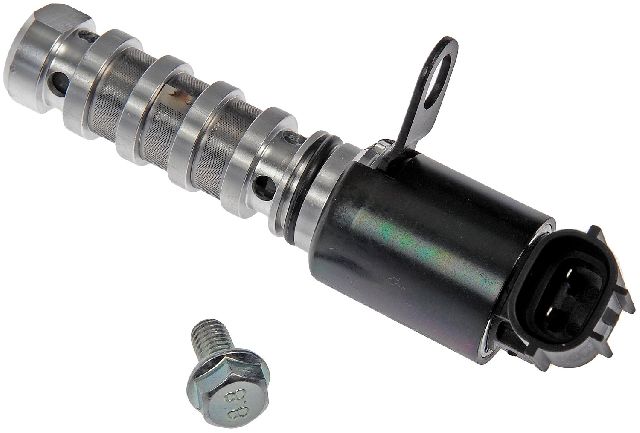
Est. part cost: $40-$80 - Faulty Bank 1 Exhaust Oil Control Valve (OCV) 🔴 High Probability → Shop Engine Variable Valve Timing (VVT) Solenoid These solenoids are a very common failure point. They can become clogged with oil sludge or metallic debris, or fail electrically, causing them to stick and improperly regulate oil flow to the cam phaser.
How to confirm: Swap the Bank 1 exhaust OCV with the Bank 2 exhaust OCV (front side). Clear codes and run the engine. If the code changes from P0017 to P0019, the OCV is confirmed faulty. You can also test the OCV's resistance with a multimeter; it should be between 6.9-7.9 Ohms.
Typical fix: Replace the Bank 1 (firewall side) exhaust Oil Control Valve. It is often recommended to replace both exhaust and intake OCVs at the same time. Some scan tools may require a VVT relearn procedure after replacement.
Est. part cost: $70-$150 - Stretched Timing Chain or Failed Tensioner 🟡 Medium Probability → Shop Engine Timing Chain This is a known issue on higher-mileage Lambda II engines. The timing chain tensioners can lose their ability to hold oil pressure, leading to chain slack, which causes a correlation fault. A TSB for the platform-mate Kia Sorento (ENG 148) confirms this weakness. NHTSA ODI #11729808 notes that repairs for P0017 may require replacing the CVVT Assembly-Exhaust and the Timing Chain Tensioner.
How to confirm: A distinct rattling noise from the engine for a few seconds on a cold startup is a strong indicator. A physical inspection of the timing components by removing the valve cover and/or timing cover is required for definitive confirmation.
Typical fix: Replace the timing chains, guides, and tensioners. This is a labor-intensive job.
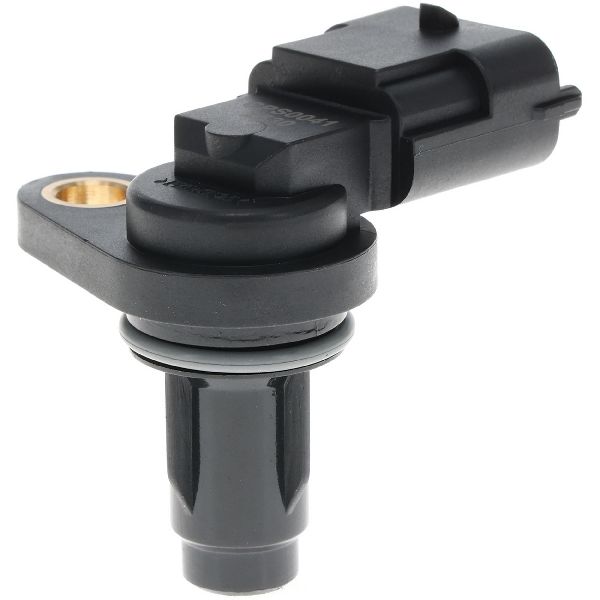
Est. part cost: $400-$900 - Failing Camshaft Position Sensor (Bank 1 Exhaust) ⚪ Low Probability → Shop Engine Camshaft Position Sensor
How to confirm: After ruling out oil and OCV issues, test the sensor's signal with an oscilloscope. Swapping the sensor with another identical one on the engine (if possible) to see if the code follows is another diagnostic step.
Typical fix: Replace the Bank 1 exhaust camshaft position sensor.
Est. part cost: $50-$100
Rare But Worth Checking
- Damaged CVVT Cam Phaser/Actuator: → Shop Engine Timing Gear The locating dowel pin on the CVVT phaser can shear or be pushed into the camshaft, allowing the phaser to rotate independently of the camshaft and causing a timing error. This is a known issue on some Hyundai engines and can be misdiagnosed as a stretched chain, as the timing marks on the phaser and chain may still appear aligned.
- Clogged Oil Passages: Severe oil sludge can block the small oil passages leading to the OCV and CVVT phaser, starving them of the oil pressure needed to operate correctly. This is often a result of neglected oil changes.
Diagnosis Steps
- Check Engine Oil: Verify the oil level is full and the oil is clean. This is the #1 cause. If low or dirty, perform an oil change with full synthetic 5W-30 oil and an OEM filter, clear the code, and re-test.
- Listen for Noise: On a cold start, listen for a brief 1-3 second rattling or chain-slap noise. If present, a timing chain/tensioner issue is highly likely.
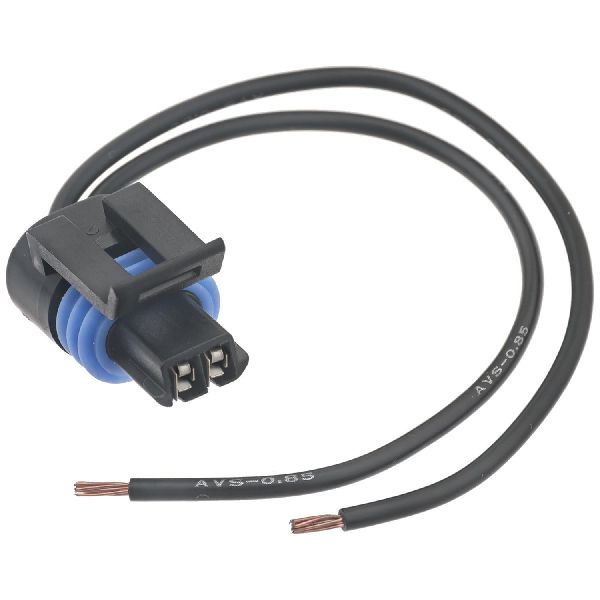
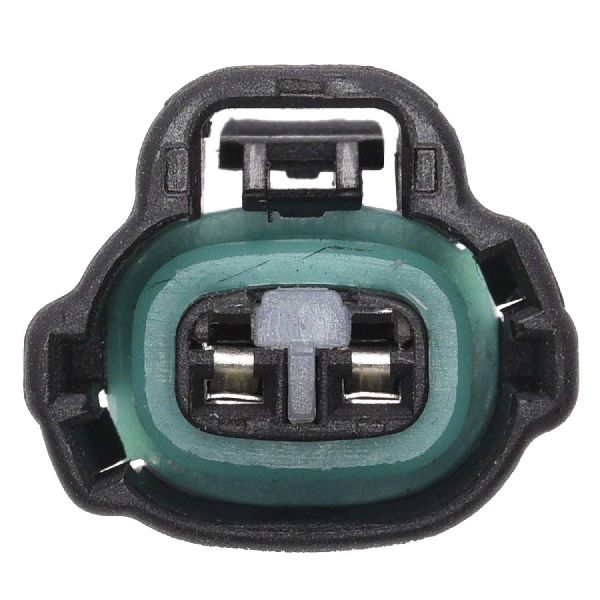
- Inspect the Oil Control Valve (OCV): Locate the Bank 1 (firewall side) exhaust OCV. Check its wiring and connector for damage or oil saturation.
- Test the OCV: For a definitive test, swap the Bank 1 exhaust OCV with the Bank 2 exhaust OCV. Clear the codes and run the engine. If the code changes to P0019, the OCV you moved is faulty and must be replaced. Alternatively, check resistance (should be 6.9-7.9 Ohms).
- Test the Camshaft Position Sensor: If the OCV is good, test the Bank 1 exhaust camshaft position sensor. Check its wiring and consider swapping it with an identical sensor from another position to see if the fault follows.
- Mechanical Timing Inspection: If all else fails, the issue is likely mechanical. This requires removing the valve cover to inspect the timing chain for slack and to verify the timing marks on the cams and crank are aligned. This step is best left to a professional.
Parts You'll Likely Need
- Oil Control Valve / VVT Solenoid (Bank 1 Exhaust)
(OEM #24375-3L100)— This is the most common component to fail or clog, directly causing the P0017 code by failing to properly adjust the exhaust cam timing on Bank 1.
Trusted brands: Hyundai OE, Dorman, Delphi, Standard Motor Products (SMP)
OEM price range: $100-$160
Aftermarket price range: $60-$110 - Camshaft Position Sensor (Bank 1 Exhaust)
(OEM #39350-3L100)— Replaced only if the sensor is specifically diagnosed as faulty after ruling out the more common OCV and mechanical timing issues.
Trusted brands: Hyundai OE, Bosch, NGK/NTK
OEM price range: $70-$120
Aftermarket price range: $40-$80 - Timing Chain Kit
(OEM #24410-3CGA1 (example kit number, verify with VIN))— Required if diagnosis confirms a stretched chain or failed tensioners/guides, a known issue on high-mileage engines that causes a mechanical timing misalignment and startup rattle.
Trusted brands: Hyundai OE, Melling, Cloyes
OEM price range: $400-$900
Aftermarket price range: $250-$500
Related Codes That Often Appear With This One
- P0016 — This is the equivalent code for the intake camshaft on Bank 1. It can appear if there are widespread oiling issues or if a technician swaps the intake and exhaust OCVs for diagnosis.
- P0019 — This is the equivalent code (Exhaust Cam Correlation) for Bank 2 (front side). It can appear if a technician swaps the Bank 1 and Bank 2 exhaust OCVs for diagnosis.
- P0300 — A random misfire code can be triggered because the incorrect cam timing disrupts the engine's combustion process, leading to an unstable idle.
- P0302 / P0303 — Specific cylinder misfires (Cylinders 2 and 3) have been documented alongside P0017 in NHTSA ODI #11675752.
Technical Service Bulletins (TSBs) & Recalls
- While no specific TSB for P0017 on this model was found, TSB ENG 148 for the platform-mate Kia Sorento addresses a startup rattle caused by a faulty timing chain tensioner, confirming a known weakness in the Lambda II engine family.
- TSB 24-EM-003H details the extended engine warranty for rod bearing wear, which can be a root cause of oil contamination leading to VVT faults.
Platform-Specific Known Issues
- Engine Failure Lawsuit & Warranty Extension: A class-action lawsuit was filed alleging defects in the 3.3L Lambda II engine causing premature bearing wear and catastrophic failure. In response to an NHTSA petition, Hyundai extended the engine warranty for 2013-2019 Santa Fe models to 15 years or 150,000 miles under TSB 24-EM-003H. Owners should check with a dealer to see if their VIN qualifies for coverage.
- Crankshaft Recall (2017 models): → Shop Engine Crankshaft Hyundai recalled certain 2017 Santa Fe 3.3L models because the crankshaft assemblies could have surface irregularities, leading to premature bearing wear, which can cause engine noise and oil pressure issues that may trigger P0017.
Mechanic-Grade Diagnostic Values
- Oil Control Valve (OCV) Solenoid Resistance — expected: 6.9 - 7.9 Ohms at 68°F (20°C). Failure: A reading of infinite resistance (open circuit), near-zero resistance (short circuit), or a value significantly outside the expected range.
- OCV Mechanical Actuation — expected: An audible 'click' when 12V is applied directly to the solenoid's pins.. Failure: No click is heard, indicating the internal spool valve is seized or stuck.
Scan Tool Commands That Help
- Hyundai GDS (Global Diagnostic System): Actuation Test: CVVT Control — This bidirectional command allows a technician to manually activate the OCV solenoid while monitoring engine RPM or live data. A change in engine note or RPM indicates the mechanical phaser is responding, helping to isolate a faulty OCV or wiring from a mechanical phaser problem.
- Hyundai GDS (Global Diagnostic System): Special Function: VVT Relearn / Reset — After replacing a CVVT component like an OCV or phaser, this function should be performed to reset the learned values in the ECM. Failure to do so may cause the code to return even with a new part.
Wiring & Ground Locations
- Bank 1 Exhaust Camshaft Position Sensor — On the rear cylinder head (closer to the firewall), on the driver's side of the engine. It is held in by a single 10mm bolt.. This is the specific sensor ('Sensor B') that provides the camshaft position signal to the ECM for the P0017 correlation calculation.
- Bank 1 Exhaust Oil Control Valve (OCV) — On the rear valve cover (closer to the firewall), typically near the camshaft position sensor.. This solenoid controls the oil flow to the Bank 1 exhaust cam phaser. Its wiring and connector are critical for proper CVVT system operation.
- Engine Ground Strap — Typically a braided strap from the engine block or transmission housing to the chassis frame rail.. A poor engine ground can cause erratic voltage and incorrect readings from all engine sensors, including the cam and crank sensors, potentially leading to false correlation codes.
Real Owner Repair Stories
- Car Talk Community Forum User (2013 Kia Rio (related platform with similar VVT system)) — Car stalled, P0017 code appeared.
❌ Tried (didn't work) Replacing the crankshaft position sensor.
✅ What actually fixed it The issue was ultimately diagnosed as a mechanical timing problem requiring the replacement of the timing chain, guides, and tensioners by a dealership. - Forum user on a platform-mate Kia Cadenza 3.3L (Kia Cadenza 3.3L V6) — P0017 code.
❌ Tried (didn't work) Replacing the VVT solenoid (OCV) with a generic aftermarket part from a local auto parts store.
✅ What actually fixed it The problem was only resolved after replacing the aftermarket part with a genuine Kia/Hyundai OEM VVT solenoid. The user noted their car was 'rejecting the generic parts'. - Reddit user r/MechanicAdvice (Hyundai with oil consumption issue) — Car ran poorly, oil was very low, timing had jumped 2 teeth.
❌ Tried (didn't work) Cleaning and testing the OCVs., Replacing the crankshaft position sensor.
✅ What actually fixed it A full timing job was required, including replacing the chain, tensioners, both CVVT sprockets, and the exhaust camshaft itself due to the infamous dowel pin breaking off. The code persisted after the repair until it was properly cleared and the system relearned. - NHTSA ODI #11450502 — An owner reported that after an oil change, the Check Engine Light for P0017 appeared. A technician cleared the code to ensure it wasn't a glitch, but the light returned in less than 50 miles.
- NHTSA ODI #11677887 — A Hyundai owner reported experiencing major engine problems including a P0017 code, which they identified as a known symptom of a larger engine defect.
Model Year Variations Within This Range
- 2012-2018: The 3.3L V6 used in this Santa Fe is the G6DH variant of the Lambda II GDI engine family. While mechanically similar throughout the 2013-2018 model years, it's important to always verify part numbers with the vehicle's VIN, especially for engine management sensors and timing components, as minor running changes can occur.
Diagnostic Flowchart
Other Known Issues on This Vehicle
Issues unrelated to this code that are worth knowing about as an owner of this generation:
- MDPS Flexible Coupler Failure 🟠 Medium — Very common across most of the vehicle's lifespan. Typically occurs between 50,000 and 100,000 miles. (Ref: TSB 17-ST-001)
- Premature Engine Bearing Wear / Engine Failure 🔴 High — Significant enough to prompt class-action lawsuits and a warranty extension. Failures have been reported under 80,000 miles. (Ref: Warranty Extension (TSB 24-EM-003H) to 15 years/150,000 miles.)
- GDI Intake Valve Carbon Buildup 🟠 Medium — A common issue for all Gasoline Direct Injection (GDI) engines. Can cause performance issues like rough idle, misfires, and loss of power, typically noticeable after 60,000-80,000 miles.
- Excessive Oil Consumption 🟠 Medium — Frequently reported by owners and a direct contributor to CVVT-related codes like P0017. Monitoring oil levels between changes is critical. (Ref: TSB 23-EM-007H (Provides diagnostic procedures for oil consumption).)
- Peeling Exterior Paint 🟡 Low — Primarily affects white and other light-colored vehicles, where the paint can delaminate and peel off in large sections.
Used vs. New Parts: Buying Guide for This Vehicle
When a used part is the smart pick: For external, easily accessible electronic components like the Camshaft Position Sensor or an Oil Control Valve (OCV), a used part from a reputable salvage yard can be a cost-effective option. These parts are typically plug-and-play and can be tested on the vehicle quickly.
Donor-vehicle mileage cap: roughly under 80000 miles for the part to have meaningful remaining life.
What to inspect on the donor part:
- Check for a clean, low-mileage donor vehicle.
- Inspect the part's electrical connector for corrosion, brittleness, or oil contamination.
- For an OCV, ensure the small filter screens are intact and free of metallic debris, which would indicate the donor engine had a catastrophic failure.
OEM-only on this vehicle (don't cheap out):
- Timing Chain Kit (Chains, Guides, Tensioners)
- CVVT Cam Phasers/Actuators
Aftermarket brands forum-validated for this vehicle:
- Melling (for timing components)
- Cloyes (for timing components)
- Standard Motor Products (SMP) (for sensors and solenoids)
- Delphi (for sensors and solenoids)
Brands owners have reported issues with on this vehicle:
- Unbranded, 'white-box' VVT solenoids (OCVs) from online marketplaces have a high failure rate. As noted in repair stories, some Hyundai/Kia vehicles are sensitive and may not function correctly with non-OEM solenoids.
Real Owner Stories
Aggregated from forums and TSBs cited above. Mileages and costs reflect what owners reported in those sources.
2013 Hyundai Santa Fe LWB 3.3L V6
Symptoms: Owner reported seeing both P0017 and P0019 codes simultaneously.
What fixed it: The owner was investigating the issue on a forum; the diagnostic path for these codes involves checking the Oil Control Valves (OCV) and oil quality.
Source hint: https://www.hyundai-forums.com/threads/p0017-and-p0019-on-2013-santa-fe-lwb-3-3l.676644/
2017 Hyundai Santa Fe 3.3L V6
Symptoms: Engine noise and oil pressure issues potentially leading to a P0017 code.
What fixed it: Crankshaft assembly replacement or repair under the 2017 model year recall for surface irregularities.
Source hint: Crankshaft Recall (2017 models) mentioned in vehicle_specific_issues
2014-2020 Kia Sorento 3.3L V6
Symptoms: A distinct rattling or chain-slap noise lasting 1-3 seconds during a cold startup.
What fixed it: Replacement of the timing chain tensioner as specified in TSB ENG 148.
Source hint: TSB ENG 148 cited in tsbs_cited and platform_mates
NHTSA Reported Incident (ODI #11499629)
Symptoms: An owner reported that the vehicle appeared to have problems changing gears and subsequently received a crankshaft-camshaft correlation code P0017 at only 28,000 miles.
Related OBD-II Codes
Frequently Asked Questions
Is there a warranty extension for the 3.3L engine in my 2013-2019 Santa Fe?
My 2017 Santa Fe has a P0017 code and engine noise; is there a specific recall for this?
Can I use any oil filter to fix the P0017 oil pressure issues?
What is the specific resistance for the Bank 1 Exhaust Oil Control Valve on the 3.3L V6?
Does the startup rattle mentioned in Kia TSB ENG 148 apply to my Santa Fe?
What type of oil should I use to prevent CVVT faults in my 3.3L Santa Fe?
Helpful Videos
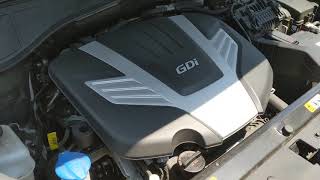
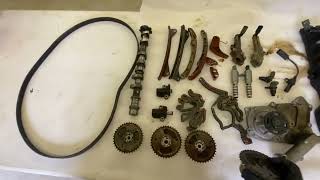
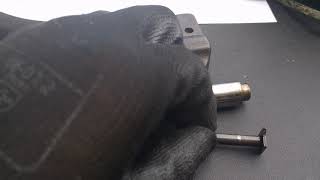
We Have This Part in Stock


The information in this article is provided for general reference and educational purposes only. Vehicle specifications, procedures, and part compatibility can vary by production date, trim level, and region. Always consult your vehicle's factory service manual and verify part numbers before purchasing or performing repairs. Safety-critical components such as airbags, seat belts, and braking systems should be installed by a qualified professional.
- Hyundai Santa Fe:
- 🧭 Diagnostic Flowchart
- 🎬 Helpful Videos
- 🛍️ Shop This Part
- What's Unique About the 2013-2018 Hyundai Santa Fe
- Symptoms You May Notice
- Most Likely Causes
- Rare But Worth Checking
- Diagnosis Steps
- Parts You'll Likely Need
- Related Codes That Often Appear With This One
- Technical Service Bulletins (TSBs) & Recalls
- Platform-Specific Known Issues
- Mechanic-Grade Diagnostic Values
- Scan Tool Commands That Help
- Wiring & Ground Locations
- Real Owner Repair Stories
- Model Year Variations Within This Range
- Other Known Issues on This Vehicle
- Used vs. New Parts: Buying Guide for This Vehicle
- Real Owner Stories
- 2013 Hyundai Santa Fe LWB 3.3L V6
- 2017 Hyundai Santa Fe 3.3L V6
- 2014-2020 Kia Sorento 3.3L V6
- NHTSA Reported Incident (ODI #11499629)
- Related OBD-II Codes
- Frequently Asked Questions
- 🎟️ Get 5% Off