

P0017 on 2009-2011 Kia Borrego 3.8L V6: Crank-Cam Correlation Fixes
On the Kia Borrego 3.8L V6, code P0017 is most often caused by low or dirty engine oil, or a failing exhaust Oil Control Valve (OCV) on the rear cylinder bank (Bank 1). Always start by changing the oil and filter (use an OEM filter); if that doesn't work, the OCV is the next likely part to replace, costing around $60-$120. A persistent code after these steps may point to a more serious timing chain issue.
- First, change the engine oil and use a genuine Kia/Hyundai oil filter. This simple step solves the problem more often than not.
- P0017 refers to the exhaust camshaft on Bank 1, which is the cylinder bank closer to the firewall on the Borrego.
- Do not replace the camshaft or crankshaft sensors first; they are rarely the cause of this specific correlation code.
- If an oil change doesn't fix it, the exhaust Oil Control Valve (OCV) for Bank 1 is the next most likely and affordable part to replace.
- A persistent code, especially with a rattling engine noise, points to a more serious and expensive timing chain issue.
What's Unique About the 2009-2011 Kia Borrego
The Kia Borrego was a short-lived model in the US market, but it uses the well-known Lambda 3.8L V6 engine, shared with many Hyundai and Kia models. This engine's dual continuously variable valve timing (D-CVVT) system is notoriously sensitive to oil pressure and cleanliness. While many correlation codes can point to major mechanical failure, on this specific platform, the issue is very frequently resolved with basic oil maintenance or the replacement of an accessible Oil Control Valve (OCV). Using a genuine Kia/Hyundai oil filter is often cited by mechanics and in forums as a critical step, as some aftermarket filters can cause pressure issues that trigger this code. A Reddit user with a P0018 code on a 2009 Borrego noted their problems started after waiting too long for an oil change, leaving very little, sludgy oil in the engine.
Symptoms You May Notice
- Check Engine Light illuminated
- Rough or unstable engine idle
- Noticeable loss of engine power and sluggish acceleration
- Engine hesitation or stalling, especially at low speeds
- Increased fuel consumption
- Rattling noise from the engine, particularly on cold startups, may indicate a timing chain issue
- Replacing the camshaft position sensor. The code P0017 indicates a *correlation* or timing relationship problem, not a sensor circuit failure (like P0340). While sensors can fail, it is not the most probable cause for this specific code.
- Replacing the crankshaft position sensor. Similar to the camshaft sensor, this is rarely the cause of a correlation fault.
Most Likely Causes
- Low, Dirty, or Incorrect Viscosity Engine Oil 🔴 High Probability The CVVT system is hydraulic and requires clean oil at the proper pressure to function. Sludge from old oil is the primary enemy of this system, capable of clogging the small passages in the Oil Control Valves (OCVs).
How to confirm: Check the oil level on the dipstick and inspect the oil's color and consistency. If it's low, black, or sludgy, it needs to be changed. Note the service interval history if available; long intervals increase the risk.
Typical fix: Perform an engine oil and filter change. Use a full synthetic 5W-20 oil and a genuine Kia/Hyundai OEM oil filter (Part No. 26320-3C100) to rule out pressure issues from aftermarket filters. Some owners report needing multiple oil changes to flush out severe sludge.
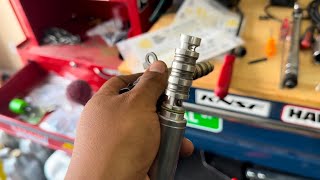
Est. part cost: $40-$80 - Faulty Bank 1 Exhaust Oil Control Valve (OCV) 🟡 Medium Probability → Shop Engine Variable Valve Timing (VVT) Solenoid The OCV is a solenoid that can get clogged with oil sludge or fail electrically, preventing it from directing oil to the cam phaser correctly. It's a very common failure point on the Lambda V6 engine family. In a similar Kia application, NHTSA ODI #11288719 notes that after diagnosis for P0017 and P0014, a mechanic identified a faulty oil control component as the culprit.
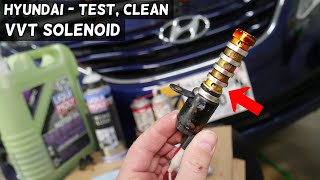
How to confirm: After an oil change, if the code returns, the OCV is the next suspect. A mechanic can test its resistance (should be 6.9-7.9 Ohms). 🎬 Watch: How to test and clean your VVT solenoid A common DIY method is to swap the Bank 1 exhaust OCV with the Bank 2 exhaust OCV and see if the code changes to P0019 (Crankshaft Position - Camshaft Position Correlation, Bank 2 Sensor B). Bank 1 is the rear bank, closer to the firewall.
Typical fix: Replace the Bank 1 exhaust Oil Control Valve. There are four OCVs in total (intake and exhaust for each bank). P0017 points specifically to the exhaust OCV on Bank 1.
Est. part cost: $60-$120 - Stretched Timing Chain or Failed Tensioner ⚪ Low Probability → Shop Engine Timing Chain While designed to last the engine's life, a history of infrequent oil changes can cause premature wear and stretch in the timing chains or failure of the hydraulic tensioners. Early Lambda engines had known timing chain issues.
How to confirm: This is a complex diagnosis. A key symptom is a rattling noise on cold startups that lasts for a few seconds. Verifying requires significant disassembly to physically inspect the chain for slack against the guides. A shop quoted a user approximately $4,000 for this repair.
Typical fix: Replace the timing chains, guides, and tensioners. This is a very labor-intensive job with labor costs estimated to be between $2,245 and $3,294.
Est. part cost: $250-$550
Rare But Worth Checking
- Clogged CVVT Oil Filter Screen: → Shop Engine Oil Filter Adapter There are small, fine mesh screens in the cylinder head oil passages that can become clogged with debris, restricting oil flow to the OCV. They are often overlooked but can be cleaned or replaced during an OCV replacement.
- Failed CVVT Cam Phaser: → Shop Engine Timing Gear The actuator on the camshaft itself can fail mechanically, getting stuck or developing issues with its internal locking pin. This is less common than an OCV failure and much more expensive to fix, as it requires timing chain removal.
- Damaged Camshaft Reluctor Wheel: → Shop Engine Camshaft The reluctor wheel, which is read by the camshaft position sensor, can be damaged or incorrectly installed, leading to correlation codes. Kia issued a Pitstop TSB (PS731) for other models highlighting this possibility, which could apply if recent engine work was performed.
Diagnosis Steps
- Verify Oil Level and Condition: Check the dipstick. If the oil is low, dirty, or overdue for a change, this is your starting point. This is the most common cause.
- Perform Oil and Filter Change: Change the oil using a full synthetic 5W-20 oil. Crucially, use a genuine OEM Kia/Hyundai oil filter (26320-3C100) to eliminate variables related to oil pressure. Clear the code and drive the vehicle to see if it returns.
- Inspect OCV Wiring: Locate the Bank 1 (rear bank) exhaust OCV. Inspect its electrical connector and wiring for any damage, corrosion, or looseness.
- Test the Oil Control Valve (OCV): The most reliable test is to swap the Bank 1 exhaust OCV with the Bank 2 (front bank) exhaust OCV. They are typically the same part. Clear the codes and drive. If the code changes to P0019 (Exhaust Cam Correlation, Bank 2), you have confirmed the OCV is faulty and needs replacement.
- Check OCV Resistance: Using a multimeter, check the resistance of the suspect OCV. It should be between 6.9 and 7.9 Ohms at room temperature. An open or shorted reading confirms failure.
- Inspect for Timing Chain Slack: If the OCV is not the cause, the next step is to investigate a mechanical fault. This usually involves removing the valve cover to visually inspect for timing chain slack. A rattling noise on startup is a strong clue. This step is best left to a professional.
- Seek Professional Diagnosis: If the above steps do not resolve the issue, the problem is likely a stretched timing chain, a bad phaser, or a damaged reluctor wheel, requiring a professional teardown and diagnosis.
Parts You'll Likely Need
- Engine Oil Control Valve (OCV) / VVT Solenoid
(OEM #24355-3C200 / 24355-3C100)— This solenoid is the most common part to fail after oil-related issues. It gets clogged with sludge or fails electrically. Part number 24355-3C100 is listed for the driver's side (LH) and 24355-3C200 for the passenger's side (RH), though some aftermarket parts are listed as interchangeable. For P0017 (Bank 1 Exhaust), the specific valve is on the rear bank. 🎬 See this walkthrough for replacing the oil control valve
Trusted brands: Kia (OEM), Hyundai (OEM), Delphi, Dorman
OEM price range: $80-$120
Aftermarket price range: $40-$70 - Engine Timing Chain Kit
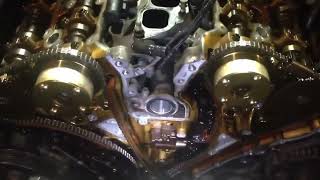
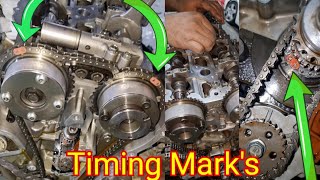
(OEM #24312-3C100 (Primary Chain, example))— If the code is persistent and accompanied by engine rattle, the timing chain has likely stretched or the tensioner has failed, requiring a full replacement of the timing components. 🎬 Watch: Professional guide to installing a new timing chain A full kit is recommended.
Trusted brands: Cloyes (e.g., 9-0771SA), Melling, DNJ, Genuine Hyundai/Kia
OEM price range: $400-$600
Aftermarket price range: $250-$450 - Engine Oil Filter
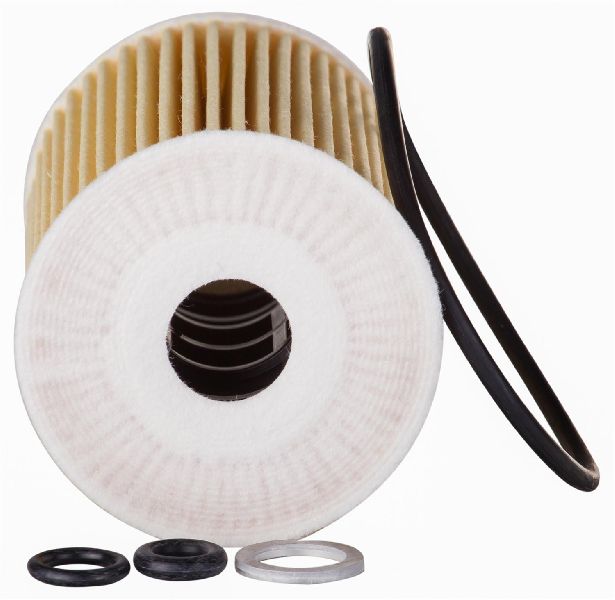
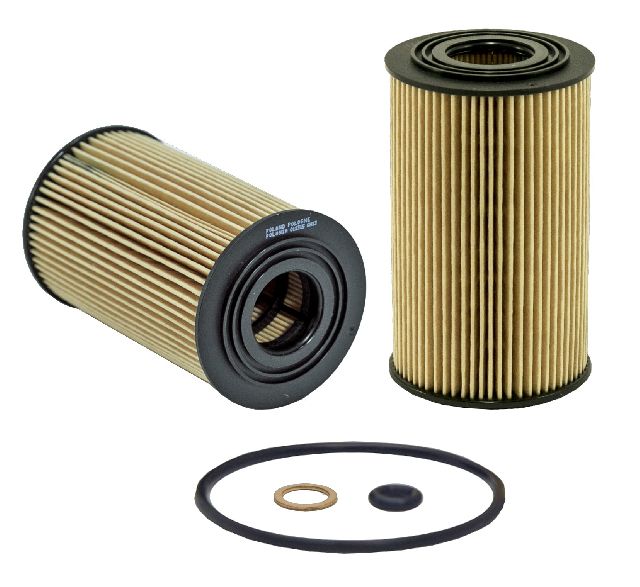
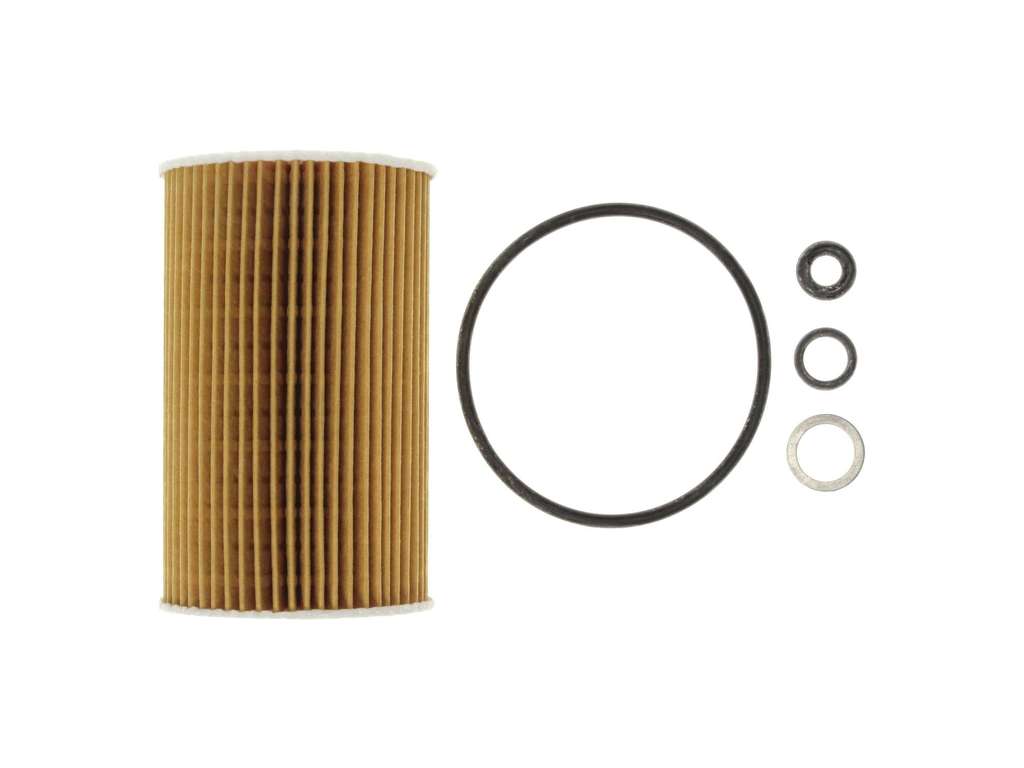
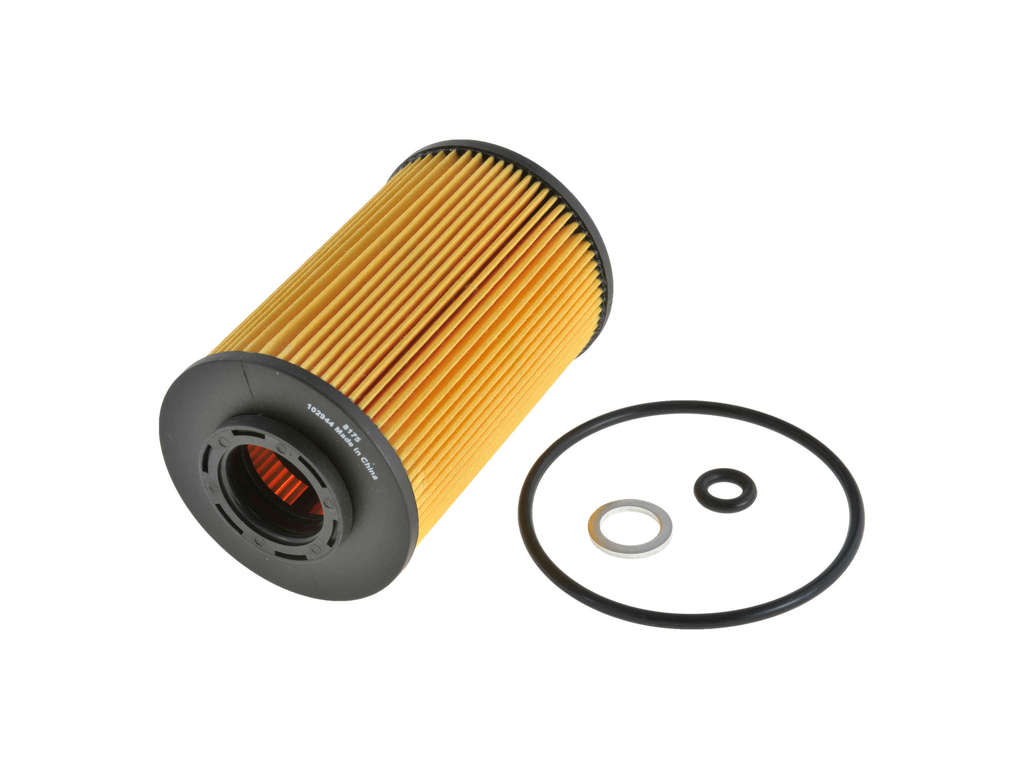
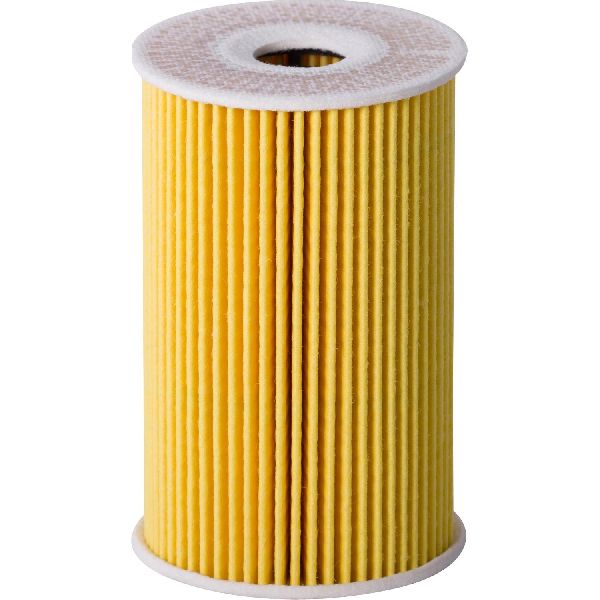
(OEM #26320-3C100)— The CVVT system is sensitive to oil pressure. Using a non-OEM filter has been reported to cause pressure issues that trigger this code. Always use a genuine OEM filter as the first step in diagnosis.
Related Codes That Often Appear With This One
- P0016 — This is the correlation code for the intake camshaft on the same bank (Bank 1). If P0016 and P0017 appear together, it points more strongly toward a base timing issue, like a stretched timing chain affecting the entire bank, or a problem with the Bank 1 cylinder head.
- P0018 / P0019 — These are the equivalent correlation codes for Bank 2 (the front bank). Seeing codes for both banks simultaneously is a very strong indicator of a systemic problem like severe oil sludging, low oil pressure from a failing oil pump, or a primary timing chain issue.
- P0014 — This code means 'Exhaust Camshaft Position Timing - Over-Advanced (Bank 1)'. It can appear with P0017 and often points directly to a stuck or faulty Bank 1 exhaust OCV.
Technical Service Bulletins (TSBs) & Recalls
- PS731 - While not for the Borrego specifically, this Kia Pitstop TSB for other models highlights that an incorrectly positioned camshaft reluctor wheel can cause codes P0016/P0017, which is a possibility during major engine work. Bulletin #PS731 specifically identifies this incorrect configuration as a cause for P0011, P0014, P0016, and P0017.
- TSB-046 - Issued for the 2009 Borrego, this TSB addresses rough idling and timing-related codes, pointing to the Oil Control Valve (OCV) as a potential cause, which can mimic symptoms of a bad camshaft sensor.
Platform-Specific Known Issues
- Owner Experience with P0018: A 2009 Borrego owner on Reddit reported getting a P0018 code (the Bank 2 equivalent of P0016) after severely delaying an oil change. The oil was found to be extremely low and sludgy. Even after two oil changes, the light remained intermittent, leading to suspicion of a clogged OCV solenoid as the next likely culprit before considering a costly timing chain replacement.
Mechanic-Grade Diagnostic Values
- Oil Control Valve (OCV) Solenoid Resistance — expected: 6.8 - 8.0 Ohms at 68°F (20°C).. Failure: A reading of infinity (open circuit), near-zero (short circuit), or significantly outside the specified range indicates a failed solenoid coil.
- Camshaft Position Sensor (CMP) Signal Voltage — expected: With Key On, Engine Off (KOEO), back-probing the signal wire should show approximately 4.8-5.0 volts.. Failure: When a piece of metal is passed over the sensor's tip, the voltage should drop to 0V. If the voltage is stuck high, stuck low, or does not switch, the sensor is likely faulty.
- Scan Tool Live Data: Desired vs. Actual Camshaft Position — expected: At idle and elevated RPM, the 'Actual' position value should closely follow the 'Desired' position value commanded by the ECM, typically within a few degrees.. Failure: A large, erratic, or lagging discrepancy between the actual and desired values points to a problem with the OCV, oil pressure, or the phaser itself.
Scan Tool Commands That Help
- Kia GDS (or equivalent professional scan tool): CVVT (or OCV) Actuator Test — This bidirectional command allows the technician to manually activate the Bank 1 exhaust OCV while the engine is running. If the solenoid is functioning, activating it should cause a noticeable change in engine idle (e.g., hesitation or stalling). No change in engine operation strongly suggests the OCV is stuck or has failed.
OEM Part Supersession History
24355-3C100→N/A - Side Specific— This is the Oil Control Valve for the LH (Driver's) side of the engine (Bank 2).
Heads up: This part is not for Bank 1. Using it would mean you are replacing the wrong part for a P0017 code.24355-3C200→N/A - Side Specific— This is the Oil Control Valve for the RH (Passenger's) side of the engine (Bank 1).
Heads up: This is the correct part for Bank 1 codes like P0016 and P0017 on the Borrego's longitudinal 3.8L V6. The intake and exhaust OCVs on the same bank are typically interchangeable.
Diagnostic Flowchart
Other Known Issues on This Vehicle
Issues unrelated to this code that are worth knowing about as an owner of this generation:
- Failing Fuel Pump 🟠 Medium — Can fail without a specific mileage pattern, leading to stalling or no-start conditions.
- Steering Column Coupler Noise 🟡 Low — Common across many Hyundai/Kia models of this era. Noise develops over time.
- Suspension Component Wear (Rattling) 🟡 Low — Becomes more common with age and mileage, typically over 80,000 miles.
- Transfer Case Failure (4WD Models) 🟠 Medium — Not widespread, but failures occur due to low fluid or normal wear and tear.
Used vs. New Parts: Buying Guide for This Vehicle
When a used part is the smart pick: For this repair, sourcing a used part is generally not recommended for the primary failure components. However, if the issue is traced to a damaged wiring pigtail for the OCV or camshaft sensor, a used connector from a junkyard is a perfectly acceptable and cost-effective fix.
Donor-vehicle mileage cap: roughly under 80000 miles for the part to have meaningful remaining life.
What to inspect on the donor part:
- For an OCV: Avoid. The risk of receiving a part clogged with sludge from a poorly maintained donor engine is too high.
- For a wiring connector: Inspect for brittle plastic, corrosion on the pins, or any signs of cracking. Ensure there is enough wire length to splice it into your harness.
- For a timing chain/phaser: Never buy used. These are wear items and installing used components is asking for a repeat failure.
OEM-only on this vehicle (don't cheap out):
- Engine Oil Filter: This is critical. Aftermarket filters for this engine are widely reported to cause oil pressure deviations that can trigger CVVT codes like P0017. Always use the genuine Kia/Hyundai filter (26320-3C100) to eliminate this variable.
Aftermarket brands forum-validated for this vehicle:
- OCV/VVT Solenoid: Delphi (often the original OEM supplier), Dorman.
- Timing Chain Kit: Cloyes, Melling.
Brands owners have reported issues with on this vehicle:
- Ultra-cheap, unbranded VVT solenoids and timing kits from online marketplaces. Failure rates are high, and the labor to replace a timing chain is too great to risk on a low-quality part.
Real Owner Stories
Aggregated from forums and TSBs cited above. Mileages and costs reflect what owners reported in those sources.
2009 Kia Borrego 3.8L V6
Symptoms: The owner severely delayed an oil change, resulting in extremely low and sludgy oil. The Check Engine Light remained intermittent even after two oil changes.
What fixed it: The diagnosis pointed toward a clogged OCV solenoid as the next step to resolve the intermittent light before considering a timing chain replacement.
Source hint: Reddit r/MechanicAdvice thread titled 'What are the symptoms of a bad vvt solenoid how/' and vehicle_specific_issues 'Owner Experience with P0018'
2009 Kia Borrego 3.8L V6
Symptoms: Rough idling and timing-related error codes.
What fixed it: Replacement of the Oil Control Valve (OCV) as specified in the technical service bulletin.
Source hint: TSB-046
2009 Kia Borrego 3.8L V6
Symptoms: Rattling noise on cold startup and a P0017 code that persisted after basic maintenance.
What fixed it: Replacement of the timing chains, guides, and tensioners.
Cost: $4,000-$4,000
Source hint: Article Context - Common Causes (Stretched Timing Chain)
Kia Owner Report (NHTSA ODI #11722774)
Symptoms: The vehicle would stall if it went over 3000 RPMs and idled hard. A code reader showed P0014 and P0017.
What fixed it: The vehicle had to be towed to a local dealer for safety after these crankshaft/camshaft position correlation errors occurred.
Source hint: NHTSA ODI #11722774
Kia Owner Report (NHTSA ODI #11711598)
Symptoms: The owner experienced a loss of power and stalling. After a dealer visit, the printout showed P0014 as pending and P0017 stored in history.
What fixed it: The owner stopped driving the vehicle immediately due to the safety risk of stalling in traffic.
Source hint: NHTSA ODI #11711598
Kia Owner Report (NHTSA ODI #11721571)
Symptoms: Excessive oil consumption, rough idle, and reduced power accompanied by codes P1327, P0304, and P0017.
What fixed it: These symptoms indicated progressive cylinder wall scoring from improperly heat-treated rings.
Source hint: NHTSA ODI #11721571
Related OBD-II Codes
Frequently Asked Questions
Does TSB-046 apply to my 2009 Kia Borrego regarding the P0017 code?
Which oil filter should I use for my Borrego 3.8L to prevent CVVT issues?
Can I swap parts to test if my Bank 1 Exhaust OCV is bad?
What is the correct oil viscosity for the 2009-2011 Borrego 3.8L V6?
Is there a TSB regarding the camshaft reluctor wheel for this engine?
What should the electrical resistance be for the OCV on my Borrego?
Helpful Videos
We Have This Part in Stock


The information in this article is provided for general reference and educational purposes only. Vehicle specifications, procedures, and part compatibility can vary by production date, trim level, and region. Always consult your vehicle's factory service manual and verify part numbers before purchasing or performing repairs. Safety-critical components such as airbags, seat belts, and braking systems should be installed by a qualified professional.
- Kia Borrego:
- 🧭 Diagnostic Flowchart
- 🎬 Helpful Videos
- 🛍️ Shop This Part
- What's Unique About the 2009-2011 Kia Borrego
- Symptoms You May Notice
- Most Likely Causes
- Rare But Worth Checking
- Diagnosis Steps
- Parts You'll Likely Need
- Related Codes That Often Appear With This One
- Technical Service Bulletins (TSBs) & Recalls
- Platform-Specific Known Issues
- Mechanic-Grade Diagnostic Values
- Scan Tool Commands That Help
- OEM Part Supersession History
- Other Known Issues on This Vehicle
- Used vs. New Parts: Buying Guide for This Vehicle
- Real Owner Stories
- 2009 Kia Borrego 3.8L V6
- 2009 Kia Borrego 3.8L V6
- 2009 Kia Borrego 3.8L V6
- Kia Owner Report (NHTSA ODI #11722774)
- Kia Owner Report (NHTSA ODI #11711598)
- Kia Owner Report (NHTSA ODI #11721571)
- Related OBD-II Codes
- Frequently Asked Questions
- 🎟️ Get 5% Off