

P0017 on 2015-2021 Kia Sedona 3.3L V6: Causes and Fixes for Cam/Crank Correlation
For the 2015-2021 Kia Sedona with the 3.3L V6, code P0017 is most often caused by low or dirty engine oil, or a failing Oil Control Valve (OCV) for the exhaust camshaft. Always check your oil first; if it's clean and full, replacing the Bank 1 exhaust OCV is the next logical step and a common fix. A startup rattle noise often points to a more serious, but also known, issue of a stretched timing chain.
- First, check your engine oil. Low or dirty oil is the #1 cause of P0017 on this engine.
- If the oil is fine, the Bank 1 exhaust Oil Control Valve (OCV) is the most likely culprit and is a relatively inexpensive and accessible part to replace.
- Do not immediately replace the camshaft or crankshaft sensors; they are rarely the root cause.
- If a new OCV and clean oil don't fix the code, the issue is likely a stretched timing chain, which is a more complex and expensive repair.
What's Unique About the 2015-2021 Kia Sedona
The Lambda II 3.3L V6 engine, like many modern engines, uses a dual overhead cam (DOHC) design with variable valve timing (VVT) to improve performance and efficiency. This system relies heavily on clean engine oil and proper oil pressure to function. On these Kia/Hyundai V6 engines, issues with oil sludge from extended oil change intervals can lead to premature failure of the Oil Control Valves (OCVs), which are the actuators for the VVT system. While timing chain issues can occur, especially over 100,000 miles, they are less common than faulty OCVs as the initial cause for P0017.
Symptoms You May Notice
- Check Engine Light is on
- Rough or unstable idle
- Poor acceleration and reduced engine power
- Engine stalling, especially at low speeds or when stopping
- Increased fuel consumption
- Rattling noise from the engine on startup, which often points to a timing chain tensioner or stretch issue
- Replacing the camshaft or crankshaft position sensors first. These sensors are usually doing their job by reporting the timing discrepancy. The fault typically lies with the oil, the OCV, or the mechanical timing components.
Most Likely Causes
- Low or Dirty Engine Oil 🔴 High Probability The VVT system is hydraulic and highly sensitive to oil pressure and cleanliness. Sludge or low levels can prevent the phasers from adjusting correctly, a known weakness in Lambda engines.
How to confirm: Check the engine oil dipstick for proper level and inspect the oil's condition. If it's low, dark, or sludgy, this is the likely cause.
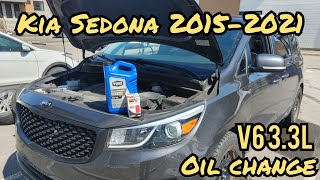
Typical fix: Perform an oil and filter change using the manufacturer-specified oil viscosity 🎬 Watch: Step-by-step oil change guide for the Sedona V6. (typically 5W-20 or 5W-30, check owner's manual).
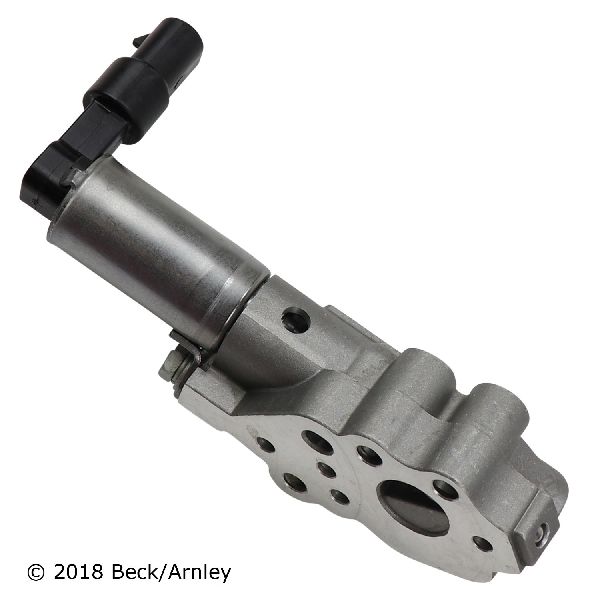
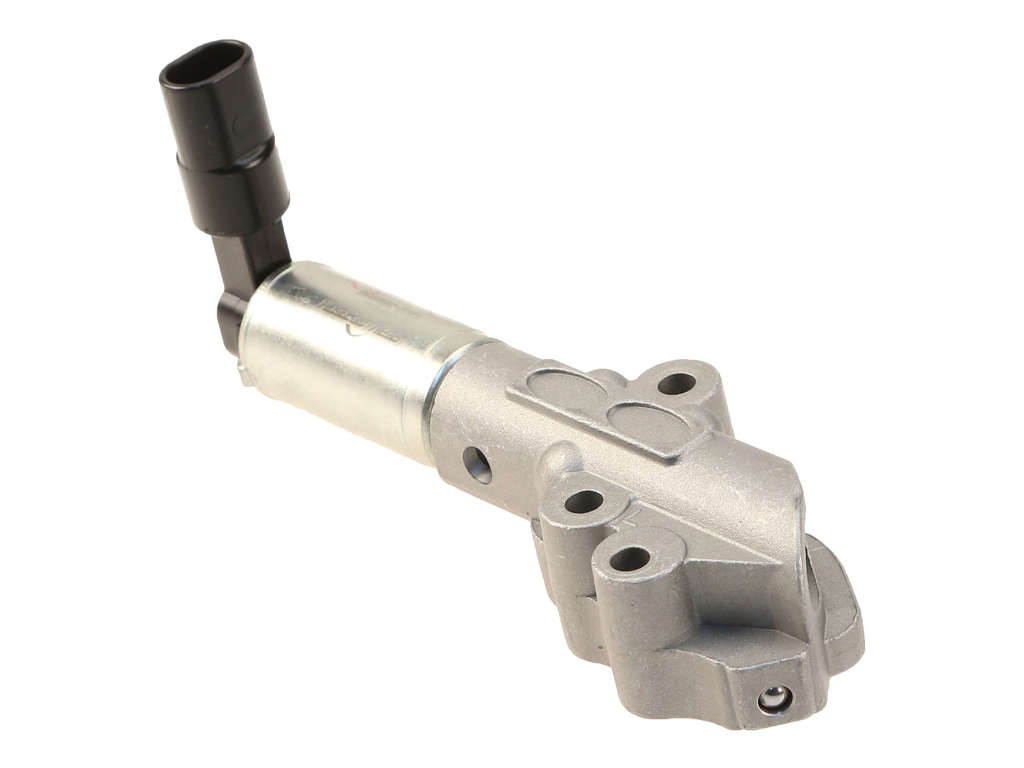
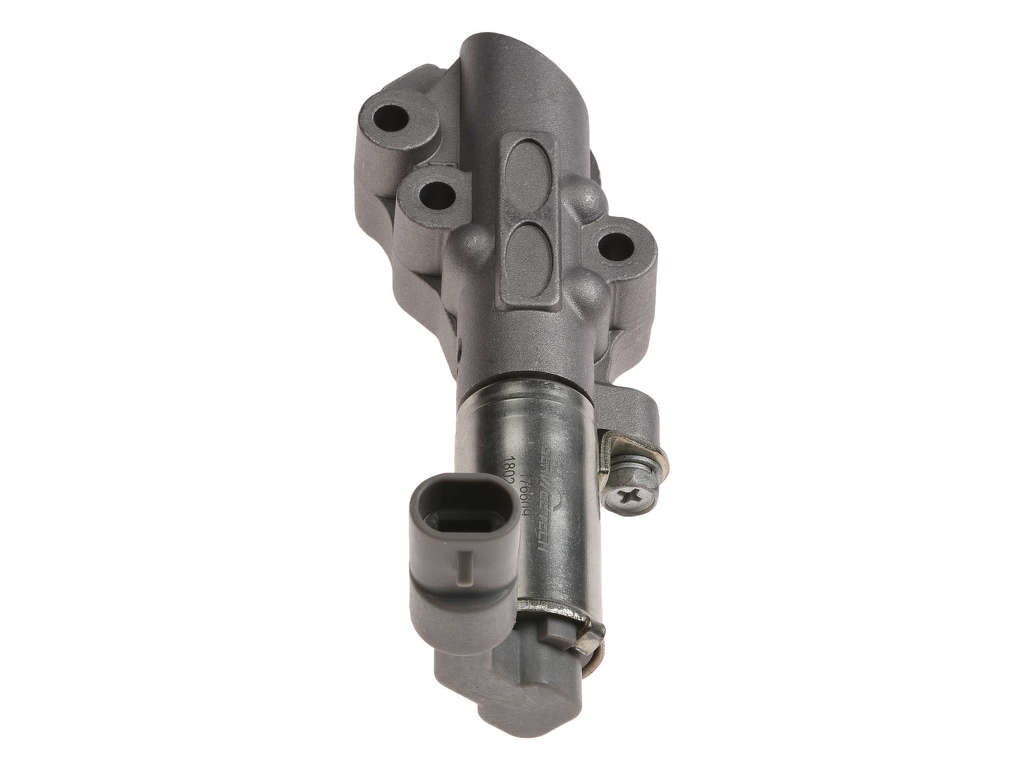
Est. part cost: $40-$80 - Faulty Exhaust Oil Control Valve (OCV) / VVT Solenoid 🔴 High Probability → Shop Engine Variable Valve Timing (VVT) Solenoid These solenoids can get clogged with oil sludge or fail electrically, which is a very common issue on Hyundai/Kia Lambda engines leading to correlation codes. A manufacturer report (NHTSA ODI #11288719) confirms that after diagnosing P0014 and P0017 codes, a mechanic identified a faulty oil control valve as the root cause.
How to confirm: Swap the Bank 1 (rear/firewall side) exhaust OCV with the Bank 1 intake OCV. Clear codes and drive. If the code changes to P0016 (Intake Cam Correlation), the OCV is confirmed faulty. You can also test the solenoid's resistance with a multimeter; it should be around 6.9-7.9 ohms.
Typical fix: Replace the Bank 1 exhaust Oil Control Valve. Bank 1 is the rear bank, closer to the firewall.
Est. part cost: $50-$120 - Stretched Timing Chain or Worn Timing Components 🟡 Medium Probability → Shop Engine Timing Chain Over time, especially with mileage over 100,000 miles, the timing chain can stretch, or the tensioners and guides can wear out, causing slack and incorrect timing. NHTSA ODI #11648244 notes that a P0017 code could be caused by a timing chain being "stretched vigorously" alongside excessive oil consumption.
How to confirm: This is an involved diagnosis. A persistent rattling noise on startup is a strong indicator. Diagnosis requires removing the valve cover and/or timing cover to physically inspect the chain for slack and check the timing marks. This is best left to a professional.
Typical fix: Replace the timing chain, tensioners, and guides. This is a labor-intensive job often costing over $1,500.
Est. part cost: $300-$700
Rare But Worth Checking
- Faulty Camshaft or Crankshaft Position Sensor: → Shop Engine Crankshaft Position Sensor While these sensors are often suspected, they are less likely to be the cause than the OCV or oil issues. The code usually means the sensor is correctly reporting a real correlation problem, not that the sensor itself has failed. Only replace a sensor after ruling out other causes.
- Damaged Camshaft Phaser (VVT Actuator): → Shop Engine Camshaft The mechanical gear on the end of the camshaft can fail or get stuck. This is less common than an OCV failure and usually requires timing chain service to replace.
- Internal Engine Damage: In some instances, correlation codes are accompanied by severe internal issues. NHTSA ODI #11532992 describes a case where P0017 and P0014 were retrieved and metal shavings were subsequently found inside the engine, requiring a full engine replacement.
Diagnosis Steps
- Check Engine Oil: Verify the oil level is full and the oil is clean. If low or dirty, perform an oil and filter change with the correct viscosity oil, clear the codes, and see if P0017 returns.
- Scan for Other Codes: Check for other related codes like P0016, P0014, or codes for Bank 2, which can help narrow down the problem. NHTSA ODI #11712704 notes that P0017 and P0016 can sometimes appear together as pending codes while the check engine light flashes randomly.
- Inspect OCV Wiring: Check the electrical connector and wiring to the Bank 1 (rear bank) exhaust OCV for any damage or corrosion.
- Test the Oil Control Valve (OCV): The easiest test is to swap the Bank 1 exhaust OCV with the Bank 1 intake OCV. They are located on the rear valve cover. Clear the codes and drive the vehicle. If the code returns as P0016, the OCV you moved is faulty and needs to be replaced.
- Test Sensors: If the OCV is not the issue, you can test the camshaft and crankshaft position sensors with a multimeter, but sensor failure is less common.
- Inspect Mechanical Timing: If all else fails, the problem is likely mechanical. Listen for a startup rattle. This requires removing the timing cover to inspect the timing chain, guides, and tensioner for wear, slack, or damage. This step is best left to a professional.
Parts You'll Likely Need
- Engine Oil Control Valve (VVT Solenoid), Bank 1 Exhaust
(OEM #24375-2GGB0 (Verify with VIN, may also be 24355-3CAA1 or similar))— This is the most common part to fail due to oil sludge or electrical issues, causing the P0017 code on this engine. Bank 1 is the rear bank (firewall side).
Trusted brands: Kia (OEM), Hyundai (OEM), Delphi, Dorman
OEM price range: $70-$120
Aftermarket price range: $40-$80 - Timing Chain Kit — If the timing chain has stretched or the tensioner has failed, a full kit is needed to restore proper engine timing. This is the second most likely repair after the OCV, especially on higher-mileage vehicles. RepairPal estimates the job can cost between $1,644 and $2,146.
Trusted brands: Kia (OEM), Cloyes, Melling
OEM price range: $400-$600
Aftermarket price range: $250-$400
Related Codes That Often Appear With This One
- P0016 — Crankshaft/Intake Camshaft Correlation (Bank 1). If both P0016 and P0017 appear together, it strongly points to a base timing issue affecting the entire bank, like a stretched timing chain or jumped timing.
- P0014 — Exhaust Camshaft Position Timing - Over-Advanced (Bank 1). This code points to the same system (Bank 1 exhaust cam) and is often caused by the same faults, like a stuck OCV.
- P0019 — Crankshaft/Camshaft Correlation (Bank 2, Sensor B). If codes for both Bank 1 (P0017) and Bank 2 (P0019) are present, it is a very strong indicator of a base timing problem affecting both banks, such as a stretched timing chain.
Technical Service Bulletins (TSBs) & Recalls
- PS731: This Pitstop (a type of TSB) notes that codes P0011, P0014, P0016, or P0017 can appear after an engine replacement if the camshaft reluctor wheel is not in the correct position. This is not a common cause for a vehicle with its original engine but is important for technicians to be aware of during major engine work.
Platform-Specific Known Issues
- The Lambda II V6 engines are known to be sensitive to oil maintenance. Failure to follow recommended oil change intervals can lead to sludge buildup, which is a primary driver of OCV failure and VVT system problems.
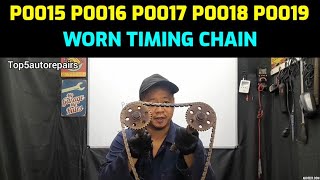
- On high-mileage (100k+) examples, a timing chain rattle on cold startup is a well-documented precursor to timing correlation codes 🎬 Listen to this example of a Kia engine startup rattle. like P0017, indicating wear in the timing chain tensioners or chain stretch.
Mechanic-Grade Diagnostic Values
- Oil Control Valve (OCV) / VVT Solenoid Resistance — expected: Approximately 6.9 - 7.9 Ohms (per general Kia specs), though some V6 models may measure higher, around 10.7 Ohms.. Failure: A reading of infinite resistance (open circuit) or zero resistance (short circuit). A reading significantly outside the expected range also indicates a problem.
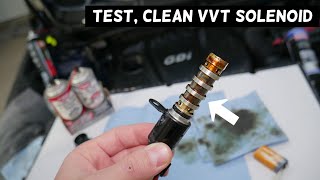
- OCV / VVT Solenoid Activation Test — expected: When 12V is applied directly to the solenoid's pins, an audible click should be heard, and the internal plunger should move.. 🎬 See how to bench test a VVT solenoid for movement. Failure: No click or movement when power is applied, or sluggish operation. This indicates a seized or electrically failed solenoid.
Scan Tool Commands That Help
- Kia GDS (Global Diagnostic System): Actuation Test for Oil Control Valve — After confirming good oil level/pressure and checking wiring, this command forces the OCV to actuate. A technician can monitor live data (like camshaft target vs. actual position) to see if the valve is responding to the command. This helps confirm if the OCV is stuck or if the problem is elsewhere.
- Kia GDS (Global Diagnostic System): Resetting Adaptive Values — After replacing a component like an OCV or performing a timing chain service, it is best practice to reset the engine's learned adaptive values. This forces the ECM to relearn the new component's characteristics immediately.
Wiring & Ground Locations
- Engine Ground Wiring Assembly — The main engine ground strap for the 2015-2018 Sedona is part number 91860-A9021. It connects the engine block to the chassis to ensure a proper ground path for all engine sensors and actuators.. A poor engine ground can cause erratic voltage signals from the camshaft and crankshaft position sensors, as well as improper operation of the oil control solenoids, potentially leading to a false P0017 code.
- ECM/PCM Connector — The Engine Control Module (ECM) is typically located in the engine bay. The wiring for the Bank 1 exhaust OCV and the Bank 1 exhaust camshaft position sensor run from the components to specific pins on the ECM connector.. When diagnosing a persistent P0017 after replacing parts, a technician must check for continuity and voltage at the ECM pins to rule out a wiring break or short between the component and the computer.
- Interior Fuse Box — Located behind a cover near the driver's left knee.. While a specific fuse for just the OCV is unlikely, this panel powers various modules. A fault here could cause broader communication issues, though it's not a primary cause for P0017.
- Engine Bay Fuse Box — Located on the driver's side of the engine bay, near the battery.. This box contains main relays and fuses for the engine control system. The main ECM relay, if faulty, would cause a no-start or stalling, but an intermittent issue could theoretically contribute to voltage problems for sensors and actuators.
Real Owner Repair Stories
- Reddit user on r/KiaForte (2018 Kia Forte (different vehicle, but same code principle and common Kia/Hyundai diagnostic path)) — P0017 code, decreased acceleration power, higher RPMs, stalling at low speeds.
❌ Tried (didn't work) The owner performed an oil consumption test at the dealership, which showed no issues.
✅ What actually fixed it The dealership recommended replacing both the intake and exhaust oil control valves as the next troubleshooting step. The user was planning to replace the exhaust OCV first, as 'Sensor B' in the P0017 code points to the exhaust side. - NHTSA ODI #11722774 — An owner reported that their vehicle would stall out if it went over 3000 RPMs and idled roughly. A code reader identified P0014 and P0017, requiring the vehicle to be towed to a local dealer for safety.
OEM Part Supersession History
24355-3CAA1→Multiple revisions may exist, such as 24355-3CAB1.— Standard part evolution for reliability or manufacturing improvements.
Heads up: The OCVs for the Lambda V6 have gone through several part numbers. While many are interchangeable, it is critical to verify the correct part number for your specific vehicle's VIN. The part number from pass 2 (24375-2GGB0) appears to be for a 4-cylinder engine and is incorrect for this V6.
Model Year Variations Within This Range
- 2015-2021: The third generation (YP) Kia Sedona used the same 3.3L Lambda II GDI V6 engine throughout its entire run from 2015 to 2021. There were no significant engine or powertrain changes that would affect the diagnosis or repair of a P0017 code within this model range.
Diagnostic Flowchart
Other Known Issues on This Vehicle
Issues unrelated to this code that are worth knowing about as an owner of this generation:
- Power Sliding Door (PSD) Failure 🟠 Medium — Common issue where the door motor fails, the latch breaks, or the door fails to auto-reverse, often requiring motor or latch assembly replacement. A recall (18V338000) was issued for the auto-reverse function. (Ref: Recall 18V338000, TSB BODY 111)
- Intake Valve Carbon Buildup 🟠 Medium — As a Gasoline Direct Injection (GDI) engine, the intake valves are not cleaned by fuel spray, leading to carbon deposits over time (typically noticeable after 60k-80k miles). This can cause hesitation, rough idle, and reduced power.
- Electrical Issues (Turn Signals/Headlights) 🟡 Low — Some owners, particularly on 2015-2017 models, report the turn signal activating on the opposite side or headlights momentarily turning off. A recall (21V725000) was issued for the turn signal logic. (Ref: Recall 21V725000)
- Prematurely Worn Suspension Components 🟡 Low — Front sway bar links and lower control arm bushings can wear out prematurely, causing rattling noises over bumps and potential alignment problems.
Used vs. New Parts: Buying Guide for This Vehicle
When a used part is the smart pick: For this repair, using used parts is generally not recommended. The primary failure items are the Oil Control Valve (OCV) and timing chain components. OCVs are relatively inexpensive new, and a used one carries the same risk of being clogged or failed. Timing components are wear items and should always be replaced with new parts.
Donor-vehicle mileage cap: roughly under 80000 miles for the part to have meaningful remaining life.
What to inspect on the donor part:
- If considering a used sensor (Cam/Crank), ensure it comes from a vehicle with a documented low-mileage history.
- Avoid any parts from an engine that shows signs of oil sludge or a 'varnish' coating, as this indicates poor maintenance and likely imminent failure of VVT components.
OEM-only on this vehicle (don't cheap out):
- Timing Chain Kit: While reputable aftermarket brands exist, the cost of labor for a timing job is so high that using OEM parts is a wise investment to ensure longevity and avoid a repeat failure.
- Camshaft Phasers (VVT Actuators): These are precision components. Aftermarket quality can be inconsistent, and failure can be catastrophic. Stick with OEM.
Aftermarket brands forum-validated for this vehicle:
- For Oil Control Valves (OCVs), brands like Delphi and Dorman (specifically their OE Solutions line) are generally considered reliable alternatives to OEM.
Brands owners have reported issues with on this vehicle:
- Avoid unbranded, 'white box' timing chain kits and OCVs from online marketplaces. Forum discussions frequently highlight premature stretching or failure of cheap timing components on Lambda engines.
Real Owner Stories
Aggregated from forums and TSBs cited above. Mileages and costs reflect what owners reported in those sources.
2012 Kia Sedona 3.5L Lambda (Similar Engine)
Symptoms: Check engine light with P0016 and P0017 codes.
What fixed it: The diagnostic path recommended starting with an oil change and VVT solenoid inspection, potentially leading to a more invasive timing job.
Source hint: BobIsTheOilGuy.com - Thread '2012 Kia Sedona LX'
2013 Kia Rio (Different engine, same code principle)
Symptoms: Persistent P0017 code that the dealership struggled to diagnose.
What fixed it: A full timing component replacement resolved the issue.
Source hint: Car Talk Community - 'Code p0017 dealership is clueless'
Kia (General Model)
Symptoms: P0017 code present.
What fixed it: The dealer recommended replacing the oil control valves as the primary troubleshooting step after checking the oil.
Source hint: Reddit r/KiaForte - 'P0017'
2015-2021 Kia Sedona 3.3L V6 — ~100000 miles
Symptoms: Rattling noise from the engine on startup.
What fixed it: Replacement of the timing chain, tensioners, and guides due to chain stretch and wear.
Cost: $1,500+
Source hint: vehicle_specific_issues
Related OBD-II Codes
Frequently Asked Questions
I just had my engine replaced and now I have a P0017 code. Does TSB PS731 apply to my 3.3L Sedona?
Can I just swap parts between banks to diagnose which Oil Control Valve is bad?
Is the rattling noise I hear on cold starts related to the P0017 code?
What is the correct oil viscosity to prevent VVT issues on my 2015-2021 Sedona?
Is there a recall for the P0017 timing issue on the Kia Sedona?
Where is Bank 1 located on my Sedona's 3.3L V6 engine?
Helpful Videos

![How to Fix P0017 Engine Code in 6 Minutes [4 DIY Methods / Only $6.81]](https://img.youtube.com/vi/Vcj-f_J2hyo/mqdefault.jpg)


We Have This Part in Stock


The information in this article is provided for general reference and educational purposes only. Vehicle specifications, procedures, and part compatibility can vary by production date, trim level, and region. Always consult your vehicle's factory service manual and verify part numbers before purchasing or performing repairs. Safety-critical components such as airbags, seat belts, and braking systems should be installed by a qualified professional.
- Kia Sedona:
- 🧭 Diagnostic Flowchart
- 🎬 Helpful Videos
- 🛍️ Shop This Part
- What's Unique About the 2015-2021 Kia Sedona
- Symptoms You May Notice
- Most Likely Causes
- Rare But Worth Checking
- Diagnosis Steps
- Parts You'll Likely Need
- Related Codes That Often Appear With This One
- Technical Service Bulletins (TSBs) & Recalls
- Platform-Specific Known Issues
- Mechanic-Grade Diagnostic Values
- Scan Tool Commands That Help
- Wiring & Ground Locations
- Real Owner Repair Stories
- OEM Part Supersession History
- Model Year Variations Within This Range
- Other Known Issues on This Vehicle
- Used vs. New Parts: Buying Guide for This Vehicle
- Real Owner Stories
- 2012 Kia Sedona 3.5L Lambda (Similar Engine)
- 2013 Kia Rio (Different engine, same code principle)
- Kia (General Model)
- 2015-2021 Kia Sedona 3.3L V6 — ~100000 miles
- Related OBD-II Codes
- Frequently Asked Questions
- 🎟️ Get 5% Off