

P0017 on 2014-2020 Kia Sorento 3.3L V6: Camshaft Correlation Causes and Fixes
On the 2014-2020 Sorento 3.3L V6, P0017 is most often caused by low/dirty engine oil or a failing exhaust Oil Control Valve (OCV). Always check your oil first, as these engines can consume oil. If the oil is fine, a new exhaust OCV (Part No. 24360-3CAA1) is a common fix. If you hear a rattling noise on startup, suspect a more serious timing chain issue, which is a known weakness.
- Always check your engine oil level and condition first. An oil change with an OEM filter can sometimes fix this code.
- A rattling noise for a few seconds when starting the engine cold is a major clue that points to a failing timing chain tensioner, a known issue.
- The most likely failed part is the exhaust Oil Control Valve (OCV). You can diagnose it for free by swapping it with the identical OCV on the front bank and seeing if the code changes to P0024.
- Do NOT replace the camshaft or crankshaft position sensors. They are almost never the cause of this specific code.
- Accessing Bank 1 (rear bank) components is difficult and requires removing the intake manifold, increasing labor costs.
What's Unique About the 2014-2020 Kia Sorento
The Lambda II 3.3L V6 is highly sensitive to oil maintenance and is known for systemic issues like oil consumption and, in severe cases, catastrophic engine failure due to bearing issues, which has led to class-action lawsuits. For P0017, the problem is almost always oil-related. A technical service bulletin (TSB ENG 148) was issued for 2014-2015 models for a timing chain tensioner, confirming a known weakness. Furthermore, a petition was filed with the NHTSA regarding widespread engine failures in the 3.3L Lambda II, highlighting reliability concerns beyond just timing components. The rear bank (Bank 1) location makes accessing components like the OCVs significantly more difficult than the front bank.
Generation note: This range covers two Sorento generations. The 2014-2015 models are the end of the 2nd generation (XM), and the 2016-2020 models are the 3rd generation (UM). A TSB for a faulty timing chain tensioner (ENG 148) specifically applies to the 2014-2015 models, making a startup rattle on these years a strong clue. Additionally, 2016-2017 models have a warranty extension (WTY035) for head gasket issues, which can cause other engine problems. However, the primary causes and fixes for P0017 are identical for both generations as they share the same Lambda II 3.3L V6 engine.
Symptoms You May Notice
- Check Engine Light is on
- Rough or unstable idle
- Engine hesitation or lack of power during acceleration
- Decreased fuel economy
- Engine stalling, especially at low speeds
- Rattling or chattering noise from the engine for a few seconds on cold startup
- Engine may enter 'limp mode' with reduced power.
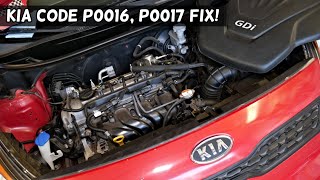
- Replacing the Camshaft Position Sensor: The P0017 code indicates a correlation *problem*, not necessarily a faulty sensor. The sensor is usually doing its job correctly by reporting the timing mismatch. 🎬 See why these correlation codes appear and how to diagnose them. Replacing it will not fix an underlying mechanical or oil pressure issue.
- Replacing the Crankshaft Position Sensor: This sensor is even less likely to be the cause. A failing crankshaft sensor typically causes more severe issues like no-start conditions or stalling, often with a P0335 code.
Most Likely Causes
- Low or Dirty Engine Oil 🔴 High Probability The CVVT system uses oil pressure to adjust cam timing. These engines are known to consume oil between changes, so the level can drop unexpectedly. Low levels or sludgy oil will starve the system and prevent the cam phasers from operating correctly, triggering a correlation code.
How to confirm: Check the engine oil dipstick regularly (e.g., every 1,000 miles). The oil level should be between the 'F' and 'L' marks. Inspect the oil's color and consistency; it should be amber/brown and not thick, black, or sludgy.
Typical fix: Perform an oil and filter change using a high-quality full synthetic 5W-30 oil and an OEM Kia/Hyundai oil filter. Aftermarket filters can sometimes cause oil pressure issues.
Est. part cost: $40-$80 - Failed Bank 1 Exhaust Oil Control Valve (OCV/VVT Solenoid) 🔴 High Probability → Shop Engine Variable Valve Timing (VVT) Solenoid These solenoids are a common failure point. They get clogged with oil sludge or fail electrically, preventing them from properly directing oil to the camshaft phaser. In a similar Kia application, NHTSA ODI #11288719 notes that after diagnosis for P0017, a mechanic found a faulty oil control valve.
How to confirm: A definitive DIY test is to swap the Bank 1 (rear) exhaust OCV with the Bank 2 (front) exhaust OCV, as they are identical parts. Clear the codes and drive. If the code changes to P0024 (Bank 2 Exhaust Correlation), the OCV is confirmed to be faulty.
Typical fix: Replace the Bank 1 exhaust OCV (Part No. 24360-3CAA1). Since accessing the rear bank is difficult and requires removing the intake manifold, many mechanics recommend replacing both the intake and exhaust OCVs on Bank 1 at the same time.
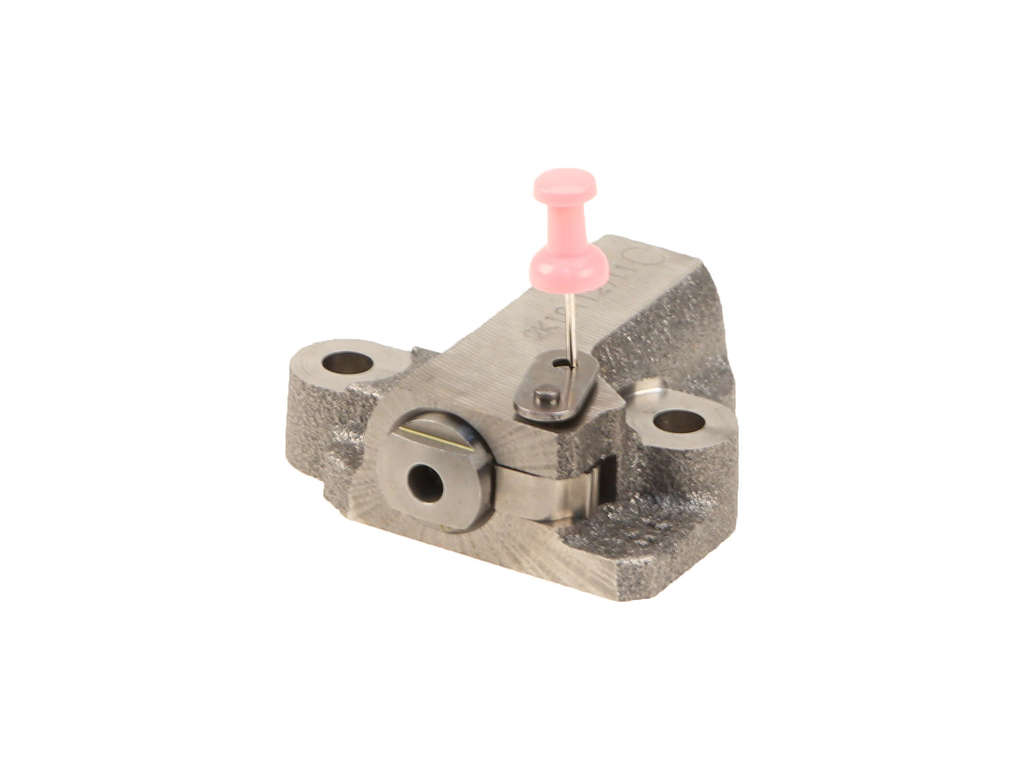
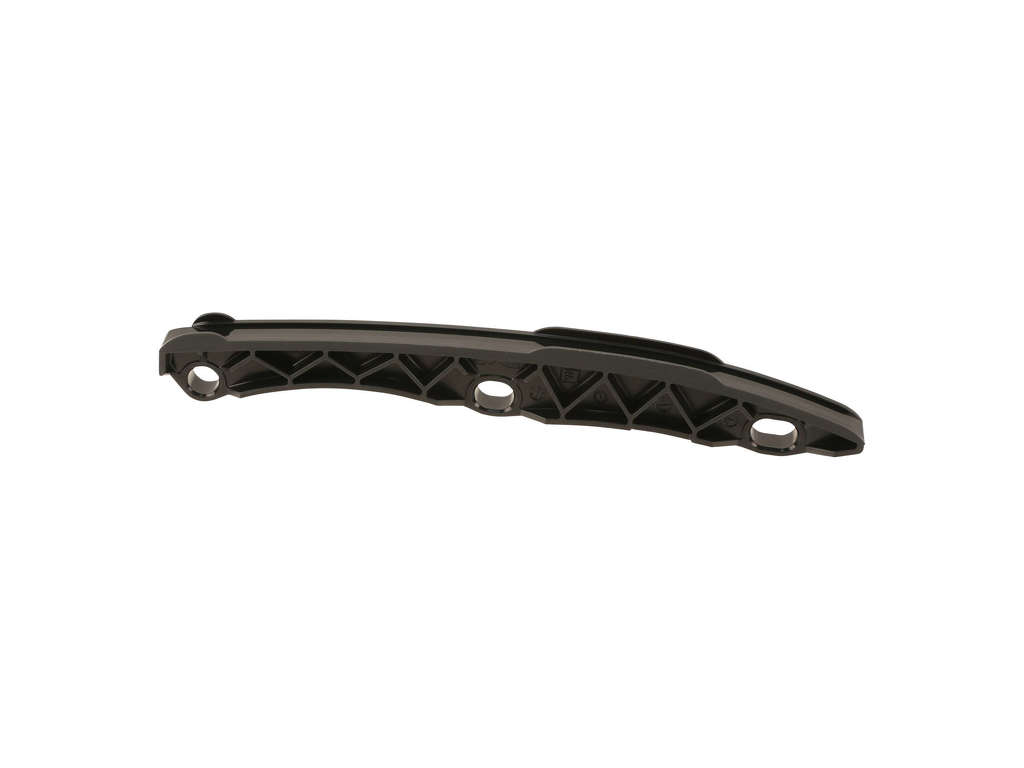
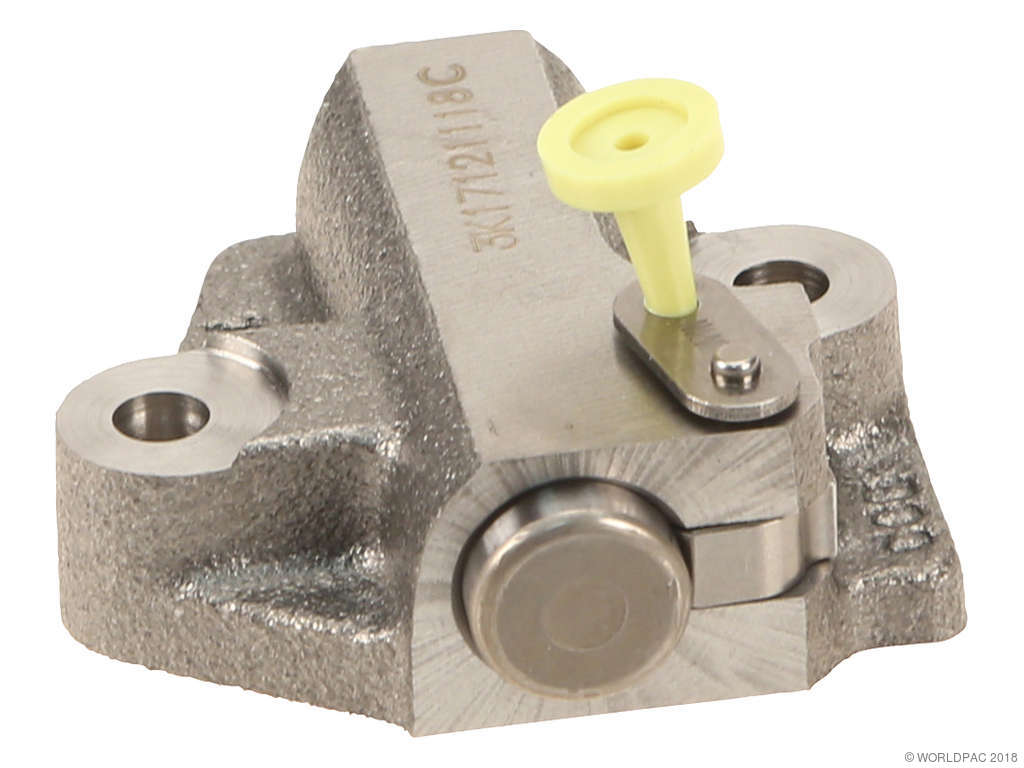
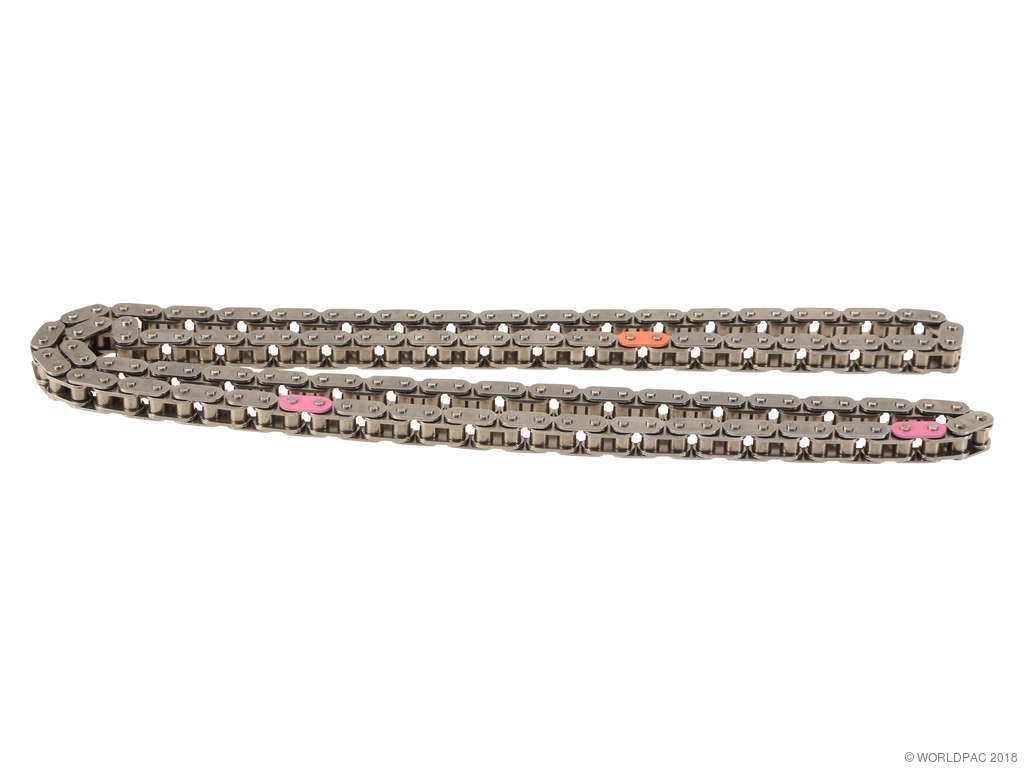
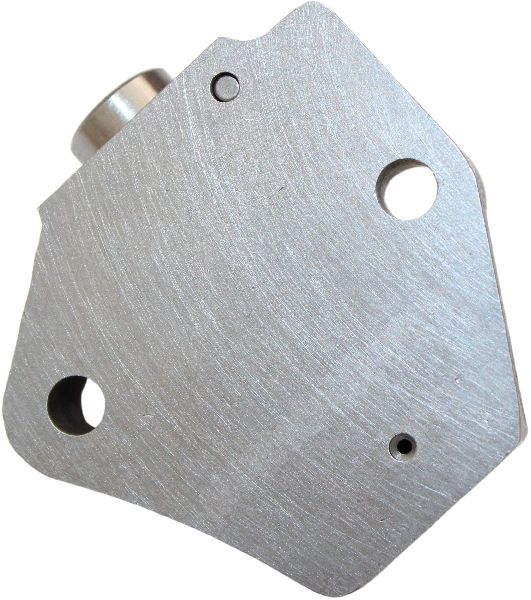
Est. part cost: $50-$120 - Stretched Timing Chain or Failed Timing Chain Tensioner 🟡 Medium Probability → Shop Engine Timing Chain This is a known issue, especially on higher-mileage engines or those with poor oil change history. A rattling noise on cold startup is the classic symptom. TSB ENG 148 🎬 Watch: Hear the specific rattle caused by a failing timing chain. for 2014-2015 models confirms a known weakness in the tensioner design. NHTSA ODI #11648244 describes a P0017 code where the timing chain may be "stretched vigorously" alongside excessive oil consumption.
How to confirm: Listen for a distinct 1-3 second rattle or chain-slap noise from the engine upon cold start. This is a strong indicator. A physical inspection for chain slack by checking the tensioner requires significant engine disassembly and is best left to a professional.
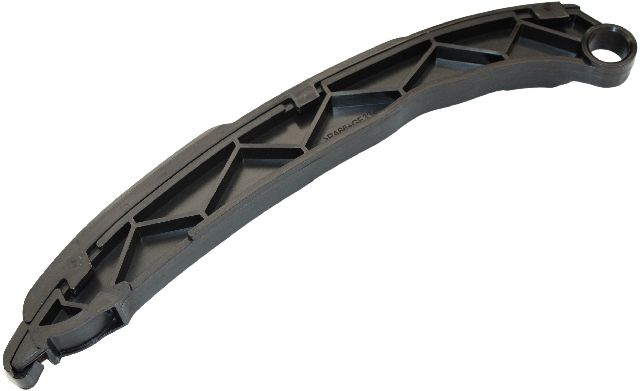
Typical fix: This is a major repair requiring replacement of the timing chains, guides, and tensioners. It is labor-intensive and expensive.
Est. part cost: $400-$800
Rare But Worth Checking
- Failed Camshaft Phaser (CVVT Actuator): → Shop Engine Camshaft The mechanical gear on the end of the camshaft can become stuck or fail internally. This is usually diagnosed after the OCV has been ruled out and is often replaced as part of a full timing chain service.
- Damaged Wiring or Connectors: Check the wiring harness and connector for the Bank 1 exhaust OCV and camshaft position sensor for any signs of damage, corrosion, or oil contamination before replacing parts.
- Sheared Camshaft Dowel Pin: → Shop Engine Camshaft In some cases, the dowel pin that aligns the CVVT phaser to the camshaft can shear or recess into the camshaft, allowing the phaser to spin independently and lose timing. This is a known issue on other Kia engines and can cause a P0017 that is not fixed by replacing OCVs or sensors.
Diagnosis Steps
- Check Engine Oil: Verify the oil level is correct and the oil is clean. If low or dirty, perform an oil and filter change, clear the code, and drive to see if it returns. This is the first and most important step.
- Listen for Startup Noise: When the engine is cold, start it and listen carefully for a 1-3 second rattling or chattering noise. If you hear this, a timing chain/tensioner issue is highly likely.
- Scan Tool Data: Use an OBD-II scanner to check for other pending or stored codes.
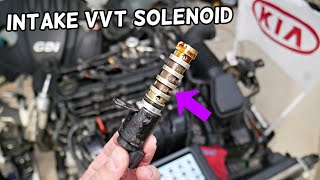
- Inspect OCV Wiring: Visually inspect the wiring and connector for the Bank 1 (rear bank) exhaust OCV. It is located on the rear valve cover. 🎬 Watch this guide to find and replace the VVT solenoid. Access requires removing the upper intake manifold.
- Test the OCV: The most effective test is to swap the Bank 1 (rear) exhaust OCV with the Bank 2 (front) exhaust OCV. They are the same part. Clear the codes. If P0017 is gone and P0024 appears, the OCV is bad and needs replacement.
- Professional Diagnosis: If the oil and OCV are good, the issue is likely a stretched timing chain, failed tensioner, or bad cam phaser. This requires extensive disassembly to confirm and should be handled by a professional mechanic.
Parts You'll Likely Need
- Engine Oil Control Valve (Exhaust)
(OEM #24360-3CAA1)— This solenoid is the most common part to fail, either by getting clogged with debris or failing electrically. It controls oil flow to the cam phaser.
Trusted brands: Kia/Hyundai (OEM), Dorman, Standard Motor Products (SMP)
OEM price range: $100-$150
Aftermarket price range: $40-$90 - Timing Chain Kit — If a startup rattle is present, it indicates slack in the timing system. A complete kit including chains, tensioners, and guides is required to fix this more serious root cause.
Trusted brands: Kia/Hyundai (OEM)
OEM price range: $400-$800
Aftermarket price range: $250-$500
Related Codes That Often Appear With This One
- P0024 — This is the exhaust correlation code for Bank 2. If you swap the Bank 1 and Bank 2 exhaust OCVs for diagnosis, P0017 will turn into P0024 if the valve is bad.
- P0016, P0018, P0019 — These are other camshaft correlation codes for different positions (intake/exhaust, Bank 1/2). If a timing chain has stretched significantly, it can cause multiple timing codes to appear at once, strongly suggesting a base timing problem.
Technical Service Bulletins (TSBs) & Recalls
- ENG 148 - 'Chatter/Rattle Noise From Engine After Cold Soak' for 2014-2015 Sorento (XMa), addresses a faulty timing chain tensioner.
Platform-Specific Known Issues
- TSB ENG 148: For 2014-2015 Sorento (XM) models, Kia issued a bulletin for a rattling noise on startup caused by a faulty timing chain tensioner. While the TSB may specify one bank, it confirms a known weakness in the timing system for this engine generation that can lead to correlation codes like P0017.
- Warranty Extension WTY035 (TSB ENG253/254): For 2016-2017 Sorento 3.3L models, Kia extended the warranty for coolant leaks from the cylinder head gasket area. This indicates a known issue with head bolts pulling from the block, which can lead to major engine failure.
- Difficult Access to Bank 1: Bank 1 is the rear cylinder bank, located against the firewall. Accessing the OCVs, ignition coils, or valve cover for this bank requires removing the upper intake manifold, significantly increasing labor time and cost compared to working on the front bank (Bank 2).
Mechanic-Grade Diagnostic Values
- Oil Control Valve (OCV) Solenoid Resistance — expected: Two different specifications exist depending on the OEM supplier: 6.7-7.9 Ohms or 9.4-10.4 Ohms.. Failure: A reading of infinity (open circuit), near-zero (short circuit), or significantly outside the expected ranges indicates a failed solenoid.
- Camshaft Position Sensor (CPS) Signal Voltage (Hall Effect Sensor) — expected: With ignition on, engine off, the signal wire should read a steady high state (~5V) or low state (~0V). When passing a metal object over the sensor tip, the voltage should switch cleanly between high and low.. Failure: Voltage does not switch, is stuck in the middle, or the low state voltage is higher than ~0.1V, which can indicate a failing sensor even if it appears to work.
- Scan Tool Live Data: Desired vs. Actual Camshaft Position — expected: At a steady RPM, the 'Actual' position should mirror the 'Desired' (commanded) position within a few degrees (typically < 5 degrees).. Failure: A large, consistent variance between the desired and actual values, especially when engine speed changes, indicates the phaser is not responding correctly to commands. The code may set when the deviation exceeds 10 degrees for 5 seconds.
Scan Tool Commands That Help
- Kia GDS (Global Diagnostic System) or equivalent advanced bidirectional scanner: Actuation Test: 'OIL CONTROL VALVE' (OCV) — This command allows a technician to manually cycle the OCV solenoid to verify it is mechanically clicking and functioning. This is extremely useful for testing the Bank 1 (rear) OCV without the labor of removing the intake manifold for physical access.
Wiring & Ground Locations
- Main Engine Ground — Typically a large gauge wire running from the negative battery terminal to the vehicle chassis, and another from the chassis to the engine block or transmission case.. A poor engine ground can cause erratic behavior and incorrect readings from any engine sensor, including the Camshaft and Crankshaft Position Sensors, leading to false correlation codes.
- OCV Connector — Located on the valve cover for each respective bank. Bank 1 (rear bank, against firewall) requires removal of the upper intake manifold for access. Bank 2 is on the front valve cover.. This is the connector where resistance and voltage tests are performed. It should be inspected for oil saturation from a leaking valve cover gasket, which can degrade the connection and cause intermittent solenoid function.
Real Owner Repair Stories
- Reddit r/MechanicAdvice (Kia with 3.3L GDI engine (specific model not stated, but engine is relevant)) — Car ran badly, found oil was very low due to oil consumption. Timing had jumped.
❌ Tried (didn't work) Initial diagnosis focused on OCVs, but they tested good.
✅ What actually fixed it A full timing job was required: replaced timing chain, tensioners, both CVVT sprockets, and the exhaust camshaft because the dowel pin had broken off. However, even after the mechanical repair and with the car running well, the P0017 code would not clear, suggesting a potential need for an ECM relearn procedure or a separate unresolved issue. - NHTSA ODI #11722774 (Kia Seltos) — An owner reported the vehicle would stall if it went over 3000 RPMs and idled hard; a code reader identified P0014 and P0017.
- NHTSA ODI #11532992 (Kia Forte) — A report notes that after a check engine light illuminated with codes P0017 and P0014, metal shavings were found inside the engine, necessitating a full engine replacement.
"I Checked Everything" — The Actual Cause
- The 'smoke test clean' diagnostic pattern is not applicable to trouble code P0017. A smoke test is used to find vacuum or evaporative (EVAP) system leaks by forcing visible vapor into the system. P0017 is a timing correlation code related to the mechanical synchronization between the crankshaft and camshaft, which is a function of the timing chain, tensioners, cam phasers, and the hydraulic oil pressure that controls them. A smoke test provides no diagnostic value for this code.
When the Usual Fixes Don't Work
- While replacing the Bank 1 exhaust OCV is a very common fix, it is not a guaranteed solution. In cases where the timing chain has stretched or a tensioner has failed, replacing the OCV will not resolve the code. The key differentiator is often a startup rattle, which points directly to the more serious timing chain issue. Furthermore, as seen in a documented repair, even a complete timing component replacement including chains, phasers, and a new camshaft may not immediately clear the code, indicating a potential need for an ECM relearn procedure or further diagnosis of the sensor wiring or reluctor wheels. In some Kia engines, as noted in NHTSA ODI #11695139, a P0017 code can be linked to severe damage from oil loss, requiring a new engine.
Diagnostic Flowchart
Other Known Issues on This Vehicle
Issues unrelated to this code that are worth knowing about as an owner of this generation:
- Excessive Oil Consumption 🔴 High — Widespread issue, often reported after 60,000 miles. Kia considers up to 1 quart per 1,000 miles 'acceptable' under some TSBs. Can lead to engine damage if level is not checked frequently. (Ref: Multiple TSBs exist regarding oil consumption testing procedures.)
- GDI Intake Valve Carbon Buildup 🟠 Medium — Common on all GDI engines, including the Lambda II V6, typically becoming problematic after 80,000 miles. Can cause misfires, rough idle, and reduced power.
- Catastrophic Engine Failure (Rod Bearing) 🔴 High — A significant number of failures have been reported, sometimes under 100,000 miles. Often attributed to manufacturing debris causing oil starvation to rod bearings, leading to engine seizure or a hole in the block. (Ref: Subject of numerous class-action lawsuits and an urgent petition to the NHTSA for investigation.)
- Head Gasket Leak / Head Bolt Failure 🔴 High — Affects 2016-2017 models specifically. Head bolts can pull from the engine block, causing coolant loss, overheating, and engine failure. (Ref: Warranty Extension WTY035 (TSB ENG253/ENG254) extends coverage for this specific issue.)
Used vs. New Parts: Buying Guide for This Vehicle
When a used part is the smart pick: For this repair, used parts are generally not recommended due to the high labor cost and criticality of the components. The only exception might be a structural part like the upper intake manifold if it were damaged during the repair.
Donor-vehicle mileage cap: roughly under 75000 miles for the part to have meaningful remaining life.
What to inspect on the donor part:
- For any used engine component, check for signs of heavy oil sludge or varnish.
- Avoid parts from engines that show signs of overheating (discolored metal, melted plastic).
- If considering a complete used engine, request service history to verify oil change intervals.
OEM-only on this vehicle (don't cheap out):
- Timing Chain Kit (Chains, Guides, Tensioners): Aftermarket kits have a high risk of premature failure on interference engines like the Lambda II, which can cause catastrophic damage. The cost savings do not justify the risk.
- Camshaft Phasers (CVVT Actuators): These are complex hydraulic/mechanical parts. OEM is strongly recommended for reliability.
- Oil Control Valves (OCVs): Given the high labor cost to access the Bank 1 OCV, using a proven OEM part is wise to avoid a repeat repair.
- Camshaft/Crankshaft Position Sensors: While some aftermarket brands are reliable, OEM sensors are the safest bet to avoid compatibility or signal quality issues.
Aftermarket brands forum-validated for this vehicle:
- Beck Arnley (Solenoids, Sensors)
- NGK / NTK (Sensors)
- Melling (Valvetrain components, Solenoids)
Brands owners have reported issues with on this vehicle:
- Generic 'white-box' or unbranded parts from online marketplaces.
- Dorman VVT solenoids have a mixed reputation on forums for various vehicles; while not specifically confirmed for this application, caution is advised.
Real Owner Stories
Aggregated from forums and TSBs cited above. Mileages and costs reflect what owners reported in those sources.
2014-2015 Kia Sorento 3.3L V6
Symptoms: Chatter/rattle noise from engine after cold soak.
What fixed it: Replacement of the timing chain tensioner as per TSB ENG 148.
Source hint: TSB ENG 148 - 'Chatter/Rattle Noise From Engine After Cold Soak'
2023 Kia Forte
Symptoms: Decreased acceleration and higher RPMs.
What fixed it: Not specified, but confirmed presence of P0017 code.
Source hint: Reddit r/KiaForte - 'P0017' (Feb 16, 2023)
Related OBD-II Codes
Frequently Asked Questions
My 2014 Sorento has a rattling noise for a few seconds when I first start it in the morning. Is there a specific bulletin for this?
I have a P0017 code on my 2017 Sorento 3.3L and I'm also losing coolant. Are these related?
Can I just swap parts to see if the Bank 1 Exhaust Oil Control Valve is bad?
Is it true that Kia considers high oil consumption 'normal' for the Lambda II 3.3L engine?
Why is the labor cost so much higher to fix P0017 on Bank 1 compared to Bank 2?
Does the type of oil filter I use matter for preventing VVT codes like P0017?
Helpful Videos

We Have This Part in Stock

The information in this article is provided for general reference and educational purposes only. Vehicle specifications, procedures, and part compatibility can vary by production date, trim level, and region. Always consult your vehicle's factory service manual and verify part numbers before purchasing or performing repairs. Safety-critical components such as airbags, seat belts, and braking systems should be installed by a qualified professional.
- Kia Sorento:
- 🧭 Diagnostic Flowchart
- 🎬 Helpful Videos
- 🛍️ Shop This Part
- What's Unique About the 2014-2020 Kia Sorento
- Symptoms You May Notice
- Most Likely Causes
- Rare But Worth Checking
- Diagnosis Steps
- Parts You'll Likely Need
- Related Codes That Often Appear With This One
- Technical Service Bulletins (TSBs) & Recalls
- Platform-Specific Known Issues
- Mechanic-Grade Diagnostic Values
- Scan Tool Commands That Help
- Wiring & Ground Locations
- Real Owner Repair Stories
- "I Checked Everything" — The Actual Cause
- When the Usual Fixes Don't Work
- Other Known Issues on This Vehicle
- Used vs. New Parts: Buying Guide for This Vehicle
- Real Owner Stories
- 2014-2015 Kia Sorento 3.3L V6
- 2023 Kia Forte
- Related OBD-II Codes
- Frequently Asked Questions
- 🎟️ Get 5% Off