

P0017 on 2018-2022 Kia Soul: Crank-Cam Correlation Causes and Fixes
For a 2018-2022 Kia Soul, code P0017 is most often caused by low/dirty engine oil or a failing Oil Control Valve (OCV) for the exhaust camshaft. An OCV is relatively inexpensive (~$50-$100) and easy to replace. Always check your oil level and condition first before buying any parts. If the oil level is fine, replacing the exhaust OCV is the most common and cost-effective next step.
- Always check your engine oil level and condition first. This is the simplest and most common cause for P0017.
- The exhaust Oil Control Valve (OCV) is the next most likely culprit and is a relatively affordable and accessible part to replace.
- Do not immediately replace the camshaft sensor; it is usually reporting a real mechanical problem, not failing itself.
- For 2018-2019 models, be aware of TSB #PS731 regarding the reluctor wheel, especially if the engine has been worked on before.
- This code is serious. Driving with it can lead to stalling and potential catastrophic engine failure. Address it promptly.
What's Unique About the 2018-2022 Kia SOUL

The 2018-2022 Kia Soul spans two generations and uses engines (Nu and Gamma series) known for sensitivity to oil maintenance. The Continuously Variable Valve Timing (CVVT) system, which adjusts cam timing, is hydraulically operated and can malfunction due to oil sludge or low pressure. A specific Kia Technical Service Bulletin (TSB #PS731) points to an incorrectly installed camshaft reluctor wheel as a potential cause for this code on 2018-2019 models, especially after an engine replacement. Furthermore, technicians note a common failure on the 2.0L Nu engine where a dowel pin on the exhaust camshaft can shear, requiring camshaft and CVVT phaser replacement.
Diagnostic Flowchart

Tap your situation to follow the diagnostic path that matches what you're seeing on this vehicle.
Generation note: This range covers two Soul generations. The 2018-2019 models are the 2nd generation (PS) with 1.6L GDI, 2.0L GDI, and 1.6L Turbo GDI engines. The 2020-2022 models are the 3rd generation (SK3) with 2.0L MPI and 1.6L Turbo GDI engines. TSB #PS731 regarding the reluctor wheel applies to the PS and SK3 generations within this range.
Symptoms You May Notice

- Check Engine Light is on
- Rough or unstable idle, sometimes dipping low and jolting back up
- Engine stalling, especially when coming to a stop or at idle
- Reduced engine power and sluggish acceleration
- Increased oil consumption, often a precursor to the code
- Rattling or knocking noise from the engine
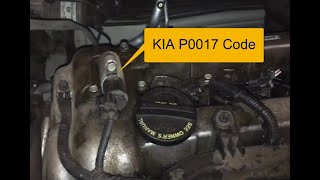
- Replacing the camshaft position sensor without diagnosing the underlying cause. The P0017 code indicates a correlation *problem*, not necessarily a bad sensor. The sensor is often just the messenger reporting a real mechanical timing issue. 🎬 See how to troubleshoot correlation codes before buying sensors.
Most Likely Causes

- Low or Dirty Engine Oil 🔴 High Probability The CVVT system uses oil pressure to adjust cam timing. These engines can consume oil, and low levels will starve the CVVT actuators, causing timing correlation errors. One owner noted the P0017 code appeared, they checked the oil and found it nearly empty, and an oil change temporarily resolved the light.
How to confirm: Check the oil dipstick. The oil should be at the 'Full' mark and have a clear, amber-brown color. Dark, thick, or gritty oil needs to be changed.
Typical fix: Top off or change the engine oil and filter. Use the manufacturer-recommended viscosity. Clear the code and drive to see if it returns.
Est. part cost: $30-$70 - Faulty Exhaust Oil Control Valve (OCV) 🔴 High Probability → Shop Engine Variable Valve Timing (VVT) Solenoid The OCV is an electronic solenoid that is a very common failure point. It can get clogged with debris from dirty oil or fail electrically, preventing proper control of the exhaust cam phaser. It is often the first part replaced after checking the oil.
How to confirm: A mechanic can command the solenoid with a scan tool to check for response. It can also be removed (a single 10mm bolt) and tested for resistance or by applying 12V to see if the internal plunger actuates.
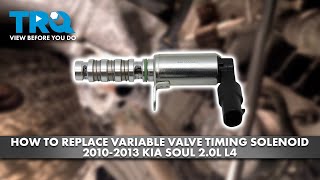
Typical fix: Replace the Bank 1 (Exhaust) Oil Control Valve. This is a relatively simple DIY job for many owners. 🎬 Watch: Step-by-step guide to replacing the VVT solenoid.
Est. part cost: $50-$150 - Stretched Timing Chain or Faulty Tensioner 🟡 Medium Probability → Shop Engine Timing Chain Over time, especially with high mileage or poor maintenance, the timing chain can stretch. This creates slack and alters the mechanical timing between the crank and cams, which the sensors will detect. Mechanics note that these chains are known to stretch.
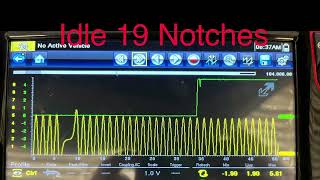
How to confirm: This is a complex diagnosis. A mechanic may remove the valve cover to inspect for slack and check timing marks. An oscilloscope analyzing cam/crank sensor waveforms is the definitive non-invasive check. 🎬 Watch: Using an oscilloscope to confirm timing sensor patterns.
Typical fix: Replace the timing chain, guides, and tensioner. This is a labor-intensive job.
Est. part cost: $200-$500 - Incorrect Camshaft Reluctor Wheel Configuration ⚪ Low Probability → Shop Engine Camshaft As per TSB #PS731, if the engine has been recently replaced, it's possible the camshaft reluctor wheel (or pulse wheel) was installed incorrectly, causing the cam sensor to send an erroneous signal even if mechanical timing is perfect.
How to confirm: Follow the diagnostic procedure in TSB #PS731, which involves setting the engine to Top Dead Center and visually inspecting the reluctor wheel's position relative to a camshaft cap bolt.
Typical fix: Correctly position or replace the camshaft reluctor wheel.
Est. part cost: $20-$50 (part only)
Rare But Worth Checking
- Sheared Camshaft Dowel Pin / Failed CVVT Cam Phaser: → Shop Engine Timing Gear A severe failure mode noted by Hyundai/Kia technicians, particularly on the 2.0L Nu engine. The locating pin on the exhaust camshaft that aligns the CVVT phaser can shear off, allowing the phaser to rotate freely and creating a major timing error. This is often misdiagnosed as just a stretched chain. The fix requires replacing the exhaust camshaft, the CVVT phaser assembly, and the OCV.
- Faulty Camshaft or Crankshaft Position Sensor: → Shop Engine Crankshaft Position Sensor While many DIYers replace these sensors first, it's uncommon for the sensor itself to be the root cause. The code usually means the sensor is accurately reporting a mechanical problem. Multiple forum users report replacing sensors with no success.
Diagnosis Steps
- Check engine oil level and condition. This is the number one cause. If low, top off, clear codes, and re-evaluate.
- Use a scan tool to confirm P0017 and check for other codes like P0014, P0016, or misfire codes.
- Inspect the wiring and connector for the exhaust camshaft position sensor and the Oil Control Valve (OCV) for any visible damage or corrosion.
- Test the exhaust OCV. This is the most likely component failure. Command it with a scan tool or remove it (one bolt) and apply 12V power to check for mechanical actuation. Check for sludge or debris on the OCV screens.
- If the OCV is good, the next step is more involved. An oscilloscope is the best tool to compare the camshaft and crankshaft sensor patterns to confirm a real timing discrepancy.
- If a timing discrepancy is confirmed, perform a mechanical inspection. This requires removing the valve cover to check timing marks and inspect the timing chain for obvious slack or damage to the guides.
- For 2018-2019 models, if the engine was recently replaced, consult TSB #PS731 to verify the camshaft reluctor wheel position.
- If the chain and tensioner appear okay but the code persists, suspect a failed CVVT phaser or a sheared camshaft dowel pin, which requires more significant engine disassembly to replace.
Parts You'll Likely Need
- Engine Oil Control Valve (VVT Solenoid), Exhaust
(OEM #24375-2E100 (For 2.0L Nu & 1.8L Engines) or 24375-2G500 (For 2.0L & 2.4L GDI Theta II Engines))— This solenoid controls oil flow to the cam phaser and is a very common failure point, either by clogging or electrical fault. It's the most likely culprit after low oil.
Trusted brands: Genuine Kia/Hyundai, Aisin, Dorman
OEM price range: $80-$150
Aftermarket price range: $40-$90 - Camshaft Position Sensor
(OEM #39350-2E200 (Verify by VIN))— Though less common to be the root cause, a failing sensor can give incorrect readings. It's often replaced during diagnosis but is not usually the fix. Many owners replace this first without success.
Trusted brands: Genuine Kia/Hyundai, Bosch, NGK/NTK
OEM price range: $70-$120
Aftermarket price range: $30-$60 - Timing Chain Kit — If the chain has stretched, this kit is required to restore mechanical timing. The job is labor-intensive and often includes the chain, guides, and tensioner.
Trusted brands: Genuine Kia/Hyundai, Melling
OEM price range: $250-$450
Aftermarket price range: $150-$300 - CVVT Cam Phaser/Actuator, Exhaust
(OEM #24370-2G750 (For some 2.0L/2.4L engines, verify by VIN))— This gear on the end of the camshaft can fail internally or, in severe cases, the locating dowel pin on the camshaft can shear, necessitating replacement of the phaser and the camshaft itself.
Trusted brands: Genuine Kia/Hyundai
OEM price range: $150-$250
Aftermarket price range: $100-$180
Related Codes That Often Appear With This One
- P0014 — This code indicates 'Exhaust Camshaft Position Timing - Over-Advanced'. It is very often seen with P0017 as both relate to the exhaust cam timing control and can be triggered by the same faults, like a faulty OCV or sheared cam dowel pin. [NHTSA ODI #11727919, 30]
- P0016 — This is the equivalent correlation code for the intake camshaft. If both appear, it may point to a more significant base timing issue, like a stretched timing chain that has affected both cams.
- P0300-P0304 — These are random or specific cylinder misfire codes. Incorrect cam timing disrupts the air/fuel mixture and combustion process, leading to misfires. [NHTSA ODI #11720416]
Technical Service Bulletins (TSBs) & Recalls
- PS731: DTC P0011/ P0014/ P0016/ P0017 DUE TO INCORRECT CAMSHAFT RELUCTOR WHEEL CONFIGURATION
Platform-Specific Known Issues
- TSB #PS731: Incorrect Camshaft Reluctor Wheel: → Shop Engine Camshaft Notes that on 2014-2019 Soul (PS) and 2020+ Soul (SK3) vehicles, DTCs like P0017 can appear after an engine replacement due to an incorrectly configured camshaft reluctor wheel, even if timing is correct.
- Owner Complaint NHTSA ODI #11727919: An owner of a 2021 Soul reported engine stalling and excessive oil consumption along with codes P0014/P0017, alleging the dealer mishandled the diagnostic data. This highlights the link between oil issues, stalling, and this code.
- Owner Complaint NHTSA ODI #11648244: A 2020 Soul owner with P0017 and excessive oil consumption was told the issue could be a 'stretched vigorously' timing chain, corroborating this as a known failure path.
- Owner Complaint NHTSA ODI #11711598: A 2022 Soul owner experienced loss of power and stalling. The dealer found P0017 stored as history and P0014 pending, causing the owner to stop driving the vehicle due to safety concerns.
- Potential Link to SC209 Recall: A 2020 Soul owner with P0017 and engine stalling on the highway linked their issue to the SC209 recall for piston oil rings, which can cause oil consumption leading to engine damage. The dealer, however, attributed the failure to poor maintenance by a previous owner.
Mechanic-Grade Diagnostic Values
- Oil Control Valve (OCV) Coil Resistance — expected: 6.9–7.9 Ohms (Denso) or 6.7–7.7 Ohms (Delphi) at 68°F/20°C.. Failure: Resistance outside of the specified range, or an open/short circuit.
- Oscilloscope Cam/Crank Correlation (2.0L Engine) — expected: At idle with OCVs disconnected, the rising edge of the exhaust cam sensor pulse should be 15 crankshaft notches after the missing tooth on the crank sensor pattern.. Failure: A different number of notches (e.g., 19 notches) indicates a mechanical timing error, such as a stretched chain or failed phaser.
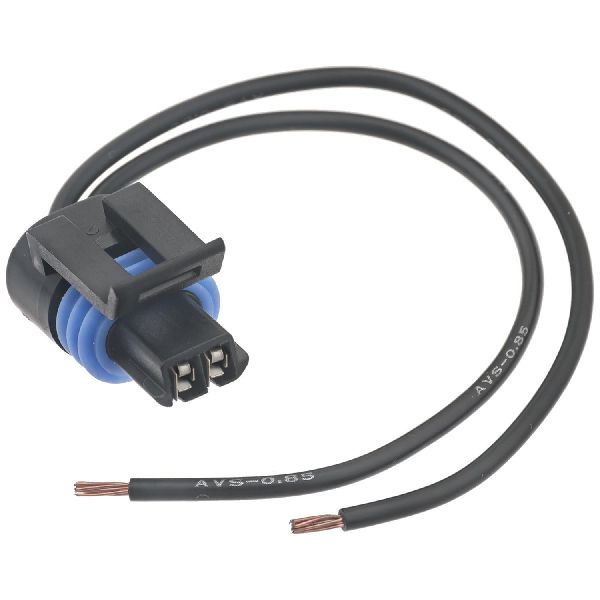
- Camshaft Position Sensor Connector Pins (2.0L Engine) — expected: White wire = Signal; Middle wire = Ground; Other wire = 5V Reference.. Failure: Missing voltage or ground, or a short on the signal wire.
Scan Tool Commands That Help
- Kia GDS/KDS: OCV Activation Test — To force the Oil Control Valve to actuate, confirming if the solenoid is mechanically stuck or electrically unresponsive. This is a primary test after checking oil level.
- Kia GDS/KDS: Resetting Adaptive Values — After replacing components like the OCV, cam phaser, or sensors, this function in the 'Special Function' menu resets the ECM's learned values to adapt to the new parts.
- Kia GDS/KDS: Trigger Module / Flight Record — For intermittent stalling or performance issues related to P0017. This function records sensor data during a drive cycle, allowing a technician to analyze what happens leading up to the fault.
Wiring & Ground Locations
- Engine Ground Harness (2.0L MPI) — Main ground strap for the engine block. Part number 91861K0040 for the 2020+ 2.0L MPI Soul.. A poor engine ground can cause erratic sensor readings and incorrect voltage references for the cam/crank sensors and OCVs, leading to false correlation codes.
- Camshaft Position Sensor Connector — On the top, rear of the valve cover, one for each camshaft.. This is the direct connection point for testing sensor signal, power, and ground. On the 2.0L, the white wire is signal, which can be back-probed for oscilloscope diagnosis.
- ECM Pins (C100-MK Connector) — At the Engine Control Module.. Pin 42 provides the +5V power to both intake and exhaust cam sensors. Pin 10 is a sensor ground. Testing here can confirm if the issue is with the shared power supply or a wiring break between the sensor and ECU.
Real Owner Repair Stories
- Reddit user Fabulous_Day_3200 (2020 Kia Soul, 73k miles) — Check Engine Light with code P0017, but car was running perfectly.
❌ Tried (didn't work) Initially ignored the code as the car ran fine.
✅ What actually fixed it The owner discovered the engine had little to no oil. An oil change and top-off made the code go away, confirming the fault was triggered by a low oil level due to oil consumption. This highlights that low oil is a primary cause and can present before other symptoms appear. - YouTube channel 'Shop Foreman Garage' (2019 Kia Forte with 2.0L Nu Engine (shared with Soul)) — Codes P0017 and P0014, slight lack of power on the high end, but otherwise runs fine.
❌ Tried (didn't work) The mechanic notes that simply replacing the OCV or sensors often fails to fix this specific issue on this engine.
✅ What actually fixed it The mechanic identifies the root cause as a very common failure on the 2.0L Nu engine: the dowel pin on the exhaust camshaft that aligns the CVVT phaser shears or breaks. The definitive fix is to replace the exhaust camshaft and the CVVT phaser assembly together.
Model Year Variations Within This Range
- 2018-2022: The 2018-2019 2.0L engine is a GDI (Gasoline Direct Injection) Nu engine, while the 2020-2022 2.0L is an MPI (Multi-Port Injection) Nu engine. While the fuel system is different, the underlying CVVT system design, including the OCVs, cam phasers, and timing chain assembly, is very similar. Therefore, oil-related failures, OCV issues, and the potential for a sheared camshaft dowel pin are common problems across this entire year range for the 2.0L engine.
Helpful Videos

We Have This Part in Stock


The information in this article is provided for general reference and educational purposes only. Vehicle specifications, procedures, and part compatibility can vary by production date, trim level, and region. Always consult your vehicle's factory service manual and verify part numbers before purchasing or performing repairs. Safety-critical components such as airbags, seat belts, and braking systems should be installed by a qualified professional.
- Kia SOUL:
- 🧭 Diagnostic Flowchart
- 🎬 Helpful Videos
- 🛍️ Shop This Part
- What's Unique About the 2018-2022 Kia SOUL
- Symptoms You May Notice
- Most Likely Causes
- Rare But Worth Checking
- Diagnosis Steps
- Parts You'll Likely Need
- Related Codes That Often Appear With This One
- Technical Service Bulletins (TSBs) & Recalls
- Platform-Specific Known Issues
- Mechanic-Grade Diagnostic Values
- Scan Tool Commands That Help
- Wiring & Ground Locations
- Real Owner Repair Stories
- Model Year Variations Within This Range
- 🎟️ Get 5% Off