

P0017 on 2018-2023 Kia Stinger 3.3T: Crank/Cam Correlation Causes and Fixes
On a 2018-2023 Kia Stinger with the 3.3T engine, code P0017 is most often caused by low or dirty engine oil, or a failing exhaust Oil Control Valve (OCV) on Bank 1 (passenger side). An oil change with an OEM filter and a new OCV are the most common fixes and are relatively inexpensive first steps before exploring more complex issues.
- Always check your engine oil level and condition first. Low or dirty oil is the number one cause of P0017 on the Kia Stinger 3.3T.
- The most likely failed part is the Bank 1 (passenger side) exhaust Oil Control Valve (OCV).
- A cost-free and effective diagnostic step is to swap the suspect OCV or Camshaft Position Sensor with an identical one from a different position to see if the trouble code follows the part.
- Only consider more serious mechanical issues like a stretched timing chain after you have definitively ruled out oil problems, the OCV, and the sensors.
What's Unique About the 2018-2023 Kia Stinger
The 3.3T Lambda II GDI (Gasoline Direct Injection) engine in the Stinger is a sophisticated, twin-turbo powerplant that is highly dependent on clean oil and correct oil pressure for its CVVT system to function properly. While generally robust, timing-related codes like P0017 on this platform are frequently traced back to oil maintenance or failure of an Oil Control Valve (OCV) rather than more severe mechanical issues like a stretched timing chain. Experiences from owners of the Genesis G70, which shares this engine, corroborate that oil issues and OCVs are the primary culprits.
Symptoms You May Notice
- Check Engine Light is on
- Rough idling
- Engine hesitation or stumbling on acceleration
- Reduced engine power
- Poor fuel economy
- Engine stalling in some cases
- Rattling noise from the engine on startup (if related to timing chain tensioner)
- Replacing the camshaft or crankshaft position sensors immediately. While they can fail, the P0017 code indicates a *correlation* issue, which is more often caused by an oil-related or mechanical problem (like the OCV) than a complete sensor failure. Always diagnose by swapping sensors before replacing them.
- Assuming a stretched timing chain without first ruling out oil quality, oil level, and a faulty OCV. The OCV is a much more frequent and less expensive failure point.
Most Likely Causes
- Low or Dirty Engine Oil 🔴 High Probability The CVVT system is hydraulic and highly sensitive to oil level, viscosity, and cleanliness. Sludge or low pressure can prevent the cam phasers from adjusting correctly. GDI engines can be harsh on oil, and many owners report issues when using non-OEM oil filters which may have incorrect bypass pressure ratings.
How to confirm: Check the engine oil dipstick. If the level is below the 'L' mark or the oil is dark, gritty, or past its service interval, this is the first item to address.
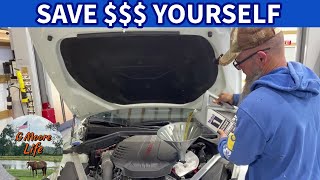
Typical fix: Perform an oil and filter change using a high-quality full synthetic oil of the manufacturer-recommended viscosity (typically 5W-30) and a genuine OEM filter (Part No. 26320-3LTA0). After the oil change, clear the codes 🎬 Watch: A simple walkthrough for a Kia Stinger oil change and drive to see if the issue returns.
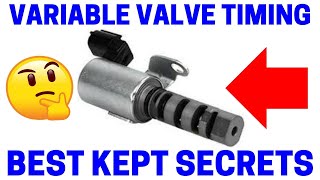
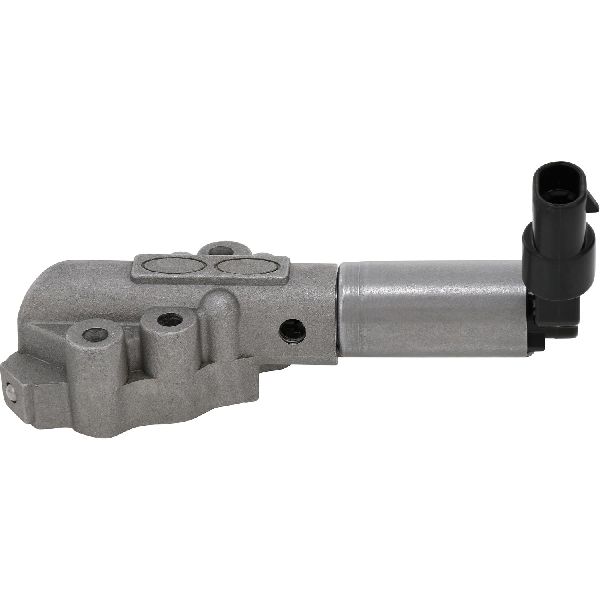
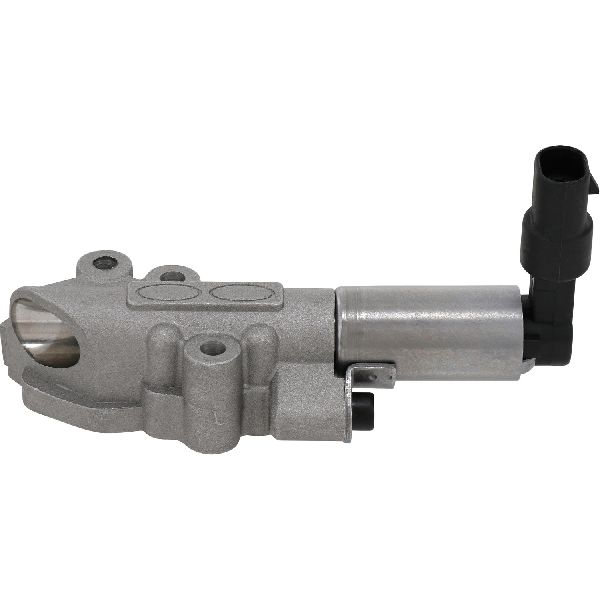
Est. part cost: $50-$90 - Faulty Bank 1 Exhaust Oil Control Valve (OCV) / VVT Solenoid 🔴 High Probability → Shop Engine Variable Valve Timing (VVT) Solenoid The OCV is an electronic solenoid that can get stuck or clogged by oil debris or simply fail electrically over time. It's a very common failure point for CVVT-related codes on this engine platform and its Genesis counterparts.
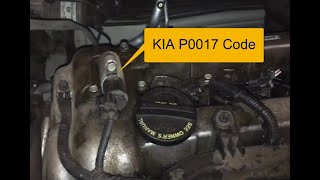
How to confirm: The Bank 1 OCVs are on the front of the passenger-side cylinder head. The exhaust OCV is typically the lower of the two. Swap the Bank 1 exhaust OCV with the intake OCV on the same bank. Clear the codes and drive. If the code changes to P0016 (Intake Cam Correlation), the OCV is confirmed to be faulty. Resistance can also be tested with a multimeter (typically 6.9-7.9 ohms).
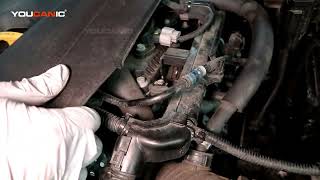
Typical fix: Replace the Bank 1 exhaust Oil Control Valve. The confirmed OEM part number is 24360-3CAB2. 🎬 See how to replace a faulty VVT oil control solenoid
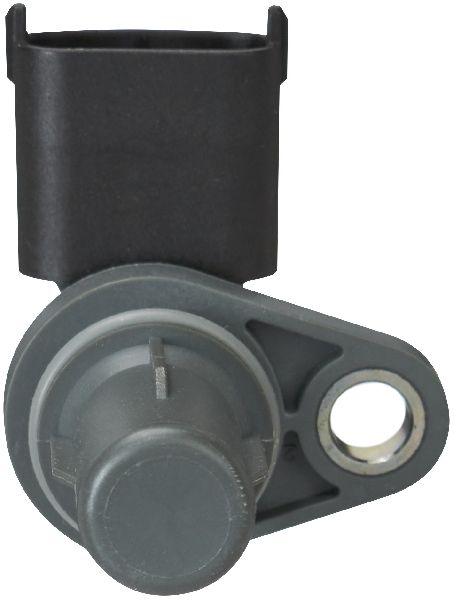
Est. part cost: $70-$120 - Faulty Bank 1 Exhaust Camshaft Position Sensor (CMP) 🟡 Medium Probability → Shop Engine Camshaft Position Sensor
How to confirm: Swap the Bank 1 (passenger side) exhaust CMP sensor with the Bank 2 (driver's side) exhaust CMP sensor. Clear codes and drive. If the code changes to P0019 (Bank 2 Exhaust Correlation), the sensor is faulty.
Typical fix: Replace the Bank 1 exhaust Camshaft Position Sensor. A common OEM part number for this sensor is 39350-3L100, but always verify with VIN.
Est. part cost: $60-$120
Rare But Worth Checking
- Stretched Timing Chain or Failed Tensioner: → Shop Engine Timing Chain While not extremely common on well-maintained Stingers, high mileage or a history of poor oil change intervals can lead to timing chain stretch or tensioner failure. This is a much more significant mechanical issue. A distinct, brief rattling noise on a cold start that lasts 1-3 seconds is a key symptom of a failing hydraulic tensioner bleeding down. NHTSA ODI #11648244 notes a report where P0017 was diagnosed with a timing chain being stretched vigorously alongside excessive oil issues.
- Damaged Camshaft or Crankshaft Reluctor Ring: → Shop Engine Crankshaft The reluctor ring (or tone ring) is what the position sensor reads. If it is damaged, loose, or has sheared its key, it will send incorrect position data to the ECM. A Kia service document notes that incorrect installation of the camshaft reluctor wheel during a previous repair can cause codes like P0017. This is an uncommon failure.
- Clogged CVVT Oil Passages: In cases of severe oil sludging, the small oil passages within the cylinder head that feed the OCVs and cam phasers can become blocked. This prevents the system from operating correctly even with a new OCV. This usually requires more extensive engine cleaning or disassembly.
Diagnosis Steps
- Check Engine Oil: Before any other step, verify the engine oil is full, clean, and of the correct viscosity. Use of an OEM filter is highly recommended. If not, perform an oil and filter change, clear the code, and see if it returns.
- Scan for Other Codes: Use an OBD-II scanner to see if any other codes are present that could provide additional clues, such as P0014 or P0016.
- Inspect Wiring: Visually check the wiring and connectors for the Bank 1 (passenger side) exhaust camshaft position sensor and Oil Control Valve (OCV) for any damage, corrosion, or loose connections.
- Test the Oil Control Valve (OCV): Locate the OCVs on the front of the passenger-side cylinder head. Swap the Bank 1 exhaust OCV with the Bank 1 intake OCV. Clear the codes and run the engine. If the code changes to P0016, the OCV is bad and must be replaced.
- Test the Camshaft Position Sensor (CMP): If the OCV swap does not isolate the problem, swap the Bank 1 exhaust CMP sensor with the Bank 2 exhaust CMP sensor. If the code moves to P0019, the sensor is faulty. 🎬 Watch this guide on troubleshooting P0017 correlation codes
- Mechanical Diagnosis: If all sensors, wiring, and OCVs check out, the problem is likely mechanical. Listen for a startup rattle, which indicates a timing chain tensioner issue. At this point, diagnosis requires checking for timing chain stretch or a damaged phaser, which is best left to a professional.
Parts You'll Likely Need
- Engine Oil and Filter
(OEM #26320-3LTA0 (Filter))— Incorrect oil level or condition is the most frequent cause of all CVVT system faults. Use of a non-OEM filter is a common source of issues.
Trusted brands: Kia/Hyundai (OEM Filter), Pennzoil Platinum Full Synthetic, Mobil 1 Full Synthetic
OEM price range: $60-$100
Aftermarket price range: $40-$80 - Oil Control Valve / VVT Solenoid (Bank 1 Exhaust)
(OEM #24360-3CAB2)— This solenoid is the most common mechanical part to fail, either by getting clogged with sludge or failing electrically.
Trusted brands: Kia (OEM), Hyundai (OEM), Delphi
OEM price range: $70-$120
Aftermarket price range: $40-$80 - Camshaft Position Sensor (Bank 1 Exhaust)
(OEM #39350-3L100 (Verify with VIN))— This sensor provides the position data to the ECM. While less common than the OCV, sensor failure is a possible cause.
Trusted brands: Kia (OEM), Bosch, NTK
OEM price range: $80-$120
Aftermarket price range: $50-$90
Related Codes That Often Appear With This One
- P0016 — This is the correlation code for the intake camshaft on the same bank (Bank 1). If you swap a faulty exhaust OCV with the intake OCV during diagnosis, this code will appear. If seen with P0017 from the start, it may indicate a base timing issue like a jumped chain.
- P0014 — This code for 'Exhaust Camshaft Position Timing - Over-Advanced (Bank 1)' often appears with P0017 because it's triggered by the same faults, such as a stuck OCV or mechanical timing issue. NHTSA ODI #11722774 describes a vehicle that would stall if it went over 3000 RPMs and idle hard with both P0014 and P0017 present.
- P0019 — This is the correlation code for the exhaust camshaft on Bank 2. This code would appear if you swap a faulty Bank 1 exhaust camshaft position sensor to the Bank 2 position as a diagnostic step.
Technical Service Bulletins (TSBs) & Recalls
- While no TSB is directly for P0017 on the Stinger, a related document for other Kia models highlights
Platform-Specific Known Issues
- Post-Oil Change Code: A number of owners on forums like stingerforum.org have reported the P0017 code appearing shortly after an oil change was performed at a non-dealer, quick-lube style shop. This is often attributed to the use of lower-quality aftermarket cartridge oil filters that do not meet the OEM's flow and pressure specifications, disrupting the CVVT system.
- Real-World Repair Story: A user on the Kia Forte forums with a P0017 code was advised by the dealership to replace both intake and exhaust oil control valves after an oil consumption test showed no issues. This highlights the common diagnostic path of suspecting the OCVs directly after oil quality is confirmed.
Mechanic-Grade Diagnostic Values
- Oil Control Valve (OCV) Coil Resistance — expected: 6.9 - 7.9 Ω at 68°F (20°C). Failure: A reading of infinity (open circuit) or near zero (short circuit) indicates a faulty OCV.
- Oil Control Valve (OCV) Mechanical Actuation Test — expected: An audible 'click' as the internal spool valve moves.. Failure: No click or movement when 12V is briefly applied to the terminals indicates the valve is mechanically stuck.
- Scan Tool Live Data: Desired vs. Actual Cam Angle — expected: At idle, the 'Actual' angle should be within a few degrees of the 'Desired' angle (typically near 0).. Failure: If the 'Actual' angle is permanently offset by 5-10+ degrees from the 'Desired' angle at idle, it strongly suggests a stretched timing chain or jumped tooth. If the 'Actual' angle does not change when the 'Desired' angle is commanded to change by the ECM (during revving), the OCV or phaser is stuck.
- Camshaft Position Sensor (CMP) Signal Frequency — expected: Approximately 50 Hz at idle, increasing smoothly and proportionally with engine RPM.. Failure: A signal that is intermittent, drops out, or does not change with RPM points to a faulty sensor or wiring issue.
Scan Tool Commands That Help
- Kia GDS / High-End Bidirectional Scanner: CVVT Actuator Test / VVT Solenoid Command — This function allows the technician to manually command the OCV to activate. By observing the change (or lack thereof) in actual cam angle on live data, you can determine if the OCV and phaser are responding to commands, isolating a stuck valve from an electrical issue.
- Kia GDS / High-End Bidirectional Scanner (e.g., Autel, XTool): Reset Engine Adaptive Values / Reset Learned Values — This function should be performed after replacing major engine components like CVVT assemblies, OCVs, or camshaft sensors. The ECU 'learns' the operating parameters of these parts; resetting these values forces the ECU to re-learn with the new component, preventing performance issues or lingering codes.
Wiring & Ground Locations
- 91860-J5010 — Engine Bay. This is the OEM part number for the complete 'Wiring Assembly-Eng Ground'. A poor engine ground can cause a variety of sensor data issues and electrical noise, potentially contributing to correlation codes. While not a primary cause, ensuring ground connections are clean and tight is a crucial step in diagnosing persistent electrical faults.
Real Owner Repair Stories
- Common report on Genesis G70 / Kia Stinger forums (2018-2023 Kia Stinger or Genesis G70 with 3.3T V6) — Check Engine Light with P0017 comes on, particularly during a cold spell or after using the remote start feature in cold weather.
❌ Tried (didn't work) Clearing the code, only for it to return on the next cold start.
✅ What actually fixed it In many cases, the code is transient and may not return once the weather warms up. However, for others, it was an early indicator of a failing Oil Control Valve (OCV) that was more sensitive to cold temperatures and thicker oil. Replacing the Bank 1 Exhaust OCV (24360-3CAB2) resolved the issue permanently. - Synthesized from multiple Stinger forum threads (2019 Kia Stinger GT 3.3T, approx. 60,000 miles) — P0017 code, slight rough idle, but no major performance loss.
❌ Tried (didn't work) Performing an oil and filter change with high-quality synthetic oil and an OEM filter. The code returned within 50 miles., Swapping the Bank 1 exhaust Camshaft Position Sensor (CMP) with the Bank 2 sensor. The P0017 code returned, and no P0019 appeared, ruling out the sensor.
✅ What actually fixed it The owner swapped the Bank 1 exhaust OCV with the Bank 1 intake OCV. The code immediately changed to P0016 (Intake Correlation). This confirmed the OCV was faulty. A new OEM OCV (24360-3CAB2) was installed in the exhaust position, and the original intake OCV was put back in its place. The codes were cleared, and the issue was resolved. - Cross-Manufacturer Reference (Kia): An owner reported in NHTSA ODI #11695139 that a P0017 code was discovered after a check engine light came on, and a mechanic stated a new engine was required due to damage caused by oil loss. Another report, NHTSA ODI #11711598, mentions that the dealer printout showed timing correlation codes P0014 and P0017, which were associated with loss of power and stalling. Furthermore, NHTSA ODI #11721571 notes that P0017 can appear alongside misfire codes and may indicate progressive cylinder wall scoring from improperly heat-treated rings.
OEM Part Supersession History
39350-3L000→39350-3L100— Part update or consolidation.
Heads up: The OEM parts catalog can be confusing. Part 39350-3L100 is listed as 'Cover Assembly-CMPS' and fits the Stinger. An older part, 39350-3L000, is listed as 'Cover-Cmp'. While 3L100 is the correct part for this vehicle, the similar naming can cause confusion. Always verify the part number with a VIN at a dealership to ensure the correct sensor is purchased.
Model Year Variations Within This Range
- 2018-2023: There are no significant mechanical changes to the 3.3T Lambda II engine's core timing system, CVVT components, or ECU logic related to P0017 across the Stinger's single generation. A facelift for the 2022 model year introduced cosmetic changes and a minor 3hp power bump from a variable exhaust, but the causes and fixes for this code remain identical.
Diagnostic Flowchart
Other Known Issues on This Vehicle
Issues unrelated to this code that are worth knowing about as an owner of this generation:
- Electronic Wastegate Actuator (EWGA) Rattle/Failure 🟠 Medium — A common issue where the wastegate actuator rod develops play, causing a metallic rattle, especially on deceleration or shutdown. Can eventually lead to boost control problems. (Ref: No recall, but dealers can perform an adjustment procedure. In many cases, the turbocharger assembly must be replaced as the actuator is not sold separately.)
- High-Pressure Fuel Pump (HPFP) Failure 🔴 High — A known issue, primarily on the 2.0T but also seen on the 3.3T, where the HPFP can fail, leading to hesitation, rough idle, and loss of power. Codes like P0087/P0088 are common. (Ref: Recall NHTSA 23V634 was issued for the 2.0T Stinger (2018-2021) for a similar issue, but the 3.3T can also experience HPFP failures.)
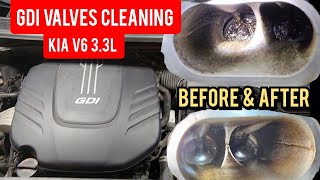
- Intake Valve Carbon Buildup 🟠 Medium — As with most GDI engines, the Lambda II 3.3T is prone to carbon accumulation on the back of the intake valves over time (typically noticeable after 50,000+ miles), which can lead to misfires and reduced performance.
- Failing Oil Pressure Switch 🔴 High — A very common failure where the oil pressure switch fails, causing the oil light to flicker or stay on at warm idle, despite correct oil pressure. The part is cheap, but labor is high due to its location under the intake manifold.
- Cracking Turbo Oil Feed Pipe (Bank 2) 🔴 High — A defect in the left-hand (Bank 2) turbocharger oil feed pipe can cause it to crack and leak oil, potentially leading to engine damage or fire. (Ref: Safety Recall SC300 (NHTSA 24V143000) was issued for 2018-2023 models to replace the pipe. An oil leak from this can cause low oil levels, triggering timing codes.)
Used vs. New Parts: Buying Guide for This Vehicle
When a used part is the smart pick: For purely electronic components like the Camshaft Position Sensor (CMP), a used part from a reputable, low-mileage donor vehicle can be a cost-effective option. Avoid used hydraulic or mechanical parts for this repair.
Donor-vehicle mileage cap: roughly under 50000 miles for the part to have meaningful remaining life.
What to inspect on the donor part:
- Verify the donor vehicle's mileage.
- Inspect the part for any physical damage, cracks, or signs of extreme heat.
- Check electrical connector pins for corrosion, moisture, or damage.
- Ensure no wires are cut or insulation is frayed.
OEM-only on this vehicle (don't cheap out):
- Oil Filter: Aftermarket filters are a known cause of oil pressure-related issues and CVVT codes on this engine. Use only the OEM Hyundai/Kia filter (26320-3LTA0).
- Oil Control Valve (OCV): Given its critical role in the hydraulic CVVT system and high failure rate, using a new OEM part (24360-3CAB2) is strongly recommended to ensure correct operation and longevity.
- Timing Components: If the issue is diagnosed as a stretched chain or failed tensioner, only new OEM parts should be used. This is not a job you want to do twice.
Brands owners have reported issues with on this vehicle:
- Cartridge Oil Filters (any brand other than OEM): Many aftermarket oil filters for this engine do not meet the precise flow and bypass pressure specifications, which can starve the CVVT system and trigger timing codes.
Real Owner Stories
Aggregated from forums and TSBs cited above. Mileages and costs reflect what owners reported in those sources.
2018-2023 Kia Stinger 3.3T
Symptoms: The P0017 code appeared shortly after having an oil change performed at a non-dealer, quick-lube style shop.
What fixed it: Replacing the aftermarket oil filter with a genuine OEM filter and performing a fresh oil change with the correct viscosity.
Source hint: stingerforum.org
Genesis G70 3.3T
Symptoms: Experienced P0019 (the Bank 2 equivalent of P0017) with similar engine performance issues.
What fixed it: Replacement of the Oil Control Valve (OCV) using part number 24360-3CAB2.
Source hint: genesisg70forum.com
Kia Forte
Symptoms: P0017 code present; oil consumption test showed no issues.
What fixed it: The dealership replaced both the intake and exhaust oil control valves.
Source hint: Kia Forte forums
2018-2023 Kia Stinger 3.3T
Symptoms: Multiple codes including P0365 related to the cam sensor circuit.
What fixed it: Checking and replacing the cam and crank sensors as they are externally accessible and more cost-effective than internal engine work.
Source hint: reddit.com/r/kiastinger
Related OBD-II Codes
Frequently Asked Questions
Can using a non-OEM oil filter cause a P0017 code on my 3.3T Stinger?
Is there a specific Oil Control Valve part number I should look for to fix this?
How can I tell if the P0017 code is a sensor failure or a mechanical issue like timing chain stretch?
Does the Genesis G70 share this same P0017 issue with the Stinger?
What is the correct oil viscosity for the 3.3T Lambda II V6 to prevent CVVT issues?
Is there a recall for the high-pressure fuel pump that might be related to my engine hesitation?
Helpful Videos
We Have This Part in Stock

The information in this article is provided for general reference and educational purposes only. Vehicle specifications, procedures, and part compatibility can vary by production date, trim level, and region. Always consult your vehicle's factory service manual and verify part numbers before purchasing or performing repairs. Safety-critical components such as airbags, seat belts, and braking systems should be installed by a qualified professional.
- Kia Stinger:
- 🧭 Diagnostic Flowchart
- 🎬 Helpful Videos
- 🛍️ Shop This Part
- What's Unique About the 2018-2023 Kia Stinger
- Symptoms You May Notice
- Most Likely Causes
- Rare But Worth Checking
- Diagnosis Steps
- Parts You'll Likely Need
- Related Codes That Often Appear With This One
- Technical Service Bulletins (TSBs) & Recalls
- Platform-Specific Known Issues
- Mechanic-Grade Diagnostic Values
- Scan Tool Commands That Help
- Wiring & Ground Locations
- Real Owner Repair Stories
- OEM Part Supersession History
- Model Year Variations Within This Range
- Other Known Issues on This Vehicle
- Used vs. New Parts: Buying Guide for This Vehicle
- Real Owner Stories
- 2018-2023 Kia Stinger 3.3T
- Genesis G70 3.3T
- Kia Forte
- 2018-2023 Kia Stinger 3.3T
- Related OBD-II Codes
- Frequently Asked Questions
- 🎟️ Get 5% Off