

P0017 on 2020-2024 Kia Telluride 3.8L V6: Crankshaft/Camshaft Correlation Causes and Fixes
On a 2020-2024 Kia Telluride, code P0017 is most often caused by low or dirty engine oil, or a failing exhaust Oil Control Valve (OCV) on Bank 1. Always check your oil level and condition first. Many owners report excessive oil consumption, so low oil is a frequent trigger. Replacing the OCV is a common and relatively affordable fix.
- First, check your engine oil. Low or dirty oil is a very common and easy-to-fix cause for P0017.
- The most likely faulty part is the Bank 1 exhaust Oil Control Valve (OCV), located on the rear cylinder bank (firewall side).
- Do not immediately assume a catastrophic timing chain failure. Diagnose the simpler electrical components (OCV, sensors) first.
- If you hear a persistent rattling noise from the engine, a mechanical timing issue is more likely and should be inspected by a professional.
- Use the manufacturer-specified 5W-30 engine oil to ensure the CVVT system operates correctly.
What's Unique About the 2020-2024 Kia Telluride
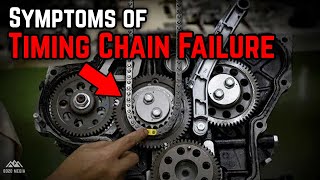
The 3.8L Lambda II V6 (G6DN) in the Telluride is a sophisticated engine with dual continuously variable valve timing (CVVT) controlled by oil pressure. This system is sensitive to oil level and cleanliness; sludge or low oil can disrupt the timing adjustments and trigger correlation codes like P0017. A notable issue for this platform is a tendency for some engines to consume oil between changes, which can lead to a low oil condition that triggers this code even if no leaks are present. While generally more robust than its 4-cylinder cousins, the Lambda V6 family can experience timing chain tensioner noise on startup, indicating potential wear in the timing system 🎬 Watch: Common signs and symptoms of timing chain failure. over time.
Symptoms You May Notice
- Check Engine Light is on
- Rough or unstable idle
- Engine hesitation or loss of power during acceleration
- Engine stalling, especially at low speeds or after coming to a stop
- Rattling noise from the engine on startup or while running
- Reduced fuel economy
- Flashing Check Engine light during rough running events
- Replacing the camshaft position sensor when the actual problem is a faulty or clogged Oil Control Valve (OCV).
- Replacing timing components when the issue is simply low or dirty engine oil, often due to unchecked oil consumption.
Most Likely Causes
- Low or Dirty Engine Oil 🔴 High Probability The CVVT system, which adjusts cam timing, is hydraulically operated. Incorrect oil level or viscosity, or oil contaminated with sludge, can impede the function of the Oil Control Valves (OCVs) and camshaft phasers. This engine is also known for issues with excessive oil consumption, which can lead to a low oil level sufficient to trigger P0017.
How to confirm: Check the engine oil dipstick. The oil level should be between the 'Full' and 'Low' marks. Inspect the oil's color and consistency; if it is black, thick, or gritty, it needs to be changed. It is critical to check the oil level frequently (e.g., every 1,000 miles) to monitor for consumption.
Typical fix: Perform an oil and filter change using the manufacturer-specified oil viscosity (typically 5W-30 for this engine). If consumption is high, you may need to pursue an oil consumption test with a Kia dealer.
Est. part cost: $40-$80 - Failing Oil Control Valve (OCV) / VVT Solenoid 🟡 Medium Probability → Shop Engine Variable Valve Timing (VVT) Solenoid The OCV for the Bank 1 exhaust camshaft can get clogged with debris from the oil or fail electrically. This is a common failure point in many modern engines with VVT. As noted in NHTSA ODI #11288719 for a related Kia model, a mechanic diagnosed P0017 and found a faulty oil control valve as the root cause.
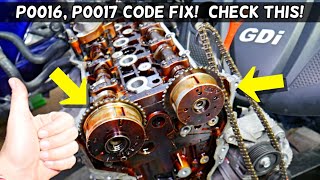
How to confirm: The OCV for Bank 1 Exhaust is located on the valve cover of the rear cylinder bank (near the firewall). A common diagnostic technique is to swap it with the intake OCV on the same bank. If the trouble code changes to P0016 🎬 Watch: How to diagnose P0016 and P0017 correlation codes. (Intake Cam Correlation), the OCV is faulty. You can also test the solenoid's resistance with a multimeter (should be around 6.9-7.9 ohms) or command it with a capable scan tool.
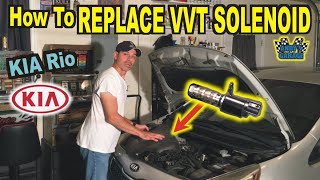
Typical fix: Replace the Bank 1 exhaust Oil Control Valve. The OEM part number is 24360-3CAB2. 🎬 See this walkthrough on replacing a VVT solenoid.
Est. part cost: $70-$150 - Stretched or Damaged Timing Chain / Tensioner ⚪ Low Probability → Shop Engine Timing Chain Over time, timing chains can stretch, and hydraulic tensioners can weaken or fail. This causes slack in the chain, leading to incorrect timing correlation between the crank and cams. While not a widespread issue on this specific model yet due to its age, it's a known potential failure on higher-mileage Lambda engines. In some Kia platforms, P0017 has been associated with more severe internal issues; for instance, NHTSA ODI #11721571 describes a correlation error alongside cylinder wall scoring.
How to confirm: This is a complex diagnosis. A mechanic may listen for a persistent rattling noise from the front of the engine. Confirmation requires removing the timing cover to physically inspect the chain guides for damage and the chain for slack. This is typically only suspected after oil and OCV issues are ruled out.
Typical fix: Replace the timing chains, guides, and tensioners. This is a labor-intensive job.
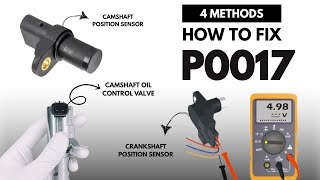
Est. part cost: $400-$800 - Faulty Camshaft or Crankshaft Position Sensor ⚪ Low Probability → Shop Engine Crankshaft Position Sensor While less common than OCV failure, the sensors themselves can fail, sending incorrect data to the ECM. NHTSA ODI #11491984 notes a case where P0017 was stored alongside multiple cylinder misfire codes and low compression.
How to confirm: Inspect the wiring and connector for damage. The sensors can be tested with a multimeter for proper resistance and signal output. Often, if the engine runs perfectly fine with no audible issues, a sensor is a more likely culprit than a mechanical timing problem. However, this is rarely the case for P0017.
Typical fix: Replace the faulty sensor (either the Bank 1 exhaust camshaft position sensor or the crankshaft position sensor).
Est. part cost: $50-$120
Rare But Worth Checking
- Damaged Camshaft Phaser (CVVT Gear): → Shop Engine Camshaft The CVVT actuator gear on the end of the camshaft can fail internally or get stuck, preventing it from adjusting timing correctly. This usually occurs due to severe oil sludging or a major mechanical failure.
- Incorrect Camshaft Reluctor Wheel Position: → Shop Engine Camshaft If the engine was recently replaced or had major internal work, the reluctor wheel (which the camshaft sensor reads) might have been installed incorrectly. TSB PS731 addresses this issue on other Kia models.
Diagnosis Steps
- Check Engine Oil: This is the most critical first step. Verify the oil level is correct and the oil is clean. Due to known oil consumption issues, do not assume the oil level is fine. If low or dirty, perform an oil and filter change, clear the code, and see if it returns.
- Scan for Other Codes: Use an OBD-II scanner to check for any other related trouble codes that could provide more clues.
- Inspect Wiring: Visually inspect the wiring harnesses and connectors for the camshaft position sensor, crankshaft position sensor, and the oil control valve on Bank 1 (rear bank). Look for any signs of damage, corrosion, or loose connections.
- Test the Oil Control Valve (OCV): The easiest test is to swap the Bank 1 exhaust OCV with the Bank 1 intake OCV. Clear the codes and drive the vehicle. If the code changes to P0016, you have confirmed the OCV is the faulty part.
- Test Sensors: If the OCV is not the issue, test the camshaft and crankshaft position sensors using a multimeter to check for correct resistance and signal, or by observing their live data on an advanced scan tool.
- Mechanical Timing Inspection: If all electrical components and sensors check out, the final step is to inspect the mechanical timing. This involves removing the engine's timing cover to check for a stretched timing chain, worn guides, or a failed tensioner. This step is best left to a professional.
Parts You'll Likely Need
- Engine Oil Control Valve (VVT Solenoid), Bank 1 Exhaust
(OEM #24360-3CAB2)— This is the most common component to fail or become clogged, directly causing the P0017 code. It is located on the rear (Bank 1) cylinder head.
Trusted brands: Kia (OEM), Hyundai (OEM), NTK, Dorman
OEM price range: $90-$150
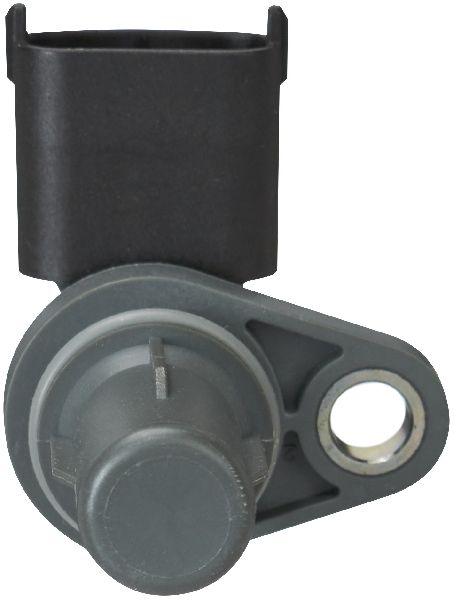
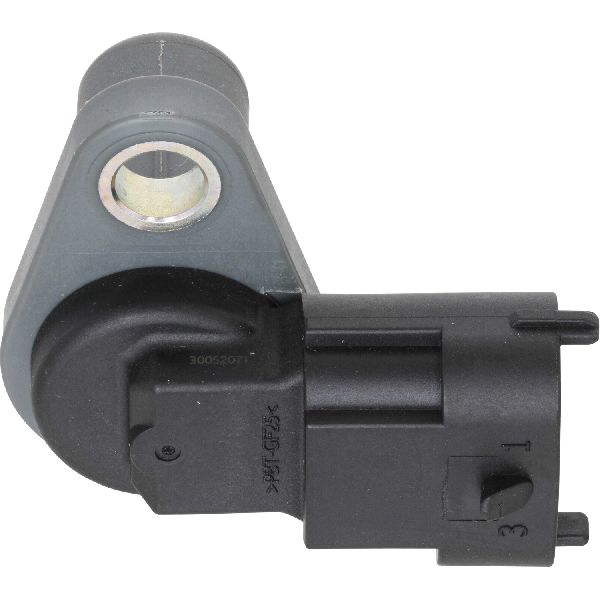
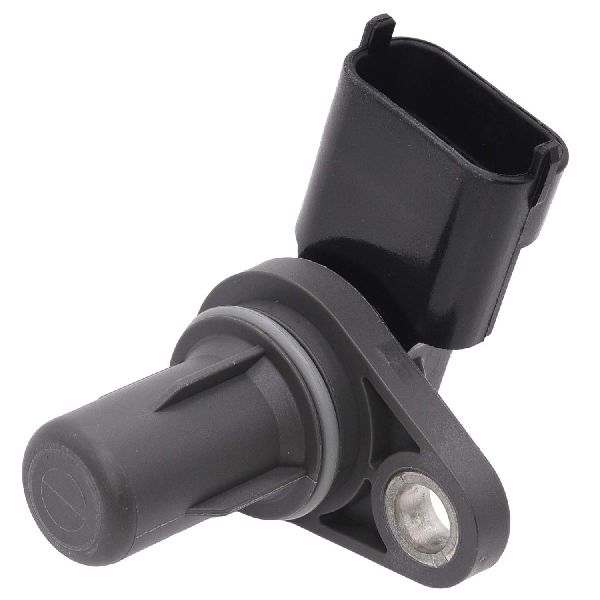
Aftermarket price range: $50-$100 - Camshaft Position Sensor, Bank 1 Exhaust — If the OCV is functioning correctly, a faulty sensor is the next most likely electrical cause, though it is far less common than the OCV.
Trusted brands: Kia (OEM), Bosch, NTK/NGK
OEM price range: $70-$120
Aftermarket price range: $40-$80 - Timing Chain Kit (Chains, Guides, Tensioners) — For higher mileage vehicles or if a rattling noise is present, a stretched chain or failed tensioner is the underlying mechanical cause.
Trusted brands: Kia (OEM)
OEM price range: $400-$800
Aftermarket price range: $250-$500
Related Codes That Often Appear With This One
- P0016 — Crankshaft/Intake Camshaft Correlation, Bank 1. If this appears with P0017, it strongly suggests a base timing issue like a stretched chain affecting both camshafts on Bank 1. It can also appear if you swap a faulty exhaust OCV with the intake OCV during diagnosis.
- P0018 / P0019 — These are the equivalent correlation codes for Bank 2 (front cylinder bank). Seeing codes for both banks points to a problem common to the whole engine, like severe oil pressure loss or a primary timing chain issue.
- P0171 / P0174 — System Too Lean (Bank 1 / Bank 2). While not directly related to timing, issues in the PCV system, which can contribute to oil consumption, may also cause lean codes.
Technical Service Bulletins (TSBs) & Recalls
- Tow Hitch Harness Fire Risk: Recall for 2020-2022 models where debris and moisture can enter the 4-pin tow hitch wiring harness module, causing an electrical short and potential fire, even when the vehicle is parked and off. Owners were advised to park outside until the fix was performed.
- Power Seat Motor Fire Risk: Recall for 2020-2024 models where a stuck power seat slide knob can cause the seat motor to overheat, resulting in a fire risk while parked or driving. Owners are advised to park outside.
- Driveshaft Disengagement / Roll-Away Risk: A recall affecting over 427,000 2020-2024 Tellurides where the intermediate shaft and right front driveshaft may not be fully engaged, potentially allowing the vehicle to roll away while in Park.
- Engine Valve Spring Failure: Safety recall SC296 (NHTSA 24V-154) for a specific production range of 2024 Tellurides due to improperly manufactured engine valve springs that can break, leading to loss of power and potential engine damage.
Platform-Specific Known Issues
- Recall SC296 / NHTSA 24V-154 was issued for some 2024 Tellurides for defective engine valve springs.
Mechanic-Grade Diagnostic Values
- Oil Control Valve (VVT Solenoid) Resistance — expected: 6.9 - 7.9 Ohms. Failure: A reading outside this range indicates an electrical failure of the solenoid coil. This value is from other Kia engines but is a strong reference.
- Scan Tool Live Data: Commanded vs. Actual Camshaft Position — expected: The 'Actual' value should closely track the 'Commanded' value, typically within 1-2 degrees at idle and under load.. Failure: A persistent deviation greater than a few degrees (e.g., 4-5 degrees) that the system cannot correct indicates a mechanical timing issue (stretched chain, phaser problem) rather than a solenoid or oil pressure issue.
- OCV / VVT Solenoid Securing Bolt Torque — expected: 5 to 7 ft-lbs. Failure: N/A. This is an installation specification. Over-torquing can crack the plastic housing of the solenoid, leading to leaks or failure.
Scan Tool Commands That Help
- Kia GDS (Global Diagnostic System) or equivalent: CVVT (OCV) Activation Test — This bidirectional test allows a technician to manually command the Bank 1 exhaust OCV to operate while the engine is running. A change in engine RPM/sound and a corresponding change in the 'Actual' cam angle on live data confirms the solenoid is mechanically working and the oil passages are not blocked.
- Kia GDS (Global Diagnostic System) or equivalent: Crankshaft Position Sensor Relearn Procedure — This procedure may be required after replacing the crankshaft position sensor. The ECM needs to learn the electronic variations of the new sensor to accurately calculate timing. Failure to perform this could cause the P0017 code to persist even with a good part installed.
Wiring & Ground Locations
- Main Engine Ground Strap — Typically a braided cable connecting the engine block or cylinder head directly to the vehicle's chassis/frame rail near the battery.. A poor ground connection can cause erratic voltage signals from the cam and crank sensors, leading to false correlation codes. While not a common cause, it's a critical check for any persistent, hard-to-diagnose electrical issue. Tracing the main negative battery cable to the chassis is the easiest way to find it.
- Fuse Panel Ground Point — On many Kia models, a primary grounding bolt with multiple wires attached is located near the interior fuse panel, often behind the driver's side kick panel.. The Engine Control Module (ECM) and its related sensor circuits rely on clean grounds. A loose or corroded ground point here can cause a variety of difficult-to-trace codes, including P0017.
Real Owner Repair Stories
- NHTSA ODI #11711598 — An owner reported that the check engine light returned with timing correlation codes P0014 and P0017. The event involved a loss of power and stalling, causing the owner to stop driving the vehicle.
- NHTSA ODI #11722774 — A driver experienced a situation where the vehicle would stall out if it went over 3000 RPMs and idled roughly. A code reader identified P0014 and P0017 (crankshaft/camshaft position), requiring a tow to the dealer.
- Mechanics Stack Exchange User (Mercedes-Benz W204 (Illustrates a relevant principle)) — P0017 code, engine choking at idle, vibration, and misfires when at maximum temperature.
❌ Tried (didn't work) Replaced cam and crankshaft position sensors, Checked VVT solenoids, Inspected timing chain and vacuum lines, A shop incorrectly diagnosed it as a failed timing chain and camshafts
✅ What actually fixed it A simple engine oil and filter change. The vehicle had been sitting for nearly a year, causing the oil to degrade and lose its lubricating and heat-dissipating properties, which in turn affected the hydraulic VVT system's operation. - Car Talk Community User (2013 Kia Rio (Illustrates a common diagnostic path)) — Car stalled, P0017 code present.
❌ Tried (didn't work) A general mechanic replaced the crankshaft sensor., Dealer then replaced the camshaft sensor., Dealer then replaced the aftermarket crankshaft sensor with an OEM one.
✅ What actually fixed it The issue was unresolved after multiple sensor replacements, and the next step suggested by forum members and the owner was to inspect/clean the VVT solenoid (OCV), which is the more probable cause after low oil is ruled out. This highlights the common misdiagnosis of immediately replacing sensors.
When the Usual Fixes Don't Work
- While low oil and faulty OCVs are the most common causes, there are documented cases on similar VVT systems where the code persisted after these fixes. In one instance, the root cause was found to be degraded oil from the vehicle sitting for a long period, which was only resolved with a fresh oil and filter change. In another case involving multiple sensor replacements that failed to fix the code, the problem was ultimately traced back to a mechanical timing issue, reinforcing that P0017 is often a mechanical or hydraulic problem, not an electrical sensor failure.
OEM Part Supersession History
24360-3CAB2→No supersession found.— This part number appears to be stable and fits a wide range of Kia/Hyundai vehicles with 3.3L and 3.8L engines from 2014 through 2025, indicating no major revisions.
Model Year Variations Within This Range
- 2020-2024: No significant variations in the 3.8L V6 engine or CVVT system that would affect the diagnosis of P0017 have been documented within this model year range. Changes were primarily cosmetic.
Diagnostic Flowchart
Other Known Issues on This Vehicle
Issues unrelated to this code that are worth knowing about as an owner of this generation:
- Spontaneous Windshield Cracking 🟠 Medium — Very common across 2020-2023 models. Numerous complaints filed with NHTSA and subject of a class-action lawsuit. (Ref: Kia issued a 'goodwill' customer satisfaction initiative in Nov 2019 to replace some windshields, but it was not a formal recall.)
- Tow Hitch Harness Fire Risk 🔴 High — Affects 2020-2022 models equipped with the specific 4-pin genuine Kia tow harness. Potentially over 36,000 vehicles. (Ref: Recall SC247 / NHTSA 22V-626)
- Power Seat Motor Fire Risk 🔴 High — Affects a large population of 2020-2024 models, over 460,000 vehicles recalled. (Ref: Recall SC316 / NHTSA 24V-402)
- Driveshaft Disengagement / Roll-Away Risk 🔴 High — Affects over 427,000 vehicles across the 2020-2024 model years due to a potential assembly error. (Ref: NHTSA Campaign ID: 24V214000)
- Excessive Oil Consumption 🟠 Medium — Widely reported by owners on forums for all model years, though not officially acknowledged as a universal defect by Kia. Onset can be after 60,000-70,000 miles.
- Engine Valve Spring Failure 🔴 High — Affects a specific batch of 2024 models produced between Oct-Dec 2023. (Ref: Recall SC296 / NHTSA 24V-154)
- Transmission Hesitation or Failure 🟠 Medium — Some owners report harsh shifting, lurching, or premature transmission failure, though it is less common than other issues. (Ref: A software update was available for early models with code P0741.)
Used vs. New Parts: Buying Guide for This Vehicle
When a used part is the smart pick: For this specific repair, using used parts is generally not recommended. The cost savings on sensors or solenoids are minimal compared to the risk of installing a part with unknown history and wear.
Donor-vehicle mileage cap: roughly under 60000 miles for the part to have meaningful remaining life.
What to inspect on the donor part:
- If considering a used OCV, inspect the mesh screens for any tears or metallic debris.
- For any used electronic part, check the connector for corrosion, bent pins, or cracks in the plastic housing.
- Never use a junkyard timing chain, tensioner, or guide. These are wear items and must be purchased new.
OEM-only on this vehicle (don't cheap out):
- Timing Chain Kit: Given the labor-intensive nature of the job, using OEM timing components is critical to ensure longevity and prevent catastrophic failure.
- Camshaft Phasers (CVVT Gears): Aftermarket phasers have a poor reputation across many brands. Stick with OEM to ensure correct operation and avoid immediate or premature failure.
Aftermarket brands forum-validated for this vehicle:
- NTK/NGK (For Cam/Crank Sensors)
- Bosch (For Cam/Crank Sensors)
- Dorman (For OCV/VVT Solenoids, though OEM is often preferred)
Brands owners have reported issues with on this vehicle:
- No-name, unbranded sensors and solenoids from online marketplaces. These frequently fail out of the box or have incorrect internal specifications, causing persistent codes.
Real Owner Stories
Aggregated from forums and TSBs cited above. Mileages and costs reflect what owners reported in those sources.
2020 Kia Telluride 3.8L V6
Symptoms: The engine experienced stalling, especially at low speeds or after coming to a stop. The owner discovered the vehicle was consuming significant amounts of oil between changes.
What fixed it: The owner underwent an oil consumption test process with a Kia dealer, which eventually led to a full engine replacement.
Source hint: Reddit: 2020 Kia Telluride - Engine Replacement Due to Excessive Oil Consumption
2020 Kia Telluride 3.8L V6
Symptoms: High oil consumption where the engine loses approximately one quart every 1,000 miles.
What fixed it: Dealers often cite this as 'within spec,' but it requires the owner to frequently top off the oil to prevent timing-related codes like P0017.
Source hint: CarComplaints.com: 2020 Kia Telluride High Oil Consumption
2024 Kia Telluride 3.8L V6
Symptoms: Potential loss of engine power and engine damage due to mechanical failure within the valvetrain.
What fixed it: Replacement of defective engine valve springs under safety recall SC296.
Source hint: SC296 / NHTSA 24V-154
Kia Telluride (General)
Symptoms: The P0017 code appeared intermittently, accompanied by engine vibrations and noise.
What fixed it: The owner suspected an issue with the Oil Control Valve (OCV) or the mechanical timing components.
Source hint: Reddit: p0017 code
Related OBD-II Codes
Frequently Asked Questions
Is there a recall for the 2024 Kia Telluride engine that could cause a P0017 code?
My 2020 Telluride is consuming a lot of oil; could this be why my Check Engine Light is on?
What is the specific part number for the Oil Control Valve if I need to replace it?
Kia told me that losing a quart of oil every 1,000 miles is normal. Is that true for the Telluride?
Can I test the Bank 1 Exhaust OCV myself before buying a new one?
Are there any other fire-related recalls I should be aware of while getting my P0017 code diagnosed?
Helpful Videos
We Have This Part in Stock

The information in this article is provided for general reference and educational purposes only. Vehicle specifications, procedures, and part compatibility can vary by production date, trim level, and region. Always consult your vehicle's factory service manual and verify part numbers before purchasing or performing repairs. Safety-critical components such as airbags, seat belts, and braking systems should be installed by a qualified professional.
- Kia Telluride:
- 🧭 Diagnostic Flowchart
- 🎬 Helpful Videos
- 🛍️ Shop This Part
- What's Unique About the 2020-2024 Kia Telluride
- Symptoms You May Notice
- Most Likely Causes
- Rare But Worth Checking
- Diagnosis Steps
- Parts You'll Likely Need
- Related Codes That Often Appear With This One
- Technical Service Bulletins (TSBs) & Recalls
- Platform-Specific Known Issues
- Mechanic-Grade Diagnostic Values
- Scan Tool Commands That Help
- Wiring & Ground Locations
- Real Owner Repair Stories
- When the Usual Fixes Don't Work
- OEM Part Supersession History
- Model Year Variations Within This Range
- Other Known Issues on This Vehicle
- Used vs. New Parts: Buying Guide for This Vehicle
- Real Owner Stories
- 2020 Kia Telluride 3.8L V6
- 2020 Kia Telluride 3.8L V6
- 2024 Kia Telluride 3.8L V6
- Kia Telluride (General)
- Related OBD-II Codes
- Frequently Asked Questions
- 🎟️ Get 5% Off