

P0017 on 2012-2017 Land Rover Range Rover: Crank-Cam Correlation Causes and Fixes
On 2012-2017 Range Rovers, P0017 almost always points to a mechanical timing issue, specifically stretched timing chains or failed tensioners, a known issue with the 5.0L V8 and 3.0L V6 engines. This is a serious, expensive repair that should not be ignored. The primary symptom is a 2-5 second rattle on cold start.
- P0017 on a 2012-2017 Range Rover is a serious code that often indicates a significant mechanical engine problem.
- The most likely cause is worn timing chain components, a known weak point on the 5.0L V8 and 3.0L V6 engines.
- Do not ignore this code. Continued driving risks severe, catastrophic engine damage if the timing chain fails completely.
- While simple fixes like an oil change or sensor replacement are possible, be prepared for the high cost of a full timing chain service.
What's Unique About the 2012-2017 Land Rover RANGE ROVER
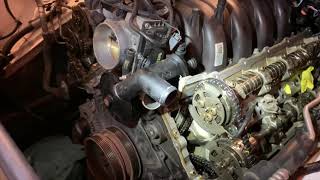
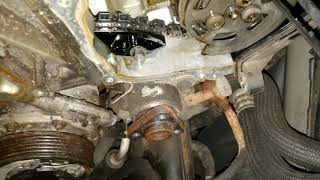
The JLR 5.0L V8 (AJ133) and the related 3.0L V6 (AJ126) engines used in this era of Range Rover are notorious for premature timing chain guide and tensioner wear. Early versions of the guides were made of a soft aluminum that would be worn through by the steel piston of the hydraulic tensioner. 🎬 Watch: How these timing chain guides fail and wear down. This wear causes a loss of hydraulic pressure, allowing the timing chains to go slack. This slack is the most common reason for the ECM to detect a correlation error between the cams and the crank, triggering codes like P0017. It's less often a simple sensor issue and more frequently a sign of this significant underlying mechanical problem, which often appears between 60,000 and 80,000 miles.
Diagnostic Flowchart
Tap your situation to follow the diagnostic path that matches what you're seeing on this vehicle.
Generation note: This range covers the end of the L322 generation (2012) and the majority of the L405 generation (2013-2017). Both generations used the 5.0L V8 and/or the derivative 3.0L V6, which share the same timing chain architecture and potential faults.
Symptoms You May Notice
- Check Engine Light illuminated, often with a 'Restricted Performance' message.
- A distinct metallic rattling or ticking noise from the front of the engine, especially on a cold start, that lasts for 2-5 seconds.
- Engine runs rough or has an unstable idle.
- Noticeable loss of power and acceleration.
- Engine may hesitate or stall.
- Increased oil consumption.
- Replacing only the camshaft or crankshaft position sensors without investigating the mechanical timing system. Many owners and even some shops spend money on sensors when the root cause is worn timing chains or tensioners.
Most Likely Causes
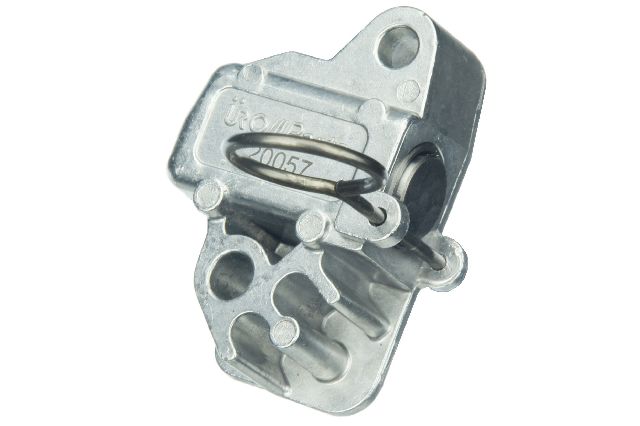
- Worn Timing Chain Tensioners and Guides / Stretched Timing Chain 🔴 High Probability → Shop Engine Timing Chain The original-spec timing chain tensioners for the 5.0L V8 and 3.0L V6 are a known failure point. The tensioner piston is made of steel, which wears a groove into the softer aluminum guide, leading to a loss of hydraulic pressure and chain slack. JLR later updated the guides with steel reinforcements.
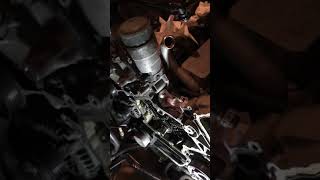
How to confirm: A physical inspection is required, which involves significant engine disassembly to access the timing cover. A mechanic will listen for the characteristic chain rattle on a cold start 🎬 Listen to the rattle and see the tensioner replacement process., which is a primary indicator.
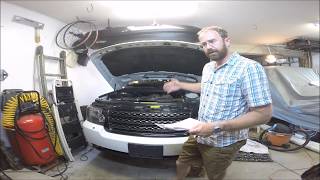
Typical fix: Replace all timing chains, tensioners, and guides with updated parts. This is a major service often requiring 20+ labor hours. 🎬 See a complete walkthrough of the timing chain and guide repair. It is critical to replace the full kit, not just the failed components.
Est. part cost: $800-$1500 for a full kit - Low or Dirty Engine Oil 🟡 Medium Probability The Variable Valve Timing (VVT) system is hydraulically operated by engine oil pressure. If the oil is low, dirty, or the wrong viscosity, the VVT phasers cannot operate correctly, leading to timing correlation codes. Extended oil change intervals can accelerate sludge buildup, clogging VVT solenoids and tensioners.
How to confirm: Check the oil level and condition. If it's low or looks like sludge, this is a likely contributor. An oil change is the first and cheapest diagnostic step.
Typical fix: Perform an engine oil and filter change using the manufacturer-specified oil (e.g., Castrol Edge Synthetic).
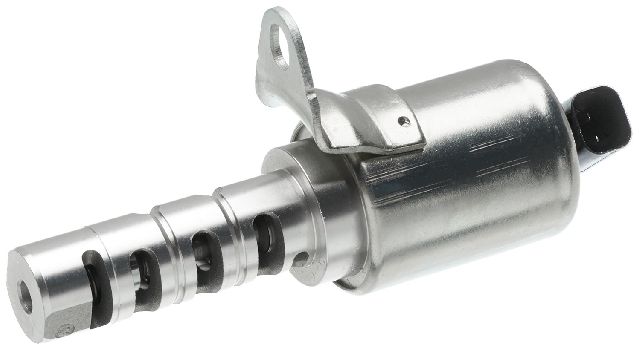
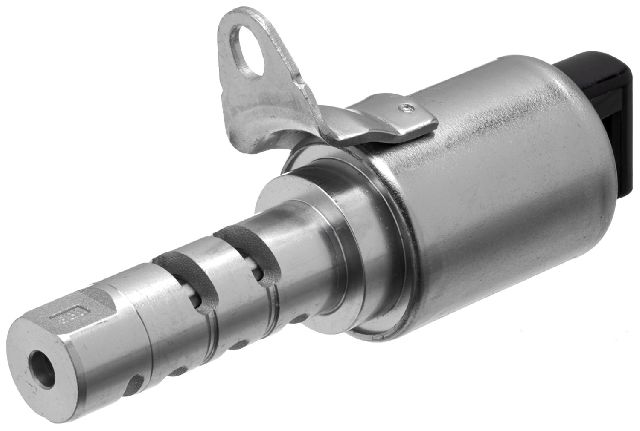
Est. part cost: $100-$200 - Faulty VVT Solenoid (Oil Control Valve) 🟡 Medium Probability The solenoid can get clogged with sludge from dirty oil or fail electronically, preventing it from directing oil to the cam phaser. A service bulletin (SSM74161) noted a batch of faulty solenoids manufactured before August 2018 that were out of spec.
How to confirm: A mechanic can command the solenoid with a diagnostic tool to check for response. It can also be removed for inspection and cleaning, or swapped with the one from the other bank to see if the code follows. Resistance can be measured; a good solenoid should read around 7-12 Ohms.
Typical fix: Replace the VVT solenoid for Bank 1 Exhaust.
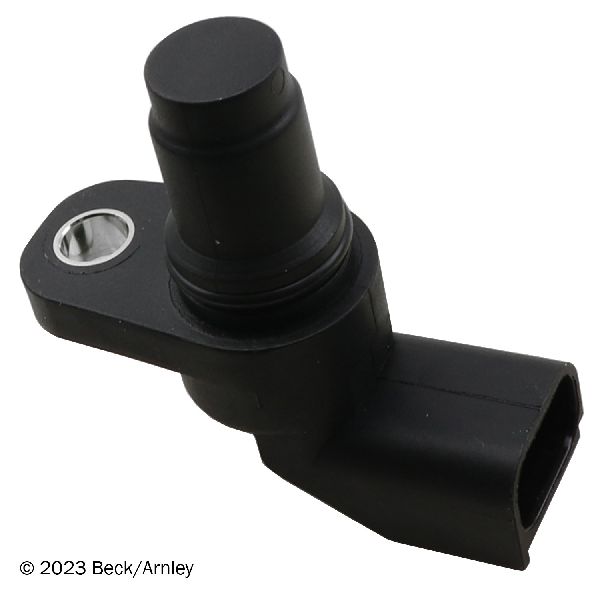
Est. part cost: $70-$150 - Faulty Camshaft Position Sensor ⚪ Low Probability → Shop Engine Camshaft Position Sensor While sensors can fail, on this platform it's a far less frequent cause for P0017 than mechanical timing issues. Many owners mistakenly replace sensors when the root cause is mechanical.
How to confirm: Swap the Bank 1 exhaust camshaft sensor with the Bank 2 exhaust sensor. Clear codes and drive. If the code changes to P0019 (Bank 2 Exhaust), the sensor is bad.
Typical fix: Replace the Bank 1 exhaust camshaft position sensor.
Est. part cost: $50-$120
Rare But Worth Checking
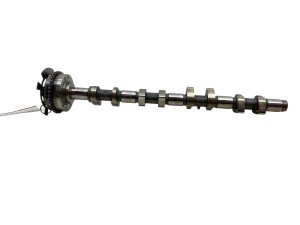
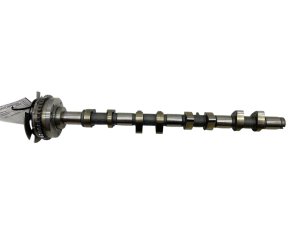
- Failed VVT Phaser (Actuator): The mechanical gear on the end of the camshaft can fail internally or break its dowel pin, but this is much less common than tensioner or solenoid issues. It is typically replaced during a full timing chain service.
- Faulty Crankshaft Position Sensor: → Shop Engine Crankshaft Position Sensor A failing crankshaft sensor can cause a variety of timing codes, but it's less likely to isolate to just P0017 without other codes present. A Reddit user reported replacing this sensor did not fix the P0017 code when the timing had jumped.
Diagnosis Steps
- Check engine oil level and condition. Top up or change the oil and filter if necessary. Use only the manufacturer-specified grade. Clear codes and see if P0017 returns.
- Use an OBD-II scanner to check for any other stored trouble codes, particularly P0016, P0018, or P0019.
- On a cold engine, start the vehicle and listen carefully for a metallic rattling sound from the front of the engine lasting 2-5 seconds. This is a strong indicator of loose timing chains.
- If no rattle is present, consider swapping the Bank 1 exhaust VVT solenoid with the Bank 2 solenoid. Clear codes and see if the fault moves to P0019. If it does, the solenoid is faulty.
- As a next step, swap the Bank 1 exhaust camshaft position sensor with the sensor from Bank 2. If the code changes to P0019, the sensor is faulty.
- If the above steps do not resolve the code, especially if a startup rattle is present, the vehicle must be inspected by a professional for mechanical timing issues. This involves removing the engine's front cover to check the timing chains, guides, and tensioners for slack and wear. This is a labor-intensive process.
Parts You'll Likely Need
- Timing Chain Kit
(OEM #The primary tensioners have been updated. The latest part number is LR095472, which replaces the older LR051008.)— This is the most common root cause of P0017 on these engines. A full kit includes the chains, guides, and the crucial updated tensioners.
Trusted brands: Land Rover (OEM), INA, Britpart
OEM price range: $1000-$1500
Aftermarket price range: $700-$1000 - VVT Solenoid / Oil Control Valve
(OEM #LR024990 (Varies by specific engine, verify with VIN))— Can become clogged or fail, preventing correct camshaft adjustment.
Trusted brands: Land Rover (OEM), Bosch
OEM price range: $120-$200
Aftermarket price range: $70-$150 - Camshaft Position Sensor
(OEM #LR024138 (Varies by specific engine, verify with VIN))— A possible but less common cause. It's the sensor that reports the camshaft's position to the ECM.
Trusted brands: Land Rover (OEM), Bosch, Denso
OEM price range: $80-$150
Aftermarket price range: $40-$90
Related Codes That Often Appear With This One
- P0016 — P0016 is the same correlation error but for the intake camshaft on Bank 1. If both appear, it strongly suggests a base timing issue (e.g., jumped chain) affecting the entire bank.
- P0341 — This is a general circuit performance code for the camshaft position sensor. TSB LTB00916NAS3 lists it as a possible companion code to P0017 when timing components are failing.
- P0018 / P0019 — These are the equivalent correlation codes for Bank 2 (driver's side). Seeing codes for both banks simultaneously points to a severe, systemic problem like major chain stretch or oil pressure issues, and may occur after a major repair if timing is set incorrectly.
Technical Service Bulletins (TSBs) & Recalls
- LTB00916NAS3: Mentions that a rattle from the engine compartment and codes P0016, P0017, P0026, or P0341 may be logged, pointing towards timing component issues.
Platform-Specific Known Issues
- A known issue with the 5.0L V8 and 3.0L V6 engines is the premature failure of the timing chain tensioners and plastic/aluminum guides. Land Rover issued Technical Service Bulletin #LTB00916NAS3 which mentions that DTC P0017 can be logged due to this condition.
- Another related TSB, LTB00474NAS3, specifically addresses a 'rattle noise on cold start' for 2010-2012 5.0L engines, identifying the cause as wear in the timing chain components.
- Real Owner Experience: A user on landroverworld.org with a 2012 LR4 (same 5.0L engine) reported a check engine light and restricted operation at 75,000 miles. The codes were P0016 and P0017, accompanied by an engine knock. The community immediately diagnosed it as failed timing chain tensioners, a common fate for these engines around that mileage.
Mechanic-Grade Diagnostic Values
- VVT (Oil Control Valve) Solenoid Resistance — expected: 7 to 12 Ohms.. Failure: A reading of 0 Ohms indicates a short, while an infinite (O.L.) reading means an open circuit. A significantly higher reading, like 26 Ohms, also indicates failure.
- VVT Solenoid Harness Voltage (Key On, Engine Off) — expected: Battery voltage (approx. 12V) should be present at the harness connector.. Failure: No voltage suggests a wiring issue, blown fuse, or a problem with the Engine Control Module (ECM).
- Camshaft Position Sensor Signal Voltage — expected: Approximately 4.6 volts was measured on a similar Land Rover engine.. Failure: A fluctuating or absent voltage signal when the engine is running points to a sensor or wiring fault.
Scan Tool Commands That Help
- JLR SDD (Symptom Driven Diagnostics): Service Functions - Engine Power Supply - Bridging System — The JLR SDD software, used for models up to 2017, has functions to test and reset engine components. A technician can use it to command the VVT solenoids to actuate, confirming if they are responding mechanically to electrical input, which helps differentiate a stuck solenoid from an electrical fault.
- Advanced OBD-II Scanners (e.g., Autel MaxiDAS): Live Data - Commanded vs. Actual Camshaft Angle — This is critical for diagnosis. A technician can monitor the camshaft angle requested by the ECM versus the actual angle reported by the sensor. If the actual angle does not match the commanded angle, it confirms a problem with the VVT system's ability to adjust timing, whether due to oil pressure, a bad solenoid, or a faulty phaser.
Wiring & Ground Locations
- Main Engine Ground Points — On Land Rover V8s, primary ground straps typically run from the battery negative terminal to the frame rail, from the starter motor bolt to the frame, and from the cylinder head to the body/firewall.. A poor engine ground can cause erratic behavior in sensors and solenoids, including the crankshaft and camshaft position sensors. While not a common cause for an isolated P0017, verifying the main engine ground connection is a fundamental step in diagnosing any electrical fault.
Real Owner Repair Stories
- Jaguar Forums user (Range Rover with 5.0L Supercharged V8 (AJ133 engine)) — P0017 error code (exhaust crank/cam correlation error) after an engine rebuild. Live data showed Bank 1 exhaust cam timing jumping between 120 and 150 degrees at idle, when it should be steady at 120.
❌ Tried (didn't work) The engine was timed correctly according to the workshop manual., Sensors and solenoids were swapped between banks to rule them out.
✅ What actually fixed it The issue was traced to a faulty VVT actuator (phaser) on the Bank 1 exhaust camshaft. Even though the timing was set correctly, the phaser itself was not functioning properly, causing the erratic timing readings. Replacing the VVT actuator resolved the code. - Reddit user on r/MechanicAdvice (Vehicle with P0017 (details not specified, but common Hyundai/Kia issue)) — Car ran poorly after oil level became very low. P0017 code present.
❌ Tried (didn't work) Cleaned and tested VVT solenoids (oil control valves).
✅ What actually fixed it A physical inspection revealed the timing had jumped two teeth. The fix required replacing the timing chain, tensioners, both VVT sprockets (phasers), and the exhaust camshaft because its dowel pin had broken off. The code was resolved after the complete timing job.
OEM Part Supersession History
LR051008→LR095472— This is the part number for the primary timing chain tensioner. The original design (LR051008) was prone to failure. The updated part (LR095472) is part of the fix for the timing chain rattle and associated codes.N/A→N/A— The timing chain guides were updated around 2015. The original aluminum guides were susceptible to wear from the steel tensioner piston. The revised guides feature a steel indent to prevent this wear.
Heads up: When performing a timing chain service on an earlier engine, it is critical to use the updated guide design to prevent a repeat failure.
Model Year Variations Within This Range
- 2012-c.2015: Engines produced before roughly 2015 were fitted with aluminum timing chain guides that are prone to wear from the steel tensioner piston. Later models used an updated guide with a steel reinforcement to mitigate this issue.
Helpful Videos
Used OEM Parts in Stock
New Aftermarket Parts Available


The information in this article is provided for general reference and educational purposes only. Vehicle specifications, procedures, and part compatibility can vary by production date, trim level, and region. Always consult your vehicle's factory service manual and verify part numbers before purchasing or performing repairs. Safety-critical components such as airbags, seat belts, and braking systems should be installed by a qualified professional.
- Land Rover RANGE ROVER:
- 🧭 Diagnostic Flowchart
- 🎬 Helpful Videos
- 🛍️ Shop This Part
- What's Unique About the 2012-2017 Land Rover RANGE ROVER
- Symptoms You May Notice
- Most Likely Causes
- Rare But Worth Checking
- Diagnosis Steps
- Parts You'll Likely Need
- Related Codes That Often Appear With This One
- Technical Service Bulletins (TSBs) & Recalls
- Platform-Specific Known Issues
- Mechanic-Grade Diagnostic Values
- Scan Tool Commands That Help
- Wiring & Ground Locations
- Real Owner Repair Stories
- OEM Part Supersession History
- Model Year Variations Within This Range
- 🎟️ Get 5% Off