

P0017 on 2015-2019 Lincoln MKT: Crank/Cam Correlation Causes and Fixes
P0017 on a Lincoln MKT usually points to a problem with the variable camshaft timing (VCT) system, often a sticking VCT solenoid due to dirty oil, as noted in Ford TSBs. However, it can also indicate a more serious stretched timing chain, a known issue on these engines, particularly the 3.5L EcoBoost. An oil change and solenoid replacement is a possible first step, but a timing chain replacement is a more involved and expensive repair often costing over $2,000.
- P0017 on a 2015-2019 Lincoln MKT indicates the exhaust camshaft on Bank 1 is out of sync with the crankshaft.
- Always check the engine oil level and condition first; low or dirty oil is a primary cause of VCT system problems.
- The most likely culprits are a sticking VCT solenoid or a stretched timing chain.
- A rattling noise from the engine on startup is a strong sign of a timing chain problem that should not be ignored.
- Due to the risk of severe engine damage, it is critical to diagnose the issue correctly and not simply replace sensors.
What's Unique About the 2015-2019 Lincoln MKT
The 3.5L and 3.7L V6 engines in the Lincoln MKT are known for their Variable Camshaft Timing (VCT) systems being sensitive to oil condition. Multiple Technical Service Bulletins (TSBs) from Ford/Lincoln highlight that debris in the oil can cause VCT solenoids to stick, triggering this code. Furthermore, the 3.5L EcoBoost variant, in particular, has a documented history of timing chain stretch. This is exacerbated by the engine's turbocharged design, which leads to higher operating temperatures and faster oil degradation, increasing wear on timing components. Infrequent oil changes are a primary contributor to both solenoid and chain failures.
Diagnostic Flowchart
Tap your situation to follow the diagnostic path that matches what you're seeing on this vehicle.
Symptoms You May Notice
- Check Engine Light is on
- Rough or uneven idle
- Engine rattling noise, especially on cold startup
- Poor acceleration and loss of power
- Engine stalling at low speeds
- Reduced fuel economy
- Hesitation when accelerating
- Replacing the camshaft position sensor or crankshaft position sensor without first checking the oil condition, VCT solenoids, or for mechanical timing issues. The code indicates a correlation problem, which is more often mechanical or hydraulic (oil pressure) than a sensor failure.
Most Likely Causes
- Low or Dirty Engine Oil 🔴 High Probability The VCT system is hydraulically operated and highly sensitive to oil pressure and cleanliness. TSBs SSM 48423 and SSM 47170 directly state that debris can cause VCT solenoids to stick. This is often the first and most recommended check.
How to confirm: Check the oil level on the dipstick and inspect its condition. If the oil is low, dark, or sludgy, it needs to be changed. Many forum users report this code appearing after going too long on an oil change interval.
Typical fix: Perform an engine oil and filter change using the manufacturer-specified grade of oil. Some owners use an engine flush product before the oil change, then clear the codes.
Est. part cost: $50-$100 - Failing VCT Solenoid (Bank 1 Exhaust) 🔴 High Probability → Shop Engine Variable Valve Timing (VVT) Solenoid As noted in TSBs, these solenoids can stick due to oil debris. They are a very common failure point for this code, sometimes failing intermittently when hot. TSB SSM 48423 even suggests cycling the solenoid with a scan tool 10 times to try and clear debris before replacement.
How to confirm: A mechanic can use a scan tool to command the solenoid on and off to check for response. Another common DIY method is to swap the exhaust solenoid with the intake solenoid on the same bank (Bank 1) and see if the code changes to P0016 (Intake correlation). If it does, the solenoid is confirmed bad.
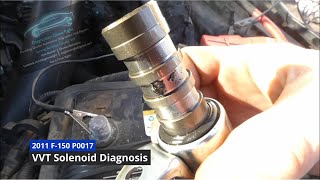
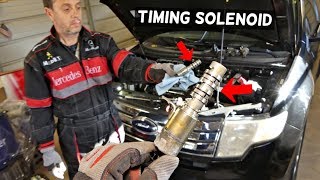
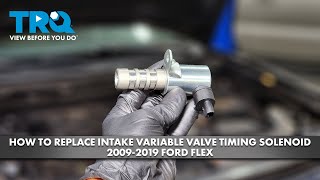
Typical fix: Replace the Bank 1 exhaust VCT solenoid. It is located on the valve cover. 🎬 See how to locate and replace the VVT solenoids. The correct part number for the Bank 1 (right side) exhaust solenoid is often AT4Z-6M280-C.
Est. part cost: $40-$120 - Stretched Timing Chain 🟡 Medium Probability → Shop Engine Timing Chain The 3.5L EcoBoost engine, in particular, is known to have issues with timing chain stretch over time, which creates slack and alters the mechanical timing between the crank and cams. This is often the root cause if solenoids and oil are good. The 3.7L can also suffer timing component failure, though less commonly from chain stretch.
How to confirm: A startup rattle is a strong indicator. A mechanic will use a scan tool to check cam/crank deviation PIDs (Cam Error). A deviation of more than +/- 5 degrees at idle often confirms a stretched chain. Visual inspection of the tensioner may also be possible by removing the oil fill cap or valve cover, where seeing many teeth exposed on the tensioner indicates significant chain stretch.
Typical fix: Replace the timing chain, guides, and tensioners. This is a labor-intensive job often costing $2000-$4000. It is highly recommended to replace the cam phasers and water pump at the same time.
Est. part cost: $400-$900 for a full kit - Failing Camshaft Phaser (Bank 1 Exhaust) ⚪ Low Probability → Shop Engine Camshaft The phaser is the mechanical gear that the VCT solenoid controls. It can fail by getting stuck, breaking internally, or having its locking pin fail, often due to the same oiling issues that affect the solenoids.
How to confirm: Diagnosis typically occurs after confirming the VCT solenoid is working correctly. A scan tool may show the actual cam angle is not matching the desired angle, even when the solenoid is commanded. This is often diagnosed during a timing chain inspection.
Typical fix: Replace the camshaft phaser. This is almost always done during a timing chain replacement job.
Est. part cost: $150-$300
Rare But Worth Checking
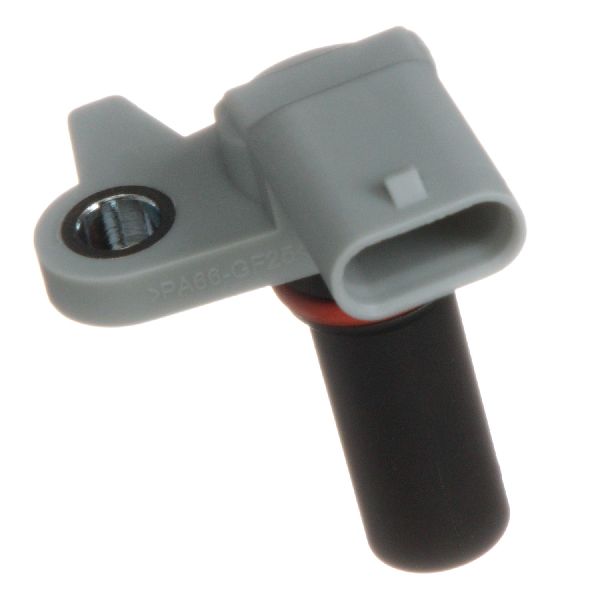
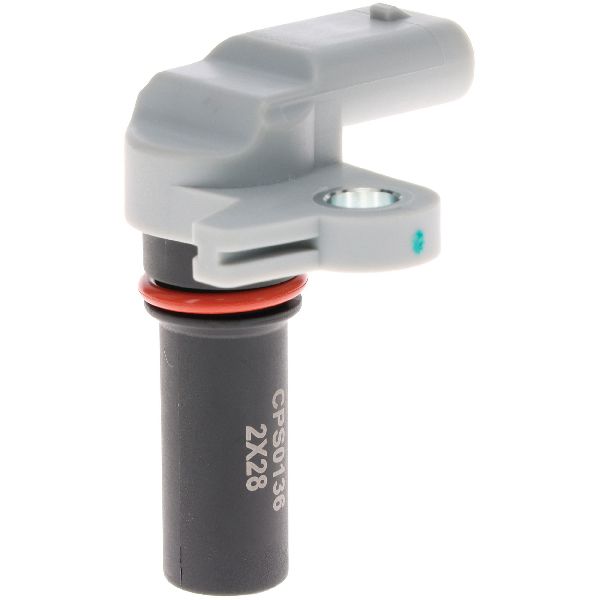
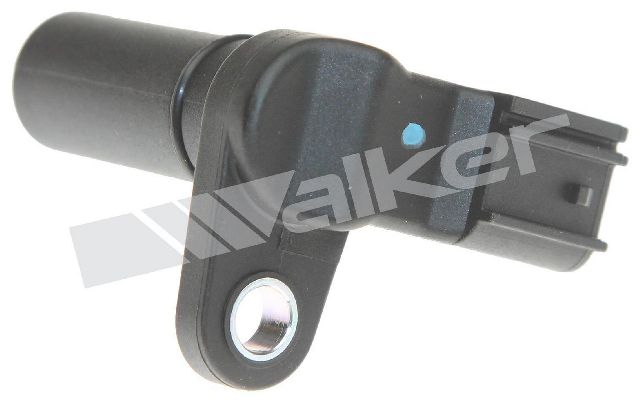
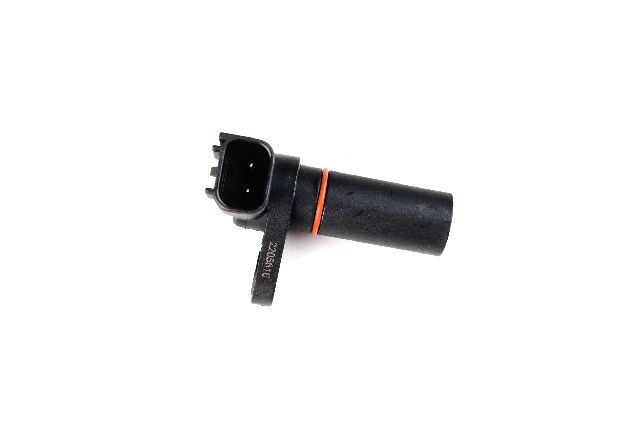
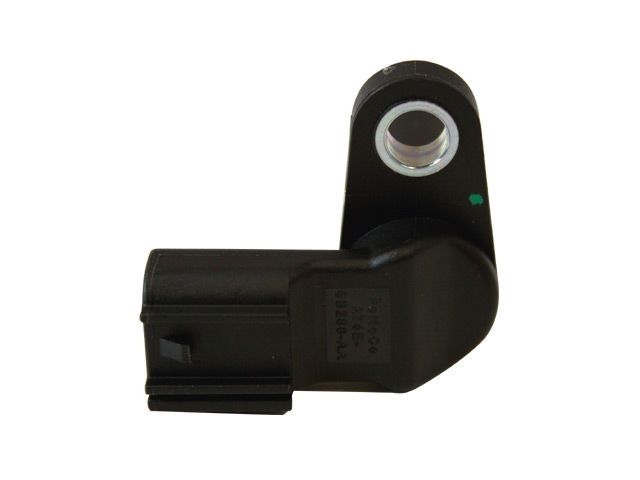
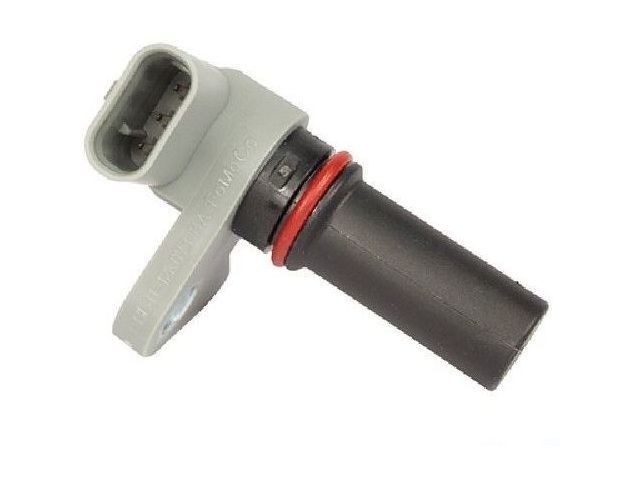
- Faulty Camshaft or Crankshaft Position Sensor: → Shop Engine Crankshaft Position Sensor While possible, it's less common for a sensor to fail in a way that produces only a correlation code. Usually, a bad sensor will trigger its own specific circuit code. Owners often replace these sensors first without success.
- Damaged Wiring or Connectors: An intermittent signal from the cam or crank sensor due to a damaged wire or loose connection can cause a correlation fault. This should be checked before replacing expensive components, especially the harness near the sensors.
- Failed Timing Chain Idler Gear: → Shop Engine Timing Chain On the 3.7L V6 specifically, there are documented cases where the bearing for a timing chain idler gear fails, causing timing to jump and triggering a P0017 code.
Diagnosis Steps
- Verify the engine oil level and condition. If low or dirty, perform an oil and filter change and clear the codes to see if the issue returns. This is the most common first step recommended.
- Use a professional scan tool to read freeze frame data and monitor live data. Look for 🎬 Watch: A professional diagnostic walkthrough for the P0017 code. PIDs like 'VCT_EXH_CAM_ERR1' (Bank 1 Exhaust Cam Error). A value consistently greater than +5 or less than -5 degrees at idle strongly suggests a mechanical timing issue (stretched chain).
- Command the Bank 1 Exhaust VCT solenoid on and off using the scan tool. Listen for a click and watch for a change in engine idle. Per TSB SSM 48423, cycle it 10 times to attempt to clear debris.
- If the solenoid does not respond, inspect the wiring and connector for damage or corrosion.
- If wiring is good, swap the Bank 1 exhaust VCT solenoid with the Bank 1 intake VCT solenoid. Clear the codes and run the engine. If the code changes to P0016, the solenoid is faulty and needs replacement.
- If the solenoid is confirmed to be working and cam error PIDs are out of spec, the problem is mechanical. Listen for a rattling noise on startup, which indicates a timing chain issue.
- The final step involves inspecting the timing chain for stretch and checking the cam phasers, which requires significant engine disassembly (removing the front timing cover) and should be performed by a professional.
Parts You'll Likely Need
- Variable Camshaft Timing (VCT) Solenoid
(OEM #AT4Z-6M280-C (Bank 1/Right Side Exhaust))— This is the most common and accessible part to fail, often due to oil contamination as cited in manufacturer TSBs. Note: AT4Z-6M280-A is for Bank 1 Intake/Bank 2 Exhaust, and AT4Z-6M280-B is for Bank 2 Intake.
Trusted brands: Motorcraft, Dorman
OEM price range: $70-$120
Aftermarket price range: $40-$80 - Timing Chain Kit
(OEM #HL3Z-6B274-A (Example for 2017+ F-150, verify for MKT))— A stretched timing chain is a well-documented cause for this code on the 3.5L EcoBoost engine. A full kit includes the chain(s), guides, and tensioners.
Trusted brands: Motorcraft, Cloyes
OEM price range: $500-$900
Aftermarket price range: $300-$600
Related Codes That Often Appear With This One
- P0016 — Crankshaft/Camshaft Correlation for Bank 1, Intake Cam. If seen with P0017, it strongly suggests a base timing issue on Bank 1, such as a stretched chain or a problem with a cam phaser.
- P0018 / P0019 — These are the equivalent correlation codes for Bank 2. Seeing codes for both banks simultaneously points towards a systemic problem like a stretched primary timing chain, low oil pressure, or a failing crankshaft reluctor wheel.
- P0300, P0301, P0302, P0303 — Random or specific misfire codes for Bank 1 cylinders. If the cam timing is incorrect, it can lead to misfires on that bank. A flashing check engine light often accompanies these codes.
Technical Service Bulletins (TSBs) & Recalls
- SSM 48423: Notes that various VCT codes including P0017 can be caused by debris sticking the solenoid and advises cycling the solenoid via scan tool before replacement.
- SSM 47170: An earlier version of SSM 48423 with a similar message about debris in VCT solenoids.
- TSB 16-0093 / 16-0038: For certain 2016 models with very low mileage, instructs dealers to replace the VCT solenoid corresponding to the stored code.
- SSM 54366: A general TSB for various VCT codes on 2015-2021 vehicles, pointing technicians to specific diagnostic procedures in the service manual.
Platform-Specific Known Issues
- TSB SSM 48423 and SSM 47170 note that on some 2015-2020 Ford and Lincoln vehicles, P0017 (and other related codes) may be caused by small debris causing the VCT solenoid to stick. The TSB recommends cycling the solenoid with a scan tool before replacement.
- The 3.5L EcoBoost engine family has a known tendency for the primary timing chain to stretch over time, which directly causes cam/crank correlation codes like P0017. This is often accompanied by a rattling noise on a cold start and is considered a common repair around 100,000 miles.
- TSB 16-0093 (supersedes 16-0038) was issued for some 2016 models with low mileage (<2000 miles) exhibiting VCT codes, instructing dealers to replace the affected solenoid.
Mechanic-Grade Diagnostic Values
- VCT Solenoid Internal Resistance — expected: 8 to 12 Ohms. Failure: A reading outside of this range indicates a faulty solenoid coil.
- Camshaft Position Sensor (3-wire Hall Effect) Voltage - Power Wire — expected: ~5 Volts with key on, engine off (KOEO). Failure: No voltage or significantly lower voltage indicates a wiring or PCM issue.
- Camshaft Position Sensor (3-wire Hall Effect) Voltage - Signal Wire — expected: ~4 to 5 Volts (KOEO), which drops to near 0V as metal passes the sensor.. Failure: Voltage that doesn't change or is stuck at 0V or 5V suggests a failed sensor or wiring issue.
- Scan Tool PID: VCT_ADVERR (VCT Advance Error) — expected: Should hover around 0° at stable idle.. Failure: A consistent deviation greater than +/- 5° indicates a mechanical timing or phaser problem.
Scan Tool Commands That Help
- Ford IDS (or equivalent high-end scanner): VCT Solenoid On/Off Command (Duty Cycle Control) — Used to manually activate a specific VCT solenoid while monitoring engine RPM or cam error PIDs. A lack of change in engine behavior or PID values when the solenoid is commanded suggests a stuck/failed solenoid or a clogged oil passage.
- Ford IDS (or equivalent high-end scanner): Datalogger for VCT PIDs — Record PIDs like VCT_ADV, VCT_ADVERR, and VCT_DC during a test drive to capture intermittent faults. This helps correlate a drivability complaint with a specific VCT system malfunction that may not be present at idle.
Wiring & Ground Locations
- Power Distribution Box — Located in the engine compartment on the driver's side.. This box contains fuses and relays that supply power to the PCM and engine sensors, including the VCT solenoids. A fault here could interrupt power to the system.
- Passenger Compartment Fuse Panel — Located under the instrument panel, to the left of the steering column.. Contains fuses related to the PCM and various control modules. Fuse #18 (10A) is noted for 'Powertrain control module wake-up', which is critical for system operation.
- G101 (or similar engine ground) — Typically located on the left side of the engine compartment, on the fender or engine block.. The PCM and sensors require a solid ground connection to function. A corroded or loose engine ground can cause erratic sensor readings and trigger correlation codes.
Real Owner Repair Stories
- YouTube user repairing a Ford truck with a similar engine and shared sensor circuit design. (Ford Truck with 3.5L engine) — No gear indicator on the dash (P, R, N, D), multiple transmission codes (P0706, P0707), and camshaft sensor codes (P0340, P0345, etc.).
❌ Tried (didn't work) Replacing the transmission lead frame.
✅ What actually fixed it A single camshaft position sensor had shorted internally. This short circuit pulled down the shared 12-volt reference voltage supplied to it and other components, including the transmission range sensor, causing all the codes. Unplugging the faulty cam sensor caused the 12-volt supply to return to normal and the transmission codes to clear. Replacing the single bad cam sensor resolved all issues. - Ford F150 Forum user 'WyoWraith' (2014 F-150 FX4 3.5L EcoBoost, 78,432 miles) — Preventative maintenance, but implies concern over common timing chain issues.
✅ What actually fixed it A complete timing job was performed by a trusted shop for peace of mind. The total cost was $2,742.78, which included replacing the timing set, a radiator upgrade, new thermostat, and other fluid services. The owner noted the book time for the timing job alone was 13.9 hours.
OEM Part Supersession History
7T4Z-6M280-A, 7T4Z-6M280-B→7T4Z-6M280-C— Part revision and consolidation for 3.5L and 3.7L engines.
Heads up: While the base part numbers are similar, the letter suffix is critical. AT4Z-6M280-A, -B, and -C are for different camshaft positions (Intake/Exhaust, Bank 1/Bank 2) and are not interchangeable despite looking similar. Using the wrong solenoid will prevent the VCT system from working correctly.
Model Year Variations Within This Range
- 2015-2016 (Gen 1 EcoBoost design): These earlier models in the range use the first-generation 3.5L EcoBoost design, which features a single, long primary timing chain. This design is considered more susceptible to stretching over time compared to the later Gen 2 design.
- 2017-2019 (Gen 2 EcoBoost design): Starting in 2017 for F-150s and rolling into SUVs like the MKT's successor (Aviator), the Gen 2 3.5L EcoBoost was introduced. It features a more robust dual-chain system (one per bank), redesigned cam phasers, and a dual injection system (port and direct). These changes were intended to improve the durability of the timing components.
Helpful Videos

We Have This Part in Stock

The information in this article is provided for general reference and educational purposes only. Vehicle specifications, procedures, and part compatibility can vary by production date, trim level, and region. Always consult your vehicle's factory service manual and verify part numbers before purchasing or performing repairs. Safety-critical components such as airbags, seat belts, and braking systems should be installed by a qualified professional.
- Lincoln MKT:
- 🧭 Diagnostic Flowchart
- 🎬 Helpful Videos
- 🛍️ Shop This Part
- What's Unique About the 2015-2019 Lincoln MKT
- Symptoms You May Notice
- Most Likely Causes
- Rare But Worth Checking
- Diagnosis Steps
- Parts You'll Likely Need
- Related Codes That Often Appear With This One
- Technical Service Bulletins (TSBs) & Recalls
- Platform-Specific Known Issues
- Mechanic-Grade Diagnostic Values
- Scan Tool Commands That Help
- Wiring & Ground Locations
- Real Owner Repair Stories
- OEM Part Supersession History
- Model Year Variations Within This Range
- 🎟️ Get 5% Off