

P0017 on 2015-2018 Lincoln MKX: Crankshaft/Camshaft Correlation Causes and Fixes
P0017 on a Lincoln MKX indicates the exhaust camshaft on Bank 1 is out of sync with the crankshaft. The most common causes are low/dirty engine oil or a sticking Variable Camshaft Timing (VCT) solenoid, which is a relatively inexpensive fix. However, it can also signal a more serious stretched timing chain or, on the 3.7L V6, a failing internal water pump contaminating the oil.
- P0017 is a serious code that should be addressed promptly to prevent poor performance and potential engine damage.
- Always check your engine oil level and condition first. Low or dirty oil is the #1 cause of VCT system problems.
- The most likely part to fail is the Bank 1 exhaust VCT solenoid, which is relatively easy and inexpensive to replace.
- A rattling noise on startup strongly suggests a more serious timing chain issue, which is a costly repair.
- Do not simply replace the camshaft sensor; it is almost always reporting a real problem, not causing it.
What's Unique About the 2015-2018 Lincoln MKX
Ford and Lincoln vehicles of this era, including the MKX with the 3.7L and 2.7L engines, are known for having Variable Camshaft Timing (VCT) systems that are sensitive to oil quality and maintenance schedules. Manufacturer Technical Service Bulletins (TSBs) frequently cite that small debris in the oil can cause the VCT solenoids to stick, triggering correlation codes like P0017. Furthermore, these engines, particularly the 3.7L V6, can be susceptible to timing chain stretch and a unique, critical failure point where an internal, timing-chain-driven water pump fails and leaks coolant directly into the engine oil, leading to catastrophic lubrication and timing system failure.
Diagnostic Flowchart
Tap your situation to follow the diagnostic path that matches what you're seeing on this vehicle.
Generation note: The 2015 model year is the last of the first-generation MKX, while 2016-2018 models are the second generation. The 3.7L V6 engine was available in both generations. The 2.7L EcoBoost V6 was introduced for the second generation in 2016. The causes for P0017 are largely similar as they relate to the engine's VCT and timing systems, which are shared across many Ford and Lincoln platforms.
Symptoms You May Notice
- Check Engine Light is on
- Rough or unstable idle
- Noticeable loss of engine power and poor acceleration
- Engine may hesitate or stall
- Decreased fuel economy
- Rattling noise from the engine, especially on cold startups, that may last for a few seconds.
- Engine cranks but has difficulty starting.
- Milky or frothy appearance on the oil dipstick or oil cap (specific to 3.7L internal water pump failure).
- Replacing the camshaft position sensor first. The sensor is usually not the cause, but is accurately reporting the timing misalignment. This wastes money and doesn't fix the root problem.
- Replacing the crankshaft position sensor. This sensor is robust and rarely the cause of a single-bank correlation code.
Most Likely Causes
- Low or Dirty Engine Oil 🔴 High Probability The VCT system is hydraulic and highly dependent on clean oil at the proper pressure. Sludge or debris from extended oil change intervals directly causes VCT components to fail. This is the first thing to check and the easiest fix.
How to confirm: Check the oil level on the dipstick and inspect its color and consistency. If the level is low or the oil is dark, thick, or milky, this is the first suspect. A Reddit user with P0017 noted their issue began after going 15,000 miles on an oil change.
Typical fix: Perform an engine oil and filter change using the manufacturer-specified grade (e.g., Motorcraft 5W-30 Synthetic Blend meeting Ford WSS-M2C946-A specification) and a quality filter. Clear the codes and see if P0017 returns.
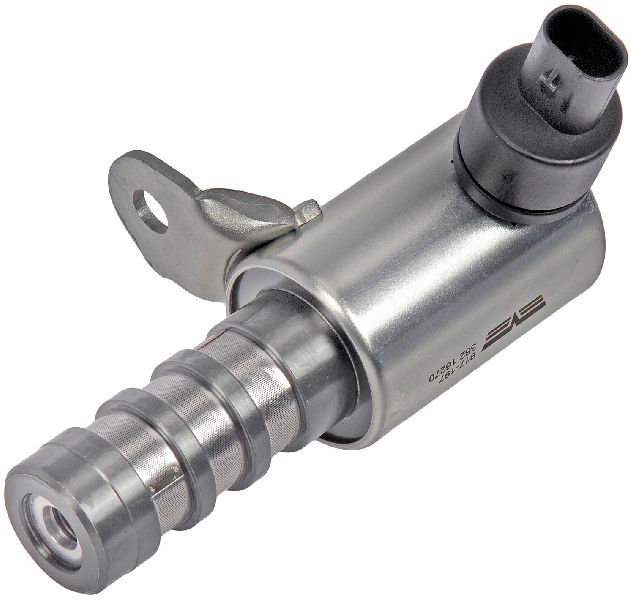
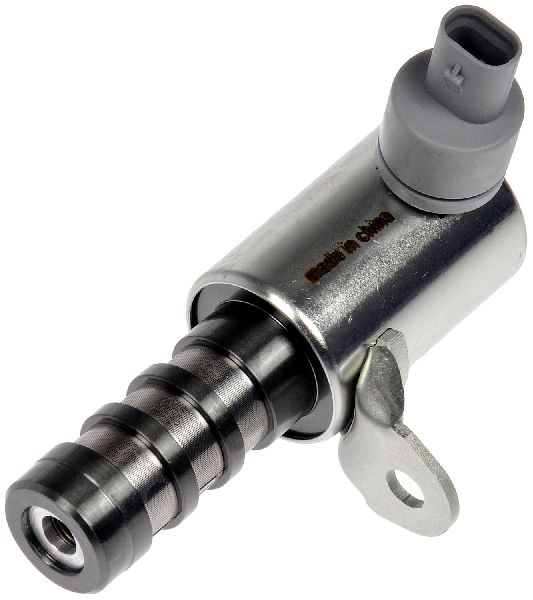
Est. part cost: $50-$100 - Sticking or Failed VCT Solenoid 🔴 High Probability → Shop Engine Variable Valve Timing (VVT) Solenoid This is a widely documented issue. Ford TSBs SSM 47170, SSM 48423, and SSM 54366 all state that small debris can cause the VCT solenoid to stick, leading to this code.
How to confirm: Use a scan tool to command the solenoid on and off while listening for a click. TSB SSM 48423 specifically advises using the scan tool's power balance or VCT command function to cycle the affected solenoid 10 times to try and clear debris before replacement. A common DIY trick is to swap the Bank 1 exhaust solenoid with the Bank 1 intake solenoid (if they are identical parts) and see if the code changes to P0016 (Intake Cam Correlation).
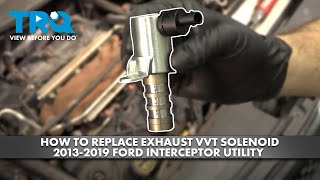
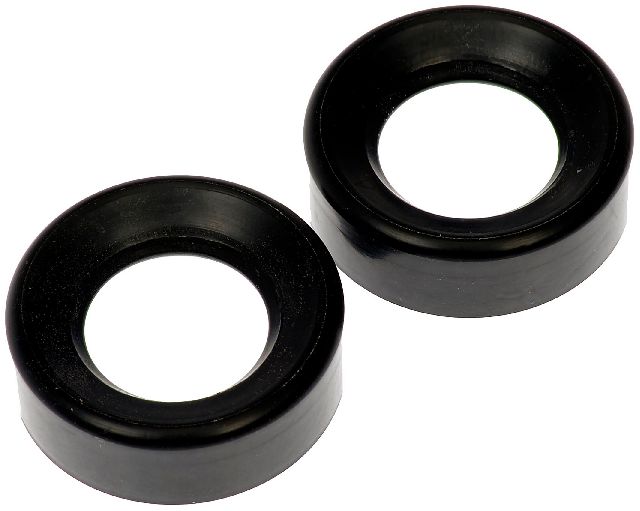
Typical fix: Replace the Bank 1 exhaust VCT solenoid. On the 2.7L EcoBoost, the solenoids are accessible after removing the engine cover; on the 3.7L, the valve cover must be removed. 🎬 Watch: Step-by-step guide to replacing the exhaust VCT solenoid. Clear codes and test drive.
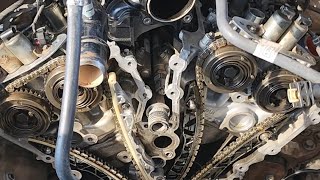
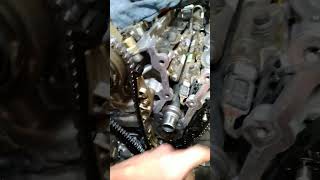
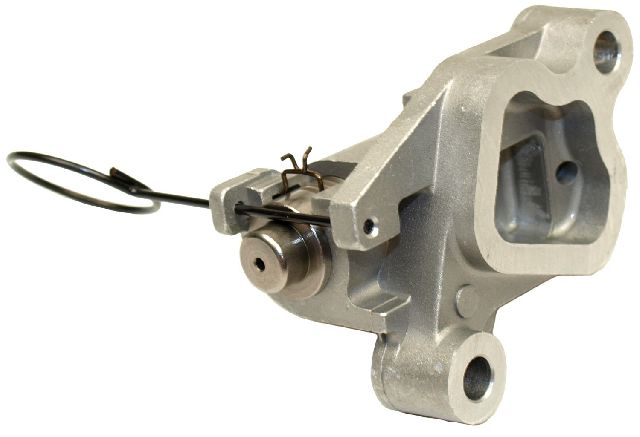
Est. part cost: $40-$85 - Stretched Timing Chain 🟡 Medium Probability → Shop Engine Timing Chain The timing chains on the 3.7L and 2.7L engines can stretch over time, especially with poor oil maintenance, causing the cam/crank correlation to fall out of spec. The first-generation 2.7L EcoBoost (2016-2017) used a single timing chain design and is noted to be more susceptible to chain rattle and stretch issues around 80,000-100,000 miles. 🎬 Watch: Full timing chain replacement procedure for the 2.7L EcoBoost.
How to confirm: A distinct rattling noise on a cold start that lasts for 2-3 seconds is a strong indicator of a slack chain or failing tensioner. A technician can monitor live data PIDs for cam/crank deviation; a consistent error of more than +/- 5 degrees at idle often confirms a mechanical timing issue. Visual confirmation requires removing the timing cover to inspect the tensioner extension and timing marks.
Typical fix: Replace the timing chain, tensioners, and guides. This is a major repair often costing between $2,000 and $3,500 at a shop. It is highly recommended to replace the cam phasers at the same time.
Est. part cost: $400-$700 - Failing Internal Water Pump (3.7L V6 only) ⚪ Low Probability → Shop Engine Water Pump On the 3.7L V6, the water pump is driven by the timing chain. If its internal seal fails, it leaks coolant directly into the engine oil. This contaminates the oil, destroying its lubricating properties and leading to rapid failure of timing components, which triggers correlation codes.
How to confirm: Check the engine oil for a milky, frothy appearance, which indicates coolant contamination. A rapid, unexplained loss of coolant with no external leaks is another key sign.
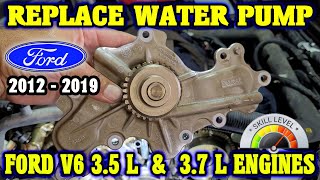
Typical fix: This requires a full timing chain job, replacement of the water pump, and a thorough flushing of the engine oiling system. The engine may have suffered permanent damage. The repair cost for the water pump and timing components together is often quoted around $2,400 or more. 🎬 See how to replace the internal water pump and timing chain.
Est. part cost: $500-$900
Rare But Worth Checking
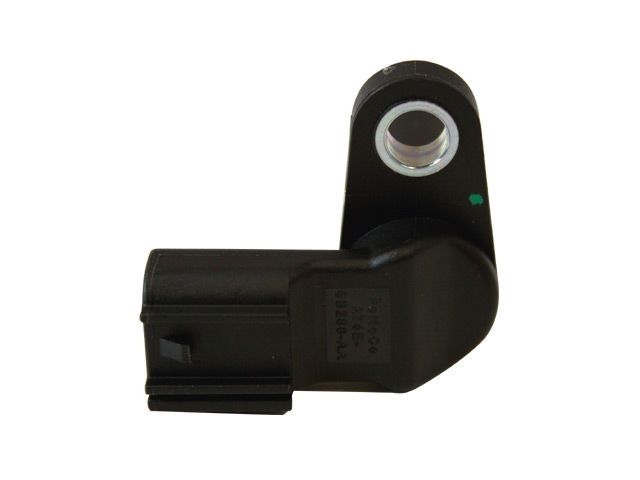
- Failed Camshaft Position Sensor: → Shop Engine Camshaft Position Sensor It's rare for the sensor itself to fail. It is more often correctly reporting a mechanical or hydraulic problem. Only replace the sensor if it fails a specific electrical test. Many owners replace this first, only for the code to return.
- Damaged Camshaft Phaser: → Shop Engine Camshaft The phaser (or VVT actuator) on the end of the camshaft can become stuck or fail mechanically, but this is less common than a solenoid or chain issue. A Reddit user noted that replacing just the chain didn't fix their rattle, but replacing the phasers as well did. Phasers are typically replaced during a full timing chain job.
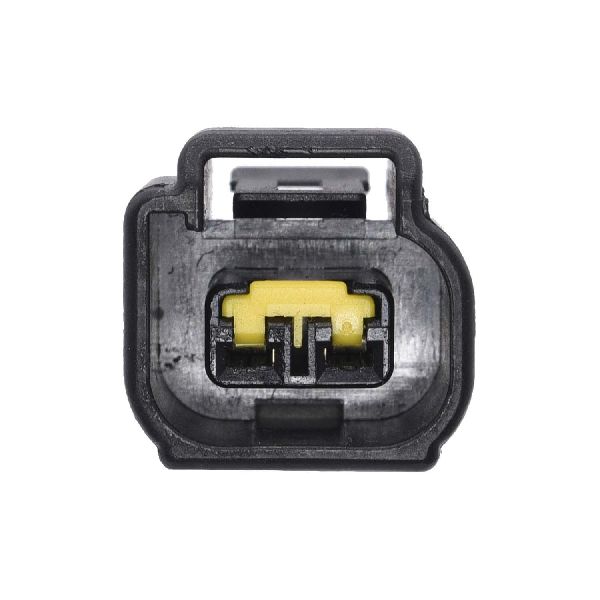
- Wiring or Connector Issue: Damage or corrosion on the wiring to the camshaft sensor or VCT solenoid can cause intermittent signals, triggering the code. Inspect the harness for oil saturation or physical damage before replacing parts.
Diagnosis Steps
- Verify the engine oil level and condition. If low, dirty, or contaminated, perform an oil and filter change with the correct spec oil, clear the code, and re-test. This is the cheapest and easiest first step.
- Use a professional scan tool to check for any other DTCs that may provide more context.
- Inspect the wiring and connectors for the Bank 1 exhaust camshaft position sensor and the VCT solenoid for any signs of damage, corrosion, or oil saturation.
- Using the scan tool, access the PCM controls and command the Bank 1 exhaust VCT solenoid on and off multiple times as suggested by TSB SSM 48423. Listen for an audible click from the solenoid. If there is no click or the engine idle doesn't change, the solenoid is likely stuck or has failed.
- If the solenoid is suspected, swap it with the adjacent intake solenoid (if identical) and see if the code changes to P0016. If it does, the solenoid is confirmed bad.
- If the code returns after an oil change and solenoid replacement/test, the issue is likely mechanical. Listen carefully for a 2-3 second rattle on a cold start, which strongly indicates a timing chain/tensioner issue.
- The next step is to remove the valve cover and timing cover to inspect the timing chain for slack and verify all timing marks are correctly aligned. This is a labor-intensive step.
- While inspecting the timing components on a 3.7L V6, check for any signs of coolant leakage or residue around the water pump area, which would indicate a failed internal pump.
Parts You'll Likely Need
- Engine VVT Solenoid (3.7L V6)
(OEM #AT4Z-6M280-B)— This is the most common point of failure due to oil debris, as documented in multiple TSBs. It controls oil flow to the cam phaser. This part number fits the 3.7L and 3.5L engines.
Trusted brands: Motorcraft, Dorman
OEM price range: $45-$60
Aftermarket price range: $25-$50 - Engine VVT Solenoid (2.7L EcoBoost V6)
(OEM #FT4Z-6M280-B)— This is the equivalent VCT solenoid for the 2.7L EcoBoost engine. It is also prone to sticking from oil contamination.
Trusted brands: Motorcraft, Standard Motor Products
OEM price range: $50-$70
Aftermarket price range: $30-$55 - Timing Chain and Water Pump Kit (3.7L V6)
(OEM #Varies by kit components)— If the timing chain is stretched or the internal water pump has failed, it is critical to replace all related components: primary and secondary chains, guides, tensioners, and the water pump.
Trusted brands: Motorcraft, Cloyes
OEM price range: $600-$900
Aftermarket price range: $400-$650 - Camshaft Position Sensor
(OEM #DU-90)— Replaced if it fails electrical tests, but this is an uncommon cause of P0017. It is often replaced unnecessarily.
Related Codes That Often Appear With This One
- P0016 — Crank/Cam correlation error for the intake cam on the same bank. If seen with P0017, it strongly suggests a base timing issue like a stretched chain affecting all of Bank 1.
- P0018, P0019 — These are the equivalent correlation codes for Bank 2 (front of the vehicle). Seeing codes for both banks (e.g., P0017 and P0019) points toward a systemic problem like a stretched primary timing chain or low oil pressure affecting the entire engine.
- P0011, P0012, P0014, P0015 — These are codes for over-advanced or over-retarded timing. Their presence points to a general VCT system fault, often related to oil pressure or a sticking solenoid, as mentioned in the TSBs.
- P0301, P0302, P0303 — Misfire codes for the cylinders on Bank 1. Incorrect cam timing can disrupt combustion and cause misfires on the affected bank.
Technical Service Bulletins (TSBs) & Recalls
- SSM 54366
- SSM 48423
- SSM 47170
Platform-Specific Known Issues
- TSB SSM 48423 and SSM 47170 note that some 2015-2020 Ford and Lincoln vehicles may exhibit P0017 due to small debris causing the VCT solenoid to stick.
- TSB SSM 54366 reiterates the same issue for 2015-2021 vehicles and points technicians toward specific diagnostic tests in the service manual.
- On the 3.7L V6 engine, a known failure point is the internal, timing-chain-driven water pump, which can leak coolant into the engine oil, causing widespread lubrication failure and triggering timing codes like P0017.
Mechanic-Grade Diagnostic Values
- VCT Solenoid Internal Resistance — expected: 5 to 15 Ohms. Failure: A reading of 0 Ohms (short), infinity/OL (open), or outside the specified range indicates a failed solenoid coil.
- Camshaft Position Sensor (2-wire VR type) Resistance — expected: 586 to 2,033 Ohms. Failure: Resistance outside this range suggests a faulty sensor winding.
- Camshaft Position Sensor (3-wire Hall-effect type) Power Supply — expected: ~5V with Key On, Engine Off. Failure: No voltage or incorrect voltage points to a wiring or PCM fault, not necessarily a bad sensor.
- Live Data PID: Cam/Crank Correlation Error — expected: Close to 0 degrees at idle. Failure: A consistent deviation greater than +/- 5 degrees indicates a mechanical timing issue, such as a stretched chain. One technician noted Ford may not authorize warranty repair until the deviation exceeds 6 degrees.
- Minimum Hot Idle Oil Pressure — expected: At least 25 PSI. Failure: Pressure below this threshold can cause the VCT system to malfunction and trigger timing codes due to oil starvation.
Scan Tool Commands That Help
- Ford IDS (or equivalent professional scan tool): VCT Solenoid Bidirectional Control / Output State Control — As recommended by Ford TSBs (SSM 48423, SSM 50067), this function is used to cycle the suspected VCT solenoid on and off up to 10 times. This can dislodge small debris causing the solenoid to stick, potentially fixing the code without replacing the part.
Wiring & Ground Locations
- Bank 1 VCT Solenoid and CMP Sensor Connectors — Bank 1 is the cylinder bank closer to the firewall. The connectors are located on or near the valve cover for that bank.. The connectors and associated wiring are the primary interface between the PCM and the timing components. Oil saturation, corrosion, or physical damage to these connectors can cause a loss of signal or control, triggering P0017.
- Engine Ground Points (e.g., G102, G104) — Various points on the engine block, chassis, and near the firewall. For example, G102 is often at the left rear of the engine, and G104 on the engine block. A vehicle-specific factory wiring diagram is required for exact locations.. A poor or corroded ground connection for the PCM or sensor circuits can introduce electrical noise or cause incorrect voltage readings, leading the PCM to falsely detect a timing correlation error.
Real Owner Repair Stories
- Diesel Technician Society forum (2015 Ford Transit with 3.7L Ti-VCT (engine shared with MKX)) — Lack of power, MIL on with code P0017.
❌ Tried (didn't work) Initial scan tool data suggested a stuck cam phaser.
✅ What actually fixed it Upon engine disassembly, the root cause was a failed bearing in the timing chain idler gear, which caused the timing to jump. This was a purely mechanical failure unrelated to the VCT solenoids or phasers. - Reddit user in r/f150 (2013 F-150 EcoBoost (similar VCT/timing system design)) — Cold start rattle.
❌ Tried (didn't work) The user replaced the timing chain but found the old chain was the exact same length as the new one, suggesting stretch was not the issue.
✅ What actually fixed it The problem was resolved by also replacing the cam phasers and cleaning sludge from the engine. The total cost was approximately $2,000. The rattle was gone after replacing the phasers.
"I Checked Everything" — The Actual Cause
- For code P0017, the equivalent of a 'smoke test clean' scenario is when all electronic components (sensors, solenoids) and their wiring test correctly, yet the code persists. This strongly indicates a hidden mechanical failure. One documented case on a 3.7L engine was a failed timing chain idler gear bearing, which is not a component that is typically checked first but caused the timing to jump.
OEM Part Supersession History
AT4Z-6M280-A→AT4Z-6M280-B— Updated VCT solenoid for 3.7L applications.
Heads up: The intake and exhaust solenoids on the 3.7L are often identical, allowing for diagnostic swapping. It is always recommended to use the latest part number revision for durability.7T4Z-6M280-A, 7T4Z-6M280-B→7T4Z-6M280-C— Part revision and improvement for VCT solenoids used on 3.5L/3.7L engines.
Heads up: Using the newest part number is generally recommended for improved durability and performance.FT4Z-6M280-B (For 2.7L EcoBoost)→N/A— This is a common part number cited for the 2.7L V6 VCT solenoid.
Heads up: Always verify part numbers with the vehicle's VIN before ordering.
Model Year Variations Within This Range
- 2016-2017 (2.7L EcoBoost only): The first-generation 2.7L EcoBoost used a single timing chain design. These engines are more prone to timing chain rattle and stretch issues, which can trigger P0017, typically emerging around 80,000-100,000 miles.
- 2018 (2.7L EcoBoost only): For the 2018 model year, Ford updated the 2.7L EcoBoost to a second-generation design which included a stronger dual timing chain setup, making it less susceptible to the chain stretch and rattle issues seen in earlier models.
Helpful Videos


We Have This Part in Stock

The information in this article is provided for general reference and educational purposes only. Vehicle specifications, procedures, and part compatibility can vary by production date, trim level, and region. Always consult your vehicle's factory service manual and verify part numbers before purchasing or performing repairs. Safety-critical components such as airbags, seat belts, and braking systems should be installed by a qualified professional.
- Lincoln MKX:
- 🧭 Diagnostic Flowchart
- 🎬 Helpful Videos
- 🛍️ Shop This Part
- What's Unique About the 2015-2018 Lincoln MKX
- Symptoms You May Notice
- Most Likely Causes
- Rare But Worth Checking
- Diagnosis Steps
- Parts You'll Likely Need
- Related Codes That Often Appear With This One
- Technical Service Bulletins (TSBs) & Recalls
- Platform-Specific Known Issues
- Mechanic-Grade Diagnostic Values
- Scan Tool Commands That Help
- Wiring & Ground Locations
- Real Owner Repair Stories
- "I Checked Everything" — The Actual Cause
- OEM Part Supersession History
- Model Year Variations Within This Range
- 🎟️ Get 5% Off