

P0017 on 2015-2021 Lincoln Navigator 3.5L EcoBoost: Causes and Fixes
P0017 on a 3.5L EcoBoost Navigator usually means a stretched timing chain or failing cam phasers, often signaled by a cold-start rattle. Before a costly timing job ($2,500+), check the engine oil and test the VCT solenoids, as these are simpler, cheaper potential fixes. Ignoring the code can lead to catastrophic engine failure.
- P0017 on a 3.5L EcoBoost Navigator is a serious code that requires immediate attention to prevent severe engine damage.
- Always check the engine oil level and condition first. A simple oil change using the correct 5W-30 oil can sometimes resolve VCT solenoid issues.
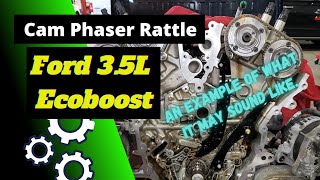
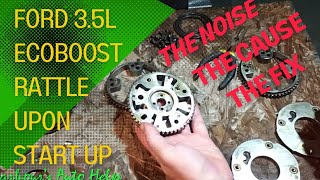
- A rattling noise on cold startup is the key symptom. On 2015-2017 models, it likely means a stretched timing chain. On 2018-2021 models, it points to failing cam phasers.
- Do not replace the camshaft position sensor as a first step; it is almost always reporting a real mechanical issue.
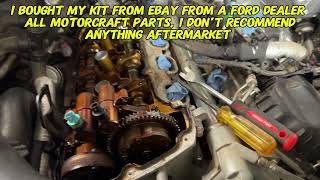
- If a timing job is necessary, insist on replacing the chains, guides, tensioners, and all four cam phasers with quality OEM (Motorcraft) parts to ensure a long-lasting repair.
What's Unique About the 2015-2021 Lincoln Navigator
The 3.5L EcoBoost engine in the Lincoln Navigator has well-documented weaknesses in its timing system that differ by generation. The first-generation EcoBoost (2015-2017 models) is highly prone to a stretched primary timing chain, which directly causes this code. For the second-generation engine (2018-2021 models), Ford updated the chain design, but these engines are known for failing camshaft phasers that produce a distinct rattle on cold starts and trigger timing codes. Ford has issued multiple Technical Service Bulletins (TSBs) and a customer satisfaction program (21N03) to address these specific issues.
Generation note: The 2015-2021 range covers two Navigator generations. 2015-2017 models (third generation) use the Gen 1 EcoBoost and are most susceptible to stretched timing chains, often addressed by TSB 18-2305. 2018-2021 models (fourth generation) use the Gen 2 EcoBoost, which is more prone to failing VCT phasers, as addressed in TSBs like 23-2143 and customer satisfaction program 21N03. TSB 20-2166 also specifically targets the cold start rattle in 2018-2019 Navigators due to worn VCT units.
Symptoms You May Notice
- Check Engine Light is on
- Loud rattle from the engine for 2-5 seconds when starting it cold.
- Rough or unstable idle.
- Reduced engine power and poor acceleration.
- Engine may stall at low speeds.
- Decreased fuel economy.
- Vehicle may enter a reduced-power 'limp mode'.
- Strong smell of unburnt fuel from the exhaust.
- Replacing the camshaft position sensor first. The sensor is usually just the messenger reporting a real mechanical timing problem. Replacing it rarely fixes the issue.
- Ignoring the cold start rattle. On the 3.5L EcoBoost, this noise is a well-documented symptom of impending timing component failure and should be addressed immediately to prevent catastrophic engine damage.
Most Likely Causes
- Stretched Timing Chain 🔴 High Probability → Shop Engine Timing Chain This is a widely documented failure on the first-generation 3.5L EcoBoost engine (2015-2017 models). The long, single-chain design is prone to stretching over time, causing the cam and crank correlation to fall out of specification.
How to confirm: A distinct rattling noise on a cold start is a primary indicator. A technician 🎬 See how a technician diagnoses a stretched timing chain. can also use a scan tool to monitor timing PIDs (cam error vs. desired) or perform a physical inspection, which requires removing the engine's front cover.
Typical fix: Replace the timing chain, tensioners, and guides. It is highly recommended to replace the VCT solenoids, cam phasers, and water pump at the same time to prevent a costly repeat repair.
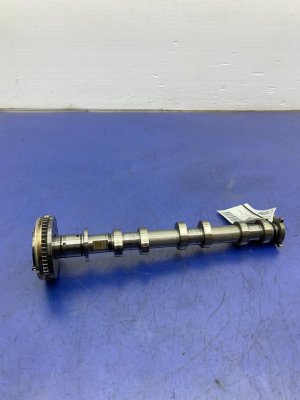
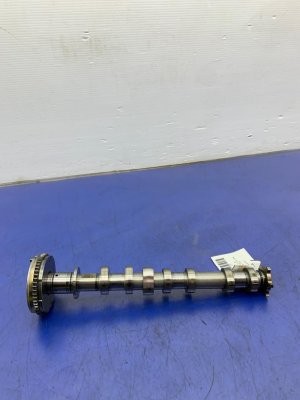
Est. part cost: $400-$1200 - Failed Camshaft Phasers (VCT Units) 🔴 High Probability → Shop Engine Camshaft This is a very common failure on the second-generation 3.5L EcoBoost (2018-2021 models). A faulty internal locking pin design causes a loud rattle on cold starts and can lead to timing codes. TSBs 23-2143 and 22-2200 were issued to address this, recommending replacement of all four VCT units.
How to confirm: A loud 2-5 second rattle upon cold startup is the classic symptom. An advanced scan tool can also monitor VCT performance. The noise is a direct result of the phaser's locking pin failing to hold when oil pressure is low.
Typical fix: Replace all four camshaft phasers with the updated part design (e.g., ML3Z-6256-A, ML3Z-6C525-A) and reprogram the PCM, as outlined in Ford's TSBs. This is often done as part of a complete timing job.
Est. part cost: $600-$1200 - Low or Dirty Engine Oil 🟡 Medium Probability The entire VCT system is hydraulic and relies on clean oil at the correct pressure and viscosity (5W-30). Infrequent oil changes can lead to sludge that clogs passages in the VCT solenoids and phasers, causing them to malfunction and trigger correlation codes.
How to confirm: Check the oil level on the dipstick and inspect its condition. If the level is low or the oil is dark/sludgy, this is a likely contributor. This should always be the first check.
Typical fix: Perform an engine oil and filter change using the correct OEM-specified oil (Motorcraft 5W-30 Synthetic Blend) and a quality filter. Clear codes and re-test.
Est. part cost: $50-$100 - Failed VCT Solenoid 🟡 Medium Probability → Shop Engine Variable Valve Timing (VVT) Solenoid Ford TSBs (like SSM 48423 and TSB 16-0093) note that small debris in the oil can cause these solenoids to stick, triggering correlation codes. It's a common failure point and a much cheaper fix to attempt before a full timing job. TSB 16-0093 specifically addresses this issue in low-mileage 2016 models.
How to confirm: A technician can command the solenoid on and off with a scan tool to check its response. A common DIY diagnostic is to swap the Bank 1 exhaust solenoid (Sensor B) with the Bank 1 intake solenoid (Sensor A). If the code changes to P0016, the solenoid is confirmed to be faulty.
Typical fix: Replace the Bank 1 exhaust VCT solenoid (the one specified by P0017). The OEM part number is often AT4Z-6M280-C. It is often recommended to replace all four solenoids at once.
Est. part cost: $40-$80
Rare But Worth Checking
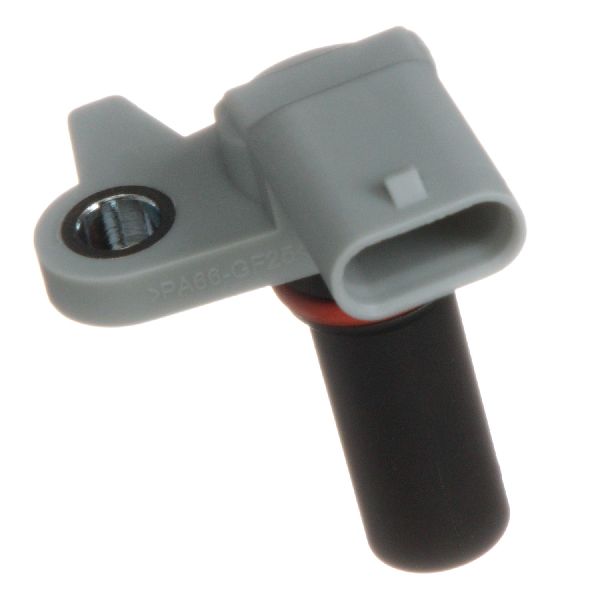
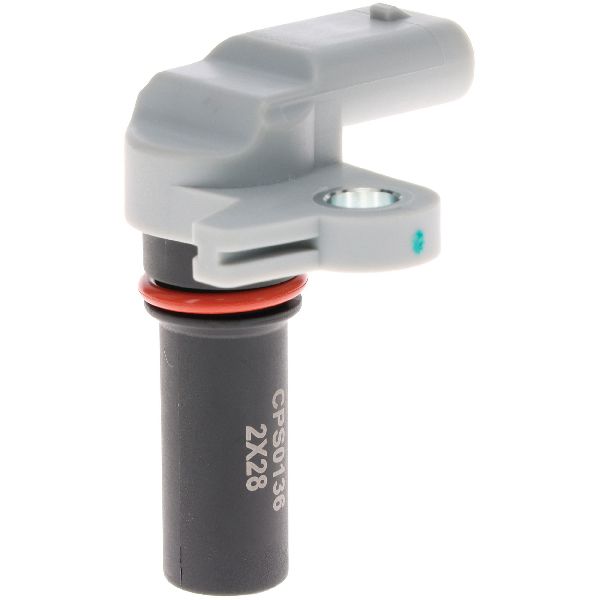
- Failed Camshaft or Crankshaft Position Sensor: → Shop Engine Crankshaft Position Sensor While possible, it's uncommon for the sensor itself to fail. The code usually indicates the sensor is correctly reporting a mechanical problem. Do not replace sensors without first ruling out mechanical issues.
- Damaged Wiring or Connectors: Frayed wires or corroded pins at the VCT solenoid or camshaft sensor connector can cause an intermittent signal. A visual inspection of the harness is a good diagnostic step.
- Incorrect Timing After Repair: Several forum users have reported getting a P0017 code immediately after a DIY or professional timing chain replacement. This indicates the timing was likely set incorrectly by one tooth on the chain, requiring a full teardown to correct.
Diagnosis Steps
- Verify the engine oil level and condition. If low, dirty, or overdue for a change, perform an oil and filter change with the correct 5W-30 synthetic blend or full synthetic oil. Clear codes and test drive.
- Listen for a 2-5 second rattle from the front of the engine on a cold start (after sitting 6+ hours). If present, a stretched timing chain or bad cam phasers are the most likely cause.
- Use an advanced scan tool to monitor VCT PIDs (Parameter IDs). Check the requested vs. actual cam positions and look for VCT_ERROR PIDs. A significant and persistent error percentage points to a mechanical or hydraulic issue.
- Inspect the wiring and connectors for the Bank 1 exhaust VCT solenoid and camshaft position sensor for any damage or corrosion.
- Command the Bank 1 exhaust VCT solenoid with a scan tool. If it doesn't respond, or if swapping it with the intake solenoid on the same bank moves the code from P0017 to P0016, the solenoid is bad.
- If all other steps fail to identify the issue, a physical inspection of the timing chain, guides, and phasers is required. This involves significant engine disassembly and is best left to a professional.
Parts You'll Likely Need
- Timing Chain Kit
(OEM #BL3Z-6D256-C (Gen 1 Kit), ML3Z-6C526-A (Gen 2 Kit))— This is the primary fix for a stretched timing chain, a common issue on 2015-2017 models. A complete kit includes the chain(s), tensioners, and guides.
Trusted brands: Motorcraft, Cloyes
OEM price range: $300-$500
Aftermarket price range: $150-$300 - Camshaft Phaser (VCT Actuator)
(OEM #HL3Z-6256-B (Superseded), ML3Z-6256-A (Intake), ML3Z-6C525-A (Exhaust))— These commonly fail on 2018-2021 models, causing a cold-start rattle. They are typically rep
Trusted brands: Motorcraft
OEM price range: $150-$300 per phaser
Aftermarket price range: $100-$200 per phaser
Related Codes That Often Appear With This One
- P0016 — This is the correlation code for the intake camshaft on the same bank (Bank 1). If the timing chain has stretched, it often affects both intake and exhaust cam timing, setting both codes together.
- P0018, P0019 — These are the corresponding correlation codes for Bank 2 (driver's side). If codes for both banks are present, it strongly points to a base timing issue like a stretched primary chain affecting the whole engine.
- P0300, P0301, P0302, P0303 — These are random or specific cylinder misfire codes for Bank 1. Incorrect cam timing disrupts the combustion process, leading to misfires on the affected bank.
- P0015 — This code for 'B' Camshaft Position - Timing Over-Retarded (Bank 1) often appears with P0017, as both point to the same set of causes related to the exhaust cam on Bank 1.
Technical Service Bulletins (TSBs) & Recalls
- TSB 23-2143: Supersedes TSB 22-2200. For 2018-2020 Navigator/Expedition and 2017-2020 F-150 models built before 30-Nov-2019. Addresses cold start rattle (2-5 seconds) and potential no-restart during auto-start-stop by replacing all four VCT units (phasers).
- TSB 18-2305: For 2011-2015 F-150s built on or before 29-May-2015. Addresses a 2-5 second cold start rattle by replacing all four VCT units and the primary timing chain. Labor time is listed as 9.0-9.2 hours.
- TSB 20-2166: For 2018-2019 Expedition/Navigator built on or before 8-Apr-2019. Specifically targets the 2-5 second cold start rattle due to worn VCT units, recommending replacement of all four phasers and a PCM update.
- TSB 16-0093 (supersedes 16-0038): For 2016 model year Navigators and other Fords with less than 2,000 miles. Addresses a range of timing codes, including P0017, by replacing the affected VCT solenoid, indicating early life failure is possible.
- Customer Satisfaction Program 21N03: Extends warranty coverage for cam phaser replacement on affected 2018-2020 Navigators (and platform mates) that exhibit the cold start rattle.
Platform-Specific Known Issues
- Timing Chain Stretch (2015-2017): The Gen 1 3.5L EcoBoost is known for the primary timing chain stretching, leading to a cold-start rattle and timing correlation codes like P0017.
- Cam Phaser Rattle (2018-2021): The Gen 2 3.5L EcoBoost is known for a loud 2-5 second rattle on cold starts due to faulty cam phasers. Ford addressed this with TSB 23-2143 and Customer Satisfaction Program 21N03.
Mechanic-Grade Diagnostic Values
- VCT Solenoid Internal Resistance — expected: 5 - 14 Ohms. Failure: A reading outside this range, or infinite resistance (open circuit), indicates a failed solenoid coil.
- VCT Solenoid Power Supply (at connector) — expected: ~12V (Battery Voltage) on one pin. Failure: No voltage indicates a problem with the wiring harness or a blown fuse upstream of the solenoid.
- Scan Tool PID: VCT_ERROR (e.g., VCT_EXH_ERR1) — expected: Should hover around 0°, with an acceptable variance of +/- 5° during operation.. Failure: A consistent deviation greater than 5-6° at idle or under load points to a mechanical timing or hydraulic control issue.
- Scan Tool PID: VCT_ACT (e.g., VCT_EXH_ACT1) — expected: Less than +6° at warm idle.. Failure: A reading of +6° or greater at idle is a strong indicator of a worn or stretched primary timing chain.
- Engine Oil Pressure (at oil filter adapter) — expected: Minimum of 15 PSI at hot idle; Minimum of 20 PSI at 1500 RPM.. Failure: Pressure below these specifications can starve the VCT system, causing erratic operation and setting correlation codes.
- Camshaft Position Sensor (CMP) Signal Voltage — expected: The signal wire should show ~5V with Key On, Engine Off, and rapidly switch between ~5V and 0V when the engine is cranked.. Failure: A signal that is stuck high (5V) or low (0V) during cranking indicates a failed sensor or a wiring circuit issue.
Hidden / Shadow Codes Worth Checking
- P164C: Internal Control Module - Camshaft Position Actuator Performance (Bank 1). This code is specifically mentioned in TSB 23-2143 as a potential companion code to the cold-start rattle caused by worn VCT units. (see via Standard OBD-II scanner or professional tools like Ford IDS.)
- Mode $06, TID $53: This is not a DTC, but a non-continuous monitor test result for the VVT system. It provides statistical data on timing deviations that can help confirm a correlation problem, sometimes before a constant DTC like P0017 is set. (see via Requires a professional scan tool (like Ford IDS) or advanced DIY software (like FORScan) capable of displaying Mode $06 test results.)
Scan Tool Commands That Help
- Ford IDS / FORScan: VCT Solenoid On/Off Command (Output State Control) — Used to test the functionality of a specific VCT solenoid. When commanding the Bank 1 exhaust solenoid 'on' at idle, the engine should stumble or run rough. If there is no change, it points to a stuck/clogged solenoid or a wiring issue.
- Ford IDS / FORScan: Cycle VCT Solenoid (Actuator Command) — TSB SSM 48423 specifically advises cycling the suspect VCT solenoid 10 times with the scan tool. This can potentially dislodge small debris causing the solenoid to stick, and may resolve the code without part replacement.
- Ford IDS / FORScan: PCM - Reset All Adaptations — This should be performed after replacing timing components like cam phasers or VCT solenoids. It clears the PCM's learned values, allowing it to re-learn the operational parameters of the new parts and can prevent the code from returning due to old, incorrect adaptive data.
- Ford IDS: Crankshaft Position Profile Correction Reset (Crank Relearn) — This procedure may be required after major engine work, such as flywheel or crankshaft replacement, to allow the PCM to relearn the profile of the crankshaft position sensor's reluctor wheel. An incorrect profile could potentially contribute to correlation codes.
Wiring & Ground Locations
- G108 — Typically located on the right side (passenger side) of the engine compartment, often on the firewall or inner fender structure.. This is a primary ground point for the engine wiring harness. A loose or corroded connection at G108 can introduce electrical noise or voltage drops, affecting the signals from the camshaft and crankshaft sensors, potentially causing a false correlation code.
- PCM Main Connectors (e.g., C175B, C1551B/E) — The Powertrain Control Module (PCM) is typically located on the passenger side of the firewall in the engine bay.. The control signals for the VCT solenoids and the input signals from the cam/crank sensors all pass through these main PCM connectors. Corrosion, moisture intrusion, or pushed-out pins at these connectors can directly cause VCT system faults and correlation codes.
- Bank 1 VCT Solenoid Connector (e.g., C1653) — On the front of the passenger side (Bank 1) valve cover. The exhaust solenoid is typically the rearmost of the two.. This 2-pin connector is the direct interface to the solenoid. One pin receives ~12V power with the key on, and the other is pulsed to ground by the PCM to actuate the solenoid. Damage or corrosion here will prevent the solenoid from operating correctly.
- Main Engine-to-Chassis Ground Strap — A large braided strap typically connecting the engine block directly to the vehicle's frame rail.. While less common to cause a specific code, a degraded main ground can create a floating ground for the entire engine management system, leading to unpredictable electrical behavior across all sensors and actuators.
Real Owner Repair Stories
- Ford F150 Forum user 'PoisonBeef' (2011 Ford F-150 3.5L EcoBoost (Gen 1 Engine, shared timing design)) — Immediate P0017 code after a complete timing chain and phaser replacement job.
❌ Tried (didn't work) Clearing the code (it returned instantly).
✅ What actually fixed it The consensus from other experienced users was that the timing was set incorrectly by one tooth on the primary chain during reassembly, requiring a full teardown to correct. The user acknowledged the difficulty in keeping the long chain perfectly aligned during the job. - Ford F150 Forum user 'johnday' (2012 Ford F-150 3.5L EcoBoost (Gen 1 Engine)) — P0016 code (Bank 1 Intake correlation), loss of power, misfire at idle.
❌ Tried (didn't work) Initial diagnosis pointed towards a costly timing job.
✅ What actually fixed it The user disconnected the VCT solenoid connector and manually cycled the solenoid by applying 12V power to its pins around 10 times. An audible click was heard after the first few attempts, indicating the solenoid was initially stuck. After reconnecting, the misfire was gone and full power was restored, resolving the issue without parts replacement. - F-150 Forum user story (referenced in an article) (Ford F-150 with 2.7L EcoBoost (similar VCT system)) — P0017 code returned shortly after repair.
❌ Tried (didn't work) Engine oil and filter change., Replacement of the Bank 1 exhaust VCT solenoid with an aftermarket part.
✅ What actually fixed it The aftermarket VCT solenoid was found to be faulty out of the box. Replacing the new, faulty part with a genuine Motorcraft VCT solenoid resolved the code permanently.
When the Usual Fixes Don't Work
- In several documented cases, particularly on related Ford platforms, a P0017 code that persists after replacing a VCT solenoid was traced back to a faulty-out-of-the-box aftermarket solenoid. The issue was only resolved by installing a genuine OEM Motorcraft part. This indicates that while the diagnosis of a bad solenoid may be correct, the quality of the replacement part is critical and can lead to a misdiagnosis of a larger mechanical problem if the new part is also defective.
OEM Part Supersession History
HL3Z-6256-B, HL3Z-6256-CD (Intake Phaser)→ML3Z-6256-A— The original 'HL3Z' series phasers used in 2018-2020 models were prone to a failure of the internal locking pin, causing the well-documented 'cold start rattle'. The 'ML3Z' series is an updated design to correct this flaw and is used in 2021+ models.
Heads up: The ML3Z parts are backward compatible and are the recommended replacement for the older HL3Z parts as per Ford's TSBs and customer satisfaction programs.HL3Z-6C525-CD (Exhaust Phaser)→ML3Z-6C525-A— Same as the intake phaser; this is the updated part to address the cold-start rattle issue prevalent in the 2018-2020 Gen 2 EcoBoost engines.
Heads up: The ML3Z exhaust phaser is the correct updated replacement for the older HL3Z part when performing a timing job on an affected vehicle.
Model Year Variations Within This Range
- 2015-2017: These models use the Gen 1 3.5L EcoBoost, which features a very long single primary timing chain. This design is highly susceptible to stretching over time, making a stretched chain the most probable cause for P0017 in these years.
- 2018-2021: These models use the Gen 2 3.5L EcoBoost. The engine was updated with a more robust dual-chain timing system, but the cam phasers (VCT units) are a known major failure point, causing a loud cold-start rattle. TSB 23-2143 addresses this issue for vehicles built on or before November 30, 2019.
Diagnostic Flowchart
Real Owner Stories
Aggregated from forums and TSBs cited above. Mileages and costs reflect what owners reported in those sources.
2015 Ford F-150 3.5L EcoBoost
Symptoms: Received a P0017 code immediately after completing a full timing chain and phaser replacement.
What fixed it: Suspected the timing was off by a single tooth despite careful installation, highlighting the extreme difficulty and precision required for this repair.
Source hint: f150forum.com user 'secretboost'
2014 Ford F-150 3.5L EcoBoost
Symptoms: Needed a timing chain replacement to resolve timing correlation issues.
What fixed it: Faced a massive labor bill, noting that the shop book time for the 3.5L EcoBoost timing chain job is 13.9 hours.
Source hint: f150forum.com thread about timing chain replacement
Ford Expedition 3.5L EcoBoost
Symptoms: Vehicle triggered a P0017 code and was taken to the dealership for diagnosis.
What fixed it: Dealership advised that the internal damage/timing failure was so severe they needed a completely new engine.
Source hint: expeditionforum.com
2016 Lincoln Navigator 3.5L EcoBoost — ~1500 miles
Symptoms: Triggered P0017 and other timing codes very early in the vehicle's life.
What fixed it: Replaced the affected VCT solenoid, as outlined in Ford's bulletin for early-life solenoid failures.
Source hint: TSB 16-0093
Related OBD-II Codes
Frequently Asked Questions
Does TSB 23-2143 apply to my 2018-2021 Lincoln Navigator for code P0017?
Is the cam phaser rattle covered under any extended warranty or goodwill program for the Navigator?
My 2016 Navigator has very low mileage but threw a P0017 code. What could it be?
What is the difference in P0017 causes between the 2015-2017 and 2018-2021 Navigator 3.5L EcoBoost?
Can I just replace the VCT solenoid instead of doing a full timing chain replacement?
How much labor time does a timing chain or phaser replacement take on the 3.5L EcoBoost?
Helpful Videos
Used OEM Parts in Stock
New Aftermarket Parts Available


The information in this article is provided for general reference and educational purposes only. Vehicle specifications, procedures, and part compatibility can vary by production date, trim level, and region. Always consult your vehicle's factory service manual and verify part numbers before purchasing or performing repairs. Safety-critical components such as airbags, seat belts, and braking systems should be installed by a qualified professional.
- Lincoln Navigator:
- 🧭 Diagnostic Flowchart
- 🎬 Helpful Videos
- 🛍️ Shop This Part
- What's Unique About the 2015-2021 Lincoln Navigator
- Symptoms You May Notice
- Most Likely Causes
- Rare But Worth Checking
- Diagnosis Steps
- Parts You'll Likely Need
- Related Codes That Often Appear With This One
- Technical Service Bulletins (TSBs) & Recalls
- Platform-Specific Known Issues
- Mechanic-Grade Diagnostic Values
- Hidden / Shadow Codes Worth Checking
- Scan Tool Commands That Help
- Wiring & Ground Locations
- Real Owner Repair Stories
- When the Usual Fixes Don't Work
- OEM Part Supersession History
- Model Year Variations Within This Range
- Real Owner Stories
- 2015 Ford F-150 3.5L EcoBoost
- 2014 Ford F-150 3.5L EcoBoost
- Ford Expedition 3.5L EcoBoost
- 2016 Lincoln Navigator 3.5L EcoBoost — ~1500 miles
- Related OBD-II Codes
- Frequently Asked Questions
- 🎟️ Get 5% Off