

P0017 on 2007-2013 Mazda 3 2.3L Turbo: Causes for Crank-Cam Correlation Failure
On the Mazda 3 with the 2.3L MZR DISI Turbo engine (Mazdaspeed3), code P0017 almost always indicates a stretched timing chain and/or a failed Variable Valve Timing (VVT) actuator. This is a significant mechanical issue requiring replacement of the timing components, costing between $1,200 and $2,000 at a shop.
- P0017 on a 2007-2013 Mazda 3 2.3L Turbo is a serious code that usually points to a mechanical engine problem.
- The most likely cause is a stretched timing chain combined with a failing VVT actuator.
- Do not ignore this code or its symptoms (especially engine rattle) as it can lead to catastrophic engine failure.
- The correct fix is to replace the timing chain, VVT actuator, tensioner, and guides as a complete job using updated parts.
- This is not a beginner-friendly DIY repair and should be handled by a professional or a highly experienced DIYer.
What's Unique About the 2007-2013 Mazda 3
While P0017 can be a simple sensor issue on many vehicles, on the MZR 2.3L DISI Turbo engine, it's a well-documented warning sign of a more serious mechanical problem. These engines are known for premature timing chain stretching and VVT actuator failures. Owners often first notice a rattling or ticking noise on a cold start, which is a classic symptom of these parts failing. The issue is so common that Mazda has released updated parts and multiple Technical Service Bulletins (TSBs) over the years. The root cause is often a combination of a weak original timing chain and a VVT actuator whose internal lock pin fails, allowing excessive play.
Generation note: The 2007-2013 Mazda 3 with the 2.3L DISI Turbo engine is known as the Mazdaspeed3. This period covers the end of the first generation (BK, 2007-2009) and the full run of the second generation (BL, 2010-2013). The MZR engine and its timing system weaknesses are common to both generations.
Symptoms You May Notice
- Check Engine Light is on
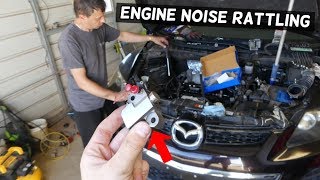
- Rattling, ticking, or grinding noise from the engine, especially on cold startups.
- Rough or unstable idle.
- Noticeable loss of engine power and sluggish acceleration.
- Engine may hesitate or stall.
- Oil light may flicker during acceleration due to VVT issues affecting oil pressure dynamics.
- Replacing the camshaft position sensor or crankshaft position sensor without first inspecting the mechanical timing components. The sensors are reporting a real problem, they are not usually the cause of it.
Most Likely Causes
- Stretched Timing Chain 🔴 High Probability → Shop Engine Timing Chain The original timing chains on the MZR 2.3L DISI Turbo engine were prone to premature stretching, a widely documented issue in owner forums and TSBs. This is often exacerbated by a failing VVT actuator putting extra stress on the chain.
How to confirm: A mechanic can remove the valve cover to visually inspect for slack in the chain. Another method is to check the extension of the timing chain tensioner; excessive extension indicates a stretched chain. With cylinder 1 at TDC, slack between the cam gears is a definitive sign.
Typical fix: Replace the timing chain, tensioner, and all related guides. This is typically done as a complete kit. All one-time-use friction washers and bolts must also be replaced.
Est. part cost: $250-$500 for a full kit - Failed VVT (Variable Valve Timing) Actuator 🔴 High Probability The lock pin mechanism in the original VVT actuator was a common failure point, causing a loud ticking or rattling noise on startup and improper cam phasing. A faulty actuator can also put excess stress on the timing chain, accelerating its failure.
How to confirm: Listen for a distinct, loud ticking/rattling noise for a few seconds immediately after a cold start. 🎬 Watch: Hear what a failing VVT actuator sounds like. A mechanic can also test the actuator's function with a capable scan tool.
Typical fix: Replace the VVT actuator. This is almost always done at the same time as the timing chain service. Mazda has released updated parts to address the issue.
Est. part cost: $200-$400 - Worn Timing Chain Tensioner 🟡 Medium Probability → Shop Engine Timing Chain The hydraulic tensioner can weaken or fail, allowing slack in the timing chain which disrupts the cam/crank correlation. It is considered a wear item.
How to confirm: The tensioner is inspected during a timing chain service. If it is over-extended or fails to hold pressure, it is faulty. It is always replaced as part of a complete timing job.
Typical fix: The tensioner is a core component of the timing chain kit and should always be replaced with the chain.
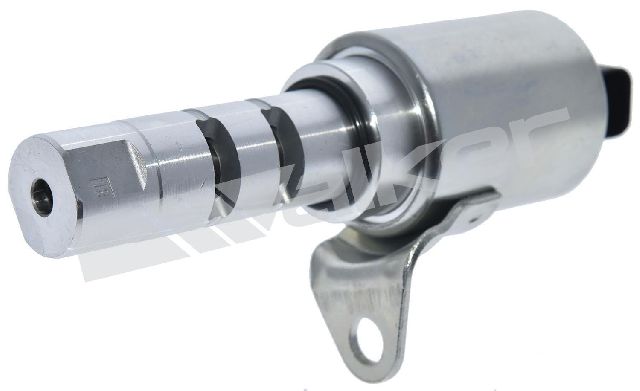
Est. part cost: $50-$100 if purchased separately - Clogged or Failed Oil Control Valve (OCV) ⚪ Low Probability → Shop Engine Variable Valve Timing (VVT) Solenoid Also known as the VVT solenoid, this valve controls oil flow to the VVT actuator. It can become clogged with sludge if oil changes are neglected, or it can fail electrically.
How to confirm: The valve can be removed and inspected for sludge or debris on its screen. It can also be tested for resistance with a multimeter or activated with a scan tool to check for proper function.
Typical fix: Clean or replace the oil control valve.
Est. part cost: $40-$120
Rare But Worth Checking
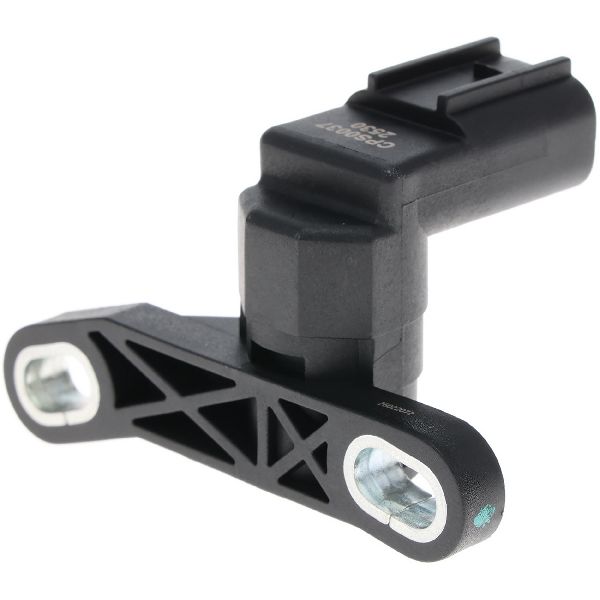
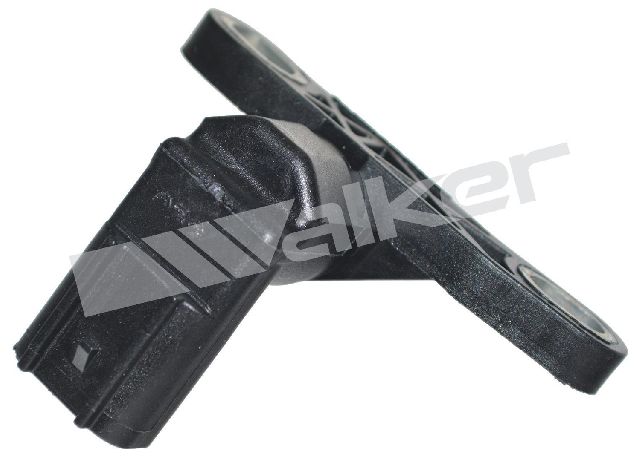
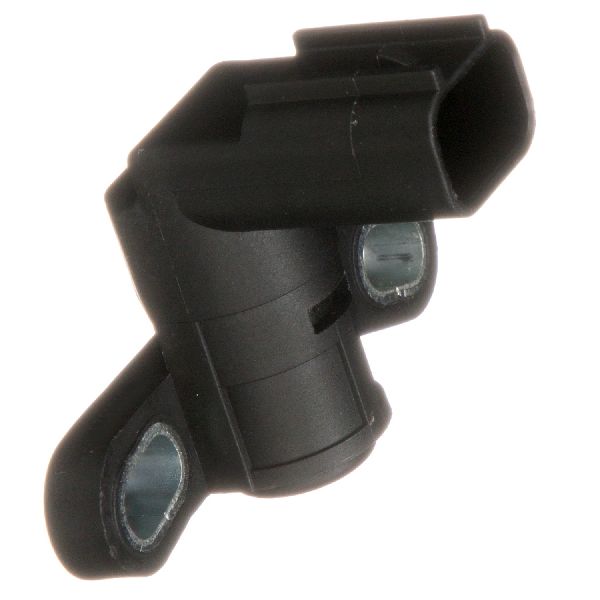
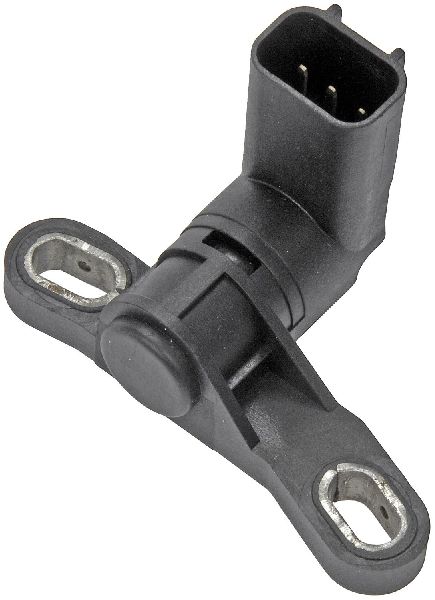
- Failed Camshaft or Crankshaft Position Sensor: → Shop Engine Crankshaft Position Sensor While these sensors can fail, it is not the most common cause for P0017 on this specific engine. The mechanical timing components should be investigated first to avoid a misdiagnosis.
- Low or Dirty Engine Oil: The VVT system is operated by oil pressure. Severely low or dirty oil can cause the VVT actuator to malfunction and trigger this code. This is more of a contributing factor than a root cause.
Diagnosis Steps
- Verify the oil level is correct and the oil is in good condition. If low or very dirty, perform an oil change.
- Listen carefully for a rattling or ticking noise from the right side of the engine during a cold start. A noise that lasts for 2-5 seconds is a strong indicator of a bad VVT actuator.
- Use a professional scan tool to monitor the requested vs. actual camshaft position angles. A significant deviation points to a mechanical timing or VVT system problem.
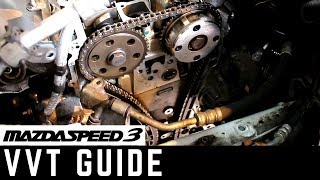
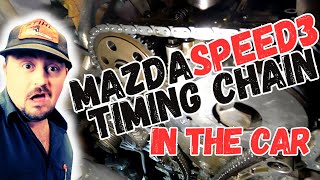
- Remove the valve cover to visually inspect the timing chain for obvious slack between the camshaft sprockets. 🎬 Watch: DIY guide for troubleshooting and changing the timing chain.
- If slack is present, proceed with replacing the timing chain, VVT actuator, tensioner, and guides as a complete set. Ensure all one-time-use bolts and friction washers are also replaced.
Parts You'll Likely Need
- Timing Chain Kit — This is the primary failure point. A kit ensures all related wear items (chain, guides, tensioner) are replaced simultaneously.
Trusted brands: Mazda OE, Cloyes
OEM price range: $400-$550
Aftermarket price range: $250-$400 - VVT Actuator (Intake Cam Sprocket)
(OEM #L3K9-12-4X0C)— The second primary failure point, often replaced with the timing chain. The 'C' revision is an updated part designed to be more durable.
Trusted brands: Mazda OE
OEM price range: $250-$400
Aftermarket price range: $150-$250 - Crankshaft Bolt (One-Time Use)
(OEM #LF01-11-406)— This is a torque-to-yield (stretch) bolt and MUST be replaced whenever it is removed. Reusing it risks it backing out and causing catastrophic engine failure.
Trusted brands: Mazda OE
OEM price range: $15-$25
Aftermarket price range: $10-$20 - Diamond Friction Washers (One-Time Use)
(OEM #L3H5-11-407)— These three small washers (one for the crank, two for the cams) use a diamond-like coating to lock the sprockets in place. They are one-time use and absolutely critical for preventing the timing from slipping.
Trusted brands: Mazda OE
OEM price range: $5-$10 each - Oil Control Valve (VVT Solenoid)
(OEM #L3K9-18-741)— A less common but possible cause. It can get clogged with sludge or fail electrically, preventing proper VVT operation.
Trusted brands: Mazda OE, Dorman
OEM price range: $80-$150
Aftermarket price range: $40-$90
Related Codes That Often Appear With This One
- P0011 — Intake Camshaft Position Timing - Over-Advanced. This can occur if the VVT system is malfunctioning.
- P0012 — Intake Camshaft Position Timing - Over-Retarded. This is another code related to VVT system failure.
- P0300 — Random Misfire Detected. If cam timing is incorrect, it can lead to misfires in one or more cylinders.
Technical Service Bulletins (TSBs) & Recalls
- Mazda TSB 01-012/12: A comprehensive bulletin that supersedes earlier ones, addressing VVT noise and timing chain issues. It provides detailed diagnostic flowcharts and repair procedures for the combined failure.
- Mazda TSB 01-002/08: Specifically details a loud ticking noise from the VVT actuator on startup and recommends replacing the actuator with an updated part.
- Mazda TSB 01-053/10: Addresses timing chain noise specifically.
Platform-Specific Known Issues
- The MZR 2.3L DISI Turbo engine has a well-known history of issues with its timing chain and VVT system, as acknowledged by Mazda through multiple TSBs and updated parts.
Mechanic-Grade Diagnostic Values
- Oil Control Valve (OCV) / VVT Solenoid Coil Resistance — expected: 6.9—7.9 ohms at 20°C (68°F). Failure: A reading outside of this range indicates a faulty solenoid. Note that resistance can vary with temperature, but significant deviation points to a problem.
- Scan Tool: Desired vs. Actual Camshaft Position — expected: The 'Actual' PID should closely match the 'Desired' PID at idle and under load.. Failure: A significant and persistent deviation between the two values, especially a difference of more than 10 degrees on a cold engine, strongly suggests a mechanical timing issue (stretched chain, failed VVT) rather than a sensor fault.
Scan Tool Commands That Help
- Mazda IDS or equivalent professional scan tool: VVT Solenoid Actuation Test — This bidirectional command allows a technician to manually command the Oil Control Valve (OCV) to operate. It is used to verify if the solenoid is mechanically functioning and if the oil passages are clear, helping to isolate a faulty solenoid from a clogged passage or a failed VVT phaser.
Wiring & Ground Locations
- Main Engine Ground — A primary ground strap connects the negative battery terminal to the chassis on the driver-side strut tower, and then to the engine block, often near the starter motor.. A poor engine ground can cause floating or incorrect voltage readings from critical sensors like the crankshaft and camshaft position sensors, potentially leading to false correlation codes. Ensuring this connection is clean and tight is a crucial preliminary step.
- PCM/Harness Grounds — There are multiple smaller ground wires for the engine wiring harness. Key locations include one on top of the transmission housing and two on the front of the transmission.. The Camshaft and Crankshaft position sensors, as well as the OCV, rely on these grounds to provide a stable signal to the Powertrain Control Module (PCM). Corrosion or a loose connection at these points can disrupt the signals and trigger P0017.
Real Owner Repair Stories
- Reddit r/MechanicAdvice user (Mazda with 2.3L engine (specific model not stated, but engine is relevant)) — Check Engine Light with code P0017.
❌ Tried (didn't work) Replacing all timing components (chain, guides, tensioner, VVT actuator)., Replacing the crankshaft position sensor with a new one., Cleaning the VVT solenoids (Oil Control Valves) and testing their actuation.
✅ What actually fixed it The user reported the code remained even after a full timing job and replacing the crank sensor. The resolution was not posted in the thread, highlighting that even after the most common and expensive fix, the code can persist. This points towards less common causes like a wiring issue, a problem with the reluctor wheel, or a faulty PCM, which should be investigated if the code returns after a timing service.
OEM Part Supersession History
L3K9-12-4X0A, L3K9-12-4X0B→L3K9-12-4X0C— The original VVT actuators (4X0A, 4X0B) had a high failure rate of the internal locking pin, causing the infamous cold start rattle. The 'C' revision is an updated, more robust design to address this flaw.
Model Year Variations Within This Range
- 2007-2009 (Gen 1) vs 2010-2013 (Gen 2): While the core engine block and timing system are largely identical, Gen 2 engines received slightly redesigned pistons for better combustion and a more baffled valve cover. Crucially, Gen 2 models came from the factory with the improved 'L3K9-12-4X0C' VVT actuator, though they can still fail over time. Any Gen 1 receiving a timing service should be upgraded to the Gen 2 style actuator.
Diagnostic Flowchart
Other Known Issues on This Vehicle
Issues unrelated to this code that are worth knowing about as an owner of this generation:
- K04 Turbocharger Failure ('Smoking Turbo') 🔴 High — Common around 80k-120k miles, often accelerated by oil starvation from a clogged banjo bolt filter or VVT failure. (Ref: Mazda SSP 86 (Warranty Extension for white smoke))
- High-Pressure Fuel Pump (HPFP) Internals Weakness 🟠 Medium — The stock HPFP is a known bottleneck and reliability concern, especially if the vehicle is modified. It can fail to provide adequate fuel pressure under high load, leading to lean conditions.
- Leaking Fuel Injector Seals 🟠 Medium — The OEM injector seals can degrade over time (60k-100k miles), causing boost leaks, false knock readings, and poor performance.
- Carbon Buildup on Intake Valves 🟡 Low — As a direct-injection engine, it is prone to carbon accumulation on the intake valves over its lifetime, which can reduce performance. Manual cleaning is recommended every 60k-80k miles.
- Failing Passenger Side Motor Mount 🟡 Low — The stock hydraulic passenger-side motor mount is prone to leaking and failure, resulting in excessive engine vibration.
Used vs. New Parts: Buying Guide for This Vehicle
When a used part is the smart pick: For this specific P0017 repair, using used parts is strongly discouraged. The primary failure components (timing chain, VVT actuator, tensioner) are wear items on an engine known for premature failure of these exact parts. A used part will have unknown wear and a high likelihood of failing again shortly after installation.
What to inspect on the donor part:
- Not applicable, as used timing components should not be considered for this repair.
OEM-only on this vehicle (don't cheap out):
- VVT Actuator: Aftermarket VVT actuators for this platform have a very poor reputation and often fail quickly. Only Mazda OE (L3K9-12-4X0C) should be used.
- Crankshaft Bolt: This is a one-time-use, torque-to-yield bolt. It MUST be a new OEM part.
- Diamond Friction Washers: These are critical, one-time-use parts. Only new OEM washers should be used; never reuse them.
Aftermarket brands forum-validated for this vehicle:
- Cloyes: For the timing chain, guides, and tensioner, Cloyes is a reputable aftermarket brand often considered equivalent to OEM quality by the community.
Brands owners have reported issues with on this vehicle:
- Xspeedfab: Forum members have reported issues with kits from this brand, including missing critical components like friction washers and questionable part quality.
Real Owner Stories
Aggregated from forums and TSBs cited above. Mileages and costs reflect what owners reported in those sources.
Mazda 3 2.3L DISI Turbo
Symptoms: Car started running badly after realizing oil was very low. Timing had jumped 2 teeth. Tested oil control valves and they were moving. Inspected valves and pistons with borescope and saw no visible damage.
What fixed it: Replaced chain, tensioners, both CVVT sprockets, and the exhaust camshaft due to the dowel pin breaking off. Also changed the oil.
Source hint: r/MechanicAdvice
Related OBD-II Codes
Frequently Asked Questions
Is there a TSB for the rattling noise on startup for my 2007-2013 Mazda 3 Turbo?
Can I just replace the VVT actuator to fix the P0017 code?
What parts are required for a full timing service on the MZR 2.3L DISI Turbo?
Why is my oil light flickering when I accelerate along with the P0017 code?
Is the smoking turbo issue related to my P0017 timing code?
How can a mechanic confirm if my timing chain is stretched without a full teardown?
Helpful Videos

We Have This Part in Stock

The information in this article is provided for general reference and educational purposes only. Vehicle specifications, procedures, and part compatibility can vary by production date, trim level, and region. Always consult your vehicle's factory service manual and verify part numbers before purchasing or performing repairs. Safety-critical components such as airbags, seat belts, and braking systems should be installed by a qualified professional.
- Mazda 3:
- 🧭 Diagnostic Flowchart
- 🎬 Helpful Videos
- 🛍️ Shop This Part
- What's Unique About the 2007-2013 Mazda 3
- Symptoms You May Notice
- Most Likely Causes
- Rare But Worth Checking
- Diagnosis Steps
- Parts You'll Likely Need
- Related Codes That Often Appear With This One
- Technical Service Bulletins (TSBs) & Recalls
- Platform-Specific Known Issues
- Mechanic-Grade Diagnostic Values
- Scan Tool Commands That Help
- Wiring & Ground Locations
- Real Owner Repair Stories
- OEM Part Supersession History
- Model Year Variations Within This Range
- Other Known Issues on This Vehicle
- Used vs. New Parts: Buying Guide for This Vehicle
- Real Owner Stories
- Mazda 3 2.3L DISI Turbo
- Related OBD-II Codes
- Frequently Asked Questions
- 🎟️ Get 5% Off