

P0017 on 2007-2010 Pontiac G5: Crank/Cam Correlation Causes and Fixes
P0017 on a Pontiac G5 usually means the exhaust camshaft is out of sync with the crankshaft. This is often caused by a bad exhaust VVT solenoid, low/dirty oil, or a stretched timing chain. Replacing the VVT solenoid is a common, affordable DIY fix (~$25-$60), but a stretched timing chain is a major repair costing over $1,000. Always check oil first.
- Always check your engine oil level and condition first; low or dirty oil is a primary cause of this code.
- A startup rattle is a major warning sign of a failing timing chain, a known issue on these engines.
- The most likely and easiest part to fix is the exhaust VVT solenoid. Try swapping it with the intake solenoid to diagnose before buying parts.
- Do not replace the camshaft position sensor unless you have ruled out mechanical timing and VVT solenoid issues.
- Driving with this code is not recommended and can lead to severe engine damage.
What's Unique About the 2007-2010 Pontiac G5
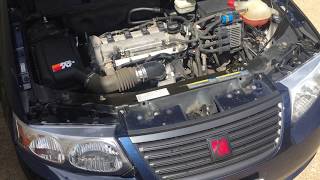
The Pontiac G5 uses the GM Ecotec engine family (primarily the 2.2L and 2.4L), which is shared with the Chevy Cobalt and HHR. These engines are known for timing chain issues, where the chain stretches or the plastic guides break, causing correlation codes like P0017. A startup rattle is a classic symptom of this wear. Additionally, the Variable Valve Timing (VVT) system, which relies on clean oil and functioning solenoids, is a frequent source of this code. Problems can range from a simple, cheap solenoid replacement to a complex and expensive timing chain job, with real-world replacement costs for the latter often exceeding $1,100.
Diagnostic Flowchart
Tap your situation to follow the diagnostic path that matches what you're seeing on this vehicle.
Symptoms You May Notice
- Check Engine Light is on
- Engine runs rough or has a rough idle
- Rattling noise from the engine, especially on startup for 2-5 seconds
- Loss of power and poor acceleration
- Engine stalls or is difficult to start
- Poor fuel economy
- Engine may crank but not start in severe cases.
- Replacing the camshaft position sensor first. The sensor is usually just the messenger, reporting a real mechanical issue with timing. Always diagnose the VVT solenoids and timing chain first.
- Assuming the timing chain is good because the engine runs smoothly. The ECM can detect a correlation error of just a few degrees, which may not be noticeable to the driver until the problem worsens.
Most Likely Causes
- Failed Exhaust Camshaft (VVT) Actuator Solenoid 🔴 High Probability → Shop Engine Camshaft The VVT solenoids on Ecotec engines can get clogged with dirty oil or fail electronically, causing them to stick. This is a very common failure point and the easiest to fix.
How to confirm: The easiest way to test is to swap the exhaust solenoid with the intake solenoid. If the code changes to P0016 (Intake Cam Correlation), the solenoid is bad. You can also test its resistance with a multimeter (spec is 8-13 ohms). When removing, inspect the small mesh screens on the solenoid; if they are clogged with sludge or torn, it's a bad sign and the solenoid should be replaced.
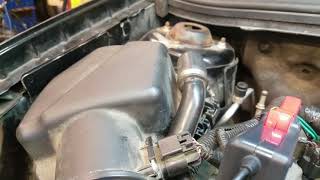
Typical fix: Replace the exhaust camshaft position actuator solenoid. It is located on top of the engine and held by a single 10mm bolt, making it an easy DIY repair. 🎬 Watch: See this VVT solenoid replacement walkthrough for your G5. Many owners replace both intake and exhaust solenoids at the same time as a preventative measure.
Est. part cost: $25-$60 - Low or Dirty Engine Oil 🔴 High Probability The VVT system uses oil pressure to adjust cam timing. If the oil is low, dirty, or the wrong viscosity (5W-30 is specified), the VVT actuators cannot function correctly. This is the most common trigger for the code appearing suddenly after a long interval.
How to confirm: Check the oil level on the dipstick and inspect its condition. If the level is low or the oil is dark and sludgy, this is a likely contributing factor. This should always be the first check.
Typical fix: Perform an oil and filter change using the correct viscosity oil (full synthetic 5W-30 is recommended). Clear the code and drive to see if it returns.
Est. part cost: $30-$70 - Stretched Timing Chain or Failed Tensioner/Guides 🟡 Medium Probability → Shop Engine Timing Chain Ecotec engines are known for timing chain stretch and failure of the plastic guides over time, especially on engines produced before tensioner design updates. A startup rattle is a key indicator of this issue. This is a more serious mechanical failure.
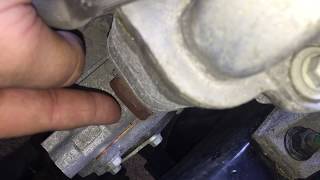
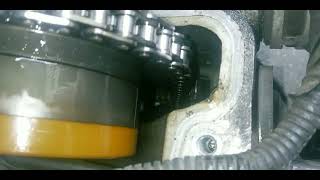
How to confirm: Listen for a distinct rattle from the front of the engine for 2-5 seconds on a cold start. 🎬 Listen: Hear an example of the Ecotec cold start rattle. The presence of both P0016 and P0017 codes simultaneously is a very strong indicator of a base timing issue. Confirmation requires removing the valve cover to inspect the chain for slack, which is a more involved process. One user on CobaltSS.net reported finding a broken timing chain guide was the cause of both codes.
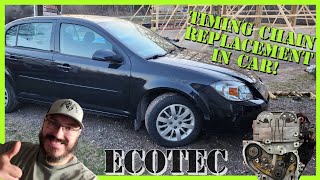
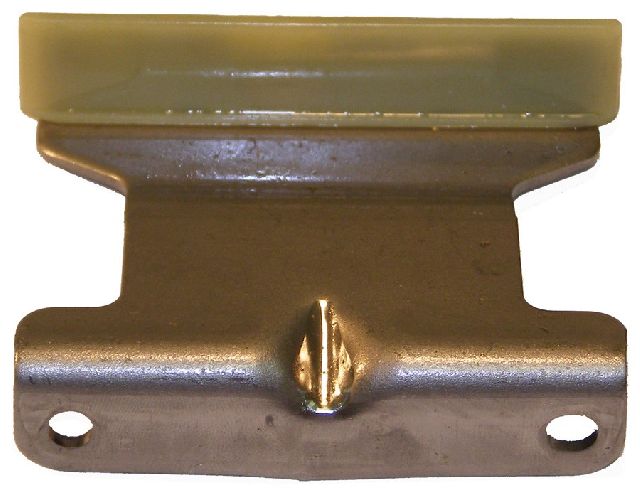
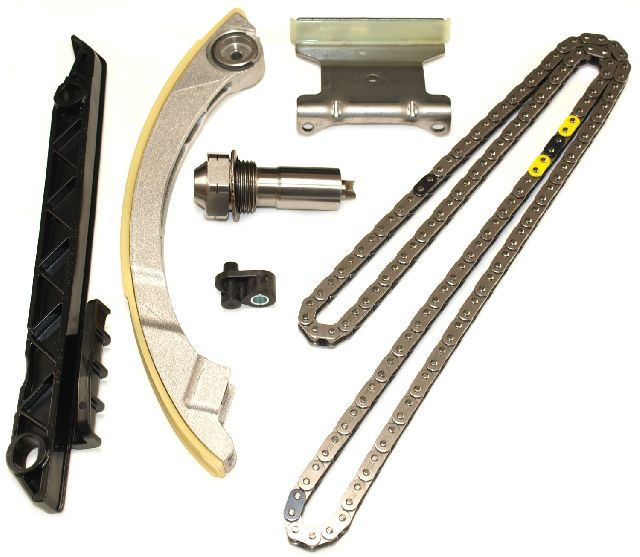
Typical fix: Replace the timing chain, tensioner, and guides as a complete kit. This is a labor-intensive job, often costing between $1,126 and $1,388 at a shop for a Chevy Cobalt. Cloyes is a popular aftermarket brand 🎬 Watch: A complete guide to replacing the Ecotec timing chain. for timing kits.
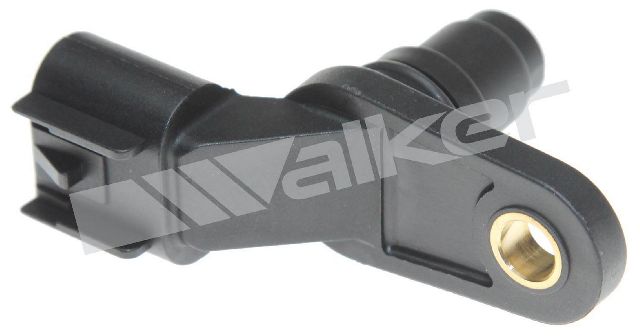
Est. part cost: $150-$400 for a kit - Failed Camshaft or Crankshaft Position Sensor ⚪ Low Probability → Shop Engine Crankshaft Position Sensor While sensors can fail, they are more likely to report a problem than be the problem itself. The sensor is often correctly detecting a mechanical timing misalignment. Misdiagnosing this is common.
How to confirm: After ruling out VVT solenoids and base timing issues, the sensor's wiring and the sensor itself can be tested with a multimeter or oscilloscope. Swapping the sensor is not a reliable diagnostic method unless you have a known good part.
Typical fix: Replace the faulty sensor. The camshaft sensor is accessible on the top of the engine.
Est. part cost: $20-$50
Rare But Worth Checking
- Slipped Camshaft Reluctor Ring: → Shop Engine Camshaft TSB #PIP4548F mentions that the reluctor ring, which the cam sensor reads, can spin on the camshaft, often due to an engine overheat. This causes a false correlation reading even with a perfectly timed engine. The reluctor cannot be repositioned; the entire camshaft must be replaced.
- Failed Camshaft Phaser (Actuator): → Shop Engine Camshaft The gear-like actuator on the end of the camshaft can fail mechanically or get stuck. TSB #PIP4716F notes this can happen if the phaser fails to park correctly, causing a startup rattle. This is a more involved repair than the solenoid.
- Faulty Engine Control Module (ECM): → Shop Engine Control Module (ECM) In a documented case on CobaltSS.net, a user with persistent P0016 and P0017 codes ultimately found the ECM was faulty. It was sending a bad signal, forcing the VVT actuators open. The fix required replacing the ECM and both VVT solenoids, which had likely been damaged by the faulty ECM signals.
Diagnosis Steps
- Check the engine oil level and condition. Top off or change the oil if it's low or dirty, using 5W-30 synthetic. This is the simplest and most crucial first step.
- Scan for other codes. Codes like P0016 or P0014 can help pinpoint the problem area. P0016 and P0017 together point heavily towards the timing chain.
- Listen for a startup rattle. A 2-5 second rattle from the front of the engine strongly points to a timing chain system issue (chain, guides, tensioner, or phasers).
- Test the VVT solenoids. Swap the intake and exhaust solenoids. They are identical and easily accessible. Clear the codes and run the engine. If the code changes to P0016, you have a bad exhaust solenoid. While they are out, inspect their screens for debris.
- If solenoids are good, inspect the VVT solenoid wiring and connectors for damage.
- If the above steps don't resolve the issue, the next step is to inspect the timing chain, guides, and tensioner for wear, damage, or slack. This requires removing the valve cover and possibly the front engine cover.
- If timing is confirmed to be correct via timing marks, investigate the possibility of a spun reluctor ring on the exhaust camshaft, as per TSB PIP4548F.
- As a final step, if all mechanical and solenoid issues are ruled out, test the camshaft and crankshaft position sensors and their circuits.
Parts You'll Likely Need
- Exhaust Camshaft Position Actuator Solenoid
(OEM #12655421 (Superseded by 12679100))— This is a very common failure point for P0017 on the Ecotec engine. It gets clogged or fails electronically, preventing proper adjustment of the exhaust cam timing.
Trusted brands: ACDelco, Delphi
OEM price range: $40-$70
Aftermarket price range: $25-$50 - Intake Camshaft Position Actuator Solenoid
(OEM #12655420 (Superseded by 12679099))— This is the corresponding solenoid for the intake camshaft. It is identical to the exhaust solenoid and is often swapped for diagnosis or replaced as a pair. The original part number 12655420 has been updated.
Trusted brands: ACDelco, Delphi
OEM price range: $40-$70
Aftermarket price range: $25-$50 - Timing Chain Kit — If the timing chain has stretched or the guides have failed, a complete kit is needed to restore proper engine timing. This is a known weak point on these engines.
Trusted brands: ACDelco, Cloyes
OEM price range: $250-$400
Aftermarket price range: $150-$250
Related Codes That Often Appear With This One
- P0016 — This is the correlation code for the intake camshaft. Seeing both P0016 and P0017 together strongly suggests a base timing issue, like a stretched timing chain affecting both cams, rather than an individual component failure.
- P0014 — This code indicates 'Exhaust Camshaft Position Timing - Over-Advanced'. It often appears with P0017 because both relate to the exhaust cam's position and can be caused by a faulty VVT solenoid or phaser.
Technical Service Bulletins (TSBs) & Recalls
- PIP4716F: Mentions P0017 with startup rattle noise, suggesting inspection of cam phasers and VVT solenoids for debris.
- PIP4548F: Advises on inspection for P0017 when the engine timing is correct, pointing to a spun camshaft reluctor ring as a potential cause that requires camshaft replacement.
Platform-Specific Known Issues
- TSB #PIP4716F notes that P0017 can be accompanied by a 'short, sharp rattle noise from the front of the engine at start up,' pointing directly to timing component issues, potentially with the cam phasers not parking correctly.
- TSB #PIP4548F discusses the possibility of the code setting even with a 'properly timed engine,' which can be caused by a spun camshaft reluctor ring, requiring camshaft replacement. This can be triggered by an engine overheat event.
Mechanic-Grade Diagnostic Values
- VVT (Camshaft Oil Control Valve) Solenoid Resistance — expected: 8 to 13 Ohms at 68°F (20°C).. Failure: A reading of zero (short), infinite/OL (open), or significantly outside the specified range indicates a faulty solenoid.
- Camshaft Position Sensor (3-wire) Power Supply Voltage — expected: Approximately 5 Volts with key on, engine off.. Failure: No voltage or significantly low voltage points to a problem with the ECM or wiring, not the sensor itself.
- Camshaft Position Sensor (3-wire) Signal Wire Voltage — expected: Switches between ~5V and ~0V as the engine is cranked. With key on, engine off, it should read a steady 5V.. Failure: If the voltage does not change while cranking, or does not drop from 5V to 0V when a piece of metal is passed in front of the sensor tip, the sensor is likely faulty.
Scan Tool Commands That Help
- Tech2 / GDS2 or equivalent professional scan tool: VVT Solenoid Control / Camshaft Position Actuator Control — This bidirectional command allows a technician to manually command the exhaust VVT solenoid ON and OFF while watching live data for the desired vs. actual camshaft angle. If the solenoid is commanded but the cam angle doesn't change, it confirms a fault in the solenoid, a clog in the oil passages, or a stuck cam phaser.
- Tech2 / GDS2 or equivalent professional scan tool: Crankshaft Position Variation Learn (CASE Relearn) — This procedure must be performed after replacing the timing chain, crankshaft sensor, or ECM. It allows the ECM to learn the precise position of the crankshaft reluctor wheel. While failure to perform it more commonly causes false misfire codes, it is a required final step for any major timing job to ensure all engine systems are correctly calibrated.
Wiring & Ground Locations
- G103 / G101 — G103 is often located on the engine block near the starter. G101 can be found on the front lower block.. These are primary engine block grounds. A loose or corroded connection at these points can cause erratic behavior from multiple sensors, including the crankshaft and camshaft position sensors, leading to false correlation codes.
- ECM Connector (E37/E67) — The ECM is located on the left side of the engine compartment, in front of the underhood fuse block.. For testing at the source: Exhaust CMP sensor signal is at Pin 48, and the VVT solenoid control wire is at Pin 31. Probing here can determine if a signal is being sent/received correctly, isolating a wiring fault from a component fault.
Real Owner Repair Stories
- CobaltSS.net forum user (Chevrolet Cobalt (shared Ecotec platform)) — Persistent P0017 code after replacing VVT solenoid and cam sensor.
❌ Tried (didn't work) Replaced exhaust VVT solenoid, Replaced exhaust camshaft position sensor
✅ What actually fixed it A shop confirmed the reluctor wheel on the exhaust camshaft had spun, causing the sensor to read an incorrect position even though the chain timing was correct. The entire exhaust camshaft had to be replaced. - YouTube repair channel (2015 Chevy Equinox 2.4L Ecotec) — P0016 and P0017 codes returned immediately after a full timing chain replacement.
❌ Tried (didn't work) A complete timing chain kit was installed with all timing marks aligned.
✅ What actually fixed it The technician discovered the timing was off by one tooth on the crankshaft sprocket despite the colored links lining up. After removing the tensioner and manually rotating the cams one tooth forward relative to the chain, the codes were resolved. This highlights how easily a one-tooth error can occur during installation. - Reddit r/MechanicAdvice user (Hyundai (similar VVT system)) — P0017 code persisted after replacing timing chain, tensioners, CVVT sprockets, and exhaust camshaft.
❌ Tried (didn't work) Replaced timing chain kit, Replaced both CVVT sprockets (phasers), Replaced exhaust camshaft, Cleaned and tested VVT solenoids
✅ What actually fixed it The user had not performed the CVVT adaptation/relearn procedure with a capable scan tool after replacing the components. Once the relearn was performed, the code cleared and did not return.
OEM Part Supersession History
Various early designs→GM Part #12608580 (or equivalent in kits like Cloyes 9-4201S)— The original timing chain tensioner design was purely hydraulic. The updated design incorporates an internal spring and ratchet mechanism that keeps tension on the chain guide even before oil pressure builds on a cold start. This prevents the chain slap/rattle that leads to premature chain and guide wear.12655421 (Exhaust), 12655420 (Intake)→12679100 (Exhaust), 12679099 (Intake)— The original VVT solenoid design was updated for improved durability and resistance to clogging from oil debris.
Heads up: The new parts are direct replacements for the old ones.
Model Year Variations Within This Range
- 2007-2008 vs 2009-2010: The 2.2L engine was updated from the L61 to the LAP generation in 2009. While both have VVT and similar architecture, the LAP engine and later 2.4L LE5 engines are more likely to have the updated timing chain tensioner design from the factory. An earlier 2007 model is at higher risk of having the original, less robust tensioner design.
Helpful Videos

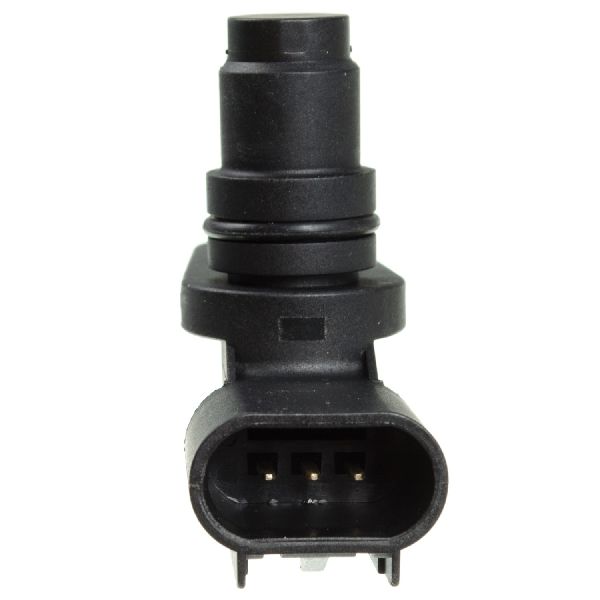
We Have This Part in Stock


The information in this article is provided for general reference and educational purposes only. Vehicle specifications, procedures, and part compatibility can vary by production date, trim level, and region. Always consult your vehicle's factory service manual and verify part numbers before purchasing or performing repairs. Safety-critical components such as airbags, seat belts, and braking systems should be installed by a qualified professional.
- Pontiac G5:
- 🧭 Diagnostic Flowchart
- 🎬 Helpful Videos
- 🛍️ Shop This Part
- What's Unique About the 2007-2010 Pontiac G5
- Symptoms You May Notice
- Most Likely Causes
- Rare But Worth Checking
- Diagnosis Steps
- Parts You'll Likely Need
- Related Codes That Often Appear With This One
- Technical Service Bulletins (TSBs) & Recalls
- Platform-Specific Known Issues
- Mechanic-Grade Diagnostic Values
- Scan Tool Commands That Help
- Wiring & Ground Locations
- Real Owner Repair Stories
- OEM Part Supersession History
- Model Year Variations Within This Range
- 🎟️ Get 5% Off