

P0017 on 2006-2010 Pontiac G6 2.4L: Exhaust Camshaft Correlation Causes and Fixes
On a 2006-2010 Pontiac G6 with the 2.4L Ecotec engine, code P0017 most often points to a faulty exhaust camshaft actuator solenoid, a relatively inexpensive part that is easy to replace. An oil and filter change should be the first step. However, it can also be a sign of a more serious stretched timing chain or failed guides, which are known issues for this engine and often produce a rattling noise on startup.
- Always check your engine oil level and condition first; low or dirty oil is a primary cause of VVT and timing issues on this engine.
- The most likely and easiest fix is a faulty exhaust camshaft actuator solenoid. A simple swap with the intake solenoid can diagnose this in minutes.
- A rattling noise from the engine on startup is a strong sign of a more serious timing chain problem. Do not ignore this symptom.
- Do not immediately replace the camshaft sensor; it is more often correctly reporting a problem than failing itself.
- Driving with this code, especially if a rattle is present, is risky and can lead to catastrophic engine failure.
What's Unique About the 2006-2010 Pontiac G6
The 2.4L Ecotec engine (RPO: LE5) used in the Pontiac G6 and other GM vehicles of this era is known for issues related to its timing system. The plastic timing chain guides can become brittle with heat and age, breaking apart and falling into the oil pan. The hydraulic chain tensioner can also fail or weaken. Both issues lead to chain slack that triggers correlation codes like P0017. Low or dirty oil significantly worsens these problems, as the variable valve timing (VVT) system and chain tensioner are dependent on clean oil and proper pressure to function. Some later model 2.4L Ecotec engines also had issues with excessive oil consumption due to piston ring design, which can starve the timing components of lubrication if the level is not checked frequently.
Symptoms You May Notice
- Check Engine Light is on
- Rough idle or engine vibration
- Difficulty starting the engine
- Loss of power and poor acceleration
- Engine stalling at low speeds
- Rattling or buzzing noise from the engine, especially on a cold startup (lasts 2-5 seconds)
- Poor fuel economy
- Replacing the camshaft position sensor when the actual fault is the camshaft position actuator solenoid. The solenoid is a more frequent failure point and should be tested first by swapping it with the intake solenoid.
- Replacing sensors or solenoids when the root cause is a mechanical timing issue like a stretched chain or broken guide. A rattling noise on startup is a key indicator of a mechanical problem that sensors won't fix.
- Using cheap aftermarket sensors or solenoids. Many forum users and mechanics report that these Ecotec engines are very sensitive and often reject non-OEM electronic parts, leading to persistent codes.
Most Likely Causes
- Failed Exhaust Camshaft Position Actuator Solenoid 🔴 High Probability → Shop Engine Camshaft These solenoids control oil flow to the cam phasers. They are a very common failure point on GM Ecotec engines, often getting clogged by oil sludge or failing electrically. The screens on the solenoids can also tear or become blocked.
How to confirm: Swap the exhaust solenoid (rear, typically with a black connector) with the identical intake solenoid (front, typically with a gray connector). Clear the codes. If the trouble code changes to P0016 (Intake Cam Correlation), the solenoid is bad. You can also test its resistance with a multimeter; it should be between 8-13 ohms.
Typical fix: Replace the exhaust camshaft position actuator solenoid. Using an OEM ACDelco part is highly recommended, as aftermarket solenoids are known to cause issues.
Est. part cost: $25-$60 - Low or Dirty Engine Oil 🔴 High Probability The entire VVT system, including the cam phasers and a hydraulic timing chain tensioner, is hydraulically operated. Low oil levels or old, sludgy oil will starve these components, causing them to function improperly and trigger timing codes. The 2.4L Ecotec can be prone to oil consumption, making regular oil level checks critical.
How to confirm: Check the engine oil level on the dipstick and inspect its condition. If the level is low or the oil is dark and thick, this is a likely contributor.
Typical fix: Perform an oil and filter change using a full synthetic oil that meets GM's dexos1 specification (typically 5W-30). Top off the oil if low. This is the cheapest and easiest first step.
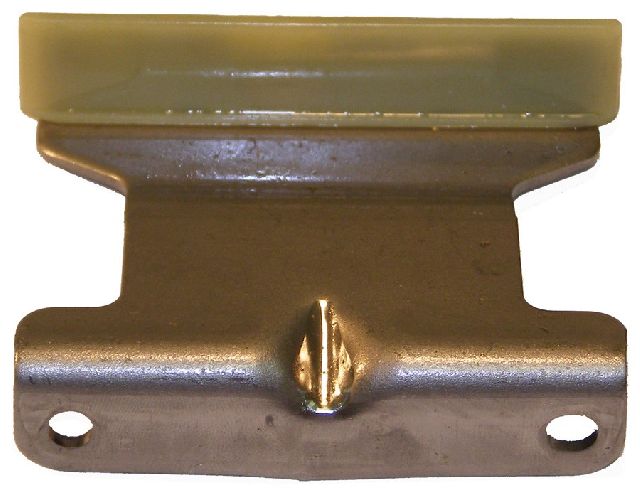
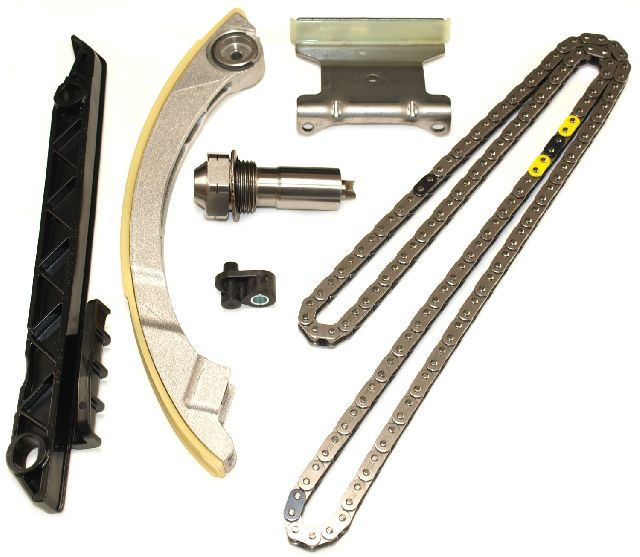
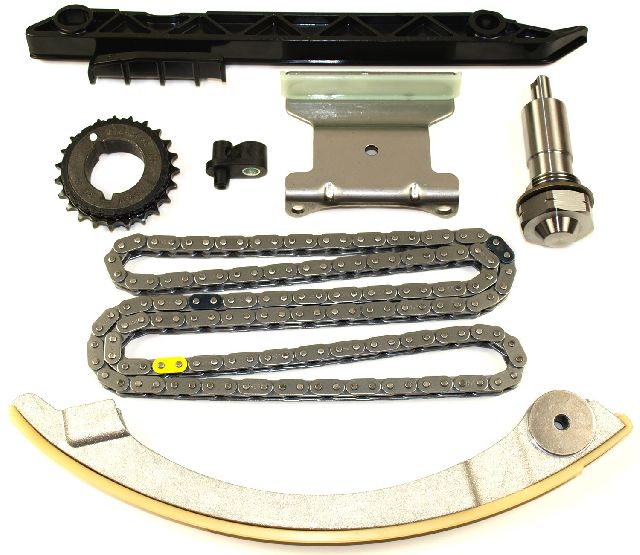
Est. part cost: $40-$80 - Stretched Timing Chain or Failed Guides/Tensioner 🟡 Medium Probability → Shop Engine Timing Chain The 2.4L Ecotec engine is known for its plastic timing chain guides becoming brittle and breaking. The tensioner can also fail, leading to chain slack. This slack causes the cam/crank correlation to be off, triggering P0017. A startup rattle is the key symptom.
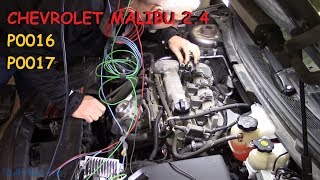
How to confirm: A distinct rattling noise from the passenger side of the engine on cold startups is a classic symptom. Confirmation requires removing the valve cover and/or timing cover to physically inspect the chain for slack, check for broken guide pieces, and verify the timing marks. 🎬 Watch: A professional diagnosis of P0016 and P0017 timing issues. This is a labor-intensive process.
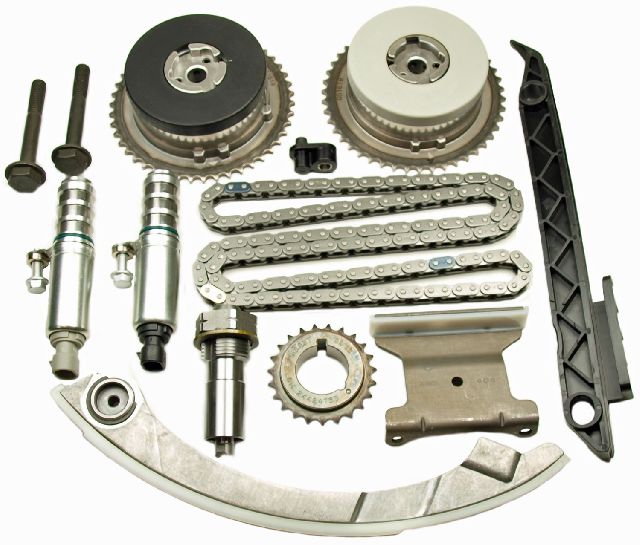
Typical fix: Replace the entire timing chain kit, which includes the chain, guides, tensioner, and sprockets/gears. The water pump is also driven by the timing chain and should be replaced at the same time.
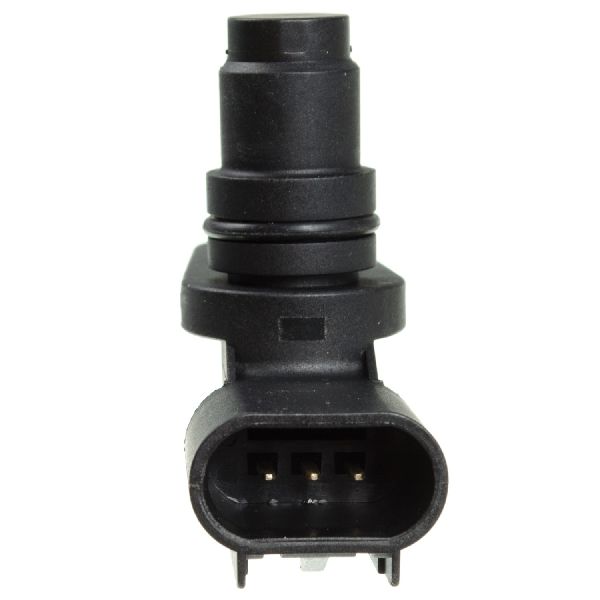
Est. part cost: $200-$550 - Faulty Exhaust Camshaft Position Sensor ⚪ Low Probability → Shop Engine Camshaft Position Sensor
How to confirm: After confirming the solenoid is good, the sensor is the next suspect. It can be tested with a multimeter or an oscilloscope. However, it's more common for the sensor to be accurately reporting a mechanical problem than for it to fail itself. As with solenoids, owners and mechanics strongly recommend using only ACDelco/GM Genuine parts for these sensors.
Typical fix: Replace the exhaust camshaft position sensor.
Est. part cost: $35-$60
Rare But Worth Checking
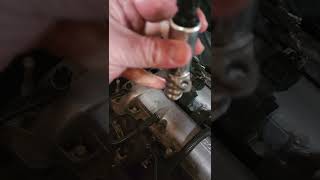
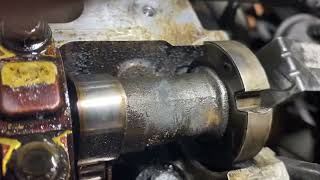
- Slipped Camshaft Reluctor Ring: → Shop Engine Camshaft GM issued a TSB (PIP4548G, and its predecessors) noting that the reluctor ring, which the camshaft sensor reads, can spin on the camshaft. This is a press-fit, un-keyed ring. If it moves, it will cause persistent P0016/P0017 codes even if the timing chain and sensors are good. A technician with an oscilloscope can confirm this by comparing cam/crank waveforms to a known-good pattern. The official fix is to replace the entire camshaft. Some owners have reported success by manually rotating the ring back to its correct position. 🎬 See how a slipped reluctor ring causes persistent timing codes.
- Failed Camshaft Phaser (Actuator): → Shop Engine Camshaft The sprocket on the end of the camshaft that actually adjusts the timing can fail mechanically or get stuck due to debris or oil starvation. This is less common than a solenoid failure but can cause the same code. Often, a timing chain kit will include new phasers.
- Chafed Crankshaft Position Sensor Wiring: → Shop Engine Crankshaft Position Sensor A less common cause for correlation codes, but a known issue on this platform for crank sensor codes in general (P0335), is wiring harness damage. GM TSB #PIP4549B notes that the engine harness can rub against the EVAP purge solenoid bracket, causing a short in the crankshaft sensor circuit. This could potentially contribute to correlation faults.
Diagnosis Steps
- Check the engine oil level and condition. If low, top it off. If dirty, perform an oil and filter change with the correct viscosity (5W-30) full synthetic oil. Clear the code and see if it returns.
- Listen for any rattling or buzzing noises from the engine during a cold start. A rattle lasting 2-5 seconds strongly points towards a timing chain, guide, or tensioner issue.
- Scan for other diagnostic trouble codes. The presence of P0016 at the same time is a strong indicator of a base timing problem.
- Test the exhaust camshaft position actuator solenoid. The easiest method is to swap it with the intake solenoid. They are identical and located on top of the valve cover, held by a 10mm bolt. 🎬 Watch: How to replace the VVT solenoids on an Ecotec engine. The exhaust is at the rear (black connector) and intake is at the front (gray connector). Clear the codes and run the engine. If P0017 disappears and P0016 appears, the solenoid you moved is faulty and must be replaced.
- If the solenoid swap does not isolate the problem, inspect the wiring and connectors for both the camshaft and crankshaft position sensors for any signs of damage, corrosion, or oil contamination.
- If sensors and solenoids test good, the cause is almost certainly a mechanical timing issue. This requires inspecting the timing chain, guides, and tensioner, which is a significant job. At this stage, professional diagnosis is recommended.
- If a new timing set is installed and the code persists, the final check should be for a slipped camshaft reluctor ring, as documented in TSB PIP4548G. This requires an oscilloscope or camshaft replacement.
Parts You'll Likely Need
- Exhaust Camshaft Position Actuator Solenoid
(OEM #12655421 (often superseded by 12679099))— This is the most common failure point for P0017 on the 2.4L Ecotec. It's an electronically controlled valve that gets clogged or fails, preventing proper cam phasing.
Trusted brands: ACDelco (GM Genuine), Delphi
OEM price range: $40-$60
Aftermarket price range: $25-$45 - Timing Chain Kit — If the chain is stretched or the plastic guides are broken, a complete kit is required. This is a known weak point of the LE5 engine.
Trusted brands: ACDelco (GM Genuine), Cloyes, Melling
OEM price range: $350-$550
Aftermarket price range: $200-$400
Related Codes That Often Appear With This One
- P0016 — This code is for the intake camshaft correlation. If both P0016 and P0017 appear together, it strongly suggests a base timing issue, such as a stretched or jumped timing chain affecting both camshafts.
- P0014 — This code indicates the exhaust camshaft timing is over-advanced. It can be caused by a sticking VVT solenoid or a stretched chain, both of which are also common causes for P0017.
- P0011 — This is the over-advanced code for the intake camshaft. It may appear alongside P0017 if there are widespread oiling issues or after swapping a faulty exhaust solenoid to the intake side for diagnosis.
Technical Service Bulletins (TSBs) & Recalls
- PIP4548G: Documents the rare but frustrating issue of the press-fit camshaft reluctor ring spinning on the camshaft, causing persistent P0016/P0017 codes even with correct mechanical timing. The fix is camshaft replacement.
- PIP4716F: Addresses a short, sharp rattle noise from the engine on startup, which may be accompanied by codes like P0011, P0014, P0016, or P0017. It points to cam actuators not parking correctly.
- PIP4549B: While for code P0335 (Crank Sensor Circuit), this TSB is relevant as it identifies a common chafing point where the engine wiring harness can rub against the EVAP purge solenoid bracket, causing shorts in the crank sensor wiring that could potentially affect correlation codes.
Platform-Specific Known Issues
- The 2.4L Ecotec engine is known for failure of its plastic timing chain guides, which can break apart, fall into the oil pan, and cause chain slack.
- The water pump is driven by the timing chain, which adds complexity and cost to a timing chain replacement job.
- A TSB (PIP4548G) was issued for a rare but possible issue where the camshaft reluctor ring can spin on the camshaft, causing persistent timing codes that cannot be fixed by replacing sensors or timing components.
Mechanic-Grade Diagnostic Values
- Camshaft Position Actuator Solenoid (VVT Solenoid) Resistance — expected: 8 to 13 Ohms at 68°F (20°C).. Failure: A reading outside this range, an open circuit (OL), or a reading that fluctuates wildly when wiggling the connector pins indicates a faulty solenoid.
- VVT Solenoid Harness Connector Voltage (Key On, Engine Off) — expected: Approximately 12V (Battery Voltage) on the power supply pin.. Failure: No voltage or significantly low voltage suggests a problem in the wiring, a blown fuse, or an issue with the ECM's power supply circuit, not the solenoid itself.
- Scan Tool: Desired vs. Actual Camshaft Position Angle — expected: The 'Actual' angle reported by the sensor should track the 'Desired' angle commanded by the ECM within a few degrees as engine RPM changes.. Failure: A large, persistent deviation between the desired and actual angles, or an actual angle that is stuck and does not respond to commanded changes, points to a mechanical or hydraulic issue (stuck phaser, bad solenoid, low oil pressure).
Scan Tool Commands That Help
- Tech2 / GDS2: Camshaft Position Actuator Solenoid Test — This bidirectional control allows a technician to command the VVT solenoid to a specific duty cycle (e.g., 0%, 25%, 50%) while monitoring the 'Actual' vs. 'Desired' cam angle PIDs. This can confirm if the solenoid is responding electrically and if the cam phaser is responding mechanically, helping to isolate a faulty solenoid from a stuck phaser or oil flow problem without disassembly.
- Tech2 / GDS2: Crankshaft Position Variation Learn (CASE Relearn) — This procedure is mandatory after replacing the crankshaft position sensor or the Engine Control Module (ECM). It synchronizes the sensor's signal with the ECM to ensure accurate timing and misfire detection. Failing to perform this can sometimes lead to false correlation codes.
Wiring & Ground Locations
- G105 — On the left rear side of the engine compartment, located on an engine/transmission stud, typically below the upper coolant hose.. This ground is shared by multiple critical components including the Engine Control Module (ECM), Transmission Control Module (TCM), and the Park/Neutral Position Switch. A poor connection at G105 can cause erratic behavior and communication errors for the ECM, potentially leading to incorrect diagnostic codes.
- G106 — For the 2.4L LE5 engine, this ground is located on the left rear of the engine.. This is another primary engine ground. A loose or corroded G106 can cause a variety of sensor and module issues, as components may seek a ground path through other, unintended circuits, leading to voltage drops and noisy signals for sensors like the crank and cam sensors.
- VVT Solenoid Connectors — On top of the valve cover. The intake solenoid connector is at the front (radiator side) and is typically gray. The exhaust solenoid connector is at the rear (firewall side) and is typically black.. These connectors are physically identical and can be accidentally swapped during service (like a valve cover gasket replacement). Swapping them will cause the ECM to command the wrong phaser, immediately setting correlation codes P0016 and P0017.
Real Owner Repair Stories
- YouTube channel 'A2Z Auto Masters' (2007 Pontiac G6 2.4L Ecotec) — Check engine light with codes P0014, P0016, and P0106.
❌ Tried (didn't work) A previous mechanic had replaced the camshaft position sensors and camshaft actuators (solenoids).
✅ What actually fixed it The technician observed that the wiring harness connectors for the intake (gray) and exhaust (black) VVT solenoids had been swapped. Plugging the correct color connector into the corresponding solenoid resolved the issue.
OEM Part Supersession History
12655421 (Exhaust)→12679100, 12679099 (often sold as a universal fit for intake/exhaust)— Improved design or consolidation of part numbers. The newer parts may have updated screen material or coil windings.
Heads up: While the newer parts are backward compatible, it is critical to use OEM ACDelco parts. Aftermarket solenoids for this engine are notoriously unreliable and can cause the code to return or introduce new VVT-related codes.
Model Year Variations Within This Range
- 2006 - Mid-2007 vs. Mid-2007 - 2010: In July 2007, the 2.4L LE5 engine switched from GKN-forged connecting rods to C70 forged connecting rods. Additionally, around 2007, the engine controller was updated to the E37, which used new crank and cam sensors compared to the earliest Ecotecs. While these changes don't directly alter the cause of P0017, it's important to ensure correct sensor part numbers for the specific year.
Diagnostic Flowchart
Other Known Issues on This Vehicle
Issues unrelated to this code that are worth knowing about as an owner of this generation:
- Electric Power Steering (EPS) Failure 🔴 High — Very common, especially on 2006-2009 models. Can occur suddenly at various mileages (e.g., 70k-100k miles). (Ref: GM Recalls #14V224000, #14V153000. GM also had special coverage adjustments.)
- 4T45-E Automatic Transmission Problems 🔴 High — Common failure point, often between 130,000-180,000 miles. Symptoms include hard shifting, no 1st gear (limp mode), or no movement. (Ref: Commonly caused by failed shift solenoids (P0751) or a failed Torque Converter Clutch (TCC) solenoid.)
- Body Control Module (BCM) Electrical Gremlins 🟠 Medium — Widespread reports of various electrical issues. Can cause brake lights to stay on or not work, turn signal faults, and 'error' messages on the odometer. (Ref: GM Recall #14V252000 addressed BCM issues causing brake light malfunctions.)
- Sunroof Drain Clogs and Water Leaks 🟡 Low — A very common annoyance where sunroof drain tubes get clogged with debris, causing water to leak into the cabin, often onto the headliner or into the footwells.
- Intermediate Steering Shaft Noise 🟡 Low — Commonly causes a clunking or grinding noise when turning the steering wheel at low speeds. Often requires lubrication or replacement of the intermediate steering shaft.
Used vs. New Parts: Buying Guide for This Vehicle
When a used part is the smart pick: For this repair, buying used parts is generally not recommended. The key failure components (solenoids, sensors, timing chain) are wear items or prone to failure from oil contamination. A used part from a salvage yard carries the same risks as the part being replaced.
Donor-vehicle mileage cap: roughly under 80000 miles for the part to have meaningful remaining life.
What to inspect on the donor part:
- If considering a used part is unavoidable (e.g., a complete engine), look for evidence of regular oil changes (no heavy sludge under the oil cap).
- Avoid engines that show signs of heavy oil leaks from the timing cover or valve cover, as this may indicate prolonged neglect.
- Ask for compression test results if possible; healthy LE5 engines should show 165-175 PSI per cylinder.
OEM-only on this vehicle (don't cheap out):
- Camshaft Position Actuator Solenoids (VVT Solenoids)
- Camshaft Position Sensors
- Crankshaft Position Sensor
Aftermarket brands forum-validated for this vehicle:
- Cloyes (for Timing Chain Kits)
- Melling (for Timing Chain Kits and Oil Pumps)
- Delphi (often an OEM supplier, acceptable for solenoids if ACDelco is unavailable)
Brands owners have reported issues with on this vehicle:
- Unbranded, 'white-box' solenoids and sensors from online marketplaces are frequently reported on forums to be dead-on-arrival or fail within a few months.
Real Owner Stories
Aggregated from forums and TSBs cited above. Mileages and costs reflect what owners reported in those sources.
2008 Chevrolet Malibu 2.4L LE5
Symptoms: Persistent P0017 code remained even after a full timing chain replacement.
What fixed it: The exhaust cam reluctor ring had shifted; the issue was diagnosed using an oscilloscope and required addressing the shifted ring as per TSB PIP4548G.
Source hint: YouTube - P0017 Won't Go Away? It Might Be This Hidden GM Issue
2006-2010 Pontiac G6 2.4L Ecotec
Symptoms: P0017 and P0008 error codes appearing together.
What fixed it: Replacement of the timing chain, which is a known culprit for P0017 on these models when paired with other timing codes.
Source hint: G6 Owners Club - P0017 and P0008 error codes
GM 2.4L Ecotec
Symptoms: Persistent P0017 after a full timing job.
What fixed it: The un-keyed reluctor ring on the exhaust camshaft had spun slightly; the mechanic manually rotated it back into position.
Source hint: YouTube - GM 2.4L P0017 strange fix
Related OBD-II Codes
Frequently Asked Questions
My 2.4L G6 has a rattling noise for about 5 seconds when I first start it in the morning. Is this related to P0017?
I replaced the timing chain and sensors on my Pontiac, but P0017 won't go away. What else could it be?
Can I just swap the solenoids to see if one is bad before buying parts?
Should I use aftermarket parts for the camshaft position actuator solenoids?
Is there a specific oil I should use to prevent VVT issues on my G6?
Could a wiring issue cause P0017 on my 2.4L Ecotec?
Helpful Videos
We Have This Part in Stock


The information in this article is provided for general reference and educational purposes only. Vehicle specifications, procedures, and part compatibility can vary by production date, trim level, and region. Always consult your vehicle's factory service manual and verify part numbers before purchasing or performing repairs. Safety-critical components such as airbags, seat belts, and braking systems should be installed by a qualified professional.
- Pontiac G6:
- 🧭 Diagnostic Flowchart
- 🎬 Helpful Videos
- 🛍️ Shop This Part
- What's Unique About the 2006-2010 Pontiac G6
- Symptoms You May Notice
- Most Likely Causes
- Rare But Worth Checking
- Diagnosis Steps
- Parts You'll Likely Need
- Related Codes That Often Appear With This One
- Technical Service Bulletins (TSBs) & Recalls
- Platform-Specific Known Issues
- Mechanic-Grade Diagnostic Values
- Scan Tool Commands That Help
- Wiring & Ground Locations
- Real Owner Repair Stories
- OEM Part Supersession History
- Model Year Variations Within This Range
- Other Known Issues on This Vehicle
- Used vs. New Parts: Buying Guide for This Vehicle
- Real Owner Stories
- 2008 Chevrolet Malibu 2.4L LE5
- 2006-2010 Pontiac G6 2.4L Ecotec
- GM 2.4L Ecotec
- Related OBD-II Codes
- Frequently Asked Questions
- 🎟️ Get 5% Off