

P0017 on 2008-2009 Pontiac Torrent 3.6L: Causes and Fixes for Timing Chain Issues
On a 2008-2009 Pontiac Torrent with the 3.6L V6 engine, the P0017 code almost always indicates a stretched timing chain. This is a well-documented issue and a major repair that can cost between $2,000 and $3,500. GM acknowledged this with a special warranty extension (#11340C) that has since expired. Do not replace sensors before having the timing system inspected, as this is a common misdiagnosis.
- P0017 on a 2008-2009 Torrent with the 3.6L V6 is a serious code that almost certainly indicates a stretched timing chain.
- Do not waste money replacing the camshaft or crankshaft sensors; they are very rarely the cause of the problem.
- The first and easiest step is to check the engine oil level and condition. Low or dirty oil can cause or worsen this issue.
- The correct repair is a complete timing chain service, which is a very expensive and complex job that should be handled by a professional.
- Ignoring this code can lead to the timing chain breaking, which will cause catastrophic engine failure.
What's Unique About the 2008-2009 Pontiac TORRENT
The 3.6L LY7 V6 engine used in the Torrent GXP model is notorious for premature timing chain stretch. This issue was so common that it led to class-action lawsuits and prompted General Motors to release multiple Technical Service Bulletins (TSBs) and Special Coverage Adjustment #11340C. This program extended the warranty for timing chain failure to 10 years or 120,000 miles, though it has now expired for all eligible vehicles. The root causes are a combination of an early timing chain design prone to wear and an overly optimistic oil life monitoring system (OLM) that led to extended oil change intervals and oil degradation. As a result, P0017 on this vehicle is rarely a simple sensor failure and almost always points to the need for a major timing chain service.
Diagnostic Flowchart
Tap your situation to follow the diagnostic path that matches what you're seeing on this vehicle.
Symptoms You May Notice
- Check Engine Light is on
- Reduced engine power and poor acceleration
- Rough or unstable idle
- Rattling noise from the engine, especially on a cold start for 2-5 seconds
- Difficulty starting the engine, or it cranks but won't start
- Poor fuel economy
- Replacing the camshaft position sensor
- Replacing the crankshaft position sensor
- Replacing only the VVT solenoids without checking mechanical timing
Most Likely Causes
- Stretched Timing Chains 🔴 High Probability → Shop Engine Timing Chain The original timing chains on the 3.6L LY7 engine were susceptible to premature wear due to their design and lubrication issues exacerbated by long oil change intervals. GM TSBs #PIP3423P and #12-06-01-009F directly link this code to stretched timing chains.
How to confirm: A technician can use a scan tool to read cam/crank correlation data. A physical inspection confirming chain slack by removing the front engine cover is the definitive diagnosis, but this is labor-intensive.
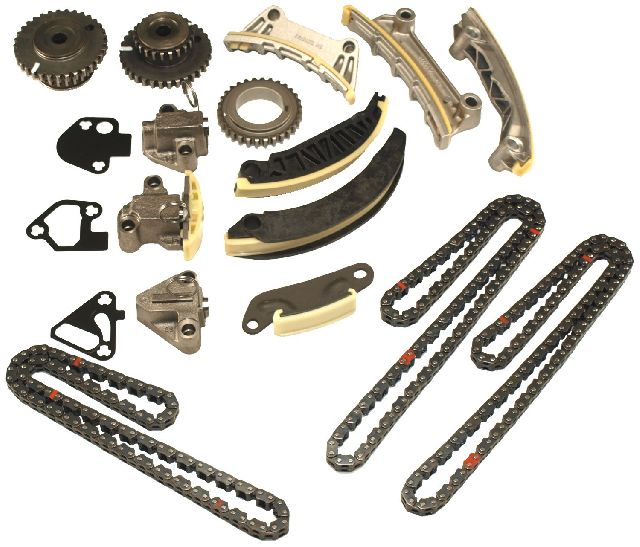
Typical fix: Replace all three timing chains, the tensioners, and the guides with an updated kit. This is a major repair. It is critical to use the complete, updated kit to prevent a recurrence.
Est. part cost: $250-$600 - Failed Timing Chain Tensioners 🔴 High Probability → Shop Engine Timing Chain The tensioners are hydraulically actuated and can fail or lose their ability to keep the chains tight, often due to oil pressure issues from degraded oil or internal seal failure. They are considered an integral part of the timing chain system.
How to confirm: Diagnosed during a physical inspection of the timing system. A rattling noise is a common symptom. A failed tensioner allows slack in the chain, causing the correlation fault.
Typical fix: Tensioners are always replaced as part of a complete timing chain service. They should never be replaced in isolation without also replacing the chains.
Est. part cost: $100-$200 (part of kit) - Low or Degraded Engine Oil 🟡 Medium Probability The timing chain tensioners and camshaft phasers are hydraulically operated by engine oil. Low or dirty oil, often a result of following the original OLM recommendations, can't provide the necessary pressure, leading to slack and correlation errors. This starves the VVT system and accelerates wear on the chains.
How to confirm: Check the oil level on the dipstick and inspect its condition. If it's low or looks like sludge, this is a likely contributor. An engine flush may be attempted, but if the chains are already stretched, it will not solve the problem.
Typical fix: Perform an oil and filter change with the correct viscosity oil (5W-30). In some cases, an engine flush may help if sludge is present, but often the damage to the chains is already done and they will require replacement.
Est. part cost: $40-$80 - Faulty Camshaft Actuator Solenoid (VVT Solenoid) ⚪ Low Probability → Shop Engine Camshaft These solenoids control oil flow to the cam phasers. They can get clogged with sludge from degraded oil or fail electrically. While a possible cause, it's far less common than chain stretch on this engine.
How to confirm: Can be tested by swapping the Bank 1 exhaust solenoid with another one (e.g., intake) to see if the code changes (e.g., to P0016). A scan tool can also command the solenoid to check its response.
Typical fix: Replace the faulty solenoid. They are relatively easy to access on top of the engine.
Est. part cost: $30-$70
Rare But Worth Checking
- Slipped Crankshaft Reluctor Wheel: → Shop Engine Crankshaft TSB #PIP3423P notes that the reluctor ring, which the crankshaft position sensor reads, can physically move on the crankshaft due to an insufficient press fit. This will cause correlation codes even with perfect timing chains. A forum user confirmed this fix on a related engine, noting it can be checked by removing the oil pan and inspecting the wheel's position relative to the crankshaft edge. The official fix is crankshaft replacement, though some have repositioned and tacked the wheel in place.
- Faulty Camshaft or Crankshaft Position Sensor: → Shop Engine Crankshaft Position Sensor While possible, a sensor failure is very unlikely to be the root cause on this specific engine. The sensors are usually accurately reporting a real mechanical timing problem. Replacing them is a common misdiagnosis that will not fix the underlying issue.
Diagnosis Steps
- Verify the engine oil level and condition. If low or dirty, perform an oil and filter change and clear the codes to see if the problem persists. This is a crucial first step due to the hydraulic nature of the VVT system.
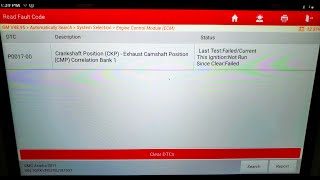
- Use a professional scan tool to check for other DTCs. Codes like P0008, P0016, P0018, or P0019 strongly indicate a timing chain issue.
- Observe live data on the scan tool for camshaft/crankshaft correlation angles (Cam/Crank Correlation PIDs). Deviations beyond 4-6 degrees at idle confirm a timing problem.
- Inspect the wiring and connectors for the Bank 1 exhaust camshaft position sensor and the crankshaft position sensor for any damage or corrosion.
- If timing chain stretch is suspected, a physical inspection is required. This involves removing the engine front cover to measure the slack in the chains, which is a labor-intensive step.
- If timing chains are found to be tight, investigate the possibility of a slipped crankshaft reluctor wheel as per TSB #PIP3423P. This can be visually inspected with a borescope through the crank sensor hole or by removing the oil pan.
Parts You'll Likely Need
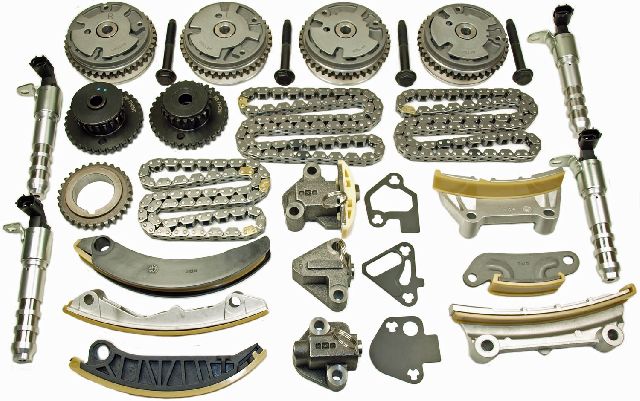
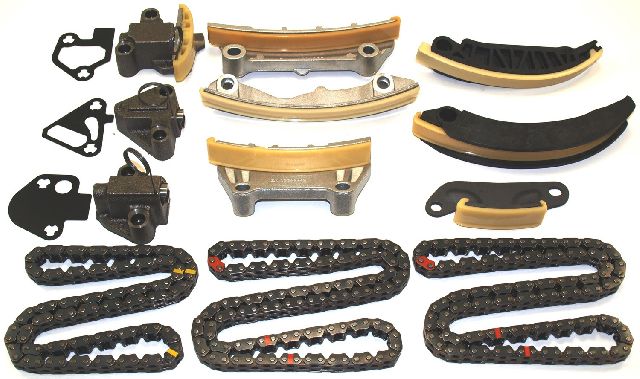
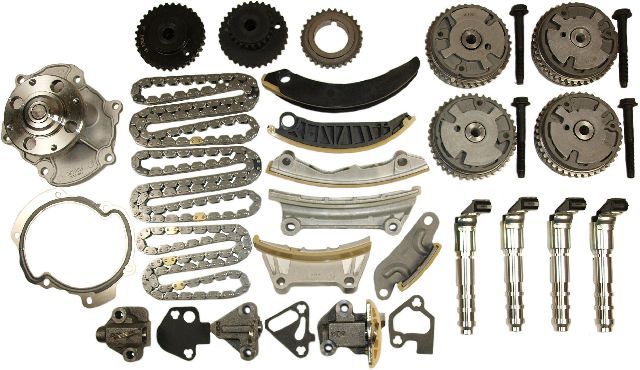
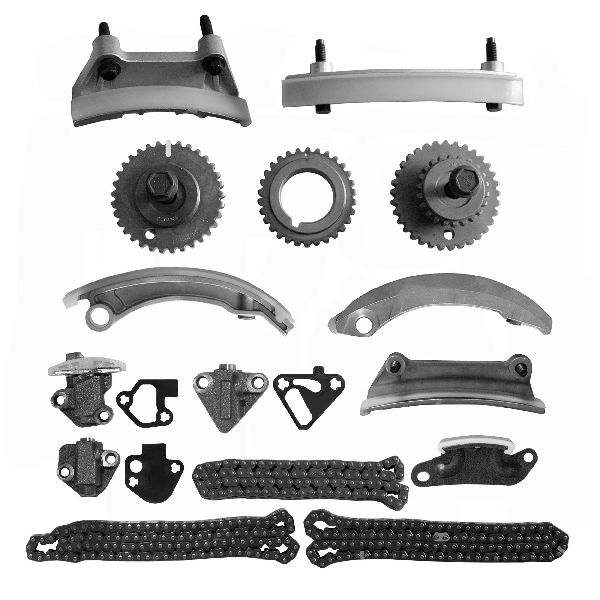
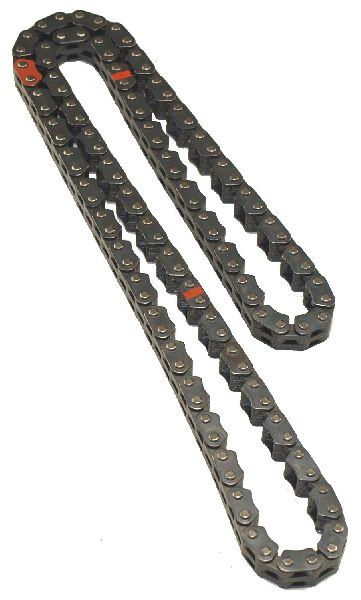
- Timing Chain Kit
(OEM #12650231)— This is the definitive fix for the common stretched timing chain issue. The kit should include all three chains, all tensioners, and all guides. Per GM Special Coverage bulletin #11340C, part number 12650231 is specified for 2008-2009 models with the LY7 engine.
Trusted brands: ACDelco, Cloyes
OEM price range: $400-$600
Aftermarket price range: $250-$450
Related Codes That Often Appear With This One
- P0008 — A general engine position system performance code for Bank 1, often the first code to appear when the primary timing chain stretches. It is explicitly mentioned in TSBs alongside P0017.
- P0016 — Indicates a correlation error on the Bank 1 intake camshaft. It often appears with P0017 when the timing chain issue is significant enough to affect both camshafts on the bank.
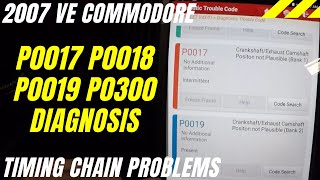
- P0018 — Indicates a correlation error on the Bank 2 intake camshaft. Seeing codes for both banks (P0016/P0017 and P0018/P0019) strongly points to a stretched primary timing chain affecting the entire engine.
- P0019 — Indicates a correlation error on the Bank 2 exhaust camshaft. Seeing codes for both banks strongly points to a stretched primary timing chain.
Technical Service Bulletins (TSBs) & Recalls
- PIP3423P: Notes that codes P0016, P0017, P0018, P0019, P0008, or P0009 can be caused by loose timing chains, tensioners, or a slipped crankshaft reluctor wheel.
- 12-06-01-009F: Details the availability of updated timing chain kits for repairing stretched timing chains that cause DTCs P0008, P0009, P0016, P0017, P0018 and/or P0019 on the 3.6L V6 engine.
- 11340C: This was the Special Coverage Adjustment that extended the warranty on timing chains to 10 years/120,000 miles for this issue.
Platform-Specific Known Issues
- Stretched Timing Chains due to Oil Life Monitor: → Shop Engine Timing Chain This is the most significant issue. GM's original Oil Life Monitor (OLM) calibration allowed for oil change intervals that were too long, leading to oil breakdown. This degraded oil failed to properly lubricate the timing chains, causing them to stretch prematurely. GM acknowledged this by issuing Special Coverage Adjustment #11340C and later updating the OLM software in affected vehicles.
- Slipped Crankshaft Reluctor Wheel: → Shop Engine Crankshaft TSB #PIP3423P warns that after ruling out timing chains, the underlying cause could be a crankshaft reluctor wheel that has physically moved. This will cause persistent timing codes even after a new chain set is installed. The fix requires either crankshaft replacement or repositioning and securing the wheel.
Mechanic-Grade Diagnostic Values
- Camshaft Position Actuator Solenoid (VVT Solenoid) Resistance — expected: 4.6-7.5 Ohms for the LY7 engine. Some general GM sources state 8-13 Ohms.. Failure: A reading of 0 Ohms (short), infinite/OL (open), or a value significantly outside the expected range indicates a failed solenoid.
- Scan Tool 'Camshaft Position Variance' PID — expected: Less than +/- 4 degrees at idle.. Failure: A consistent deviation greater than 4-6 degrees strongly suggests a mechanical timing issue. The ECM may set the code when deviation exceeds 10 degrees.
- Camshaft Position (CMP) Sensor 5V Reference Circuit — expected: 4.8-5.2 Volts with key on, engine off.. Failure: Voltage outside this range suggests a problem with the ECM or the wiring harness.
- Slipped Crankshaft Reluctor Wheel Inspection (per TSB PIP3423P) — expected: A measurement of 25 to 26 mm from the end of the machined surface of the crankshaft throw to the edge of the open space in the reluctor.. Failure: Any significant deviation from the 25-26mm measurement, viewed either clockwise or counter-clockwise, indicates the wheel has slipped.
Scan Tool Commands That Help
- GM Tech2 / GDS2 or equivalent: Camshaft Position Actuator Test (Bidirectional Control) — This allows a technician to manually command the VVT solenoid to activate. If the engine's idle does not change or stall, it points to a faulty solenoid, a clogged oil passage, or a stuck phaser, helping to rule out the component without disassembly.
- GM Tech2 / GDS2 or equivalent: Crankshaft Position Variation Learn (CASE Relearn) — This procedure is required after replacing the timing chains, crankshaft sensor, or ECM. It allows the ECM to learn the minor variations in the crankshaft reluctor wheel to ensure accurate misfire detection and timing.
Wiring & Ground Locations
- G111 (for 3.4L, similar location for 3.6L) — Located at the rear of the engine, near the crankshaft sensor.. A poor ground connection here can affect the crankshaft position sensor's signal, which is a primary input for calculating cam/crank correlation.
- G107 / G108 / G109 — Located on the upper front (G107) and rear (G108/G109) sides of the engine/cylinder heads.. These are primary engine grounds. A loose or corroded connection can cause intermittent electrical issues for various engine management sensors and actuators, including the camshaft sensors and VVT solenoids.
- G101 — Located at the lower front of the engine block.. This is a main ground for the Engine Control Module (ECM). A faulty ground here can cause unpredictable behavior from the ECM and the systems it controls, including the VVT system.
- ECM Connector C1, Pin 20 — On the Engine Control Module (ECM), which is mounted on top of the battery cover.. On a similar LY7 engine, the signal wire for the Bank 1 Exhaust Camshaft Position sensor is a Dark Green wire at Pin 20. This is a critical point for testing signal continuity between the sensor and the ECM to rule out a wiring harness fault.
Real Owner Repair Stories
- YouTube user Kevin Nadeau (Cadillac CTS with 3.6L V6 (LY7)) — Check Engine Light with codes P0008 and P0017.
❌ Tried (didn't work) The user went straight to diagnosis rather than replacing parts randomly.
✅ What actually fixed it The user inspected the Bank 1 (passenger side) camshaft position sensors and found the exhaust sensor ('Sensor B') had a significant buildup of oil sludge. After cleaning the area and replacing the sensor, the codes were cleared and did not return after a five-mile test drive. This highlights the importance of checking for oil contamination as a first step.
OEM Part Supersession History
12650231→12700435— The part number for the complete timing chain kit has been updated by GM over time as revisions were made. 12650231 was the number specified in earlier service bulletins for the LY7.
Helpful Videos
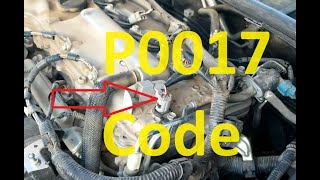

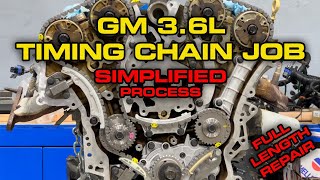
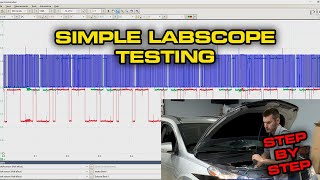
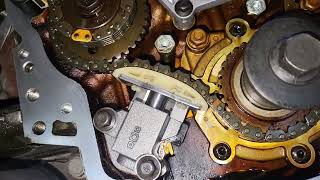
![How to Fix P0017 Engine Code in 6 Minutes [4 DIY Methods / Only $6.81]](https://img.youtube.com/vi/Vcj-f_J2hyo/mqdefault.jpg)


We Have This Part in Stock

The information in this article is provided for general reference and educational purposes only. Vehicle specifications, procedures, and part compatibility can vary by production date, trim level, and region. Always consult your vehicle's factory service manual and verify part numbers before purchasing or performing repairs. Safety-critical components such as airbags, seat belts, and braking systems should be installed by a qualified professional.
- Pontiac TORRENT:
- 🧭 Diagnostic Flowchart
- 🎬 Helpful Videos
- 🛍️ Shop This Part
- What's Unique About the 2008-2009 Pontiac TORRENT
- Symptoms You May Notice
- Most Likely Causes
- Rare But Worth Checking
- Diagnosis Steps
- Parts You'll Likely Need
- Related Codes That Often Appear With This One
- Technical Service Bulletins (TSBs) & Recalls
- Platform-Specific Known Issues
- Mechanic-Grade Diagnostic Values
- Scan Tool Commands That Help
- Wiring & Ground Locations
- Real Owner Repair Stories
- OEM Part Supersession History
- 🎟️ Get 5% Off