

P0017 on 2015-2018 Porsche Macan 3.6L Turbo: Exhaust Cam Timing Fixes
On the 2015-2018 Macan 3.6L V6, P0017 often points to a failing VVT solenoid or incorrect timing after a separate repair, like the common timing cover oil leak. Start by checking your oil level and quality, then inspect the Bank 1 exhaust VVT solenoid before suspecting a major timing issue. A mechanical timing error is highly probable if the timing cover service was recently performed.
- Always check engine oil level and condition first; low or dirty oil is a simple fix that can cause this complex code.
- Be aware of the common timing chain cover oil leak on these models. If this service was recently performed, the P0017 code is very likely due to a mechanical timing error during reassembly.
- Before suspecting major mechanical failure like a stretched timing chain, diagnose the Bank 1 exhaust VVT solenoid. It is a more common failure point and much easier to replace.
- If both P0016 (intake) and P0017 (exhaust) codes are present, the problem is almost certainly a base timing issue (chain, tensioner, or incorrect setup).
What's Unique About the 2015-2018 Porsche Macan
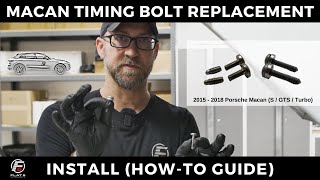
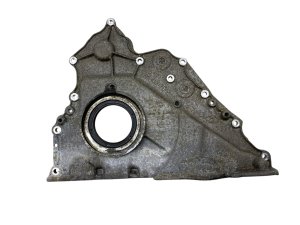
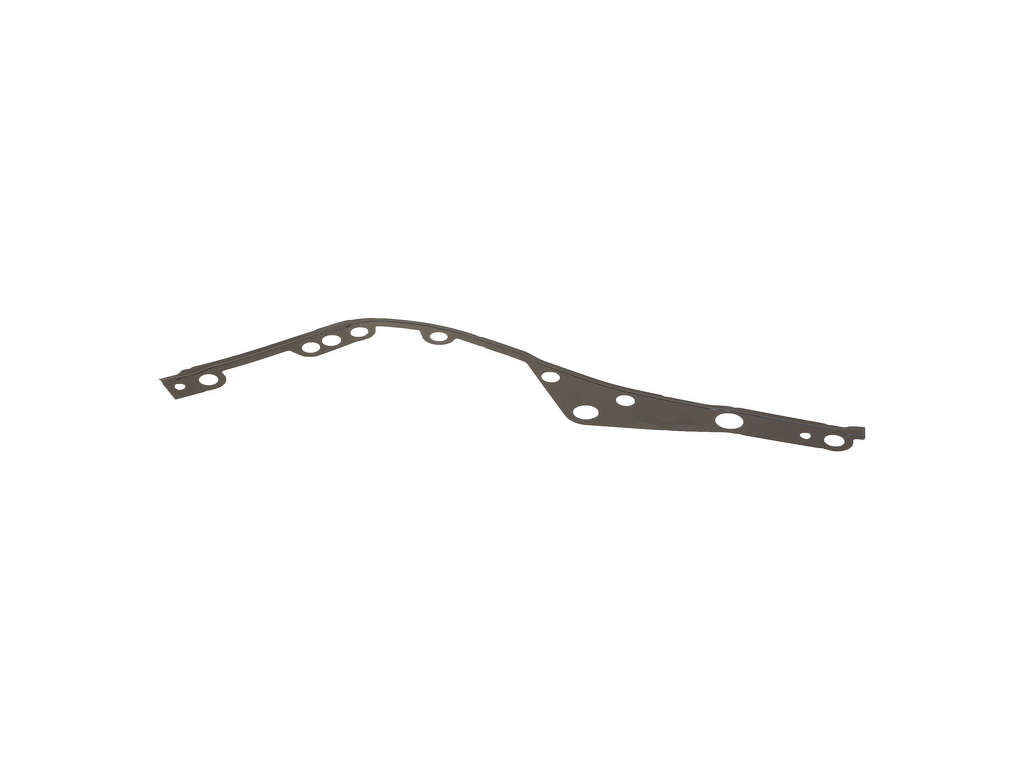
The 2015-2018 Macan V6 engines are notorious for a timing chain cover oil leak caused by stretching or breaking aluminum bolts. 🎬 Watch: Step-by-step guide to replacing those broken timing cover bolts. This issue is critical context for P0017. The code can appear due to low oil pressure from the leak affecting the Variable Valve Timing (VVT) system. More frequently, it may be triggered due to incorrect mechanical timing after the complex timing cover repair has been performed. A Rennlist forum member reported this exact scenario, where a P0017 code appeared immediately after a timing cover service, and physical inspection revealed the Bank 1 exhaust cam was off by approximately 6 degrees. Owners should be highly aware of the vehicle's service history when this code appears.
Symptoms You May Notice
- Check Engine Light is on
- Rough or unstable idle, can feel 'lumpy'
- Reduced engine power and poor acceleration
- Engine may hesitate or stall at low speeds
- Rattling noise from the engine, especially on startup
- Noticeable loss of power under boost
- Immediately replacing the camshaft position sensor. The code indicates a 'correlation' problem, which is more often a mechanical (timing alignment) or hydraulic (oil pressure/VVT solenoid) issue rather than a complete failure of the sensor itself.
- Assuming a stretched timing chain without checking VVT solenoids or service history first. The solenoids are far easier and cheaper to diagnose and replace, and a recent timing cover service is a much stronger indicator of the root cause.
Most Likely Causes
- Incorrect Camshaft Timing After a Recent Repair 🔴 High Probability → Shop Engine Camshaft This engine is known for timing cover oil leaks requiring a complex repair. Forum users report that using improper tools or procedures during reassembly can easily leave the exhaust camshaft misaligned. One owner on Rennlist documented getting a P0017 code immediately after this service, with a PIWIS scan showing a ~6° deviation on the Bank 1 exhaust cam. Another user mentioned that cheap, knock-off camshaft alignment tools were blamed for a similar issue.
How to confirm: Query the vehicle's service history for a recent timing cover repair. Use a Porsche-specific scan tool (like PIWIS) to view the camshaft deviation angles. A static, incorrect angle (e.g., several degrees off) points to a mechanical timing error.
Typical fix: The engine's mechanical timing must be professionally re-checked and corrected. This involves re-aligning the camshafts, which is a labor-intensive job.
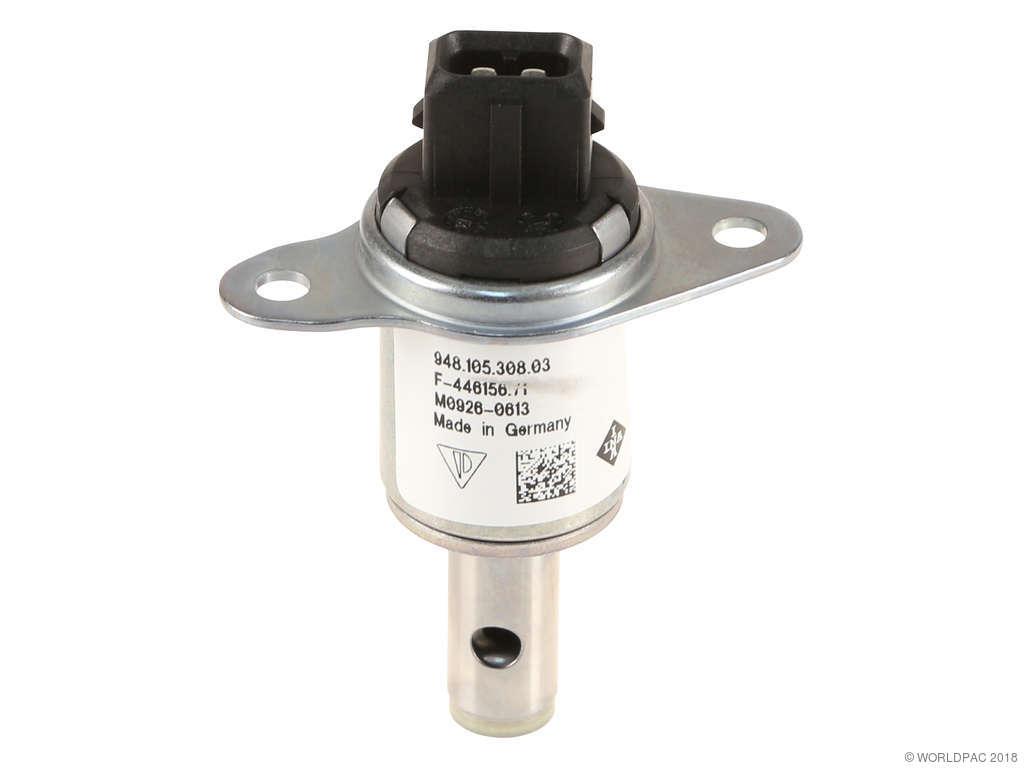
Est. part cost: $0 (if no parts are broken) - Faulty Variable Valve Timing (VVT) Solenoid 🟡 Medium Probability The VVT system relies on these solenoids (also called oil control valves or camshaft adjusters) to direct oil pressure to adjust cam timing. They can become clogged with sludge or fail electrically, causing the camshaft to be in the wrong position. Debris from other engine issues can also clog the solenoid's fine mesh screens.
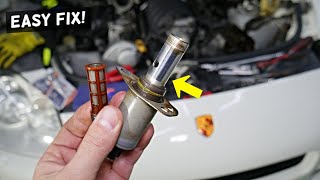
How to confirm: Swap the Bank 1 exhaust solenoid with the Bank 1 intake solenoid. If the code changes to P0016 (Intake Camshaft Correlation), the solenoid is faulty. They can also be tested with a multimeter or by applying 12V to check for actuation. 🎬 See how to test and clean your VVT solenoid.
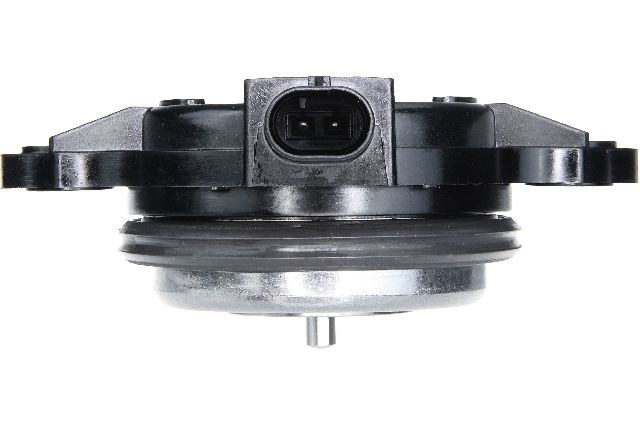
Typical fix: Replace the faulty VVT solenoid for Bank 1 Exhaust. The OEM part number is 0PB-109-259-C.
Est. part cost: $60-$160 - Low or Dirty Engine Oil 🟡 Medium Probability The VVT system is entirely dependent on clean oil at the proper pressure. The platform's known timing cover leak increases the risk of running on a low oil level, which can starve the VVT system and trigger this code. One user on a forum noted their P0017 appeared alongside a low oil pressure warning.
How to confirm: Check the engine oil level via the instrument cluster and inspect the oil's condition and service interval. This should always be the first step.
Typical fix: Perform an oil and filter change using a Porsche-approved oil. If the level was low, identify and fix the source of the leak (e.g., timing cover bolts).
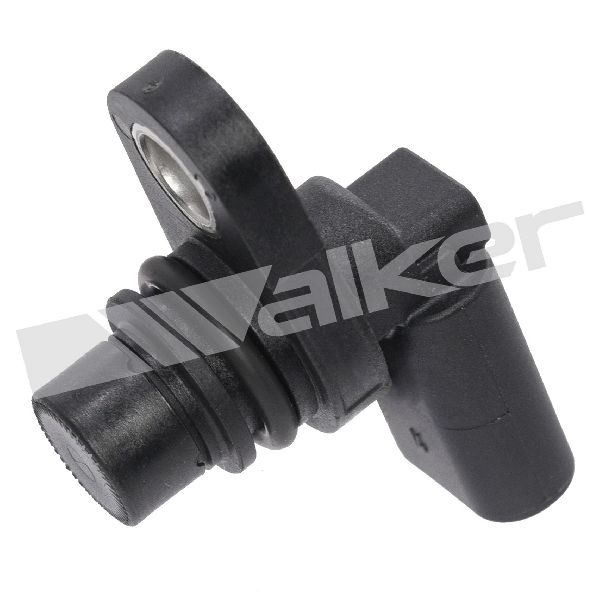
Est. part cost: $100-$200 - Failed Camshaft Position Sensor (Bank 1 Exhaust) ⚪ Low Probability → Shop Engine Camshaft Position Sensor
How to confirm: A failing sensor may provide an erratic signal. This can be diagnosed by monitoring live sensor data on a scan tool or by swapping the sensor with an identical one from another position (if possible) to see if the fault follows the sensor.
Typical fix: Replace the Bank 1 exhaust camshaft position sensor.
Est. part cost: $180-$250
Rare But Worth Checking
- Stretched Timing Chain or Failed Tensioner: → Shop Engine Timing Chain While the timing cover bolts are the more famous issue, the chain itself can stretch over time, especially on higher mileage examples. This is a major mechanical job and usually presents with a rattling noise on startup. If other, simpler causes are ruled out, this becomes a possibility.
- Damaged Camshaft Reluctor Wheel/Tone Ring: → Shop Engine Camshaft The reluctor wheel is what the camshaft sensor reads. If it has slipped or been damaged during a repair, it will send incorrect position data to the ECM, causing a correlation code even if the mechanical timing is perfect. This has been noted on other GM engines after vacuum pump failures allowed debris into the valvetrain, which could be a theoretical possibility.
Diagnosis Steps
- Check Engine Oil: Verify the oil level is correct and the oil is clean. An oil change is a cheap first step if the oil is old or dirty.
- Scan for Other Codes: Check for other codes, especially P0016 or P0014, which would point towards a larger timing issue or a specific VVT problem.
- Review Service History: Ask if the timing cover leak or any other timing-related service was recently performed. This is a critical clue.
- Analyze Live Data: Use a professional scan tool (like PIWIS) to observe the 'camshaft deviation' value for Bank 1 Exhaust. A large, steady deviation (e.g., 6 degrees) strongly suggests a mechanical timing error. An intermittent or fluctuating value could point to a sticky VVT solenoid.
- Inspect the VVT Solenoid: Locate the VVT solenoid for the Bank 1 exhaust camshaft. Check its wiring and connector. Consider swapping it with the intake solenoid to see if the code changes to P0016.
- Inspect the Camshaft Position Sensor: Check the sensor's wiring and connector. If other tests have not identified the issue, the sensor itself could be faulty.
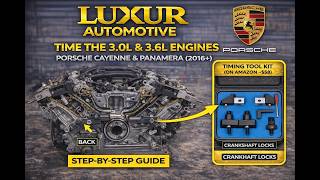
- Mechanical Timing Inspection: If all else fails, a professional technician will need to access the timing components to physically verify that the crankshaft and camshafts are correctly aligned using proper alignment tools. 🎬 Watch: A deep dive into Porsche engine timing and alignment. This is the most labor-intensive step but is often the ultimate fix if a recent repair was performed incorrectly.
Parts You'll Likely Need
- Camshaft Adjuster Solenoid (VVT Solenoid)
(OEM #0PB-109-259-C)— This solenoid controls oil flow to the cam phaser and is a common failure point in VVT systems. It can get stuck or fail electrically, causing the cam to be out of position.
Trusted brands: Genuine Porsche, APA/URO Parts
OEM price range: $135-$160
Aftermarket price range: $50-$90 - Camshaft Position Sensor
(OEM #946-606-106-00)— If the sensor itself fails or sends an erratic signal, it can trigger a correlation fault. This is less common than a solenoid or oil issue but is a possible cause.
Trusted brands: Bosch, Genuine Porsche
OEM price range: $180-$220
Aftermarket price range: $30-$80 - Timing Cover Bolt Repair Kit
(OEM #N91097101 (individual bolt))— If P0017 is accompanied by an oil leak from the front of the engine, the root cause is likely failed timing cover bolts. A revised procedure allows for replacing the critical upper bolts without engine removal.
Related Codes That Often Appear With This One
- P0016 — This is the correlation code for the intake camshaft on the same bank. If both P0016 and P0017 appear together, it strongly suggests a base timing issue (e.g., stretched chain, incorrect timing set) affecting the entire bank, rather than a single faulty component.
- P0300, P0301, P0302, P0303 — These are codes for random or specific cylinder misfires on Bank 1. Incorrect valve timing from the camshaft issue can lead to poor combustion, causing the engine to misfire.
- P0014 — This code indicates 'Camshaft Position 'B' Timing Over-Advanced' for Bank 1. It can appear with P0017 and points more specifically to the VVT system being unable to retard the timing, possibly due to a stuck solenoid or oil pressure issue.
Technical Service Bulletins (TSBs) & Recalls
- MC-10177917-0001 (or WC-20): Original bulletin for the timing chain cover oil leak, often requiring engine removal for a full reseal.
- MC-10209760-0001: Updated technical information for addressing the timing cover leak by replacing only the two upper screws with steel bolts, a procedure that can be done with the engine in the vehicle.
- Extended Warranty for Transfer Case: While not for P0017, Porsche extended the warranty to 7 years for transfer case issues on many Macans, a critical issue for owners to be aware of.
Platform-Specific Known Issues
- Timing Chain Cover Bolt Failure: The 2015-2018 V6 models are widely known for having their aluminum timing cover bolts stretch and break, causing a significant oil leak. Porsche issued TSB WC-20, which initially mandated an engine-out repair. A subsequent bulletin (MC-10209760-0001) outlined a much simpler, in-vehicle procedure to replace the two most critical upper bolts with steel bolts. An error during either of these complex repairs is a very likely cause of a subsequent P0017 code.
Mechanic-Grade Diagnostic Values
- Camshaft Deviation Angle (Bank 1 Exhaust vs. Intake) — expected: Near 0 degrees at idle.. Failure: A static deviation of several degrees (e.g., ~6 degrees) points to a mechanical timing error from a previous repair.
- VVT Solenoid Actuation Test — expected: An audible click when 9V or 12V is applied to the solenoid's two pins.. Failure: No click indicates a failed solenoid. The pins are not polarity-sensitive, but they must not be shorted together.
Scan Tool Commands That Help
- PIWIS Tester: Reset adaptation values — After addressing a potential cause like dirty oil or a sticking VVT solenoid, this function in the DME control unit's 'Maintenance/repairs' tab can clear old learned values that might be causing the fault to persist.
- PIWIS Tester: Actual values -> Camshaft — To monitor the live camshaft deviation angles. This is the primary method to determine if the correlation error is due to a static mechanical misalignment or an intermittent hydraulic/electrical issue.
Wiring & Ground Locations
- A-pillar ground pins — The base of the A-pillar, inside the vehicle.. This is a primary grounding point for various engine and chassis electronics. While not directly tied to the cam sensor circuit in documentation, a poor ground here can cause a variety of difficult-to-diagnose electrical issues, including erratic sensor readings.
- Camshaft Position Sensor Connector — On the cylinder head, near the corresponding camshaft.. This 3-pin connector provides power, ground, and signal for the sensor. Checking for voltage, ground continuity, and signal output at this connector is a key diagnostic step. The connector is an oval shape with three blade-style terminals.
Real Owner Repair Stories
- Rennlist user (2017 Macan Turbo 3.6L) — P0017 code (Exhaust camshaft position with respect to crankshaft timing) appeared after major service.
❌ Tried (didn't work) Initial assumption was a sensor issue, but scan data suggested otherwise.
✅ What actually fixed it The owner performed a major service including timing seal replacement. Afterward, a P0017 code was present. A PIWIS scan showed the Bank 1 exhaust cam had a deviation of approximately 6 degrees. A physical inspection confirmed the Bank 1 exhaust cam was misaligned by ~6 degrees counter-clockwise. The fix was to manually re-align the camshaft to the correct timing and torque the cam adjuster. The user noted that cheap, knock-off camshaft alignment tools were blamed for similar issues by others.
OEM Part Supersession History
94610505375, 94610505376, 94610505377, 94610505379, PB109259, PB109259A→0PB-109-259-C— Standard part evolution and consolidation for the VVT Solenoid.Original aluminum timing cover bolts→Steel bolts (e.g., N91097101 with a washer)— The original aluminum bolts were prone to stretching and breaking, causing a common timing cover oil leak. Porsche later approved a repair procedure using steel bolts for the most critical locations.
Heads up: When replacing the aluminum bolts with steel, an aluminum washer must be used to prevent galvanic corrosion between the steel bolt and the magnesium timing cover.
Model Year Variations Within This Range
- 2015-2018: These models are designated as the first generation, or 95B.1. They feature the 3.6L Turbo V6 engine. The subsequent 95B.2 refresh (2019-2021) replaced this engine with a 2.9L twin-turbo V6 for the Turbo trim, making the P0017 diagnosis on a 'Macan Turbo' different for later model years.
Diagnostic Flowchart
Other Known Issues on This Vehicle
Issues unrelated to this code that are worth knowing about as an owner of this generation:
- Timing Chain Cover Oil Leak 🔴 High → Shop Engine Timing Chain — Very common on 2015-2018 V6 models. Caused by aluminum bolts stretching or breaking. (Ref: Porsche TSB WC-20 (later updated, e.g., MC-10177917-0001) details the repair, which originally required engine removal. A later TSB (e.g., MC-10209760-0001) introduced an in-vehicle repair method.)
- Transfer Case Failure 🔴 High — Widespread on 2015-2018 models, causing shuddering or jerking at low speeds, especially during turns. Often fixed by a fluid change if caught early, but may require replacement. (Ref: Porsche offered an extended warranty (up to 7 years) and issued technical bulletins for diagnosis.)
- Carbon Buildup on Intake Valves 🟠 Medium — As a direct-injection engine, carbon buildup is common over time, leading to rough idle, misfires, and reduced power.
- PCM Infotainment System Glitches 🟡 Low — Owners of pre-2019 models report occasional system freezes, reboots, or dropped CarPlay connections, often resolved by software updates.
Used vs. New Parts: Buying Guide for This Vehicle
When a used part is the smart pick: For this repair, used parts are generally not recommended. The key components (solenoids, sensors) are relatively inexpensive new and are critical for engine health. A used part carries an unknown history and could fail quickly.
Donor-vehicle mileage cap: roughly under 50000 miles for the part to have meaningful remaining life.
What to inspect on the donor part:
- For a VVT solenoid, ensure the mesh screens are intact and free of metallic debris.
- For a sensor, check that the plastic housing is free of cracks and the connector pins are clean and straight.
OEM-only on this vehicle (don't cheap out):
- Timing Chain and Tensioners: Given the critical nature and labor-intensive replacement, using Genuine Porsche or OEM-supplier parts is essential to avoid premature failure.
- Timing Cover Bolts: Use the specific steel bolt and washer combination approved by Porsche for the updated repair procedure to ensure a lasting fix.
Aftermarket brands forum-validated for this vehicle:
- Bosch (for sensors)
Brands owners have reported issues with on this vehicle:
- Unbranded or 'knock-off' camshaft alignment tools have been cited as a direct cause of incorrect timing, leading to P0017 codes after a service.
Real Owner Stories
Aggregated from forums and TSBs cited above. Mileages and costs reflect what owners reported in those sources.
2015-2018 Porsche Macan 3.6L Turbo V6
Symptoms: The owner documented getting a P0017 code immediately after a timing cover service. A PIWIS scan showed a ~6° deviation on the Bank 1 exhaust cam.
What fixed it: The engine's mechanical timing had to be re-checked and corrected because the exhaust camshaft was left misaligned during the previous repair, possibly due to improper tools.
Source hint: rennlist.com thread titled '3.6 turbo cam sync issue p0017'
2015-2018 Porsche Macan V6
Symptoms: The P0017 code appeared alongside a low oil pressure warning.
What fixed it: Identifying and fixing the source of the oil leak (timing cover bolts) and performing an oil and filter change.
Source hint: common_causes section referencing forum user reports
Related OBD-II Codes
Frequently Asked Questions
Can the common timing cover oil leak on my 2015-2018 Macan V6 cause a P0017 code?
Does Porsche have a specific TSB for the timing cover bolt failure that might be related to my P0017 code?
What is the specific part number for the Bank 1 Exhaust VVT solenoid if I need to replace it?
How can I tell if my P0017 is a mechanical timing error or just a bad sensor?
Is there a way to test the VVT solenoid without buying a new one?
Helpful Videos

Used OEM Parts in Stock
New Aftermarket Parts Available

The information in this article is provided for general reference and educational purposes only. Vehicle specifications, procedures, and part compatibility can vary by production date, trim level, and region. Always consult your vehicle's factory service manual and verify part numbers before purchasing or performing repairs. Safety-critical components such as airbags, seat belts, and braking systems should be installed by a qualified professional.
- Porsche Macan:
- 🧭 Diagnostic Flowchart
- 🎬 Helpful Videos
- 🛍️ Shop This Part
- What's Unique About the 2015-2018 Porsche Macan
- Symptoms You May Notice
- Most Likely Causes
- Rare But Worth Checking
- Diagnosis Steps
- Parts You'll Likely Need
- Related Codes That Often Appear With This One
- Technical Service Bulletins (TSBs) & Recalls
- Platform-Specific Known Issues
- Mechanic-Grade Diagnostic Values
- Scan Tool Commands That Help
- Wiring & Ground Locations
- Real Owner Repair Stories
- OEM Part Supersession History
- Model Year Variations Within This Range
- Other Known Issues on This Vehicle
- Used vs. New Parts: Buying Guide for This Vehicle
- Real Owner Stories
- 2015-2018 Porsche Macan 3.6L Turbo V6
- 2015-2018 Porsche Macan V6
- Related OBD-II Codes
- Frequently Asked Questions
- 🎟️ Get 5% Off