

P0017 on 2005-2009 Saab 9-7x 4.2L: Causes and Fixes for Cam/Crank Correlation
On the Saab 9-7x 4.2L, code P0017 is almost always caused by a faulty exhaust Camshaft Position Actuator Solenoid or low/dirty engine oil. A new ACDelco solenoid costs around $40-$90 and is the most common fix after verifying the oil is clean and full. Before suspecting major mechanical issues, check for a loose crankshaft balancer bolt, a known issue outlined in a GM TSB.
- Before buying any parts for a P0017 code, check your engine oil. Low or dirty oil is the most common trigger for this issue on the Saab 9-7x 4.2L.
- The most likely failed component is the exhaust Camshaft Position Actuator Solenoid (VVT Solenoid), not the sensor.
- A simple and effective diagnostic is to swap the identical intake and exhaust VVT solenoids. If the code changes to P0016, you have confirmed the solenoid is bad.
- Only after ruling out oil issues and a faulty solenoid should you suspect a more serious mechanical problem like a stretched timing chain.
What's Unique About the 2005-2009 Saab 9-7x
The Saab 9-7x with the 4.2L engine is mechanically a twin to the Chevrolet Trailblazer and GMC Envoy. This means all common problems and fixes for the GM LL8 'Atlas' engine are directly applicable. This engine's Variable Valve Timing (VVT) system, which only actuates the exhaust cam, is notoriously sensitive to oil quality and level. The exhaust Camshaft Position Actuator Solenoid is a well-documented weak point that gets clogged with sludge from infrequent oil changes or has its internal screens tear, leading directly to P0017.
Symptoms You May Notice
- Rough idle, especially when cold
- Reduced engine power and poor acceleration
- Stalling, especially when slowing to a stop
- Decreased fuel economy
- Engine rattling or knocking sounds, which may point to a loose crank bolt or timing chain issue
- Hesitation during acceleration
- Replacing the Camshaft Position Sensor when the problem is the Camshaft Actuator Solenoid.
- Replacing the Crankshaft Position Sensor.
- Assuming the timing chain has stretched without first replacing the much cheaper and more common failure point, the actuator solenoid, and verifying oil condition.
- Replacing the Camshaft Phaser actuator (the gear itself) when the issue is the controlling solenoid.
Most Likely Causes
- Faulty Exhaust Camshaft Position Actuator Solenoid (VVT Solenoid) 🔴 High Probability → Shop Engine Camshaft The solenoid's fine mesh screens get clogged with oil sludge or tear over time, causing it to stick. This is a well-documented weak point on the LL8 engine, and sometimes oil can wick through the solenoid into the electrical connector itself.
How to confirm: Remove the solenoid (one 10mm bolt, located near the power steering pump) and inspect the screens for debris or tears. The best diagnostic is to swap the identical intake and exhaust solenoids; if the code changes to P0016 (intake correlation), the solenoid is confirmed bad. A visual inspection of the connector for oil contamination is also a key indicator.
Typical fix: Replace the solenoid and perform an engine oil and filter change. Cleaning is not recommended as it's usually a temporary fix. Using an OEM ACDelco part is highly recommended by owners on forums.
Est. part cost: $30-$90 - Low or Dirty Engine Oil 🔴 High Probability The VVT system is entirely hydraulic and requires clean oil at the proper level and viscosity (5W-30) to function. The LL8 engine has a large 7-quart capacity, and running it low, with old/sludgy oil, or with the wrong viscosity (like 20W-50) directly starves the actuator solenoid and can trigger the code.
How to confirm: Check the engine oil dipstick. The oil should be at the full mark and have a light brown, translucent color. If it is black, thick, or below the 'add' line, this is a likely contributor.
Typical fix: Perform an engine oil and filter change using the correct 5W-30 oil. Some owners on forums suggest using an engine flush product before the oil change to help clean passages, but this should be done with caution and by following the product's directions precisely.
Est. part cost: $40-$80 - Stretched Timing Chain or Worn Guides 🟡 Medium Probability → Shop Engine Timing Chain This becomes a more likely cause on engines with higher mileage (typically over 100,000-125,000 miles), especially if oil changes have been neglected. Deep grooves can form in the guides, and the chain itself can stretch, causing the timing correlation to be off permanently.
How to confirm: This is a diagnosis of exclusion. If a new, known-good ACDelco solenoid and fresh oil do not resolve the code, a mechanical timing issue is the next logical step. This requires advanced diagnostics, such as using a scan tool to monitor commanded vs. actual cam phaser angles, or significant disassembly to physically inspect the timing components.
Typical fix: Replacement of the timing chain, tensioner, and guides. This is a labor-intensive and expensive repair, often costing over $2,000 at a shop.
Est. part cost: $250-$400
Rare But Worth Checking
- Loose Crankshaft Balancer Bolt: → Shop Engine Crankshaft GM Technical Service Bulletin (TSB) PIP4581B notes that a loose or improperly torqued crankshaft balancer bolt can cause the crankshaft gear to rattle on its alignment pin, sending an erratic signal and triggering P0017 or P0016. This should be checked before attempting a timing chain replacement, especially if the balancer was recently removed for other service.
- Failed Exhaust Camshaft Position Sensor: → Shop Engine Camshaft Position Sensor While possible, the sensor itself is rarely the cause of this correlation code. It is often mistakenly replaced when the true fault lies with the actuator solenoid or oil condition. A forum user on GMTNation noted their P0017 appeared only after replacing the crank and cam sensors with aftermarket parts.
- Excessive Crankshaft End Play: → Shop Engine Crankshaft TSB PIP3694F mentions that worn thrust bearings can allow the crankshaft to move back and forth (longitudinally), which can disrupt the crank sensor reading and trigger P0017. This indicates a serious internal engine problem requiring a bottom-end rebuild.
Diagnosis Steps
- Check the engine oil level and condition. If low, dirty, or the wrong viscosity, perform an oil and filter change with 5W-30 synthetic oil, clear the code, and re-test.
- If oil is good, inspect the wiring and connector for the exhaust camshaft actuator solenoid for any damage or oil intrusion. If oil is present in the connector, the solenoid and likely the connector pigtail need replacement.
- The most effective diagnostic step: Swap the exhaust camshaft actuator solenoid with the identical intake solenoid. They are located next to each other on the passenger side of the cylinder head.
- Clear the codes and drive the vehicle. If the code changes to P0016 (Intake Camshaft Position Correlation), the solenoid you moved is faulty and must be replaced.
- If code P0017 returns, the problem is not the solenoid. The next step is to test the circuit for the solenoid.
- If the solenoid and circuit are good, the issue is likely mechanical. Inspect the crankshaft balancer bolt for tightness (per TSB PIP4581B). This is especially important if any front-engine service was recently performed.
- If all else fails, and especially on a high-mileage engine, the most likely cause is a stretched timing chain, worn guides, or a faulty camshaft phaser, which requires significant disassembly to confirm and repair.
Parts You'll Likely Need
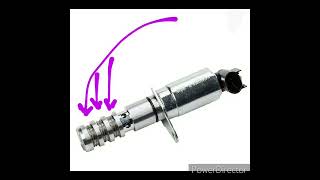
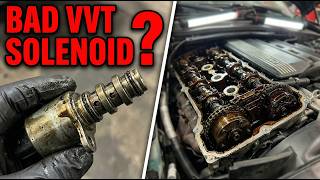
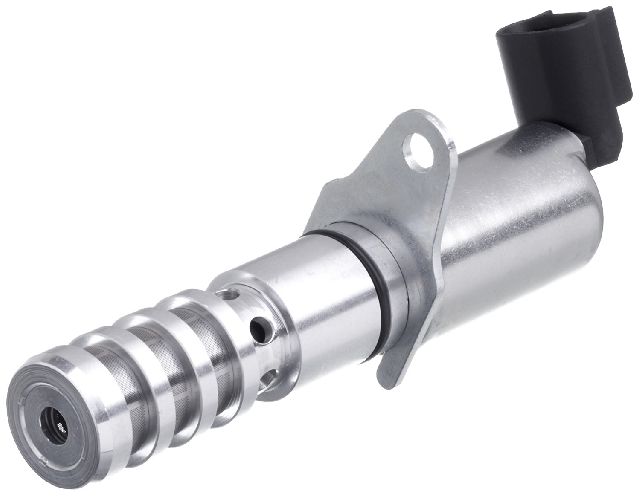
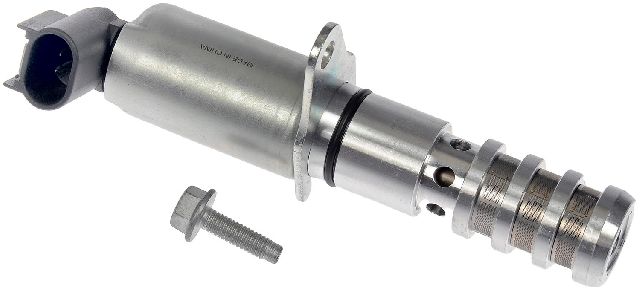
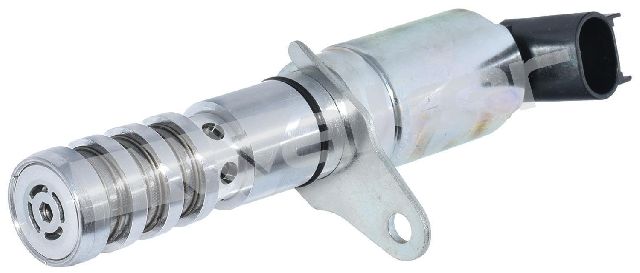
- Engine Variable Valve Timing (VVT) Solenoid
(OEM #12615873)— This is the most common failure point for P0017 on the 4.2L LL8 engine. Its internal screens get clogged or tear, causing it to malfunction. It is highly recommended to use the ACDelco OEM part.
Trusted brands: ACDelco (OEM), Dorman (Aftermarket, P/N 917-010), Standard Motor Products (SMP)
OEM price range: $50-$90
Aftermarket price range: $30-$60 - Timing Chain Kit — Required for higher-mileage engines where the chain has physically stretched, causing a persistent P0017 code that a new solenoid and clean oil cannot fix.
Trusted brands: Cloyes, Melling
OEM price range: $250-$400
Aftermarket price range: $150-$250
Related Codes That Often Appear With This One
- P0014 — This code for 'Camshaft Position B - Timing Over-Advanced' often appears with P0017 because a stuck VVT solenoid can cause both a correlation error and an over-advanced position error for the same exhaust camshaft.
- P0016 — This is the correlation code for the intake camshaft. If you swap the intake and exhaust VVT solenoids for diagnosis and the code changes from P0017 to P0016, it confirms the solenoid is faulty. If both codes appear together without swapping parts, it strongly suggests a base timing issue like a stretched chain or a loose crank balancer bolt.
Technical Service Bulletins (TSBs) & Recalls
- PIP4945B: A cumulative diagnostic guide for P0017 on inline GM engines, including the 4.2L LL8.
- PIP4581B: Notes that a loose crankshaft balancer bolt can cause an engine rattle and trigger P0017. It advises re-torquing the bolt before assuming a timing chain issue.
Platform-Specific Known Issues
- The Camshaft Position Actuator Solenoid (VVT Solenoid) is a known high-failure item on the GM 4.2L LL8 engine platform. Owners on forums consistently recommend using only the ACDelco part for replacement to avoid repeat failures.
- GM issued TSB PIP4945B which consolidates information for diagnosing P0017 on inline GM engines, listing causes from loose crank bolts to incorrect timing.
- The engine has a large 7-quart oil capacity, making it critical to maintain the proper level for the hydraulically-operated VVT system to function correctly.
Mechanic-Grade Diagnostic Values
- VVT Actuator Solenoid Resistance — expected: 8-13 Ohms. Failure: A reading of zero (short) or infinite (open) ohms indicates a failed solenoid coil.
- Engine Oil Pressure (for VVT function) — expected: At least 12 PSI at 1200 RPM. Failure: Pressure below this threshold can starve the VVT system and cause correlation codes.
- Crankshaft End Play — expected: 0.0044 - 0.0153 inches (0.112 - 0.389 mm). Failure: Exceeding this specification indicates worn thrust bearings, a major mechanical failure.
- VVT Solenoid (OCV) Power Supply — expected: Battery Voltage (approx. 12V) with ignition on. Failure: No voltage indicates a wiring or PCM issue.
Scan Tool Commands That Help
- Tech2 / GDS2 (or equivalent): Camshaft Position Actuator Solenoid Control — Used to command the solenoid's duty cycle on and off to verify it is responding mechanically. Note: The PCM may inhibit this test if DTC P0017 is active, so the code may need to be cleared first.
Wiring & Ground Locations
- G107 / G108 — On the lower left (driver's) side of the engine block.. These are primary engine ground points. A loose or corroded connection here can cause erratic voltage and incorrect readings from the cam and crank sensors, potentially triggering correlation codes like P0017.
- ECM/PCM Connector — On the upper left side of the engine for the 4.2L.. The wiring for the camshaft position sensor, crankshaft position sensor, and VVT solenoid all terminate at the Engine Control Module. A poor connection or damaged pin at this connector can cause the code.
- G201 — In the passenger side footwell, behind the kick panel.. This is a major interior ground splice pack. While less likely to cause P0017 directly, a bad connection here is known to cause bizarre electrical issues, including problems with the instrument cluster and data link connector, which can complicate diagnosis.
Real Owner Repair Stories
- GMTNation Forum User 'Brimmy' (2005 GMC Envoy XL, 4.2L I6, 185,000 miles) — P0017 returned instantly, stalling when put in gear, crank-no-start.
❌ Tried (didn't work) Replaced VVT solenoid, Replaced camshaft position sensor, Replaced crankshaft position sensor, Replaced timing chain and guides, Replaced cam phaser (Dorman brand)
✅ What actually fixed it The original poster did not provide a final confirmed fix. However, expert diagnosis on the forum pointed to two high-probability causes after all parts were replaced: 1) The new timing chain was installed incorrectly (off by a tooth), or 2) Excessive crankshaft end play due to a failed main thrust bearing, a condition that must be checked mechanically and is often overlooked. The use of a Dorman phaser was also questioned.
OEM Part Supersession History
12568078, 12576768, 12597025, 12602516→12615873— Standard part evolution and consolidation. Later versions may have improved screen design and materials to better resist tearing and clogging from oil sludge.
Heads up: All listed part numbers are interchangeable for this application. The latest part, 12615873, is the recommended and most reliable replacement for all previous versions.
Model Year Variations Within This Range
- 2006-2009: Around 2006, the engine management system was updated. The single Powertrain Control Module (PCM) was split into a separate Engine Control Module (ECM) and Transmission Control Module (TCM). A Mass Airflow (MAF) sensor was added, and the cylinder head and ignition coils were redesigned. These changes can affect diagnostic procedures and wiring diagrams compared to 2005 models.
Diagnostic Flowchart
Other Known Issues on This Vehicle
Issues unrelated to this code that are worth knowing about as an owner of this generation:
- Instrument Cluster Gauge Stepper Motor Failure 🟠 Medium — Very common, typically occurs after 80,000 miles. Affects speedometer, tachometer, fuel, and temp gauges, causing them to stick, read incorrectly, or fail completely. (Ref: No recall for the 9-7x, but was a known issue across millions of GM vehicles from 2003-2007. The fix is to replace all stepper motors (part X27.168) in the cluster.)
- Electronic Fan Clutch Failure 🟠 Medium — Common failure item. Can fail to engage (causing overheating) or fail while engaged (causing a loud 'jet engine' roar, especially on cold starts) and reduced power.
- Cracked Exhaust Manifold 🟠 Medium — The original cast iron manifold is prone to cracking over time, causing an exhaust leak noise (ticking) that is most noticeable when the engine is cold.
- Throttle Body Failure (Codes P2135, P2101) 🔴 High — Extremely common failure where the internal throttle position sensors fail, putting the vehicle into 'Reduced Engine Power' mode, making it very slow and unsafe in traffic. (Ref: TSB PIP4578B acknowledges carbon buildup as a cause. The standard fix is complete throttle body replacement.)
- Water Pump Failure 🔴 High → Shop Engine Water Pump — Tends to fail around the 100,000-mile mark, which is somewhat premature. Failure leads to coolant leaks and potential for engine overheating.
Used vs. New Parts: Buying Guide for This Vehicle
When a used part is the smart pick: For this specific P0017 fault, using used parts is generally not recommended. The primary failure components (VVT solenoid, timing chain) are wear items or are inexpensive to buy new. A used engine computer (ECM/PCM) could be an option if a rare module failure is diagnosed, but it would require professional programming.
Donor-vehicle mileage cap: roughly under 80000 miles for the part to have meaningful remaining life.
What to inspect on the donor part:
- For a major component like an engine assembly, look for evidence of regular oil changes (no heavy sludge under the oil cap).
- Avoid parts from vehicles with signs of a major front-end collision, which could have damaged engine accessories or wiring.
OEM-only on this vehicle (don't cheap out):
- Camshaft Position Actuator Solenoid (VVT Solenoid): Forum and mechanic consensus strongly recommends using the ACDelco (GM Genuine) part (12615873). Aftermarket solenoids, particularly from brands like Dorman, are frequently reported to fail prematurely or be dead-on-arrival.
- Timing Chain Kit: While reputable aftermarket brands like Cloyes exist, using a GM OEM kit is the safest bet to ensure proper material hardness and chain link tolerances.
- Sensors (Cam/Crank): While not a common cause, if replacement is necessary, OEM sensors are recommended to avoid signal quality issues that can be introduced by some aftermarket brands.
Aftermarket brands forum-validated for this vehicle:
- Cloyes (for timing components)
Brands owners have reported issues with on this vehicle:
- Dorman (specifically for the VVT solenoid and Cam Phaser on this platform, based on forum reports of premature failures)
Real Owner Stories
Aggregated from forums and TSBs cited above. Mileages and costs reflect what owners reported in those sources.
2002-2009 Chevrolet Trailblazer 4.2L I6 — 80000 miles
Symptoms: P0017 code persisted even after replacing sensors. The dealership replaced the solenoid with no luck.
What fixed it: The dealership quoted a timing job to resolve the issue.
Cost: $2,600-$2,600
Source hint: GMTNation.com - Thread 'The dreaded P0017 CODE... Help me pleeeease'
2002-2009 GMT360 Platform 4.2L I6
Symptoms: P0017 code instantly returned after replacing the VVT solenoid, cam sensor, crank sensor, timing chain, guides, and phaser, accompanied by stalling.
What fixed it: The source illustrates that underlying issues can persist even after replacing the solenoid, sensors, and full timing set.
Source hint: GMTNation.com - Thread 'SOLVED! - P0017 Assistance'
Related OBD-II Codes
Frequently Asked Questions
I'm hearing a rattling sound from the front of my LL8 engine along with the P0017 code. Does TSB PIP4581B apply to my Saab 9-7x?
Is there a specific diagnostic guide from GM for troubleshooting P0017 on the 4.2L I6 engine?
Can I use any aftermarket VVT solenoid to fix this code on my 9-7x?
How much oil does the Saab 9-7x 4.2L engine actually need to keep the VVT system happy?
I've heard I can swap parts to test the solenoid. Which ones are identical on the 4.2L engine?
Helpful Videos
We Have This Part in Stock



The information in this article is provided for general reference and educational purposes only. Vehicle specifications, procedures, and part compatibility can vary by production date, trim level, and region. Always consult your vehicle's factory service manual and verify part numbers before purchasing or performing repairs. Safety-critical components such as airbags, seat belts, and braking systems should be installed by a qualified professional.
- Saab 9-7x:
- 🧭 Diagnostic Flowchart
- 🎬 Helpful Videos
- 🛍️ Shop This Part
- What's Unique About the 2005-2009 Saab 9-7x
- Symptoms You May Notice
- Most Likely Causes
- Rare But Worth Checking
- Diagnosis Steps
- Parts You'll Likely Need
- Related Codes That Often Appear With This One
- Technical Service Bulletins (TSBs) & Recalls
- Platform-Specific Known Issues
- Mechanic-Grade Diagnostic Values
- Scan Tool Commands That Help
- Wiring & Ground Locations
- Real Owner Repair Stories
- OEM Part Supersession History
- Model Year Variations Within This Range
- Other Known Issues on This Vehicle
- Used vs. New Parts: Buying Guide for This Vehicle
- Real Owner Stories
- 2002-2009 Chevrolet Trailblazer 4.2L I6 — 80000 miles
- 2002-2009 GMT360 Platform 4.2L I6
- Related OBD-II Codes
- Frequently Asked Questions
- 🎟️ Get 5% Off