

P0017 on 2007-2009 Saturn Aura: Causes for Crank/Cam Misalignment and Fixes
On a 2007-2009 Saturn Aura with the 3.6L V6 engine, code P0017 almost always indicates stretched timing chains. This is a well-documented, serious issue requiring a complex and costly repair, often exceeding $1,500. The problem was so widespread that GM issued special coverage programs and multiple TSBs.
- P0017 on a 2007-2009 Saturn Aura 3.6L V6 is a strong indicator of a stretched timing chain, a known issue with this engine.
- Do not simply replace the camshaft or crankshaft sensors; the problem is almost always mechanical.
- This is a serious issue. Driving with this code can lead to the timing chain breaking and causing catastrophic engine failure.
- The repair is complex and expensive, requiring the replacement of all chains, guides, and tensioners with an updated kit.
- Always check engine oil level and condition first, as low or dirty oil can cause the hydraulic tensioners to fail.
What's Unique About the 2007-2009 Saturn AURA
The 2007-2009 Saturn Aura's optional 3.6L V6 (RPO code LY7) is a member of GM's High Feature V6 engine family, which was known in this era for premature timing chain stretching. This was largely attributed to a combination of the original chain design and overly optimistic oil life monitor (OLM) settings from the factory, which led to oil degradation and accelerated wear. Unlike many vehicles where P0017 might point to a simple sensor, on this platform, it is very frequently a symptom of this underlying mechanical timing chain problem, as documented in multiple Technical Service Bulletins (TSBs) and a special coverage adjustment (No. 11340) that extended the warranty to 10 years/120,000 miles.
Diagnostic Flowchart
Tap your situation to follow the diagnostic path that matches what you're seeing on this vehicle.
Symptoms You May Notice
- Check Engine Light is on
- Engine runs rough or idles poorly, sometimes with a fluctuating idle RPM.
- Rattling noise from the front of the engine, especially on a cold start, that may last for a few seconds.
- Reduced engine power and sluggish acceleration.
- Difficulty starting the engine.
- Reduced fuel economy.
- Replacing only the camshaft position sensor.
- Replacing only the crankshaft position sensor.
- Replacing the camshaft actuator solenoid without first confirming the mechanical timing is correct.
- Performing an oil change and expecting it to fix already stretched chains.
Most Likely Causes
- Stretched Timing Chains 🔴 High Probability → Shop Engine Timing Chain The early GM 3.6L HFV6 engines used timing chains susceptible to premature wear and stretching. This was exacerbated by long oil change intervals suggested by the factory Oil Life Monitor, leading to oil breakdown and poor lubrication of the timing system. GM acknowledged this with Special Coverage Adjustment #11340.
How to confirm: A technician can use a scan tool to observe camshaft deviation angles. 🎬 Watch: How to use a labscope to diagnose timing issues. However, the definitive diagnosis requires physical inspection of the chains for slack by removing the engine front cover, a labor-intensive process. A borescope can sometimes be used to inspect the crankshaft reluctor wheel first to rule out that rarer issue.
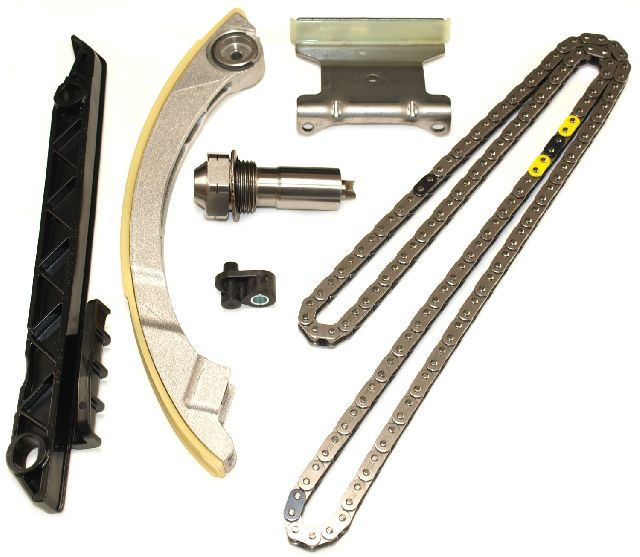
Typical fix: Replace all three timing chains, all tensioners, and all guides as a complete kit. It is critical to use a high-quality OEM (ACDelco) or reputable aftermarket (e.g., Cloyes, Melling) kit. After the repair, switching to a 5,000-mile oil change interval with full synthetic oil is highly recommended to prevent recurrence.
Est. part cost: $250-$550 - Failed Timing Chain Tensioners or Guides 🔴 High Probability → Shop Engine Timing Chain The hydraulic tensioners rely on clean oil pressure to keep the chains taut. Sludge from old oil can cause them to fail. The plastic/nylon guides can become brittle and break, leading to chain slack. This is part of the same common timing system failure.
How to confirm: Diagnosed during the physical inspection for a stretched timing chain. A broken guide or failed tensioner will be visually apparent. Sometimes a rattling noise on startup is the key symptom.
Typical fix: Replace as part of a complete timing chain kit. It is not recommended to replace only the failed component, as other parts are likely worn.
Est. part cost: $250-$550 (part of kit) - Low or Dirty Engine Oil 🟡 Medium Probability The timing chain tensioners and camshaft phasers are hydraulic and rely on clean oil at the proper pressure to function. Neglected oil changes or running the engine low on oil leads to sludge buildup and accelerated wear on all timing components. Some owners attempt an engine flush as a last-ditch effort before a mechanical repair.
How to confirm: Check the oil level on the dipstick and inspect its condition. An owner complaint to the NHTSA mentioned a technician suggesting an engine flush, which points to oil quality as a potential factor. If the oil is very low or appears like sludge, this is a likely contributor.
Typical fix: Perform an engine oil and filter change with high-quality full synthetic oil. If the code persists, the mechanical damage to the timing components is likely already done and they will need to be replaced.
Est. part cost: $50-$100 - Faulty Camshaft Position Actuator Solenoid (Oil Control Valve) ⚪ Low Probability → Shop Engine Camshaft These solenoids can become clogged with sludge from dirty oil or fail electrically. While less common than chain stretch on this engine, it's a possible and much easier fix to attempt first.
How to confirm: The solenoid can be tested for resistance with a multimeter (typically 6.9-7.9 ohms) and commanded on/off with a capable scan tool to check for a response. They can also be removed and inspected for clogged screens.
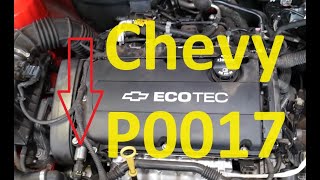
Typical fix: Replace the Bank 1 exhaust camshaft position actuator solenoid. The OEM part number is superseded by 12636175. 🎬 See this quick guide on replacing the actuator solenoid.
Est. part cost: $30-$70
Rare But Worth Checking
- Faulty Camshaft or Crankshaft Position Sensor: → Shop Engine Crankshaft Position Sensor While these sensors can fail, they are often replaced unnecessarily when the root cause is mechanical (timing chains). Always investigate the timing system before replacing sensors for this code on this engine. A bad sensor is a diagnosis of exclusion on the LY7 V6.
- Damaged Reluctor Wheel on Crankshaft: → Shop Engine Crankshaft As mentioned in TSB #PIP4548F and #PIP3423C, if the engine is confirmed to be properly timed but the code persists, the reluctor wheel (the toothed ring the sensor reads) could be damaged or have shifted on the shaft. This can be inspected with a borescope through the crankshaft position sensor hole.
Diagnosis Steps
- Check the engine oil level and condition. If low or dirty, correct this first, clear the codes, and see if the problem returns. Consider an engine flush if sludge is suspected, but be aware this is unlikely to fix a stretched chain.
- Use a professional scan tool to check for other related DTCs. Codes like P0008, P0016, P0018, or P0019 strongly point to a base timing issue.
- On the scan tool, monitor the desired vs. actual camshaft position angles and the Camshaft Angle Variance parameter. A significant, persistent deviation on Bank 1 Exhaust is a strong indicator of a mechanical timing problem.
- As a relatively easy and inexpensive step, consider swapping the Bank 1 exhaust camshaft actuator solenoid with the intake solenoid on the same bank to see if the code changes to P0016. If it does, the solenoid is faulty.
- If other tests do not reveal the cause, proceed with a physical inspection of the timing chains, guides, and tensioners. This is an involved job that requires partial engine disassembly and is the definitive diagnostic step.
Parts You'll Likely Need
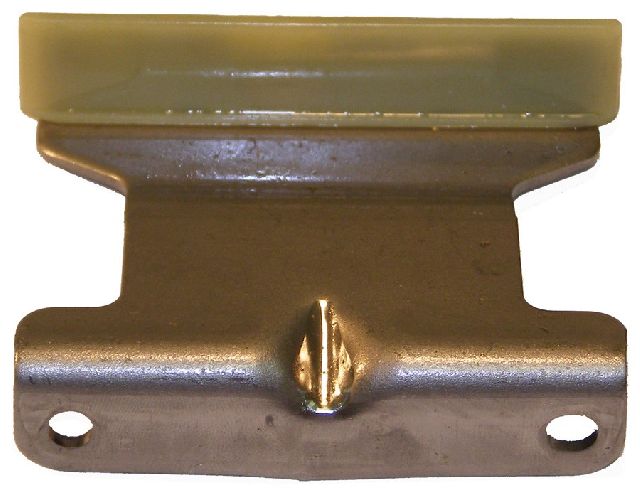
- Engine Timing Chain Kit
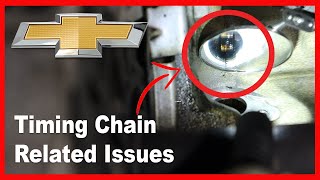
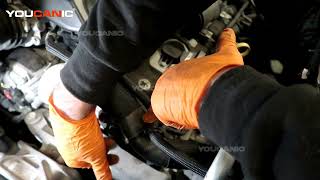
(OEM #12651450)— This is the most common failure. A complete kit ensures all worn components (chains, guides, tensioners) are replaced at once. TSB 12-06-01-009F details these kits. 🎬 Watch: Full step-by-step timing chain removal and installation walkthrough.
Trusted brands: ACDelco (OEM), Cloyes (e.g., 9-0753S), Melling
OEM price range: $350-$500
Aftermarket price range: $250-$400 - Camshaft Position Actuator Solenoid
(OEM #12636175)— A less common but possible cause. This solenoid controls oil flow to the cam phaser and can get stuck or fail electrically, causing correlation faults. It's a wise part to replace before tearing into the timing cover.
Trusted brands: ACDelco (OEM), Delphi
OEM price range: $40-$70
Aftermarket price range: $25-$50
Related Codes That Often Appear With This One
- P0008 — A general engine position system performance code, often the first sign of a stretching timing chain on this engine.
- P0016 — Indicates a correlation fault on the Bank 1 *intake* camshaft, often set along with P0017 when the timing chain has stretched.
- P0018 — Indicates a correlation fault on the Bank 2 *intake* camshaft. Seeing multiple correlation codes (e.g., P0016, P0017, P0018, P0019) strongly suggests a base timing issue with the primary chain.
- P0019 — Indicates a correlation fault on the Bank 2 *exhaust* camshaft. Seeing multiple correlation codes strongly suggests a base timing issue.
Technical Service Bulletins (TSBs) & Recalls
- PIP3423P: Mentions that DTC P0017 may be set and advises inspection of timing chains and tensioners.
- 12-06-01-009F: Discusses the availability of comprehensive timing chain kits specifically for repairing stretched timing chains that cause P0008, P0017, and other related codes.
- PIP4548F: Advises on inspection steps if P0017 is present even on a properly timed engine, pointing to rarer causes like a shifted crankshaft reluctor wheel.
- PIP4716F: Connects P0017 with a start-up rattle noise and advises inspection of the engine belt system.
- 11340C: Special Coverage Adjustment extending the warranty for timing chain wear to 10 years/120,000 miles on 2007 models, acknowledging the defect.
Platform-Specific Known Issues
- The 3.6L V6 engine in this vehicle is widely known for premature timing chain stretching. GM issued multiple Technical Service Bulletins (TSBs) related to this issue, including #PIP3423P and #12-06-01-009F, which directly link codes like P0017 to stretched or loose timing chains.
- GM also issued Special Coverage Adjustment
Mechanic-Grade Diagnostic Values
- Camshaft Position Actuator Solenoid Resistance — expected: 6.9 to 7.9 ohms at 68°F (20°C). Some sources suggest a broader range of 8 to 12 ohms is acceptable.. Failure: A reading of 0 ohms (short circuit), infinite resistance (open circuit), or a value significantly outside the expected range.
- Scan Tool Camshaft Variance Parameter — expected: 0 degrees when the camshaft actuator is in the home/parked position (at idle).. Failure: A persistent, non-zero value for the CMP variance parameter at idle indicates a correlation error that the ECM cannot correct, strongly suggesting a mechanical timing issue.
Scan Tool Commands That Help
- Tech2 / GDS2 or equivalent professional scan tool: CMP Actuator Control / Camshaft Position Actuator Solenoid Test — This bidirectional command allows a technician to manually command the solenoid to a specific degree of advance (e.g., 20 degrees) while monitoring the actual camshaft position. If the actual position does not match the commanded position, it helps isolate the problem to the solenoid, the phaser, or oil pressure, after confirming base timing is correct.
Wiring & Ground Locations
- G105 — On the 3.6L engine, this ground is located at the center rear of the engine.. This is a primary engine ground. A poor connection here can cause erratic behavior from various engine sensors and the ECM itself, potentially leading to false or intermittent correlation codes.
- G106 — On the 3.6L engine, this ground is located on the top rear right side of the engine.. This is another critical engine ground point. Ensuring it is clean and tight is a fundamental step in diagnosing any electronic engine control issue, including sensor correlation faults.
- Engine Control Module (ECM) — For the 3.6L V6, the ECM is located in the left side of the engine compartment, in front of the battery.. Knowing the ECM location is essential for testing the wiring harness continuity for the camshaft and crankshaft position sensors and the actuator solenoids directly at the module's connectors.
Real Owner Repair Stories
- Camaro5 forum user 'secrethero89' (2011 Chevy Camaro 3.6L V6 (LY7 engine, shared with Aura)) — P0008, P0009, P0016, P0017 timing-related DTCs.
❌ Tried (didn't work) Initial diagnosis pointed towards the common timing chain failure.
✅ What actually fixed it The crankshaft reluctor wheel had slipped. A mechanic was able to carefully reposition it without removing the crankshaft and applied a small tack weld to prevent it from moving again. The user confirmed this resolved the codes and restored performance. - Chevy HHR Network user (2011 model with 2.4L engine (different engine, but similar VVT system logic)) — P0016 and P0017 before repair. After timing chain replacement, only P0017 remained.
❌ Tried (didn't work) Complete timing chain replacement., Crankshaft position sensor replacement.
✅ What actually fixed it The user tested the VVT solenoids and found the exhaust solenoid was faulty, despite not having a specific solenoid code. Replacing both the intake and exhaust VVT solenoids was the final step in their diagnosis, which they hoped would resolve the persistent P0017.
OEM Part Supersession History
12588943, 12615613, 12626012→12636175— GM regularly updates service parts to integrate new materials and technologies for improved durability and performance.
Model Year Variations Within This Range
- 2007-2008: The 3.6L LY7 V6 engine was available in the uplevel XR trim.
- 2009: For the final model year, the V6 engine lineup was simplified. The 3.6L V6 was the sole V6 option and was only available in the XR trim. The base XE model became four-cylinder only.
Helpful Videos
We Have This Part in Stock


The information in this article is provided for general reference and educational purposes only. Vehicle specifications, procedures, and part compatibility can vary by production date, trim level, and region. Always consult your vehicle's factory service manual and verify part numbers before purchasing or performing repairs. Safety-critical components such as airbags, seat belts, and braking systems should be installed by a qualified professional.
- Saturn AURA:
- 🧭 Diagnostic Flowchart
- 🎬 Helpful Videos
- 🛍️ Shop This Part
- What's Unique About the 2007-2009 Saturn AURA
- Symptoms You May Notice
- Most Likely Causes
- Rare But Worth Checking
- Diagnosis Steps
- Parts You'll Likely Need
- Related Codes That Often Appear With This One
- Technical Service Bulletins (TSBs) & Recalls
- Platform-Specific Known Issues
- Mechanic-Grade Diagnostic Values
- Scan Tool Commands That Help
- Wiring & Ground Locations
- Real Owner Repair Stories
- OEM Part Supersession History
- Model Year Variations Within This Range
- 🎟️ Get 5% Off