

P0017 on 2007-2010 Saturn Outlook: Stretched Timing Chain Causes and Fixes
On a 2007-2010 Saturn Outlook, P0017 almost always means the timing chains have stretched. This is a well-known, serious issue with the 3.6L V6 engine. The only reliable fix is a complete timing chain kit replacement, which is a major repair costing $2,300-$3,500. Before this major repair, a chemical engine flush and oil change should be attempted as a low-cost potential fix for sludge-related VVT issues.
- P0017 on a 2007-2010 Saturn Outlook is a serious code that almost always indicates a stretched timing chain.
- Do not waste money replacing the camshaft or crankshaft sensors first; this is a common misdiagnosis that will not fix the underlying mechanical problem.
- Your first diagnostic step should be to check the engine oil level and condition. Low or dirty oil can trigger this code and is a major contributor to timing chain wear.
- Continued driving is risky and can lead to the chain breaking, causing catastrophic engine failure.
- The correct repair is a complete timing chain kit replacement, which is an expensive job that should be performed by a professional mechanic.
What's Unique About the 2007-2010 Saturn Outlook
The 3.6L V6 engine (RPO code LY7) in the Saturn Outlook and its GM siblings is notorious for premature timing chain stretching. A contributing design factor was GM's decision to use smaller chain links (reducing them from 9.5mm to 7.7mm) to reduce noise, which inadvertently led to premature stretching. The problem was so widespread that General Motors issued multiple Technical Service Bulletins (TSBs) and a Special Coverage Adjustment 🎬 See this video explaining the GM extended warranty coverage. (No. 11340C) that extended the warranty to 10 years or 120,000 miles for this specific failure. The issue is largely attributed to this chain design combined with an original Oil Life Monitor (OLM) calibration that allowed for excessively long oil change intervals, leading to oil breakdown, loss of lubrication, and accelerated chain wear.
Symptoms You May Notice
- Check Engine Light is on
- Rattling or scraping noise from the engine, especially on cold starts
- Rough or unstable idle
- Reduced engine power and poor acceleration
- Engine stalling
- Difficulty starting the engine
- Engine sounds normal, but has a slight vibration at idle only when warm.
- Replacing only the camshaft or crankshaft position sensors. This is the most common misdiagnosis, as the issue is almost always the mechanical timing chains.
- Replacing only one VVT solenoid without addressing poor oil quality or checking the timing chains. This may provide a temporary fix if sludge is the issue, but the code often returns if the chains are stretched.
Most Likely Causes
- Stretched Timing Chains 🔴 High Probability → Shop Engine Timing Chain The original timing chains on the 3.6L LY7 engine were susceptible to premature wear, a fact acknowledged by GM through TSBs and a special warranty program (11340C). The chains can stretch in as few as 40,000 miles. Manufacturer Bulletin #PIP3423P confirms that technicians should specifically inspect for loose timing chains or tensioners when P0017 is set.
How to confirm: While other causes should be ruled out first, definitive diagnosis requires a physical inspection for chain slack, which is a labor-intensive process requiring removal of the timing cover. The presence of related codes (P0008, P0016, P0018, P0019) strongly indicates a chain issue.
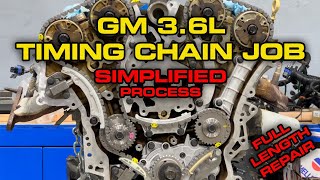
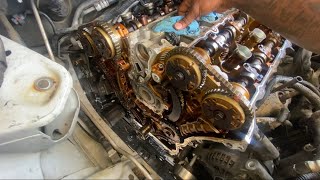
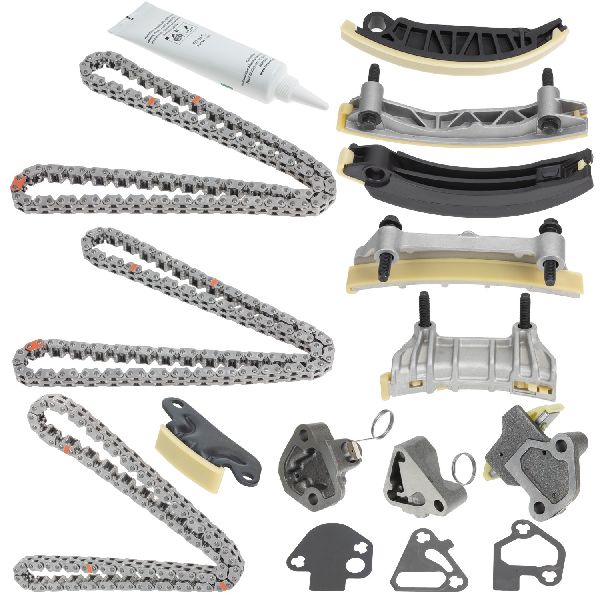
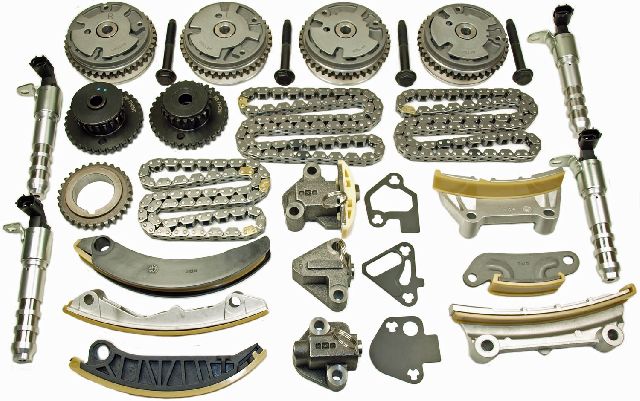
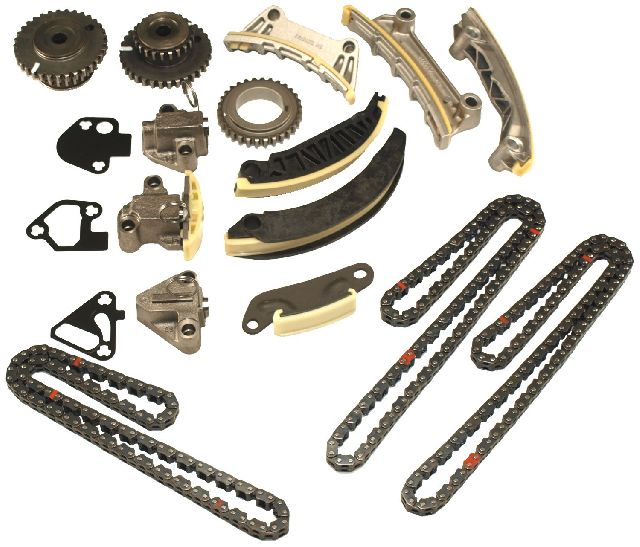
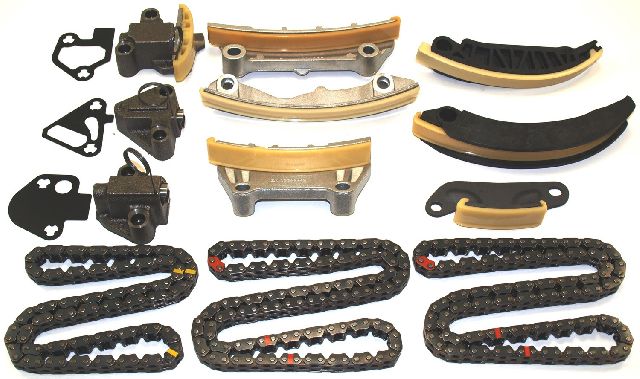
Typical fix: Replace all three timing chains, all tensioners, and all guides with an updated kit. 🎬 Watch this full-length timing chain removal and installation walkthrough. This is a major repair. It is also recommended to replace the water pump and oil pump at the same time.
Est. part cost: $400-$900 - Low or Degraded Engine Oil 🟡 Medium Probability The timing chain tensioners and VVT system are hydraulically operated by engine oil pressure. The original Oil Life Monitor often recommended overly long change intervals, leading to oil breakdown and sludge which clogs passages and accelerates wear.
How to confirm: Check the engine oil level and condition on the dipstick. If the oil is low, black, or sludgy, this is a likely contributor.
Typical fix: Perform an engine oil and filter change using a high-quality full synthetic oil meeting GM's specifications. Many mechanics and owners strongly recommend using a chemical engine flush product (e.g., STP, Amsoil) before the oil change to dissolve sludge that may be affecting VVT components.
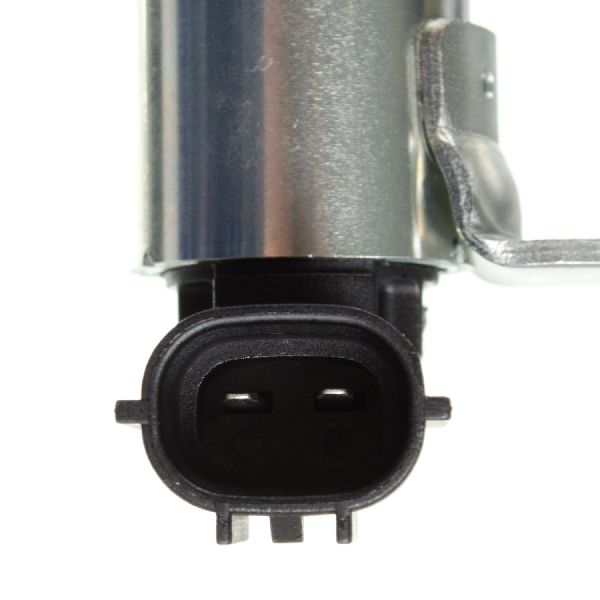
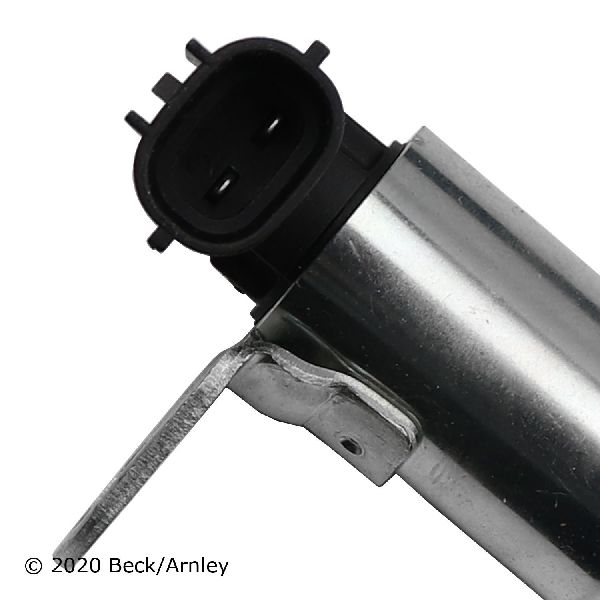
Est. part cost: $50-$100 - Failing Camshaft Actuator Solenoid (VVT Solenoid) ⚪ Low Probability → Shop Engine Camshaft These solenoids can become clogged with oil sludge or fail electronically. While not the most common root cause for P0017 on this engine, it's a possible and much cheaper fix to investigate, especially if the oil is dirty.
How to confirm: Swap the Bank 1 exhaust solenoid with another one (e.g., Bank 1 intake). If the code changes to P0016, the solenoid is bad. They can also be tested with a multimeter for resistance; a reading between 6.9 and 7.9 Ohms is typically expected.
Typical fix: Replace the faulty solenoid. This is a relatively easy repair.
Est. part cost: $30-$60
Rare But Worth Checking
- Slipped Crankshaft Reluctor Wheel: → Shop Engine Crankshaft GM TSB PIP3423P notes that in rare cases where timing chains are found to be tight, the reluctor wheel pressed onto the crankshaft may have moved, causing a correlation fault. This can be inspected through the crankshaft position sensor hole to check the alignment of the wheel's gap relative to the crankshaft lobe. If it has slipped, crankshaft replacement is required.
- Failing Camshaft or Crankshaft Position Sensor: → Shop Engine Crankshaft Position Sensor While often replaced as a first step, the sensors themselves are an infrequent cause of P0017 on this platform. However, a sensor can fail, so it should be considered after checking oil and VVT solenoids. They can be tested with a multimeter.
Diagnosis Steps
- Check engine oil level and condition. If low or dirty, perform an engine flush and an oil/filter change with full synthetic oil, clear the codes, and see if the issue returns.
- Scan for other DTCs. The presence of codes like P0008, P0016, P0018, or P0019 makes a stretched timing chain highly probable.
- Inspect and test the Bank 1 exhaust camshaft actuator (VVT) solenoid. Check its resistance with a multimeter (should be 6.9-7.9 ohms) or swap it with the intake solenoid to see if the code follows the part (changes to P0016).
- If solenoids are functional, inspect the wiring and connectors for the camshaft and crankshaft position sensors for any damage or corrosion.
- Using an advanced scan tool, monitor the desired vs. actual camshaft position angles. A persistent deviation greater than +/- 4 degrees at idle, or greater than 10 degrees under load, strongly points to a mechanical timing issue.
- If all other steps fail to find the cause, a physical inspection of the timing chains for slack is necessary. This confirms a stretched chain and is the final diagnostic step before replacement. This is a labor-intensive step.
Parts You'll Likely Need
- Engine Timing Chain Kit
(OEM #12650230)— This is the definitive fix for the most common cause of P0017 on this engine. An updated kit is required. Part number 12650230 is specified for 2007 models. Later models may use kit 12650231.
Trusted brands: ACDelco, Cloyes
OEM price range: $400-$600
Aftermarket price range: $250-$450 - Camshaft Position Actuator Solenoid (VVT Solenoid)
(OEM #12636175)— A potential, though less likely, cause. It can get clogged with sludge or fail electronically. It's often replaced as a diagnostic step due to its low cost and easy access.
Trusted brands: ACDelco, Delphi, Dorman
OEM price range: $45-$70
Aftermarket price range: $25-$50 - Camshaft Position Sensor
(OEM #12608424)— Rarely the cause, but can fail. There are four total on the engine (intake/exhaust for each bank). P0017 specifically relates to the Bank 1 exhaust sensor.
Trusted brands: ACDelco, Bosch, NGK
OEM price range: $30-$50
Aftermarket price range: $20-$40
Related Codes That Often Appear With This One
- P0008 — A general engine position system performance code for Bank 1. It is often the first code to appear as the timing chains begin to stretch and indicates a problem with the primary timing chain.
- P0016 — This is the correlation code for the intake camshaft on the same bank (Bank 1). Seeing P0016 and P0017 together strongly points to a timing chain issue affecting the entire bank, likely a stretched secondary chain for Bank 1 or a stretched primary chain.
- P0018 / P0019 — These are the correlation codes for the intake and exhaust camshafts on Bank 2 (the bank closer to the radiator). Seeing codes for both banks (e.g., P0016, P0017, P0018, P0019) indicates a severe timing problem with the primary chain or a slipped crankshaft reluctor wheel.
Technical Service Bulletins (TSBs) & Recalls
- 11340C: Special Coverage Adjustment
- Bulletin #PIP3423P: Provides information regarding Diagnostic Trouble Codes P0016, P0017, P0018, P0019, P0008 or P0009 and the need to inspect for loose timing chains or tensioners.
- Bulletin #12-06-01-009F: Announces the availability of high feature V6 timing chain kits and chain guide replacements for repairing stretched timing chains setting DTCs P0008, P0009, P0016, P0017, P0018 and/or P0019.
Platform-Specific Known Issues
- Widespread premature timing chain stretch on the 3.6L LY7 V6 engine.
- GM Special Coverage Adjustment 11340C was issued to extend the warranty for timing chain replacement to 10 years/120,000 miles, but has since expired for all 2007-2010 models due to age.
- The original Oil Life Monitor (OLM) calibration contributed to the problem by allowing excessively long oil change intervals, which accelerated chain wear. The fix under SCA 11340C included an ECM reprogram to shorten these intervals.
- TSB 12-06-01-009F was released to announce the availability of comprehensive timing chain service kits with updated parts to address this specific failure across the entire GM lineup using this engine.
Mechanic-Grade Diagnostic Values
- Camshaft Actuator (VVT) Solenoid Resistance — expected: 6.9-7.9 Ohms at 68°F (20°C). Some service literature may state 7-12 Ohms.. Failure: A reading outside the specified range, or an open/short circuit reading, indicates a failed solenoid.
- Camshaft Position Variance (Scan Tool PID) — expected: Less than +/- 4 degrees at idle.. Failure: A persistent deviation greater than +/- 4 degrees at idle, or a deviation that exceeds 10 degrees under load, strongly indicates a stretched timing chain.
- Crankshaft Reluctor Wheel Alignment — expected: 25 to 26 mm from the end of the machined surface of the crankshaft throw to the edge of the open space in the reluctor wheel. This corresponds to approximately 3.5 teeth visible.. Failure: Any measurement other than the specified 25-26mm indicates the reluctor wheel has slipped on the crankshaft.
- VVT Solenoid Control Circuit Voltage (Scan Tool Commanded) — expected: When commanding the solenoid ON with a scan tool, voltage at the control circuit should drop to less than 1V. When commanded OFF, it should be greater than 2V.. Failure: If the voltage does not change as commanded, it points to a wiring or ECM driver issue.
Scan Tool Commands That Help
- GDS2 (GM Global Diagnostic System 2) or equivalent professional scan tool: Camshaft Position Actuator Solenoid Control / Test — Use this bidirectional command to manually activate the Bank 1 exhaust solenoid. While commanding it ON and OFF, a technician should observe a change in engine idle (it should stumble or run rough). If the idle does not change and the 'Actual' camshaft angle PID does not change relative to the 'Desired' angle, it confirms a fault in the solenoid, its circuit, or a mechanically stuck camshaft phaser.
Wiring & Ground Locations
- ECM (Engine Control Module) — In the engine compartment, mounted to a bracket on the firewall side of the engine (Bank 1).. The ECM is the central component that receives signals from the cam/crank sensors and controls the VVT solenoids. A poor connection or faulty ground at the ECM can cause erratic signals and false codes.
- G101 — Located on the left side of the engine compartment.. This is a primary engine ground point. A loose or corroded connection at G101 can disrupt the signals from various engine sensors, including the camshaft and crankshaft position sensors, leading to correlation codes.
- Bank 1 Exhaust Camshaft Position Sensor ECM Pin — The signal wire is typically a Dark Green wire located at Pin 20 on the C1 connector of the ECM.. For persistent codes where sensors and solenoids test good, a technician must check for continuity on this wire between the sensor and the ECM to rule out a harness break or short.
Real Owner Repair Stories
- Reddit user in r/MechanicAdvice (GM vehicle with 3.6L engine, experiencing oil consumption.) — Car ran badly, check engine light with P0017 was on. Found oil was very low.
❌ Tried (didn't work) Replacing the crankshaft position sensor.
✅ What actually fixed it The user performed a full timing job, replacing the chain, tensioners, both VVT sprockets (phasers), and the exhaust camshaft because the dowel pin had broken off. The car ran well after the repair, but the P0017 code remained, suggesting a potential need for a crankshaft position variation relearn procedure or a lingering electrical issue not solved by the mechanical parts replacement. - AcadiaForum.net user (2008 GMC Acadia (sister vehicle)) — P0017 code present.
❌ Tried (didn't work) Initial diagnosis pointed towards common causes.
✅ What actually fixed it After a timing chain replacement did not fix the code, the shop suspected a slipped crankshaft reluctor wheel, which is a rare but documented cause for this code when the chains are confirmed to be good. - NHTSA ODI #11113615 — An owner reported receiving codes P0017 and P0011, noting that a previous similar occurrence cost over $1500 to replace wiring and fuses.
- NHTSA ODI #10744325 — An owner reported that their mechanic read code P0017 and suggested replacing the gas cap, which did not resolve the intermittent check engine light.
OEM Part Supersession History
Unknown early part numbers→12650230— Updated timing chain kit to address premature stretching issues in early LY7 engines.
Heads up: Part number 12650230 is specified for 2007 models. Later model years, especially those with the LLT engine (2009+), may use a different kit number such as 12650231. Always verify the correct kit part number by VIN.
Model Year Variations Within This Range
- 2007-2008 vs 2009-2010: The engine was changed from the 3.6L LY7 (port injection) in 2007-2008 to the 3.6L LLT (direct injection) in 2009. While both are known for timing chain issues, some parts like pistons and fuel system components are not interchangeable. The fundamental cause of P0017 (timing correlation) remains the same across these years, but direct injection (LLT) engines are also susceptible to carbon buildup on intake valves, which is not a factor for the LY7.
Diagnostic Flowchart
Real Owner Stories
Aggregated from forums and TSBs cited above. Mileages and costs reflect what owners reported in those sources.
2007 Saturn Outlook 3.6L LY7 V6
Symptoms: Engine only vibrates at idle after warmed up. The owner chased the P0017 code for a month, noting the previous owner likely replaced the timing chain.
What fixed it: Unresolved in the report; the owner replaced sensors and VVT solenoids without success, suspecting a skipped timing tooth or severe engine sludge from poor maintenance.
Source hint: Reddit r/MechanicAdvice thread titled '2007 Saturn Outlook - P0017 code - engine only vibrates at idle after warmed up'
2009 Chevrolet Traverse 3.6L LLT V6 — 89000 miles
Symptoms: Intermittent P0017 code coming up.
What fixed it: A forum moderator diagnosed that the Bank 1 exhaust cam was out of sync, advising that if codes P0008, P0009, or P0016-P0019 are also present, the primary timing chain or a slipped crank reluctor wheel must be addressed.
Source hint: Carjunky Forum thread titled '2009 Chevy traverse code p0017 coming up'
GMC Acadia 3.6L LY7/LLT V6
Symptoms: P0017 code triggered by sticky VVT components due to oil sludge buildup in the hydraulic timing system.
What fixed it: Performed a chemical engine flush using STP or Amsoil products followed by an oil change to free up sticky VVT components before committing to a full timing chain replacement.
Source hint: YouTube video titled 'GMC Acadia code P0017. Try this BEFORE replacing your timing chains.'
Related OBD-II Codes
Frequently Asked Questions
Is the timing chain replacement covered under GM's Special Coverage Adjustment 11340C for my 2007-2010 Saturn Outlook?
What does TSB 12-06-01-009F mean for my 3.6L LY7 engine?
Can an oil change really fix a P0017 code on the Saturn Outlook?
How do I test the VVT solenoid on my 3.6L V6 to see if it's causing the P0017?
Why did my Saturn Outlook's timing chain stretch so early?
Helpful Videos
We Have This Part in Stock

The information in this article is provided for general reference and educational purposes only. Vehicle specifications, procedures, and part compatibility can vary by production date, trim level, and region. Always consult your vehicle's factory service manual and verify part numbers before purchasing or performing repairs. Safety-critical components such as airbags, seat belts, and braking systems should be installed by a qualified professional.
- Saturn Outlook:
- 🧭 Diagnostic Flowchart
- 🎬 Helpful Videos
- 🛍️ Shop This Part
- What's Unique About the 2007-2010 Saturn Outlook
- Symptoms You May Notice
- Most Likely Causes
- Rare But Worth Checking
- Diagnosis Steps
- Parts You'll Likely Need
- Related Codes That Often Appear With This One
- Technical Service Bulletins (TSBs) & Recalls
- Platform-Specific Known Issues
- Mechanic-Grade Diagnostic Values
- Scan Tool Commands That Help
- Wiring & Ground Locations
- Real Owner Repair Stories
- OEM Part Supersession History
- Model Year Variations Within This Range
- Real Owner Stories
- 2007 Saturn Outlook 3.6L LY7 V6
- 2009 Chevrolet Traverse 3.6L LLT V6 — 89000 miles
- GMC Acadia 3.6L LY7/LLT V6
- Related OBD-II Codes
- Frequently Asked Questions
- 🎟️ Get 5% Off