

P0017 on 2013-2016 Scion FR-S: Crankshaft Camshaft Correlation Causes and Fixes
On the 2013-2016 Scion FR-S, code P0017 is most often caused by a faulty exhaust cam sprocket (AVCS gear) on the passenger side, not a simple sensor failure. Expect a $600-$1500+ repair. Always check engine oil level and for a TSB on 2013 models first. In some cases, the code can get 'stuck' in the ECU and require dealer tools to clear after the mechanical fix.
- P0017 on a Scion FR-S is a serious code that usually points to a mechanical issue, not just a bad sensor.
- The most likely culprit is a failed exhaust cam sprocket (AVCS gear) on the passenger side of the engine.
- Always check your engine oil level and condition first. Low or dirty oil is a common and easy-to-fix cause.
- If you have a 2013 model, check if TSB S-SB-0032-12 applies to your car, as an ECM update might be the fix.
- Due to the complexity of replacing timing components, professional diagnosis and repair are strongly recommended.
What's Unique About the 2013-2016 Scion FR-S
The FA20 engine, a Subaru design, has a known weakness with its variable valve timing cam sprockets (Subaru's AVCS gears). Unlike many cars where this code points to a simple sensor or solenoid, on the FR-S/BRZ platform, it frequently indicates a failing cam sprocket, which is a much more involved repair. A common failure mode is the internal locking pin sticking or a seal on the gear failing, causing a loss of oil pressure at idle. Furthermore, early 2013 models were subject to a Technical Service Bulletin (TSB S-SB-0032-12) for faulty ECM logic causing this code. Some owners report the fault code can get 'burned' into the ECU's memory even after a mechanical fix, requiring special tools like Toyota Techstream to perform a 'VVT Learning Value' reset.
Symptoms You May Notice
- Check Engine Light and Traction Control Light are on simultaneously.
- Vehicle enters 'limp mode' with drastically reduced engine power.
- Rough or unstable idle, sometimes dipping below 500 RPM, especially when coming to a stop.
- Engine hesitates or bogs down at low speeds or when coming to a stop.
- Stalling.
- Poor fuel economy.
- Rattling or whining noise from the front of the engine, particularly after a cold start.
- Immediately replacing the camshaft or crankshaft position sensors. The code P0017 is a 'correlation' code, meaning the sensors are likely reading correctly, but the mechanical timing they are reading is wrong. Always diagnose the oil system, OCVs, and mechanical components first.
Most Likely Causes
- Faulty Exhaust Cam Sprocket (AVCS Gear) 🔴 High Probability The FA20's AVCS cam sprockets are a known failure point. A small, pressurized metal cap can loosen, causing oil pressure loss at idle, or the internal spring-loaded locking pin can stick due to debris or wear. Debris from other engine issues, like the 2013 model's valve spring recall problems, can also clog the sprocket's oil passages.
How to confirm: This is often a diagnosis by elimination. If oil level is good, and OCVs and sensors test fine, the sprocket is the next logical cause. A technician may use an oscilloscope to view cam/crank patterns, but definitive diagnosis requires removing the timing cover for inspection.
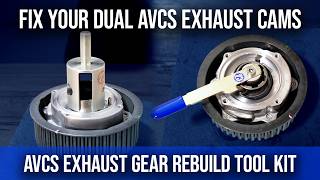
Typical fix: Replace the Bank 1 (passenger side) exhaust cam sprocket. This requires removing the front timing cover and re-timing the engine. 🎬 See how to rebuild a Subaru AVCS exhaust cam gear Many shops and experienced owners recommend replacing all four sprockets at the same time as a preventative measure.
Est. part cost: $180-$270 for one OEM sprocket - Low or Dirty Engine Oil 🟡 Medium Probability The AVCS (variable valve timing) system is hydraulically operated by engine oil. Low levels or oil that is dirty, sludgy, or the wrong viscosity can prevent the cam sprockets from adjusting correctly. The FA20 can consume oil, so regular checks are critical.
How to confirm: Check the oil dipstick for level and inspect the oil's condition. If it's low or very dark/gritty, this is a likely contributor.
Typical fix: Perform an oil and filter change using the correct OEM-specified oil (typically 0W-20 synthetic). Clear codes and see if the issue returns.
Est. part cost: $50-$90 - Faulty Oil Control Valve (OCV) / VVT Solenoid 🟡 Medium Probability → Shop Engine Variable Valve Timing (VVT) Solenoid The OCVs can become clogged with sludge or metal debris, or fail electronically. They are a common failure point before the sprockets themselves.
How to confirm: The OCV can be tested for resistance with a multimeter (should be between 6.9-7.9 Ohms at 68°F). A simpler and more effective method is to swap the Bank 1 exhaust OCV with another one (e.g., the intake OCV on the same bank). Clear the codes. If the trouble code changes to P0016 (Bank 1 Intake), the solenoid is confirmed bad.
Typical fix: Replace the faulty Oil Control Valve. There are four total on the engine, one for each camshaft.
Est. part cost: $90-$110 for one OEM solenoid - Faulty ECM Logic (2013 models only) ⚪ Low Probability Scion issued Technical Service Bulletin S-SB-0032-12 (and a revision S-SB-0032-12-REV-1) for some 2013 FR-S vehicles where the original ECM logic was too sensitive and could falsely trigger P0017 or P0019.
How to confirm: A Toyota/Scion dealership can check if your vehicle's VIN is covered by the TSB and if the updated software calibration has been applied. This TSB often involves determining if a reprogram or full ECM replacement is needed.
Typical fix: The dealership will reprogram (reflash) the ECM with updated software. In some cases, the ECM itself may require replacement per the TSB.
Est. part cost: $0 if covered by emissions warranty, otherwise $100-$250 for a reflash.
Rare But Worth Checking
- Stretched Timing Chain or Failed Tensioner: → Shop Engine Timing Chain While the cam sprockets are a more common failure point on the FA20, a physically stretched chain or a hydraulic tensioner that has lost its ability to keep the chain taut will also cause correlation codes. This is more likely on high-mileage engines.
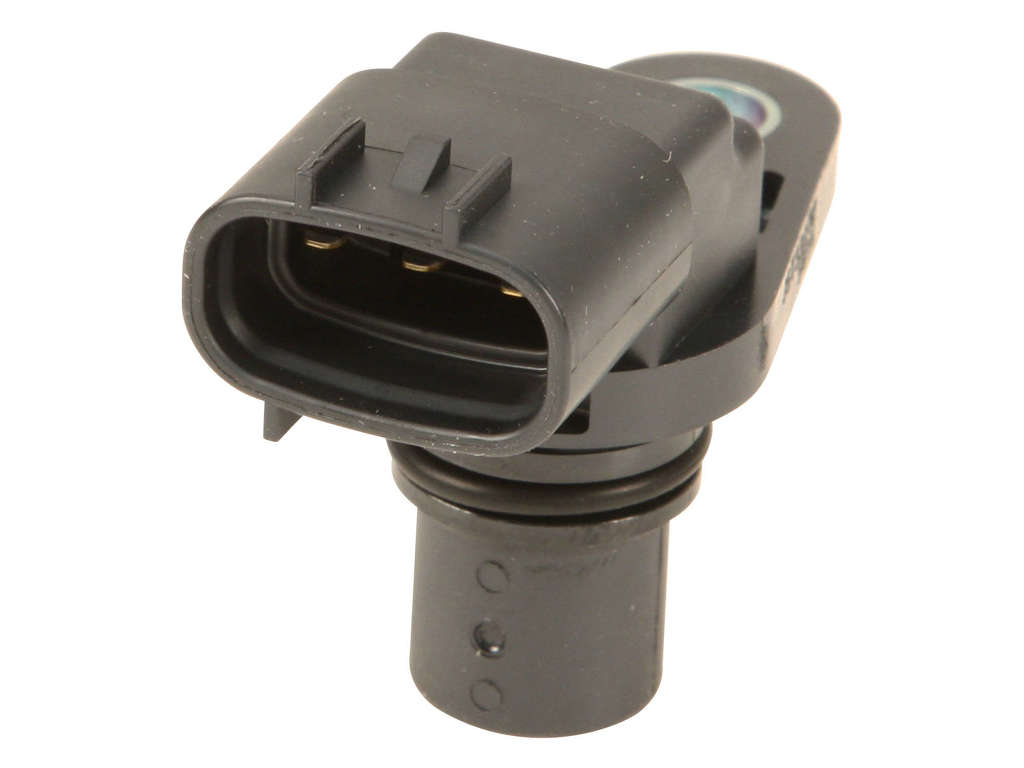
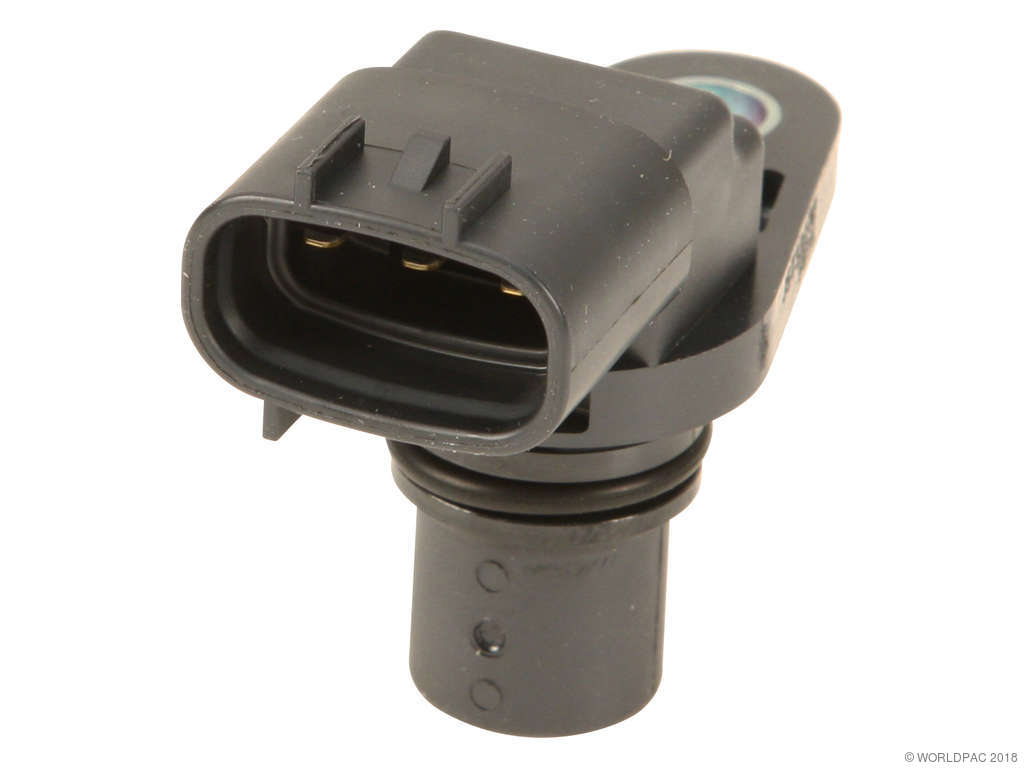
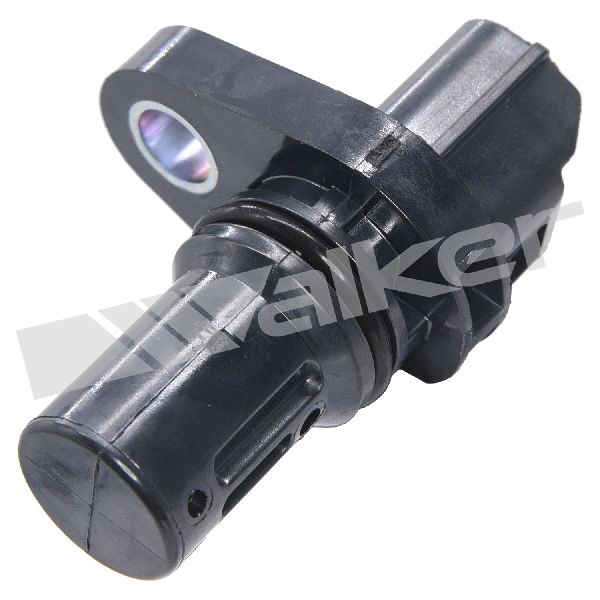
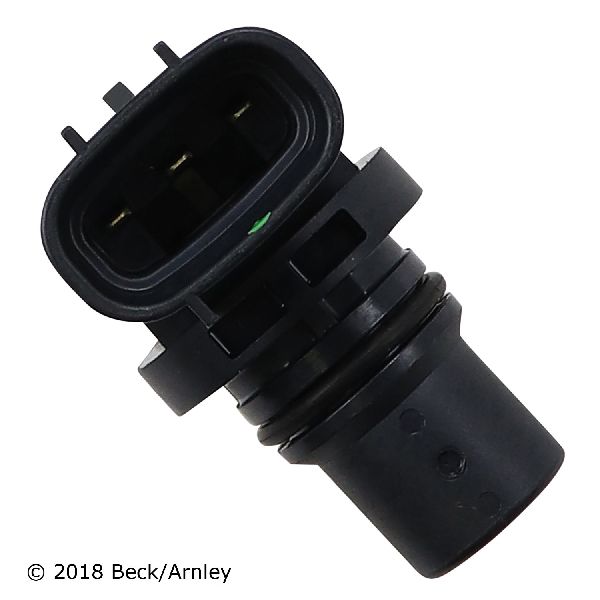
- Faulty Camshaft Position Sensor: → Shop Engine Camshaft Position Sensor It's possible for the sensor itself to fail, but it's less common than the mechanical causes. The code indicates a correlation error, not a sensor circuit fault, making a mechanical issue more likely. Always diagnose other components first.
- Clogged Oil Passages: Excessive use of liquid gasket (RTV) during previous repairs (like the valve spring recall) has been known to break off and clog small oil passages leading to the OCVs or cam sprockets, starving them of oil and causing timing codes.
Diagnosis Steps
- Check Engine Oil: Verify the oil level is full and the oil is clean and of the correct 0W-20 viscosity. If low or dirty, perform an oil change and clear the code. See if it returns. This is the simplest and first step.
- Check for TSBs (2013 Models): If you have a 2013 FR-S, contact a dealer with your VIN to see if TSB S-SB-0032-12 applies and has been performed. Also be aware of the valve spring recall, as improper repairs could cause related issues.
- Test Oil Control Valves (OCVs): Locate the exhaust OCV on the passenger side (Bank 1). Swap it with the intake OCV on the same bank. Clear codes and drive. If the code changes from P0017 to P0016, you have a bad OCV. 🎬 Watch: How to test and fix P0017 correlation issues This is the most common diagnostic step after checking oil.
- Test Camshaft Position Sensor: While unlikely to be the cause, you can inspect the sensor wiring for damage. Advanced diagnostics involve using an oscilloscope to check the sensor's signal against the crank sensor signal.
- Inspect Mechanical Timing: If all of the above check out, the problem is almost certainly mechanical. The front timing cover must be removed to inspect the cam sprockets for damage/play and to check the timing chain for stretch and tension.
- Clear 'Permanent' DTCs: If a mechanical part is replaced and the code returns instantly, the fault may be permanently stored in the ECU. This requires dealer-level software like Toyota Techstream or a high-end scan tool to perform a 'VVT Learning Value' reset or similar utility function to fully clear the memory.
Parts You'll Likely Need
- Exhaust Camshaft Timing Gear Assembly (Bank 1)
(OEM #SU003-05178 (Toyota), 13321AA010 (Subaru))— This is the most common point of failure on the FA20 engine for code P0017. The internal mechanism can stick or fail, causing a timing correlation error.
Trusted brands: Toyota/Subaru Genuine
OEM price range: $200-$280
Aftermarket price range: $150-$220 - Camshaft Timing Oil Control Valve (OCV)
(OEM #SU003-07806 (Toyota), 10921AA231 (Subaru))— This solenoid controls oil flow to the cam sprocket. It can get clogged or fail electronically, and is a common diagnostic step before replacing the sprocket itself.
Related Codes That Often Appear With This One
- P0016 — Crank/Cam correlation error for Bank 1 Intake camshaft. Often appears with P0017 if there is a major timing issue on Bank 1, like a jumped chain or a problem affecting the entire bank.
- P0019 — Crank/Cam correlation error for Bank 2 Exhaust camshaft. If seen with P0017, it points to a systemic problem like low/dirty oil, or issues with both exhaust cam sprockets.
- P0018 — Crank/Cam correlation error for Bank 2 Intake camshaft. Seeing all four codes (P0016, P0017, P0018, P0019) strongly suggests a major mechanical failure like a stretched main timing chain or widespread oiling issue.
- P000B — 'B' Camshaft Position Slow Response. This code often accompanies AVCS-related correlation codes and points towards a sluggishly responding cam phaser or OCV due to oiling issues or mechanical failure.
Technical Service Bulletins (TSBs) & Recalls
- S-SB-0032-12 (and REV-1): Addresses MIL on for DTC P0017 or P0019 on 2013 models due to overly sensitive ECM logic, requiring either a re-program or ECM replacement.
- Subaru Recall / NHTSA Campaign 18V724000: Pertains to the 2013 model year valve spring recall. Improper dealer service for this recall has been linked to subsequent engine failures and oiling problems that can trigger codes like P0017.
Platform-Specific Known Issues
- For early 2013 models, a sensitive ECM logic can trigger P0017, which is addressed by TSB S-SB-0032-12.
- The FA20 engine is known for the cam sprockets (AVCS gears) getting clogged with debris, especially after another engine failure (like spun bearings) contaminates the oil with metal particles.
- Forum users report that after fixing the mechanical cause, the P0017 code can be 'imprinted' in the ECU and may require a dealer or tuner with EcuTek software to permanently clear it.
Mechanic-Grade Diagnostic Values
- Oil Control Valve (OCV / VVT Solenoid) Resistance — expected: 6.9 - 7.9 Ohms at 68°F (20°C). Failure: A reading outside this range, or an open/short circuit, indicates a failed solenoid.
- Camshaft Position Sensor Signal Voltage (Hall Effect Sensor) — expected: The signal wire should toggle between approximately 0V and 5V as the engine rotates.. Failure: A constant 0V, 5V, or a voltage that does not switch indicates a faulty sensor or wiring issue. A technician would use an oscilloscope for accurate diagnosis.
- Camshaft Position Sensor Clearance (2013 Models) — expected: 1.3 +/- 0.05 mm (1.25 to 1.35 mm). Failure: Incorrect clearance can cause sensor reading errors. TSB S-SB-0033-13 provides a procedure for measuring the gap and adding a shim if necessary.
Scan Tool Commands That Help
- Toyota Techstream: VVT Initial Position Learning Value Reset — After a mechanical repair such as replacing a cam sprocket, the ECU may retain old, incorrect learned values, causing the code to return immediately. This function forces the ECU to clear the stored values and relearn the new cam/crank correlation. It is found under the Utility menu for the Engine Control System.
- Toyota Techstream: Calibration Update (ECU Flash) — For 2013 models affected by TSB S-SB-0032-12, the original ECU logic was too sensitive. This function reprograms the ECM with an updated calibration file to prevent false P0017 codes.
Wiring & Ground Locations
- Engine Ground Straps — There are three primary engine grounds: one on each side of the front bottom of the engine block connecting to the frame rail, and one from the top-rear of the passenger side of the transmission to the transmission tunnel.. A poor or corroded ground connection can introduce noise or voltage offsets into the camshaft and crankshaft position sensor circuits, leading to erroneous signals and correlation faults. The ground on the passenger side is particularly relevant to Bank 1 sensors.
- ECM (Engine Control Module) — Located at the right end of the dash, accessible from the passenger footwell.. This is the termination point for all sensor wiring. When diagnosing persistent electrical faults, checking for a solid connection and testing pin voltage at the ECM connector is a crucial step.
Real Owner Repair Stories
- GMTNation forum user (4.2L I6 (Note: Not an FR-S, but illustrates a common diagnostic trap)) — Persistent P0017 code after numerous part replacements.
❌ Tried (didn't work) Replaced VVT Solenoid (CPAS), Replaced Camshaft Position Sensor, Replaced Crankshaft Position Sensor, Replaced Timing Chain and Guides, Replaced Cam Phaser
✅ What actually fixed it The user was advised that even after replacing all timing components, the code can return instantly if the timing chain was misaligned by even one tooth during installation. The final fix requires a painstaking re-verification of mechanical timing.
OEM Part Supersession History
10921AA220, 10921AA230→10921AA231— Standard part revision and consolidation by Subaru.
Heads up: The latest part number, 10921AA231, is the correct replacement for all OCVs on the 2013-2016 FA20 engine.13321AA010, 13321AA011→13321AA012— Standard part revision by Subaru.
Heads up: Part number 13321AA010 is specified for the 2013-2016 FR-S Bank 1 (Right Hand) Exhaust Cam Sprocket. Later revisions like ...011 and ...012 are also available and should be compatible.13321AA030, 13321AA031→13321AA032— Part revision with a specific date cutoff.
Heads up: Part lists show a change on 9/28/2013 for the BRZ exhaust cam sprocket. This indicates a potential mid-year change in the part design for 2013 models, aligning with the known TSBs for that year. Verifying the correct part by VIN is critical for 2013 models.
Model Year Variations Within This Range
- 2013 Only: Subject to multiple TSBs (S-SB-0032-12 for ECM logic, S-SB-0033-13 for sensor clearance) that can cause P0017. Also subject to the valve spring recall, where improper RTV application during the fix can clog oil passages, leading to this code.
- 2015-2016: Received an updated engine wiring sub-harness and coil packs compared to 2013-2014 models. While not a direct cause or fix for P0017, it's a notable running change in the engine's electrical system.
- Post-July 2014 (Mid-2015 MY): Forum discussions indicate that multiple internal engine components, including camshafts and sprockets, received new part numbers starting with production after July 2014. While the exact design changes are not specified, it suggests a revision that may affect part compatibility between early and late models within this generation.
Diagnostic Flowchart
Real Owner Stories
Aggregated from forums and TSBs cited above. Mileages and costs reflect what owners reported in those sources.
2014 Scion FR-S 2.0L FA20 — 11860 miles
Symptoms: Check Engine Light and Slip/Traction lights came on simultaneously.
What fixed it: The dealer ordered a new Cam Position Sensor and changed the oil in hopes of resolving the issue.
Source hint: ft86club.com owner report
Scion FR-S / Subaru BRZ 2.0L FA20
Symptoms: Vehicle threw P0016 and P0017 codes.
What fixed it: Dealer repairs involving fixing the specific failure of a cap on the cam gear, and in some cases, ECU replacements.
Source hint: ft86club.com thread 'CEL/SL/Idle Issue List for FR-S/BRZ Owners'
Scion FR-S 2.0L FA20
Symptoms: Received both exhaust cam codes (P0017 and P0019) and the car went into limp mode.
What fixed it: Replaced mechanical parts, but also required ECU replacement because the learned values get 'burned into memory'.
Source hint: reddit.com/r/ft86 thread 'Code P0017 and P0019'
Scion FR-S 2.0L FA20
Symptoms: Threw codes P000B and P0017, and found an oil leak near the Oil Control Valve (OCV).
What fixed it: Diagnosed the oil leak near the OCV and evaluated the vehicle for the ECM logic TSB.
Source hint: ft86club.com thread 'P000B and P0017'
Related OBD-II Codes
Frequently Asked Questions
Does TSB S-SB-0032-12 apply to my Scion FR-S?
Could the valve spring recall on my 2013 FR-S have caused the P0017 code?
I replaced the cam sprocket and OCV, but the P0017 code comes back instantly. What's wrong?
How can I test if the Oil Control Valve (OCV) is causing P0017 on my FA20 engine?
What is the most common mechanical failure causing P0017 on the FR-S?
Can low oil cause a P0017 on my FR-S?
Helpful Videos
We Have This Part in Stock


The information in this article is provided for general reference and educational purposes only. Vehicle specifications, procedures, and part compatibility can vary by production date, trim level, and region. Always consult your vehicle's factory service manual and verify part numbers before purchasing or performing repairs. Safety-critical components such as airbags, seat belts, and braking systems should be installed by a qualified professional.
- Scion FR-S:
- 🧭 Diagnostic Flowchart
- 🎬 Helpful Videos
- 🛍️ Shop This Part
- What's Unique About the 2013-2016 Scion FR-S
- Symptoms You May Notice
- Most Likely Causes
- Rare But Worth Checking
- Diagnosis Steps
- Parts You'll Likely Need
- Related Codes That Often Appear With This One
- Technical Service Bulletins (TSBs) & Recalls
- Platform-Specific Known Issues
- Mechanic-Grade Diagnostic Values
- Scan Tool Commands That Help
- Wiring & Ground Locations
- Real Owner Repair Stories
- OEM Part Supersession History
- Model Year Variations Within This Range
- Real Owner Stories
- 2014 Scion FR-S 2.0L FA20 — 11860 miles
- Scion FR-S / Subaru BRZ 2.0L FA20
- Scion FR-S 2.0L FA20
- Scion FR-S 2.0L FA20
- Related OBD-II Codes
- Frequently Asked Questions
- 🎟️ Get 5% Off