

P0017 on 2013-2020 Subaru BRZ: Exhaust Cam Timing Causes and Fixes
P0017 on a Subaru BRZ most often points to low/dirty engine oil or a failing exhaust Oil Control Valve (OCV) on the passenger side. An oil change and replacing the OCV (Subaru P/N: 10921AA231) is the most common fix. If the code persists, the issue is likely a more serious failure of the AVCS camshaft sprocket (phaser). In some cases, an ECM software update from the dealer is required per a TSB.
- Always check your oil level and condition first. An oil change with 0W-20 synthetic might fix the problem.
- The passenger-side exhaust Oil Control Valve (OCV) is the most likely part to fail. It's a relatively easy and affordable DIY replacement.
- Do NOT replace the camshaft or crankshaft sensors. They are rarely the cause of a correlation code.
- Be aware that a dealership ECM software update might be the required fix, as noted in official TSBs.
What's Unique About the 2013-2020 Subaru BRZ
The FA20 engine in the first-generation BRZ and its twins (Scion FR-S, Toyota 86) is known for being sensitive to oil level and quality. The AVCS is operated by oil pressure, and many P0017 issues trace back to simple oil maintenance. Furthermore, Subaru has issued a comprehensive Technical Service Bulletin (TSB #02-163-16R) that provides a detailed diagnostic procedure for this and other AVCS codes, acknowledging the commonality of the issue. A unique and frustrating quirk of this platform is that if the timing correlation is off for too long, the ECM can 'learn' and store incorrect timing parameters that cannot be reset, sometimes requiring a full ECU replacement even after the mechanical fault is fixed.
Diagnostic Flowchart
Tap your situation to follow the diagnostic path that matches what you're seeing on this vehicle.
Symptoms You May Notice
- Check Engine Light is on
- Traction control light is on (disabling VSC/traction control)
- Engine enters 'limp mode' with noticeably reduced power
- Rough or unstable idle, sometimes bouncing between 500-1000 RPM
- Engine stalling, especially at low speeds or when coming to a stop
- Reduced engine power and poor acceleration
- Decreased fuel economy
- Rattling or ticking noises from the front timing cover area
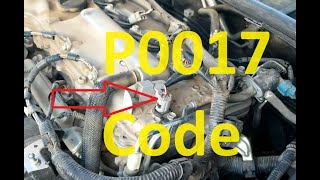
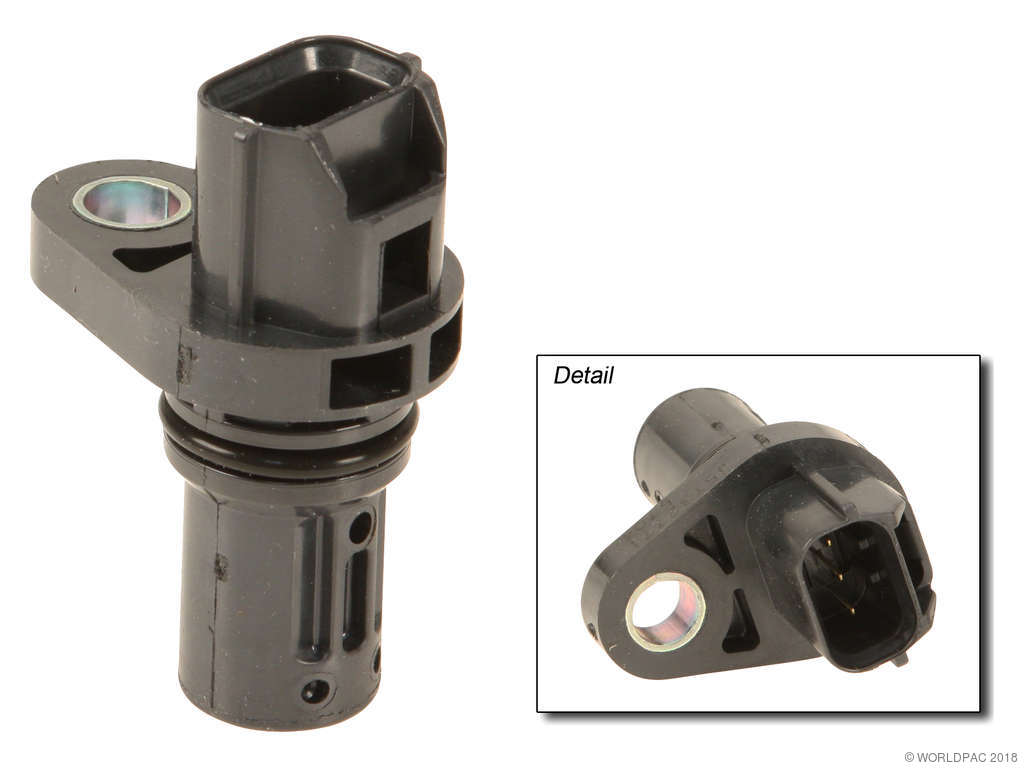
- Replacing the camshaft or crankshaft position sensor. A correlation code like P0017 means the sensors are likely working but the signals they are sending do not line up. The problem is almost always mechanical or hydraulic (oil-related), not the sensor itself. Many owners replace these sensors with no effect. 🎬 Watch: A breakdown of common P0017 causes and fixes.
Most Likely Causes
- Low or Dirty Engine Oil 🔴 High Probability The AVCS (Active Valve Control System) is entirely dependent on clean, full synthetic 0W-20 oil at the correct pressure to function. This is the first thing to check and the most common cause of timing correlation codes on the FA20 engine.
How to confirm: Check the oil level on the dipstick and inspect the oil's condition and service history. This should always be the first step.
Typical fix: Perform an engine oil and filter change using high-quality, full synthetic 0W-20 oil.
Est. part cost: $40-$80 - Faulty Oil Control Valve (OCV) / VVT Solenoid 🟡 Medium Probability → Shop Engine Variable Valve Timing (VVT) Solenoid The OCV for the Bank 1 (passenger side) exhaust camshaft can become clogged with sludge or fail electronically. It's a known failure point and the second step in Subaru's own diagnostic TSB.
How to confirm: Swap the suspected faulty exhaust OCV with the intake OCV on the same bank (they are often interchangeable). Clear the codes and drive. If the code changes to P0016 (Intake Cam Correlation), the OCV is confirmed bad.
Typical fix: Replace the Bank 1 exhaust Oil Control Valve. It is located on the front timing cover on the passenger side, held in by a single 10mm bolt.
Est. part cost: $80-$150 - Failed Camshaft Sprocket (AVCS Actuator/Phaser) Medium-low Probability → Shop Engine Camshaft This is a very common issue on the FA20 once oil and the OCV are ruled out. The internal mechanism of the sprocket, which uses oil pressure to change cam timing, can get stuck or fail. Forum users report a small internal locking pin can stick or a rear cap can pop out, causing a loss of oil pressure.
How to confirm: This is a difficult diagnosis without first ruling out the OCV. A dealership can use the Subaru Select Monitor to command the AVCS angle and watch its response time. A slow or non-responsive sprocket is faulty. Visual inspection requires removing the timing cover.
Typical fix: Replace the Bank 1 exhaust camshaft sprocket. This is a labor-intensive job that requires removing the front timing cover.
Est. part cost: $150-$250 - Incorrect ECM Software Logic ⚪ Low Probability Subaru has released TSBs (e.g., #09-128-24R) indicating the ECM may misinterpret sensor data. An owner complaint (ODI #11329091) also documents an ECM update as part of the fix.
How to confirm: A Subaru dealership or a specialized shop with a Subaru Select Monitor (SSM) can check the current software version and determine if an update is available for your VIN.
Typical fix: Reflash the Engine Control Module (ECM) with the updated software.
Est. part cost: $0-$200 (Labor cost at a dealership) - Stretched Timing Chain or Failed Tensioner ⚪ Low Probability → Shop Engine Timing Chain While less common than AVCS component failure at lower mileages, the timing chain can stretch over time, or the hydraulic tensioner can weaken, causing timing to become out of sync.
How to confirm: This is a mechanical issue requiring removal of the timing cover to physically inspect the chain, guides, and tensioner for slack or damage. This is a labor-intensive diagnosis.
Typical fix: Replace the timing chain, tensioners, and guides.
Est. part cost: $300-$600
Rare But Worth Checking
- ECU with 'Burned-In' Bad Learn Values: If the car is driven for an extended period with a timing correlation fault, the ECM can permanently store incorrect 'learn values'. In these cases, even after replacing the faulty mechanical part (like the cam sprocket), the code will return. The only fix is to replace the ECM itself.
- Clogged Oil Passages or Cam Carrier Filters: Sludge or metal debris can clog the small oil passages and tiny filter screens within the cam carriers that feed the OCVs and cam sprockets, starving them of oil pressure. TSB #02-163-16R includes steps to inspect these passages if other fixes fail.
Diagnosis Steps
- Check Engine Oil: Verify the oil level is full and the oil is clean. If low, dirty, or overdue for a change, perform an oil and filter change with 0W-20 synthetic oil. Clear the code and drive to see if it returns. This is the first step in Subaru's official TSB.
- Scan for Other Codes: Check for any other related codes (e.g., P0016, P0018, P0019, P000B) that could provide more clues.
- Check for TSBs & ECM Updates: Contact a Subaru dealer with your VIN to see if TSB #02-163-16R or an ECM software update applies to your vehicle.
- Test the Oil Control Valve (OCV): Locate the exhaust OCV on the passenger side front timing cover. A common and effective DIY diagnostic is to swap the exhaust OCV with the intake OCV on the same bank. Clear the codes and drive. If the code changes to P0016 (intake correlation), the OCV is faulty and must be replaced.
- Advanced Diagnostics (Shop Recommended): If the above steps fail, follow the procedure in TSB #02-163-16R. This involves using a professional scan tool (like the Subaru Select Monitor) to command the AVCS sprocket and measure its response. A slow or non-responsive sprocket indicates failure.
- Inspect Mechanical Timing: If the AVCS system appears to function electronically, the final step is a major mechanical inspection. This requires removing the front timing cover to check the timing chain for stretching, and inspecting the guides, tensioner, and cam sprocket for physical damage or sludge. This is best left to an experienced mechanic.
Parts You'll Likely Need
- Engine Oil Control Valve (VVT Solenoid)
(OEM #10921AA231 (Exhaust); 10921AA220 (Intake). Verify with dealer.)— This solenoid controls oil flow to the cam phaser and is a frequent failure point, either by getting clogged or failing electronically. It's the second most likely cause after oil issues.
Trusted brands: Subaru (OEM), Denso
OEM price range: $120-$160
Aftermarket price range: $80-$110 - AVCS Camshaft Sprocket (Phaser) — The next most common failure after the OCV. The internal mechanism fails, preventing it from adjusting cam timing correctly. This is a more involved repair.
Trusted brands: Subaru (OEM)
OEM price range: $150-$250
Aftermarket price range: $100-$180 - Full Synthetic Engine Oil (0W-20) and Filter — The AVCS system is highly sensitive to oil quality and level. Low, old, or incorrect viscosity oil is the leading cause of P0017 and related timing codes.
Related Codes That Often Appear With This One
- P0016 — This is the correlation code for the intake camshaft on the same bank (Bank 1). Seeing both P0016 and P0017 together strongly suggests a larger timing issue on the passenger side, such as a stretched chain, a problem with the cam carrier oil supply, or multiple failed AVCS components.
- P0019 — This is the equivalent exhaust cam correlation code for Bank 2 (driver's side). If you see P0017 and P0019 together, it points towards a systemic problem affecting the exhaust cams on both sides, like severe oil contamination/starvation or a major timing chain issue.
Technical Service Bulletins (TSBs) & Recalls
- 02-163-16R: A comprehensive bulletin that supersedes older ones. It provides a detailed diagnostic procedure for all AVCS-related DTCs (including P0017) on FA/FB engines, outlining a step-by-step troubleshooting process.
- 09-128-24R: Mentions an ECM software update as a potential remedy for P0017, among other codes.
- 02-137-12: (Superseded by 02-163-16R) Originally provided a diagnostic procedure for DTC P0017 and P0019 on the 2013 BRZ.
Platform-Specific Known Issues
- Subaru TSB #02-163-16R provides a detailed diagnostic flowchart for P0017 and other AVCS codes. It prioritizes checking oil, then replacing the OCV, then performing advanced diagnostics on the cam sprocket before tearing into the timing cover.
- The ECU can permanently learn incorrect timing values if the P0017 code is present for too long, necessitating an ECU replacement even after the mechanical fault is repaired.
- A known failure mode for the AVCS cam sprocket is a small cap on the back of the gear popping out, leading to a loss of oil pressure for the phaser mechanism.
Mechanic-Grade Diagnostic Values
- VVT Advance Angle Amount at idle with OCV disconnected — expected: Near 0 degrees. Failure: A deviation of more than +/- 10 degrees indicates a slipped timing chain tooth.
- Resistance between OCV connector terminals — expected: 6.9 - 7.9 Ω at 68°F (20°C). Failure: Resistance outside this range indicates a faulty solenoid coil.
- OBD Mode $06 'AVCS diagnostic value' — expected: Value greater than or equal to 1000. Failure: A value less than 1000 after a repair indicates the fix was not successful.
Scan Tool Commands That Help
- Subaru Select Monitor (SSM) or compatible (RomRaider, Autel): Live Data Monitoring of 'VVT Adv. Ang. Amount' — Used to check the base mechanical timing by disconnecting the OCV and starting the engine. A value other than ~0° within 10 seconds points to a jumped timing chain.
- Subaru Select Monitor (SSM) or compatible: Live Data Comparison of Left vs. Right AVCS Advance — After swapping or replacing an OCV, monitor both banks' advance angles during a drive cycle. The faulty bank will show slow, erratic, or no response compared to the good bank.
- Advanced Aftermarket Scan Tools (e.g., Autel, Snap-on): AVCS Zero Angle Calibration Reset — If the ECM has 'learned' incorrect timing values that persist after a mechanical repair, some advanced tools can force a reset of these values, which the dealer's SSM tool may not be able to do, potentially avoiding an ECM replacement.
Wiring & Ground Locations
- Engine Ground Straps — There are three primary engine grounds: one on each side of the engine near the bottom, connecting to the frame rail, and one at the top-rear of the passenger side of the transmission/engine, connecting to the transmission tunnel.. A poor ground connection can introduce electrical noise or voltage drops, potentially affecting the accuracy of sensor readings from the camshaft and crankshaft position sensors, leading to false correlation codes.
- OCV Connector — The connector plugs directly into the top of the Oil Control Valve (solenoid) on the front timing cover. Bank 1 (passenger side) has two: one for intake (top) and one for exhaust (bottom).. Oil can leak through a failing OCV seal and contaminate the electrical connector and harness, causing high resistance or a short, which prevents the ECM from controlling the valve correctly.
Real Owner Repair Stories
- Reddit user on r/subaru (Subaru FA-engine vehicle (likely Forester XT, similar AVCS system)) — P0017 code. Scan tool data showed VVT advance angle varying up to 14 degrees, when 10 degrees is the maximum expected deviation.
❌ Tried (didn't work) The shop initially could not determine if the issue was the timing chain/sprocket or the OCV system because of electrical issues found.
✅ What actually fixed it The root cause was an oil leak into the Bank 1 exhaust OCV connector and harness, causing intermittent high resistance. The repair path started with replacing both Bank 1 OCVs and repairing/cleaning the oil-contaminated wiring and connector. - ft86club.com user (2015 BRZ Limited, 32,000 miles) — Rough idle (bouncing 500-1000 RPM), limp mode, CEL for P0017. Also saw P000B (Slow Response) at one point.
❌ Tried (didn't work) Reverting from a custom tune back to the stock tune.
✅ What actually fixed it The user discovered a significant oil leak originating from the Bank 2 (driver's side) exhaust OCV, caking the front of the engine in oil. Although the code was for Bank 1, the presence of a leaking OCV on the opposite bank pointed to a likely OCV failure as the root cause for P0017 as well. The implied fix was OCV replacement.
OEM Part Supersession History
10921AA230→10921AA231— Likely an internal revision for improved reliability or to address known failure modes like internal leaking.
Heads up: 10921AA231 is the current replacement for 10921AA230 and also replaces 10921AA220 (the intake OCV), indicating they are likely interchangeable on many models, but always verify with a dealer.
Model Year Variations Within This Range
- 2017-2020: For the 2017 model year refresh, the FA20 engine received minor updates including a more rigid cylinder block, low-friction camshafts, and polished valve guides. While these changes were aimed at durability and minor performance gains, they do not fundamentally change the P0017 diagnostic process, as the AVCS components and logic remain the same.
Helpful Videos
We Have This Part in Stock


The information in this article is provided for general reference and educational purposes only. Vehicle specifications, procedures, and part compatibility can vary by production date, trim level, and region. Always consult your vehicle's factory service manual and verify part numbers before purchasing or performing repairs. Safety-critical components such as airbags, seat belts, and braking systems should be installed by a qualified professional.
- Subaru BRZ:
- 🧭 Diagnostic Flowchart
- 🎬 Helpful Videos
- 🛍️ Shop This Part
- What's Unique About the 2013-2020 Subaru BRZ
- Symptoms You May Notice
- Most Likely Causes
- Rare But Worth Checking
- Diagnosis Steps
- Parts You'll Likely Need
- Related Codes That Often Appear With This One
- Technical Service Bulletins (TSBs) & Recalls
- Platform-Specific Known Issues
- Mechanic-Grade Diagnostic Values
- Scan Tool Commands That Help
- Wiring & Ground Locations
- Real Owner Repair Stories
- OEM Part Supersession History
- Model Year Variations Within This Range
- 🎟️ Get 5% Off