

P0017 on 2023-2024 Subaru Forester: Crank/Cam Correlation Causes and Fixes
On a 2023-2024 Subaru Forester, the P0017 code is most often caused by an Engine Control Module (ECM) software issue. A simple reprogram at a Subaru dealership, as outlined in Technical Service Bulletins 09-120-24 and 09-120-24R, is the most likely fix. Other causes include low/dirty oil or a faulty oil control valve (OCV) for the passenger-side exhaust camshaft.
- For a 2023-2024 Forester, your first step for P0017 should be to contact a Subaru dealer to check if your ECM software is up-to-date per TSBs 09-120-24R and 09-120-24.
- Always check your engine oil level and condition. Low or dirty oil is a common and easy-to-fix cause for this code.
- Do not replace the camshaft or crankshaft position sensors as a first step; they are rarely the cause of a correlation code.
- If a software update and oil change do not resolve the issue, the next most likely culprit is the passenger-side exhaust Oil Control Valve (OCV).
What's Unique About the 2023-2024 Subaru FORESTER
For the 2023-2024 Forester, this code is frequently a 'ghost' code caused by a software logic error, not a mechanical failure. Subaru has issued Technical Service Bulletins (TSBs) 09-120-24 and 09-120-24R acknowledging this, and the official fix is an ECM software update. This is a critical distinction from older models where mechanical or oil-related issues are more common first culprits. This software issue is also known to affect other Subaru models using the same engine.
Diagnostic Flowchart
Tap your situation to follow the diagnostic path that matches what you're seeing on this vehicle.
Symptoms You May Notice
- Check Engine Light is on
- Rough or uneven idle, especially on a cold start.
- Reduced engine power and poor acceleration
- Decreased fuel economy
- Engine may hesitate or stall.
- Rattling sounds from the engine bay.
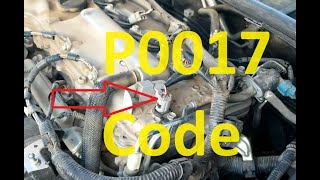
- Replacing the camshaft position sensor is a very common misdiagnosis. A correlation code usually means both the cam and crank sensors are sending valid signals, but the timing between them is incorrect, pointing to a mechanical, hydraulic (oil), or software issue 🎬 Watch: Understanding the common causes and fixes for P0017 codes rather than a sensor failure.
- Immediately assuming a major mechanical failure like a stretched timing chain before ruling out the ECM software update and oil-related issues (low level, incorrect type, or faulty OCV). For this specific vehicle, the TSB is the most important first check.
Most Likely Causes
- Engine Control Module (ECM) Software Needs Update 🔴 High Probability → Shop Engine Control Module (ECM) Subaru has officially acknowledged a software logic issue in TSBs 09-120-24R and 09-120-24 that can falsely trigger P0017 and related codes (P0016, P0018, P0019) on 2023-2024 models due to overly sensitive diagnostics.
How to confirm: A Subaru dealer or a shop with a Subaru Select Monitor (SSM) or equivalent J2534 tool can check the current software calibration ID and see if an update is available per the TSB.
Typical fix: Reprogramming the ECM with the updated software file provided by Subaru. This is a warranty-covered repair if the vehicle is within the 3-year/36,000-mile basic or 5-year/60,000-mile powertrain warranty period.
Est. part cost: $0 - Low, Dirty, or Incorrect Viscosity Engine Oil 🟡 Medium Probability The Active Valve Control System (AVCS) uses oil pressure to adjust cam timing. Low, sludgy, or incorrect viscosity (0W-20 is specified) oil can cause the VVT actuators (phasers) to respond slowly or get stuck, creating a correlation error. Going too long on an oil change interval is a commonly cited trigger.
How to confirm: Check the oil level on the dipstick and inspect its color and consistency. Ensure the correct oil viscosity (e.g., 0W-20) is being used per manufacturer specifications.
Typical fix: Perform an engine oil and filter change with the correct type of oil. Some owners perform an engine flush before the oil change if sludge is suspected.
Est. part cost: $40-$80 - Faulty Oil Control Valve (OCV) / VVT Solenoid 🟡 Medium Probability → Shop Engine Variable Valve Timing (VVT) Solenoid The OCV is an electronic solenoid that can fail electrically or become clogged with debris from the oil, preventing it from properly directing oil flow to the cam phaser. There are also small mesh filters in the oil passages leading to the OCVs that can become clogged and should be inspected.
How to confirm: A technician can test the solenoid's resistance with a multimeter (should be 6.9-7.9 ohms), check for clogging, or command it to activate with a scan tool. 🎬 See how to test and fix the Bank 1 exhaust sensor A common DIY diagnostic is to swap the Bank 1 exhaust OCV with the Bank 1 intake OCV and see if the code changes to P0016. If it does, the OCV is faulty.
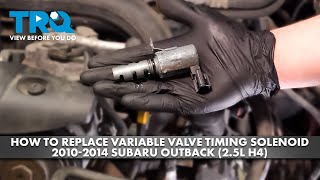
Typical fix: Replace the Bank 1 exhaust OCV. 🎬 Watch this walkthrough on replacing a Subaru VVT solenoid The OEM part number has been superseded, with 10921AA231 being a more robust version.
Est. part cost: $60-$120 - Faulty Camshaft Position Sensor ⚪ Low Probability → Shop Engine Camshaft Position Sensor
How to confirm: The sensor's signal can be checked with an oscilloscope. However, this is an uncommon cause for a correlation code, as the code itself implies the sensor is working but its signal doesn't align with the crank sensor's signal. Swapping the sensor with another one on the engine is a common but often fruitless diagnostic step.
Typical fix: Replace the Bank 1 exhaust camshaft position sensor.
Est. part cost: $50-$100
Rare But Worth Checking
- Stretched Timing Chain or Failed Tensioner: → Shop Engine Timing Chain While less common on newer vehicles, significant mechanical wear or a faulty tensioner can cause the timing chain to stretch or jump a tooth, leading to a permanent correlation error that software or sensor changes won't fix.
- Failed Camshaft Phaser/Sprocket: → Shop Engine Camshaft The mechanical actuator (phaser) on the end of the camshaft can fail, getting stuck in one position or responding slowly. This is a more involved mechanical repair that can sometimes require engine removal to fully diagnose and replace. Forum users have reported this as the ultimate fix after replacing OCVs and sensors did not solve the problem.
Diagnosis Steps
- Verify the engine oil level and condition. Ensure the correct 0W-20 synthetic oil is being used. If low, dirty, or overdue for a change, correct this first, clear the code, and re-test.
- Connect a professional scan tool (like the Subaru Select Monitor) to check the current ECM calibration ID. Compare this to the latest version listed in TSB 09-120-24R or 09-120-24.
- If the software is outdated, perform the ECM reprogram as specified in the TSB. This is the most critical and likely fix for this specific vehicle and year range.
- If the software is up-to-date, use the scan tool to monitor live data from the crankshaft and camshaft position sensors to look for irregularities.
- Inspect the wiring and connector for the Bank 1 exhaust camshaft position sensor and the oil control valve for any damage or corrosion.
- Test the Bank 1 exhaust Oil Control Valve (OCV). A common DIY method is to swap it with the intake OCV on the same bank. If the code changes to P0016, the OCV is bad. Also, inspect and clean the small filter screen in the cylinder head bore where the OCV sits.
- Only after all the above steps have been exhausted should you consider more complex mechanical issues like a stretched timing chain or failed cam phaser, which may require a professional technician for diagnosis.
Parts You'll Likely Need
- Oil Control Valve (VVT Solenoid)
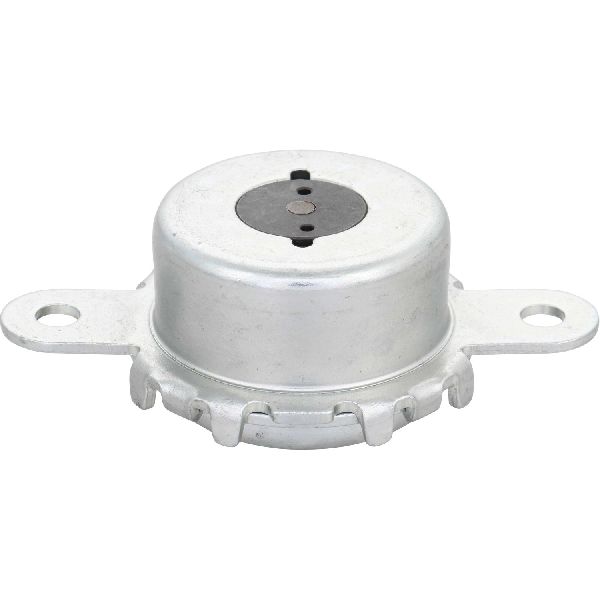
(OEM #10921AA231 (Supersedes earlier versions))— This solenoid controls the cam timing and is a frequent failure point due to oil contamination or electrical issues. It's often the first mechanical part to be replaced after verifying oil level and ECM software.
Trusted brands: Denso, Hitachi, Subaru OE
OEM price range: $90-$150
Aftermarket price range: $60-$120 - Engine Oil and Filter — Low or dirty oil is a primary cause of VVT system faults. An oil change is a simple and inexpensive first step in diagnosis and repair.
Trusted brands: Mobil 1, Castrol, Subaru OE
OEM price range: $50-$90
Aftermarket price range: $40-$70
Related Codes That Often Appear With This One
- P0016 — This is the correlation code for the intake camshaft on the same bank (Bank 1). Seeing them together points to a broader issue on that bank, like an OCV or timing problem. The ECM software update from TSB 09-120-24R also addresses this code.
- P0018 — This is the correlation code for the intake camshaft on the opposite bank (Bank 2). Seeing codes for both banks often suggests a systemic problem like low oil, a stretched timing chain, or the ECM software fault mentioned in the TSBs.
- P0019 — This is the correlation code for the exhaust camshaft on the opposite bank (Bank 2). Like with P0018, this points towards a systemic issue affecting the whole engine. The ECM software update from TSB 09-120-24R also addresses this code.
- P0087 — This code for "Fuel Rail/System Pressure – Too Low" is also addressed by the same ECM reprogramming files in TSBs 09-120-24 and 09-120-24R, indicating the software update fixes multiple potential diagnostic logic errors.
Technical Service Bulletins (TSBs) & Recalls
- 09-120-24R: Announces new ECM reprogramming files to fix DTCs P0016, P0017, P0018, and P0019 on 2023-2024 Forester models, among others. This is the revised and most current TSB for this issue.
- 09-120-24: The original bulletin
Platform-Specific Known Issues
- A primary issue for the 2023-2024 Forester is a known software glitch in the Engine Control Module (ECM) that can cause a false P0017 code. Subaru issued TSBs 09-120-24 and 09-120-24R to address this with a software update.
- Owners on forums like Reddit have reported dealers sometimes misdiagnose the issue, initially replacing OCVs or sensors when the TSB software update was the true required fix.
Mechanic-Grade Diagnostic Values
- Oil Control Valve (OCV) Solenoid Resistance — expected: 6.9 - 7.9 Ω at 68°F (20°C). Failure: A reading of 0 (short), infinity/OL (open), or a value significantly outside the specified range indicates a faulty solenoid coil.
- VVT Advance Angle Amount (Live Data at Idle) — expected: 0° within 10 seconds of startup. Failure: A value that is stuck or deviates more than a few degrees from the target of 0° at idle suggests a problem with the OCV, oil pressure, or the phaser itself.
- AVCS Exhaust Right (Live Data) — expected: Value should change in response to engine RPM and load. Should match 'AVCS Exhaust Target' value under most conditions.. Failure: If the actual value ('AVCS Exh Right') does not follow the target value, or is slow to respond, it indicates a hydraulic or mechanical issue in the AVCS circuit for that camshaft.
Hidden / Shadow Codes Worth Checking
- Mode $06 Data: While not a 'shadow code,' Mode $06 provides access to the results of the ECU's non-continuous self-tests. For P0017, this can show the measured camshaft-to-crankshaft correlation angle and the acceptable min/max thresholds. A value close to the limit can indicate an emerging problem before a DTC is set. (see via An advanced OBD-II scan tool capable of displaying Mode $06 test results.)
Scan Tool Commands That Help
- Subaru Select Monitor (SSM) or equivalent: AVCS Intake/Exhaust Active Test — This bidirectional control allows a technician to command the OCV solenoid to activate, which should change the camshaft angle. Monitoring the live cam angle data while performing this test can confirm if the OCV is responding to commands and if the cam phaser is moving as expected. A lack of change points to a failure in the OCV, oil circuit, or phaser.
- Subaru Select Monitor (SSM) or equivalent: Clear Memory / Reset ECU — After a mechanical repair (like replacing an OCV or timing components), performing a full 'Clear Memory' function is recommended over a simple code clear. This can reset the learned values for the AVCS system, which may be necessary for the ECU to properly control the new components.
Wiring & Ground Locations
- Engine Block to Chassis Ground — Typically a strap or cable running from the engine block (often near the alternator or starter) to the chassis/frame rail, and another from the negative battery terminal to the fender.. A poor ground can cause erratic voltage signals from the cam and crank sensors, or improper operation of the oil control solenoid. While not a primary cause, verifying grounds are clean and tight is a fundamental step in diagnosing any electronic engine control issue.
- Bank 1 Exhaust OCV Connector — On the FB25D engine, Bank 1 is the passenger side. There are two OCVs on the front timing cover for that bank. The 'B' sensor code (P0017) corresponds to the exhaust camshaft, which is typically the lower of the two solenoids on that side.. This is the primary connector to inspect for damage, corrosion, or oil contamination, which could interrupt the signal to the solenoid.
Real Owner Repair Stories
- Reddit user on r/SubaruForester (2014 Subaru Forester with 78k miles) — Check Engine Light with code P0017, engine stumbles for 20-30 seconds on cold start then clears up.
❌ Tried (didn't work) Replacing the Oil Control Valve (OCV/VVT Solenoid) - the CEL came back on within a mile.
✅ What actually fixed it The ultimate cause was a malfunctioning camshaft gear (phaser) that was slow to respond. The engine had to be pulled to clean and inspect oil passages (which were found to be clear) and replace the cam sprocket.
OEM Part Supersession History
10921AA220, 10921AA230→10921AA231— Subaru often revises parts to improve reliability or address known failure modes. The -231 part is the latest revision for the OCV used in many FB/FA series engines.
Heads up: The superseded parts (-220, -230) are replaced by -231. Using the newest available OEM part number is always recommended for this component.
Helpful Videos

We Have This Part in Stock

The information in this article is provided for general reference and educational purposes only. Vehicle specifications, procedures, and part compatibility can vary by production date, trim level, and region. Always consult your vehicle's factory service manual and verify part numbers before purchasing or performing repairs. Safety-critical components such as airbags, seat belts, and braking systems should be installed by a qualified professional.
- Subaru FORESTER:
- 🧭 Diagnostic Flowchart
- 🎬 Helpful Videos
- 🛍️ Shop This Part
- What's Unique About the 2023-2024 Subaru FORESTER
- Symptoms You May Notice
- Most Likely Causes
- Rare But Worth Checking
- Diagnosis Steps
- Parts You'll Likely Need
- Related Codes That Often Appear With This One
- Technical Service Bulletins (TSBs) & Recalls
- Platform-Specific Known Issues
- Mechanic-Grade Diagnostic Values
- Hidden / Shadow Codes Worth Checking
- Scan Tool Commands That Help
- Wiring & Ground Locations
- Real Owner Repair Stories
- OEM Part Supersession History
- 🎟️ Get 5% Off