

P0017 on 2012-2019 Subaru Impreza 2.0L: Crank/Cam Correlation Causes and Fixes
On a 2012-2019 Impreza, P0017 is most often caused by low or dirty engine oil, or a failing passenger-side exhaust Oil Control Valve (OCV). Always check your oil first. If oil is good, swapping the exhaust and intake OCVs on the passenger side is the definitive test. If the code changes to P0016, the OCV is bad. The OEM part is #10921AA231 and costs around $90-$150.
- Always check your engine oil level and condition first. Low or dirty 0W-20 oil is the #1 cause of P0017 on this car.
- The next most likely culprit is a faulty Oil Control Valve (OCV) for the passenger-side exhaust cam, which is an affordable and accessible DIY replacement.
- Do not immediately replace the camshaft or crankshaft sensors; they are rarely the cause of this specific code on this engine.
- If oil and the OCV are good, ask a Subaru dealer to check if your ECM software is up to date, as software updates have been released to fix false P0017 triggers.
What's Unique About the 2012-2019 Subaru Impreza
The FB20 engine's Dual Active Valve Control System (AVCS) is highly dependent on clean oil at the correct pressure. This platform is known for potential oil consumption, which can lead to low oil levels that trigger this code. A class-action lawsuit was filed against Subaru for excessive oil consumption in 2012-2013 Impreza models, among others. Additionally, Subaru has issued technical service bulletins (TSBs), like #11-127-13R, acknowledging that the original engine control software on some models (notably 2013) was overly sensitive and could falsely trigger a P0017 code, requiring a dealer software update to fix. More recent updates, such as TSB Bulletin #09-120-24R, continue to provide new reprogramming files for the Engine Control Module (ECM) specifically developed to remedy P0017 and related correlation codes.
Generation note: This range covers the fourth generation (2012-2016) and the fifth generation (2017-2019) of the Subaru Impreza. Both generations use the FB20 2.0L engine, which features a timing chain instead of a belt. The 2017+ models use the updated FB20D with direct injection, but the causes for P0017 remain largely the same.
Symptoms You May Notice
- Check Engine Light is on
- Traction control and Hill Assist lights are also illuminated
- Rough idle or engine vibration, sometimes dropping to ~500 RPM
- Difficulty starting the engine
- Poor acceleration and loss of power
- Decreased fuel economy
- Engine stalling at low speeds or when coming to a stop
- Rattling or ticking noise from the engine, particularly on startup
- Replacing the camshaft or crankshaft position sensors. These sensors rarely fail on this platform and are much less likely to be the cause than oil issues, a faulty OCV, or outdated software. Owners on forums frequently report replacing these sensors with no success before finding the true cause.
Most Likely Causes
- Low or Dirty Engine Oil 🔴 High Probability The FB20 engine can consume oil, and early models were part of a class-action lawsuit for this issue. The AVCS (variable valve timing) system is entirely dependent on clean oil at the proper pressure to function correctly.
How to confirm: Check the engine oil dipstick to verify the oil level and inspect the oil's color and consistency. If the level is low or the oil is dark and sludgy, this is the most likely cause.
Typical fix: Top up the oil to the correct level or perform a complete oil and filter change. Use the manufacturer-recommended 0W-20 full synthetic oil and an OEM filter.
Est. part cost: $40-$80 - Faulty Oil Control Valve (OCV) / AVCS Solenoid 🔴 High Probability → Shop Engine Variable Valve Timing (VVT) Solenoid These solenoids are a very common failure point on Subaru engines. They can get stuck due to oil sludge or fail electronically, preventing proper cam timing adjustments.
How to confirm: Swap the Bank 1 exhaust OCV (passenger side, lower position) with the Bank 1 intake OCV (same side, upper position). They are identical parts. Clear the codes and drive. If the code changes to P0016 (Intake Cam Correlation), the OCV you moved is faulty. You can also test resistance with a multimeter; it should be 6.9-7.9 Ohms at 68°F.
Typical fix: Replace the faulty Oil Control Valve for the Bank 1 exhaust camshaft. It is held by a single 10mm bolt and is easily accessible on the front of the engine. 🎬 Watch: How to diagnose and replace a faulty oil control valve.
Est. part cost: $80-$150 - Outdated ECM Software 🟡 Medium Probability Subaru released TSBs (e.g., #11-127-13R) because the original ECM logic, particularly on 2013 models, was too sensitive and could falsely trigger P0017 and related codes. TSB Bulletin #11-128-13 also announces the availability of ECM reprogramming to address P0017 specifically for earlier models in this generation.
How to confirm: A Subaru dealership or a qualified shop with a Subaru Select Monitor (SSM) tool can check the current software Calibration Identification (CID) number against available updates listed in the TSB.
Typical fix: Reprogram the Engine Control Module (ECM) with the updated software file. This is a dealer-only procedure.
Est. part cost: $100-$250
Rare But Worth Checking
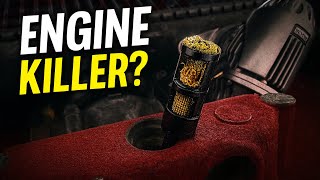
- Clogged OCV Filter Screen: There is a small, thimble-like mesh filter screen for the OCV oil supply located in the cylinder head, directly underneath the OCV. This can become clogged with sludge, restricting oil flow even if the OCV is good. It's highly recommended to pull this screen out with a pick tool and clean it 🎬 Watch: How to locate and remove the AVCS banjo bolt screen. whenever replacing an OCV.
- Stretched Timing Chain: → Shop Engine Timing Chain While less common than oil or OCV issues, premature timing chain stretch can occur on higher-mileage FB engines. A technician can observe cam/crank deviation with a scan tool; a value consistently off by more than 8-10 degrees at idle suggests a timing chain issue. This is a labor-intensive repair requiring removal of the timing cover.
- Failing AVCS Camshaft Sprocket (Phaser): → Shop Engine Camshaft The mechanical sprocket itself can fail internally, causing it to stick in one position. This is often the culprit when oil, the OCV, and the OCV filter are all good. Diagnosis requires an advanced scan tool to command AVCS angles and check for slow response.
- Incorrect Camshaft Position Sensor Air Gap: → Shop Engine Camshaft Position Sensor Subaru issued TSB #11-130-13R for a range of models including the 2012-13 Impreza, noting that an incorrect air gap for the camshaft position sensor could cause various cam-related DTCs. The fix involves checking and adjusting the clearance.
Diagnosis Steps
- Check the engine oil level and condition. Top up or change the oil and filter if necessary. Use 0W-20 full synthetic oil. This is the #1 cause and fix.
- Clear the code with an OBD-II scanner and test drive to see if it returns.
- If the code returns, inspect the wiring and connector for the Bank 1 exhaust OCV (passenger side, lower solenoid) for damage or oil contamination.
- Perform a diagnostic swap: exchange the Bank 1 exhaust OCV with the Bank 1 intake OCV. 🎬 See this walkthrough on how to test if your AVCS solenoid is activating. They are identical parts. Clear codes and drive. If the code changes to P0016, the OCV is confirmed faulty.
- When the OCV is removed, use a pick tool to pull out and inspect the small mesh filter screen in the cylinder head beneath it. Clean or replace it if clogged with sludge.
- If the OCV is not the issue, contact a Subaru dealer to check if your vehicle's ECM software is up to date per TSB #11-127-13R, especially for 2013 models.
- If all else fails, the issue is likely mechanical. A professional technician will need to use a scan tool to monitor cam deviation angles to check for a stretched timing chain or a faulty/sticking AVCS camshaft sprocket.
Parts You'll Likely Need
- Oil Control Valve (Bank 1 Exhaust)
(OEM #10921AA231)— This solenoid is the most common component to fail, causing the P0017 code when oil level and quality are good. It is superseded from older parts 10921AA230 and 10921AA220.
Trusted brands: Subaru Genuine, Denso, Hitachi
OEM price range: $90-$150
Aftermarket price range: $70-$120 - Engine Oil and Filter — Low, dirty, or incorrect viscosity oil is the number one cause of this code, as it directly affects the hydraulically-actuated AVCS system.
Trusted brands: Subaru Genuine 0W-20, Mobil 1, Pennzoil Platinum
OEM price range: $50-$80
Aftermarket price range: $40-$60
Related Codes That Often Appear With This One
- P0016 — This is the correlation code for the intake camshaft on the same bank (Bank 1). Seeing them together suggests a more significant timing issue on the passenger side of the engine. It will also appear after swapping a bad exhaust OCV to the intake position for diagnosis.
- P0018 / P0019 — These are the correlation codes for Bank 2 (driver's side). Seeing them with P0017 could indicate a widespread problem like a stretched timing chain, severe oil contamination affecting the entire engine, or an ECM software issue as noted in TSBs.
- P000B — This code for 'B' Camshaft Position Slow Response (Bank 1) often accompanies P0017. It reinforces the likelihood of a hydraulic issue (clogged passage, bad OCV) or a failing mechanical cam phaser, as the camshaft is not moving to its commanded position quickly enough.
Technical Service Bulletins (TSBs) & Recalls
- TSB #11-127-13R: Mentions reprogramming the ECM to correct overly sensitive diagnostic logic for P0017 and P0019 on 2013 Impreza and XV Crosstrek models.
- TSB #11-130-13R: Addresses multiple cam position and misfire codes on 2012-13 Imprezas (among others) caused by incorrect Camshaft Position Sensor air gap.
- TSB Bulletin #11-128-13: Announces the availability of ECM reprogramming specifically to address DTCs P0017 and P0019 for 2012 models.
- TSB Bulletin #09-120-24: Announces new reprogramming files for the Engine Control Module (ECM) developed to remedy DTCs P0016, P0017, P0018, and P0019.
- TSB Bulletin #09-120-24R: An updated bulletin detailing ECM software developed to remedy P0017 (Crankshaft Position - Camshaft Position Correlation Bank 1 Sensor B) and related correlation codes.
Platform-Specific Known Issues
- Some early models in this year range, particularly 2013, had overly sensitive ECM logic that could trigger P0017 incorrectly; Subaru issued TSB #11-127-13R to address this with a software update.
- The FB20 engine can be prone to oil consumption. A class-action lawsuit covered 2012-2013 Impreza models for this issue, which led to an extended warranty (8yr/100k miles) and reimbursements for some owners. Keeping the oil level full is critical to prevent this and other oil-pressure-related codes.
Mechanic-Grade Diagnostic Values
- Oil Control Valve (OCV) Internal Resistance — expected: 6.9 - 7.9 Ohms at 68°F (20°C). Failure: A reading significantly outside this range, or an open/infinite reading, indicates a failed solenoid coil.
- Oil Control Valve (OCV) Connector Voltage (Key On, Engine Off) — expected: Approximately 12V (Battery Voltage). Failure: No voltage or significantly low voltage points to a problem in the power supply wiring or fuse, not the OCV itself.
- Live Data - Cam/Crank Deviation Angle (at idle) — expected: Less than 8 degrees. Failure: A value that consistently exceeds 8-10 degrees indicates a likely mechanical timing issue, such as a stretched timing chain or a failing AVCS phaser.
- Mode $06, Test ID $8B-$8E - Cam/Crank Correlation Angle — expected: The measured value ('Val') should be below the maximum limit ('MAX') specified by the ECU.. Failure: A measured value that is at or exceeds the MAX limit confirms the timing deviation that triggered the P0017 code. This can verify the fault exists without waiting for the CEL to return.
Hidden / Shadow Codes Worth Checking
- Mode $06, Monitor ID $35: This is not a separate trouble code but a non-continuous monitor report for cam/crank correlation. It provides the raw test data, including the exact measured angle of deviation and the ECU's pass/fail threshold. It can confirm the fault condition even if the Check Engine Light is not currently on. (see via An advanced OBD-II scan tool capable of displaying Mode $06 data.)
Scan Tool Commands That Help
- Subaru Select Monitor (SSM) or equivalent advanced scan tool: AVCS Angle Command / VVT Active Test — This bidirectional command allows a technician to manually command the AVCS phaser to advance or retard. By observing the 'VVT Advance Angle' live data PID, you can determine if the phaser is responding slowly or not at all, which helps differentiate a sticky mechanical phaser from an OCV or oil pressure issue.
Wiring & Ground Locations
- Bank 1 Exhaust OCV Connector — On the front of the engine timing cover, passenger side (Bank 1). It is typically the lower of the two solenoid connectors on that side.. This is the primary connector to inspect for damage, corrosion, or oil contamination. A poor connection here will prevent the ECM from controlling the exhaust camshaft timing, directly causing a P0017.
- Main Engine Ground Strap — A thick ground cable that typically connects from the main wiring harness to a top bolt on the starter motor or an adjacent bolt on the transmission bell housing.. A loose or corroded main engine ground can cause floating voltages and erratic behavior from various sensors, including the camshaft and crankshaft position sensors. This can lead to false correlation codes even if all timing components are mechanically sound.
Real Owner Repair Stories
- Reddit user on r/subaruimpreza (2019 Subaru Impreza, 70,000+ miles) — P0017 code appeared, but car ran fine with no noticeable symptoms.
❌ Tried (didn't work) Cleaned and swapped all four OCVs (code did not move)., Dealer swapped the exhaust side camshaft position sensors (code did not move)., Performed two oil changes, one with an engine flush product.
✅ What actually fixed it The user was advised by other forum members that since swapping the OCVs and sensors didn't move the code, the next logical steps were to inspect the small OCV filter screen for clogs or to diagnose a mechanically sticking AVCS cam sprocket, which are common culprits after oil/OCV issues are ruled out. - Reddit user on r/WRX (2016 Subaru WRX (FA20 engine, similar AVCS system)) — Initially had P000B, which was resolved by swapping a sensor. Two days later, P0017 appeared.
❌ Tried (didn't work) Replacing the OCV solenoid (light returned)., Replacing camshaft sensors., Oil change.
✅ What actually fixed it The issue was more severe. After replacing the OCV, cam sensors, and changing the oil, the code persisted. The dealership had to pull the engine and found an unspecified issue with the passenger side cylinder head that was causing the timing to be knocked out of spec, requiring major mechanical repair.
OEM Part Supersession History
10921AA220→10921AA230, then 10921AA231— Internal design and material improvements to increase reliability and resistance to sticking from oil contamination.
Heads up: The parts are physically interchangeable, but it is highly recommended to use the latest revision (10921AA231) for the longest service life. All four OCVs on the FB20 engine are identical.
Model Year Variations Within This Range
- 2012-2016: These models use the FB20B engine with port fuel injection.
- 2017-2019: These models use the updated FB20D engine, which features direct fuel injection and a higher compression ratio (12.5:1). While the AVCS system is fundamentally the same, direct injection engines can be more susceptible to carbon buildup, though this is not a primary cause of P0017.
- 2013: This model year was specifically called out in TSB #11-127-13R for having overly sensitive ECM logic that could falsely trigger P0017. A dealer re-flash is the specific fix if oil/OCV issues are ruled out.
Diagnostic Flowchart
Other Known Issues on This Vehicle
Issues unrelated to this code that are worth knowing about as an owner of this generation:
- Excessive Oil Consumption 🔴 High — Most prevalent on 2012-2013 models. Led to a class-action lawsuit and extended warranty for affected vehicles. Caused by defective piston rings. (Ref: Subaru TSB 02-157-14R; Class Action Lawsuit (Yaegar v. Subaru))
- CVT Transmission Problems 🟠 Medium — Some owners of 2012-2015 models report issues like shuddering, hesitation, or outright failure of the continuously variable transmission (CVT).
- Sudden Unintended Acceleration 🔴 High — A notable number of complaints for the 2012 model year involve reports of the engine revving and the car accelerating unexpectedly at low speeds or while idling.
- Engine Valve Spring Failure (2012-2013) 🔴 High — A recall (NHTSA #18V724000) was issued for some 2012-2013 Impreza models for valve springs that could fracture, potentially causing the engine to stall while driving. (Ref: Subaru Recall WTY-84 / NHTSA 18V724000)
Used vs. New Parts: Buying Guide for This Vehicle
When a used part is the smart pick: For this specific repair, using used parts is generally not recommended. The primary failure components (OCV solenoids, AVCS sprockets) are wear items that are highly sensitive to the previous owner's oil change habits. The cost savings are minimal compared to the high risk of installing a part that is already near the end of its service life.
Donor-vehicle mileage cap: roughly under 30000 miles for the part to have meaningful remaining life.
What to inspect on the donor part:
- If considering a used OCV, insist on seeing the donor vehicle's service history to verify frequent oil changes.
- Inspect the used OCV's internal screen for any signs of sludge or metal particles. If it's not perfectly clean, do not buy it.
- For a used AVCS sprocket, there is no reliable way to inspect its internal condition without disassembly, making it a very high-risk purchase.
OEM-only on this vehicle (don't cheap out):
- Oil Control Valve (OCV) / AVCS Solenoid
- AVCS Camshaft Sprocket (Phaser)
Aftermarket brands forum-validated for this vehicle:
- Denso (often the OEM supplier for Subaru)
- Hitachi
Brands owners have reported issues with on this vehicle:
- Unnamed, no-brand 'white box' solenoids from online marketplaces are frequently reported to fail quickly or be dead-on-arrival.
Real Owner Stories
Aggregated from forums and TSBs cited above. Mileages and costs reflect what owners reported in those sources.
2019 Subaru Impreza 2.0L FB20 — 70000 miles
Symptoms: The code appeared after a late oil change. The owner cleaned and swapped all four OCVs, but the P0017 code remained.
What fixed it: The community suggested the next steps were checking the OCV filter screens or inspecting the AVCS cam sprocket for sticking due to oil sludge issues.
Source hint: Reddit r/subaruimpreza - 2019 Impreza P0017 Diagnostic Help
2017 Subaru Impreza 2.0L FB20
Symptoms: The owner experienced a persistent P0017 code and attempted to fix it by replacing the camshaft and crankshaft sensors.
What fixed it: Replacing sensors did not resolve the issue, highlighting that the problem was likely a hydraulic or mechanical timing issue rather than a sensor failure.
Source hint: Reddit r/MechanicAdvice - 2017 Impreza P0017
2013 Subaru Impreza 2.0L FB20
Symptoms: False triggering of P0017 and P0019 codes due to overly sensitive diagnostic logic.
What fixed it: Reprogramming the Engine Control Module (ECM) with updated software per TSB #11-127-13R.
Cost: $100-$250
Source hint: TSB #11-127-13R
Related OBD-II Codes
Frequently Asked Questions
Does TSB #11-127-13R apply to my 2013 Subaru Impreza?
Can I swap parts to diagnose which Oil Control Valve is failing on my FB20 engine?
Is there a specific oil I should use to prevent AVCS issues on my 2012-2019 Impreza?
Was there a recall for engine components that could cause timing issues on early FB20 models?
What is the resistance specification for testing the OCV solenoids on this vehicle?
Are there small filters I should check when replacing the OCV?
Helpful Videos

The information in this article is provided for general reference and educational purposes only. Vehicle specifications, procedures, and part compatibility can vary by production date, trim level, and region. Always consult your vehicle's factory service manual and verify part numbers before purchasing or performing repairs. Safety-critical components such as airbags, seat belts, and braking systems should be installed by a qualified professional.
- Subaru Impreza:
- 🧭 Diagnostic Flowchart
- 🎬 Helpful Videos
- What's Unique About the 2012-2019 Subaru Impreza
- Symptoms You May Notice
- Most Likely Causes
- Rare But Worth Checking
- Diagnosis Steps
- Parts You'll Likely Need
- Related Codes That Often Appear With This One
- Technical Service Bulletins (TSBs) & Recalls
- Platform-Specific Known Issues
- Mechanic-Grade Diagnostic Values
- Hidden / Shadow Codes Worth Checking
- Scan Tool Commands That Help
- Wiring & Ground Locations
- Real Owner Repair Stories
- OEM Part Supersession History
- Model Year Variations Within This Range
- Other Known Issues on This Vehicle
- Used vs. New Parts: Buying Guide for This Vehicle
- Real Owner Stories
- 2019 Subaru Impreza 2.0L FB20 — 70000 miles
- 2017 Subaru Impreza 2.0L FB20
- 2013 Subaru Impreza 2.0L FB20
- Related OBD-II Codes
- Frequently Asked Questions
- 🎟️ Get 5% Off