

P0017 on 2009-2019 Toyota Corolla: Exhaust Cam Timing Fixes
On the 2009-2019 Corolla, P0017 is most often caused by a faulty exhaust Oil Control Valve (OCV) or low/dirty engine oil. Start by checking your oil level and condition. If the oil is fine, replacing the exhaust OCV is the next logical step and often solves the problem for under $100. This is a very common DIY repair.
- Always check your engine oil level and condition first. Low or dirty oil is a primary cause of P0017.
- The most likely part to have failed is the exhaust Oil Control Valve (VVT solenoid), not the sensor itself.
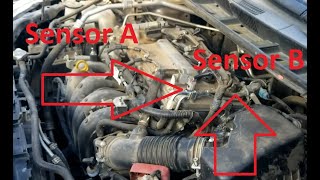
- P0017 refers specifically to the exhaust camshaft ('Sensor B'). This helps narrow down the diagnosis.
- The repair is often simple and affordable, usually involving an oil change or replacing the easily accessible OCV.
- Ignoring the code can lead to poor performance, bad fuel economy, and potential long-term engine wear.
What's Unique About the 2009-2019 Toyota Corolla
The 2ZR-FE engine uses Toyota's Dual VVT-i (Variable Valve Timing with intelligence) system, which adjusts both intake and exhaust camshaft timing to optimize performance and fuel economy. This system is highly dependent on clean engine oil and correct oil pressure to function. P0017 specifically points to the exhaust side ('Sensor B'), which helps narrow down the diagnosis compared to more general timing codes. While timing chain stretch can occur, it's less common on these engines than issues with the oil control valves (solenoids) that actuate the system. The intake and exhaust OCVs are distinct parts and not interchangeable.
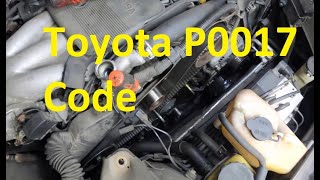
Generation note: This guide covers the 10th generation (2009-2013) and 11th generation (2014-2019) Toyota Corolla. The 2ZR-FE engine and its Dual VVT-i system are fundamentally the same across these years, so the causes, symptoms, and diagnostic procedures for P0017 are consistent. This also applies to the 2ZR-FAE variant 🎬 Watch: Overview of causes and fixes for the P0017 code found in some models.
Symptoms You May Notice
- Check Engine Light is on
- Rough or unstable idle
- Reduced engine power and hesitation during acceleration
- Poor fuel economy
- Engine may be harder to start
- Rattling or ticking noise from the engine, especially on startup
- Replacing the camshaft or crankshaft position sensors immediately without checking oil level/condition or testing the Oil Control Valve first. The sensors are often just reporting the problem, not causing it.
- Confusing the intake and exhaust Oil Control Valves. They are separate parts and have different part numbers. The exhaust OCV is typically the one with the grey connector.
Most Likely Causes
- Low or Dirty Engine Oil 🔴 High Probability The VVT-i system is hydraulically operated by engine oil. Sludge, low levels, or incorrect viscosity oil can prevent the VVT actuator from responding correctly to commands from the OCV. Early 2ZR-FE engines (approx. 2009-2011) were also prone to excessive oil consumption, making low oil levels a frequent issue.
How to confirm: Check the engine oil dipstick for proper level and inspect the oil's color and consistency. If it's low, black, or sludgy, this is a likely contributor.
Typical fix: Perform an oil and filter change using the correct viscosity oil (0W-20 is specified for most of these years). Clear codes and re-test.
Est. part cost: $30-$70 - Faulty Exhaust Oil Control Valve (OCV) / VVT Solenoid 🔴 High Probability → Shop Engine Variable Valve Timing (VVT) Solenoid The OCV is an electronic solenoid that can get clogged with debris from the oil or fail electrically over time, causing it to stick. This is a very common failure point for VVT-i related codes and a frequent fix reported by owners.
How to confirm: You can test the solenoid by applying 12V power to its terminals to see if the plunger moves. You can also measure its resistance with a multimeter (should be 6.9-7.9 ohms at 68°F). A professional scan tool can also command the solenoid to operate to check for a response in engine RPM.
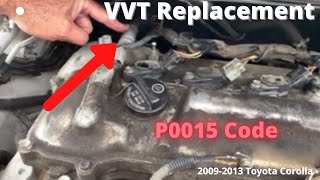
Typical fix: Replace the exhaust OCV. It is located on the top 🎬 See this walkthrough on how to replace the VVT solenoid of the cylinder head, held in by a single 10mm bolt, and has a grey electrical connector.
Est. part cost: $50-$150 - Clogged OCV Filter Screen 🟡 Medium Probability There are small filter screens for the oil supply to the VVT system. If these screens become clogged with sludge or debris, they can starve the OCV and cam phaser of oil pressure. Their location can be difficult to access.
How to confirm: On some 2ZR-FE engines, there is a filter under a banjo bolt on the side of the cylinder head, near the alternator. On others, the filter screens are located under the camshaft bearing caps, requiring valve cover removal to inspect. Visual inspection after removal is the only way to confirm.
Typical fix: Remove and clean the filter screen with brake cleaner. If it is damaged or cannot be cleaned, it should be replaced. The banjo bolt filter is easier to service than the under-cover filters.
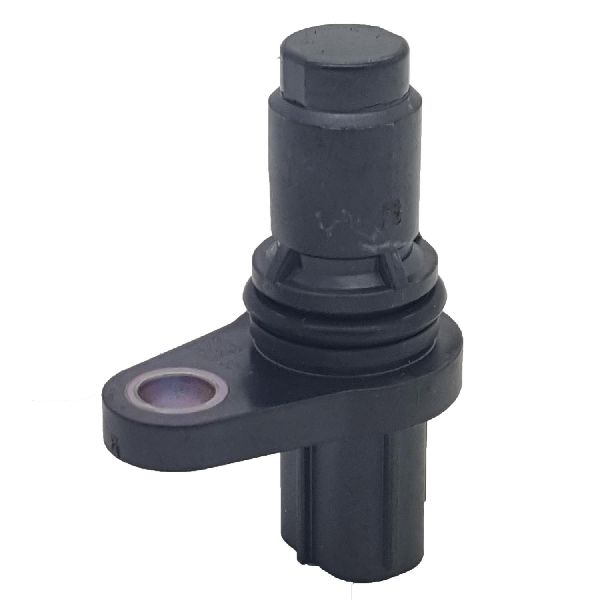
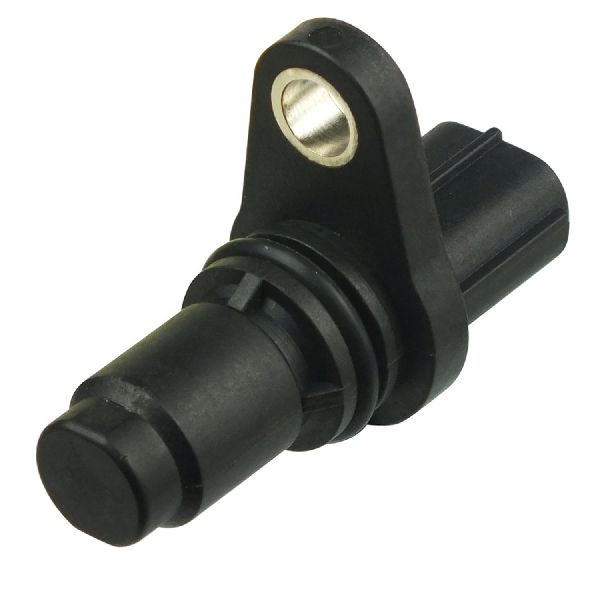
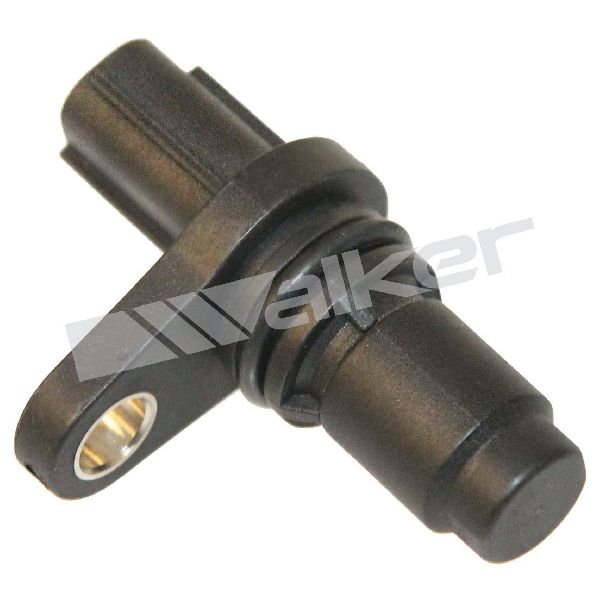
Est. part cost: $10-$25 - Faulty Exhaust Camshaft Position Sensor ⚪ Low Probability → Shop Engine Camshaft Position Sensor While sensors can fail, it's less common for the sensor itself to be the root cause of a correlation code compared to mechanical or hydraulic issues. The sensor is usually just accurately reporting the timing discrepancy.
How to confirm: The sensor's signal can be checked with an oscilloscope. A simpler, but less definitive, test is to swap the intake and exhaust camshaft position sensors (they are the same part number, 90919-05060) and see if the code changes to P0016 (intake correlation). If it does, the sensor is bad.
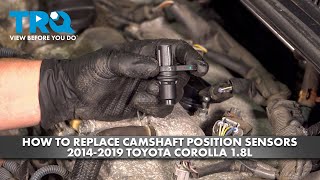
Typical fix: Replace the exhaust camshaft position sensor. It is located 🎬 Watch: Step-by-step guide to replacing the camshaft position sensors on the valve cover and held by a 10mm bolt.
Est. part cost: $40-$120
Rare But Worth Checking
- Stretched Timing Chain or Failed Tensioner: → Shop Engine Timing Chain While not as common as on other vehicles, a timing chain can stretch over very high mileage (typically 150k+ miles), causing the cam/crank correlation to be off. This is a much more involved and expensive repair. One owner on ToyotaNation reported this as the ultimate cause after replacing sensors and OCVs on a 160k mile Corolla.
- Failed VVT-i Cam Gear (Phaser): The VVT-i actuator (cam gear) itself can fail internally, getting stuck in one position or developing a rattle on startup. This usually requires significant labor to replace as it involves removing the timing chain. A TSB for startup rattle (T-SB-0087-09) involves replacing this gear.
- Faulty Crankshaft Position Sensor: → Shop Engine Crankshaft Position Sensor A failing crankshaft position sensor can also cause correlation codes, but it typically presents with other symptoms like no-start or stalling conditions. It's a less likely cause for an isolated P0017.
Diagnosis Steps
- Check Engine Oil: Verify the oil level is full and the oil is clean and of the correct 0W-20 viscosity. If low or dirty, perform an oil and filter change, clear the code, and drive to see if it returns. This is the cheapest and easiest first step.
- Inspect Wiring: Check the wiring and connector for the exhaust camshaft position sensor and the exhaust oil control valve (grey connector) for any visible damage, corrosion, or loose connections.
- Test the Oil Control Valve (OCV): Use a scan tool to perform an active test on the exhaust OCV, listening for a change in engine idle. Alternatively, remove the OCV (one 10mm bolt), connect it to a 12V battery, and check for mechanical movement of the plunger. Also, measure its resistance (spec: 6.9-7.9 ohms).
- Inspect OCV Filter: If accessible on your model (external banjo bolt), remove and inspect the filter screen for clogs or debris. If the filters are under the valve cover, this step is more involved and should be done later.
- Test Camshaft Position Sensor: Swap the intake and exhaust cam sensors (they are identical) and clear the codes. If the code returns as P0016, the sensor you moved to the intake side is faulty.
- Mechanical Timing Check: If all the above steps do not resolve the issue, a more in-depth mechanical inspection is needed. This involves checking for a stretched timing chain, worn guides, or a failed VVT cam gear. This step is best left to a professional unless you are an experienced DIYer.
Parts You'll Likely Need
- Engine Variable Valve Timing (VVT) Solenoid / Oil Control Valve (Exhaust)
(OEM #15330-37020 (superseded by 15330-0T020))— This solenoid is the most common point of failure for P0017. It gets clogged with debris or fails electrically, preventing correct adjustment of the exhaust cam timing.
Trusted brands: Denso (OEM supplier), Aisin, Dorman (917-245)
OEM price range: $100-$150
Aftermarket price range: $40-$90 - Camshaft Position Sensor (Exhaust/Intake)
(OEM #90919-05060)— Though less common, a faulty sensor can send incorrect data to the ECM, triggering the code. It's a potential culprit if the OCV and oil are confirmed to be good.
Trusted brands: Denso (OEM supplier), Bosch, NGK
OEM price range: $80-$120
Aftermarket price range: $30-$70
Related Codes That Often Appear With This One
- P0016 — Crankshaft Position - Camshaft Position Correlation (Bank 1 Sensor A). If both P0016 and P0017 are present, it points towards a more fundamental timing issue like a jumped or stretched timing chain, a failed crankshaft sensor, or a problem common to both intake and exhaust VVT systems (like severe oil sludging).
Technical Service Bulletins (TSBs) & Recalls
- T-SB-0087-09 - Addresses a rattle noise from the VVT-i controller (cam gear) on 2009-2010 Corollas and Matrices with the 2ZR-FE. While for a noise complaint, it involves replacing the VVT gear, which can also be a rare cause of timing correlation codes like P0017.
- Warranty Enhancement Program (ZE7) / T-SB-0094-11 - Related to excessive oil consumption on 2009-2011 Corollas. Not a direct fix for P0017, but highly relevant as low/dirty oil is a primary cause of the code.
Platform-Specific Known Issues
- Oil Consumption on Early Models: The 2009-2011 model year Corollas with the 2ZR-FE engine were known for excessive oil consumption due to piston ring design. Toyota issued a warranty enhancement program (ZE7) to address this. This history makes checking for a low oil level the absolute first step in diagnosing P0017 on these cars.
- OCV Filter Location Varies: The location of the OCV filter screens can vary. Some North American-made Corollas have the filter located under the valve cover, beneath the camshaft bearing cap, making it very difficult to access. Other versions may have a more accessible filter under a banjo bolt on the side of the cylinder head.
Mechanic-Grade Diagnostic Values
- VVT Solenoid (OCV) Resistance — expected: 6.9 to 7.9 Ω at 68°F (20°C). Failure: A reading outside this range indicates an internal coil fault. No continuity (infinite resistance) means an open circuit; very low resistance indicates a short.
- VVT Initial Position Learning Value (Exhaust) — expected: Within specified range (varies slightly by specific ECU calibration but should be stable at idle).. Failure: A value that is out of the specified range after the engine has idled for 5 minutes can trigger the DTC. This indicates a mechanical timing issue (jumped tooth) or a stuck phaser.
- ECM Power Source Voltage (Terminal +B) — expected: 11 to 14 V. Failure: Voltage outside this range can cause erratic ECM behavior and spurious codes. This is a foundational check.
Hidden / Shadow Codes Worth Checking
- Mode 6, Test ID $83, Component ID $12: This refers to the On-Board Diagnostic monitor for Exhaust Cam Phase. It tracks the correlation between the target camshaft angle requested by the ECM and the actual angle reported by the sensor. (see via A professional scan tool capable of displaying OBD-II Mode 6 data. The values will show the measured deviation and the maximum allowable limit. A value exceeding the limit will fail the test and contribute to setting P0017.)
Scan Tool Commands That Help
- Toyota Techstream: Active Test: 'Control the VVT (Bank 1)' or 'Operate Camshaft Timing Oil Control Valve' — This command allows the technician to directly command the exhaust OCV to operate while the engine is idling. A healthy system will show a change in engine RPM or a rough idle when the solenoid is activated, confirming the OCV and cam phaser are mechanically responding. No change suggests a stuck OCV, clogged oil passage, or failed phaser.
- Toyota Techstream: Data List: 'VVT Ctrl Val (Exhaust) B1' and 'VVT Ang (Exhaust) B1' — This allows for monitoring the target VVT angle versus the actual VVT angle in real-time. When diagnosing, you can observe if the actual angle follows the target angle as engine RPM and load change. A significant, lagging, or non-existent response from the actual angle points to a hydraulic or mechanical issue.
- Toyota Techstream: Utility: 'All Readiness' — After a repair, this utility can be used to check the status of the VVT monitor without extensive driving. It helps confirm if the monitor has run and passed, indicating a successful repair.
Wiring & Ground Locations
- ECM Terminals VVE+ / VVE- — On the 2ZR-FE, the exhaust camshaft position sensor wires (typically Brown and White) connect to specific pins on the Engine Control Module (ECM). For example, VVE+ may go to pin 98 and VVE- to pin 120 on a 121-pin connector.. Damage to these specific wires or a poor connection at the ECM pin can cause a loss or corruption of the camshaft position signal, directly leading to a P0017 code even if the sensor itself is good.
- ECM Terminals OC1+ / OC1- — The exhaust Oil Control Valve is controlled by the ECM via these two terminals. For example, on a 2ZR-FE, these could be pins 74 and 96 on the 'B' connector.. A break or short in the wiring between the ECM and the OCV will prevent the valve from operating, causing a timing correlation fault.
- Ground Points AA, AB, AC — These are primary engine compartment ground points for the LHD Corolla. They are typically located on the chassis rails near the front of the engine bay, often near the shock towers or fenders.. The ECM and its sensors rely on a clean ground reference. A corroded or loose ground at one of these main points can introduce electrical noise and voltage offsets, potentially corrupting sensor readings and causing intermittent or false correlation codes.
Real Owner Repair Stories
- Reddit user in r/MechanicAdvice (Vehicle with 2ZR-FE engine (details consistent with Corolla)) — Car started running badly after oil was found to be very low. Check engine light with P0017 was on.
❌ Tried (didn't work) Cleaned and tested both oil control valves (they actuated correctly)., Cleared code with a reader, but it returned immediately.
✅ What actually fixed it The user discovered the timing had jumped by two teeth, likely due to the low oil condition. Replacing the timing chain, tensioners, guides, and both VVT sprockets (cam gears) finally resolved the code. The exhaust camshaft's dowel pin had also broken off, requiring camshaft replacement.
OEM Part Supersession History
15330-37020→15330-0T020— The specific reason for the supersession is not officially published by Toyota, but it typically indicates an improvement in design, materials, or manufacturing process to enhance reliability and prevent common failure modes like sticking or electrical faults.
Heads up: The parts are interchangeable; 15330-0T020 is the correct and improved replacement for 15330-37020.
Model Year Variations Within This Range
- 2009-2011: These early 2ZR-FE engines had a known issue with excessive oil consumption due to piston ring design. This makes 'low engine oil' a significantly higher probability cause for P0017 on these specific years compared to later models where the issue was corrected.
- All (Varies by assembly plant): The location of the OCV filter screen is inconsistent. Some North American-built Corollas have the filter integrated under the front camshaft bearing cap, requiring valve cover removal to service. Others may have an easier-to-access filter located in a banjo bolt on the cylinder head. There is no clear model year cutoff for this variation.
Diagnostic Flowchart
Other Known Issues on This Vehicle
Issues unrelated to this code that are worth knowing about as an owner of this generation:
- Excessive Oil Consumption 🔴 High — Common on 2009-2011 models. Caused by faulty piston ring design. Can lead to engine damage if oil level is not monitored. (Ref: Warranty Enhancement Program ZE7 (T-SB-0094-11))
- Water Pump Failure 🟠 Medium → Shop Engine Water Pump — Known to fail prematurely, sometimes as early as 30,000 miles. Symptoms include a whining/grinding noise from the belt area or visible pink/white crust from dried coolant leak.
- Starter Motor Failure 🟡 Low — Some owners report intermittent no-start conditions where the starter fails to engage. Less common than other issues but documented in owner forums.
- Melting / Sticky Dashboard 🟡 Low — Affects earlier models (approx. 2009-2010) in hot climates. The dashboard material can become sticky or melt in direct sunlight. (Ref: Warranty Enhancement Program ZLD)
Used vs. New Parts: Buying Guide for This Vehicle
When a used part is the smart pick: For this specific repair, sourcing used parts is generally not recommended for the primary failure components. However, if a confirmed wiring issue requires replacing a connector pigtail or a small section of the engine harness, a used part from a salvage yard is a cost-effective and viable option.
Donor-vehicle mileage cap: roughly under 80000 miles for the part to have meaningful remaining life.
What to inspect on the donor part:
- For wiring: Check for brittle plastic, corrosion on pins, or any signs of previous repair (e.g., tape, butt connectors).
- Ensure the donor vehicle was not in a front-end collision that could have stressed the engine harness.
- Look for a vehicle with a clean engine bay, suggesting better maintenance and less exposure to leaks.
OEM-only on this vehicle (don't cheap out):
- VVT Cam Gear (Phaser): Aftermarket phasers have a poor reputation for reliability and can fail prematurely. Given the high labor cost to replace, using an OEM part is critical.
- Timing Chain Kit: Similar to the phaser, the timing chain, guides, and tensioner are critical components where OEM quality provides the best assurance against premature stretching or failure.
Aftermarket brands forum-validated for this vehicle:
- Denso (for sensors and OCVs - often the OEM supplier without the Toyota box)
- Aisin (for OCVs - another trusted OEM supplier)
- NGK/NTK (for camshaft/crankshaft sensors)
Brands owners have reported issues with on this vehicle:
- Unbranded/generic 'white box' VVT solenoids and sensors from online marketplaces. These frequently have high failure rates, incorrect electrical resistance, or poor mechanical tolerances, often causing the code to return shortly after repair.
Real Owner Stories
Aggregated from forums and TSBs cited above. Mileages and costs reflect what owners reported in those sources.
2009-2019 Toyota Corolla 2ZR-FE — 160000 miles
Symptoms: The owner experienced P0016 and P0017 codes. Diagnosis began with replacing the Oil Control Valves (OCVs) and sensors, but the codes persisted.
What fixed it: Replacement of a stretched timing chain.
Source hint: ToyotaNation Forums thread titled 'P0017 and P0016 after OCV replacement'
North American Toyota Corolla 2ZR-FE
Symptoms: Owner was attempting to locate the OCV filter to resolve VVT-related issues.
What fixed it: The owner discovered the OCV filter was not externally accessible but located under the valve cover, requiring more extensive labor to service.
Source hint: Reddit r/COROLLA thread titled '2ZR FE OCV filter location'
Related OBD-II Codes
Frequently Asked Questions
Does TSB-0087-09 apply to my 2009 Corolla's P0017 code?
My 2010 Corolla is burning a lot of oil; could this be causing my P0017 code?
Where is the OCV filter located on a North American 2ZR-FE engine?
Can I swap sensors to test if the exhaust camshaft position sensor is bad?
What is the correct oil viscosity for my 2009-2019 Corolla to avoid VVT issues?
How can I identify the Exhaust Oil Control Valve on my engine?
Helpful Videos
We Have This Part in Stock


The information in this article is provided for general reference and educational purposes only. Vehicle specifications, procedures, and part compatibility can vary by production date, trim level, and region. Always consult your vehicle's factory service manual and verify part numbers before purchasing or performing repairs. Safety-critical components such as airbags, seat belts, and braking systems should be installed by a qualified professional.
- Toyota Corolla:
- 🧭 Diagnostic Flowchart
- 🎬 Helpful Videos
- 🛍️ Shop This Part
- What's Unique About the 2009-2019 Toyota Corolla
- Symptoms You May Notice
- Most Likely Causes
- Rare But Worth Checking
- Diagnosis Steps
- Parts You'll Likely Need
- Related Codes That Often Appear With This One
- Technical Service Bulletins (TSBs) & Recalls
- Platform-Specific Known Issues
- Mechanic-Grade Diagnostic Values
- Hidden / Shadow Codes Worth Checking
- Scan Tool Commands That Help
- Wiring & Ground Locations
- Real Owner Repair Stories
- OEM Part Supersession History
- Model Year Variations Within This Range
- Other Known Issues on This Vehicle
- Used vs. New Parts: Buying Guide for This Vehicle
- Real Owner Stories
- 2009-2019 Toyota Corolla 2ZR-FE — 160000 miles
- North American Toyota Corolla 2ZR-FE
- Related OBD-II Codes
- Frequently Asked Questions
- 🎟️ Get 5% Off