

P0018 on 2011-2018 Audi A6 3.0T: Timing Chain Correlation Causes and Fixes
P0018 on the Audi A6 3.0T almost always indicates a serious mechanical timing issue, such as a stretched timing chain or failed tensioner. This is a very expensive, engine-out repair costing $4,000-$10,000 due to the timing components being at the rear of the engine. Ignoring this code can lead to catastrophic engine failure.
- P0018 on an Audi A6 3.0T should be treated as a serious, stop-driving-immediately code.
- A brief rattling noise on cold starts is the classic warning sign of the failing timing chain tensioners that cause this code.
- Do not assume it's just a bad sensor. Proper diagnosis involves checking camshaft phase deviation with a scan tool before replacing any parts.
- The repair is one of the most expensive for this platform due to the engine-out labor required. Get multiple quotes from qualified independent German auto specialists.
- Always use the latest revised OEM parts for the timing chain, tensioners, and guides to ensure a long-lasting repair.
What's Unique About the 2011-2018 Audi A6
On the Audi 3.0T Supercharged V6 (engine codes CGXB, CGWD, CTUA, etc.), this code is particularly serious. Unlike many engines where timing components are at the front, Audi placed the four timing chains at the rear of this engine, against the firewall. This design means that what would be a moderately expensive job on another vehicle becomes an extremely labor-intensive and costly repair, as the engine or transmission must be removed to access the chains and tensioners. A brief rattle on a cold start is a very common precursor symptom of the failing upper tensioners 🎬 Watch: Hear what a typical cold start rattle sounds like. that eventually lead to this code.
Symptoms You May Notice
- Check Engine Light (CEL) illuminated with P0018 stored
- Rattling noise from the back of the engine for 1-3 seconds on cold startup
- Rough or uneven idle, sometimes with a 'misfire thump' felt in the cabin
- Loss of power and hesitation during acceleration
- Longer than normal engine cranking to start
- Reduced fuel economy
- Engine may enter a reduced RPM mode (limp mode)
- Failure of state emissions testing due to the active fault code
- Replacing only the camshaft position sensor. Forum users and mechanics repeatedly state this rarely fixes the P0018 code on the 3.0T, as the underlying cause is almost always the mechanical timing system.
- Replacing only the crankshaft position sensor without full diagnosis. This is also an unlikely fix for a bank-specific correlation code.
- Assuming the startup rattle is harmless. While Audi's TSB states the noise from failing upper tensioners does not cause *immediate* damage, it is a clear indicator of wear that will eventually lead to chain stretch and codes like P0018.
Most Likely Causes
- Stretched Timing Chains / Failed Timing Chain Tensioners 🔴 High Probability → Shop Engine Timing Chain The original upper timing chain tensioners are a known weak point. They are hydraulic and can lose oil pressure when the engine is off, allowing chain slack on startup, causing a rattle. This repeated slack accelerates wear on the chains and plastic guides, leading to a permanent change in timing correlation that the ECU detects as P0018. Audi released multiple updated tensioner designs to address this, and a Technical Service Bulletin (TSB) 151628 was issued for this problem.
How to confirm: A mechanic can use an advanced scan tool (like VCDS) to view measuring blocks for camshaft phase deviation. For UDS controllers, this is in Advanced Measuring Values. A value for 'Camshaft adjustment: inlet phase: bank 2' greater than -7 degrees (e.g., -8, -9) strongly indicates a mechanical timing problem. Some technicians consider any value beyond -4° a red flag. Physical inspection is the ultimate confirmation but requires engine removal. 🎬 Watch: A time-lapse of the full engine removal process.
Typical fix: Complete replacement of all four timing chains, all tensioners (using updated parts), and all plastic guide rails. This is an engine-out service. While the engine is out, it is highly recommended to also replace the thermostat, water pump, PCV valve, and motor mounts.
Est. part cost: $1500-$2200 for a comprehensive OEM kit - Low or Dirty Engine Oil 🟡 Medium Probability The timing chain tensioners and camshaft adjusters (phasers) are hydraulically operated by engine oil pressure. If the oil level is low, the oil is past its service life, or the incorrect viscosity is used, it cannot provide adequate pressure to keep the chain tight or properly actuate the cam phasers. This can trigger a correlation fault, especially on startup.
How to confirm: Check the oil level via the MMI system (or dipstick if fitted). Verify service records for the last oil change. The oil must meet Audi's VW 502 00 or newer specification, typically a 5W-40 full synthetic.
Typical fix: Perform an oil and filter change using high-quality, manufacturer-specified synthetic oil. Clear codes and monitor if P0018 returns. This is a crucial first step before considering major mechanical work.
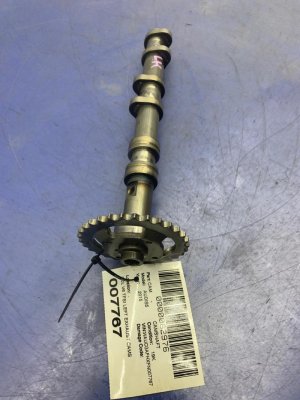
Est. part cost: $100-$150 - Faulty Camshaft Adjuster Solenoid (N319) ⚪ Low Probability → Shop Engine Camshaft
How to confirm: A mechanic can use a scan tool to perform an output test on the Bank 2 intake camshaft adjuster solenoid (N319). They can also be removed and inspected for sludge or debris. A common diagnostic technique is to swap the Bank 2 solenoid with the Bank 1 solenoid and see if the fault code changes to P0016 (for Bank 1). If it does, the solenoid is bad.
Typical fix: Replace the faulty camshaft adjuster solenoid for Bank 2. These are located on the back of the cylinder heads.
Est. part cost: $150-$250
Rare But Worth Checking
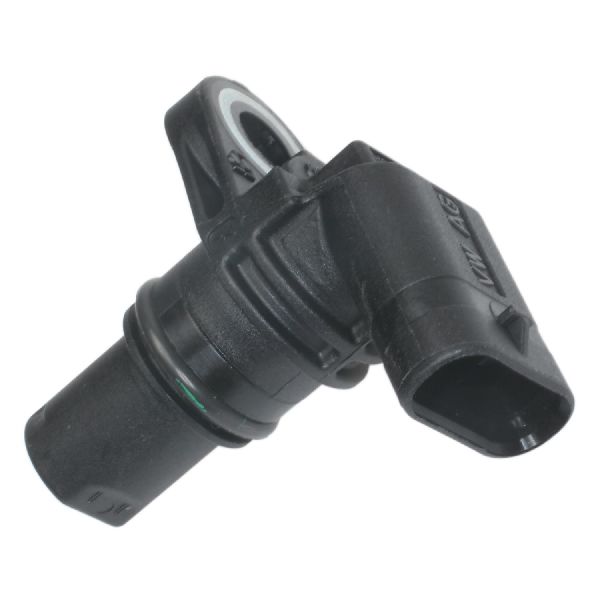
- Faulty Camshaft Position Sensor (G163): → Shop Engine Camshaft Position Sensor While a faulty sensor can cause timing codes, with P0018 on this engine it is rarely the root cause. It's a common misdiagnosis. A simple diagnostic step is to swap the Bank 2 intake sensor (G163) with the Bank 1 intake sensor. Clear codes and drive. If the code changes to P0016, the sensor is bad. If P0018 returns, the problem is mechanical.
- Failed Camshaft Adjuster (Phaser): → Shop Engine Camshaft The mechanical adjuster on the end of the camshaft can fail internally, getting stuck in one position or responding slowly to oil pressure commands. This is less common than chain/tensioner failure but is a definite possibility. It is typically diagnosed and replaced during a full timing service.
- Damaged Sensor Wiring: In some cases, the wiring harness to the camshaft position sensor can become damaged or frayed, causing an intermittent or constant signal loss that can trigger P0018. A dealership technician on a forum noted finding and repairing a damaged wire as a fix for one owner.
Diagnosis Steps
- Verify Engine Oil Level and Condition: Ensure the oil is full, clean, and of the correct VW 502 00 specification (e.g., 5W-40 Synthetic). If in doubt, perform an oil and filter change. Clear codes and re-test.
- Scan for Codes and Live Data: Use an Audi-specific scan tool (VCDS/VAG-COM) to read all fault codes and freeze frame data.
- Check Camshaft Phase Deviation: With the engine fully warmed up, access Advanced Measuring Values in the Engine module. Monitor 'Camshaft adjustment: inlet phase: bank 1' and '...bank 2'. A consistent reading on Bank 2 that is more negative than -7.0° (e.g., -8.5°) indicates excessive chain stretch or tensioner failure. Values between 0° and -4° are generally considered healthy.
- Test Camshaft Position Sensors: Swap the Bank 2 intake camshaft position sensor (driver's side) with the Bank 1 sensor (passenger's side). Clear codes and drive. If the code changes to P0016, the sensor is faulty. If P0018 returns, the sensor is not the cause.
- Test Camshaft Adjuster Solenoids: Use the scan tool's output test function to command the Bank 2 intake solenoid (N319). Listen for a click and observe changes in engine running. Consider swapping with the Bank 1 solenoid to see if the fault follows.
- Prepare for Mechanical Inspection: If the phase deviation value is high and sensor/solenoid swaps do not isolate the problem, the issue is confirmed to be mechanical with very high probability. The next step is an engine-out service for physical inspection and replacement of the timing components.
Parts You'll Likely Need
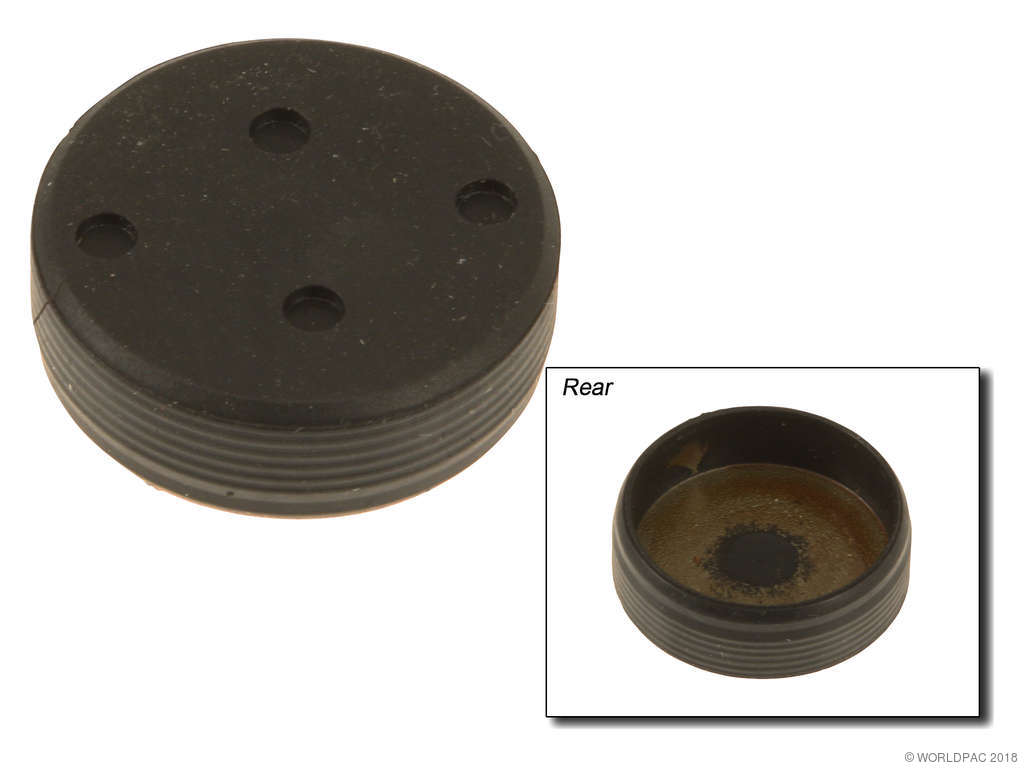
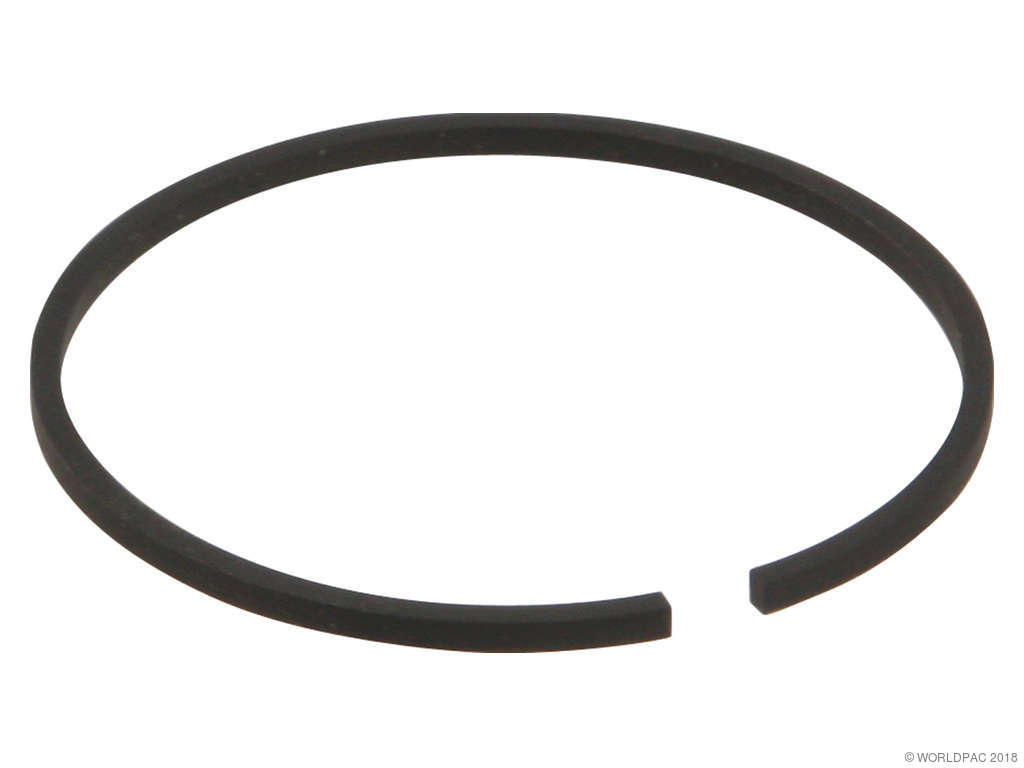
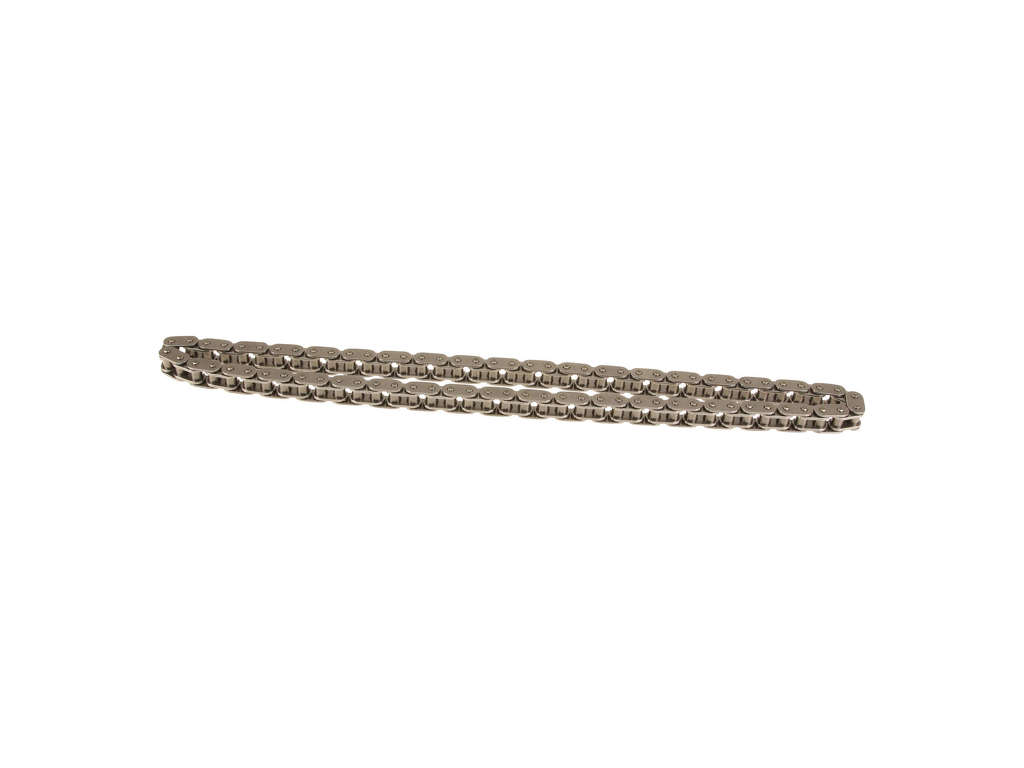
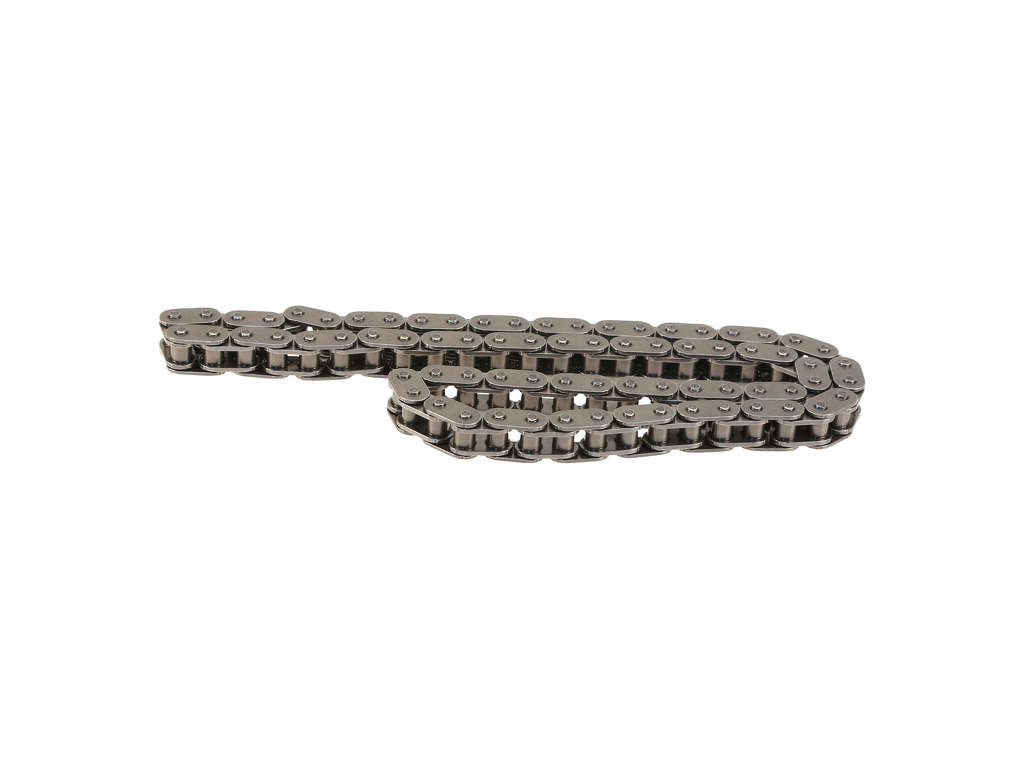
- Timing Chain Kit
(OEM #Various, see notes)— This is the most common failure. A complete kit should include all 4 chains, updated hydraulic tensioners, and all plastic guide rails. Key updated upper tensioner part numbers include 06E109217AM (Bank 1) and 06E109218H (Bank 2). 🎬 See how to replace upper tensioners with the engine in-car.
Trusted brands: Audi Genuine, Iwis (OEM Chain Manufacturer), INA (OEM Tensioner Manufacturer)
OEM price range: $1500-$2200
Aftermarket price range: $800-$1200 - Camshaft Position Sensor (Bank 2)
(OEM #06E905163A)— Replaced only if found to be faulty during diagnostic steps. It is not the common cause of the code, but a frequent misdiagnosis.
Trusted brands: Bosch, Audi Genuine
OEM price range: $100-$150
Aftermarket price range: $50-$90
Related Codes That Often Appear With This One
- P0016 — This is the same correlation error but for Bank 1 (passenger side). If both P0016 and P0018 are present, it strongly suggests a systemic issue like a stretched main timing chain, severe oil pressure/quality problems, or failure of the main chain tensioner.
- P0348 — This code indicates a 'Camshaft Position Sensor 'A' Circuit High (Bank 2)'. It could appear alongside P0018 if there is a wiring or sensor electrical fault, as opposed to a purely mechanical correlation issue.
- P0019 — Crankshaft Position - Camshaft Position Correlation Bank 2 Sensor 'B'. This refers to the exhaust camshaft on the same bank. Seeing this with P0018 points to a significant timing issue affecting the entire bank.
Technical Service Bulletins (TSBs) & Recalls
- TSB 15-16-28 / 2039995/2: Addresses cold start rattling noise by replacing both upper timing chain tensioners with updated parts. It explicitly states the noise itself does not cause damage, but it is the primary symptom of the underlying tensioner problem.
- TSB 15-15-26 / 2039995: The earlier version of the above TSB, later superseded.
Platform-Specific Known Issues
- The timing components are located on the rear of the engine, which dramatically increases labor costs for replacement as it requires engine or transmission removal.
- Original-spec upper timing chain tensioners are known to fail, causing a 'startup rattle' and eventually leading to chain stretch or guide failure. Audi has released updated parts and TSBs (e.g., TSB 15-16-28 / 2039995/2) addressing this.
- Class-action lawsuits have been filed against Audi for premature timing chain system failures on 3.0T engines within this model year range.
Documented NHTSA Reports
- NHTSA ODI #11233069 describes an instance where the check engine light illuminated with code P0018 at approximately 63,000 miles. The owner reported that the vehicle subsequently failed an emissions test for license renewal due to the fault.
Mechanic-Grade Diagnostic Values
- Camshaft Position Sensor (G163) Supply Voltage — expected: Approximately 5V DC between pins 1 and 3 of the sensor connector with ignition on, sensor unplugged.. Failure: No voltage or significantly lower voltage suggests a wiring or ECU problem, not a sensor failure.
- Camshaft Adjuster Solenoid (N319) Resistance — expected: Between 12 to 20 Ω at 20°C (68°F). Some sources cite a tighter range of 6.9 to 7.9 Ω for similar VAG engines.. Failure: A reading outside the specified range, or an open/short circuit, indicates a faulty solenoid.
- VCDS Advanced Measuring Value - Camshaft Phase Deviation (Bank 2) — expected: IDE00182 or ENG99898 'Camshaft adaptation intake bank 1: phase position'. Healthy is 0° to -4°.. Failure: Consistently more negative than -7° indicates significant chain stretch requiring mechanical repair.
Scan Tool Commands That Help
- VCDS (VAG-COM): Engine -> Basic Settings -> Test of camshaft adjustment intake — After verifying sensor and solenoid electrical integrity, this function commands the entire VVT system to actuate. A 'System not OK' result helps confirm a functional failure (e.g., stuck phaser, oil pressure issue) that is not purely electrical.
- VCDS (VAG-COM): Engine -> Output Tests -> Camshaft Adjustment Valve (N319) — This directly cycles the Bank 2 intake solenoid. A technician can listen for an audible 'click' to confirm the solenoid is receiving the signal and is not mechanically seized. Lack of a click points to a wiring or solenoid failure.
Wiring & Ground Locations
- Earth connection (ignition coils) — On the engine block, often near the alternator or on the cylinder head itself. A specific ground point for ignition coils is designated as '306' in some wiring diagrams.. A poor ground for the ignition system or sensors can introduce electrical noise or incorrect readings, potentially contributing to correlation faults. Ensuring all engine grounds are clean and tight is a critical, though often overlooked, diagnostic step.
Real Owner Repair Stories
- Reddit user post in r/MechanicAdvice (2011 Audi A6 3.0T, 140k miles) — Persistent P0018 Check Engine Light.
❌ Tried (didn't work) The dealership initially replaced the sensor and repaired a damaged wire, which made the code intermittent instead of constant, but it still returned.
✅ What actually fixed it The final fix was not explicitly stated, but the strong implication after the sensor/wiring fix failed was that the underlying mechanical timing system (chains/tensioners) was the root cause, which the owner was researching. This highlights that even with a confirmed wiring issue, the mechanical problem can still be present. - AudiWorld Forums user 'jpjmustang' (2012 Audi A6 3.0T) — Recurring P0018 code.
❌ Tried (didn't work) Replaced Cam position sensors, replaced Crank position sensor, checked VVT solenoids (found to be OK).
✅ What actually fixed it An Audi dealership pulled the cam covers and confirmed the driver's side cams were out of time, confirming the need for a full timing chain replacement job.
OEM Part Supersession History
06E109217 (various early suffixes like H, L, S)→06E109217AM (or AJ, AP)— To improve durability and prevent premature failure of the hydraulic tensioning mechanism, which would lead to startup rattle and chain slack.06E109218 (various early suffixes like D, G, K)→06E109218H (or AK, AN)— Similar to the Bank 1 tensioner, revisions were made to improve the hydraulic seal and longevity to combat the common startup rattle issue.
Model Year Variations Within This Range
- 2016-2018 (C7.5 Facelift): The mid-cycle refresh introduced the 'CREC' version of the 3.0T engine in some markets. While mechanically very similar with the same rear-mounted timing chain design, there can be subtle differences in sensors, software, and specific part numbers for components like injectors and the ECU. Diagnosis remains largely the same, but it's crucial to verify part numbers by VIN for these later models.
Diagnostic Flowchart
Other Known Issues on This Vehicle
Issues unrelated to this code that are worth knowing about as an owner of this generation:
- Water Pump and/or Thermostat Failure 🔴 High → Shop Engine Water Pump — Very common, especially on pre-2013 models. Often fails between 60k-100k miles, causing coolant leaks or overheating. (Ref: Service actions were issued for early models.)
- PCV Valve (Oil Separator) Failure 🟠 Medium — Common failure around 80k-120k miles. Can cause high oil consumption, rough idle, a whistling noise, and lean codes. (Ref: An updated PCV with lower pressure regulation was released for early models.)
- Engine Mount Failure 🟠 Medium — The fluid-filled engine mounts tend to leak and collapse around 80k-120k miles, causing excessive engine vibration at idle.
- Carbon Buildup on Intake Valves 🟠 Medium — As a direct-injection engine, carbon buildup is inevitable and typically requires cleaning every 60k-100k miles to prevent misfires and maintain performance. (Ref: A warranty extension for secondary air port cleaning exists for some models, which is related but not a full valve cleaning.)
- Supercharger Clutch/Coupler Rattle 🟡 Low — The coupler inside the supercharger snout can wear, causing a rattling or 'marbles in a can' sound at idle that goes away with RPM. Not mechanically dangerous but can be annoying.
Used vs. New Parts: Buying Guide for This Vehicle
When a used part is the smart pick: For this specific repair, sourcing used parts is generally not recommended for any of the core timing components. However, if diagnostic 'swap tests' are not possible, a used Camshaft Position Sensor (G163) or Camshaft Adjuster Solenoid (N319) from a low-mileage, reputable salvage yard could be a cost-effective way to confirm a diagnosis before buying a new part.
Donor-vehicle mileage cap: roughly under 60000 miles for the part to have meaningful remaining life.
What to inspect on the donor part:
- Verify the donor vehicle was not in a front-end collision that could have damaged engine components.
- Ask for the VIN to check the service history if possible, specifically for regular oil changes.
- For sensors/solenoids, inspect the electrical connector for corrosion, and the body for cracks or damage.
OEM-only on this vehicle (don't cheap out):
- Timing Chains
- Timing Chain Tensioners
- Timing Chain Guides
- Camshaft Adjusters (Phasers)
Aftermarket brands forum-validated for this vehicle:
- Iwis (often the OEM supplier for chains)
- INA (often the OEM supplier for tensioners)
- Bosch (for sensors)
- Victor Reinz / Elring (for gaskets and seals)
Brands owners have reported issues with on this vehicle:
- Unnamed, no-brand 'complete' timing kits from online marketplaces. The quality of the chains, tensioners, and especially the plastic guides is often poor and can lead to catastrophic failure much sooner than OEM components.
Real Owner Stories
Aggregated from forums and TSBs cited above. Mileages and costs reflect what owners reported in those sources.
2011 Audi A6 3.0T — 113000 miles
Symptoms: Confirmed P0018 code after swapping sensors to rule them out.
What fixed it: Full timing chain replacement (engine-out service).
Cost: $4,500-$4,500
Source hint: AudiWorld Forums - Thread '2011 A6 Timing Chains Replacement Costs?- P0018'
2010 Audi A6 3.0T
Symptoms: P0018 code appeared after a head gasket job; VCDS showed a deviation of 10.1KW (degrees) on Measuring Block 93.
What fixed it: Correction of mechanical timing on Bank 2.
Source hint: Ross-Tech Forums - Thread 'Help!!! P0018 code on 2010 A6 3.0T'
2011 Audi A6 3.0T
Symptoms: Owner was charged for a sensor and wire repair by a dealer, but the P0018 code returned immediately.
What fixed it: Diagnosis confirmed a mechanical chain issue (cam phase deviation over 3% / 5-6 degrees).
Source hint: Reddit (r/MechanicAdvice) - Thread 'AUDI A6 3.0T ENGINE CODE P0018'
Audi 3.0T Owner Report
Symptoms: An owner reported that at about 63,000 miles the check engine light went on and code P0018 showed up, subsequently causing the vehicle to fail an emissions test (NHTSA ODI #11233069).
What fixed it: Diagnostic investigation at a dealership was required after the initial code appeared.
Source hint: NHTSA ODI #11233069
Related OBD-II Codes
Frequently Asked Questions
Is there a Technical Service Bulletin for the startup rattle on my 3.0T Audi A6?
What VCDS values indicate that my timing chains are stretched?
Can I just replace the camshaft sensors to fix P0018?
Does the startup rattle mean my engine is being damaged?
Why is the labor cost so high for a P0018 repair on the A6 3.0T?
What oil specification should I use to prevent timing issues?
Helpful Videos
![3.0 T AUDI TFSI ENGINE TIMING CHAIN RATTLE (NOISE) COLD Start .... [PART 1] #audi #automotive #a7](https://img.youtube.com/vi/MlMCHpJmELo/mqdefault.jpg)
Used OEM Parts in Stock
New Aftermarket Parts Available


The information in this article is provided for general reference and educational purposes only. Vehicle specifications, procedures, and part compatibility can vary by production date, trim level, and region. Always consult your vehicle's factory service manual and verify part numbers before purchasing or performing repairs. Safety-critical components such as airbags, seat belts, and braking systems should be installed by a qualified professional.
- Audi A6:
- 🧭 Diagnostic Flowchart
- 🎬 Helpful Videos
- 🛍️ Shop This Part
- What's Unique About the 2011-2018 Audi A6
- Symptoms You May Notice
- Most Likely Causes
- Rare But Worth Checking
- Diagnosis Steps
- Parts You'll Likely Need
- Related Codes That Often Appear With This One
- Technical Service Bulletins (TSBs) & Recalls
- Platform-Specific Known Issues
- Documented NHTSA Reports
- Mechanic-Grade Diagnostic Values
- Scan Tool Commands That Help
- Wiring & Ground Locations
- Real Owner Repair Stories
- OEM Part Supersession History
- Model Year Variations Within This Range
- Other Known Issues on This Vehicle
- Used vs. New Parts: Buying Guide for This Vehicle
- Real Owner Stories
- 2011 Audi A6 3.0T — 113000 miles
- 2010 Audi A6 3.0T
- 2011 Audi A6 3.0T
- Audi 3.0T Owner Report
- Related OBD-II Codes
- Frequently Asked Questions
- 🎟️ Get 5% Off