

P0018 on 2012-2018 Audi S6 4.0T: Crank-Cam Correlation Causes and Fixes
On the Audi S6 4.0T, P0018 is most often caused by a faulty Bank 2 (driver's side) intake camshaft adjuster solenoid, frequently due to its internal filter screen breaking. This is a ~$150 part and is moderately easy to replace. Before replacing parts, check your engine oil level and ensure the 21H7 oil strainer recall has been performed, as oiling issues are the root cause of many VVT problems on this engine.
- P0018 on the S6 4.0T is very frequently caused by an oil-related issue, not a catastrophic engine failure.
- The first and most important parts to check are the engine oil level/condition and the Bank 2 intake camshaft adjuster solenoid for a broken filter screen.
- Confirm that the Audi recall 21H7 for the main oil strainer has been performed on your vehicle to prevent oil starvation issues.
- Do not assume the timing chain has failed. Diagnose by swapping the cheaper sensors and solenoids between cylinder banks first.
- Driving with this code active can lead to poor performance and risks severe, expensive engine damage if the timing jumps.
What's Unique About the 2012-2018 Audi S6
The EA824 4.0T engine features a 'hot-vee' design, where the twin turbochargers are nestled in the valley between the cylinder banks. This compact, powerful design generates significant heat, which can degrade engine oil and lead to sludge. A very common trigger for P0018 on this specific engine is the failure of a tiny filter screen inside the camshaft adjuster solenoid (VVT solenoid). This screen can break apart or become clogged with oil deposits, obstructing the solenoid and preventing it from adjusting cam timing correctly. This issue is so prevalent that Audi issued a Technical Service Bulletin (TSB 2041097) about it. Furthermore, this engine was subject to a major recall (Audi code 21H7 / NHTSA 22V178000) for a main oil strainer that could clog and starve the turbochargers and other critical components of oil, which can also lead to VVT system faults like P0018.
Symptoms You May Notice
- Check Engine Light or EPC (Electronic Power Control) light is on
- Rough, unstable, or shaking idle
- Hesitation or a noticeable loss of power when accelerating
- Engine stalling, particularly at low speeds or when stopping
- Decreased fuel economy
- Engine rattling or ticking sounds, especially on startup
- Extended cranking time before the engine starts
- Immediately replacing the timing chain and tensioners without first inspecting the much cheaper and more common failure points like the camshaft adjuster solenoids and sensors.
- Replacing only the camshaft position sensor without first checking or swapping the VVT solenoid, which is a more frequent point of failure for this specific code on the 4.0T.
Most Likely Causes
- Faulty Bank 2 Intake Camshaft Adjuster Solenoid (VVT Solenoid) 🔴 High Probability → Shop Engine Camshaft The filter screen on the solenoid is a known weak point on the 4.0T engine and is prone to breaking or clogging with oil sludge, which obstructs oil flow and prevents proper cam phasing. This is a widely documented failure in owner forums.
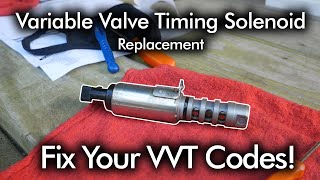
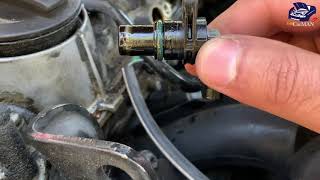
How to confirm: Remove the solenoid from the front of the Bank 2 (driver's side) cylinder head. Visually inspect its tip for a broken or clogged screen. 🎬 Watch: How to replace and inspect the VVT solenoid. A common diagnostic trick is to swap it with the identical solenoid from Bank 1 and see if the code changes to P0016. If the code moves, the solenoid is bad. Resistance should be between 12 and 20 Ohms at room temperature (20°C/68°F); a reading outside this range indicates failure.
Typical fix: Replace the faulty solenoid. It is recommended to use a Genuine Audi part (latest revision is 06M109257G, superseding 06E109257T). Some owners proactively remove the failure-prone screens from the new solenoids, though this is not an official recommendation.
Est. part cost: $150-$250 - Low, Incorrect, or Dirty Engine Oil 🔴 High Probability The entire variable valve timing system is hydraulic and depends on clean oil at the correct pressure. The 4.0T has known issues with a factory oil strainer clogging (Recall 21H7), making it very sensitive to oil condition and level. Oil breakdown from the 'hot-vee' turbo layout exacerbates this.
How to confirm: Check the engine oil level via the MMI system. Review service records to ensure oil changes with the correct specification (VW 504 00) have been performed at or before the recommended intervals. Check the VIN with an Audi dealer to confirm the 21H7 recall has been completed.
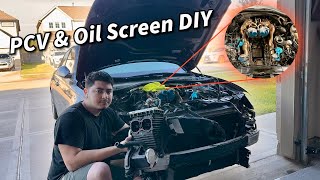
Typical fix: Perform an oil and filter change using high-quality, manufacturer-specified oil. If the 21H7 recall for the oil strainer has not been completed, have it done by an Audi dealer immediately. The recall service replaces the strainer with a less restrictive version. 🎬 See this DIY walkthrough for the oil screen and PCV service.
Est. part cost: $80-$150 - Faulty Bank 2 Camshaft Position Sensor 🟡 Medium Probability → Shop Engine Camshaft Position Sensor The sensor provides the primary data for camshaft position to the ECM. Like any electronic component, it can fail with age and from the high heat in the 4.0T engine bay, sending incorrect data.
How to confirm: Swap the Bank 2 intake camshaft position sensor with the sensor from Bank 1. If the trouble code follows the sensor and changes to P0016, the sensor is faulty. You can also test for power at the sensor's electrical connector. With the ignition on (engine off), there should be 5 volts between the outer two pins (left and right) of the 3-pin connector. If 5V is present and the code persists, the sensor is likely bad.
Typical fix: Replace the camshaft position sensor. It's often recommended to replace them in pairs (both intake sensors). Use an OEM or OE-quality part like Bosch.
Est. part cost: $40-$90
Rare But Worth Checking
- Stretched Timing Chain or Failed Tensioner: → Shop Engine Timing Chain This is the most severe potential cause, but less common on the 4.0T than the other listed issues. It typically presents with a distinct chain rattle noise on cold starts that persists. If simpler causes are ruled out, this becomes the primary suspect. This is an engine-out repair and is extremely expensive, often costing over $10,000. 🎬 Learn how to check for a stretched timing chain in minutes.
- Faulty Camshaft Adjuster (Phaser): → Shop Engine Camshaft This is the mechanical gear at the end of the camshaft that the solenoid acts upon. If it becomes clogged with debris (often from a failed solenoid screen) or fails internally, it can get stuck and cause a correlation code. This is a much more involved repair than the solenoid itself.
Diagnosis Steps
- Verify Oil Level and Condition: Use the MMI to check that the oil level is full. Review service history for regular oil changes with VW 504 00 spec oil. An oil change is a good first step if the history is unknown.
- Check Recall Status: Contact an Audi dealer with your VIN to confirm that Recall 21H7 (NHTSA 22V178000) for the turbo oil strainer has been performed.
- Scan for Codes and Live Data: Use an Audi-specific scan tool (like VCDS or OBDeleven) to read fault codes and view live data. Check the 'Camshaft Adjustment' measuring blocks. Note the requested vs. actual phase angle for Bank 2 intake at idle and under load. A large deviation indicates a problem.
- Inspect and Swap Camshaft Adjuster Solenoid: Remove the Bank 2 intake solenoid (driver's side, front of cylinder head). Carefully inspect the small filter screen at its tip for damage, debris, or sludge. Even if it looks okay, swap it with the Bank 1 intake solenoid. Clear codes and drive. If P0016 appears, the solenoid is confirmed faulty.
- Swap Camshaft Position Sensor: If the solenoid swap changes nothing, repeat the process with the camshaft position sensor. Swap the Bank 2 sensor with the Bank 1 sensor and see if the fault code moves to P0016.
- Check Wiring: Inspect the wiring harnesses and connectors for both the sensor and solenoid on Bank 2 for any signs of damage, corrosion, or loose connections.
- Mechanical Timing Inspection: If all of the above check out, the problem is likely mechanical (timing chain, guides, tensioner, or the camshaft phaser itself). This requires professional diagnosis, often involving checking timing marks, which is a labor-intensive job.
Parts You'll Likely Need
- Camshaft Adjuster Solenoid (VVT Solenoid)
(OEM #06M109257G (latest revision, supersedes 06E109257T))— This is the most common point of failure for this code on the 4.0T engine, often due to a broken internal filter screen. It is crucial to use the latest OEM revision.
Trusted brands: Genuine Audi/VW
OEM price range: $180-$250
Aftermarket price range: $100-$160 - Camshaft Position Sensor
(OEM #04C907601K (supersedes 04C907601, 04C907601B, 04C907601L))— This sensor provides the position data to the ECM. If it fails, it will directly cause a correlation code. Part number requires VIN verification but this is the most common one.
Trusted brands: Bosch, Genuine Audi/VW, VNE Automotive
OEM price range: $70-$110
Aftermarket price range: $30-$60
Related Codes That Often Appear With This One
- P0016 — This is the identical correlation fault but for Bank 1 (passenger side). If you swap a faulty component from Bank 2 to Bank 1 for diagnosis, P0018 will be replaced by P0016.
- P0019 — This is a correlation fault for the exhaust camshaft ('Sensor B') on Bank 2. It can appear alongside P0018 if there are widespread oiling issues or timing problems affecting the entire cylinder bank.
- P0346 — This code indicates a problem with the Bank 2 camshaft position sensor circuit itself. It can be a cause of P0018 if the sensor signal is failing or intermittent.
Technical Service Bulletins (TSBs) & Recalls
- ATU 2041097 / 15-18-54: Addresses MIL on with camshaft position DTCs (P0011, P0018, etc.) caused by a broken filter element on the camshaft control valve.
- Audi Recall 21H7 (NHTSA 22V178000): Recall for a clogged oil strainer that can lead to oil starvation for the turbochargers and other VVT components.
Platform-Specific Known Issues
- Recall 21H7 / NHTSA 22V178000: Audi issued a recall for a potentially clogged oil strainer located under the turbochargers. This can cause oil starvation, leading to turbo failure and VVT system faults like P0018. The fix involves replacing the strainer with an improved design.
Mechanic-Grade Diagnostic Values
- Camshaft Adjuster Solenoid (VVT Solenoid) Coil Resistance — expected: 12 to 20 Ω (at 20°C / 68°F). Failure: A reading significantly outside this range, or an open/short circuit, indicates a faulty solenoid coil.
- Camshaft Position Sensor Connector Voltage — expected: 5 Volts DC. Failure: With the ignition on and engine off, measure between the two outer pins of the 3-pin connector. A reading other than 5V suggests a wiring or ECU power supply issue, not a bad sensor.
Scan Tool Commands That Help
- VCDS (VAG-COM): Basic Settings - Group 094 (Intake) / Group 096 (Exhaust) — With the engine warm and idling, running this test will command the camshaft adjusters to move and report back system status. It can help verify if the mechanical phaser and solenoid are responding to ECU commands. A 'Syst. OK' result indicates the system is responding correctly at that moment.
- VCDS (VAG-COM): Output Test Mode (Function 03) - Sequential Test — This mode cycles through and activates various engine components one by one. The camshaft adjustment solenoid is included in this sequence. It can be used to audibly or physically confirm the solenoid is clicking when activated by the ECU, helping to isolate a completely dead solenoid.
Wiring & Ground Locations
- Engine Ground Point — On the right side of the engine compartment, near the alternator.. A poor engine ground can cause erratic behavior and incorrect readings from various sensors, including the camshaft and crankshaft position sensors. While not a direct cause of P0018, verifying this ground is tight and corrosion-free is a crucial step in diagnosing any electrical fault on the engine.
Real Owner Repair Stories
- AudiWorld Forums user 'dragpro' (2012 Audi A6 3.0T (Note: 3.0T engine, but P0018 diagnosis is analogous)) — Check Engine Light with code P0018.
❌ Tried (didn't work) Replaced the Bank 2 camshaft position sensor., Performed a wiring check, which tested good.
✅ What actually fixed it The final resolution was replacing the Bank 2 camshaft adjuster solenoid. The problem was initially misdiagnosed as a sensor or timing issue. - Cross-Manufacturer Reference: NHTSA ODI #11233069 — An owner of a similar Audi model reported that at about 63,000 miles the check engine light went on with code P0018, which subsequently caused the vehicle to fail an emissions test.
OEM Part Supersession History
06E109257T→06M109257G— The original part is prone to the internal filter screen failing. The revised part is intended to be more durable.04C907601 / 04C907601B→04C907601K / 04C907601L— General part revision and improvement by the manufacturer.
Heads up: Always verify the correct part number with the vehicle's VIN, but later revisions are generally backward compatible for this sensor.
Model Year Variations Within This Range
- 2012-2015 (C7) vs 2016-2018 (C7.5 Facelift): The core EA824 4.0T engine and VVT system components related to P0018 are largely the same. However, the C7.5 facelift models received a power increase (from ~420hp to ~450hp) via ECU tuning from the factory. While this doesn't change the physical repair, be aware of software differences if dealing with a tuned vehicle or ECU replacement. The facelift occurred for the 2016 model year.
Diagnostic Flowchart
Other Known Issues on This Vehicle
Issues unrelated to this code that are worth knowing about as an owner of this generation:
- Turbocharger Failure due to Clogged Oil Strainer 🔴 High — Very common on 2012-2017 models not yet updated. This was the subject of a major safety recall. (Ref: Audi Recall 21H7 / NHTSA 22V178000)
- PCV / Oil Separator Failure 🟠 Medium — Common after 60,000 miles. The diaphragm can tear, causing high oil consumption, rough idle, and potential oil leaks.
- Active Engine Mount Failure 🟠 Medium — Common around 50,000-80,000 miles. The hydraulic mounts leak, causing vibrations at idle and fault codes for the mount solenoids.
- Thermostat Failure 🟡 Low — Can fail and stick open, leading to a 'engine temperature too low' fault and preventing the engine from reaching full operating temperature.
- Control Arm Bushing Wear 🟡 Low — The front upper control arm bushings are a common wear item, leading to suspension clunks and noises over bumps, typically after 50,000 miles.
Used vs. New Parts: Buying Guide for This Vehicle
When a used part is the smart pick: For this specific repair, using used parts is generally not recommended. The primary failure items are electronic sensors and solenoids that degrade with heat and time. A used Camshaft Position Sensor could be considered if it's from a very low-mileage donor and tested, but the savings are often minimal compared to a new aftermarket part.
Donor-vehicle mileage cap: roughly under 40000 miles for the part to have meaningful remaining life.
What to inspect on the donor part:
- Verify the donor vehicle was not in a front-end collision.
- Ask for the VIN to check the donor's service history for regular oil changes.
- Visually inspect the part for any signs of physical damage, corrosion on the pins, or brittle plastic.
OEM-only on this vehicle (don't cheap out):
- Camshaft Adjuster Solenoid (VVT Solenoid): Due to the high failure rate of the original design's filter screen, it is critical to use the latest revision Genuine Audi part (06M109257G). Aftermarket versions may not incorporate the latest design improvements and could fail prematurely.
- Timing Chain, Tensioners, and Guides: If the issue is diagnosed as mechanical timing, only use OEM parts. The cost of labor for this job is immense, and using cheaper parts introduces an unacceptable risk of catastrophic failure.
Aftermarket brands forum-validated for this vehicle:
- Bosch: For the Camshaft Position Sensor, Bosch is an Original Equipment Manufacturer (OEM) for Audi and provides a reliable alternative to the dealer part.
Brands owners have reported issues with on this vehicle:
- Unnamed/white-box brands: Avoid generic, unbranded solenoids and sensors from online marketplaces. These often have high defect rates and may not perform to the required specifications for the 4.0T's sensitive VVT system.
Real Owner Stories
Aggregated from forums and TSBs cited above. Mileages and costs reflect what owners reported in those sources.
2013-2017 Audi S6 4.0T
Symptoms: Owner reported a Check Engine Light with code P0018 and expressed concern about potential turbo failure related to the known oil screen issues.
What fixed it: The discussion points toward the camshaft valve solenoid as the likely culprit, specifically checking for a broken or clogged filter screen on the solenoid tip.
Source hint: Reddit r/Audi: '2020 Master Tech AMA'
2012-2018 Audi S6 4.0T
Symptoms: Engine stalling at low speeds, rough idle, and a rattling sound on startup. The vehicle also experienced a noticeable loss of power and an EPC light.
What fixed it: Replacement of the oil strainer under the turbochargers as part of the 21H7 recall to restore proper oil flow to the VVT components.
Source hint: Audi Recall 21H7 (NHTSA 22V178000)
2015 Audi S6 4.0T — ~65000 miles
Symptoms: Rough idle and high oil consumption; owner was concerned about the diaphragm in the oil separator.
What fixed it: Replacement of the PCV / Oil Separator assembly.
Source hint: Known issues section regarding PCV / Oil Separator Failure
Related OBD-II Codes
Frequently Asked Questions
Is my 2012-2018 Audi S6 4.0T included in the oil strainer recall mentioned in forum discussions?
Can I test if the Bank 2 Intake Camshaft Adjuster Solenoid is the cause of my P0018 code without buying parts?
What is the latest part number for the camshaft control valve if I need to replace it?
Does TSB 2041097 apply to the P0018 code on my Audi S6?
What oil specification should I be using to prevent VVT issues on the 4.0T engine?
Are there any other common failures on the S6 that might mimic or contribute to timing codes?
Helpful Videos

We Have This Part in Stock

The information in this article is provided for general reference and educational purposes only. Vehicle specifications, procedures, and part compatibility can vary by production date, trim level, and region. Always consult your vehicle's factory service manual and verify part numbers before purchasing or performing repairs. Safety-critical components such as airbags, seat belts, and braking systems should be installed by a qualified professional.
- Audi S6:
- 🧭 Diagnostic Flowchart
- 🎬 Helpful Videos
- 🛍️ Shop This Part
- What's Unique About the 2012-2018 Audi S6
- Symptoms You May Notice
- Most Likely Causes
- Rare But Worth Checking
- Diagnosis Steps
- Parts You'll Likely Need
- Related Codes That Often Appear With This One
- Technical Service Bulletins (TSBs) & Recalls
- Platform-Specific Known Issues
- Mechanic-Grade Diagnostic Values
- Scan Tool Commands That Help
- Wiring & Ground Locations
- Real Owner Repair Stories
- OEM Part Supersession History
- Model Year Variations Within This Range
- Other Known Issues on This Vehicle
- Used vs. New Parts: Buying Guide for This Vehicle
- Real Owner Stories
- 2013-2017 Audi S6 4.0T
- 2012-2018 Audi S6 4.0T
- 2015 Audi S6 4.0T — ~65000 miles
- Related OBD-II Codes
- Frequently Asked Questions
- 🎟️ Get 5% Off