

P0018 on 2008-2015 Buick Enclave: Crank/Cam Correlation Causes and Fixes
On a 2008-2015 Buick Enclave, code P0018 almost always indicates stretched timing chains. This is a well-documented, widespread issue with the 3.6L V6 engine, often exacerbated by long oil change intervals recommended by the original Oil Life Monitor calibration. It is a significant, labor-intensive repair. Expect costs to range from $2,700 to $3,700 at a professional shop.
- P0018 on a 2008-2015 Buick Enclave is a strong indicator of a stretched timing chain, a known issue with the 3.6L V6 engine.
- While you should check the engine oil and consider testing the VVT solenoids first, be prepared for the high probability of a major timing chain service.
- This is a serious code. Ignoring it can lead to the chain breaking, causing catastrophic and expensive engine damage.
- The repair is complex and expensive, requiring special tools and significant labor. It is not recommended for a DIY novice.
- When performing the repair, always use a complete, high-quality timing chain kit to replace all chains, guides, and tensioners simultaneously.
What's Unique About the 2008-2015 Buick ENCLAVE
The 3.6L V6 engines (both LLT and LFX) used in this generation of the Buick Enclave and its sister vehicles are notorious for premature timing chain wear. A primary contributing factor was GM's early Oil Life Monitoring (OLM) system, which allowed for excessively long oil change intervals. The direct-injection technology in the LLT engine leads to faster oil contamination and breakdown, and insufficient lubrication accelerates wear on the timing chains. GM later acknowledged the issue by releasing updated timing chain kits and revising service recommendations, as detailed in multiple Technical Service Bulletins that link P0018 and related codes directly to stretched chains.
Diagnostic Flowchart
Tap your situation to follow the diagnostic path that matches what you're seeing on this vehicle.
Symptoms You May Notice
- Check Engine Light is on
- Rough or unstable idle
- Loss of engine power and poor acceleration
- Rattling, scraping, or whirring noise from the engine, especially on cold starts
- Difficulty starting the engine, or extended cranking time
- Increased fuel consumption
- Engine may stall, particularly when coming to a stop 🎬 See a 2015 Enclave with these rough running symptoms
- Replacing only the camshaft position sensor or crankshaft position sensor without verifying the mechanical timing. The issue is almost always the timing chains themselves.
- Replacing only the VVT solenoids when the code is caused by stretched chains. The new solenoids cannot compensate for the mechanical slack.
- Replacing only one component of the timing system (e.g., just one chain or one tensioner) instead of the complete kit, leading to a repeat failure.
Most Likely Causes
- Stretched Timing Chains 🔴 High Probability → Shop Engine Timing Chain The original timing chains were susceptible to premature wear, a problem compounded by an overly optimistic Oil Life Monitor (OLM) system leading to oil degradation. GM TSBs #12-06-01-009F and #PIP3423P directly address this failure mode.
How to confirm: A mechanic will use a scan tool to monitor camshaft position deviation angles in real-time. Significant, persistent deviation (e.g., >6-9 degrees) points to a stretched chain. Definitive confirmation requires physical inspection for chain slack, which is labor-intensive.
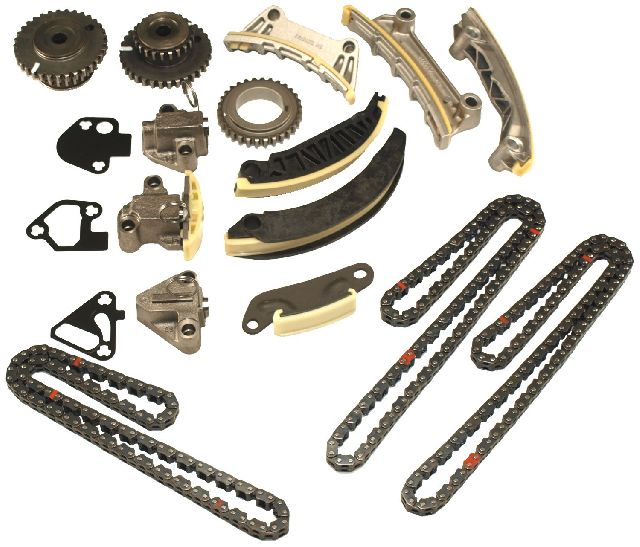
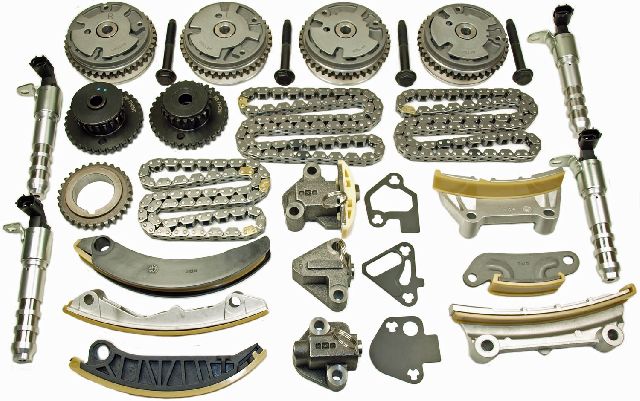
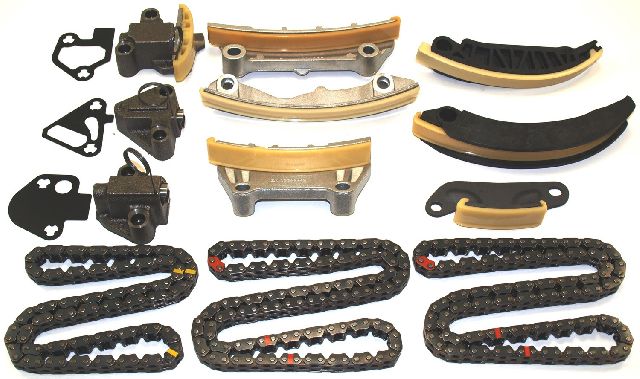
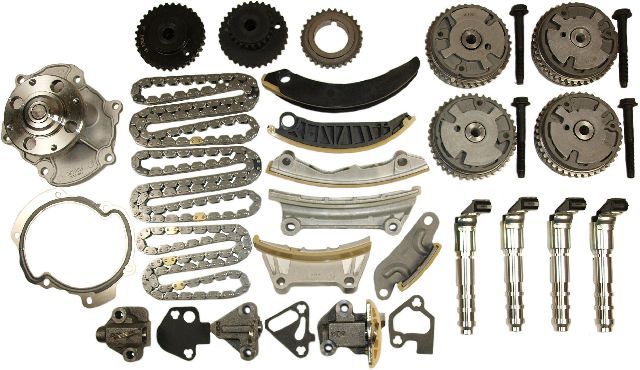
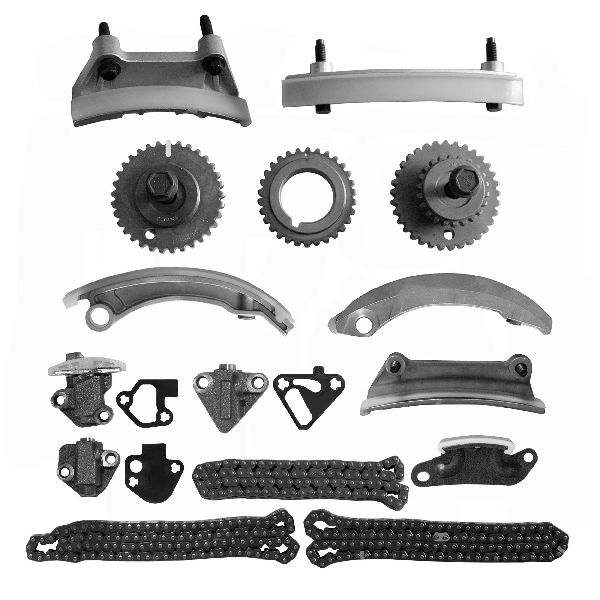
Typical fix: Replace all three timing chains, all tensioners, guides, and sprockets using an updated kit. It is also recommended to replace the water pump (which is driven by a timing chain) and the oil pump at the same time.
Est. part cost: $250-$600 for a full kit - Worn Timing Chain Tensioners or Guides 🔴 High Probability → Shop Engine Timing Chain The hydraulic tensioners rely on clean oil pressure to keep the chains taut. Sludge from extended oil changes can clog them. The plastic guides can become brittle and break, leaving pieces in the oil pan and causing chain slack.
How to confirm: Confirmed during physical inspection when replacing the timing chains. A rattling noise on startup that goes away is a classic sign of a failing tensioner.
Typical fix: Always replaced as part of a complete timing chain service. Never replace just a tensioner without the chains.
Est. part cost: Included in timing chain kits - Low or Incorrect Viscosity Engine Oil 🟡 Medium Probability The camshaft phasers and timing chain tensioners are hydraulically operated. Low oil levels or using oil that is dirty or not meeting GM's dexos1 specification can impede their function, leading to timing correlation codes. This was a root cause of the chain stretch issue due to the original OLM calibration.
How to confirm: Check the oil level and condition on the dipstick. Review service records to ensure the correct oil (SAE 5W-30 dexos1) was used at appropriate intervals (5,000 miles is recommended over the OLM).
Typical fix: Perform an oil and filter change using high-quality, manufacturer-specified oil. This is a critical first step but is unlikely to fix a code caused by already-stretched chains.
Est. part cost: $40-$80 - Faulty Camshaft Position Actuator Solenoid (VVT Solenoid) ⚪ Low Probability → Shop Engine Camshaft These solenoids control oil flow to the cam phasers. They can become clogged with sludge or fail electrically. While a possible cause, it's far less common than the chains themselves for this specific code on this platform.
How to confirm: Swap the Bank 2 intake solenoid with the Bank 2 exhaust solenoid. Clear codes and run the engine. If the code changes to P0019 (exhaust cam correlation), the solenoid is confirmed bad. They can also be tested for resistance or activated with a scan tool.
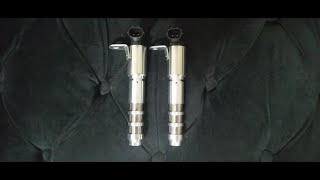
Typical fix: Replace the faulty solenoid. It's often recommended to replace them in pairs or all four at once 🎬 Watch: Where to find the VVT solenoids on this engine due to shared wear and labor access.
Est. part cost: $25-$60 per solenoid
Rare But Worth Checking
- Shifted Crankshaft Reluctor Wheel: → Shop Engine Crankshaft A known but uncommon issue where the toothed ring on the crankshaft that the position sensor reads can move slightly. TSBs suggest this as a possibility if timing chain inspection reveals no issues. This requires crankshaft replacement and is a last resort diagnosis.
- Faulty Camshaft or Crankshaft Position Sensor: → Shop Engine Crankshaft Position Sensor While possible, sensor failure is much less common than the mechanical timing chain issues on this engine. People often replace these first, only to find the code returns. A scan tool can usually identify a failed sensor via erratic readings, distinguishing it from a consistent timing offset.
- Clogged Oil Passages / Engine Sludge: Severe engine sludge, resulting from infrequent oil changes, can block the small passages that feed oil to the VVT solenoids and cam phasers, starving them of the hydraulic pressure needed to operate correctly. This can trigger timing codes even if the chains are not significantly stretched.
Diagnosis Steps
- Verify the engine oil level and condition. If low, dirty, or incorrect, perform an oil and filter change with full synthetic SAE 5W-30 oil meeting GM's dexos1 specification. Clear the code and see if it returns.
- Using a capable scan tool, access the live engine data and monitor the 'Camshaft Position Variance' PIDs for Bank 2. Compare the desired vs. actual camshaft position angles. A consistent deviation of several degrees at idle strongly suggests a mechanical timing issue.
- Test the Bank 2 intake camshaft position actuator solenoid. Command it ON/OFF with the scan tool while observing engine RPMs and cam angle data. 🎬 Watch: How to test and fix P0018 correlation codes A lack of change suggests a bad solenoid or clogged oil passage.
- As a secondary test, swap the Bank 2 intake solenoid with the adjacent exhaust solenoid. If the code changes from P0018 to P0019, the solenoid is faulty.
- Inspect the wiring and connectors for the Bank 2 camshaft position sensor and actuator solenoid for any damage, corrosion, or looseness.
- If the above steps do not resolve the issue and cam variance is confirmed, a physical inspection of the timing system is required. This involves removing the engine front cover to check for excessive chain slack, broken plastic guides, and proper alignment of timing marks.
Parts You'll Likely Need
- Engine Timing Chain Kit (Updated Design)
(OEM #12650230 (For 2007-2012 models, check specific application per TSB 12-06-01-009F))— This is the primary failure point. An updated kit with improved chains is required. A complete kit ensures all worn components (chains, tensioners, guides, sprockets) are replaced.
Trusted brands: ACDelco (GM OE), Cloyes
OEM price range: $450-$600
Aftermarket price range: $250-$400 - Camshaft Position Actuator Solenoid
(OEM #12615613 or 12679099 (Superseded))— A possible, and much simpler, cause of the code. It's a common diagnostic step to check or re
Related Codes That Often Appear With This One
- P0008 — A general engine position system performance code, often the first to appear when timing chains begin to stretch. It indicates a problem with the timing on either bank.
- P0017 — Crank/Cam correlation error on Bank 1, Exhaust Cam. Often appears with P0018 if multiple chains are loose.
- P0016 — Crank/Cam correlation error on Bank 1, Intake Cam. Often appears with P0018 if the primary timing chain is very loose, affecting both banks.
- P0019 — Crank/Cam correlation error on Bank 2, Exhaust Cam. This can appear alongside P0018, indicating a timing issue affecting the entire bank, often pointing to the secondary chain for Bank 2.
Technical Service Bulletins (TSBs) & Recalls
- PIP3423P: Advises inspection of timing chains/tensioners for DTCs P0016, P0017, P0018, P0019, P0008 or P0009.
- 12-06-01-009F: Announces availability of updated timing chain kits to repair stretched chains and provides a comprehensive list of affected vehicles and part numbers.
- 11-06-01-007B: Discusses conditions for setting P0008 and other timing codes, and the importance of checking for a loose primary timing chain.
Platform-Specific Known Issues
- A Technical Service Bulletin (TSB #PIP3423P) directly advises technicians to inspect for loose timing chains or tensioners when P0018 is present.
- Another TSB (#12-06-01-009F) announces the availability of updated, comprehensive timing chain kits specifically to repair stretched chains that cause codes like P0018, P0008, and others.
- An owner of a 2012 Enclave filed a complaint with the NHTSA (ODI #11317317) explicitly stating that codes P0017, P0018, and P0019 were caused by a "WORN OUT TIMING CHAIN AND GEARS".
- GM extended the powertrain warranty on some vehicles for this issue to 10 years/120,000 miles under a special coverage program, but this has likely expired for most 2008-2015 models.
Mechanic-Grade Diagnostic Values
- Camshaft Position Variance (Bank 2 Intake) — expected: Less than 6° retarded or 9° advanced relative to crankshaft.. Failure: A consistent reading greater than 6° retarded or 9° advanced.
- Camshaft Position Actuator Solenoid Resistance — expected: Approximately 11 ohms for a new, known-good solenoid.. Failure: Significantly higher resistance (e.g., 19-20 ohms) or an open circuit (infinite resistance).
- Camshaft Position Sensor Signal Voltage (Hall-Effect Type) — expected: The signal wire should toggle between approximately 5V and 0V as the engine is rotated.. Failure: Voltage that does not change, or is stuck at 0V or 5V, indicates a failed sensor.
Scan Tool Commands That Help
- GM GDS2 / Tech2: Camshaft Position Actuator Control — This bidirectional command allows a technician to manually activate the Bank 2 intake VVT solenoid. By commanding it ON and OFF while monitoring the camshaft position angle PIDs, you can verify if the solenoid is mechanically responding to electrical commands and if oil is flowing to the phaser.
- GM GDS2 / Tech2: Crankshaft Position Variation Learn — This procedure is required after replacing a crankshaft, crankshaft sensor, or ECM. It allows the ECM to learn the minor variations in the crankshaft reluctor wheel to ensure accurate misfire detection. While not a direct fix for P0018, it should be performed if related components are serviced to prevent other issues.
Wiring & Ground Locations
- G110 — On the right front of the engine, mounted to the cylinder head (Bank 1).. This ground is shared by the ECM. A poor connection here can cause a host of erratic engine management issues, including false sensor readings.
- G113 — Located on the left side of the engine, at a stud where the engine and transmission meet.. This is another critical engine ground. A loose or corroded G113 can affect sensor reference voltages and cause unpredictable behavior from the ECM and related sensors.
- Bank 2 Camshaft Position Sensor Connector — Bank 2 is the cylinder head closer to the radiator. The intake camshaft position sensor is located on the front of the cylinder head (passenger side of the engine bay).. This is the primary sensor for code P0018. The connector and its wiring are common points of failure due to heat and vibration. The three wires are typically a 5V reference, a low reference (ground), and the signal wire.
- ECM Connector X2 — The Engine Control Module (ECM) is located on the left side of the engine bay. X2 is one of the main harness connectors.. The signal and reference circuits for the camshaft position sensor terminate at this connector. A corroded pin or loose connection here can mimic a failed sensor. For example, on some Traverse models (sister vehicle), the Bank 2 Cam Sensor low reference is at pin 1 of connector X2.
Real Owner Repair Stories
- AudiWorld Forums user 'rockytopmark' (2011 Audi S5 3.0T (Note: Different vehicle, but identical code and relevant lesson)) — P0018 code appeared 5,000 miles after a preventative timing chain replacement.
❌ Tried (didn't work) A complete second timing chain job was performed under warranty., The P0018 code returned 3 days later., Replacing the camshaft position sensor did not fix the issue.
✅ What actually fixed it The issue was a faulty aftermarket VVT solenoid that had been installed prior to the second timing chain job. Replacing both VVT solenoids with OEM parts finally resolved the code. This highlights the risk of using non-OEM electronic components. - Ford F150 Forum user 'tbrady' (2011 Ford F-150 5.0L (Note: Different vehicle, but identical code and relevant lesson)) — P0018 and misfire codes (P0302, P0304) appeared immediately after replacing all timing chains, phasers, and solenoids.
❌ Tried (didn't work) Visually inspecting the timing marks, which appeared to be correct.
✅ What actually fixed it The secondary timing chain for Bank 2 was off by one tooth. Although it looked correct by eye, using a straight edge (ruler) across the sprocket marks revealed the misalignment. This emphasizes that even after a major timing job, the code should be trusted and mechanical timing must be re-verified with precision.
When the Usual Fixes Don't Work
- While stretched timing chains are the overwhelming cause of P0018 on this platform, there are documented cases where the code returned even after a complete timing chain replacement. In one such instance involving a similar engine, the ultimate culprit was a faulty aftermarket VVT solenoid that was not providing the correct response, fooling the ECM into thinking there was a mechanical timing issue. The problem was only resolved by replacing the new aftermarket part with an OEM solenoid. In another case, a technician found the secondary timing chain was off by a single tooth, which was not obvious with a quick visual check but was revealed by using a straightedge to confirm alignment between sprocket marks. These cases prove that after the primary repair is done, the code should still be treated as a valid fault, pointing toward either an installation error or a faulty non-OEM replacement part.
OEM Part Supersession History
Varies (Early design cam phasers)→Varies (Later design cam phasers)— Design improvement to address durability and VVT operation.
Heads up: The updated phasers MUST be used with new, thinner thrust washers. Re-using the original, thicker thrust washers with the new phasers will eliminate camshaft endplay and cause timing codes and/or engine damage.12615613 (and others)→12679099 (and others like 12636175)— Internal improvements to the VVT solenoid to prevent sticking and electrical failure.
Heads up: While physically interchangeable, using aftermarket solenoids is risky. Real-world repair stories show that faulty or out-of-spec aftermarket VVT solenoids can trigger correlation codes even when new, leading to misdiagnosis.
Model Year Variations Within This Range
- 2008-2012 (approx.): These models primarily used the LLT engine. This version had a higher incidence of timing chain stretch, partly due to the original oil life monitor calibration and early chain design. It features an aluminum intake manifold and separate, bolt-on exhaust manifolds.
- 2012-2015 (approx.): These models used the updated LFX engine. The LFX featured several improvements intended to increase durability and address the timing chain issue, including an integrated exhaust manifold (part of the cylinder head), a lighter composite intake manifold, and larger intake valves. While not immune, timing chain failure is less common on the LFX than on the early LLT.
Helpful Videos

We Have This Part in Stock

The information in this article is provided for general reference and educational purposes only. Vehicle specifications, procedures, and part compatibility can vary by production date, trim level, and region. Always consult your vehicle's factory service manual and verify part numbers before purchasing or performing repairs. Safety-critical components such as airbags, seat belts, and braking systems should be installed by a qualified professional.
- Buick ENCLAVE:
- 🧭 Diagnostic Flowchart
- 🎬 Helpful Videos
- 🛍️ Shop This Part
- What's Unique About the 2008-2015 Buick ENCLAVE
- Symptoms You May Notice
- Most Likely Causes
- Rare But Worth Checking
- Diagnosis Steps
- Parts You'll Likely Need
- Related Codes That Often Appear With This One
- Technical Service Bulletins (TSBs) & Recalls
- Platform-Specific Known Issues
- Mechanic-Grade Diagnostic Values
- Scan Tool Commands That Help
- Wiring & Ground Locations
- Real Owner Repair Stories
- When the Usual Fixes Don't Work
- OEM Part Supersession History
- Model Year Variations Within This Range
- 🎟️ Get 5% Off